
The Future of Digital Identity Wallets: Powered by Blockchain Technology


Welcome to Blockchain Trends, your guide to navigating the revolutionary world of blockchain technology. Beyond the hype of cryptocurrencies lies a vast landscape of innovation, and today, we're diving deep into one of its most promising applications: Blockchain digital identity wallets security. But how secure are they really, and what does the future hold for this decentralized approach to identity management? Join us as we explore the potential and the challenges, uncovering the transformative power of blockchain in securing our digital lives.
The Future of Digital Identity Wallets: Powered by Blockchain Technology
- Introduction: The Convergence of Blockchain, Digital Identity, and Wallets
- Blockchain's Role in Enhancing Digital Identity Wallet Security
- Key Features and Benefits of Blockchain Digital Identity Wallets
-
Use Cases of Blockchain Digital Identity Wallets
- Secure and Efficient Online Voting Systems
- Streamlining KYC (Know Your Customer) and AML (Anti-Money Laundering) Processes
- Secure Access to Healthcare Records and Medical Information
- Decentralized Finance (DeFi) Applications and Identity Verification
- Enterprise Applications: Secure Access Control and Data Management
- Challenges and Considerations for Widespread Adoption
- The Future Landscape of Blockchain Digital Identity Wallets
- Conclusion: The Transformative Potential of Blockchain Digital Identity Wallets
-
Frequently Asked Questions
- What are Blockchain digital identity wallets, and how do they differ from traditional wallets?
- How does blockchain technology enhance the security of digital identity wallets?
- What are the key benefits of using blockchain-based digital identity wallets?
- What are some potential use cases for blockchain digital identity wallets beyond simple identification?
- What are the current regulatory challenges surrounding blockchain digital identity wallets?
- Final Reflection: Embracing Secure Digital Sovereignty
- Unveil Your Secure Digital Future!
Introduction: The Convergence of Blockchain, Digital Identity, and Wallets
Defining Digital Identity Wallets and Their Current Limitations
Digital identity wallets represent a user-centric approach to managing personal credentials and attributes. At their core, they are software applications or physical devices designed to securely store digital versions of identity documents (like passports, driver's licenses), proofs (such as academic degrees, professional certifications), and personal data (like address, date of birth).
Unlike traditional physical wallets, digital identity wallets aim to provide a convenient, portable container for identity information in the digital realm, allowing users to present necessary proofs online or in person without revealing excessive personal data. However, current implementations often face significant challenges related to security, privacy, interoperability, and user control.
A major limitation of many existing digital identity solutions is their centralized nature. Identity data is frequently stored in databases controlled by governments, corporations, or service providers. This centralization creates significant security risks, making these databases attractive targets for cyberattacks.
Data breaches can expose millions of individuals' sensitive information, leading to identity theft, financial fraud, and reputational damage. Furthermore, users often lack granular control over their data, meaning they cannot easily choose which specific pieces of information to share or revoke access once granted. The lack of standardized protocols also hinders interoperability, making it difficult to use an identity credential issued by one entity with services provided by another.
The Promise of Blockchain in Revolutionizing Digital Identity Management
Blockchain technology offers a compelling alternative to traditional identity management systems, primarily by enabling decentralization and enhancing trust. By distributing identity data or, more commonly, verifiable proofs of identity across a network of computers rather than storing them in a single location, blockchain significantly reduces the risk of a single point of failure or a mass data breach.
This decentralized approach moves away from relying solely on central authorities to verify and manage identities, placing more power and control back into the hands of the individual. The inherent immutability of blockchain records ensures that once a transaction or identity proof is recorded, it cannot be altered or deleted without the consensus of the network, providing a high degree of data integrity and transparency.
The integration of blockchain with digital identity wallets paves the way for self-sovereign identity (SSI) models. In an SSI framework, individuals own and control their digital identities, issuing verifiable credentials from trusted issuers and presenting them to verifiers as needed, all without relying on a central intermediary. Blockchain serves as the trust layer, providing a secure, tamper-evident ledger for registering decentralized identifiers (DIDs) and anchoring verifiable credentials.
This paradigm shift promises enhanced privacy, as users can selectively disclose minimal information required for a specific transaction or service. Moreover, the underlying protocols of blockchain can foster greater interoperability, potentially allowing a single digital identity wallet to hold credentials from various issuers and be accepted by multiple service providers globally, fundamentally transforming blockchain digital identity wallets security and utility.
Blockchain's Role in Enhancing Digital Identity Wallet Security
Decentralized Identity (DID) and Self-Sovereign Identity (SSI) Explained
Decentralized Identity (DID) and Self-Sovereign Identity (SSI) are foundational concepts underpinning blockchain-based digital identity wallets. A Decentralized Identifier (DID) is a new type of identifier that enables verifiable, decentralized digital identity. Unlike traditional identifiers like email addresses or usernames, which are tied to centralized systems, DIDs are designed to be globally unique, resolvable, and cryptographically verifiable without requiring a centralized registry.
They are controlled by the individual or entity they identify, not by any external organization. DIDs are often anchored or registered on a decentralized ledger, such as a blockchain, which provides a secure and tamper-evident record of the DID and associated metadata, known as a DID document. This architecture is crucial for the blockchain digital identity wallets security model.
Self-Sovereign Identity (SSI) is the overarching concept and movement that leverages technologies like DIDs and verifiable credentials to give individuals complete ownership and control over their digital identities. In an SSI model, individuals obtain cryptographically signed credentials (verifiable credentials) from trusted issuers (like a university issuing a degree or a government issuing a driver's license). These credentials are held securely in the individual's digital wallet.
When proof of an attribute is needed (e.g., proof of age), the individual can present the relevant verifiable credential directly from their wallet to a verifier, who can cryptographically verify the credential's authenticity and integrity using the issuer's public key and the record on the blockchain. This process minimizes the sharing of sensitive personal data and eliminates the need for intermediaries to attest to the validity of the information, significantly bolstering privacy and the security of blockchain digital identity wallets.
Blockchain technology provides robust mechanisms for enhancing authentication and authorization within digital identity systems. Instead of relying on traditional username/password combinations or centralized single sign-on services, users can authenticate themselves using their blockchain-based digital identity wallet and cryptographic keys. When a user needs to log in to a service or prove their identity, their wallet can generate a cryptographic signature using their private key.
This signature is then verified by the service provider using the user's public key, often linked to their DID recorded on the blockchain. This method offers a much higher level of security than traditional authentication methods, which are susceptible to phishing, brute-force attacks, and database breaches. The private key never leaves the user's secure wallet, minimizing exposure risk.
Furthermore, blockchain enables fine-grained authorization based on verifiable credentials. Instead of granting a service provider full access to a user's profile, the user can present specific verifiable credentials from their wallet to authorize access or actions. For example, a user might present a credential proving they are over 18 to access age-restricted content, without revealing their exact date of birth.
The service verifies the credential via the blockchain infrastructure, granting authorization based on the specific attribute proven. This selective disclosure model, facilitated by the secure and verifiable nature of blockchain transactions, enhances user privacy while ensuring that only necessary information is shared for authorization purposes. This approach fundamentally strengthens the blockchain digital identity wallets security paradigm by minimizing data exposure.
Immutable Records and Enhanced Data Integrity for Identity Verification
One of the most significant contributions of blockchain to digital identity is the provision of immutable records and enhanced data integrity. Once a transaction or a hash of an identity-related document (like a verifiable credential or a DID document) is recorded on a blockchain, it is exceptionally difficult, if not impossible, to alter or delete it without the consensus of the network participants. This immutability is achieved through cryptographic hashing and the distributed nature of the ledger.
Each new block added to the chain contains a hash of the previous block, creating a chronological and tamper-evident link. Any attempt to modify a past record would break this chain, making the tampering immediately obvious to the network.
This inherent immutability is critical for identity verification and the security of blockchain digital identity wallets. It ensures that verifiable credentials anchored on the blockchain, or the links to their status (e.g., revoked or active), maintain their integrity over time. Verifiers can trust that the information they are validating against the blockchain has not been tampered with since it was recorded.
This dramatically reduces the risk of fraudulent credentials or identity proofs. For instance, an employer verifying an academic degree credential presented via a blockchain wallet can be highly confident in its authenticity and that it hasn't been altered since the university issued it. This verifiable integrity builds a strong foundation of trust in digital interactions and is a cornerstone of blockchain digital identity wallets security.
Key Features and Benefits of Blockchain Digital Identity Wallets
Secure Storage of Personal Data and Credentials
Blockchain digital identity wallets offer a significantly more secure method for storing personal data and credentials compared to traditional centralized databases or even storing copies on personal devices. While the sensitive personal data itself is typically not stored directly on the public blockchain for privacy reasons, the wallet stores encrypted credentials and private keys securely on the user's device, often protected by biometric authentication or strong passwords.
Critically, the verifiability of these credentials is tied to anchors or hashes on the blockchain, leveraging its inherent security properties. This architecture ensures that even if the user's device is compromised, the link to the verifiable status on the blockchain remains intact, and the attacker would need the user's private key to use the credentials, which is designed to remain within the secure enclave of the wallet.
The primary security benefit comes from decentralization and cryptography. Unlike a single database that can be breached to access millions of records at once, the risk is distributed across individual wallets. Each wallet is secured independently. Furthermore, verifiable credentials held within the wallet are cryptographically signed by the issuer, making them tamper-proof. The blockchain digital identity wallets security model relies on the fact that the user controls the private keys necessary to access and use the credentials, placing the individual as the primary guardian of their identity information, minimizing the attack surface that centralized systems present.
User Control and Privacy: Empowering Individuals with Data Ownership
A core promise of blockchain digital identity wallets is empowering individuals with unprecedented control over their digital identity and personal data. In traditional systems, users often surrender control of their data to service providers upon sign-up. With SSI and blockchain wallets, the individual becomes the central hub for their identity information.
They decide which credentials to obtain, where to store them (in their wallet), and crucially, when and with whom to share specific pieces of information. This contrasts sharply with current models where users often have to share their entire identity document just to prove a single attribute like age or residency.
This granular control translates directly into enhanced privacy. The user can employ zero-knowledge proofs or selective disclosure techniques facilitated by the wallet and verifiable credentials. For instance, instead of showing a driver's license (which contains name, address, birth date, photo), a user could present a verifiable credential from a trusted issuer that only proves they are over 21.
The verifier can cryptographically validate this proof against the blockchain without learning anything else about the user. This minimizes the digital footprint left behind during online interactions and significantly reduces the amount of sensitive data held by third parties, thereby enhancing the security and privacy of blockchain digital identity wallets.
Interoperability and Cross-Platform Compatibility for Seamless Identity Management
One of the major frustrations with current digital identity solutions is the lack of interoperability. An identity credential issued by one government agency or company is often not recognized or easily usable by another. This forces users to manage multiple digital identities and repeat verification processes across different platforms and services. Blockchain-based digital identity wallets, built on open standards and protocols (like W3C Decentralized Identifiers and Verifiable Credentials), aim to solve this problem. By adhering to these universal standards, wallets and credentials issued by different entities can theoretically be recognized and verified by any compliant service provider globally.
This standardization, anchored by the public and verifiable nature of blockchain records, fosters a truly interoperable ecosystem. A digital identity wallet could hold a university degree credential from a US university, a professional certification from a European body, and a government ID from an Asian country, and the user could present any of these to a service provider anywhere in the world, provided the verifier supports the open standards.
This seamless cross-platform compatibility dramatically improves the user experience, reduces friction in online and offline interactions requiring identity verification, and facilitates global digital trust. The underlying blockchain digital identity wallets security standards ensure that this interoperability doesn't come at the expense of safety or privacy.
Reduced Identity Fraud and Enhanced Security Measures
Identity fraud is a pervasive and costly problem globally. Traditional identity systems are vulnerable to forgery of physical documents and theft of digital credentials from centralized databases. Blockchain digital identity wallets, by leveraging cryptography and decentralized ledgers, offer powerful defenses against these threats. The use of verifiable credentials, cryptographically signed by trusted issuers and anchored on an immutable blockchain, makes them extremely difficult to forge or alter undetected. Any attempt to modify a credential would invalidate its cryptographic signature, making the fraud immediately apparent upon verification against the blockchain record.
Furthermore, the self-sovereign nature means the user's private key, required to use the credentials, is kept securely by the individual, not by potentially vulnerable third parties. The decentralized nature of DIDs means there's no single honeypot of identity data for criminals to target for mass identity theft. While wallets themselves can be targets if not properly secured by the user, the broader system architecture significantly raises the bar for attackers.
The inherent transparency of public blockchains (regarding transaction history, not personal data) can also aid in auditing and detecting suspicious activity related to credential issuance or verification. These combined factors contribute to significantly reduced identity fraud and enhance the overall blockchain digital identity wallets security.
Use Cases of Blockchain Digital Identity Wallets
Secure and Efficient Online Voting Systems
One compelling use case for blockchain digital identity wallets is revolutionizing online voting systems. Traditional online voting faces significant challenges related to security, voter verification, and ensuring the integrity and anonymity of the ballot. Blockchain identity wallets can address the voter verification challenge by providing a secure, privacy-preserving method to confirm a voter's eligibility without revealing their specific identity to the voting platform itself. A user could present a verifiable credential from a government issuer proving they are a registered voter in a specific district, without disclosing their name or address to the voting application.
Once verified, the voting process itself can leverage blockchain's properties to ensure security and transparency. Each vote can be recorded as an encrypted transaction on a blockchain, ensuring immutability and preventing tampering.
While ensuring voter anonymity is complex, techniques like zero-knowledge proofs or mixing services combined with the secure identity layer from the wallet can help maintain privacy while ensuring that only eligible voters cast ballots and that each voter only votes once. Pilots in various countries and organizations are exploring blockchain for voting, aiming to increase participation while enhancing the security and auditability of the electoral process through robust blockchain digital identity wallets security and ledger integrity.
Streamlining KYC (Know Your Customer) and AML (Anti-Money Laundering) Processes
Know Your Customer (KYC) and Anti-Money Laundering (AML) regulations are critical for preventing financial crime but are often cumbersome, costly, and repetitive for both businesses and customers. Customers frequently have to provide the same identity documents (passport, utility bills, etc.) to multiple financial institutions and service providers.
Blockchain digital identity wallets offer a solution to streamline these processes dramatically. A customer could undergo a KYC verification process once with a trusted identity verification service or financial institution. Upon successful verification, the service issues the customer a verifiable credential stored securely in their blockchain wallet, stating that they have completed KYC according to specific standards.
The customer can then use this verifiable credential to satisfy KYC requirements when onboarding with other service providers. Instead of submitting documents again, they simply present the credential from their wallet. The new service provider can cryptographically verify the credential's authenticity and check its status (e.g., not revoked) against the blockchain.
This "Verify Once, Use Many" model significantly reduces friction, saves time and resources for both parties, and enhances privacy as the user controls when and with whom they share proof of KYC completion. The inherent blockchain digital identity wallets security ensures that these verifiable KYC credentials are trustworthy and resistant to fraud.
Secure Access to Healthcare Records and Medical Information
Managing healthcare records securely and giving patients control over their medical information is a significant challenge. Records are often fragmented across different providers, and patients lack easy, secure access or the ability to share specific records with specialists. Blockchain digital identity wallets can provide a secure and user-centric solution for managing access to healthcare data. A patient could use their wallet to store verifiable credentials related to their health, such as proofs of vaccinations, lab results, or even diagnoses, issued by healthcare providers.
Crucially, the patient retains control over who can access their detailed medical records. Using their wallet, they can grant temporary or specific access permissions to healthcare providers, specialists, or even family members, all recorded immutably on a blockchain for auditability. A doctor needing access to a patient's history could request permission via the patient's wallet. The patient approves the request, granting access to specific records. The blockchain ensures that access logs are tamper-evident, enhancing accountability and trust. This model, underpinned by blockchain digital identity wallets security, empowers patients, improves care coordination, and protects sensitive medical information from unauthorized access.
Decentralized Finance (DeFi) Applications and Identity Verification
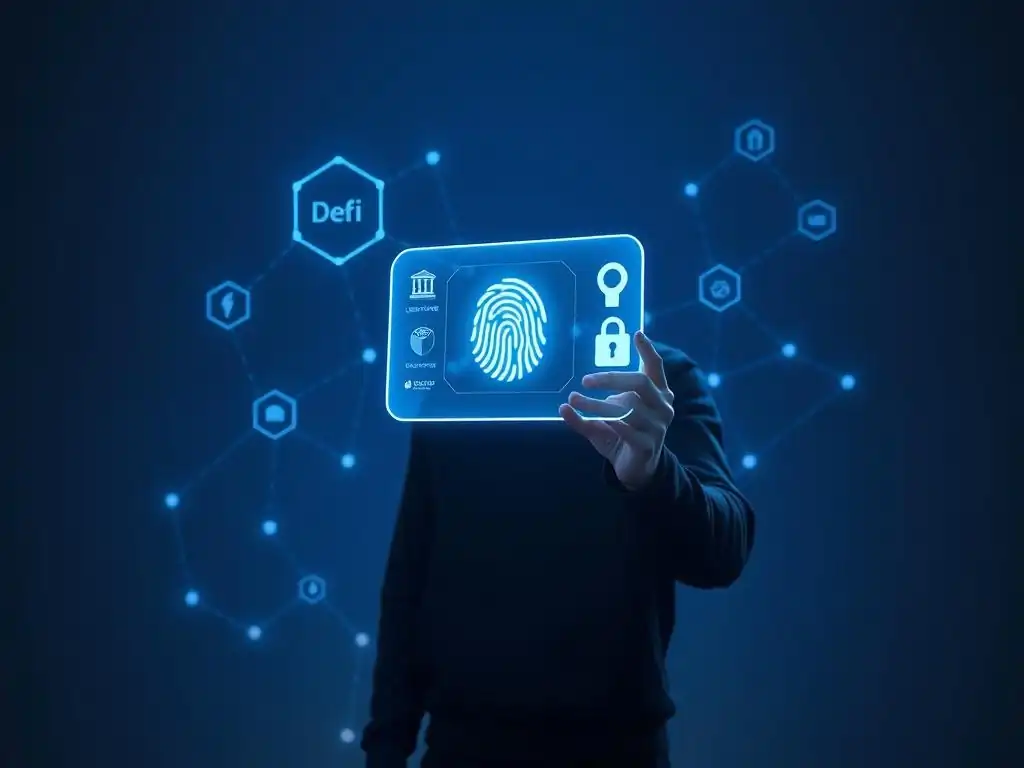
Decentralized Finance (DeFi) platforms, while aiming to be permissionless, still face challenges related to regulatory compliance (like AML/KYC in some jurisdictions) and preventing fraudulent activity. Traditional identity verification methods are often incompatible with the decentralized ethos of DeFi. Blockchain digital identity wallets provide a way to bridge this gap, allowing users to prove necessary attributes for DeFi participation without compromising their privacy or the decentralized nature of the platform. For example, a DeFi lending protocol might require users to prove residency in a specific country or accredited investor status to comply with regulations.
Instead of submitting documents to a centralized entity, a user could present a verifiable credential from their wallet proving they meet the requirement. The credential, anchored on a blockchain, allows the DeFi protocol (or a smart contract) to verify the necessary attribute programmatically and permissionlessly.
This enables DeFi platforms to incorporate compliance checks or risk assessments based on verified identity attributes while maintaining user privacy and decentralization. The security of blockchain digital identity wallets security is paramount here, as verified identity attributes can be linked to financial activity on the blockchain, requiring the highest level of protection against tampering or unauthorized use.
Enterprise Applications: Secure Access Control and Data Management
Enterprises struggle with managing employee and partner identities, controlling access to sensitive systems and data, and ensuring compliance with data privacy regulations. Traditional identity and access management (IAM) systems are often complex, costly, and vulnerable to internal and external threats. Blockchain digital identity wallets offer a promising solution for enterprise IAM, enabling more secure, efficient, and privacy-preserving access control. Employees or partners could use their wallets to store verifiable credentials issued by the company, such as proof of employment, role, department, security clearances, or training completion.
Access to internal systems, applications, or physical locations could then be granted based on presenting the required verifiable credentials from the user's wallet. Smart contracts on a private or consortium blockchain could manage access policies, automatically verifying credentials presented by the wallet before granting access. This eliminates the need for centralized user directories that are prime targets for attackers.
It also simplifies onboarding and offboarding, as credentials can be issued or revoked instantly via the blockchain. This approach enhances the blockchain digital identity wallets security for enterprise access control, reduces administrative overhead, and improves compliance with data privacy regulations by minimizing the storage of sensitive identity data in disparate systems.
Challenges and Considerations for Widespread Adoption
Scalability Issues and Blockchain Network Performance
One significant challenge for the widespread adoption of blockchain digital identity wallets is the scalability of the underlying blockchain networks. Public blockchains like Bitcoin and Ethereum (though improving with Ethereum 2.0) have historically faced limitations in processing a high volume of transactions per second compared to centralized databases.
Identity verification and credential issuance/verification could potentially generate a massive number of transactions, depending on the implementation model (e.g., anchoring every credential hash vs. anchoring DID documents). Slow transaction speeds and high transaction fees (gas costs on some networks) could hinder the usability and economic viability of blockchain identity solutions, particularly for frequent interactions.
While Layer 2 scaling solutions and faster, purpose-built blockchains (like some designed specifically for identity or enterprise use) are being developed, ensuring that the chosen network can handle the potential global scale of digital identity operations remains a key consideration. The performance of the blockchain directly impacts the responsiveness and efficiency of the digital identity wallet experience. A slow or expensive network could lead to delays in verification or make the system prohibitively expensive for widespread use, undermining the benefits of enhanced blockchain digital identity wallets security with poor performance.
Regulatory Landscape and Compliance Requirements
The regulatory landscape surrounding digital identity and blockchain technology is still evolving and presents a complex challenge for widespread adoption. Governments and regulatory bodies around the world have differing views and frameworks regarding digital identity, data privacy (like GDPR, CCPA), electronic signatures, and the legal status of blockchain-based credentials. For blockchain digital identity wallets to achieve broad acceptance, they need to operate within existing legal frameworks and potentially influence the development of new regulations that recognize and facilitate decentralized identity.
Compliance with specific industry regulations (e.g., KYC/AML in finance, HIPAA in healthcare) is also critical. While blockchain wallets can facilitate compliance by providing verifiable credentials, the systems and processes built around them must meet regulatory requirements. Uncertainty about how regulators will treat blockchain-based identities, who is liable in case of misuse, and how to handle issues like the "right to be forgotten" on an immutable ledger are significant hurdles. Navigating this complex and fragmented regulatory environment requires close collaboration between technology providers, businesses, and policymakers to ensure that blockchain digital identity wallets security and functionality align with legal requirements.
User Adoption and Education: Bridging the Knowledge Gap
Despite the potential benefits, achieving widespread user adoption of blockchain digital identity wallets requires bridging a significant knowledge gap and overcoming inertia. The concepts of decentralized identity, verifiable credentials, and managing private keys can be complex for the average user who is accustomed to simpler, albeit less secure, username/password systems. Users need to understand the value proposition – enhanced security, privacy, and control – and feel confident in their ability to manage their digital identity securely using a wallet.
Designing user-friendly wallet interfaces that abstract away the underlying technical complexities is crucial. Furthermore, extensive user education is needed to explain how these systems work, the importance of securing their private keys, and how to use their wallet effectively for various interactions. Without widespread understanding and trust, adoption will remain limited to early adopters. The success of blockchain digital identity wallets security ultimately depends on users adopting secure practices and trusting the technology, which requires effective communication and education initiatives.
Addressing Potential Security Vulnerabilities Specific to Blockchain Identity
While blockchain significantly enhances security in many ways, it also introduces potential vulnerabilities specific to its architecture and implementation. Smart contract bugs, for instance, could be exploited if not rigorously audited, potentially affecting the issuance or verification of credentials.
The security of the user's private key remains paramount; if a user loses their private key or it is compromised (e.g., through malware on their device), they could lose access to their identity credentials or an attacker could potentially misuse them. While this is a wallet-level issue rather than a blockchain protocol issue, it's a critical security consideration for the user.
Furthermore, while the blockchain record itself is immutable, the data that the credentials attest to might reside off-chain. Ensuring the integrity and availability of this off-chain data, if required for verification, is another challenge.
Attacks targeting the endpoints that issue or verify credentials (e.g., phishing attacks to trick users into sharing credentials or private keys, or attacks on issuer/verifier systems) also remain relevant. Continuous research, robust security audits of wallet software and smart contracts, and the development of best practices for users and implementers are essential to mitigate these specific risks and ensure the long-term blockchain digital identity wallets security.
The Future Landscape of Blockchain Digital Identity Wallets
Emerging Trends: Biometric Authentication and AI Integration
The future of blockchain digital identity wallets is likely to see deeper integration with emerging technologies like biometric authentication and Artificial Intelligence (AI). Biometric authentication (fingerprint, facial recognition, iris scan) is already a common security feature on smartphones and can be used to secure access to the digital wallet itself, providing a convenient and strong layer of protection for the user's private keys and credentials.
Integrating biometrics ensures that even if a device is stolen, accessing the wallet contents remains extremely difficult without the user's physical presence. This enhances the physical security aspect layered on top of blockchain digital identity wallets security.
AI can play a role in several ways. It could be used to enhance the security monitoring of the wallet, detecting unusual access patterns or potential phishing attempts. AI could also assist users in managing their credentials, suggesting which credentials might be needed for a specific service based on context, or helping to verify the trustworthiness of credential issuers or verifiers.
Furthermore, AI could be used by verifiers to analyze the risk associated with a particular transaction based on verified attributes presented via the wallet, potentially improving fraud detection while minimizing data sharing. The combination of biometrics, AI, and blockchain creates a powerful synergy for future identity solutions.
The Role of Central Bank Digital Currencies (CBDCs) and Digital Identity
The development of Central Bank Digital Currencies (CBDCs) by numerous countries is closely linked to the future of digital identity. Many proposed CBDC architectures envision requiring some level of digital identity verification for user accounts, particularly to comply with AML/KYC regulations and prevent illicit activity. Blockchain digital identity wallets could serve as the secure, privacy-preserving layer for managing the identity credentials required to access and use CBDCs.
Instead of a central bank or commercial bank managing a separate identity system for CBDC users, users could leverage their existing self-sovereign identity wallet. They could present a verifiable credential proving their eligibility to hold a CBDC account to the issuing authority. This approach leverages the existing or developing SSI ecosystem, potentially accelerating CBDC adoption by providing a ready-made, secure identity layer. It also ensures that the identity verification process for CBDCs benefits from the enhanced privacy and blockchain digital identity wallets security features, offering a more user-centric approach than traditional centralized identity systems tied to financial accounts.
Market Predictions and Growth of Blockchain Identity Solutions
Market analysts predict substantial growth in the blockchain identity solutions market in the coming years. Reports from various research firms consistently forecast the market size to reach several billion US dollars by the mid to late 2020s. For instance, some reports projected the market to exceed $5 billion by 2025 or 2026. This growth is driven by increasing concerns over data breaches and identity theft, the need for more efficient and compliant digital onboarding processes, and the growing recognition of the benefits of decentralized identity models across various sectors.
While the market is still relatively nascent, particularly for consumer-facing SSI wallets, enterprise adoption for specific use cases like supply chain identity, secure access, and streamlined KYC is gaining traction. Government initiatives exploring digital identity frameworks that could incorporate blockchain principles are also contributing to market maturation. The focus on improving blockchain digital identity wallets security, usability, and interoperability through open standards is expected to fuel this growth, making blockchain identity a significant segment within the broader blockchain technology market.
Conclusion: The Transformative Potential of Blockchain Digital Identity Wallets
Blockchain as a Catalyst for a More Secure and User-Centric Digital Future
Blockchain technology serves as a powerful catalyst for transforming digital identity management, moving away from vulnerable, centralized systems towards a more secure, private, and user-centric future. By enabling decentralized identifiers, verifiable credentials, and immutable records, blockchain empowers individuals to own and control their digital identities. This paradigm shift enhances the blockchain digital identity wallets security by distributing risk, leveraging strong cryptography, and minimizing the amount of sensitive data stored in centralized honeypots. Users gain control over their personal information, deciding precisely what data to share, when, and with whom, thereby reclaiming their digital sovereignty.
The potential impact spans across numerous sectors, from streamlining financial services and healthcare access to enabling more secure and transparent democratic processes like online voting. While challenges related to scalability, regulation, and user education remain, the foundational benefits of blockchain – trust, transparency, security, and decentralization – position it as a critical technology for building the next generation of digital identity infrastructure. The evolution of digital identity wallets, powered by blockchain, promises a future where interactions are more trustworthy, personal data is better protected, and individuals are empowered as active participants, not just passive subjects, in the digital economy.
The Importance of Collaboration and Innovation in the Blockchain Identity Ecosystem
Realizing the full transformative potential of blockchain digital identity wallets requires sustained collaboration and innovation across a diverse ecosystem of stakeholders. This includes technology developers building open-source protocols and wallet software, identity verification service providers issuing verifiable credentials, enterprises integrating blockchain identity into their workflows, governments establishing supportive regulatory frameworks, and educational institutions helping to onboard users. No single entity can build this future alone; it necessitates a collective effort to establish common standards, ensure interoperability, and address the technical and non-technical challenges that arise.
Continued innovation is needed to improve the scalability and performance of blockchain networks for identity use cases, enhance the user experience of digital wallets, and develop advanced security features like sophisticated key management and recovery mechanisms. Research into privacy-preserving technologies, such as zero-knowledge proofs, will further strengthen the privacy guarantees of blockchain identity solutions.
By fostering a collaborative and innovative environment, the blockchain identity ecosystem can accelerate the development and adoption of secure, interoperable, and user-controlled digital identity solutions, paving the way for a more trusted and efficient digital world built on the robust foundation of blockchain digital identity wallets security.
Frequently Asked Questions
What are Blockchain digital identity wallets, and how do they differ from traditional wallets?
Blockchain digital identity wallets are secure digital repositories leveraging blockchain technology to store and manage digital identities. Unlike traditional wallets, they offer decentralized control and enhanced security through cryptography.
How does blockchain technology enhance the security of digital identity wallets?
Blockchain's immutable ledger and cryptographic hashing make it extremely difficult to tamper with identity data. This enhanced security reduces the risk of identity theft and fraud compared to centralized systems.
What are the key benefits of using blockchain-based digital identity wallets?
The major benefits include increased user control over their personal data, enhanced privacy through selective disclosure, and improved security against identity theft and fraud.
What are some potential use cases for blockchain digital identity wallets beyond simple identification?
Beyond basic ID, they can be used for secure document storage, verifiable credentials, and streamlining access to DeFi services. They also facilitate secure online voting and digital signatures.
What are the current regulatory challenges surrounding blockchain digital identity wallets?
Regulatory frameworks are still evolving, presenting challenges related to data privacy compliance, cross-border interoperability, and the legal recognition of digital identities. Clarity is needed to foster wider adoption.
Final Reflection: Embracing Secure Digital Sovereignty
The journey through the landscape of blockchain-powered digital identity wallets reveals a future where individual control over personal data reigns supreme. No longer will our identities be fragmented across countless platforms, vulnerable to breaches and misuse. Instead, we stand on the cusp of an era where security, transparency, and self-sovereignty converge, empowering individuals to navigate the digital world with unprecedented confidence.
This shift towards decentralized identity management is not merely a technological advancement; it's a fundamental reshaping of the power dynamics in our digital lives. The promise of owning and controlling our digital selves resonates deeply, offering a pathway towards greater autonomy and trust in an increasingly interconnected world. Identity is the new perimeter of security, and blockchain is the key to unlocking its potential.
This quote encapsulates the transformative power of blockchain in securing our digital existence and reclaiming our right to privacy.
As we look ahead, let us not simply be passive observers of this technological evolution. Let us actively engage in shaping the future of digital identity, advocating for solutions that prioritize security, accessibility, and user empowerment. Embrace the potential of blockchain digital identity wallets to secure your digital sovereignty, and become a steward of your own data. The future of identity is in our hands; let us build it together, responsibly and ethically.
Unveil Your Secure Digital Future!
Thank you for exploring the potential of blockchain-powered digital identity wallets with us. You've gained valuable insights into how this technology can revolutionize security and ownership. Are you ready to take control of your digital identity?
Here are some steps you can take right now:
- Research digital identity wallet applications that match your needs and privacy preferences. This is your first step toward reclaiming ownership of your data.
- Review white papers and developer documentation of blockchain platforms supporting digital identity solutions to deepen your understanding of the underlying technology.
- Share this article with friends and colleagues interested in data privacy and the future of identity. Let's start a conversation about the importance of secure digital ownership.
How will you use blockchain technology to protect your digital identity today? Share your thoughts and preferred wallet options in the comments below!
Leave a Reply