
The Immutable Ledger: Ensuring Data Integrity in Supply Chains with Blockchain


Welcome to Blockchain Trends, your guide to navigating the evolving landscape of blockchain technology! Discover how blockchain is revolutionizing industries beyond cryptocurrency.
Ever wondered how to guarantee the authenticity and reliability of goods as they move across complex networks? Dive into our in-depth analysis of Blockchain supply chain data integrity and unlock the secrets of leveraging immutable ledgers to build trust and transparency in your operations. Ready to explore how this powerful technology can transform your business?
Enhancing Supply Chain Resilience with Blockchain-Based Data Integrity
- Introduction: Blockchain's Transformative Impact on Supply Chain Data
- Core Principles of Blockchain for Supply Chain Data Integrity
- Benefits of Blockchain-Enabled Supply Chain Data Integrity
- Practical Applications of Blockchain in Supply Chain Security
- Implementing Blockchain for Supply Chain Integrity: A Practical Approach
- Addressing Challenges in Blockchain Implementation
- Case Studies: Real-World Blockchain Implementations in Supply Chains
- Future Trends in Blockchain and Supply Chain Data Security
- Conclusion: Building a More Secure and Efficient Supply Chain Future
-
Frequently Asked Questions
- How does blockchain ensure data integrity in the supply chain?
- What are the key benefits of using blockchain for supply chain data integrity?
- What are some real-world applications of blockchain in supply chain management?
- What are the main challenges to implementing blockchain in a supply chain?
- How is blockchain helping to improve regulatory compliance in supply chains?
- Final Reflection: Embracing Trust in the Chain
- Unlock Supply Chain Transparency: Start Building Today!
Introduction: Blockchain's Transformative Impact on Supply Chain Data
Modern supply chains are vast, complex networks spanning continents and involving numerous participants – from raw material suppliers and manufacturers to logistics providers and retailers. This complexity, while enabling global trade, also introduces significant vulnerabilities. Traditional systems often rely on siloed databases and manual processes, creating opportunities for data errors, manipulation, and a fundamental lack of trust among parties who may not have established relationships. Ensuring the accuracy and reliability of information flowing through these networks is paramount, not just for efficiency but for safety, compliance, and brand reputation.
The growing need for robust, verifiable data has accelerated the exploration of innovative technologies. Blockchain, initially known for powering cryptocurrencies, has emerged as a powerful tool for creating shared, immutable ledgers. Its core properties offer a fundamentally different approach to managing supply chain data, promising a step-change in how information is recorded, shared, and trusted across the entire ecosystem. By providing a single source of truth that all authorized participants can access and verify, blockchain technology directly addresses the challenges inherent in fragmented, traditional data management systems.
The Increasing Demand for Resilient and Transparent Supply Chains
Recent global events, such as the COVID-19 pandemic and geopolitical shifts, have starkly exposed the fragilities within global supply chains. Disruptions have led to shortages, delays, and significant financial losses for businesses across sectors. A survey by McKinsey in 2020 found that 73% of companies experienced supply chain disruptions, with 12% reporting losses exceeding $100 million. This has intensified the focus on building supply chain resilience, which requires greater visibility and transparency to anticipate and react effectively to unforeseen events.
Stakeholders, from consumers demanding ethically sourced products to regulators enforcing stricter safety standards, are also pushing for more transparency. Consumers want to know the origin and journey of the products they buy, while regulators require verifiable records for compliance and risk management. Traditional paper trails and disparate digital systems make it difficult, if not impossible, to achieve the level of end-to-end visibility and data integrity needed to meet these demands and build truly resilient supply networks.
How Blockchain Addresses Vulnerabilities in Traditional Supply Chains
Traditional supply chain data systems often suffer from a lack of centralization and a lack of distributed trust. Information is scattered across various databases owned by different companies, leading to delays, errors during data transfer, and a lack of a unified, real-time view. Furthermore, the potential for data tampering, whether accidental or malicious, exists when data is controlled by single entities without independent verification. This creates a trust deficit, often necessitating costly intermediaries and lengthy verification processes.
Blockchain technology counters these vulnerabilities by providing a decentralized, append-only ledger shared among network participants. Once data related to a transaction or event (like a product moving from one location to another) is recorded on the blockchain and validated by the network's consensus mechanism, it is extremely difficult to alter or delete. This inherent immutability ensures Blockchain supply chain data integrity, providing a trustworthy and verifiable history of goods and transactions accessible to all authorized parties, thereby reducing information asymmetry and enhancing trust.
Core Principles of Blockchain for Supply Chain Data Integrity
At its heart, blockchain technology is a distributed ledger that records transactions across many computers. For supply chains, this means creating a shared, tamper-evident record of events and data points related to products, shipments, and transactions. Several core principles make blockchain uniquely suited for enhancing Blockchain supply chain data integrity.
Immutability and Tamper-Proofing of Supply Chain Records
The fundamental strength of blockchain lies in its structure: data is organized into blocks, and each new block contains a cryptographic hash of the previous block. This creates a chain where altering any data in an older block would change its hash, which would then invalidate the hash in the subsequent block, and so on, breaking the chain.
For a public blockchain like Bitcoin, altering even a single transaction record would require re-mining that block and all subsequent blocks faster than the rest of the network is adding new blocks – a computationally infeasible task given the vast network's processing power (hash rate).
In permissioned blockchains, often used in enterprise supply chains, while the network participants are known and access is controlled, the principle of cryptographic linking of blocks still ensures that historical data cannot be retroactively altered without detection by other network members. Any attempt to tamper with a record would immediately become apparent to other nodes validating the ledger. This makes the blockchain ledger a highly reliable source of truth for supply chain events, guaranteeing the integrity of the historical data.
Cryptographic Security and Validation of Data Transactions
Every transaction added to the blockchain is secured using advanced cryptography. Participants use public and private keys to digitally sign transactions, verifying the identity of the sender and ensuring the data hasn't been tampered with during transmission. The data itself is often hashed, creating a unique digital fingerprint.
Before any new data (like a shipment update or a quality check result) is added to a block and appended to the chain, it must be validated by the network participants according to the blockchain's consensus mechanism. This process ensures that all parties agree on the state of the ledger and the validity of new entries.
For instance, in a permissioned supply chain consortium, validators might be authorized partners who verify that a proposed transaction aligns with predefined rules before it's accepted onto the ledger. This multi-party validation process significantly reduces the risk of erroneous or fraudulent data entering the system, bolstering Blockchain supply chain data integrity.
Decentralized Network Architecture for Enhanced Security
Unlike traditional databases, which are typically stored in a single location or controlled by one entity, a blockchain ledger is distributed across multiple nodes (computers or servers) operated by different participants in the network. This decentralized architecture eliminates single points of failure. If one node goes offline or is compromised, the network as a whole remains operational, and the data persists on other nodes.
Furthermore, because no single entity has complete control over the entire database, it is much harder for malicious actors to corrupt the data. To successfully attack the network and alter data, an attacker would need to gain control of a significant portion (often a majority, depending on the consensus mechanism) of the network's nodes simultaneously, which is prohibitively difficult in a well-designed blockchain network. This distributed control is a key factor in maintaining the security and integrity of supply chain data recorded on the ledger.
Benefits of Blockchain-Enabled Supply Chain Data Integrity
Leveraging blockchain for supply chain data management offers a cascade of benefits that improve visibility, trust, efficiency, and security across the entire value chain.
End-to-End Supply Chain Traceability and Provenance
One of the most significant advantages of blockchain in supply chains is the ability to create a comprehensive, immutable record of a product's journey from its origin to the final consumer. Each step – sourcing of raw materials, manufacturing, packaging, transportation, quality checks, customs clearance, storage, and distribution – can be recorded as a transaction on the blockchain.
This creates a verifiable audit trail or "digital passport" for every item or batch. By querying the blockchain, authorized parties can instantly access the complete history of a product, including its origin, handling, and ownership changes. This enhanced traceability is critical for verifying provenance, confirming ethical sourcing, and providing consumers with transparent information about the products they purchase.
Enhanced Collaboration and Trust Among Supply Chain Partners
Supply chains inherently involve multiple independent entities – suppliers, manufacturers, logistics providers, distributors, retailers, and sometimes even regulators and financial institutions. Building trust among these parties, especially when they haven't worked together before, can be challenging. Traditional methods often involve lengthy contract negotiations, audits, and reliance on intermediaries.
A blockchain provides a shared, transparent, and immutable ledger that all authorized participants can view and contribute to. This shared source of truth reduces information asymmetry and eliminates disputes over data accuracy. Because the system is designed to be tamper-evident, participants can trust the data recorded by others on the network without needing to trust the individual entities themselves. This fosters greater collaboration, streamlines communication, and builds a foundation of trust across the entire supply chain network, significantly improving Blockchain supply chain data integrity for shared records.
Mitigation of Counterfeit Goods and Product Diversion
Counterfeiting is a massive global problem, estimated by the International Chamber of Commerce to cost the global economy hundreds of billions, potentially trillions, of dollars annually. Counterfeit goods not only represent lost revenue but can also pose serious health and safety risks, particularly in industries like pharmaceuticals and food. Product diversion, where goods are sold through unauthorized channels, also harms brands and disrupts distribution strategies.
By creating a secure, verifiable digital identity and history for each product or batch on the blockchain, it becomes significantly harder to introduce counterfeit items into the legitimate supply chain. Retailers and consumers can scan a QR code or use an app to verify the authenticity and provenance of a product by checking its record on the blockchain. Similarly, tracking the movement and ownership changes on the ledger makes it easier to detect and prevent product diversion, ensuring goods reach their intended destinations through authorized routes.
Improved Operational Efficiency and Cost Reduction
The enhanced transparency and trust facilitated by blockchain can lead to substantial improvements in operational efficiency and cost reduction. Automated processes, often executed through smart contracts (self-executing contracts with the terms of the agreement directly written into code), can streamline workflows. For example, payments to suppliers can be automatically triggered once verifiable data on the blockchain confirms goods have been received and quality checks passed.
Reduced data discrepancies and disputes mean less time and resources spent on reconciliation. Faster information flow enables better inventory management, reducing carrying costs and waste. Streamlined customs procedures and reduced reliance on paper documentation can also cut down on administrative overhead. While figures vary by industry and implementation, pilot programs have demonstrated potential reductions in administrative costs by 10-20% and significant decreases in dispute resolution times. These efficiencies directly contribute to a healthier bottom line.
Practical Applications of Blockchain in Supply Chain Security
The theoretical benefits of using blockchain for Blockchain supply chain data integrity are translating into real-world applications across diverse industries.
Tracking High-Value Goods and Preventing Theft
Industries dealing with high-value goods, such as luxury items, electronics, pharmaceuticals, and artwork, are particularly vulnerable to theft, loss, and counterfeiting. Blockchain provides a robust mechanism for tracking these items with a high degree of security and transparency. By assigning a unique digital identifier (like a serial number or RFID tag linked to a blockchain entry) to each item, its movement, custody changes, and status can be recorded immutably on the ledger.
This creates a verifiable chain of custody that makes it difficult to steal an item and introduce it back into the legitimate market, as its digital history on the blockchain would not match. For example, tracking a diamond from the mine, through cutting and polishing, to retail sale, ensures that its origin is known and verifiable, significantly reducing the market for conflict diamonds and providing assurance to consumers.
Ensuring Regulatory Compliance and Product Safety
Maintaining regulatory compliance is a critical and often complex task for businesses operating in global supply chains. Regulations related to food safety (like the US Food Safety Modernization Act - FSMA), pharmaceuticals (like serialization requirements), customs declarations, and environmental standards require detailed and accurate record-keeping.
Blockchain's immutable ledger simplifies compliance by providing an easily auditable and verifiable history of products and processes. In the event of a product recall or safety issue, authorities can use the blockchain record to quickly trace the affected items back to their source, identify the scope of the problem, and execute targeted recalls, saving time and potentially lives. This rapid response capability is a major driver for blockchain adoption in industries where safety is paramount.
Facilitating Secure and Transparent Cross-Border Trade
International trade involves numerous parties, complex documentation, and often lengthy processes for customs clearance and financing. Discrepancies in paperwork and lack of visibility can lead to significant delays and costs. Blockchain can streamline cross-border transactions by providing a shared, transparent platform for all relevant trade documents and data.
Trade finance initiatives using blockchain are exploring how to connect buyers, sellers, banks, and logistics providers on a single network to digitize and automate processes like letters of credit and invoice financing. Pilots have shown the potential to reduce transaction times from weeks to days and significantly lower costs by reducing paperwork and improving trust among parties. The secure and transparent nature of the blockchain ensures that data shared across borders maintains its integrity and can be trusted by all stakeholders.
Optimizing Inventory Management and Reducing Waste
Accurate and real-time inventory data is crucial for efficient supply chain operations. In traditional systems, data is often delayed, inaccurate, or inconsistent across different locations and partners. This leads to inefficiencies like stockouts (lost sales), overstocking (increased carrying costs and potential obsolescence), and waste (especially for perishable goods).
By recording inventory levels, movements, and conditions (like temperature or humidity via IoT sensors) on a shared blockchain ledger, all authorized participants gain access to near real-time, accurate inventory data. This improved visibility allows for better forecasting, more efficient allocation of resources, and reduced waste, particularly for goods with limited shelf life. Smart contracts can potentially automate reordering or redistribution based on verifiable inventory data recorded on the blockchain.
Implementing Blockchain for Supply Chain Integrity: A Practical Approach
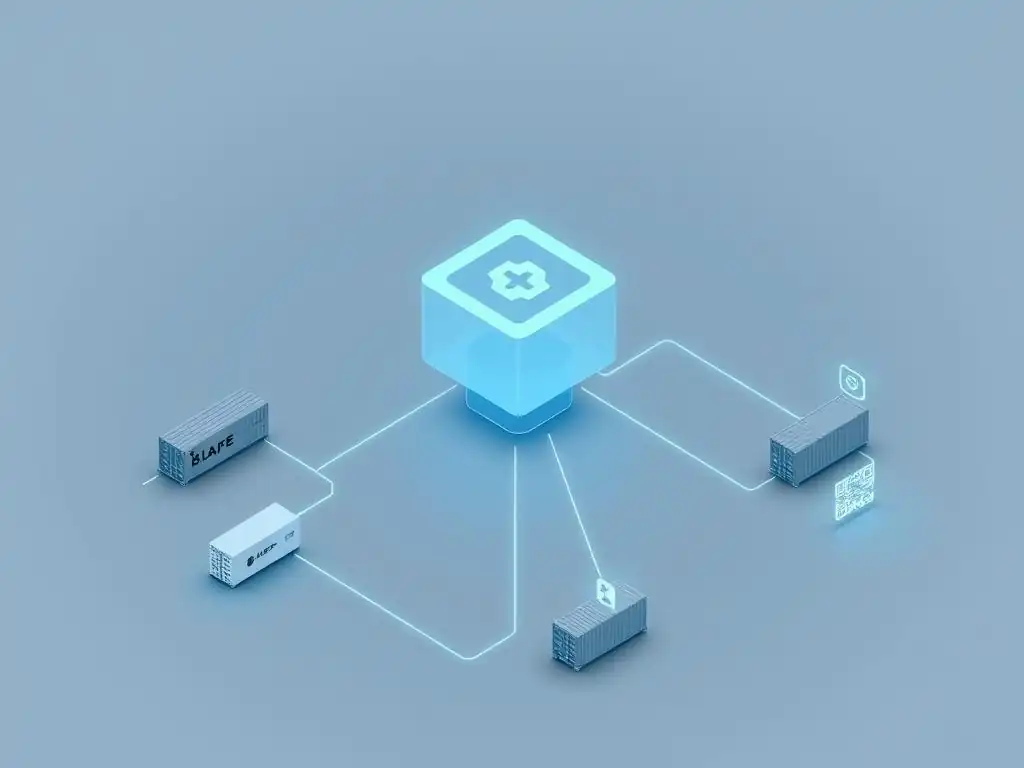
Adopting blockchain for supply chain data integrity is not merely a technology implementation; it requires careful planning, collaboration, and process re-engineering.
Identifying Critical Data Elements and Processes for Blockchain Integration
The first step is to identify which data points and processes within the supply chain are most critical for ensuring integrity, transparency, and efficiency. Not every piece of data needs to be on the blockchain. Focus on the key events and information that need to be trusted and verified by multiple parties, such as:
- Origin data (supplier, location, date)
- Manufacturing data (batch number, production date, quality checks)
- Logistics data (shipment tracking IDs, carrier, route, transfer of custody points)
- Certification data (compliance certificates, quality assurance results)
- Ownership changes (handover between partners)
- Condition monitoring data (temperature, humidity from IoT)
A thorough analysis of existing workflows and pain points will help pinpoint where blockchain can provide the most value in terms of Blockchain supply chain data integrity and overall efficiency.
Selecting the Appropriate Blockchain Platform [Permissioned vs. Permissionless]
Choosing the right blockchain platform is crucial. Permissionless blockchains (like public Ethereum or Bitcoin) are open to anyone, offer high decentralization, but can face scalability issues and lack privacy for commercially sensitive data. Permissioned blockchains (like Hyperledger Fabric, R3 Corda, or Quorum) restrict participation to known entities, offer greater transaction speed and scalability, allow for data privacy controls, and provide more governance options.
For most enterprise supply chain applications, permissioned blockchains are preferred. They allow companies to control who can join the network, define roles and permissions for data access and validation, and ensure privacy for sensitive business information while still leveraging the core benefits of immutability and shared truth. The choice will depend on the specific requirements for privacy, scalability, governance, and the level of trust required among participants.
Integrating Blockchain with Existing Enterprise Systems [ERP, WMS]
A blockchain implementation will rarely replace existing enterprise systems like ERP (Enterprise Resource Planning), WMS (Warehouse Management Systems), or TMS (Transportation Management Systems). Instead, it needs to integrate seamlessly with them. Data originating in these legacy systems (e.g., a shipment confirmation in a WMS) needs to be securely transferred and recorded on the blockchain, and conversely, data from the blockchain (e.g., verifiable proof of delivery) might need to be accessible within the ERP.
This integration typically involves using APIs (Application Programming Interfaces) and middleware to connect the blockchain platform with existing databases and applications. Careful planning is required to ensure data mapping is accurate, data flow is efficient, and the integrity of data is maintained during transfer between systems. The goal is to augment, not replace, existing operational systems with the trust and transparency layers provided by the blockchain.
Defining Data Governance Policies and Access Controls
Implementing blockchain requires establishing clear data governance policies. This includes defining who owns specific data, who is authorized to write data to the blockchain (e.g., only the entity performing a specific action like shipping goods), and who has permission to read different types of data. Not all participants in a supply chain network need access to all data.
Permissioned blockchains allow for granular access controls, enabling companies to define specific roles and permissions. For example, a regulator might have read-only access to specific compliance-related data, while a logistics provider might only be able to write data related to shipment tracking and delivery status. Establishing these policies upfront and managing identities and access within the network is critical for ensuring privacy, security, and effective collaboration while upholding Blockchain supply chain data integrity.
Addressing Challenges in Blockchain Implementation
While the potential benefits are significant, implementing blockchain in complex supply chains comes with its own set of challenges that need to be addressed proactively.
Overcoming Scalability and Throughput Limitations
Some blockchain architectures, particularly early public permissionless chains, have faced limitations in processing a high volume of transactions per second, which is a requirement for large-scale supply chains with millions of transactions daily.
Enterprise blockchain platforms (permissioned chains) are designed with higher throughput in mind, often achieving thousands of transactions per second by limiting participants and using more efficient consensus mechanisms suitable for known parties. Additionally, solutions like state channels or other layer-2 scaling techniques are being developed to handle off-chain transactions and only settle the final results on the main chain, further improving scalability for high-volume data flows common in supply chain operations.
The regulatory landscape surrounding blockchain technology is still developing and varies significantly across different countries and jurisdictions. Issues related to data privacy (e.g., GDPR in Europe), data residency, smart contract enforceability, and the legal status of digital assets recorded on a blockchain are subjects of ongoing discussion and regulation.
Businesses implementing blockchain solutions must stay informed about relevant regulations in all operating regions. Designing solutions with flexibility to adapt to future regulatory changes is important. In some cases, engaging with regulators early in the process can help clarify requirements and build solutions that are compliant from the outset.
Achieving Interoperability with Diverse Systems
Supply chains involve a multitude of participants using various legacy systems (ERP, WMS, TMS) and potentially different blockchain platforms as blockchain adoption grows. Ensuring that data can flow seamlessly between these disparate systems and even between different blockchain networks is a significant challenge.
Efforts are underway to develop standards and protocols for blockchain interoperability, allowing different ledgers to exchange data securely and reliably. While a universal standard is still some way off, designing solutions with open APIs and middleware that can connect to various systems and platforms is crucial for enabling true end-to-end visibility and collaboration across complex supply chain ecosystems.
Protecting Sensitive Data and Ensuring Privacy
While blockchain provides transparency, supply chain participants often have commercially sensitive data (e.g., pricing, customer lists, proprietary manufacturing processes) that they cannot expose to all network members. While transaction records on a blockchain are immutable, the data itself needs protection.
Permissioned blockchains offer features like private channels or sidechains where sensitive data can be shared only among specific authorized parties, while a hash of the transaction is recorded on the main chain for verification. Techniques like zero-knowledge proofs allow one party to prove that a statement is true (e.g., a product meets a certain quality standard) without revealing the underlying sensitive data.
Off-chain data storage with on-chain hashes is another approach, where the sensitive data is stored in a private database, and only a cryptographic link to it is placed on the blockchain to prove its existence and integrity at a certain point in time, thereby maintaining Blockchain supply chain data integrity without compromising privacy.
Case Studies: Real-World Blockchain Implementations in Supply Chains
Examining real-world examples provides tangible evidence of how blockchain is being successfully applied to enhance supply chain data integrity and deliver measurable benefits.
De Beers: Tracking Diamonds from Mine to Retail with Blockchain
De Beers, a leading diamond company, launched its Tracr platform, a blockchain-based system designed to track diamonds throughout their value chain, from rough stone to polished gem and sale. The luxury goods industry, particularly diamonds, faces challenges related to provenance, ethical sourcing ('blood diamonds'), and counterfeiting.
Tracr creates an immutable digital record for each registered diamond, recording its unique characteristics (carat weight, color, clarity, cut) and tracking its journey through sorting, cutting, polishing, certification, and retail. Participants in the diamond pipeline – including miners, manufacturers, traders, and retailers – record key events on the platform. The platform is designed to be permissioned, involving known and verified participants.
The benefits include enhanced trust among participants, increased transparency for consumers regarding a diamond's origin and authenticity, and improved efficiency in verifying compliance and provenance. As of late 2020/early 2021, De Beers reported that over a quarter of its rough diamond production by value was being tracked on the Tracr platform, demonstrating significant adoption.
Walmart: Enhancing Food Safety and Traceability with Blockchain
Walmart, one of the world's largest retailers, pioneered the use of blockchain for food safety and traceability, initially focusing on products like leafy greens. Food supply chains are notoriously complex, and in the event of a contamination outbreak, tracing the source of affected products quickly is critical to prevent further illness and execute targeted recalls. Traditional paper-based or disparate digital systems could take days or even weeks to trace a product back to its farm of origin.
Working with IBM Food Trust, a blockchain-based platform, Walmart implemented a system where suppliers, processors, distributors, and retailers record data points related to food items on a shared, permissioned ledger. This includes information about farm origin, processing facilities, shipping dates, and receiving locations.
In a well-documented pilot, Walmart demonstrated that tracing a package of sliced mangoes from store back to farm, which previously took about seven days, could be done in approximately two seconds using the blockchain system. This dramatic reduction in tracing time significantly improves response capabilities during food safety crises, saving time, reducing waste, and potentially saving lives, showcasing the power of Blockchain supply chain data integrity for public safety.
Future Trends in Blockchain and Supply Chain Data Security
The application of blockchain in supply chains is still evolving, with several key trends shaping its future impact on data security and efficiency.
Integration of IoT Devices for Real-Time Data Capture
The combination of Internet of Things (IoT) devices and blockchain holds immense potential for supply chain data integrity. IoT sensors can collect real-time data on product conditions (e.g., temperature, humidity for perishables, location tracking) and environmental factors automatically. Integrating these sensors with a blockchain platform allows this data to be recorded directly onto the immutable ledger as events occur, without manual intervention.
This creates a highly accurate, verifiable, and near real-time record of a product's journey and condition. For instance, in cold chain logistics for pharmaceuticals or food, temperature sensors can automatically log readings onto the blockchain, providing indisputable proof that goods were kept within the required temperature range throughout transit. This enhances transparency, reduces manual data entry errors, and provides a higher level of assurance regarding product quality and compliance.
Development of Blockchain-Based Supply Chain Finance Solutions
Blockchain's ability to provide a trusted, transparent record of transactions and events is paving the way for innovation in supply chain finance. Traditional supply chain finance relies heavily on paper documents and can be slow and inefficient, particularly for small and medium-sized enterprises (SMEs) who may struggle to access credit based on their invoices.
Blockchain platforms can facilitate the tokenization of assets like invoices and purchase orders, creating digital assets that can be easily traded and financed. Smart contracts can automate payment triggers based on verifiable delivery or quality check data recorded on the blockchain. This provides financiers with greater confidence in the underlying transactions, potentially lowering financing costs and increasing access to capital for suppliers, all built on the foundation of verifiable Blockchain supply chain data integrity.
The Role of Blockchain in Building More Sustainable Supply Chains
Increasingly, businesses and consumers are focused on the environmental and social impact of supply chains. Proving sustainability claims, such as ethical sourcing, reduced carbon footprint, or waste reduction, requires transparent and verifiable data throughout the value chain.
Blockchain can serve as a platform for tracking and verifying sustainability metrics. Data related to raw material origin, labor practices, energy consumption during manufacturing, transportation emissions, and waste disposal can be recorded on the blockchain. This provides an immutable audit trail that can be used to prove compliance with sustainability standards, support environmental certifications, and provide consumers with trustworthy information about the ethical and environmental profile of products. This verifiable data empowers businesses to build genuinely sustainable practices and communicate them credibly.
Conclusion: Building a More Secure and Efficient Supply Chain Future
The complexities and vulnerabilities of modern supply chains demand innovative solutions that can build trust, enhance transparency, and ensure the reliability of data. Traditional systems, with their fragmented databases and reliance on intermediaries, are increasingly insufficient to meet the demands for resilience, safety, and efficiency.
The Critical Role of Blockchain in Ensuring Data Integrity
Blockchain technology offers a fundamental shift in how supply chain data is managed. Its core principles of immutability, cryptographic security, and decentralized architecture create a shared, tamper-evident ledger that provides an unprecedented level of Blockchain supply chain data integrity. By recording key events and data points on the blockchain, businesses can create a verifiable history of products and transactions that is trusted by all authorized participants. This integrity is the foundation for enhanced traceability, improved collaboration, and mitigation of risks like counterfeiting and diversion.
Embracing Blockchain for a Future of Enhanced Resilience and Trust
Adopting blockchain is not without its challenges, requiring careful planning, integration with existing systems, and clear governance policies. However, the real-world successes demonstrated by companies like De Beers and Walmart highlight the tangible benefits that can be achieved. As the technology matures and integrates further with IoT and other digital tools, its potential to transform supply chains will only grow. Embracing blockchain technology is becoming increasingly essential for businesses looking to build more resilient, efficient, and trustworthy supply chains capable of navigating the complexities of the global market and meeting the evolving expectations of consumers and regulators.
Frequently Asked Questions
How does blockchain ensure data integrity in the supply chain?
Blockchain creates an immutable ledger, meaning that once data is recorded, it cannot be altered or deleted. This tamper-proof nature provides a transparent and auditable record of all transactions, ensuring data integrity.
What are the key benefits of using blockchain for supply chain data integrity?
Key benefits include enhanced transparency, improved traceability of products, and reduced risk of fraud. It also facilitates faster dispute resolution and increased efficiency across the supply chain.
What are some real-world applications of blockchain in supply chain management?
Examples include tracking food products from farm to table, verifying the authenticity of luxury goods, and managing pharmaceutical supplies to prevent counterfeiting. This provides end-to-end visibility and trust.
What are the main challenges to implementing blockchain in a supply chain?
Challenges include the need for standardization, the complexity of integrating with existing systems, and concerns about scalability and cost. Overcoming these requires careful planning and collaboration.
How is blockchain helping to improve regulatory compliance in supply chains?
Blockchain's transparent and auditable nature makes it easier to comply with regulations related to product origin, ethical sourcing, and environmental impact. It simplifies audits and provides verifiable proof of compliance.
Final Reflection: Embracing Trust in the Chain
The journey through the intricacies of blockchain and its application to supply chain data integrity reveals a profound truth: trust, once a fragile commodity, can now be systematically built and maintained. The potential for enhanced transparency, security, and efficiency is not merely theoretical; it's a tangible shift that promises to reshape how we understand and interact with global supply networks, impacting everything from the food we eat to the products we consume.
This exploration has underscored the transformative power of blockchain, not just as a technology, but as a catalyst for cultural and social change. The ability to verify the provenance and authenticity of goods, to trace their journey from origin to consumer, fosters a sense of accountability and responsibility that is sorely needed in today's interconnected world. The future of supply chains is not just about efficiency; it's about building trust and resilience.
This sentiment resonates deeply, highlighting the ethical imperative to leverage blockchain for a more equitable and sustainable future.
Now, as you consider the implications of an immutable ledger securing supply chains, I invite you to reflect on your own role in this evolving landscape. How can you, as a consumer, a business owner, or a policymaker, champion the adoption of blockchain to ensure greater transparency and accountability? The power to demand and create a more trustworthy world lies within our collective grasp. Let us embrace the potential of blockchain to build supply chains that are not only efficient but also ethical, sustainable, and ultimately, more human.
Unlock Supply Chain Transparency: Start Building Today!
Thank you for exploring how blockchain can transform data integrity in supply chains. You've gained valuable insights into leveraging this technology to enhance trust and efficiency. Are you ready to take the next step?
Here are some immediate actions you can take:
- Research permissioned blockchain platforms suitable for your supply chain needs. Look into options like Hyperledger Fabric and Corda to determine which best aligns with your goals. This is your primary action!
- Share this information with colleagues and your network to stimulate discussions about data integrity and the impact of blockchain in supply chain management.
- Identify at least three areas within your current supply chain processes where implementing blockchain could improve data security and traceability.
Which part of your supply chain will you explore first for blockchain integration? Share your ideas in the comments below!
Leave a Reply