
Luxury Goods and Blockchain: Authenticating Products and Protecting Brand Integrity

Welcome to Blockchain Trends, your compass in the evolving world of decentralized technologies!
Dive into the realm where blockchain transcends cryptocurrency, unlocking unparalleled opportunities across industries. Ever wondered how this revolutionary technology is safeguarding the integrity of high-end brands? Our latest article explores the luxury blockchain authentication benefits, revealing how this innovative approach is reshaping the future of product provenance and brand protection. Uncover the power of verifiable authenticity and the decentralized solutions driving trust in the luxury market. Ready to explore?
- Luxury Goods and Blockchain: Authenticating Products and Protecting Brand Integrity
- The Problem: Counterfeiting and Brand Erosion in the Luxury Market
- Blockchain Technology: A Solution for Luxury Goods Authentication
- Luxury Blockchain Authentication Benefits: Enhancing Trust and Transparency
- Implementing Blockchain for Luxury Goods: Practical Applications
- Different Blockchain Platforms for Luxury Authentication
- Overcoming Challenges in Blockchain Adoption for Luxury Brands
- The Future of Luxury Authentication: Blockchain and Beyond
- Conclusion: Securing the Future of Luxury with Blockchain Authentication
-
Frequently Asked Questions
- How does blockchain technology help authenticate luxury goods?
- What are the key luxury blockchain authentication benefits for luxury brands?
- What types of information are typically stored on the blockchain for luxury item authentication?
- How does blockchain authentication combat the problem of counterfeit luxury goods?
- What are some potential challenges in implementing blockchain authentication for luxury goods?
- Final Reflection: Embracing Trust in a World of Luxury
- Unveil the Future of Luxury: Become a Blockchain Advocate!
Luxury Goods and Blockchain: Authenticating Products and Protecting Brand Integrity
Introduction: The Growing Need for Luxury Blockchain Authentication
The global luxury goods market, valued at approximately €280 billion in 2023 according to Bain & Company, represents a significant segment of the global economy. However, this market is constantly battling a pervasive threat: counterfeiting. The proliferation of fake luxury items not only erodes brand value and trust but also poses substantial financial risks for companies and consumers alike. Traditional authentication methods, while useful, often struggle to keep pace with increasingly sophisticated counterfeit operations.
This challenge highlights the urgent need for more robust, transparent, and immutable authentication solutions. Blockchain technology, with its inherent properties of decentralization, transparency, and security, presents a compelling answer to this problem. By creating verifiable digital identities for physical luxury goods, blockchain offers a powerful mechanism to track provenance, verify authenticity, and protect brand integrity throughout the product lifecycle, delivering significant luxury blockchain authentication benefits.
The Problem: Counterfeiting and Brand Erosion in the Luxury Market
The Scale of the Counterfeit Luxury Goods Industry
The trade in counterfeit and pirated goods is a massive global enterprise, with conservative estimates placing its value in the hundreds of billions of dollars annually. A 2019 report by the OECD and EUIPO estimated that trade in fake goods accounted for 2.5% of world trade, reaching €464 billion. Luxury goods, including fashion, watches, jewelry, and leather goods, constitute a significant portion of this illegal trade. The sheer volume of counterfeit products circulating globally makes it incredibly difficult for brands and authorities to control the problem effectively through traditional means alone.
This vast scale means that counterfeit luxury items are not just found in illicit street markets but increasingly online and through sophisticated distribution networks. Consumers are often duped into purchasing fakes, sometimes unknowingly, which damages the brand's reputation for quality and exclusivity. The ease with which counterfeiters can replicate packaging, tags, and even serial numbers underscores the limitations of current authentication practices and the critical need for a more secure, digital layer of verification.
Brand Damage and Financial Losses Due to Counterfeits
Counterfeiting inflicts severe damage on luxury brands beyond just the lost sale of a genuine product. Reputational harm is significant; when a consumer unknowingly purchases a low-quality fake bearing a brand's logo, it diminishes their perception of the brand's craftsmanship, quality, and exclusivity. This can lead to a decline in customer loyalty and willingness to pay a premium for authentic items. The cost of repairing a damaged brand image through marketing campaigns and enhanced customer service can be substantial, potentially running into millions of dollars annually for major brands.
Financially, the losses are direct and indirect. Direct losses include the revenue from potential sales captured by counterfeiters. Indirect costs involve the expense of legal battles against infringers, investigations into counterfeit networks, the destruction of seized goods, and investment in anti-counterfeiting technologies. While precise figures are often proprietary, some estimates suggest that brands can lose upwards of 10-15% of potential revenue to counterfeiting in affected product lines. This underscores the imperative for effective luxury blockchain authentication benefits to safeguard revenue streams and brand equity.
Challenges in Traditional Authentication Methods
Traditional authentication methods for luxury goods have evolved over time but still face significant challenges in the digital age. Techniques such as holograms, special inks, security threads, and unique serial numbers printed on tags or embedded in products can be replicated by sophisticated counterfeiters. Even methods like RFID tags, while offering some level of digital tracking, can potentially be cloned or tampered with if the underlying data system is not secure and decentralized.
Furthermore, these methods often lack a unified, easily verifiable system accessible to both brands and consumers throughout the product's lifecycle. Verifying authenticity typically requires specialized knowledge, equipment, or reliance on the brand's own centralized database, which could theoretically be compromised. The lack of an immutable, transparent, and universally accessible record of a product's journey from creation to current ownership makes it difficult to definitively prove provenance and authenticity, leaving vulnerabilities that counterfeiters exploit.
Blockchain Technology: A Solution for Luxury Goods Authentication
How Blockchain Works for Supply Chain Transparency
Blockchain technology fundamentally works as a distributed ledger that records transactions across many computers. In the context of a luxury supply chain, each significant event in a product's journey – from the sourcing of raw materials, through manufacturing, quality control, shipping, distribution to retail, and even subsequent ownership changes – can be recorded as a transaction on the blockchain. These transactions are grouped into blocks, and each new block is cryptographically linked to the previous one, forming a chain.
This chain is shared across a network of participants (nodes), and for a new block to be added, a consensus mechanism ensures agreement among the participants. This decentralized and consensus-driven approach makes the ledger highly transparent among approved participants and incredibly difficult to alter retrospectively. For luxury goods, this means creating an unalterable, shared history for each item, visible to all relevant parties in the supply chain, thereby enhancing transparency from end to end.
Immutable Records and Enhanced Traceability with Blockchain
A core feature of blockchain that provides significant luxury blockchain authentication benefits is immutability. Once a transaction is recorded on the blockchain and a new block is added through the consensus process, it is practically impossible to change or delete that record without altering all subsequent blocks and gaining consensus from the majority of the network participants – a computationally infeasible task for a malicious actor in a well-designed system. This creates a permanent, tamper-proof history for every luxury item.
This immutability directly enhances traceability. By scanning a unique identifier linked to the blockchain record (like a QR code or NFC tag embedded in the product), anyone with permission (the brand, retailers, or even the consumer) can access the verifiable history of that specific item. They can see where it was made, when it was shipped, where it was sold, and potentially even past ownership records. This provides an unprecedented level of confidence in the product's provenance and authenticity, making it extremely difficult to introduce a counterfeit into the supply chain without the discrepancy being immediately flagged.
Smart Contracts for Automated Verification Processes
Smart contracts are self-executing contracts with the terms of the agreement directly written into code. They run on the blockchain and automatically execute predefined actions when specific conditions are met. In the luxury goods supply chain, smart contracts can automate and enforce authentication and tracking processes without the need for intermediaries, further enhancing luxury blockchain authentication benefits.
For example, a smart contract could be programmed to automatically release payment to a manufacturer only after the product's entry into the blockchain record at the next stage of the supply chain is verified. Another smart contract could trigger an alert if a product appears in a location or context that doesn't align with its recorded journey. This automation reduces manual checks, minimizes human error, and ensures that the rules governing the product's movement and authentication are strictly followed, adding another layer of security against counterfeiting and diversion.
Luxury Blockchain Authentication Benefits: Enhancing Trust and Transparency
Verifiable Product Provenance: Tracing the Origin of Luxury Items
One of the most compelling luxury blockchain authentication benefits is the ability to provide verifiable product provenance. For luxury goods, the origin and journey of an item are integral to its value and story. Blockchain allows brands to create a digital twin or identity for each product, linked to a unique physical marker. Every step, from the sourcing of rare materials (like ethically mined gold or specific types of leather) to the artisan's workshop, assembly line, and final packaging, can be recorded on the blockchain.
This creates a transparent and immutable ledger detailing the item's birth story and journey. Consumers can scan a tag on the product, access the blockchain record, and see the verifiable history, confirming that the item was indeed crafted by the brand in the specified location with the claimed materials. This level of detailed, trustworthy provenance information is impossible to fake with traditional methods and significantly builds confidence in the authenticity of the luxury item.
Preventing Counterfeiting with Blockchain's Security Features
Blockchain's inherent security features offer a robust defense against counterfeiting. The decentralized nature of the ledger means there is no single point of attack for hackers to alter records. The cryptographic linking of blocks ensures that any attempt to tamper with past records would be immediately detectable across the network. Each product's unique digital identity on the blockchain, tied to a secure physical marker, makes it incredibly difficult for counterfeiters to introduce fake items into the legitimate supply chain or create convincing duplicates with false provenance.
While counterfeiters might still copy the physical product, they cannot replicate or alter the immutable blockchain record associated with the genuine item. If a consumer or retailer scans a product and the identifier doesn't link to a valid, verifiable history on the blockchain, or if multiple items appear linked to the same unique identifier, it's an immediate red flag for a potential fake. This proactive detection mechanism is a significant advantage over reactive traditional methods.
Streamlining Supply Chain Management for Luxury Brands
Implementing blockchain for authentication also brings considerable luxury blockchain authentication benefits in streamlining supply chain management. The transparent and immutable record of each product's movement provides real-time visibility across the entire supply chain. Brands can track inventory more accurately, identify bottlenecks or delays more quickly, and verify the legitimate transfer of goods between parties.
This enhanced visibility reduces the need for manual checks and paperwork, decreasing administrative costs and improving efficiency. Furthermore, it helps in identifying points of diversion where genuine products might be siphoned off for unauthorized sales channels. A streamlined and transparent supply chain, underpinned by blockchain, leads to better inventory control, reduced losses from theft or error, and a more agile operation capable of responding quickly to market demands.
Building Customer Trust and Loyalty Through Authenticity
Ultimately, luxury is built on trust – trust in the brand's heritage, quality, and exclusivity. Counterfeiting erodes this trust. By leveraging blockchain for authentication, brands can directly address consumer concerns about fakes and build deeper loyalty. Providing customers with a simple, verifiable way to confirm the authenticity and provenance of their purchase empowers them and reinforces the value of owning a genuine luxury item.
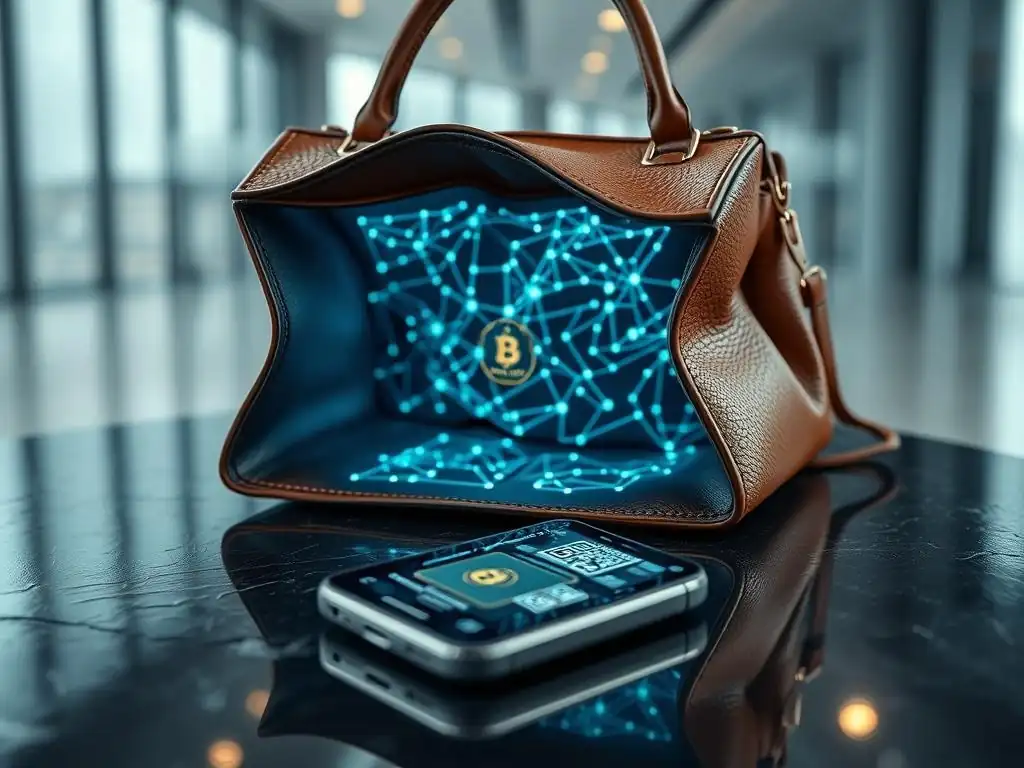
Imagine a customer scanning a QR code inside a handbag and instantly seeing a verifiable history of its creation, the materials used, and its journey to the store shelf. This level of transparency and assurance is a powerful differentiator. It transforms the authentication process from a technical check into a positive brand interaction, enhancing the customer experience and reinforcing the premium nature of the product. This transparency is a key luxury blockchain authentication benefit that translates directly into stronger customer relationships and enduring brand loyalty.
Implementing Blockchain for Luxury Goods: Practical Applications
Case Study: Arianee Protocol for Luxury Watch Authentication
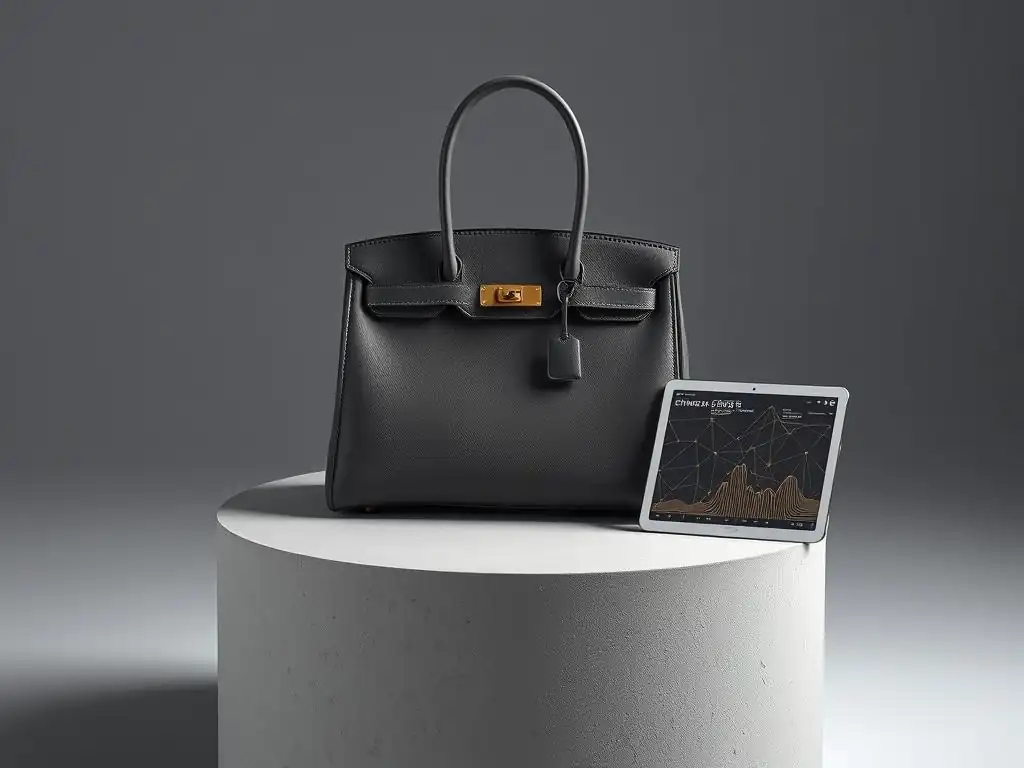
A notable example of blockchain implementation in the luxury sector is the Arianee protocol, specifically designed for creating digital identities for valuable goods. Several luxury brands, particularly in the watch industry, have piloted or adopted Arianee. Vacheron Constantin, a prestigious Swiss watchmaker, was an early adopter, issuing digital certificates of authenticity for some of its timepieces using the Arianee protocol.
This digital certificate, stored on the blockchain and linked to the physical watch via a unique marker, provides an immutable record of the watch's authenticity, warranty information, and potentially even service history. It simplifies the process of verifying ownership and authenticity during resale and provides the owner with a secure, transferable digital asset representing their physical watch. This real-world application demonstrates how blockchain can move beyond theoretical benefits to provide tangible luxury blockchain authentication benefits for both brands and consumers in high-value segments.
Building a Blockchain Consortium for Luxury Authentication
Given the shared challenge of counterfeiting, there is potential for luxury brands to collaborate on a shared blockchain infrastructure or consortium chain specifically for authentication. A consortium blockchain is permissioned, meaning only approved participants (the brands themselves, potentially authorized retailers, and certifiers) can operate nodes and validate transactions. This offers a balance between decentralization/security and control/privacy compared to a public chain.
Such a consortium could establish industry-wide standards for digital product identities and authentication protocols. Sharing infrastructure costs and pooling resources for development and management could make blockchain adoption more accessible, especially for smaller luxury brands. A unified platform could also provide consumers with a single point of verification across multiple brands, enhancing the user experience and reinforcing the legitimacy of the blockchain approach for luxury goods authentication industry-wide.
Integrating Blockchain with Existing Supply Chain Systems
Implementing blockchain does not necessarily require a complete overhaul of existing supply chain management (SCM) or enterprise resource planning (ERP) systems. Instead, blockchain platforms can be integrated with these legacy systems. APIs (Application Programming Interfaces) can be used to connect the SCM/ERP database, where operational data resides, with the blockchain ledger, where immutable records of key authentication points are stored.
For instance, when a product passes a quality control check in the SCM system, this event can trigger the creation of a corresponding transaction on the blockchain via an API call. Similarly, when a product is scanned at the point of sale, the POS system can query the blockchain via an API to verify its authenticity. This integration strategy allows brands to leverage the luxury blockchain authentication benefits without disrupting their established operational workflows, facilitating a smoother transition to blockchain-enabled authentication.
Different Blockchain Platforms for Luxury Authentication
Exploring Public vs. Private Blockchains for Luxury Goods
When considering blockchain for luxury goods authentication, brands face a choice between different types of blockchain platforms: public (permissionless) and private (permissioned, including consortiums). Public blockchains like Ethereum offer high transparency and decentralization, meaning anyone can participate and view transactions (though transaction details can be obfuscated). They are highly secure due to the large number of independent nodes. However, they can have variable transaction costs (gas fees), potentially slower transaction speeds depending on network congestion, and less control over who participates.
Private or consortium blockchains offer more control over the network participants and data visibility. Only approved entities can join and validate transactions. This can result in faster, cheaper transactions and enhanced privacy for sensitive supply chain data not directly related to public authentication. The trade-off is less decentralization and potentially less trust if the governing consortium is not perceived as neutral. For luxury goods, a consortium model often seems appealing as it allows brands to maintain control while collaborating on a shared, trusted ledger for authentication.
Considerations for Choosing the Right Blockchain Platform
Selecting the appropriate blockchain platform is crucial for successful implementation. Key considerations include the required level of transparency (should the public be able to verify authenticity, or only authorized parties? ), scalability needs (how many items need to be tracked? ), transaction costs, speed of transactions, ease of integration with existing systems, and data privacy requirements. The level of control desired over network governance and participation is also a major factor.
For public-facing authentication where consumers need to verify authenticity directly, a platform that supports public verification is necessary. For internal supply chain tracking and B2B authentication between manufacturers, distributors, and retailers, a permissioned chain might be more suitable for privacy and performance. The technical expertise available within the brand or through partners is also a practical consideration when evaluating different platforms and their development environments.
Comparing Ethereum, Hyperledger Fabric, and Corda for Luxury Authentication
Several blockchain platforms are technically capable of supporting luxury goods authentication, each with different strengths.
- Ethereum: A leading public blockchain platform known for its smart contract functionality. It's suitable for creating public, verifiable digital certificates and NFTs linked to luxury items. Its large developer community is a plus. However, public network congestion can lead to high gas fees and variable transaction times, although Layer 2 scaling solutions are addressing this.
- Hyperledger Fabric: An open-source, permissioned blockchain framework often used for enterprise applications. It allows for private transactions between specific parties and offers fine-grained access control, making it suitable for consortiums or private supply chain tracking where not all data should be public. It provides high transaction throughput and low latency, but requires a permissioned network setup.
- Corda: Designed specifically for regulated industries and complex transactions between businesses. It focuses on privacy, with transactions shared only with parties who need to know. While perhaps less commonly cited for pure luxury authentication than Fabric or Ethereum, its emphasis on privacy and direct interactions between participants could be relevant for certain high-value, discreet transactions or supply chain steps.
The choice among these or other platforms would depend on the specific luxury blockchain authentication benefits a brand prioritizes, such as public verifiability (Ethereum), private consortium collaboration (Hyperledger Fabric), or highly regulated, private B2B interactions (Corda).
Overcoming Challenges in Blockchain Adoption for Luxury Brands
Addressing Data Privacy Concerns
While blockchain offers transparency, luxury brands handle highly sensitive data, including proprietary supply chain details, customer information, and sales figures. Storing all this data on a blockchain, especially a public one, raises significant privacy concerns. It is crucial to design blockchain solutions for luxury goods authentication that balance transparency with privacy.
This can be achieved by storing only essential, non-sensitive data points on the public or shared ledger, such as a unique product ID, a timestamp of a key event (e.g., 'manufactured', 'shipped', 'sold'), and a cryptographic hash of more detailed, off-chain data. Sensitive information can remain in private databases, with the blockchain record serving as an immutable pointer or proof of the event's occurrence without revealing the underlying details. Techniques like zero-knowledge proofs can also allow verification of data validity on the blockchain without revealing the data itself.
Ensuring Scalability and Interoperability
Luxury brands produce thousands to millions of items annually, each potentially requiring a unique digital identity and multiple blockchain transactions throughout its lifecycle. The chosen blockchain platform must be able to handle this volume of transactions efficiently and cost-effectively. Scalability is therefore a critical consideration, particularly for high-volume product lines.
Interoperability, the ability of different blockchain networks and existing IT systems to communicate and share data, is also important. A brand might use one blockchain for supply chain tracking and another for customer-facing authentication or secondary market provenance. Ensuring these systems can interact smoothly is necessary for a seamless end-to-end solution. Solutions include choosing platforms designed for high throughput, utilizing Layer 2 scaling solutions on public chains, and implementing robust API layers for integration with legacy systems.
Educating Stakeholders on Blockchain Technology
One of the primary hurdles to blockchain adoption is a lack of understanding among stakeholders within luxury organizations, from management and marketing teams to supply chain personnel and retail staff. Explaining how blockchain works, its specific luxury blockchain authentication benefits, and how it differs from traditional databases or security measures requires significant effort.
Effective education and training programs are essential to ensure buy-in and proper implementation. This includes explaining the technology in non-technical terms, demonstrating its practical applications through pilot programs, and highlighting the value proposition – how it directly addresses the problems of counterfeiting, enhances brand value, and improves customer trust. Overcoming this knowledge gap is vital for successful adoption and realizing the full potential of blockchain in the luxury sector.
The Future of Luxury Authentication: Blockchain and Beyond
The Role of NFTs in Verifying Ownership and Authenticity
Non-Fungible Tokens (NFTs) are unique digital assets recorded on a blockchain, most commonly on Ethereum. Because each NFT is unique and verifiable, they are increasingly being explored by luxury brands to represent ownership and authenticity of physical goods. An NFT can be created as a digital certificate linked to a specific luxury item. When the physical item is sold, the associated NFT can be transferred to the new owner's digital wallet.
This NFT serves as a secure, blockchain-verified proof of ownership and authenticity that is difficult to counterfeit or lose, unlike paper certificates. It can also store data about the item's history, warranty, and even unlock exclusive digital content or experiences for the owner. Using NFTs leverages blockchain's power to create unique, verifiable digital twins, adding another layer to luxury blockchain authentication benefits, particularly in the secondary market where verifying authenticity and ownership is critical.
Integrating Blockchain with IoT for Enhanced Tracking
Integrating blockchain with Internet of Things (IoT) devices can provide even richer, automated data for luxury goods authentication and tracking. IoT sensors (e.g., temperature, humidity, location trackers) can be embedded in packaging or even the product itself (for certain items like high-value art or specific accessories) during transit.
These sensors can automatically record environmental conditions or location data. This data can then be fed directly onto the blockchain, creating an automated, verifiable log of the product's journey and handling conditions. This combination of IoT data and blockchain immutability enhances transparency and provides stronger evidence of the product's condition and legitimate path through the supply chain, further strengthening luxury blockchain authentication benefits and preventing tampering or diversion.
The Potential of Decentralized Autonomous Organizations (DAOs) in Luxury Brand Governance
While still an emerging concept for physical goods, Decentralized Autonomous Organizations (DAOs) could potentially play a role in the future governance of luxury brand authentication consortiums or even aspects of brand management. A DAO is an organization represented by rules encoded as a transparent computer program, controlled by the organization members, and not influenced by a central government.
In a luxury authentication context, a DAO could potentially govern the standards for adding new brands to a consortium, voting on protocol upgrades, or managing shared resources for verifying authenticity. While full DAO governance might be distant, the principles of decentralized decision-making and transparent rules could inform the structure of future luxury blockchain authentication initiatives, ensuring fairness and trust among participating brands and stakeholders.
Conclusion: Securing the Future of Luxury with Blockchain Authentication
Key Takeaways: Luxury Blockchain Authentication Benefits and Implementation
The luxury industry faces a significant threat from counterfeiting, which erodes brand value, causes substantial financial losses, and undermines customer trust. Traditional authentication methods are increasingly inadequate against sophisticated counterfeit operations. Blockchain technology offers a powerful, modern solution. The key luxury blockchain authentication benefits include providing verifiable product provenance, robustly preventing counterfeiting through immutable records, streamlining supply chain management with enhanced transparency, and ultimately building deeper customer trust and loyalty.
Implementing blockchain requires careful consideration of platform choice (public vs. private), addressing data privacy, ensuring scalability and interoperability with existing systems, and educating all stakeholders. Real-world examples like the Arianee protocol demonstrate successful applications. The future holds further potential with the integration of NFTs for ownership verification and IoT for enhanced tracking, potentially governed by more decentralized structures.
The Long-Term Impact of Blockchain on the Luxury Goods Market
The long-term impact of blockchain on the luxury goods market is poised to be transformative. By providing a secure, transparent, and immutable layer of authentication, blockchain can fundamentally change how luxury products are verified, tracked, and valued. It has the potential to significantly reduce the prevalence of counterfeits, protecting brand integrity and revenue streams.
Moreover, blockchain-enabled authentication can unlock new opportunities in the secondary market for luxury goods, enabling trusted resale and potentially increasing the lifecycle value of products. As consumers become more aware and demanding of transparency and authenticity, brands that successfully implement blockchain solutions will be better positioned to meet these expectations, reinforce their exclusivity, and secure their position in an increasingly digital and discerning global market. The adoption of blockchain is not just about technology; it's about preserving the essence of luxury in the 21st century.
Frequently Asked Questions
How does blockchain technology help authenticate luxury goods?
Blockchain creates a tamper-proof ledger where each product's unique information is recorded. This allows consumers to verify authenticity by tracing the product's journey from origin to purchase, significantly reducing counterfeiting.
What are the key luxury blockchain authentication benefits for luxury brands?
Luxury blockchain authentication benefits include enhanced brand reputation, increased customer trust, and a more robust supply chain. Brands can also gain valuable data insights into product distribution and customer behavior.
What types of information are typically stored on the blockchain for luxury item authentication?
Information stored on the blockchain often includes the product's origin, manufacturing details, ownership history, and any relevant certifications. This comprehensive data record provides strong evidence of authenticity.
How does blockchain authentication combat the problem of counterfeit luxury goods?
By providing a transparent and immutable record of a product's lifecycle, blockchain makes it incredibly difficult for counterfeiters to introduce fake items into the supply chain. Verifying authenticity becomes simple and reliable.
What are some potential challenges in implementing blockchain authentication for luxury goods?
Challenges include the cost of implementation, the need for industry-wide adoption, and ensuring data privacy. Overcoming these hurdles is crucial to realize the full potential of blockchain authentication.
Final Reflection: Embracing Trust in a World of Luxury
The journey of luxury goods, from creation to consumer, has always been shrouded in exclusivity and trust. Today, however, that trust is increasingly challenged by counterfeiting and a lack of transparency. Blockchain technology offers a powerful solution, not just for authenticating products, but for fundamentally reshaping the relationship between brands and their customers. This is more than just a technological upgrade; it's a paradigm shift towards verifiable provenance and unwavering brand integrity in a world demanding authenticity.
The impact of blockchain on the luxury market extends far beyond simply verifying a product's origin. It's about fostering a deeper connection with the consumer, empowering them with knowledge and assurance, and ultimately, preserving the value and prestige associated with luxury brands. This shift is crucial in an era where consumers are increasingly discerning and demand ethical and transparent practices. Trust is the new currency,
as Brian Solis aptly puts it, and blockchain provides the infrastructure to earn and maintain that trust in the luxury sector.
As we look to the future, the integration of blockchain into the luxury industry is poised to revolutionize how we perceive and interact with these coveted items. It's an invitation to reflect on the value we place on authenticity, transparency, and the stories behind the products we cherish. Consider how you, as a consumer, can demand greater transparency and support brands that embrace innovative solutions like blockchain to safeguard their integrity and your trust. Let us all strive to be more informed and conscious consumers, contributing to a future where luxury is synonymous with authenticity and ethical practices.
Unveil the Future of Luxury: Become a Blockchain Advocate!
Thank you for exploring the world of luxury authentication with us. Now that you understand how blockchain technology is transforming product verification and safeguarding brand integrity, it’s time to take action!
- Champion Transparency: Engage with your favorite luxury brands about their current authentication methods and encourage them to consider blockchain solutions to enhance security and build consumer trust.
- Share this article with fellow luxury enthusiasts, blockchain professionals, and industry insiders to foster a wider discussion on digital verification.
- Explore more applications of blockchain technology beyond luxury goods, such as supply chain management and digital identity solutions.
What steps will you take to inspire luxury brands to adopt the secure future of blockchain authentication? Share your thoughts in the comments below!
Leave a Reply