
The Metaverse Real Estate Boom: How Blockchain is Powering Virtual Land Ownership

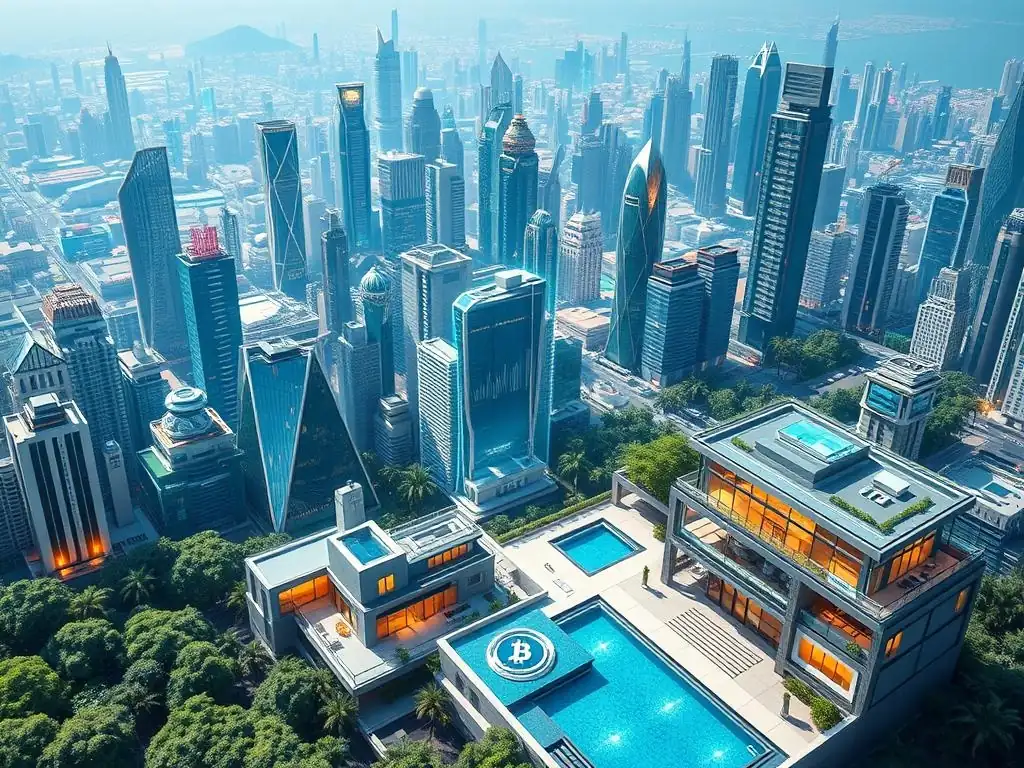
Welcome to Blockchain Trends, your guide to understanding the revolutionary impact of blockchain technology. Are you ready to unlock the secrets of virtual land ownership? Discover how blockchain metaverse real estate investment is shaping the future of digital assets and enterprise solutions. Dive in to explore the booming metaverse real estate market and uncover the strategies driving this exciting new frontier!
The Metaverse Real Estate Boom: How Blockchain is Powering Virtual Land Ownership
- Introduction: Understanding the Metaverse Real Estate Landscape
- Blockchain's Impact on Metaverse Real Estate
- Investing in Metaverse Real Estate: Opportunities and Risks
- How to Buy Metaverse Real Estate Using Blockchain
- The Future of Blockchain Metaverse Real Estate
- Blockchain and the Democratization of Real Estate Investment
- Case Studies: Successful Blockchain Metaverse Real Estate Projects
- Navigating the Legal and Regulatory Landscape of Metaverse Real Estate
- Conclusion: Blockchain as the Foundation for the Future of Real Estate in the Metaverse
-
Frequently Asked Questions
- How is blockchain technology facilitating real estate transactions in the metaverse?
- What are the potential benefits of investing in blockchain metaverse real estate?
- What are the risks associated with investing in blockchain metaverse real estate?
- How does DeFi integrate with blockchain metaverse real estate investment?
- What are the regulatory challenges facing blockchain metaverse real estate investment?
- Final Reflection: Building Tomorrow's Worlds, Today
- Ignite Your Metaverse Land Rush!
Introduction: Understanding the Metaverse Real Estate Landscape
What is Metaverse Real Estate and Why is it Booming?
Metaverse real estate refers to parcels of digital land within virtual worlds, platforms like Decentraland, The Sandbox, or Somnium Space. Unlike traditional video game assets, this virtual land is typically scarce, fixed in size, and owned outright by users, often represented as Non-Fungible Tokens (NFTs).
The boom in this sector is driven by several factors, including the increasing cultural prominence of the metaverse concept, the potential for virtual land to host experiences, events, and businesses, and the speculative nature of early-stage digital asset markets. Major brands like Adidas, Gucci, and JP Morgan have acquired virtual land, signaling corporate interest and validating the space.
The value of metaverse real estate has seen dramatic increases. For instance, in late 2021, reports indicated that virtual land sales across major platforms surpassed $100 million in a single week. While market activity fluctuates, specific prime locations within these virtual worlds have fetched prices comparable to or exceeding physical real estate in certain areas.
A parcel in Decentraland's Fashion Street, for example, sold for approximately $2.43 million in November 2021, intended for virtual fashion events and commerce. This surge is fueled by the belief that these digital spaces will become hubs for future social, economic, and creative interactions, making virtual land a valuable digital asset for blockchain metaverse real estate investment.
The Role of Blockchain Technology in Virtual Land Ownership
Blockchain technology is not merely incidental to metaverse real estate; it is fundamental to its existence and value proposition. At its core, blockchain provides a decentralized, transparent, and immutable ledger that records ownership. In the context of virtual land, this means that when a user purchases a parcel, the transaction and subsequent ownership record are stored on a public blockchain, typically Ethereum, but increasingly on others like Polygon or Flow. This verifiable record prevents disputes over ownership and eliminates the need for a central authority to manage land titles.
The use of blockchain, specifically through NFTs, ensures that each parcel of virtual land is unique, verifiable, and scarce, mirroring some aspects of physical land. Each NFT represents a specific, non-interchangeable digital asset corresponding to a coordinate or plot within the metaverse. This digital certificate of authenticity and ownership is crucial for establishing trust and enabling a free market for buying, selling, and trading these virtual properties. Without blockchain, virtual land would likely remain a database entry controlled by a single company, lacking the true ownership, portability, and investment potential that drives the current blockchain metaverse real estate market.
Blockchain's Impact on Metaverse Real Estate
Secure and Transparent Land Ownership via NFTs
Non-Fungible Tokens (NFTs) are the primary mechanism through which blockchain technology enables secure and transparent ownership of metaverse real estate. Each piece of virtual land, whether a parcel in Decentraland, LAND in The Sandbox, or a domain in Somnium Space, is minted as a unique NFT on a blockchain. This NFT serves as a digital deed, containing metadata that specifies the land's location, dimensions, and potentially other attributes within the virtual world. Because the NFT exists on a public ledger like Ethereum, its ownership history is fully transparent and verifiable by anyone, anywhere in the world.
This transparency and security provided by NFTs are paramount. Unlike traditional digital assets within games, which are controlled by game developers and can be deleted or altered at their discretion, an NFT representing virtual land is owned by the user's wallet address on the blockchain.
This means the user has direct control over the asset and its transfer, independent of the metaverse platform itself (though the utility of the land is tied to the platform). The immutability of the blockchain ensures that once the NFT is recorded, the ownership cannot be fraudulently altered or erased, providing a high level of security for blockchain metaverse real estate investment.
Decentralized Marketplaces for Virtual Property Trading
Blockchain technology has facilitated the rise of decentralized marketplaces, which are essential for the liquidity and trading of metaverse real estate. Platforms like OpenSea, Rarible, and specific metaverse-native marketplaces (e.g., Decentraland Marketplace, The Sandbox Marketplace) allow users to list, browse, bid on, and purchase virtual land NFTs directly from other users. These marketplaces operate on blockchain principles, enabling peer-to-peer transactions without requiring a traditional real estate agent or centralized escrow service.
These decentralized platforms leverage smart contracts to automate the transaction process. When a buyer agrees to a seller's price, the smart contract facilitates the exchange of cryptocurrency (like ETH, MANA, or SAND) for the land NFT simultaneously and securely. This reduces transaction costs, increases speed, and operates 24/7 globally. The transparency of blockchain also means that sales data, including price history, is often publicly available on these marketplaces and block explorers, providing valuable insights for potential blockchain metaverse real estate investment decisions.
Smart Contracts for Metaverse Real Estate Transactions
Smart contracts are self-executing contracts with the terms of the agreement directly written into code. Hosted on the blockchain, they automatically enforce the rules of a transaction when predefined conditions are met. In the context of metaverse real estate, smart contracts are integral to the buying, selling, and transfer of virtual land NFTs. When a buyer initiates a purchase on a decentralized marketplace, a smart contract is triggered. This contract holds the buyer's payment and the seller's NFT in escrow.
Upon verification that both assets are present and the agreed-upon price is met, the smart contract automatically executes the transfer: the cryptocurrency goes to the seller's wallet, and the land NFT is transferred to the buyer's wallet. This process eliminates counterparty risk, as neither party needs to trust the other or a third-party intermediary to fulfill their side of the bargain. Smart contracts can also govern more complex arrangements, such as rentals, fractional ownership, or even automated payments based on activity occurring on the virtual land, further expanding the possibilities for blockchain metaverse real estate investment.
Investing in Metaverse Real Estate: Opportunities and Risks
Exploring Different Metaverse Platforms for Real Estate Investment (Decentraland, The Sandbox, Somnium Space)
Several prominent platforms offer opportunities for blockchain metaverse real estate investment, each with its own characteristics and ecosystem. Decentraland, launched in 2020, is one of the earliest and most established decentralized metaverses. Its virtual land is called PARCELs, governed by the Decentraland DAO using the MANA token. PARCELs are finite (around 90,000), and their value is often tied to location (e.g., near Genesis Plaza or popular districts) and the experiences built on them.
The Sandbox, built on Ethereum, features LAND parcels, totaling 166,464 plots. It focuses heavily on user-generated content, allowing creators to build games and assets using its Game Maker and VoxEdit tools, monetized using the SAND token. LAND value is influenced by its proximity to popular estates or celebrity landowners. Somnium Space, another player, emphasizes VR integration and customization, offering different parcel sizes (Small, Medium, Large) and a limited supply on the Ethereum blockchain. Investors often choose platforms based on their community, development tools, economic model, and perceived future growth potential when considering blockchain metaverse real estate investment.
Evaluating the Potential ROI of Blockchain Metaverse Real Estate Investment
Evaluating the potential Return on Investment (ROI) for blockchain metaverse real estate investment involves considering factors similar to physical property, but with unique digital twists. Location is crucial; land parcels near popular areas, event venues, or roads within the metaverse often command higher prices due to potential for higher 'foot traffic' (avatar visits) and visibility for businesses or experiences built there. The utility of the land is also key – can it host events, games, stores, or generate passive income through rentals or advertising?
Analyzing market data, such as average sale prices over time, transaction volume, and the price floor (lowest available price) for land on a specific platform, can provide insights into market trends. For instance, the average price of LAND in The Sandbox saw significant appreciation throughout 2021, peaking before a market correction.
Projecting ROI requires assessing the platform's user growth, development roadmap, partnerships, and the overall health of the crypto and NFT markets. While some early investors saw exponential gains (e.g., turning a few thousand dollars into millions), future ROI will depend on the maturity of the platforms and the successful execution of their visions, making careful due diligence essential for blockchain metaverse real estate investment.
Understanding the Risks Associated with Virtual Land Ownership
Investing in blockchain metaverse real estate comes with significant risks that investors must understand. Market volatility is perhaps the most prominent; the value of virtual land NFTs is closely tied to the volatile cryptocurrency and NFT markets, and prices can drop sharply and quickly. Platform risk is also a concern; the success and continued existence of a metaverse platform are not guaranteed. Changes in platform policies, technology issues, or even platform shutdown could severely impact the value or utility of owned virtual land.
Security risks, while mitigated by blockchain itself, still exist at the user level. If a user's cryptocurrency wallet holding their land NFTs is compromised (e.g., through phishing or malware), the assets can be stolen with little recourse due to the irreversible nature of blockchain transactions.
Regulatory uncertainty is another factor; governments worldwide are still grappling with how to classify and regulate digital assets, including virtual land, which could lead to unforeseen taxes or restrictions. Liquidity can also be an issue; selling a specific, unique parcel of virtual land might take time, especially in a less active market, making blockchain metaverse real estate investment potentially illiquid compared to other asset classes.
How to Buy Metaverse Real Estate Using Blockchain
Setting Up a Cryptocurrency Wallet for Metaverse Transactions
The first step in purchasing blockchain metaverse real estate is setting up a compatible cryptocurrency wallet. This wallet will securely store the cryptocurrency needed for the purchase and the NFT representing the virtual land. Wallets like MetaMask, Coinbase Wallet, and Trust Wallet are popular choices, often supporting Ethereum and other networks where metaverse platforms reside. The process typically involves downloading a browser extension or mobile app, creating a new wallet, and securely storing a seed phrase (a list of words that acts as a master key to the wallet).
Once the wallet is set up, it needs to be funded with the appropriate cryptocurrency. Most metaverse land sales or marketplace transactions are conducted using Ether (ETH) or the specific platform's native token (e.g., MANA for Decentraland, SAND for The Sandbox). Users can acquire these cryptocurrencies by purchasing them on centralized exchanges like Coinbase or Binance and then withdrawing them to their newly created wallet address. Ensuring the wallet is connected to the correct blockchain network (e.g., Ethereum Mainnet or Polygon) is crucial before attempting any blockchain metaverse real estate investment transactions.
With a funded wallet, the next step is to navigate the marketplaces where metaverse real estate is bought and sold. These can be native marketplaces run by the metaverse platform itself or third-party NFT marketplaces like OpenSea. To begin, users need to connect their cryptocurrency wallet to the marketplace website. This is typically done by clicking a "Connect Wallet" button and approving the connection request from the wallet application. Once connected, the marketplace can read the wallet's address but cannot access funds without explicit transaction approval from the user.
Users can then browse available virtual land parcels, often using filters for platform, price, location, size, and features. Detailed pages for each land NFT display information such as its coordinates, current owner, price history, and sometimes visual representations within the metaverse. Prospective buyers can compare properties, examine their proximity to landmarks or roads, and evaluate the asking price relative to recent sales data. Understanding the layout and popular areas of a specific metaverse platform is key to making informed decisions when navigating for blockchain metaverse real estate investment.
Purchasing Virtual Land: NFT Minting and Acquisition
Purchasing virtual land on a marketplace involves interacting with the blockchain via the connected wallet. If buying land on the secondary market (from another user), the process is typically a direct sale or an auction. For a direct sale, the buyer clicks 'Buy Now' and their wallet prompts them to confirm the transaction. This involves reviewing the details (asset, price, fees) and approving the transfer of cryptocurrency from their wallet and the transfer of the NFT to their wallet address.
In some cases, particularly during initial land sales or 'drops' by the platform developers, land might be acquired through 'minting'. Minting is the process of creating a new NFT on the blockchain.
Users pay a fee (often in the platform's native token or ETH) plus blockchain network fees (gas) to mint a new, previously unowned parcel of land, which is then transferred directly to their wallet. Whether buying on the secondary market or participating in a mint, the final step involves waiting for the transaction to be processed and confirmed by the blockchain network, at which point the virtual land NFT appears in the buyer's wallet, completing the blockchain metaverse real estate investment.
The Future of Blockchain Metaverse Real Estate

The Evolution of Virtual Land Valuation and Appraisal
As the blockchain metaverse real estate market matures, the methods for valuing and appraising virtual land are evolving beyond simple speculation and location heuristics. Future valuations will likely incorporate more sophisticated data analytics, taking into account factors such as actual avatar traffic to a location, the revenue generated by experiences hosted on the land, the quality and complexity of builds, and even external data related to events or partnerships associated with the property. Automated appraisal tools, potentially leveraging AI and machine learning trained on historical sales data and platform activity, could emerge.
Furthermore, the concept of 'utility' will become increasingly central to valuation. Land parcels that can host profitable businesses, popular social hubs, or engaging games will inherently be more valuable than empty plots. Metrics like dwell time, number of unique visitors, and transaction volume occurring on a property could become standard indicators of its economic value. The transparency of blockchain transactions provides a rich dataset for developing these advanced valuation models, moving blockchain metaverse real estate investment from pure speculation towards a more data-driven asset class.
Blockchain-Based Governance in Metaverse Real Estate
Blockchain's inherent support for decentralized governance models, often through Decentralized Autonomous Organizations (DAOs), is set to play a significant role in the future of metaverse real estate. Platforms like Decentraland already empower landowners (holders of PARCEL NFTs) and token holders (MANA) to vote on key decisions regarding the platform's development, policies, and even the allocation of treasury funds. This allows the community that owns the virtual land to have a direct say in the environment where their assets reside.
In the future, blockchain-based governance could extend to more granular control over virtual land. Landowners might vote on zoning laws within specific districts, approve or reject major developments, or decide on shared resources and fees. This decentralized control contrasts sharply with traditional online worlds governed by a single company. It aligns the incentives of the platform developers with those of the landowners and users, potentially fostering a more stable and community-driven ecosystem for blockchain metaverse real estate investment.
The Convergence of Physical and Virtual Real Estate Through Blockchain
A fascinating future trajectory for blockchain metaverse real estate is its convergence with physical real estate. Blockchain technology, particularly NFTs, can serve as the bridge between these two worlds. Imagine owning a physical property that is tokenized on a blockchain, and simultaneously owning a corresponding virtual twin of that property in the metaverse, also represented by an NFT. This virtual twin could be used for digital experiences, marketing, or even generating revenue streams linked to the physical location.
This convergence could manifest in various ways: using virtual land to showcase architectural plans for physical buildings, hosting virtual tours of real-world properties, or using augmented reality (AR) layers on physical locations that are tied to owned virtual land. For example, an AR filter triggered at a physical address could display content hosted on the corresponding metaverse land parcel. This blending of digital and physical through blockchain could unlock entirely new use cases and investment models, creating a hybrid asset class for blockchain metaverse real estate investment that spans both realities.
Blockchain and the Democratization of Real Estate Investment
Fractional Ownership of Metaverse Land via Blockchain
One of the significant barriers to traditional real estate investment is the high capital requirement. Blockchain technology, however, enables fractional ownership of assets, including metaverse real estate. This is achieved by 'tokenizing' a single virtual land NFT into multiple smaller, fungible tokens. For example, a valuable parcel of land represented by one NFT could be split into 1,000 or more smaller tokens, each representing a fraction of ownership.
Platforms and protocols are emerging that facilitate this process, allowing investors to buy small stakes in premium virtual properties without needing to purchase the entire NFT. This significantly lowers the entry barrier, enabling individuals with limited capital to participate in blockchain metaverse real estate investment and potentially benefit from the appreciation of valuable digital assets. Fractional ownership increases accessibility and liquidity for high-value virtual properties that might otherwise be too expensive for individual buyers.
Lowering Barriers to Entry in Real Estate Investment
Beyond fractional ownership, blockchain inherently lowers several other barriers to entry in real estate investment, both virtual and potentially physical in the future. Traditional real estate transactions involve numerous intermediaries – agents, lawyers, banks, title companies – each adding costs and complexity. Metaverse real estate transactions on the blockchain, facilitated by smart contracts and decentralized marketplaces, are often more direct, faster, and involve lower transaction fees (primarily blockchain gas fees and marketplace commissions).
Furthermore, blockchain enables truly global access. Anyone with an internet connection and a cryptocurrency wallet can browse, buy, and sell metaverse real estate, regardless of their geographical location or citizenship. This contrasts with physical real estate, which is tied to local regulations and requires navigating complex international laws for foreign investors. This global accessibility and reduced friction make blockchain metaverse real estate investment a more democratic opportunity compared to traditional property markets.
Creating New Revenue Streams for Landowners
Owning virtual land in the metaverse opens up entirely new avenues for generating revenue that are distinct from traditional physical property. Unlike vacant physical land which often incurs costs (taxes, maintenance) without generating income until developed or sold, virtual land can become an active income-generating asset almost immediately. Landowners can build experiences on their parcels – games, art galleries, concert venues, virtual stores – and charge users for access, sell digital goods, or host events.
Advertising is another significant revenue stream; brands are willing to pay for visibility in high-traffic metaverse locations, allowing landowners to rent out digital billboard space or host sponsored experiences. Landowners can also rent out their undeveloped land to others for building or events, similar to physical property rentals but managed via smart contracts. The creativity inherent in the metaverse allows for diverse monetization strategies, offering compelling potential returns for blockchain metaverse real estate investment beyond simple asset appreciation.
Case Studies: Successful Blockchain Metaverse Real Estate Projects
Analyzing High-Profile Virtual Land Sales and Developments (Republic Realm's Islands, Metaverse Group's Fashion District Land)
Several high-profile sales and developments have underscored the value and potential of blockchain metaverse real estate investment. In December 2021, Republic Realm, a digital real estate investment firm, purchased a large estate of 100 private islands in The Sandbox for approximately $4.3 million. This acquisition was notable not just for the price but for the scale, indicating institutional interest in developing significant virtual land holdings for future projects, potentially including luxury villas or unique experiences only accessible on these digital islands.
Another landmark transaction occurred in November 2021 when Metaverse Group, a subsidiary of Tokens.com, acquired a parcel of land in Decentraland's Fashion Street district for roughly $2.43 million. The strategic location, intended to be a hub for virtual fashion events and commerce, highlighted the importance of digital location and planned utility in driving value. These sales, widely reported, brought mainstream attention to the sector and demonstrated the willingness of investors to commit substantial capital to specific, high-potential blockchain metaverse real estate assets.
Examining the Impact of Blockchain on Real Estate Value
Blockchain technology has fundamentally impacted the concept of value in virtual real estate by providing verifiable ownership and scarcity. Before blockchain and NFTs, digital assets could be easily copied or controlled by a single entity. The introduction of NFTs ensures that a parcel of virtual land is a unique, non-replicable asset with a transparent ownership history recorded on an immutable ledger. This verifiable scarcity and ownership are critical drivers of value, allowing virtual land to be treated as a legitimate asset class for blockchain metaverse real estate investment.
The transparency of blockchain also influences value by making market data publicly accessible. Anyone can examine past sales prices and transaction volumes on platforms like OpenSea, providing a level playing field for information that is often harder to access in traditional real estate markets. This transparency aids price discovery and contributes to market efficiency, allowing value to be better assessed based on observable demand and transaction history. The decentralized nature of ownership also adds value by removing the risk of a central authority arbitrarily altering property rights.
Lessons Learned from Early Metaverse Real Estate Adopters
Early adopters of blockchain metaverse real estate investment have provided valuable lessons for newcomers. One key takeaway is the critical importance of 'location, location, location,' mirroring the physical world. Land parcels near popular areas, transport hubs (like portals), or properties owned by influential figures tend to see higher demand and value. Another lesson is the power of utility and community; land that is actively used for events, games, or social gatherings builds community and attracts visitors, increasing its potential value and revenue generation capabilities.
Furthermore, understanding the specific platform's vision, user base, and development tools is crucial. Investing in land on a platform that fails to gain traction or deliver on its promises carries significant risk. Early investors also learned about the volatility inherent in this nascent market and the importance of long-term vision over short-term flipping. The initial boom saw rapid price increases, followed by corrections, highlighting that blockchain metaverse real estate investment is speculative and requires patience and belief in the long-term growth of the metaverse concept itself.
Understanding Property Rights and Ownership in Virtual Worlds
One of the most complex aspects of blockchain metaverse real estate is the legal status of property rights in virtual worlds. While blockchain provides verifiable digital ownership of an NFT representing virtual land, the legal framework surrounding this is still developing. Is an NFT a legal deed? Does owning an NFT grant the same rights as owning physical land, such as exclusive use, the right to develop, or protection against encroachment? These questions are largely unanswered by existing laws, which were designed for the physical world.
Different jurisdictions may interpret NFTs and virtual assets differently, potentially classifying them as property, collectibles, or securities, each with distinct legal implications. The terms of service of the specific metaverse platform also play a role, as they govern user behavior and interactions within the virtual environment, potentially creating conflicts with the concept of absolute ownership conveyed by an NFT. Navigating this ambiguity is a significant challenge for those involved in blockchain metaverse real estate investment.
Addressing Legal Challenges in Cross-Platform Metaverse Real Estate
The vision of an interoperable metaverse, where assets and identities can move seamlessly between different virtual worlds, presents unique legal challenges for real estate. If a user owns virtual land in Platform A and wants to use or display that ownership or the associated assets in Platform B, whose rules apply? Property rights and usage permissions granted by the NFT and Platform A might not be recognized or legally enforceable in Platform B, which has its own governance and terms.
Issues like digital trespass (unauthorized presence or activity on virtual land), intellectual property rights (ownership of creations built on the land), and liability for activities occurring on virtual property become significantly more complicated when assets can potentially exist or interact across multiple platforms. Establishing legal frameworks or cross-platform agreements that recognize and protect blockchain-based virtual property rights will be essential for the long-term growth and stability of blockchain metaverse real estate investment.
The Role of Blockchain in Ensuring Compliance and Security
Despite the legal ambiguities, blockchain technology itself offers tools that can contribute to compliance and security in the metaverse real estate space. The inherent transparency and immutability of the blockchain provide a clear, auditable record of every transaction and ownership change for virtual land NFTs. This can be invaluable for tracking asset provenance, verifying ownership in disputes, and potentially for regulatory bodies to monitor market activity for issues like money laundering or fraud.
Future developments could see blockchain integrated with decentralized identity solutions (DIDs) to link verifiable real-world identities to metaverse wallets, potentially enabling KYC (Know Your Customer) and AML (Anti-Money Laundering) compliance for large transactions. While regulatory frameworks are still nascent, the foundational technology of blockchain provides a level of transparency and security that is far superior to traditional, opaque systems, laying a groundwork for future compliance mechanisms in blockchain metaverse real estate investment.
Conclusion: Blockchain as the Foundation for the Future of Real Estate in the Metaverse
The Long-Term Potential of Blockchain-Powered Virtual Land Ownership
The long-term potential of blockchain-powered virtual land ownership is vast, positioning it as a fundamental component of future digital economies. Blockchain provides the essential infrastructure for secure, verifiable, and decentralized ownership of digital assets, transforming virtual land from temporary game items into persistent, ownable properties with real-world economic value. As metaverses evolve into immersive digital spaces for work, socializing, entertainment, and commerce, the demand for and utility of virtual land are likely to grow.
Blockchain ensures that this growth can occur on a foundation of trust and transparency, enabling a true free market for digital property. The ability to own, build on, monetize, and trade virtual land without relying on a single corporate entity empowers users and creators. This paradigm shift, enabled by blockchain, suggests that virtual land could become a significant asset class, offering unique opportunities for investment and wealth creation in the digital frontier for blockchain metaverse real estate investment.
Key Takeaways for Investors and Developers in the Metaverse Real Estate Market
For investors considering blockchain metaverse real estate investment, key takeaways include the importance of diligent research into specific platforms, understanding the risks of volatility and platform dependence, and recognizing the value drivers beyond mere speculation, such as location and utility. It's crucial to approach this as a long-term investment in a developing technology and cultural trend, rather than a guaranteed quick return. Diversification across platforms and property types might mitigate some risks.
For developers, the takeaway is the immense potential for innovation in creating experiences, businesses, and communities on virtual land. Leveraging blockchain's capabilities for transparent transactions, secure asset management, and potentially decentralized governance can build trust and attract users. Focusing on creating genuine utility and engaging content on virtual land will be crucial for success and for attracting valuable blockchain metaverse real estate investment to their platforms.
Blockchain's Continued Impact on the Real Estate Industry
The influence of blockchain technology extends beyond the metaverse, poised to have a transformative impact on the traditional physical real estate industry as well. Concepts proven in the virtual world, such as tokenization, fractional ownership, and smart contracts for transactions, are increasingly being explored and piloted for physical properties. Tokenizing physical real estate could make illiquid assets more liquid, enable fractional ownership for smaller investors, and streamline transactions by automating processes via smart contracts.
While the integration of blockchain into physical real estate faces more complex regulatory and logistical hurdles, the success and innovation seen in blockchain metaverse real estate are paving the way and demonstrating the potential benefits. The metaverse serves as a testing ground for decentralized property rights and digital asset markets. Ultimately, blockchain's core capabilities—transparency, security, immutability, and decentralization—are set to reshape how we perceive, own, transfer, and invest in real estate, both virtual and physical, solidifying its role as a foundational technology for the future of the industry.
Frequently Asked Questions
How is blockchain technology facilitating real estate transactions in the metaverse?
Blockchain enables secure and transparent ownership of virtual land through Non-Fungible Tokens (NFTs). These NFTs represent unique plots, allowing for verifiable scarcity and provenance, crucial for digital asset value. Furthermore, blockchain facilitates decentralized marketplaces for buying, selling, and trading virtual properties.
What are the potential benefits of investing in blockchain metaverse real estate?
Investing in the metaverse offers potential for high returns as virtual worlds grow and attract more users. Blockchain-based ownership provides greater control and security compared to traditional virtual land ownership models. You can also leverage decentralized finance (DeFi) platforms for innovative financing options.
What are the risks associated with investing in blockchain metaverse real estate?
The metaverse market is highly volatile and speculative, so investments carry significant risk. Regulatory uncertainty surrounding digital assets and the metaverse is also a major concern. Furthermore, technology risks, such as platform failure or security breaches, could jeopardize your investment.
How does DeFi integrate with blockchain metaverse real estate investment?
DeFi platforms allow you to borrow against your virtual land as collateral or earn yield by lending it out. Decentralized Autonomous Organizations (DAOs) can also be used to collectively invest in and manage metaverse properties. These features unlock new financial opportunities within the metaverse.
What are the regulatory challenges facing blockchain metaverse real estate investment?
The lack of clear legal frameworks for virtual land ownership and transactions poses a significant challenge. Tax implications on profits from metaverse real estate are also unclear and subject to change. Establishing consumer protection measures in the metaverse is another area requiring regulatory attention.
Final Reflection: Building Tomorrow's Worlds, Today
The exploration of Blockchain Metaverse Real Estate Investment reveals not just a technological trend, but a fundamental shift in how we perceive ownership, community, and value in the digital age. The potential for decentralized, secure, and transparent virtual land ownership is no longer a futuristic fantasy; it's a rapidly evolving reality reshaping the landscape of investment and social interaction.
The rise of metaverse real estate, powered by blockchain, is profoundly influencing our understanding of digital identity and belonging. This paradigm shift compels us to reconsider the very nature of property and its role in shaping our lives, both online and offline. The metaverse is coming, and it will affect every product, company, and person that we touch.
- Matthew Ball, Metaverse Expert. This quote underscores the pervasive impact this technology will have, urging us to actively participate in shaping its future.
As we stand at the cusp of this new era, let us not only consider the financial opportunities presented by blockchain metaverse real estate investment, but also the ethical and social implications. Let us strive to build virtual worlds that are inclusive, equitable, and reflective of our highest aspirations, ensuring that the digital frontier becomes a space where innovation and community thrive together.
Ignite Your Metaverse Land Rush!
Thank you for exploring the exciting world of virtual real estate and the transformative role of blockchain technology. We hope you've gained valuable insights into navigating this innovative landscape. Now, it's time to turn that knowledge into action.
Here are some ways to deepen your involvement and claim your space in the Metaverse:
- Secure your first plot of virtual land! Research different platforms and use blockchain to confidently purchase your piece of the digital future.
- Join the community forum to share your thoughts and experiences with Metaverse real estate. What innovative projects are you following?
- Explore additional articles on blockchaintrends.org related to NFTs and the evolving digital economy for more insights.
What unique experience will you create on your virtual land? Share your vision in the comments below!
Leave a Reply