
Revolutionizing Electronic Health Records: The BlockchainPowered Future of EHRs


Welcome to Blockchain Trends, your compass in the evolving landscape of decentralized technologies!
Delve into the transformative power of blockchain, extending far beyond the realm of cryptocurrency. This week, we're unlocking a crucial application in healthcare with a deep dive into Blockchain EHR data security. Imagine a future where patient records are impeccably secure and seamlessly accessible. Intrigued? Discover how blockchain is poised to revolutionize Electronic Health Records and reshape the future of healthcare data management. Let's explore the possibilities together...
Revolutionizing Electronic Health Records: The Blockchain-Powered Future of EHRs
- Introduction: The Promise of Blockchain for Electronic Health Records (EHRs)
- Understanding Blockchain Technology for EHR Data Security
- Enhancing EHR Data Security with Blockchain Technology
- Benefits of Blockchain-Based EHR Systems
- Use Cases: Real-World Applications of Blockchain in EHR Management
- Addressing the Challenges of Implementing Blockchain EHRs
- The Future of Blockchain in Healthcare: Transforming EHRs and Beyond
- Conclusion: Embracing Blockchain for Secure and Efficient EHR Management
-
Frequently Asked Questions
- How can blockchain technology enhance the security of Electronic Health Records (EHRs)?
- What are the potential benefits of using blockchain for managing EHR data beyond just security?
- What role does regulation play in the adoption of blockchain-based EHR systems?
- What are some examples of enterprise applications of blockchain in the healthcare industry, specifically related to EHRs?
- How might the future of decentralized systems impact the accessibility and usability of EHRs for patients and healthcare providers?
- Final Reflection: Securing Health's Future, Today
- Unveil the Future of Your Healthcare Data!
Introduction: The Promise of Blockchain for Electronic Health Records (EHRs)
The Current Challenges with Traditional EHR Systems
Traditional Electronic Health Record (EHR) systems face significant hurdles that impede efficient, secure, and patient-centric healthcare. A primary challenge is the fragmentation of data across disparate systems used by different providers, hospitals, and laboratories. This lack of interoperability makes it difficult to share patient information seamlessly and securely, often leading to delays in care, redundant testing, and potential medical errors. Furthermore, the centralized nature of many current EHR systems makes them attractive targets for cyberattacks, posing a substantial risk to sensitive patient data.
The security of these centralized systems is a major concern. According to reports, healthcare remains one of the most targeted sectors for data breaches, with millions of patient records compromised annually. These breaches not only cost healthcare organizations billions of dollars in recovery and fines but also erode patient trust. The complexity of managing access controls and ensuring data integrity across various platforms adds further layers of difficulty, making it hard to maintain robust Blockchain EHR data security and compliance with stringent regulations like HIPAA in the United States or GDPR in Europe.
Why Blockchain is a Game-Changer for Healthcare Data Management
Blockchain technology, initially known for its role in cryptocurrencies, offers a fundamentally different approach to data management that is particularly well-suited to address the inherent challenges of traditional EHRs. Its core principles of decentralization, immutability, and transparency provide a robust framework for enhancing the security, privacy, and interoperability of health data. By creating a shared, tamper-proof ledger of transactions (in this case, data entries or access events), blockchain can ensure that health records are accurate, verifiable, and resistant to unauthorized alteration.
Implementing blockchain technology in healthcare could revolutionize how patient data is stored, accessed, and shared. It promises to enhance Blockchain EHR data security by distributing data copies across a network, making it significantly harder for malicious actors to compromise the entire system. Moreover, blockchain enables fine-grained control over data access, potentially allowing patients themselves to grant and revoke permissions, thereby increasing patient autonomy and trust in the system. This shift towards a decentralized, secure, and patient-controlled data model represents a significant leap forward for the future of healthcare information systems.
Understanding Blockchain Technology for EHR Data Security
Blockchain Basics: Immutability, Transparency, and Decentralization
At its core, a blockchain is a distributed ledger technology that records transactions across many computers. These transactions are grouped into 'blocks,' which are then cryptographically linked together in chronological order, forming a 'chain.' Once a block is added to the chain, it is extremely difficult to alter or remove the information it contains without consensus from the network participants, a property known as immutability. This inherent resistance to tampering is a critical feature for maintaining the integrity of sensitive health records.
Transparency in a blockchain refers to the fact that all participants on the network can typically view the ledger and verify the transactions recorded on it. While the specific content of health records would be encrypted for privacy, the record of who accessed the data or when a data entry was made is transparently logged. Decentralization means that the ledger is not stored in a single location or controlled by a single entity.
Instead, copies of the ledger are maintained across multiple nodes (computers) in the network. This distributed nature eliminates single points of failure and makes the system more resilient to attacks, significantly boosting Blockchain EHR data security.
How Blockchain Ensures Data Integrity in Healthcare
Data integrity is paramount in healthcare; inaccurate or altered records can have life-threatening consequences. Blockchain ensures data integrity through cryptographic hashing and the distributed consensus mechanism. Each block in the chain contains a unique digital fingerprint (hash) of its data and the hash of the previous block. If any data within a block is changed, its hash will change, breaking the link to the next block and immediately alerting the network that tampering has occurred.
Furthermore, adding a new block (and thus a new transaction or data update) to the blockchain requires validation by multiple participants in the network according to a predefined consensus protocol. This distributed validation process ensures that only legitimate and agreed-upon data changes are recorded on the ledger. For EHRs, this means every update, every access log, and every data point added is verified and linked in an immutable chain, creating an indisputable audit trail and guaranteeing the integrity of the patient's health history, thereby bolstering Blockchain EHR data security.
Key Features of Blockchain for Secure EHR Management
Several key features of blockchain technology make it particularly suitable for enhancing security in EHR systems. Immutability, as discussed, ensures that once health data is recorded, it cannot be retroactively altered without detection, providing a reliable historical record. Decentralization removes reliance on a single server or database, reducing the risk associated with centralized points of failure and making the system more resilient against denial-of-service attacks or targeted data theft.
Another crucial feature is the use of cryptography, including public and private keys, to manage access. Patient data itself can be stored off-chain (e.g., in secure, encrypted databases) with only encrypted hashes or pointers stored on the blockchain. Access permissions, managed via the blockchain, can be controlled using cryptographic keys, ensuring that only authorized parties with the correct private key can decrypt and view the associated data. This fine-grained, cryptographically secured access control is fundamental to achieving high levels of Blockchain EHR data security and privacy.
Enhancing EHR Data Security with Blockchain Technology
Addressing Data Breaches and Cybersecurity Threats in Healthcare
The healthcare industry is a prime target for cybercriminals due to the high value and sensitivity of patient data. Data breaches in healthcare are not only costly, averaging millions of dollars per incident including legal fees, regulatory fines, and reputational damage, but they also expose individuals to identity theft and fraud. Traditional perimeter-based security models often prove insufficient against sophisticated attacks that can penetrate centralized databases.
Blockchain offers a decentralized security model that significantly mitigates the risk of widespread data breaches. By distributing encrypted data or access logs across a peer-to-peer network, there is no single database holding all the sensitive information for attackers to target. Even if one node is compromised, the vast majority of the network remains secure, and the integrity of the overall ledger is maintained through consensus mechanisms. This distributed resilience is a powerful defense against the types of large-scale attacks that plague traditional EHR systems, fundamentally improving Blockchain EHR data security.
Preventing unauthorized modification of patient records is critical for patient safety and legal compliance. In traditional systems, insider threats or successful cyberattacks can potentially alter medical histories, test results, or prescriptions without detection. Blockchain's immutable ledger directly addresses this by creating a permanent, verifiable history of every data entry and modification attempt.
Any proposed change to the data (or more accurately, a record of a change or access) must be validated by the network, and once recorded, it is cryptographically linked to the previous data state. This means that if a record were tampered with off-chain, the corresponding hash on the blockchain would not match, or if an attempt was made to record an unauthorized change on-chain, it would likely be rejected by the consensus protocol.
Furthermore, access control permissions can be managed via smart contracts on the blockchain, ensuring that only individuals or systems with the correct, verified permissions can even attempt to interact with specific data, thereby preventing unauthorized access and strengthening Blockchain EHR data security.
Improved Patient Privacy and Control Over Health Data
Current EHR systems often give patients limited visibility into or control over who accesses their health information. While regulations like HIPAA grant patients rights, the practical implementation of tracking access and granting granular permissions can be cumbersome. Blockchain technology can empower patients by placing them at the center of their data ecosystem.
Using blockchain, patients could potentially control their private keys, which are necessary to unlock and view their encrypted health data stored off-chain. They could use a user-friendly interface to grant specific healthcare providers, specialists, or researchers temporary or permanent access to particular parts of their health record, with every access request and permission logged on the immutable blockchain ledger. This level of transparency and direct control not only enhances patient privacy but also builds trust in the healthcare system's ability to manage sensitive information securely, representing a significant step forward for Blockchain EHR data security and patient empowerment.
Benefits of Blockchain-Based EHR Systems
Enhanced Interoperability and Data Sharing Between Healthcare Providers
A major hurdle in modern healthcare is the inability of disparate EHR systems to easily share patient data, often referred to as a lack of interoperability. This fragmentation leads to inefficiencies, delays in treatment, and incomplete patient histories available at the point of care. Blockchain can act as an underlying layer that connects these siloed systems without requiring them to adopt a single, uniform technology stack.
By storing encrypted pointers to patient data and managing access permissions on a shared blockchain ledger, healthcare providers using different EHR systems can securely request and receive access to relevant patient information. The blockchain ensures that the data source is verified, the access is authorized, and the transaction is immutably recorded. This approach facilitates seamless and secure data exchange across different hospitals, clinics, and even national borders, improving care coordination and enabling a more holistic view of the patient's health journey, while maintaining Blockchain EHR data security.
Streamlined Data Access and Improved Efficiency for Medical Professionals
Medical professionals often spend significant time navigating complex EHR interfaces, searching for information across multiple systems, or waiting for records to be faxed or electronically transferred. A blockchain-based system can simplify and accelerate data access while enhancing security.
With a properly designed blockchain architecture, authorized medical personnel could gain faster access to a patient's complete, verified health history across various providers. The immutable audit trail on the blockchain provides confidence in the data's accuracy and origin. This streamlined access reduces administrative burden, allows clinicians to make more informed decisions quickly, and frees up valuable time that can be redirected towards patient care, all while ensuring that access is logged and secure, contributing to robust Blockchain EHR data security.
Reduced Costs Associated with Data Management and Security
Managing and securing traditional EHR systems involves significant costs related to software licenses, hardware infrastructure, IT staffing, data security measures, and compliance audits. Data breaches alone cost the healthcare industry billions annually. Blockchain technology offers the potential to reduce these costs in several ways.
While initial implementation might require investment, the decentralized nature can lower long-term infrastructure costs by reducing reliance on massive central servers. The inherent security features, such as immutability and cryptographic access control, can decrease the need for certain layers of traditional cybersecurity defenses and simplify compliance audits by providing a transparent, verifiable record of data access and changes. Furthermore, improved interoperability reduces costs associated with manual data exchange and redundant procedures. While specific cost savings vary, pilot projects and analyses suggest potential reductions in administrative overhead and security-related expenses, reinforcing the economic case for Blockchain EHR data security solutions.
Empowering Patients with Ownership and Control of Their Health Records
One of the most transformative benefits of blockchain in healthcare is the potential to shift ownership and control of health data back to the patient. In current models, data is often owned or controlled by the healthcare providers who generated it. Blockchain can fundamentally alter this dynamic.
By providing patients with cryptographic keys linked to their data on the blockchain, they gain the ability to decide who accesses their information and for what purpose. They can grant temporary access to a new specialist, allow researchers to use anonymized data, or share specific records with family members.
This control fosters a sense of ownership and encourages patients to become more engaged in managing their health. The transparency of the blockchain ensures patients can see exactly when and by whom their records were accessed, providing an unprecedented level of visibility and trust in the system's ability to maintain Blockchain EHR data security and respect their privacy.
Use Cases: Real-World Applications of Blockchain in EHR Management
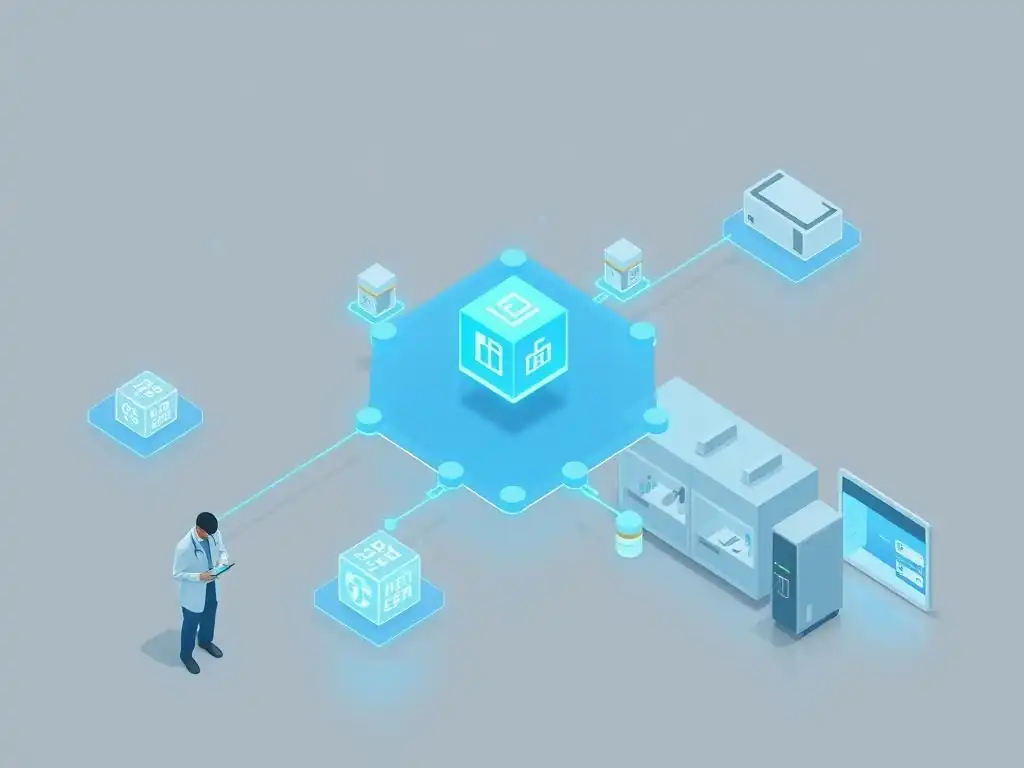
Secure and Transparent Supply Chain Management for Pharmaceuticals
While not directly managing patient EHRs, blockchain's application in the pharmaceutical supply chain has a direct impact on patient safety and data integrity within the broader healthcare ecosystem. Counterfeit drugs are a significant global problem, estimated by some reports to constitute up to 10% of the global drug market. Tracking pharmaceuticals from manufacturer to patient is complex and prone to fraud in traditional systems.
A blockchain ledger can record every transaction and transfer of ownership for a drug as it moves through the supply chain. Each participant – manufacturer, distributor, pharmacy, hospital – can verify the authenticity and history of the product by checking its immutable record on the blockchain. This transparency and security help prevent counterfeit drugs from entering the supply chain, ensure proper handling and storage conditions are logged, and provide patients and providers with confidence in the medications they receive, indirectly contributing to the overall integrity and trustworthiness of the data associated with a patient's treatment history within their EHR.
Blockchain-Enabled Verification of Healthcare Credentials and Licensing
Verifying the credentials and licenses of healthcare professionals is a critical, yet sometimes cumbersome, administrative process. Maintaining up-to-date databases of licenses, certifications, and training across various jurisdictions and institutions is complex and subject to potential inaccuracies or delays.
Blockchain can provide an immutable and easily verifiable registry for professional healthcare credentials. Licensing boards, universities, and certification bodies can issue verifiable digital credentials (often using decentralized identifiers and verifiable credentials standards) and anchor their hashes on a public or permissioned blockchain.
Healthcare employers, hospitals, or patients could then instantly and securely verify the authenticity and current status of a professional's qualifications by checking the blockchain record, streamlining hiring processes and enhancing patient safety by ensuring providers are properly qualified. This secure verification process complements the security of patient data by ensuring the trust and legitimacy of the individuals accessing it, supporting robust Blockchain EHR data security practices.
Decentralized Platform for Secure Medical Research Data Sharing
Advancing medical research requires access to large, diverse datasets, but sharing sensitive patient data across institutions is fraught with privacy and security challenges. Anonymizing or de-identifying data can reduce its utility for researchers, while sharing identifiable data carries significant risks of breaches and misuse.
Blockchain can facilitate secure, privacy-preserving data sharing for research purposes. Patients can grant explicit, granular consent for their anonymized or pseudonymized data to be used in specific research studies, with their consent preferences recorded on the blockchain.
Researchers could access encrypted datasets, potentially using techniques like differential privacy or homomorphic encryption, with access permissions and data usage logged immutably on the ledger. This creates a transparent, secure, and ethical framework for sharing valuable medical data, accelerating discoveries while protecting patient privacy and demonstrating the potential of blockchain for secure data exchange beyond direct patient care, further underscoring the importance of Blockchain EHR data security in varied contexts.
Addressing the Challenges of Implementing Blockchain EHRs
Scalability and Performance Considerations
One of the primary technical challenges for implementing blockchain in large-scale systems like EHRs is scalability. Public blockchains, like Bitcoin or Ethereum (prior to Eth2), can process a limited number of transactions per second compared to centralized databases that handle thousands. Healthcare systems generate vast amounts of data and require rapid access, making transaction throughput and latency critical factors.
Solutions are being developed to address blockchain scalability. These include using permissioned or private blockchains, which can offer higher transaction speeds and lower latency by limiting the number of participants and using more efficient consensus mechanisms.
Other approaches involve 'off-chain' solutions, where large data is stored securely off the blockchain and only hashes or metadata are recorded on the ledger, or utilizing layer-2 scaling solutions. Pilot projects are exploring these options, and while significant progress is needed, research and development are actively working towards making blockchain architectures performant enough for the demands of real-world EHR systems, ensuring that performance does not compromise Blockchain EHR data security.
Regulatory Compliance and Data Privacy Laws (HIPAA, GDPR)
Integrating blockchain with existing healthcare regulations like HIPAA in the United States or GDPR in Europe presents complex legal and compliance challenges. These regulations mandate specific requirements for data privacy, security, patient access rights, and the right to erasure ('right to be forgotten'). The immutable nature of blockchain can conflict with the right to erasure if identifiable data is stored directly on the chain.
To comply, implementations focus on storing actual patient data off-chain in encrypted databases, with only hashes, access logs, or encrypted pointers stored on the blockchain. Patient consent and access permissions are managed via the blockchain, providing a transparent audit trail that aids compliance reporting.
The right to erasure can then be managed by deleting the off-chain data and potentially marking the corresponding on-chain entry as 'invalid' or using cryptographic techniques to render the data inaccessible, rather than physically removing it from the immutable ledger. Navigating these regulatory landscapes requires careful legal and technical design, emphasizing that compliance is paramount for any Blockchain EHR data security solution.
Interoperability with Existing EHR Systems
Replacing existing EHR infrastructure is a massive, costly, and disruptive undertaking. Therefore, any successful blockchain solution for healthcare must be able to interoperate with the myriad of legacy and current EHR systems already in use across hospitals, clinics, and practices. Building bridges between these disparate systems and a new blockchain layer is a significant technical challenge.
This requires developing standardized APIs and data models that allow different EHR systems to securely interact with the blockchain ledger, exchanging necessary information (like access requests or encrypted data pointers) without requiring a complete overhaul of their internal architecture. Industry initiatives and standards bodies are working towards defining such interfaces and data formats to facilitate seamless integration. Achieving true interoperability is key to widespread adoption and realizing the full potential benefits of Blockchain EHR data security across the entire healthcare ecosystem.
The Need for Standardization and Collaboration
The lack of widespread standards for blockchain in healthcare is a major impediment to adoption. Different vendors and consortia are developing proprietary solutions, which can lead to new data silos and hinder interoperability if not built on common frameworks. Establishing universal standards for data representation, transaction formats, access protocols, and security models is crucial for the industry to move forward cohesively.
Achieving standardization requires collaboration among healthcare providers, technology vendors, regulatory bodies, and government agencies. Initiatives like the Synaptic Health Alliance or the work by organizations like HL7 are steps in this direction, exploring how blockchain can integrate with existing healthcare data standards. A concerted, collaborative effort to define and adopt common standards is essential to build a scalable, interoperable, and secure blockchain-based healthcare data infrastructure that effectively enhances Blockchain EHR data security for everyone.
The Future of Blockchain in Healthcare: Transforming EHRs and Beyond
Emerging Trends in Blockchain-Based Healthcare Solutions
Beyond EHRs, blockchain is poised to impact numerous facets of the healthcare industry. Emerging trends include the use of blockchain for secure medical device data management, ensuring the integrity and security of data transmitted from connected health devices and wearables. Another area is the development of decentralized identity solutions for patients and providers, simplifying secure authentication and access management across various healthcare services.
Furthermore, blockchain is being explored for managing clinical trials data, ensuring transparency, data integrity, and secure sharing among researchers and regulatory bodies. The potential for blockchain to support value-based care models by securely tracking patient outcomes and payments is also a significant area of development. These diverse applications highlight that the future impact of blockchain extends far beyond just EHRs, creating a more secure, transparent, and efficient healthcare ecosystem built on the foundation of technologies that enhance Blockchain EHR data security across the board.
The Potential of Smart Contracts for Automated Healthcare Processes
Smart contracts, self-executing contracts with the terms of the agreement directly written into code on the blockchain, have immense potential to automate and streamline various healthcare processes. In the context of EHRs, smart contracts could automate aspects of data access and sharing based on predefined rules and patient consent.
For example, a smart contract could automatically grant a specialist access to a patient's relevant records for a specific duration upon referral, provided the patient has given prior consent via the blockchain. They could also automate payments between providers based on treatment milestones recorded on the blockchain, or manage the secure release of de-identified data to approved researchers when certain conditions are met. Automating these processes reduces administrative overhead, minimizes delays, and ensures that actions are executed precisely as intended and immutably recorded, adding a layer of programmatic security and efficiency to Blockchain EHR data security management.
The Role of Blockchain in Personalized Medicine and Patient-Centric Care
Personalized medicine relies heavily on the collection, analysis, and secure sharing of vast amounts of diverse data, including genomic data, lifestyle information, and detailed health records. Blockchain can play a vital role in enabling this future by providing a secure, patient-controlled platform for managing and sharing this sensitive information.
Patients could curate their comprehensive health profiles, including genetic data, on a secure, blockchain-linked system. They could then selectively and securely share this data with researchers, personalized medicine providers, or AI diagnostic tools, granting access via their blockchain key.
This empowers patients to participate actively in personalized medicine initiatives and ensures that their highly sensitive data is shared ethically and securely, with every access logged on the immutable ledger. This shift towards a truly patient-centric model, facilitated by secure blockchain technology, is fundamental to unlocking the full potential of personalized medicine and reinforcing the importance of Blockchain EHR data security in this evolving field.
Conclusion: Embracing Blockchain for Secure and Efficient EHR Management
Key Takeaways: The Transformative Power of Blockchain for Healthcare Data Security
The journey through the potential of blockchain in revolutionizing Electronic Health Records reveals several key takeaways. Traditional EHR systems are plagued by issues of interoperability, data fragmentation, and significant security vulnerabilities, leading to breaches and inefficiencies. Blockchain technology, with its core principles of immutability, decentralization, and transparency, offers a compelling solution to these challenges.
By enhancing Blockchain EHR data security through distributed ledgers and cryptography, preventing data tampering, improving patient privacy control, and enabling secure interoperability, blockchain promises a more resilient, efficient, and patient-centric healthcare data ecosystem. While challenges related to scalability, regulation, and standardization remain, ongoing development and collaboration are paving the way for the successful integration of this transformative technology into healthcare.
The Path Forward: Implementing Blockchain Solutions for a Better Healthcare Future
Implementing blockchain-based EHR solutions requires a strategic and phased approach. It involves careful consideration of technical architecture (e.g., public vs. permissioned blockchains, off-chain storage), navigating the complex landscape of healthcare regulations, developing industry-wide standards for interoperability, and fostering collaboration among all stakeholders – providers, payers, technology vendors, and patients.
Pilot programs and consortia focused on specific use cases, such as secure data exchange for research or credential verification, can demonstrate the value and feasibility of blockchain in healthcare. As the technology matures and standards emerge, broader adoption for core EHR functions will become more viable. Embracing blockchain is not merely a technological upgrade; it is a fundamental shift towards a more secure, transparent, and patient-controlled paradigm for managing health information, ultimately leading to improved patient care and a more robust framework for Blockchain EHR data security in the digital age.
Frequently Asked Questions
How can blockchain technology enhance the security of Electronic Health Records (EHRs)?
Blockchain offers enhanced security through its decentralized and immutable nature. This makes it significantly harder for hackers to tamper with or alter sensitive patient data.
What are the potential benefits of using blockchain for managing EHR data beyond just security?
Beyond security, blockchain can improve data interoperability and patient control. It allows for easier sharing of records between providers while giving patients greater ownership over their health information.
What role does regulation play in the adoption of blockchain-based EHR systems?
Regulatory frameworks are crucial for ensuring compliance and addressing privacy concerns. Clear guidelines are needed to foster trust and promote the widespread adoption of blockchain in healthcare.
Enterprise applications include supply chain management for pharmaceuticals, clinical trial data management, and secure identity management for healthcare professionals accessing EHRs.
How might the future of decentralized systems impact the accessibility and usability of EHRs for patients and healthcare providers?
Decentralized systems promise greater data accessibility and transparency for both patients and providers. This leads to more patient-centered care and potentially improved healthcare outcomes.
Final Reflection: Securing Health's Future, Today
The promise of Blockchain EHR data security is no longer a distant dream, but a tangible possibility rapidly transforming the landscape of healthcare. As we've explored the potential of blockchain to revolutionize electronic health records, it's clear that its impact extends far beyond mere technological advancement. It represents a fundamental shift towards patient empowerment, enhanced data integrity, and a more secure, transparent, and efficient healthcare ecosystem.
The ongoing influence of blockchain on EHRs is undeniable, promising to reshape how we interact with our health information. This technology offers a pathway to regain control over our personal data, fostering trust and collaboration between patients and healthcare providers. The future of healthcare is connected, secure, and patient-centric. Blockchain is the key to unlocking that future.
This quote encapsulates the transformative potential of blockchain, highlighting its ability to bridge the gaps in our current healthcare system and create a more equitable and accessible environment for all.
As we stand on the cusp of this technological revolution, I invite you to reflect on the implications of blockchain for your own healthcare journey. Consider how enhanced data security and patient control could empower you to make more informed decisions about your health. Embrace the potential of this technology to create a future where healthcare is truly personalized, secure, and accessible to everyone. The future of healthcare is in our hands, and by embracing innovation, we can build a healthier, more secure tomorrow.
Unveil the Future of Your Healthcare Data!
Thank you for exploring how blockchain technology can transform Electronic Health Records. You've learned how it can improve security, transparency, and give patients greater control over their data. Now, it's time to take action.
Consider these steps to support this innovative movement:
- Deepen your understanding: Investigate blockchain projects focused on healthcare interoperability and data security.: This is your opportunity to become well-versed in the field.
- Share the knowledge: Distribute this article within your network to encourage discussion and raise awareness about the advantages of blockchain-enabled EHRs.
- Explore new possibilities: Look into pilot programs that enable patients to manage their health records directly through blockchain technology and experience the future of personalized care.
Are you ready to join the blockchain healthcare revolution? Share your thoughts in the comments—what do you see as the biggest challenge to adopting blockchain for health records, and what solutions could we start implementing today?
Leave a Reply