
The Role of Blockchain in Sustainable and Green Real Estate Initiatives

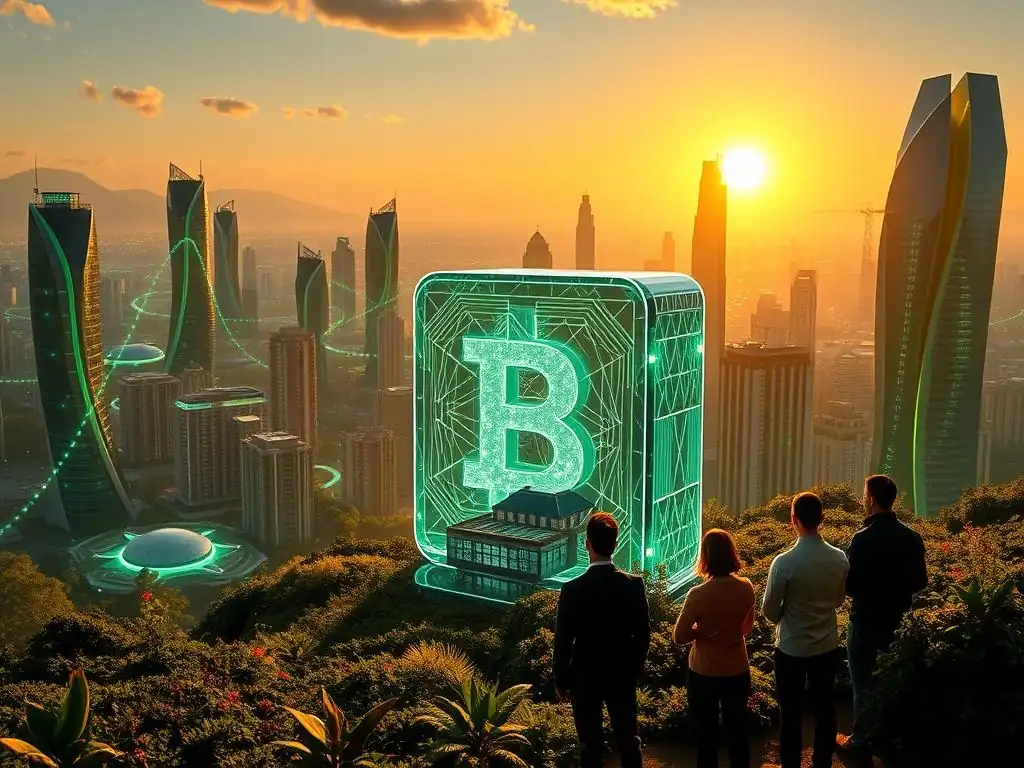
Welcome to Blockchain Trends, your gateway to understanding the revolutionary impact of blockchain technology beyond the realm of cryptocurrencies. We delve into the exciting world of decentralized finance (DeFi), cutting-edge enterprise applications, evolving regulations, and the future of decentralized systems.
Are you curious about how this technology is shaping a greener future? Dive into our featured article to explore the rising tide of blockchain real estate sustainability initiatives and discover how blockchain is revolutionizing the real estate industry, paving the way for a more sustainable and transparent tomorrow. What possibilities await? Read on to find out!
- Blockchain Real Estate Sustainability Initiatives: A Green Revolution
- Blockchain Applications for Enhanced Transparency and Traceability in Green Building
- Promoting Energy Efficiency and Renewable Energy Adoption in Real Estate with Blockchain
- Enhancing Green Financing and Investment in Real Estate through Blockchain
- Case Studies: Blockchain in Action for Sustainable Real Estate Projects
- Overcoming Barriers to Blockchain Adoption in Sustainable Real Estate
- The Future of Blockchain and Green Real Estate: Trends and Predictions
-
Frequently Asked Questions
- What are some examples of blockchain-based solutions for improving sustainability in real estate?
- How can blockchain enhance transparency in real estate sustainability initiatives?
- What are the potential benefits of using blockchain for green financing in the real estate sector?
- What role does regulation play in the adoption of blockchain for sustainable real estate development?
- How does blockchain contribute to the future of decentralized and sustainable real estate?
- Final Reflection: Building a Greener Future, Block by Block
- Unlock the Future: Invest in Green Real Estate Now!
Blockchain Real Estate Sustainability Initiatives: A Green Revolution
Defining Sustainable Real Estate and its Challenges
Sustainable real estate refers to the practice of designing, constructing, operating, and maintaining buildings in a way that minimizes environmental impact, conserves resources, and improves the health and well-being of occupants. This encompasses various aspects, including energy efficiency, water conservation, waste reduction, the use of sustainable materials, and the promotion of healthy indoor environments. The goal is to create properties that not only provide functional spaces but also contribute positively to ecological and social systems.
However, the sustainable real estate sector faces significant challenges. A major hurdle is the lack of transparency and reliable data regarding a building's true environmental performance throughout its lifecycle. For instance, accurately tracking the origin and impact of building materials, verifying energy consumption data, and ensuring compliance with green building certifications like LEED or BREEAM can be complex and prone to manual errors or even fraud. According to a 2022 report, inefficient data management costs the construction industry billions annually and hinders effective sustainability reporting.
The Potential of Blockchain Technology for Green Building Practices
Blockchain technology offers a decentralized, immutable, and transparent ledger system that can fundamentally transform how sustainability is managed and verified within the real estate lifecycle. By creating a single, tamper-proof record of transactions and data, blockchain can enhance trust among stakeholders, including developers, contractors, suppliers, certification bodies, and investors. This inherent transparency is crucial for validating green claims and proving the environmental credentials of a property.
The application of blockchain in green building practices extends beyond simple data recording. Smart contracts, self-executing contracts with the terms of the agreement directly written into code, can automate processes based on predefined conditions, such as releasing payments upon verification of sustainable material delivery or achieving specific energy efficiency milestones. This automation reduces administrative overhead and potential for disputes, making green building workflows more efficient and reliable. The potential for blockchain real estate sustainability initiatives is vast, offering a robust framework for environmental accountability.
How Blockchain Addresses Key Sustainability Challenges in Real Estate
Blockchain technology directly addresses several core challenges impeding sustainable real estate development. Firstly, it tackles the issue of data fragmentation and unreliability by providing a single source of truth for sustainability-related data, from material provenance to energy performance certificates. This standardized, verifiable data improves reporting accuracy for frameworks like GRESB (Global Real Estate Sustainability Benchmark), where data integrity is paramount.
Secondly, blockchain enhances accountability and traceability within complex supply chains. By recording each step of a material's journey – from extraction or production through transportation and installation – on a distributed ledger, stakeholders can verify its ethical sourcing and environmental impact. This level of traceability is difficult and costly to achieve with traditional systems. Furthermore, blockchain can facilitate the tokenization of sustainable assets or credits, providing liquid and transparent markets for environmental value, thereby incentivizing green practices. These blockchain real estate sustainability initiatives pave the way for more trustworthy environmental claims.
Blockchain Applications for Enhanced Transparency and Traceability in Green Building
Tracking Green Building Materials with Blockchain
Tracking the origin and environmental impact of building materials is a critical aspect of sustainable construction. Traditional methods often involve paper trails or disparate databases, making it difficult to verify claims about recycled content, low emissions, or sustainable forestry practices. Blockchain provides a transparent and immutable ledger where every transaction related to a material – from its source certification to its delivery on site – can be recorded.
Imagine a scenario where steel rebar certified as containing 90% recycled material is procured. Using a blockchain-based system, each batch of steel could be tagged with a unique identifier. As it moves through the supply chain, manufacturers, distributors, and contractors record relevant data points (e.g., production date, transportation method, installation location) on the blockchain.
This creates a verifiable history accessible to all permissioned parties, drastically reducing the risk of greenwashing and ensuring that materials meet stated sustainability standards. Pilot projects have shown promising results in tracing materials like timber and concrete using blockchain, demonstrating the potential for widespread adoption in blockchain real estate sustainability initiatives.
Ensuring Ethical Sourcing and Supply Chain Management using DLT
Beyond environmental impacts, sustainable real estate also considers social factors, including ethical labor practices and fair trade in material sourcing. Global supply chains for building materials can be notoriously opaque, making it challenging to ensure that components are not produced using forced labor or extracted from conflict zones. Distributed Ledger Technology (DLT), the underlying technology of blockchain, offers a solution by creating a transparent and auditable record of supply chain activities.
A DLT platform can record certifications related to fair labor practices, conflict-free minerals, or responsible sourcing at each stage of the supply chain. Suppliers, manufacturers, and logistics providers would add data points to the ledger, creating an immutable record. For example, a developer building a LEED-certified project requiring ethically sourced wood could verify the Chain of Custody certification for every timber delivery directly on the blockchain. This level of transparency empowers developers and consumers to make informed choices and hold suppliers accountable, bolstering ethical standards within blockchain real estate sustainability initiatives.
Verifying Carbon Footprint Data with Blockchain-Based Systems
Accurately measuring and reporting the carbon footprint of a building throughout its lifecycle – from embodied carbon in materials to operational emissions – is essential for achieving climate goals. Current methods often rely on self-reported data, which can be inconsistent or difficult to verify independently. Blockchain can provide a secure and transparent platform for collecting, storing, and verifying carbon data.
Sensors installed in buildings can automatically record energy consumption and other relevant data, writing this information to a blockchain ledger via APIs. Similarly, data related to material emissions coefficients can be recorded and verified. This creates a tamper-proof audit trail of a building's carbon performance. Third-party auditors or regulatory bodies could then access this verifiable data on the blockchain to confirm emissions reports, enhancing trust and credibility. Projects exploring the use of blockchain for verifiable carbon credits linked to building performance are emerging, highlighting the technology's potential to standardize and legitimize carbon accounting in blockchain real estate sustainability initiatives.
Promoting Energy Efficiency and Renewable Energy Adoption in Real Estate with Blockchain
Decentralized Energy Grids and Peer-to-Peer Energy Trading
Promoting energy efficiency and the use of renewable energy sources is paramount for sustainable real estate. Blockchain technology is enabling the development of decentralized energy grids, often referred to as 'microgrids,' which allow buildings to generate, store, and trade renewable energy locally. This shifts away from reliance on centralized utilities and empowers energy prosumers (producers + consumers).
Blockchain platforms facilitate peer-to-peer (P2P) energy trading within these microgrids. For example, a building with rooftop solar panels generating surplus electricity can automatically sell that excess power directly to a neighboring building using a blockchain-based marketplace. Smart contracts manage the transaction, ensuring fair pricing and automated settlement based on real-time energy production and consumption data recorded on the ledger. Projects like Brooklyn Microgrid by LO3 Energy have demonstrated the feasibility of this model, enabling localized energy markets and incentivizing renewable energy generation within communities.
Blockchain-Based Smart Contracts for Energy Conservation
Smart contracts deployed on a blockchain can automate and enforce energy conservation measures within buildings. These self-executing contracts can be programmed to trigger actions based on specific energy consumption data or external conditions, ensuring that energy efficiency protocols are followed consistently.
Consider a commercial building aiming to reduce peak energy demand. A smart contract could be linked to energy monitoring systems. If consumption exceeds a predefined threshold during peak hours, the smart contract could automatically trigger actions like dimming lights in non-essential areas, adjusting HVAC set points, or even temporarily shutting down non-critical equipment, provided these actions are pre-approved and coded into the contract. This automated enforcement, based on verifiable data on the blockchain, goes beyond simple recommendations and ensures adherence to energy-saving strategies, making blockchain real estate sustainability initiatives more actionable.
Tokenizing Renewable Energy Credits for Real Estate Projects
Renewable Energy Credits (RECs) represent the environmental attributes of electricity generated from renewable sources. They are a crucial mechanism for financing and promoting renewable energy. However, tracking and trading RECs can be complex and prone to double-counting in traditional systems. Blockchain offers a transparent and efficient way to tokenize RECs.
Each REC can be represented as a unique digital token on a blockchain. When renewable energy is generated and verified (e.g., via smart meters feeding data to the blockchain), corresponding RECs are minted as tokens. These tokens can then be easily tracked, bought, and sold on a blockchain-based marketplace.
This tokenization ensures that each REC is unique and verifiable, preventing double-counting and providing a liquid market for companies and real estate projects to purchase credits to offset their energy consumption, thereby supporting renewable energy development. Platforms like Energy Web Foundation are working on such tokenization standards, enhancing the integrity of renewable energy markets for blockchain real estate sustainability initiatives.
Enhancing Green Financing and Investment in Real Estate through Blockchain
Facilitating Green Bonds and Sustainable Real Estate Investments
Green bonds are fixed-income instruments specifically designed to finance projects with environmental benefits. The market for green bonds is growing rapidly, but investors often seek greater transparency and assurance that the funds are truly being used for sustainable purposes and delivering intended environmental outcomes. Blockchain can significantly enhance the issuance and management of green bonds for real estate projects.
By tokenizing green bonds on a blockchain, the entire lifecycle, from issuance to trading and redemption, becomes transparent and auditable. Smart contracts can automate coupon payments and principal redemption.
Crucially, the blockchain can also be used to track the deployment of the bond proceeds and link them directly to verifiable data on the environmental performance of the funded real estate project (e.g., energy consumption data, waste diversion metrics recorded on the chain). This provides investors with unprecedented transparency and confidence that their investment is genuinely contributing to sustainable development, boosting the credibility of blockchain real estate sustainability initiatives in finance.
Blockchain-Based Crowdfunding for Eco-Friendly Developments
Crowdfunding has emerged as a popular method for financing various projects, but applying it to large-scale eco-friendly real estate developments can be challenging due to the need for trust and transparency among a large number of small investors. Blockchain can facilitate fractional ownership and transparent investment tracking for sustainable real estate projects through tokenization.
A large eco-friendly development, such as a zero-energy building or a community garden project, could be tokenized, representing ownership shares or investment units as digital tokens on a blockchain. Investors can purchase these tokens, gaining fractional ownership or a right to future revenue streams (e.g., rental income from a green building).
All investment transactions and the project's financial performance (potentially linked to verifiable sustainability metrics) are recorded on the immutable ledger, providing transparency to all participants. This lowers the barrier to entry for sustainable real estate investment, allowing a wider pool of individuals to support and benefit from green developments via blockchain real estate sustainability initiatives.
Improving Transparency and Accountability in ESG Reporting for Real Estate
Environmental, Social, and Governance (ESG) reporting is becoming increasingly important for real estate companies and investors. Accurate and verifiable ESG data is crucial for demonstrating commitment to sustainability and attracting capital. However, collecting and reporting comprehensive ESG data across a real estate portfolio can be complex and subject to inconsistencies.
Blockchain can serve as a robust platform for collecting, verifying, and reporting ESG data for real estate assets. Data from various sources – such as energy meters, water usage sensors, waste management systems, and social impact assessments – can be fed into a blockchain-based system. The immutable nature of the ledger ensures data integrity, making it difficult to manipulate.
This verifiable data can then be used to generate standardized ESG reports, providing stakeholders like investors, regulators, and the public with trustworthy information about a property's or portfolio's sustainability performance. This enhanced transparency and accountability are vital for driving investment into blockchain real estate sustainability initiatives.
Case Studies: Blockchain in Action for Sustainable Real Estate Projects
WePower: Tokenizing Renewable Energy Trading
WePower is a platform that uses blockchain to enable the tokenization and trading of renewable energy. While not solely focused on real estate, its model has direct applicability. WePower allows renewable energy producers to issue tokens representing the energy they produce. These tokens can then be bought by consumers or investors.
The platform essentially creates a liquid market for renewable energy, allowing buyers to purchase energy directly from specific renewable sources. For real estate developers or property managers, this means they can buy tokenized energy from local solar farms or wind parks via the WePower platform, directly supporting renewable energy generation and potentially securing energy at more stable prices. They can also demonstrate to tenants and investors that their energy consumption is matched by renewable sources, enhancing the green credentials of their properties and aligning with blockchain real estate sustainability initiatives.
Atlant: Decentralized Real Estate Investment Platform
Atlant is a platform focused on tokenizing real estate assets, enabling fractional ownership and peer-to-peer property rentals. While not exclusively focused on sustainability, its underlying technology can be applied to green real estate projects. Atlant's tokenization approach allows developers of eco-friendly buildings to raise capital by selling fractional ownership tokens to a global pool of investors.
For instance, a developer building a certified passive house or a net-zero energy building could tokenize the property on Atlant. Investors could then buy tokens representing shares in this sustainable asset. The platform's transparency allows investors to see the property's details and potentially access performance data (which could include sustainability metrics if integrated). This facilitates investment into specific green projects that might otherwise be inaccessible to smaller investors, demonstrating how platforms leveraging blockchain real estate sustainability initiatives can democratize investment.
Analyzing the Impact and Results of Blockchain Implementation
Analyzing the real-world impact of blockchain implementation in sustainable real estate is still evolving, but early results from pilot projects and platforms like WePower and those exploring material traceability are promising. For instance, P2P energy trading platforms using blockchain have shown the potential to increase the uptake of rooftop solar by creating new revenue streams for prosumers and offering consumers access to local, cheaper renewable energy. Some pilots have reported transaction efficiency gains of up to 30% compared to traditional energy billing systems.
In material tracking, blockchain implementations have demonstrated the ability to reduce the time and cost associated with verifying material certifications and origins by potentially up to 50% in specific supply chains. While comprehensive data on the direct environmental benefits (like verified carbon emission reductions solely due to blockchain implementation) is still being collected, the technology's ability to provide verifiable data is a critical first step towards more accurate reporting and, consequently, more effective sustainability strategies in blockchain real estate sustainability initiatives. The primary impact observed so far is the significant improvement in data integrity, transparency, and process efficiency.
Overcoming Barriers to Blockchain Adoption in Sustainable Real Estate
Addressing Regulatory Uncertainty and Legal Frameworks
One of the primary barriers to widespread blockchain adoption in sustainable real estate is the lack of clear regulatory frameworks and legal certainty. Many jurisdictions are still grappling with how to classify and regulate blockchain-based assets (like tokenized real estate or RECs) and activities (like P2P energy trading). This uncertainty creates risks for developers, investors, and technology providers.
Addressing this requires collaboration between industry stakeholders, regulators, and legal experts to develop clear guidelines and legislation. For instance, establishing how tokenized property rights are legally recognized or how blockchain-recorded sustainability data can be used for compliance purposes is crucial. Progress is being made in some regions; for example, some countries are exploring digital asset laws that could encompass tokenized real estate. Clear regulations will build confidence and accelerate the deployment of blockchain real estate sustainability initiatives.
Ensuring Data Security and Privacy in Blockchain-Based Real Estate Systems
While blockchain is known for its security due to cryptography and decentralization, implementing it in real estate, which involves sensitive personal and commercial data, raises specific concerns regarding data security and privacy. Information recorded on a public blockchain is immutable, which can be problematic if sensitive data is accidentally or intentionally included.
Solutions involve utilizing permissioned or private blockchains where access is restricted to authorized parties, or employing techniques like zero-knowledge proofs, which allow verification of data without revealing the underlying information. Storing sensitive data off-chain while using the blockchain to hash and verify its integrity is another common approach. Developers of blockchain real estate sustainability initiatives must implement robust data governance policies and comply with data protection regulations like GDPR to ensure privacy while leveraging the transparency benefits of the technology.
Fostering Collaboration and Standardization in the Industry
The real estate and construction industries are traditionally fragmented, with numerous stakeholders using disparate systems. Adopting blockchain for sustainability requires a degree of collaboration and standardization across this ecosystem. Different platforms and protocols need to be interoperable to allow seamless data flow regarding materials, energy, and finance.
Industry associations, technology providers, and leading real estate firms need to work together to establish common data standards and best practices for using blockchain in sustainable applications. Developing standardized smart contract templates for green leases, energy performance agreements, or material tracking could significantly reduce implementation costs and complexity. Collaborative pilot projects involving multiple parties in the value chain can demonstrate the benefits and help refine approaches, fostering the necessary ecosystem for successful blockchain real estate sustainability initiatives.
The Future of Blockchain and Green Real Estate: Trends and Predictions
Emerging Technologies and Innovations
The intersection of blockchain and sustainable real estate is a dynamic space, continuously evolving with new technologies. The integration of the Internet of Things (IoT) with blockchain is particularly promising. IoT sensors can collect real-time data on building performance (energy, water, air quality), which is then immutably recorded on a blockchain, providing verifiable data for sustainability reporting and smart contract execution.
Artificial Intelligence (AI) can also be combined with blockchain to analyze the vast amounts of verifiable sustainability data collected, identifying patterns for optimizing energy usage or predicting maintenance needs in green buildings. Furthermore, advancements in blockchain technology itself, such as layer-2 scaling solutions and more energy-efficient consensus mechanisms (like Proof-of-Stake), are addressing scalability and environmental concerns associated with some early blockchain implementations, making the technology more viable for large-scale blockchain real estate sustainability initiatives.
The Role of Blockchain in Achieving Sustainable Development Goals (SDGs)
Blockchain technology has the potential to significantly contribute to achieving several of the United Nations' Sustainable Development Goals (SDGs), particularly those related to sustainable cities and communities (SDG 11), affordable and clean energy (SDG 7), responsible consumption and production (SDG 12), and climate action (SDG 13). By enhancing transparency and traceability in real estate, blockchain can help cities track progress towards sustainability targets.
For instance, verifiable data on energy efficiency improvements (SDG 7), the use of recycled materials (SDG 12), and the reduction of carbon emissions (SDG 13) facilitated by blockchain can provide concrete evidence of contributions towards these global goals. Tokenization of sustainable assets and green finance mechanisms can also mobilize capital towards projects that directly address SDGs, positioning blockchain as a key enabler for impactful blockchain real estate sustainability initiatives.
Blockchain's Long-Term Impact on the Real Estate Industry and the Environment
The long-term impact of blockchain on the real estate industry and the environment is expected to be transformative. By providing a foundation of trust and transparency, blockchain can streamline processes, reduce costs, and unlock new financing models for sustainable development. This could lead to a significant increase in the construction and retrofitting of green buildings.
Environmentally, blockchain's ability to accurately track and verify sustainability data is crucial for informed decision-making and accountability. It can help standardize carbon accounting, incentivize renewable energy adoption through efficient markets, and ensure the integrity of green supply chains. While challenges remain, the ongoing development and adoption of blockchain real estate sustainability initiatives suggest a future where the built environment is not only more efficient and valuable but also genuinely and verifiably sustainable, contributing significantly to global environmental goals.
Frequently Asked Questions
What are some examples of blockchain-based solutions for improving sustainability in real estate?
Blockchain can be used to track and verify green building certifications, manage energy consumption data, and facilitate transparent carbon offsetting programs within real estate projects.
How can blockchain enhance transparency in real estate sustainability initiatives?
Blockchain's immutability creates a permanent and auditable record of sustainability data, preventing greenwashing and ensuring that claims of environmental performance are verifiable and trustworthy.
What are the potential benefits of using blockchain for green financing in the real estate sector?
Blockchain can streamline the process of issuing and tracking green bonds, improve investor confidence by ensuring transparency, and lower transaction costs associated with sustainable real estate projects.
What role does regulation play in the adoption of blockchain for sustainable real estate development?
Clear and supportive regulations are crucial for fostering trust and encouraging widespread adoption. Regulatory sandboxes can provide a safe space for testing blockchain-based solutions and addressing potential legal challenges.
How does blockchain contribute to the future of decentralized and sustainable real estate?
Blockchain enables tokenization of real estate assets, allowing for more fractional ownership and community-led sustainable development. This promotes greater access to green investments and more equitable distribution of benefits.
Final Reflection: Building a Greener Future, Block by Block
The exploration of blockchain's role in sustainable real estate isn't just a theoretical exercise; it's a crucial conversation for today's world, where environmental responsibility and technological innovation must converge. As we've seen, blockchain offers tangible solutions for transparency, efficiency, and accountability in green building projects, paving the way for a more sustainable and equitable future for the real estate industry.
The potential of blockchain to revolutionize how we approach real estate sustainability is undeniable. This technology offers a pathway to not only track and verify green initiatives but also to incentivize responsible practices and foster a deeper connection between developers, investors, and the environment. The future is green energy, sustainability, renewable energy.
- Arnold Schwarzenegger. This quote encapsulates the spirit of innovation and responsibility that blockchain can bring to the real estate sector, driving us towards a more sustainable future.
Now, it's time to ask yourself: How can you contribute to this paradigm shift? Consider the ways in which you can advocate for the adoption of blockchain-based solutions in your own community or industry. Whether you're an investor, a developer, or simply a concerned citizen, your actions can help build a greener, more sustainable future, one block at a time.
Unlock the Future: Invest in Green Real Estate Now!
Thanks for exploring the potential of blockchain in building a more sustainable future! Now that you're equipped with insights into how blockchain can revolutionize green real estate, it's time to put that knowledge into action and be a part of the change.
- Discover opportunities: Identify one sustainable real estate project near you that leverages blockchain or is actively exploring its use. Understanding real-world applications is the first step to impactful change!
- Join the conversation: Share this article on your social media to get the discussion going, and use hashtag #Blockchain4Good and #GreenRealEstate. Let your network know you're exploring innovative solutions for a greener world.
- Dive deeper: Check out Blockchain Trends' other articles and reports about how blockchain technology improves supply chain transparency for eco-friendly building materials.
What unique opportunities have you seen locally that combine blockchain and sustainable real estate?
Leave a Reply