
The Role of NFTs in Supply Chain: Proving Authenticity and Ownership of Goods


Welcome to Blockchain Trends, your compass in the rapidly evolving world of decentralized technologies. Forget just cryptocurrencies; we're diving deep into the real-world impact of blockchain. This week, we unravel a fascinating application within enterprise solutions: can NFTs truly revolutionize supply chain authenticity and ownership? Explore how this innovative approach is poised to transform industries and what challenges lie ahead. Discover the future of verifiable goods and services – the answers might surprise you...
The Role of NFTs in Supply Chain: Proving Authenticity and Ownership of Goods
- Introduction: NFTs Revolutionizing Supply Chain Management
- NFTs and Supply Chain Authenticity: Combating Counterfeiting
- NFTs and Supply Chain Ownership: Securing Transfer and Provenance
- Benefits of Using NFTs for Supply Chain Management
- Challenges and Considerations for NFT Implementation in Supply Chain
- Overcoming the Challenges: Solutions and Best Practices
- Future Trends and Developments in NFTs for Supply Chain
- Conclusion: The Transformative Potential of NFTs in Supply Chain Management
-
Frequently Asked Questions
- What is the main benefit of using NFTs in the supply chain?
- How can NFTs help prove the authenticity of goods in a supply chain?
- Can NFTs help reduce counterfeiting in the supply chain?
- What kind of information can be stored on an NFT related to a product in the supply chain?
- How do NFTs impact ownership transfer in the supply chain?
- Final Reflection: Securing Trust in a Digital World
- Unveil the Future: Secure Your Supply Chain with NFTs!
Introduction: NFTs Revolutionizing Supply Chain Management
The Growing Need for Transparency and Traceability in Supply Chains
Modern supply chains are increasingly complex, globalized networks involving numerous participants from raw material suppliers to end consumers. This complexity often leads to opaqueness, making it difficult to track the origin, journey, and handling of goods. Consumers are demanding greater transparency regarding product sourcing, ethical manufacturing, and environmental impact, while businesses require precise traceability to manage recalls effectively, ensure quality control, and comply with regulations. The lack of clear, immutable records across disparate systems creates vulnerabilities and inefficiencies.
The current reliance on paper trails, centralized databases, and manual processes is prone to errors, delays, and manipulation. For instance, verifying the source of ingredients in a food product or confirming the ethical sourcing of materials in a garment can be a time-consuming and challenging process. The need for a digital, secure, and universally verifiable system to record every step a product takes is paramount to building trust and efficiency in global trade.
How NFTs Address Challenges in Verifying Product Authenticity
Counterfeiting is a pervasive problem, costing industries billions annually and posing risks to consumer safety. Traditional anti-counterfeiting measures like holograms or serial numbers can often be replicated. Non-Fungible Tokens (NFTs) offer a novel approach by creating unique, verifiable digital assets linked to physical goods. This digital twin acts as a tamper-proof certificate of authenticity and ownership.
By associating an NFT with a product at its point of origin, businesses can establish an immutable digital record on a blockchain. This record can include details about manufacturing, materials, and initial ownership. Subsequent transactions and transfers of the physical item can be recorded on the NFT's metadata or transaction history on the blockchain. This verifiable digital trail significantly complicates the production and distribution of counterfeit goods, as they would lack the corresponding, verifiable NFT linked to the legitimate product's history. This is a core aspect of using NFTs supply chain authenticity ownership.
Understanding NFT Fundamentals: A Brief Overview for Supply Chain Professionals
NFTs are unique digital tokens recorded on a blockchain, meaning each token has distinct properties and is not interchangeable with another NFT, unlike cryptocurrencies like Bitcoin or Ether. This uniqueness makes them suitable for representing individual assets, whether digital or physical. For supply chain applications, an NFT can be minted to represent a specific item, a batch of goods, or even a container shipment.
Each NFT contains metadata – data about the data – which can store crucial information about the physical product it represents. This could include manufacturing date, location, materials used, inspection records, and certifications. The ownership of the NFT is recorded on the blockchain, providing a clear, transparent, and tamper-proof record of who owns the associated physical asset at any given time. Smart contracts, self-executing contracts with the terms directly written into code, can be linked to NFTs to automate actions based on predefined conditions, such as triggering payment upon transfer of NFT ownership.
NFTs and Supply Chain Authenticity: Combating Counterfeiting
The Problem of Counterfeit Goods and Its Impact on Businesses
Counterfeiting is a significant global issue, impacting almost every industry, from luxury goods and pharmaceuticals to electronics and automotive parts. The International Chamber of Commerce estimated that the global value of counterfeit and pirated goods could reach $2.8 trillion by 2022, leading to substantial losses for legitimate businesses, including reduced sales, damaged brand reputation, and legal costs. Beyond financial implications, counterfeit products, particularly in sectors like pharmaceuticals or aerospace, can pose serious health and safety risks to consumers.
Businesses invest heavily in brand protection, but sophisticated counterfeiters constantly find ways to bypass traditional security features. The decentralized and global nature of modern supply chains provides numerous entry points for fake goods. Once counterfeit items enter the supply chain, they can be difficult to distinguish from authentic products, especially for consumers or downstream partners. The challenge lies in creating an unforgeable link between the physical product and a verifiable digital identity that can be easily checked at any point in the supply chain.
Using NFTs to Create Digital Twins for Physical Products
A powerful application of NFTs in supply chain management is the creation of a "digital twin" for a physical product. This involves minting a unique NFT on a blockchain that is inextricably linked to a specific physical item or batch. This link can be established through various methods, such as embedding secure QR codes, NFC tags, or physical security features that are registered on the NFT's metadata upon production.
Once the digital twin NFT is created, its journey on the blockchain can mirror the physical product's journey through the supply chain. Each transfer of the physical item from one party to another can be recorded as a transfer of ownership of the corresponding NFT on the blockchain. This provides an immutable, transparent ledger of the product's provenance from origin to destination. Consumers or intermediaries can scan the physical tag, access the NFT's information on the blockchain, and verify its history and authenticity against the expected trail.
NFT Metadata: Storing Critical Product Information for Verification
The metadata associated with an NFT is crucial for proving product authenticity. This data is stored either directly on the blockchain (though this can be expensive for large amounts of data) or, more commonly, referenced via a decentralized storage system like IPFS, with the hash stored on the blockchain. This metadata can include a wealth of information:
- Product Specifications: Model number, serial number, manufacturing date and location.
- Materials and Components: Details about raw materials, suppliers, and certifications (e.g., organic, fair trade).
- Quality Control Data: Inspection results, quality grades, testing parameters.
- Supply Chain Events: Date and time of shipping, receiving, customs clearance, temperature logs (if applicable).
- Certifications and Compliance: Regulatory approvals, sustainability certifications, ethical sourcing audits.
By accessing this verifiable metadata via the NFT, stakeholders throughout the supply chain, including the end consumer, can independently verify the product's origin, composition, and journey, significantly enhancing trust and combating fraud. This detailed information underpins the strength of NFTs supply chain authenticity ownership.
Real-World Examples: NFTs Enhancing Product Authenticity in Luxury Goods
The luxury goods industry is particularly vulnerable to counterfeiting, with estimates suggesting that up to 20% of goods sold online could be fake. Several luxury brands and consortia are exploring or implementing NFTs to combat this. For instance, major players have collaborated to create blockchain platforms where luxury items are registered with a unique digital identity, often represented by an NFT.
When a high-value item like a designer handbag or watch is manufactured, an NFT is minted for it. This NFT's metadata contains detailed information about the item, including materials, craftsmanship, and a unique identifier like a serial number. This digital certificate follows the product.
When the item is resold, the ownership of the NFT is transferred to the new owner. Prospective buyers in the secondary market can verify the item's authenticity and provenance by checking the NFT on the blockchain using a public explorer. This verifiable digital history provides a level of assurance that traditional paper certificates cannot match, significantly enhancing the value and trust in the secondary market for luxury goods.
NFTs and Supply Chain Ownership: Securing Transfer and Provenance
Establishing Clear Ownership History with NFTs
One of the fundamental properties of NFTs is their ability to represent unique ownership of an asset. In the context of supply chain, this means an NFT can serve as a digital deed or title for a specific physical product or batch of products as they move through the various stages. Each time the physical goods change hands – from manufacturer to distributor, distributor to retailer, and potentially retailer to consumer – the ownership of the associated NFT is transferred on the blockchain.
This creates an immutable and publicly verifiable (depending on the blockchain chosen) history of ownership for the item. Unlike traditional paper records or siloed database entries that can be lost, altered, or inaccessible to other parties, the blockchain ledger provides a single source of truth for who owned the asset and when. This clear record of provenance is invaluable for tracking responsibility, managing warranties, and resolving disputes regarding ownership or handling at different points in the chain.
Smart Contracts and Automated Transfer of Ownership
The transfer of NFT ownership on the blockchain can be facilitated and automated using smart contracts. A smart contract is a self-executing contract with the terms of the agreement directly written into code. When predefined conditions are met, the smart contract automatically executes the transfer of the NFT from one party's digital wallet to another's.
For example, a smart contract could be programmed to transfer the NFT representing a shipment of goods from the supplier to the logistics provider once proof of pickup is recorded, or from the logistics provider to the retailer upon confirmation of delivery at the destination port. This automation reduces the need for manual paperwork and verification steps, decreases the risk of human error, and accelerates the transaction process. It ensures that the digital representation of ownership accurately reflects the physical transfer of goods, streamlining the process of securing NFTs supply chain authenticity ownership.
Reducing Fraud and Disputes in Supply Chain Transactions
Clear, verifiable ownership records are critical for minimizing fraud and resolving disputes in complex supply chain transactions. When the ownership history of goods is fragmented or easily manipulated, it creates opportunities for fraudulent activities, such as claiming ownership of goods that were never paid for, diverting shipments, or introducing counterfeit items disguised as legitimate inventory.
By using NFTs to represent ownership, every transfer is recorded on an immutable blockchain ledger. This makes it extremely difficult for any party to falsely claim ownership or dispute the history of the goods' movement. If a discrepancy arises, all parties can refer to the blockchain record, which serves as an indisputable source of truth regarding the sequence of ownership transfers. This transparency and immutability build trust among supply chain partners and provide a clear audit trail for resolving any disagreements efficiently and fairly.
Case Study: Tracking Ownership of Coffee Beans Using NFTs
Consider a supply chain for specialty coffee beans, involving farmers, cooperatives, exporters, roasters, and cafes. Traditionally, tracking the beans from farm to cup, including fair trade certifications and origin details, can be cumbersome. An NFT system could work as follows:
- An NFT is minted for a specific batch of coffee beans at the farm or cooperative level. This NFT's metadata includes details about the farm, harvest date, bean variety, and any certifications (e.g., organic, fair trade).
- When the beans are sold to an exporter, the ownership of the NFT is transferred to the exporter's digital wallet.
- As the beans move through shipping and customs, relevant data (e.g., shipping container ID, transit time, customs clearance) can be added to the NFT's metadata or referenced via associated records.
- When a roaster purchases the beans, NFT ownership is transferred to the roaster. The roaster might add roasting profile data to the metadata.
- Finally, when a cafe buys the roasted beans, NFT ownership is transferred to the cafe. Consumers at the cafe could potentially scan a QR code on the coffee bag or menu to view the NFT's history, seeing exactly where their coffee came from, who handled it, and its certifications, thereby verifying the origin and ethical claims.
This system provides end-to-end traceability and verifiable ownership, enhancing transparency and trust throughout the coffee supply chain.
Benefits of Using NFTs for Supply Chain Management
Enhanced Transparency and Traceability
Implementing NFTs in supply chains significantly improves transparency by providing a shared, immutable ledger of product movement and ownership. Every authorized transaction or event linked to an NFT is recorded on the blockchain, visible to all permissioned participants. This eliminates information silos and provides a single, consistent view of the product's journey from origin to destination.
Traceability is enhanced as the complete history of the item, including its origin, handling, and chain of custody, is securely stored and easily accessible via the associated NFT. In the event of a product recall or quality issue, businesses can quickly and accurately trace affected items back to their source, minimizing the scope of the recall and mitigating potential damage. This level of verifiable traceability is difficult to achieve with traditional, fragmented systems.
Improved Product Authenticity and Reduced Counterfeiting
As discussed, NFTs create a strong defense against counterfeiting. By linking a unique digital token to a physical product, brands provide consumers and intermediaries with a reliable method to verify authenticity. Scanning a physical tag linked to an NFT allows verification of the product's legitimate history and details on the blockchain.
The immutable nature of blockchain makes it extremely challenging for counterfeiters to replicate or forge the digital identity of a product. Any attempt to create a fake NFT or alter the history of a legitimate one would be immediately detectable on the public ledger. This increased difficulty and risk for counterfeiters acts as a significant deterrent, helping to protect brand integrity and consumer safety. This direct link between NFTs supply chain authenticity ownership is a major advantage.
Streamlined Ownership Transfer and Reduced Disputes
NFTs simplify and secure the process of transferring ownership of goods within the supply chain. The transfer of the digital token on the blockchain provides a clear, timestamped, and indisputable record of the change in ownership. This process can be automated using smart contracts, reducing manual effort and potential delays.
The clear, verifiable ownership history provided by NFTs minimizes ambiguities and reduces the likelihood of disputes between supply chain partners regarding who owned the goods at a specific time or point in transit. In the event of a dispute, the blockchain record provides an objective source of truth, facilitating quicker and fairer resolutions compared to relying on potentially incomplete or conflicting paper records.
Increased Efficiency and Cost Savings in Supply Chain Operations
While initial implementation requires investment, using NFTs can lead to long-term efficiencies and cost savings. The automation of processes like ownership transfer via smart contracts reduces administrative overhead. Improved traceability allows for more efficient inventory management and targeted recalls, minimizing waste and associated costs.
Reducing counterfeiting protects revenue and avoids the costs associated with combating fakes and managing the fallout from counterfeit products in the market. Furthermore, the enhanced trust and transparency fostered by an NFT-based system can improve relationships among supply chain partners and potentially unlock new business models, such as fractional ownership of high-value assets or more efficient supply chain finance. The overall streamlining of verifying NFTs supply chain authenticity ownership contributes to operational efficiency.
Challenges and Considerations for NFT Implementation in Supply Chain
Scalability Issues and Blockchain Network Limitations
One significant challenge for widespread NFT adoption in supply chains is the scalability of current blockchain networks. Public blockchains like Ethereum, while secure and decentralized, can experience high transaction fees (gas costs) and slow processing times, especially during periods of high network congestion. A global supply chain generates an enormous volume of transactions daily – tracking millions of individual items or batches would require a network capable of handling a very high throughput at a reasonable cost.
While significant advancements are being made with Layer 2 scaling solutions and newer, faster blockchains, the current infrastructure may still pose limitations for very large-scale, high-frequency supply chain operations. Businesses need to carefully evaluate the transaction volume requirements of their specific use case and choose a blockchain platform that can meet those demands without incurring prohibitive costs or delays.
Data Security and Privacy Concerns
While the blockchain itself is secure and immutable, the data stored within or referenced by NFT metadata raises security and privacy considerations. Sensitive commercial data, such as supplier identities, pricing information, or proprietary manufacturing processes, may be included in the metadata. Placing this information directly on a public blockchain could expose it to competitors.
Using decentralized storage solutions like IPFS helps by storing data off-chain and only putting the hash on the blockchain, but securing access to the off-chain data is crucial. Furthermore, ensuring that only authorized parties can access specific levels of information within the NFT's metadata is vital for maintaining commercial confidentiality while still providing necessary transparency. Implementing robust access control mechanisms and considering permissioned or private blockchain solutions may be necessary for certain supply chain data.
Regulatory Uncertainty and Legal Frameworks
The legal and regulatory landscape surrounding NFTs and blockchain technology is still evolving in many jurisdictions. Clarity is needed on issues such as the legal status of an NFT as proof of ownership for physical goods, intellectual property rights related to the digital twin, and cross-border legal recognition of blockchain-based records.
Businesses adopting NFTs for supply chain need to navigate this uncertain environment. They must consider how their NFT implementation aligns with existing contract law, import/export regulations, and data privacy laws like GDPR. The lack of standardized legal frameworks across different countries can complicate international supply chain deployments and may require careful legal counsel to ensure compliance.
The Cost of Implementing and Maintaining NFT-Based Systems
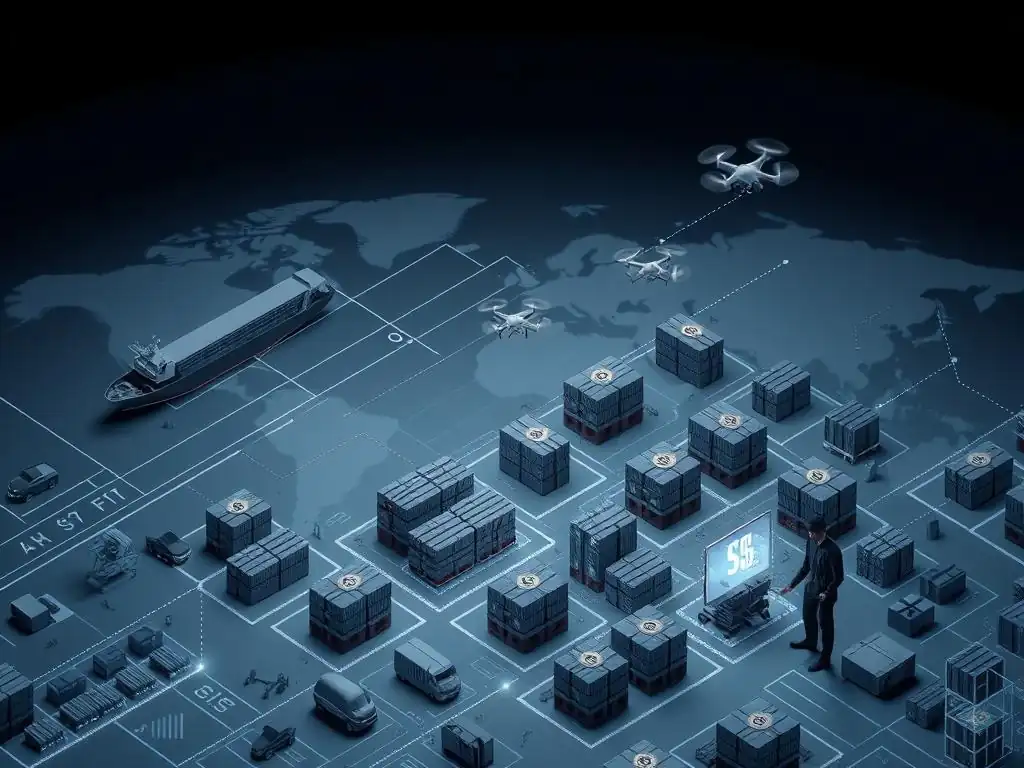
Implementing an NFT-based supply chain solution involves significant upfront and ongoing costs. These include the cost of developing or integrating with blockchain platforms, minting NFTs (which can involve gas fees), developing or integrating software for managing NFTs and connecting them to physical items (e.g., via QR codes or sensors), and potentially hardware costs for tagging products.
Ongoing maintenance costs include network transaction fees, system updates, and the need for personnel with blockchain expertise. While the long-term benefits in efficiency and reduced fraud can outweigh these costs, the initial investment can be substantial, particularly for large enterprises with complex, legacy systems. Businesses need to conduct a thorough cost-benefit analysis and potentially phase in implementation.
Interoperability with Existing Supply Chain Systems
Large enterprises rely on a complex ecosystem of existing IT systems, including Enterprise Resource Planning (ERP), Warehouse Management Systems (WMS), Transportation Management Systems (TMS), and various legacy databases. Integrating a new blockchain-based NFT system with these existing systems can be a significant technical challenge.
Ensuring seamless data flow between the blockchain layer and traditional systems is critical for operational efficiency. This often requires developing custom Application Programming Interfaces (APIs) or using middleware solutions. The need for interoperability extends to different blockchain networks if supply chain partners are using varying platforms. Achieving smooth integration without disrupting current operations is a key hurdle to successful NFT adoption in supply chain.
Overcoming the Challenges: Solutions and Best Practices
Exploring Layer-2 Scaling Solutions for NFTs
To address blockchain scalability limitations, businesses can explore Layer-2 scaling solutions built on top of main blockchains like Ethereum. Technologies such as rollups (Optimistic and Zero-Knowledge) process transactions off-chain in batches and then post summarized data back to the main chain, significantly increasing transaction throughput and reducing fees.
Alternatively, considering blockchain platforms specifically designed for enterprise use cases, often permissioned ledgers or newer public chains with different consensus mechanisms (like Proof-of-Stake or Proof-of-Authority), can offer higher transaction speeds and lower costs suitable for high-volume supply chain data. Evaluating the specific needs of the supply chain and choosing a scalable platform or solution is crucial for handling the volume of transactions associated with NFTs supply chain authenticity ownership tracking.
Implementing Robust Data Security and Privacy Protocols
Protecting sensitive supply chain data linked to NFTs requires careful planning. Instead of storing all metadata directly on a public blockchain, businesses should leverage decentralized storage solutions like IPFS for larger data sets, storing only the hash on-chain for verification. Access to the off-chain data should be controlled through encryption and access management layers.
For highly sensitive information or in supply chains requiring strict confidentiality, permissioned blockchain networks or private blockchains can be considered. These networks restrict participation to known and authorized entities, allowing for greater control over data visibility while still maintaining the core benefits of immutability and transparency among participants. Implementing strong cryptographic practices and access controls is paramount.
Advocating for Clear Regulatory Guidelines
Addressing regulatory uncertainty requires proactive engagement. Businesses and industry consortia should collaborate to advocate for clear legal guidelines and standards for blockchain and NFT usage in supply chain management. Participating in pilot programs and working groups can help shape future regulations.
Until clear frameworks are established, businesses should seek legal counsel to structure their NFT implementations in a way that minimizes legal risks and aligns with existing laws where possible. Focusing on use cases where the NFT serves as a supplementary proof of authenticity and ownership, rather than solely relying on it as the primary legal document, can be a prudent approach in the interim.
Choosing the Right Blockchain Platform for Supply Chain Applications
Selecting the appropriate blockchain platform is critical. Factors to consider include transaction speed, cost per transaction, scalability, security model (public vs. permissioned), ease of integration, and the ecosystem's maturity. Public blockchains offer high decentralization and transparency but may have scalability and cost issues. Permissioned blockchains offer better control over access and potentially higher performance but are less decentralized.
Evaluating the specific requirements of the supply chain – such as the number of participants, transaction volume, data sensitivity, and need for public verifiability – will guide the choice of platform. Pilot projects on different platforms can help determine which technology best fits the organization's needs and provides the necessary foundation for NFTs supply chain authenticity ownership.
Integrating NFTs with Existing ERP and Supply Chain Management Systems
Successful NFT adoption requires seamless integration with existing enterprise systems. This involves developing robust APIs and middleware to connect the blockchain layer with ERP, WMS, TMS, and other relevant systems. Data flows need to be carefully designed to ensure consistency between on-chain and off-chain records.
Investing in integration expertise and potentially utilizing integration platforms as a service (iPaaS) can streamline this process. Phased implementation, starting with a pilot project in a specific area of the supply chain, can help identify and resolve integration challenges before a full-scale rollout. The goal is to make the blockchain and NFT layer an invisible, yet powerful, backend component that enhances, rather than disrupts, existing workflows.
Future Trends and Developments in NFTs for Supply Chain
The Rise of Decentralized Supply Chain Platforms
Looking ahead, the trend is towards more decentralized supply chain platforms built entirely on blockchain technology, leveraging NFTs as core components. These platforms aim to connect all participants directly, removing the need for central intermediaries and creating a more resilient, transparent, and efficient ecosystem.
In such platforms, NFTs could represent not just individual products but also contracts, purchase orders, bills of lading, and other crucial supply chain documents. The entire flow of goods, information, and value could be managed on a distributed ledger, with NFTs serving as the primary mechanism for tracking assets and verifying transactions. This represents a significant shift from current centralized or semi-centralized systems.
Integration of IoT Devices and NFTs for Real-Time Tracking
The combination of Internet of Things (IoT) devices and NFTs holds immense potential for real-time, verifiable supply chain tracking. IoT sensors can collect data on location, temperature, humidity, shock, and other environmental factors as goods move through the supply chain.
This sensor data can be automatically recorded and linked to the corresponding product NFT on the blockchain. For example, a temperature sensor in a cold chain shipment could trigger an update to the NFT's metadata if temperatures exceed a certain threshold. This provides an immutable record of the product's condition and journey, enabling real-time monitoring, automated alerts for deviations, and verifiable proof of handling conditions, further enhancing NFTs supply chain authenticity ownership tracking.
The Potential of NFTs for Supply Chain Finance
NFTs can also play a transformative role in supply chain finance. By representing physical goods as digital assets (NFTs) with verifiable provenance and ownership history, businesses can unlock new financing opportunities. An NFT representing a shipment of goods in transit could be used as collateral for short-term financing.
Financial institutions or decentralized finance (DeFi) protocols could offer financing based on the verifiable value and authenticity of the assets represented by the NFTs. This could provide suppliers with earlier access to capital, improve cash flow throughout the supply chain, and reduce the risk for lenders due to the transparency and security provided by the blockchain-based asset tokenization.
The Role of NFTs in Promoting Sustainable and Ethical Supply Chains
NFTs can significantly contribute to building more sustainable and ethical supply chains. By storing verifiable data about product origin, materials, manufacturing processes, and labor conditions in the NFT's metadata, consumers and businesses can gain unprecedented insight into the ethical footprint of the goods they purchase.
Certifications (like fair trade, organic, or carbon neutral) can be linked to or represented by NFTs, providing immutable proof of compliance. This allows for greater accountability throughout the supply chain and empowers consumers to make informed decisions based on verifiable information. For example, an NFT for a piece of furniture could show that the wood is sustainably sourced and the workers were paid fair wages, verifiable on the blockchain.
Conclusion: The Transformative Potential of NFTs in Supply Chain Management
NFTs: A Key Enabler for Trust and Transparency in the Future of Supply Chains
The future of supply chain management hinges on building trust and achieving radical transparency among all participants. NFTs, with their unique ability to represent individual assets digitally and immutably, are poised to be a key enabler of this transformation. By providing a secure and verifiable link between physical goods and their digital identities on a blockchain, NFTs address fundamental challenges related to authenticity, ownership, and traceability that have plagued traditional supply chains.
The shift towards digital twins, powered by NFTs, creates a single, verifiable source of truth for product information and history. This not only combats the pervasive issue of counterfeiting but also lays the foundation for more efficient, ethical, and resilient supply chain operations. As blockchain technology matures and regulatory clarity increases, the adoption of NFTs in supply chain is expected to grow significantly.
Embracing NFTs for Enhanced Authenticity, Ownership, and Efficiency
The benefits of integrating NFTs into supply chain processes are clear: enhanced transparency and traceability, improved product authenticity and reduced counterfeiting, streamlined ownership transfer, and potential for increased efficiency and cost savings. While challenges related to scalability, data privacy, regulation, cost, and integration remain, ongoing technological advancements and best practices are providing viable solutions.
For businesses looking to future-proof their operations and meet the growing demands for verifiable product information, exploring the potential of NFTs supply chain authenticity ownership is no longer a theoretical exercise but a practical necessity. By strategically implementing NFT solutions, companies can build more trustworthy, efficient, and sustainable supply chains that benefit both businesses and consumers alike.
Frequently Asked Questions
What is the main benefit of using NFTs in the supply chain?
The main benefit is enhanced authenticity and ownership verification. NFTs provide an immutable record of a product's journey, making it difficult to counterfeit or misrepresent its origins. This bolsters consumer trust.
How can NFTs help prove the authenticity of goods in a supply chain?
NFTs act as unique digital certificates. These certificates are linked to physical goods, storing information about their origin, manufacturing process, and ownership history on a transparent and secure blockchain.
Can NFTs help reduce counterfeiting in the supply chain?
Yes, by providing a tamper-proof record of a product's journey from origin to consumer, NFTs make it significantly harder to introduce counterfeit goods into the supply chain undetected.
An NFT can store various data points, including the product's origin, manufacturing date, materials used, ownership history, and even certifications. This creates a digital twin of the physical product.
How do NFTs impact ownership transfer in the supply chain?
NFTs facilitate a transparent and secure transfer of ownership. Every transaction is recorded on the blockchain, providing a clear and auditable trail of ownership throughout the supply chain.
Final Reflection: Securing Trust in a Digital World
The journey through exploring NFTs' transformative role in supply chain management reveals a profound shift in how we perceive and verify authenticity. No longer are we solely reliant on traditional, often opaque, methods of tracking goods. The immutable nature of blockchain, coupled with the unique identifier of an NFT, offers a powerful tool for establishing verifiable ownership and provenance, addressing critical concerns in a world increasingly susceptible to counterfeiting and fraud.
The impact of this technology extends far beyond mere efficiency; it touches upon the very foundation of trust in commerce. Witnessing the potential for NFTs to empower consumers and protect businesses alike underscores the importance of embracing innovation responsibly. Trust is the glue of life. It's the most essential ingredient in effective communication. It's the foundational principle that holds all relationships.
- Stephen Covey. This quote highlights the core issue NFTs in supply chain address: building and maintaining trust in an increasingly complex global marketplace.
Now, consider how you can contribute to this evolution. Reflect on the products you consume and the information you rely on. How might the principles of transparency and verifiable ownership, championed by NFTs, enhance your own life and the lives of others? Embrace the potential of this technology, advocate for its responsible implementation, and become a part of building a future where authenticity and ownership are not just ideals, but verifiable realities.
Unveil the Future: Secure Your Supply Chain with NFTs!
Thank you for exploring how non-fungible tokens can transform supply chain management. We hope you now have a clearer understanding of how NFTs can enhance authenticity and ownership. It’s time to take action and join this exciting evolution.
Here's how you can get started:
- Identify a product in your supply chain where implementing NFT verification could immediately boost trust and transparency. This is your first step toward a more secure future!
- Explore existing NFT marketplaces and platforms specializing in supply chain solutions. Consider potential partners or technologies that align with your specific needs.
- Share this article with colleagues and industry peers to encourage discussions about the benefits and challenges of adopting NFTs in supply chains. Let’s build a community of informed innovators!
Are you ready to revolutionize your supply chain with NFTs? Do you already have a product in mind to begin with? Share your thoughts and challenges in the comments below!
Leave a Reply