
Secure and Seamless: The Potential of Blockchain in Mobile Voting


Welcome to Blockchain Trends, your guide to navigating the evolving landscape of decentralized technologies. Beyond the hype of cryptocurrencies, blockchain is poised to revolutionize industries worldwide.
Are you ready to uncover the truth about blockchain mobile voting security concerns? This article dives deep into the challenges and opportunities of utilizing this transformative technology to enhance democratic processes. Discover how blockchain could reshape elections, but first, let's confront the critical vulnerabilities that need to be addressed. Ready to explore the future of secure voting?
- Blockchain Mobile Voting Security Concerns and Solutions
-
Frequently Asked Questions
- What are the primary security concerns associated with traditional mobile voting systems?
- How does blockchain technology aim to address the security concerns in mobile voting?
- What role does decentralization play in enhancing the security of blockchain-based mobile voting?
- What are some potential challenges in implementing blockchain for mobile voting, despite its benefits?
- How does blockchain ensure voter anonymity while maintaining transparency in mobile voting systems?
- Final Reflection: Embracing Trust in the Digital Ballot Box
- Empower Democracy: Cast Your Future Today!
Blockchain Mobile Voting Security Concerns and Solutions
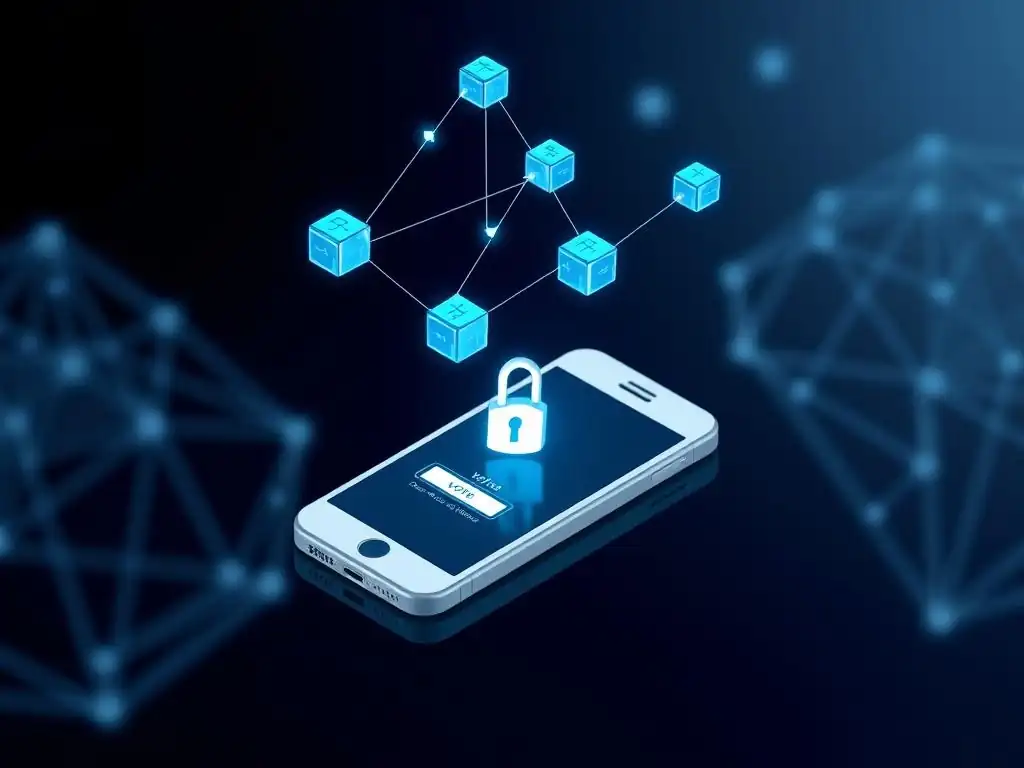
Mitigating Blockchain Mobile Voting Security Risks
While blockchain offers significant security enhancements for election systems, it is not immune to all potential vulnerabilities. A primary concern regarding blockchain mobile voting security centers on the endpoints and network layers rather than the core blockchain itself. Mobile devices, for instance, can be susceptible to malware, phishing attacks, or operating system vulnerabilities that could compromise the voter's device before their vote is encrypted and submitted to the blockchain. This is a critical area where traditional cybersecurity measures remain paramount.
Solutions involve rigorous mobile application security testing, mandatory multi-factor authentication, and secure device attestation processes to verify the integrity of the device being used for voting. Furthermore, the network infrastructure facilitating the connection between the mobile device and the blockchain nodes must be secured against denial-of-service attacks or data interception. Implementing robust network protocols, intrusion detection systems, and using secure VPNs can help mitigate these risks.
Another significant area of blockchain mobile voting security concerns lies within the implementation itself—specifically, potential bugs or flaws in the smart contracts or the voting application's code. Even a perfectly designed blockchain can be undermined by errors in the logic that governs the voting process. For example, a bug in a smart contract could potentially misinterpret vote counts, fail to correctly handle voter eligibility, or even allow unauthorized modifications under specific conditions. To address this, extensive formal verification of smart contracts and application code is essential.
This involves using mathematical methods to prove the correctness of the code against its specifications. Independent security audits by multiple reputable firms are also crucial before deployment. Moreover, using established, battle-tested blockchain frameworks and modular designs can reduce the attack surface and the likelihood of critical errors. These layered security approaches are vital for building trust in blockchain-based mobile voting systems.
Addressing Data Privacy and Voter Anonymity in Blockchain Voting
A key challenge in applying blockchain technology to voting is balancing the inherent transparency and immutability of the ledger with the fundamental requirement of voter anonymity. Public blockchains, by design, record transactions openly, which could potentially link a voter's identity to their vote if not handled carefully. This is one of the significant blockchain mobile voting security concerns that needs sophisticated cryptographic solutions. Simply recording votes directly on a public ledger without obfuscation would compromise the secrecy of the ballot, a cornerstone of democratic elections. Therefore, implementing robust privacy-preserving techniques is paramount.
Advanced cryptographic methods are employed to decouple voter identity from their ballot on the blockchain. Techniques such as zero-knowledge proofs (ZKPs) allow the system to verify the validity of a vote (e.g., confirming the voter is eligible and has not already voted) without revealing who cast which specific ballot. Homomorphic encryption is another technique that permits computations (like tallying votes) to be performed on encrypted data, so the votes remain encrypted even while being counted.
These methods are complex but necessary to maintain privacy. For instance, some experimental systems use a two-layer approach: an identity layer that verifies eligibility off-chain or using separate, permissioned credentials, and a voting layer on the blockchain where votes are recorded pseudonymously using cryptographic identifiers generated via privacy protocols. Ensuring these mechanisms are correctly implemented and resistant to side-channel attacks is a critical aspect of addressing blockchain mobile voting security concerns related to privacy.
Preventing Double Voting and Fraud with Blockchain Technology
One of blockchain's most compelling benefits in the context of elections is its inherent ability to prevent double voting and significantly reduce opportunities for various forms of fraud. Traditional voting systems often rely on centralized databases or manual processes that can be vulnerable to manipulation, such as tallying errors, ballot stuffing, or allowing individuals to vote multiple times. The decentralized and immutable nature of blockchain fundamentally disrupts these avenues for fraud.
Each vote, once cast and validated, is recorded as a transaction on the distributed ledger. This transaction is then verified by multiple independent nodes in the network according to a predefined consensus mechanism.
The process typically involves associating a unique, cryptographic identifier with each eligible voter (without revealing their identity, as discussed previously). When a vote is cast, the system checks this identifier against the ledger to ensure that a vote has not already been recorded for it.
Because the blockchain is immutable, once a valid vote transaction is added to a block and confirmed by the network, it cannot be altered or deleted. This provides a transparent and tamper-proof record of every vote cast, making it virtually impossible to add fake votes or discard legitimate ones without consensus from the majority of the network participants.
This distributed verification and immutable record-keeping directly addresses key blockchain mobile voting security concerns related to the integrity of the vote count and the prevention of casting multiple ballots. The transparency means that anyone can audit the process (up to the point of the anonymous vote being recorded), significantly increasing trust compared to opaque, centralized systems.
Frequently Asked Questions
What are the primary security concerns associated with traditional mobile voting systems?
Traditional mobile voting systems often face concerns related to voter identity verification, potential for hacking or manipulation, and the lack of transparent audit trails. These vulnerabilities can undermine trust in the electoral process.
How does blockchain technology aim to address the security concerns in mobile voting?
Blockchain offers enhanced security through its decentralized and immutable nature. This helps to prevent tampering with votes and provides a more transparent audit trail, improving election integrity.
What role does decentralization play in enhancing the security of blockchain-based mobile voting?
Decentralization distributes the voting data across numerous nodes, making it extremely difficult for a single point of failure to compromise the entire system. This reduces the risk of hacking and ensures greater data integrity.
What are some potential challenges in implementing blockchain for mobile voting, despite its benefits?
Challenges include scalability issues (handling large numbers of votes), ensuring user-friendliness for all voters, and addressing regulatory hurdles related to data privacy and security compliance.
How does blockchain ensure voter anonymity while maintaining transparency in mobile voting systems?
Blockchain uses cryptographic techniques such as zero-knowledge proofs to verify voter eligibility without revealing their identity. This allows for publicly auditable results while preserving voter privacy.
Final Reflection: Embracing Trust in the Digital Ballot Box
The exploration of blockchain's potential in mobile voting reveals a landscape ripe with opportunity, yet shadowed by legitimate blockchain mobile voting security concerns. The promise of enhanced security and transparency is undeniable, but only through rigorous development and careful consideration of potential vulnerabilities can we truly unlock its transformative power for democratic processes.
This technology's influence extends far beyond mere convenience; it touches the very core of civic engagement and trust in electoral systems. The ability to participate in elections securely and remotely, especially for marginalized communities, is a powerful step towards a more inclusive democracy. Democracy cannot succeed unless those who express their choice are prepared to choose wisely. The real safeguard of democracy, therefore, is education.
- Franklin D. Roosevelt. This quote underscores the need for informed citizens, capable of understanding and trusting the systems that underpin their participation.
As we stand at the cusp of this technological revolution, let us not shy away from the challenges that lie ahead. Instead, let us embrace the opportunity to build a future where every vote is not only counted but also secured with the utmost integrity. Consider how you can contribute to this vital conversation, whether through education, advocacy, or simply by demanding transparency and accountability from those shaping the future of our elections. The future of democracy may very well depend on it.
Empower Democracy: Cast Your Future Today!
Thank you for exploring the transformative potential of blockchain technology in mobile voting with us. You now have a better understanding of how this innovation can enhance election security and accessibility. It's time to turn that knowledge into action.
Here are some ways you can support the future of secure and inclusive voting:
- Share this article with your network to raise awareness about the advantages of blockchain voting and encourage important discussions.
- Research blockchain-based voting platforms: Look into organizations developing these solutions and consider attending webinars or demonstrations to learn more about what's currently available.
- Contact your local representatives and encourage them to consider implementing pilot programs for blockchain voting in upcoming elections. This is one of the most impactful steps you can take today.
What specific issues do you see with current voting methods that blockchain technology could help solve in your community? Share your thoughts in the comments below!
Leave a Reply