
The Security Advantages of Blockchain for Real Estate Transactions: Protecting Your Assets

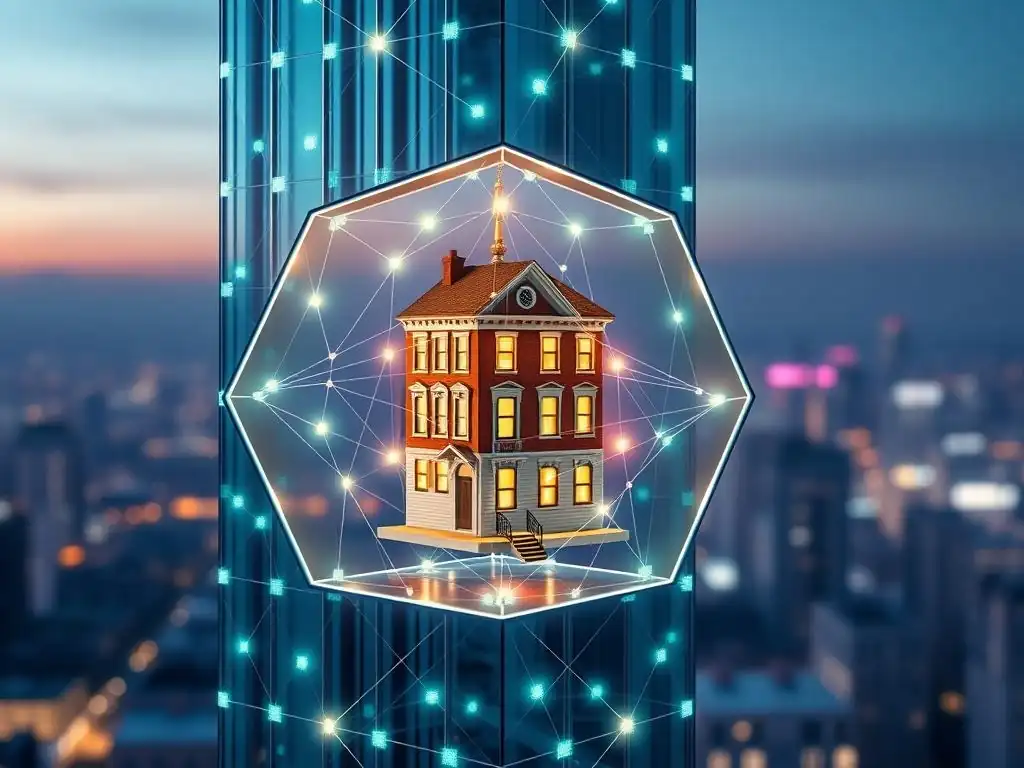
Welcome to Blockchain Trends, your compass in the rapidly evolving world of decentralized technology. Beyond the hype of cryptocurrencies lies a revolution reshaping industries, and we're here to guide you through it. Intrigued by the potential of blockchain? Let's delve into a specific application that's poised to transform a cornerstone of our economy: real estate. Discover how blockchain real estate security benefits are revolutionizing property transactions, offering unprecedented protection and efficiency. Ready to unlock the future of secure asset management? Read on to explore the groundbreaking advantages!
- The Security Advantages of Blockchain for Real Estate Transactions: Protecting Your Assets
- Understanding the Current Security Challenges in Traditional Real Estate
- Blockchain Real Estate Security Benefits: A Deep Dive
- How Blockchain Enhances Security in Real Estate Processes
- Case Studies: Real-World Examples of Blockchain Security in Real Estate
- Addressing Concerns and Challenges Regarding Blockchain Security
- The Future of Blockchain Security in Real Estate
- Conclusion: Blockchain – A Secure Foundation for the Future of Real Estate Transactions
-
Frequently Asked Questions
- What are the primary security benefits of using blockchain for real estate transactions?
- How does blockchain help prevent fraudulent activities in real estate?
- Can blockchain improve data security when storing sensitive real estate information?
- How does blockchain contribute to a more transparent real estate market?
- What role does blockchain play in streamlining security checks and due diligence in real estate deals?
- Final Reflection: Securing the Future of Real Estate
- Unlock Your Real Estate Future: Secure Your Assets Today!
The Security Advantages of Blockchain for Real Estate Transactions: Protecting Your Assets
Introduction: Blockchain's Impact on Real Estate Security
The real estate industry, traditionally reliant on paper-based processes and intermediaries, faces significant security vulnerabilities. Fraud, errors, and lack of transparency plague transactions, leading to financial losses and prolonged disputes. As the value of real estate assets continues to rise globally, the need for robust security measures becomes paramount. This is where blockchain technology emerges as a transformative force, offering a decentralized and immutable ledger that can fundamentally enhance the security of property transactions.
Blockchain's core characteristics – immutability, transparency (for permissioned or public chains), and decentralization – are uniquely suited to addressing the inherent security challenges in real estate. By creating a single, tamper-proof record of ownership, transaction history, and property details, blockchain minimizes opportunities for malicious activity and human error. Exploring the specific blockchain real estate security benefits reveals a path towards a more trustworthy and efficient system for managing valuable property assets.
Understanding the Current Security Challenges in Traditional Real Estate
Risks of Fraud and Forgery in Property Transactions
Traditional real estate transactions are highly susceptible to fraud and forgery, primarily due to reliance on physical documents and centralized databases. A common risk is title fraud, where criminals attempt to transfer property ownership using falsified documents or stolen identities.
In the US alone, title fraud incidents cost property owners and insurers millions annually; while precise aggregate figures vary, estimates often place industry losses from various forms of real estate fraud in the hundreds of millions of dollars per year. For instance, a single fraudulent transaction can result in the loss of a property valued at several hundred thousand or even millions of dollars.
Another significant risk is the alteration of documents such as deeds, mortgages, or contracts. Because these documents often exist in physical form or in easily editable digital formats, they can be intercepted and modified without immediate detection. This vulnerability extends to the entire transaction lifecycle, from initial offers to final closing, creating multiple points where fraud can occur and compromise the integrity of the agreement and ownership record.
Inefficiencies and Vulnerabilities in Existing Systems
Existing real estate systems often involve multiple intermediaries, such as brokers, lawyers, title companies, and government registries. Each intermediary adds a layer of complexity and potential points of failure or vulnerability. Information is frequently siloed, requiring manual verification and data reconciliation across different parties, which is both time-consuming and prone to errors. For example, verifying the authenticity of a deed might involve cross-referencing records across county, state, and private databases, a process that can take weeks and still not guarantee complete accuracy or security against sophisticated attacks.
Furthermore, centralized databases used by land registries can be targets for cyberattacks or internal manipulation. A breach in a government land registry database, while rare, could have catastrophic consequences, potentially compromising the ownership records of millions of properties. The lack of a single, universally verifiable, and tamper-proof record means that verifying the true history and chain of ownership requires navigating a complex and potentially insecure maze of disparate systems and paper trails.
The Need for Enhanced Security in Real Estate Investments
Real estate represents one of the largest asset classes globally, with an estimated total value exceeding $300 trillion. For individuals and institutions, property investments often constitute a significant portion of their wealth. Protecting these valuable assets from fraud, errors, and disputes is therefore critically important. Investors require assurance that their ownership is secure, the transaction process is transparent, and the records are reliable.
The current system's vulnerabilities not only expose investors to financial loss but also create uncertainty and reduce market liquidity. Resolving disputes related to ownership or transaction errors can take years and incur substantial legal costs. Implementing enhanced security measures, such as those offered by blockchain technology, is essential to build trust, reduce risk, and facilitate more efficient and secure real estate investment, unlocking greater potential within this massive market.
Blockchain Real Estate Security Benefits: A Deep Dive
Immutable Record Keeping: Enhancing Trust and Transparency
One of the primary blockchain real estate security benefits is its immutable ledger. Once a transaction or data point is recorded on the blockchain, it is cryptographically linked to the previous block, making it virtually impossible to alter or delete without invalidating the entire chain. This creates a permanent, transparent, and tamper-proof history of all property-related activities, from initial ownership records to subsequent transfers and encumbrances.
This immutability significantly enhances trust among parties involved in a transaction. Every participant with access to the chain can verify the history of the property and be confident that the records have not been fraudulently altered. For instance, recording a property deed or a lien on a blockchain creates a verifiable timestamped entry that cannot be retrospectively changed, providing a level of historical accuracy and security currently unattainable with traditional paper or centralized digital records.
Reduced Risk of Title Fraud with Blockchain Technology
Title fraud is a major threat, but blockchain technology offers a powerful defense. By recording property ownership and transfer history on an immutable distributed ledger, blockchain creates a definitive and verifiable chain of title. Each transfer of ownership is recorded as a transaction, requiring cryptographic signatures from the authorized parties. This makes it extremely difficult for fraudsters to forge deeds or impersonate owners, as they would need to compromise the cryptographic keys associated with the legitimate owner's digital identity on the blockchain.
Consider a scenario where a property title is tokenized and linked to a blockchain address. Any attempt to transfer this token (representing ownership) would require the private key corresponding to the current owner's address. This cryptographic security, combined with the public verifiability of the transaction history on the ledger, drastically reduces the feasibility of executing fraudulent title transfers compared to relying on potentially forgeable paper documents or hackable centralized databases. This is a key aspect of blockchain real estate security benefits.
Streamlined and Secure Property Transactions
Blockchain streamlines the complex real estate transaction process by providing a single, shared source of truth for all parties. Instead of relying on multiple, disparate systems and manual data reconciliation, participants can access the same secure, up-to-date information on the blockchain. This reduces delays and minimizes the risk of errors that often occur when information is transferred between intermediaries.
Furthermore, the transaction process itself is secured by cryptography. Each step, from identity verification to contract execution and fund transfer (potentially via stablecoins on the blockchain), can be recorded and verified on the ledger. This not only speeds up the process – potentially reducing closing times from weeks to days or even hours – but also makes it more secure by ensuring that each action is authorized and recorded in a tamper-proof manner, contributing significantly to blockchain real estate security benefits.
Increased Efficiency and Lower Costs Through Blockchain Automation
Beyond security, blockchain integration leads to increased efficiency and lower costs in real estate. Many manual processes, such as document verification, escrow management, and title searches, can be automated using smart contracts. These self-executing contracts, written in code and deployed on the blockchain, automatically enforce the terms of an agreement when predefined conditions are met, eliminating the need for manual intervention and reducing the risk of human error or deliberate delay.
For example, a smart contract could automatically release funds from an escrow account to the seller once the property deed token has been successfully transferred to the buyer's address on the blockchain and verified. This automation reduces reliance on intermediaries, lowers associated fees (such as escrow fees or some legal costs), and accelerates the transaction flow. This efficiency gain, underpinned by the inherent security of the blockchain, makes the entire process more affordable and faster for both buyers and sellers.
How Blockchain Enhances Security in Real Estate Processes
Secure Digital Identity and Verification for Buyers and Sellers
Establishing and verifying the identities of buyers and sellers is a critical security step in real estate, traditionally involving cumbersome paperwork and in-person checks. Blockchain can facilitate secure digital identity solutions. Users can create decentralized digital identities (often referred to as Self-Sovereign Identity or SSI) that are verified once and then used across multiple transactions without revealing sensitive underlying data unnecessarily.
These digital identities can be linked to cryptographic keys required to initiate or authorize transactions on the blockchain. For instance, a buyer's identity could be verified by a trusted third party (like a government agency or a licensed identity provider) and this verification attested on the blockchain. Subsequent transactions initiated by this buyer would require their private key, cryptographically proving their identity without needing repeated manual checks, significantly enhancing the security and efficiency of the verification process.
Smart Contracts for Automated and Secure Agreements
Smart contracts are a cornerstone of blockchain's application in real estate, enabling automated and secure agreements. Unlike traditional contracts that rely on legal interpretation and manual enforcement, smart contracts are code that executes automatically on the blockchain when specified conditions are met. This eliminates the possibility of one party failing to fulfill their obligations without the system detecting it, as the contract's logic is enforced by the blockchain network itself.
A smart contract for a property sale could hold the digital representation of the property title and the buyer's funds in escrow. Upon verification of certain conditions (e.g., successful identity checks, financing approval recorded on-chain, or a specific date passing), the smart contract would automatically transfer the property token to the buyer's wallet and the funds to the seller's wallet. This automation ensures that the exchange happens simultaneously and correctly according to the agreed-upon terms, drastically reducing the risk of escrow fraud or disputes over fulfillment.
Tokenization of Real Estate Assets for Enhanced Security
Tokenization involves representing real-world assets, like a property, as digital tokens on a blockchain. Each token can represent full ownership or a fractional share of the property. This process inherently enhances security by creating a secure, digital representation of the asset that is tied to the blockchain's immutable ledger. Ownership of the token directly corresponds to ownership of the underlying asset or its fractional value.
Managing property ownership via tokens on a blockchain is inherently more secure than relying on easily forgeable paper deeds. The transfer of tokenized property requires cryptographic authorization from the current owner's digital wallet, making unauthorized transfers extremely difficult. Furthermore, tokenization allows for granular control and transparency over ownership distribution, which is particularly beneficial for fractional ownership models, ensuring that each fractional owner's stake is securely recorded and verifiable on the distributed ledger.
Case Studies: Real-World Examples of Blockchain Security in Real Estate
Propy: Revolutionizing International Real Estate Transactions with Blockchain
Propy is a real-world example demonstrating blockchain real estate security benefits, specifically focusing on international property transactions. The platform uses blockchain technology to provide a secure and transparent environment for buying and selling properties across borders. They facilitate the entire transaction process online, from offer to closing, recording key steps and documents on the blockchain.
In one notable transaction in 2017, Propy facilitated the sale of an apartment in Kiev, Ukraine, to a buyer in New York, USA, entirely on their blockchain-based platform. The property deed was recorded on the Ethereum blockchain, marking one of the first known blockchain-based property transfers. This case highlighted the potential for increased security by providing a tamper-proof record of the transaction and ownership transfer, bypassing some of the complexities and security risks associated with traditional international wire transfers and physical document exchange.
Sweden's Lantmäteriet Land Registry: Pioneering Blockchain for Property Records
Sweden's Landmäteriet, the national land registry, has been a pioneer in exploring the use of blockchain for property records. Working with partners like ChromaWay and Telia, they developed a proof-of-concept system to test recording property transactions on a distributed ledger. The goal was to improve efficiency, transparency, and crucially, security by creating an immutable record of ownership and transfer events.
The pilot project demonstrated that using blockchain could potentially reduce the time required to process a property transaction from months to days, while also significantly enhancing security. By having all parties – buyers, sellers, banks, agents, and the land registry – interact with a shared, secure ledger, the risk of errors, fraud, and disputes arising from inconsistent or manipulated records is substantially reduced. While not yet fully implemented nationwide, this initiative showcases the potential for governments to leverage blockchain for core land registry security.
RealT: Enabling Secure and Transparent Tokenized Property Investments
RealT is a platform that leverages blockchain tokenization to allow individuals globally to invest fractionally in US real estate. They buy properties, place them into a legal structure (like an LLC), and then issue tokens on the Ethereum blockchain that represent shares in that legal entity, and thus, fractional ownership of the underlying property. Each token holder's ownership stake is recorded on the public blockchain.
This model enhances security for investors in several ways. Firstly, the record of ownership (holding the tokens) is immutable and verifiable on the blockchain, providing clear proof of investment. Secondly, the platform uses smart contracts to distribute rental income proportionally to token holders automatically, adding transparency and reducing the potential for manual errors or fraud in payouts. While not transferring the deed directly on-chain, the tokenization of equity provides significant blockchain real estate security benefits for fractional investors by ensuring transparent and secure management of ownership stakes and income distribution.
Addressing Concerns and Challenges Regarding Blockchain Security
Scalability and Performance Considerations for Real Estate Blockchain Applications
While blockchain offers significant security advantages, scalability remains a key challenge for widespread real estate adoption. Public blockchains like Ethereum, while secure, can face congestion and high transaction fees (gas costs) when network activity is high. Processing potentially millions of property transactions annually on such a network requires significant improvements in throughput. Private or permissioned blockchains can offer higher transaction speeds (e.g., thousands per second compared to tens per second for some public chains) and lower costs, but they might sacrifice some degree of decentralization.
Addressing scalability involves exploring various solutions, including layer-2 scaling protocols (like rollups for public chains) or utilizing blockchain platforms specifically designed for high transaction volumes and enterprise use cases. For a national land registry or a major real estate platform, achieving the necessary transaction speed and capacity without compromising the core security benefits of the blockchain is a critical technical hurdle that requires careful architectural design and potentially hybrid approaches.
Regulatory Landscape and Legal Frameworks for Blockchain in Real Estate
The regulatory environment for using blockchain in real estate is still evolving, presenting legal challenges. While blockchain can provide a secure and immutable record, its legal standing as proof of ownership varies significantly across jurisdictions. For a blockchain record to replace or supplement traditional paper deeds and registry entries, governments need to enact specific legislation recognizing the validity of blockchain-based property transfers and ownership records.
Furthermore, legal frameworks need to address issues like smart contract enforceability, data privacy (especially with public blockchains and GDPR-like regulations), and the legal implications of tokenized property ownership. Until clear legal frameworks are established and widely accepted, the full blockchain real estate security benefits cannot be realized, as traditional, legally recognized processes may still be required in parallel, adding complexity rather than reducing it.
Security Audits and Best Practices for Blockchain-Based Real Estate Systems
Implementing blockchain in real estate requires rigorous security audits and adherence to best practices, just like any complex software system. While the blockchain ledger itself is highly secure due to cryptography and decentralization, the applications built on top of it (smart contracts, user interfaces, identity management systems) can have vulnerabilities. Smart contracts, once deployed, are often immutable, meaning bugs or security flaws in the code are difficult or impossible to fix without complex upgrades or migrations.
Therefore, extensive security audits of smart contracts and the overall platform architecture are essential before deployment. Best practices also include secure key management for users (as losing a private key could mean losing access to your property token), robust identity verification processes off-chain (even if linked on-chain), and continuous monitoring for potential threats. Ensuring the security of the blockchain platform and its associated applications is as important as leveraging the inherent security of the blockchain itself.
The Future of Blockchain Security in Real Estate
Emerging Trends in Blockchain-Based Real Estate Security Solutions
The future of blockchain security in real estate is likely to see the integration of several emerging trends. One is the increased use of Zero-Knowledge Proofs (ZKPs), which allow parties to prove they possess certain information (like identity verification or meeting transaction criteria) without revealing the underlying data itself. This could significantly enhance privacy in real estate transactions conducted on public or permissioned blockchains while maintaining verifiability and security.
Another trend is the development of specialized real estate blockchain protocols designed with the industry's specific needs in mind, including high transaction throughput, robust identity layers, and features compliant with real estate regulations. Furthermore, expect to see more sophisticated smart contracts capable of handling complex transaction logic, integrating with traditional financial systems, and automating more aspects of property management securely on-chain.
The Role of Decentralized Finance (DeFi) in Securing Real Estate Assets
Decentralized Finance (DeFi) platforms built on blockchain can play a significant role in securing real estate assets and related financial processes. DeFi protocols can enable secure, transparent, and automated financing options like mortgage origination and servicing using smart contracts. Instead of relying on traditional banks and their centralized systems, borrowers and lenders could interact directly on the blockchain, with loan terms, payment schedules, and collateral (like tokenized property) managed securely by code.
This integration could reduce counterparty risk and increase transparency in real estate financing, which is a critical component of transactions. For instance, a DeFi protocol could automatically trigger actions based on loan repayment status or property value changes, all recorded immutably on the ledger. While still in early stages, the convergence of DeFi and tokenized real estate holds promise for enhancing the security and efficiency of financing property assets.
Predictions for the Widespread Adoption of Blockchain in the Real Estate Industry
Widespread adoption of blockchain in the real estate industry is not a question of if, but when. While challenges related to regulation, scalability, and industry inertia persist, the compelling blockchain real estate security benefits are driving increasing interest and pilot programs globally. It is plausible that within the next five to ten years, we will see governments adopting blockchain for land registries, major real estate platforms integrating blockchain for transaction management, and tokenized property becoming a more common investment vehicle.
The transition will likely be gradual, starting with specific use cases like title insurance improvements, escrow automation via smart contracts, or fractional ownership platforms. As pilot programs demonstrate success and regulatory clarity emerges, the adoption will accelerate. The long-term prediction is that blockchain will become an invisible but essential layer underlying real estate transactions, providing the unprecedented security, transparency, and efficiency needed for a modern, global property market.
Conclusion: Blockchain – A Secure Foundation for the Future of Real Estate Transactions
Frequently Asked Questions
What are the primary security benefits of using blockchain for real estate transactions?
Blockchain offers enhanced security through its immutable ledger, making it difficult to tamper with records. This transparency and security reduces fraud and increases trust in the transaction process.
How does blockchain help prevent fraudulent activities in real estate?
Blockchain's tamper-proof nature ensures that all transaction records are permanently stored and verifiable. This makes it significantly harder for fraudsters to alter documents or engage in deceptive practices.
Can blockchain improve data security when storing sensitive real estate information?
Yes, blockchain utilizes cryptographic techniques to secure data, making it highly resistant to unauthorized access. This ensures the confidentiality and integrity of sensitive information like ownership records and financial details.
How does blockchain contribute to a more transparent real estate market?
Blockchain creates a shared, distributed ledger that is accessible to authorized parties. This increased transparency reduces information asymmetry and promotes fair dealing in real estate transactions.
What role does blockchain play in streamlining security checks and due diligence in real estate deals?
Blockchain can automate many security and verification processes by providing instant access to verified property information. This speedier and more reliable verification process reduces time and costs associated with traditional due diligence.
Final Reflection: Securing the Future of Real Estate
The exploration of blockchain's security benefits in real estate, as detailed throughout this article, is not merely a theoretical exercise; it's a vital discussion for today's rapidly evolving digital landscape. The promise of enhanced transparency, immutability, and security offered by blockchain technology directly addresses the persistent vulnerabilities plaguing traditional real estate transactions. This is no longer a futuristic concept, but a present-day solution ready to revolutionize how we buy, sell, and manage property.
The impact of blockchain on real estate extends far beyond just preventing fraud; it's about fostering trust and efficiency within a system often characterized by complexity and opacity. Witnessing the potential for streamlined processes, reduced costs, and increased accessibility is truly inspiring, and it underscores the transformative power of this technology. The future of real estate is not just about bricks and mortar, it's about the data that surrounds them, and blockchain is the key to unlocking that data's full potential.
This quote encapsulates the shift we're seeing towards a more secure and transparent real estate ecosystem.
As you consider the implications of blockchain technology on real estate security, I urge you to reflect on the role you can play in embracing this innovation. Whether you're a buyer, seller, investor, or industry professional, understanding and advocating for the adoption of blockchain can contribute to a more secure, efficient, and equitable future for real estate. Let's work together to build a future where property ownership is truly protected and accessible to all.
Unlock Your Real Estate Future: Secure Your Assets Today!
Thank you for exploring the potential of blockchain technology to transform real estate security. We hope you gained valuable insights into how this innovative approach can safeguard your investments and simplify transactions. Are you ready to take the next step?
Here's how to get started:
- Research local blockchain-based real estate platforms. Understanding how these platforms are being utilized in your area will give you practical knowledge of the technology's application.
- Share this article with your network. Help raise awareness about the security advantages blockchain offers in real estate.
- Join local or online communities focused on blockchain and real estate. Networking with industry peers can provide new ideas, support, and a deeper understanding of emerging solutions.
What steps are you planning to take to protect your real estate investments with blockchain? Share your thoughts in the comments below!
Leave a Reply