
Blockchain and the Internet of Things (IoT): Synergies and Opportunities


Welcome to Blockchain Trends, your gateway to understanding the real-world impact of blockchain technology.
Beyond the hype surrounding cryptocurrencies, a revolution is brewing. Curious about the exciting potential when digital ledgers meet the physical world? Our deep dive into Blockchain IoT integration opportunities will unveil the synergies, challenges, and transformative power of connecting these two groundbreaking technologies. Discover how this powerful combination is poised to reshape industries and redefine the future. Let's explore!
- How Blockchain Enhances IoT Security and Trust
- Key Benefits of Blockchain IoT Integration for Businesses
-
Blockchain IoT Integration Across Industries
- Supply Chain Management: Tracking and Tracing Goods with Blockchain and IoT
- Healthcare: Secure and Interoperable Medical Device Data with Blockchain
- Smart Cities: Enhancing Security and Efficiency with Blockchain-Powered IoT
- Energy Sector: Decentralized Energy Management with Blockchain and IoT
- Agriculture: Improving Traceability and Efficiency in Food Production with Blockchain IoT
- Use Cases: Real-World Examples of Blockchain and IoT Synergies
- Overcoming Challenges in Implementing Blockchain IoT Solutions
- The Future of Blockchain and IoT: Trends and Predictions
- Conclusion: Maximizing Blockchain IoT Integration for Innovation
-
Frequently Asked Questions
- How does blockchain enhance the security of IoT devices?
- What are some potential Blockchain IoT integration opportunities in supply chain management?
- How can DeFi (Decentralized Finance) benefit from the integration of Blockchain and IoT?
- What role does regulation play in the widespread adoption of Blockchain IoT integration?
- What are the future trends to watch out for in Blockchain IoT integration?
- Final Reflection: Embracing the Decentralized Future
- Dive Deeper: Unlock the Power of Blockchain & IoT!
How Blockchain Enhances IoT Security and Trust
Addressing IoT Security Vulnerabilities with Blockchain
The proliferation of Internet of Things (IoT) devices has introduced significant security challenges. Common vulnerabilities include weak authentication mechanisms, insecure software/firmware updates, and the potential for data breaches or manipulation at centralized points. IoT devices can be compromised and used in botnets for Distributed Denial of Service (DDoS) attacks, or attackers might inject malicious data into IoT streams, leading to erroneous decisions or system failures. Blockchain's inherent characteristics, such as its distributed nature and cryptographic hashing, make it significantly harder for malicious actors to tamper with recorded data or compromise device integrity compared to traditional centralized systems.
Blockchain provides a robust framework for managing device identities and enforcing access control within IoT networks. Each device can be assigned a unique, immutable identity on the blockchain, verified using cryptographic signatures. This decentralized identity management prevents unauthorized devices from joining the network. Furthermore, smart contracts can define granular permissions for device interactions and data access, ensuring that only authorized entities can read specific data streams or send commands to devices, thereby mitigating risks associated with compromised credentials or insider threats.
Data Integrity and Authentication in IoT Networks Using Blockchain
Ensuring the integrity of data generated by potentially billions of IoT devices is paramount for reliable decision-making and automation. When IoT data is recorded on a blockchain, it is typically bundled into blocks, hashed, and linked cryptographically to the previous block. This creates an immutable chain where any alteration to a data point, even a single bit, would change its hash and break the link in the chain, making tampering immediately obvious. This provides a high degree of confidence that the data is authentic and has not been manipulated since it was recorded on the ledger.
Authentication is another critical area where blockchain adds value. IoT devices can authenticate themselves and the data they transmit using private keys. The corresponding public key, stored securely on the blockchain, allows any participant to verify that the data originated from a legitimate device and has not been spoofed. This cryptographic authentication mechanism is far more secure than relying on simple passwords or centralized certificate authorities, which can be single points of failure. This robust authentication underpins many promising Blockchain IoT integration opportunities.
Establishing Trust and Transparency in IoT Ecosystems with Distributed Ledgers
Many IoT applications involve multiple stakeholders who need to trust the data and the interactions within the ecosystem (e.g., manufacturers, service providers, consumers, regulators). Traditional systems often rely on central authorities or intermediaries to establish trust, which can be slow, expensive, and prone to single points of failure or corruption. A distributed ledger, like a blockchain, provides a shared, single source of truth for all participants. All transactions and data entries are recorded immutably and are visible to relevant parties according to defined permissions.
This shared, transparent ledger fosters trust among disparate entities who may not inherently trust each other. For example, in a supply chain tracked by IoT sensors, both the sender and receiver can verify the temperature data of a shipment recorded on the blockchain, eliminating disputes based on conflicting records. This transparency and shared truth enable more efficient collaborations and can unlock new business models built on trusted data flows, highlighting significant Blockchain IoT integration opportunities for creating collaborative ecosystems.
Key Benefits of Blockchain IoT Integration for Businesses
Enhanced Security and Reduced Risk in IoT Deployments
Integrating blockchain technology into IoT deployments directly translates into enhanced security and reduced business risk. By mitigating vulnerabilities related to data integrity, device identity, and access control, companies can significantly decrease the likelihood and impact of cyberattacks, data breaches, and operational disruptions caused by compromised devices or data. This leads to fewer financial losses from theft, fraud, or system downtime, and protects the company's reputation. Estimates suggest that strong IoT security could prevent billions in losses annually due to cyber incidents (approximation based on industry reports).
Consider the risk reduction in specific business contexts. A smart manufacturing facility relying on blockchain-secured IoT sensors for process automation can prevent malicious interference that could lead to equipment damage or faulty products. In logistics, tracking high-value goods with blockchain-verified IoT data reduces the risk of cargo theft or counterfeiting. These tangible security improvements directly contribute to a healthier bottom line and are compelling reasons to explore Blockchain IoT integration opportunities.
Improved Data Management and Control in IoT Systems
The sheer volume and diversity of data generated by IoT devices pose significant data management challenges. Centralized databases can become bottlenecks, single points of failure, and create data silos. Blockchain offers a decentralized approach to store and manage a secure, append-only log of critical IoT data. This distributed architecture enhances resilience and availability. Furthermore, smart contracts can provide granular control over data access and usage, allowing businesses to manage who can view or utilize specific data streams with precision, enhancing privacy and compliance.
Beyond internal management, improved data control opens avenues for data monetization. Companies can securely share or even sell access to anonymized or aggregated IoT data recorded on the blockchain to third parties (e.g., market researchers, urban planners) while maintaining data integrity and ensuring compliance with data protection regulations. This ability to securely manage and potentially derive value from vast amounts of IoT data is a significant benefit of Blockchain IoT integration.
Automation and Efficiency Gains through Smart Contracts in IoT
Smart contracts are a powerful tool within the blockchain ecosystem that can automate actions based on conditions met by data received from IoT devices. These self-executing agreements remove the need for manual intervention or intermediaries in many processes. For example, a smart contract could automatically trigger a payment to a logistics provider when IoT sensors confirm a shipment has arrived at its destination and temperature conditions were maintained throughout the journey.
This automation capability leads to substantial efficiency gains across various workflows. In predictive maintenance, an IoT sensor detecting abnormal vibration in a machine can trigger a smart contract to automatically order a replacement part and schedule a service technician. In supply chain finance, verified delivery data from IoT devices can automatically release payments, speeding up cash flow. These automated, trustless interactions streamline operations, reduce administrative overhead, and minimize human error, presenting clear Blockchain IoT integration opportunities for operational excellence.
Cost Reduction and Operational Efficiency with Blockchain-Enabled IoT
The combined benefits of enhanced security, improved data management, and automation via smart contracts ultimately lead to significant cost reductions and increased operational efficiency in Blockchain-enabled IoT systems. Reduced security incidents mean lower costs associated with recovery, legal liabilities, and reputational damage. Automation decreases labor costs and speeds up transaction times by removing intermediaries. Decentralized data storage can potentially reduce the reliance on expensive centralized infrastructure.
Specific areas of cost saving include streamlined supply chain logistics, reduced disputes due to immutable data, and more efficient energy consumption management through decentralized grids. For instance, peer-to-peer energy trading enabled by smart meters and blockchain can reduce transaction fees charged by traditional energy retailers. Proactive maintenance triggered by reliable IoT data prevents costly equipment failures and unplanned downtime. These operational efficiencies make exploring Blockchain IoT integration opportunities a compelling proposition for businesses aiming to optimize their operations.
Blockchain IoT Integration Across Industries
Supply Chain Management: Tracking and Tracing Goods with Blockchain and IoT
Modern supply chains are complex, often involving numerous parties across different geographies. Lack of visibility, issues with trust between participants, and challenges in verifying the authenticity and condition of goods are common problems. IoT sensors (such as GPS trackers, temperature/humidity sensors, accelerometers) can provide real-time data about a product's location and environmental conditions as it moves through the supply chain. Recording this immutable data on a blockchain creates a transparent, tamper-proof history of the product's journey from origin to destination.
This integration provides unparalleled traceability. In the case of a food safety issue, authorities can quickly identify the source and affected batches by tracing the products back through the blockchain record linked to IoT sensor data. For high-value goods or pharmaceuticals, this combination helps combat counterfeiting by providing verifiable proof of origin and handling conditions. Companies like IBM Food Trust have demonstrated how blockchain and IoT can enhance food supply chain transparency, reducing the time to trace an item from days to seconds in pilot programs involving major retailers and suppliers (approximation based on IBM reports).
Healthcare: Secure and Interoperable Medical Device Data with Blockchain
Healthcare data, particularly sensitive patient information generated by wearable health monitors, remote patient monitoring devices, and other medical IoT equipment, requires the highest levels of security and privacy. Traditional systems often suffer from data silos between different healthcare providers and devices, hindering interoperability and comprehensive patient care. Blockchain can provide a secure, decentralized layer for managing access to this data, giving patients control over their health records via private keys and smart contracts defining access permissions.
Beyond security, blockchain can facilitate interoperability. Instead of storing the actual sensitive patient data on the blockchain, the ledger can store encrypted hashes or pointers to data stored securely off-chain, along with access permissions managed by smart contracts. This allows authorized healthcare providers to access relevant patient data from various sources securely and efficiently, improving diagnosis and treatment. Pilot projects exploring blockchain for health data management have shown potential for reducing administrative costs and improving data sharing efficiency while maintaining compliance with regulations like HIPAA (conceptual example based on industry exploration).
Smart Cities: Enhancing Security and Efficiency with Blockchain-Powered IoT
Smart cities rely heavily on vast networks of interconnected IoT devices to manage everything from traffic flow and waste management to public safety and energy consumption. The security of this critical infrastructure and the integrity of the data it generates are paramount. Blockchain can secure communications between city infrastructure components and provide a trusted ledger for recording data streams from diverse sensors, ensuring that decisions based on this data are reliable and resistant to tampering.
Specific applications include decentralized identity management for city services and assets, secure data sharing between different municipal departments, and enabling peer-to-peer transactions for services. For instance, blockchain could manage secure payments and access for electric vehicle charging stations based on usage data from IoT sensors. It can also provide a tamper-evident log of sensor readings used for environmental monitoring or structural health assessments of buildings, enhancing public safety and operational efficiency.
Energy Sector: Decentralized Energy Management with Blockchain and IoT
The energy sector is undergoing a transformation with the rise of distributed renewable energy sources like rooftop solar panels and home battery storage systems. This creates opportunities for localized energy generation and trading. IoT smart meters are essential for measuring energy production and consumption in real-time. Blockchain technology, combined with these smart meters, can enable decentralized, peer-to-peer energy trading markets.
In such a system, residents with surplus solar energy, as recorded by their smart meter, could automatically sell that energy to neighbors via a blockchain platform. Smart contracts would execute the transactions based on real-time energy flows and predefined prices. This approach reduces reliance on traditional utility infrastructure for localized trading, increases grid efficiency, and incentivizes the adoption of renewable energy. Projects like the Brooklyn Microgrid (conceptual example) demonstrate the feasibility of using blockchain and IoT for local energy markets, showing potential for increased local energy autonomy and efficiency.
Agriculture: Improving Traceability and Efficiency in Food Production with Blockchain IoT
The agriculture industry faces challenges related to traceability, food safety, and optimizing resource usage. IoT sensors deployed in fields can monitor soil conditions, weather patterns, and crop health. Sensors can also track produce during harvesting, processing, and transportation, recording data like temperature and location. Integrating this data onto a blockchain creates an immutable record of a food product's journey from farm to table.
This provides complete transparency and traceability, which is crucial for food safety recalls and verifying organic or ethical farming practices. Consumers could potentially scan a product to view its entire history recorded on the blockchain. Furthermore, farmers can use the sensor data recorded on the blockchain for detailed analysis and optimization of farming practices, such as precision irrigation or fertilization, leading to improved yields and reduced waste. Pilot programs in agricultural supply chains have shown that blockchain and IoT can significantly reduce the time and cost associated with tracing produce origins (approximation based on industry pilots).
Use Cases: Real-World Examples of Blockchain and IoT Synergies
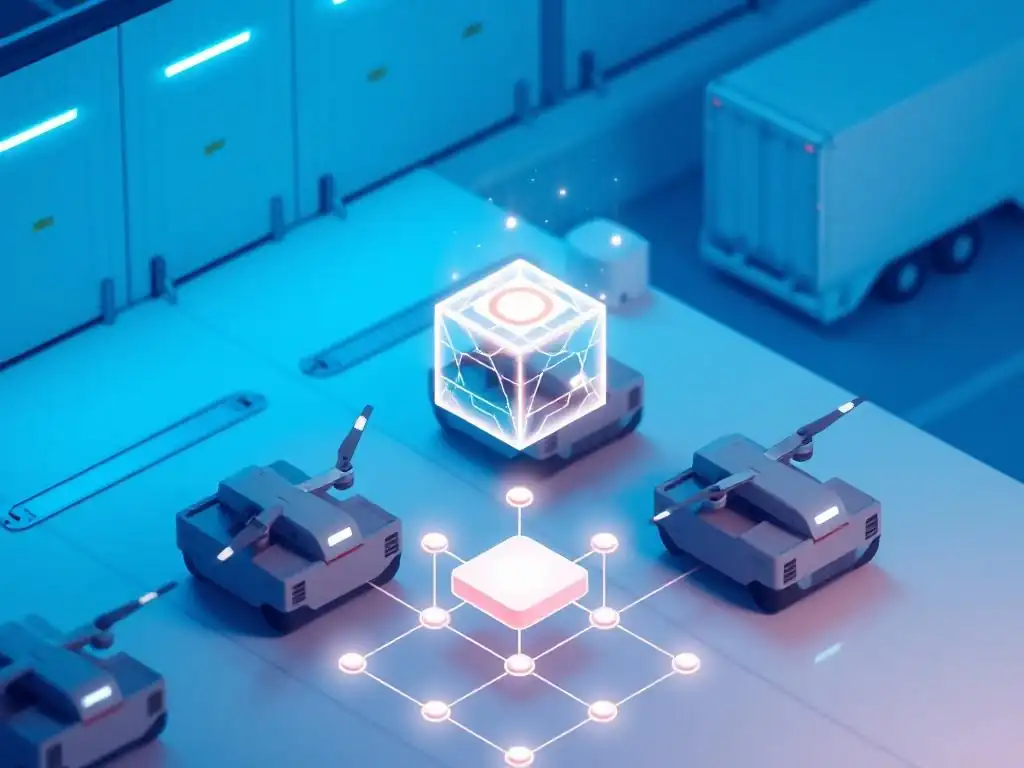
Pharmaceutical Supply Chain Tracking with Blockchain IoT
One critical application of Blockchain IoT integration is securing the pharmaceutical supply chain. Counterfeit drugs are a major global problem, posing significant health risks and causing billions in losses annually (approximation). Sensitive medications often require strict temperature and handling conditions during transport. Companies are exploring solutions where IoT sensors monitor the temperature, humidity, and location of drug shipments in real-time.
This sensor data is then recorded on a permissioned blockchain, creating a tamper-proof log of the drug's journey and conditions. This allows manufacturers, distributors, pharmacies, and even regulators to verify the authenticity and integrity of the medication at every step. Such systems can drastically reduce the risk of counterfeit drugs entering the supply chain and ensure that temperature-sensitive medications remain viable, ultimately protecting patient safety and reducing financial liabilities for pharmaceutical companies.
Remote Patient Monitoring with Blockchain-Secured IoT Devices
Remote patient monitoring (RPM) using IoT devices (like smartwatches, continuous glucose monitors, connected blood pressure cuffs) is becoming increasingly common, allowing healthcare providers to track patients' vital signs outside traditional clinical settings. However, the privacy and security of this highly sensitive personal health data are paramount concerns. Blockchain offers a solution by providing a secure, decentralized way to manage access to this data.
Patient data from IoT devices can be encrypted and timestamped, with hashes or encrypted pointers stored on a blockchain. Patients can control who has access to their data (e.g., their doctor, a specialist, a family member) via smart contracts. This ensures data privacy and integrity while enabling authorized access for better diagnosis and personalized care. Pilot programs have shown that blockchain-secured RPM can improve patient engagement and potentially reduce the need for costly hospital visits, leading to improved health outcomes and cost savings.
Smart Metering and Energy Trading with Blockchain IoT
The energy sector is seeing transformative Blockchain IoT integration opportunities, particularly in decentralized energy markets. Projects are emerging where IoT smart meters not only measure energy consumption but also generation from sources like rooftop solar panels. This real-time data is recorded on a blockchain, enabling peer-to-peer energy trading among participants.
In these systems, smart contracts automatically execute transactions when a participant with surplus energy wants to sell it to a neighbor needing power, based on the readings from their smart meters. This bypasses traditional energy retailers for local transactions, potentially reducing costs and increasing efficiency. Such initiatives empower consumers, encourage the adoption of renewable energy, and create more resilient, localized energy grids, demonstrating a powerful synergy between blockchain and IoT in creating new, efficient markets.
Overcoming Challenges in Implementing Blockchain IoT Solutions
Scalability Issues in Blockchain Networks for IoT
One of the primary challenges in implementing Blockchain IoT solutions is the scalability of current blockchain networks. IoT ecosystems can involve billions of devices generating vast amounts of data at high frequency. Public blockchains like Bitcoin or Ethereum, while decentralized and secure, have limited transaction throughput (e.g., early Ethereum handled around 15-30 transactions per second). This volume is insufficient to handle the data stream from a large-scale IoT deployment, which might require thousands or even millions of transactions per second.
Efforts to address this include developing more scalable blockchain architectures and distributed ledger technologies (DLTs) specifically designed for high transaction volumes and low latency, such as Hyperledger Fabric, IOTA's Tangle, or newer public chain scaling solutions. Layer 2 solutions, like state channels or sidechains, process transactions off the main chain, submitting only final states to the ledger, significantly increasing throughput. These advancements are crucial for realizing the full potential of large-scale Blockchain IoT integration opportunities.
Interoperability Challenges Between Different Blockchain and IoT Platforms
The landscape of both blockchain technology and IoT platforms is highly fragmented. There are numerous blockchain protocols (public, private, consortium) and an even larger number of IoT devices, protocols, and data formats. Getting these disparate systems to communicate and interact seamlessly is a significant technical hurdle. An IoT device using one communication protocol might need to interact with a smart contract on a blockchain platform different from the one used by another device in the same ecosystem.
Addressing this requires developing middleware solutions and establishing industry standards. Middleware can translate data between different IoT device protocols and blockchain interfaces. Industry consortiums and alliances are working towards defining common data models and communication standards to facilitate interoperability between various IoT platforms and DLTs. Achieving true interoperability is key to building complex, multi-stakeholder Blockchain IoT integration solutions.
Regulatory Considerations and Compliance for Blockchain IoT Deployments
The convergence of blockchain and IoT raises complex regulatory and compliance questions. Regulations regarding data privacy (like GDPR or CCPA approximations), data ownership, and liability are still evolving, especially concerning immutable data stored on distributed ledgers. Deploying Blockchain IoT solutions in regulated industries like healthcare, finance, or energy requires careful consideration of existing laws and potential future regulations.
Ensuring compliance means designing solutions with privacy by design, potentially utilizing techniques like zero-knowledge proofs or storing sensitive data off-chain with hashes on-chain. Legal experts must be consulted to navigate the complex interplay between distributed ledger technology and existing data protection and industry-specific regulations. Navigating the legal landscape is a critical step before fully capitalizing on Blockchain IoT integration opportunities, particularly in sensitive sectors.
Addressing Data Privacy Concerns in Blockchain-Based IoT Systems
While blockchain enhances security, the immutable and potentially public nature of some ledgers can raise privacy concerns, especially when dealing with sensitive IoT data (e.g., personal health data, location tracking). Once data is on the blockchain, it is difficult or impossible to remove, which can conflict with "right to be forgotten" principles in some privacy regulations.
Solutions involve technical and architectural choices. Using permissioned or private blockchains where access is restricted to known participants can enhance privacy. Encrypting data before it is stored on the ledger, so only those with the decryption key can read it, is another approach. Alternatively, storing only hashes of sensitive data on the blockchain while keeping the actual data in secure, controlled off-chain storage systems allows for verification without exposing the raw information. These strategies are essential for building privacy-preserving Blockchain IoT integration solutions.
The Future of Blockchain and IoT: Trends and Predictions
The Evolution of Blockchain Platforms for IoT Applications
Blockchain technology is continuously evolving, with new platforms and features being developed to meet specific industry needs, including those of the IoT. Future blockchain platforms are likely to be more optimized for the unique requirements of IoT devices – handling high volumes of small transactions, supporting lightweight nodes that can run on resource-constrained devices, and incorporating built-in features for device identity management and secure over-the-air updates.
Consensus mechanisms are also being refined to be more energy-efficient and faster, suitable for real-time IoT applications. We can expect to see more purpose-built DLTs designed from the ground up to address the scalability, latency, and interoperability challenges inherent in massive IoT deployments. This specialization will make Blockchain IoT integration more feasible and effective for a wider range of use cases.
The Role of Edge Computing in Blockchain IoT Integration
Edge computing, which involves processing data closer to the source (the IoT device), is a crucial complementary technology for Blockchain IoT integration. Instead of sending all raw data from potentially billions of devices to a central cloud or directly to a blockchain, edge devices can perform initial data processing, filtering, and aggregation.
This reduces the volume of data that needs to be sent over networks and recorded on the blockchain, addressing scalability concerns. Edge devices can also host lightweight blockchain nodes, allowing for localized data validation and transaction processing, reducing latency and improving network efficiency. The synergy between edge computing and blockchain will enable more responsive, efficient, and scalable decentralized IoT ecosystems.
Emerging Trends: Decentralized IoT Marketplaces and Autonomous Devices
Looking ahead, emerging trends point towards more sophisticated Blockchain IoT integration opportunities. Decentralized marketplaces are being explored where IoT devices can autonomously interact and transact with each other or with users. For instance, a smart appliance could automatically order consumables when low, paying via cryptocurrency using a built-in wallet secured by blockchain.
Furthermore, blockchain can provide the secure identity and transactional layer needed for increasingly autonomous devices. A future where autonomous vehicles or delivery drones verify their identity, receive instructions via smart contracts, report status securely, and even make payments based on sensor data is becoming plausible. These trends highlight the potential for blockchain to enable truly autonomous and economically interactive IoT ecosystems, moving beyond simple data logging to complex, decentralized machine-to-machine interactions.
Conclusion: Maximizing Blockchain IoT Integration for Innovation
The Transformative Potential of Blockchain and IoT Convergence
The convergence of blockchain and IoT is poised to be a truly transformative force across numerous industries. Individually, IoT enables the collection of vast amounts of real-world data, while blockchain provides a framework for secure, transparent, and decentralized transactions and data management. Together, they create powerful synergies, enabling applications that were previously difficult or impossible due to limitations in trust, security, and efficiency. The combination facilitates the creation of decentralized IoT ecosystems where devices can interact autonomously and data can be shared securely and transparently among multiple stakeholders.
This convergence offers the potential to revolutionize everything from global supply chains and critical infrastructure management to personal healthcare and energy systems. By providing a foundation of trust, security, and automation, Blockchain IoT integration can unlock new levels of efficiency, create innovative business models, and enhance the reliability and resilience of interconnected systems. The transformative potential lies in moving beyond traditional centralized models to create truly decentralized, peer-to-peer interactions among devices and entities.
Embracing Blockchain IoT for Secure, Efficient, and Transparent Solutions
For businesses and organizations navigating the complexities of the digital age, embracing Blockchain IoT integration opportunities is becoming increasingly compelling. While challenges related to scalability, interoperability, and regulation remain, ongoing technological advancements are rapidly addressing these hurdles. The benefits of enhanced security, improved data integrity and control, automation through smart contracts, and significant operational efficiencies offer a strong value proposition.
Implementing blockchain-enabled IoT solutions allows for the creation of systems that are inherently more secure, trustworthy, and transparent than their traditional counterparts. This not only reduces risks but also fosters collaboration, streamlines operations, and opens doors to new revenue streams and innovative services. As the technology matures and adoption grows, Blockchain IoT integration will likely become a standard for developing robust, efficient, and transparent interconnected systems, driving innovation and creating substantial value across the global economy.
Frequently Asked Questions
How does blockchain enhance the security of IoT devices?
Blockchain provides a decentralized and immutable ledger, making it incredibly difficult for hackers to tamper with device data. This enhanced security is crucial for protecting sensitive information generated by IoT devices. Each transaction is recorded on the blockchain, creating a transparent and auditable trail.
What are some potential Blockchain IoT integration opportunities in supply chain management?
Blockchain can track goods throughout the entire supply chain, ensuring provenance and authenticity. This allows for real-time visibility and reduces the risk of counterfeit products entering the market. The integration offers improved efficiency and transparency.
How can DeFi (Decentralized Finance) benefit from the integration of Blockchain and IoT?
IoT sensors can provide real-world data to DeFi platforms, triggering smart contracts based on specific events. This creates opportunities for automated lending and borrowing, as well as insurance solutions based on IoT-verified data.
What role does regulation play in the widespread adoption of Blockchain IoT integration?
Clear and consistent regulations are needed to address concerns around data privacy, security, and liability. Without a well-defined regulatory framework, businesses may be hesitant to invest in Blockchain IoT solutions. Regulations help in fostering trust and standardization.
What are the future trends to watch out for in Blockchain IoT integration?
We can expect to see increased adoption of edge computing to process data closer to the IoT devices, improving efficiency and reducing latency. Further development of standardized protocols and interoperability solutions will also be crucial for widespread adoption.
Final Reflection: Embracing the Decentralized Future
The exploration of Blockchain and IoT integration reveals not just technological advancements, but a fundamental shift in how we perceive data security, transparency, and interconnectedness. The convergence of these technologies presents unprecedented opportunities for innovation across industries, promising a future where trust and efficiency are seamlessly woven into the fabric of our digital lives. This is no longer a theoretical concept; it's a tangible reality shaping the landscape of supply chains, healthcare, smart cities, and beyond.
The potential of Blockchain IoT integration extends far beyond mere technological advancement; it's about empowering individuals and fostering a more equitable digital ecosystem. Witnessing the evolution of this synergy has been profoundly inspiring, highlighting the power of technology to address real-world challenges and create a more secure and transparent future. The future of IoT is not just about connecting devices; it's about connecting them securely and transparently, and that's where Blockchain comes in.
This quote encapsulates the essence of this transformative partnership, emphasizing the critical role of Blockchain in unlocking the full potential of IoT.
Now, as we stand on the cusp of this decentralized revolution, I invite you to reflect on the implications of Blockchain IoT integration for your own life and work. Consider how these technologies can be leveraged to enhance security, improve efficiency, and foster trust in your respective fields. The opportunities are boundless, and the future is ripe with potential. Embrace the challenge, explore the possibilities, and become a part of shaping this exciting new era of interconnected innovation.
Okay, I understand. Here's a Call to Action (CTA) designed for the end of an article on "Blockchain and the Internet of Things (IoT): Synergies and Opportunities," tailored for the "Blockchain Trends" website:
Dive Deeper: Unlock the Power of Blockchain & IoT!
Thank you for exploring the fascinating intersection of Blockchain and IoT with us. We hope you now have a clearer understanding of the potential synergies and exciting opportunities this convergence offers. It's time to put that knowledge into action!
Here are a few steps you can take right now to further your journey:
- Begin mapping out potential IoT applications in your industry that could benefit from blockchain's enhanced security and transparency. This is your primary opportunity to innovate.
- Explore open-source blockchain projects that focus on IoT integration. Experiment and contribute – you might just spark the next big breakthrough.
- Share this article with your network to spark a conversation and help others discover the potential of Blockchain and IoT.
What specific IoT challenge do you believe blockchain can revolutionize first, and what are the initial steps you would take to implement it? Let's discuss in the comments!
Leave a Reply