
Is Blockchain Just Hype? Unveiling the Real Potential


Welcome to Blockchain Trends, your guide to navigating the evolving landscape of decentralized technology. Is blockchain truly revolutionizing industries, or is it simply overhyped? Dive in to discover the answer as we cut through the noise and unveil blockchain's real enterprise applications. Prepare to be surprised by the practical solutions and transformative possibilities beyond the buzz. This is just the beginning – explore further to understand the fundamental shifts shaping our future!
-
Blockchain's Real Enterprise Applications: Transforming Industries
- Supply Chain Management: Enhancing Transparency and Traceability with Blockchain
- Healthcare: Securing Patient Data and Streamlining Processes with Blockchain
- Finance: Revolutionizing Traditional Financial Systems with Blockchain Technology
- Voting Systems: Enhancing Security and Transparency in Elections
- Identity Management: Secure and Decentralized Digital Identities
-
Frequently Asked Questions
- What are some real enterprise applications of blockchain beyond cryptocurrency?
- How can blockchain technology benefit businesses outside of the financial sector?
- What role does blockchain play in addressing concerns about data security and privacy?
- What are the main regulatory hurdles hindering the widespread adoption of blockchain in enterprises?
- What is the future outlook for blockchain adoption in the enterprise space?
- Final Reflection: Beyond the Hype, Towards Tangible Transformation
- Ignite Your Blockchain Journey!
Blockchain's Real Enterprise Applications: Transforming Industries
While blockchain technology gained initial notoriety through cryptocurrencies, its true transformative power lies in its diverse and growing blockchain’s real enterprise applications across numerous sectors. Businesses are discovering how this distributed ledger technology can solve long-standing problems related to trust, transparency, efficiency, and data security. Moving beyond speculative assets, companies are implementing blockchain solutions to optimize operations and create new business models.
The adoption curve for blockchain’s real enterprise applications is accelerating. According to a 2022 Deloitte survey, 80% of surveyed global technology leaders believe that digital assets, enabled by blockchain, will be "very" or "critically" important to their industries in the next two years. This indicates a significant shift from experimental projects to serious, large-scale implementations aimed at achieving tangible business benefits.
Supply Chain Management: Enhancing Transparency and Traceability with Blockchain
Supply chains are inherently complex, involving numerous participants, geographical locations, and data points. This complexity often leads to opacity, inefficiency, and vulnerability to fraud or errors. Blockchain’s real enterprise applications in supply chain management offer a solution by providing a single, immutable, and shared source of truth for all transactions and movements of goods. This enhances transparency and traceability from the point of origin to the final consumer.
Implementing blockchain in supply chains allows companies to track products in near real-time, record ownership transfers, and verify the authenticity of goods. For instance, a consortium like TradeLens, a blockchain-based platform developed by Maersk and IBM, has involved over 175 organizations and processes millions of shipping events weekly. This level of granular data and transparency helps identify bottlenecks, improve logistics planning, and significantly reduce the risk of counterfeit goods entering the supply chain, a problem estimated to cost the global economy hundreds of billions of dollars annually.
Tracking Products from Origin to Consumer: Reducing Counterfeiting and Improving Efficiency
One of the most compelling blockchain’s real enterprise applications is providing granular, verifiable tracking of products throughout their journey. By assigning unique digital identities (often linked to physical tags or QR codes) to items and recording their movement, handling, and ownership changes on an immutable ledger, companies can create a complete, transparent history. This is crucial for industries like food, pharmaceuticals, and luxury goods where provenance, quality, and authenticity are paramount.
For example, Walmart piloted a blockchain system for tracking leafy greens, drastically reducing the time it took to trace the origin of a product from seven days to just seconds during a food safety recall scenario. This ability to quickly and accurately identify affected products minimizes public health risks, reduces financial losses associated with widespread recalls, and builds consumer trust. The efficiency gains come from automating verification processes and reducing the need for manual reconciliation of disparate data systems across different supply chain partners.
Healthcare: Securing Patient Data and Streamlining Processes with Blockchain
The healthcare industry grapples with significant challenges related to data security, privacy, interoperability, and administrative inefficiencies. Patient records are often siloed across different providers, making it difficult to share information securely and efficiently, leading to delays in care and potential errors. Blockchain’s real enterprise applications in healthcare offer a promising path towards creating secure, patient-centric data management systems.
By using blockchain, healthcare organizations can create decentralized, tamper-proof records of patient histories, consent forms, and even clinical trial data. While the sensitive patient data itself might not always reside directly on the blockchain due to privacy concerns (like GDPR), the blockchain can store encrypted hashes of the data and manage permissions for access. This ensures that only authorized parties can view or update patient information, significantly enhancing security and privacy compared to traditional centralized databases, which are more vulnerable to breaches.
Maintaining Data Integrity and Interoperability in Healthcare Systems
A critical application of blockchain in healthcare involves ensuring the integrity of medical data and improving interoperability between disparate systems. Every interaction with a patient record – from a doctor adding notes to a lab adding test results – can be recorded as a transaction on a blockchain ledger. This creates an immutable audit trail, making it impossible to alter records undetected and significantly reducing the potential for fraud or error in billing and claims processing.
Furthermore, blockchain’s real enterprise applications can facilitate secure and controlled sharing of patient data across different hospitals, clinics, and pharmacies. Instead of relying on cumbersome and often insecure manual processes or fragmented electronic health record (EHR) systems, patients could potentially grant access to their records via cryptographic keys managed on a blockchain. This empowers patients, improves care coordination, and can accelerate medical research by providing secure access to anonymized or aggregated data sets.
Finance: Revolutionizing Traditional Financial Systems with Blockchain Technology
The finance sector was one of the earliest adopters of blockchain, initially through cryptocurrencies, but now increasingly through private and permissioned ledgers for internal processes and interbank settlements. Blockchain’s real enterprise applications are poised to disrupt traditional financial systems by offering faster, cheaper, and more transparent transactions, asset tokenization, and innovative new financial instruments.
Blockchain technology can significantly reduce the costs and time associated with cross-border payments and remittances. Traditional methods involve multiple intermediaries, each adding fees and processing time. Blockchain-based systems can potentially settle transactions in minutes or seconds, bypassing many of these intermediaries. Additionally, the tokenization of assets – representing real-world assets like real estate, stocks, or bonds as digital tokens on a blockchain – can increase liquidity and enable fractional ownership, opening up new investment opportunities.
Decentralized Finance (DeFi): Opportunities and Challenges
Decentralized Finance (DeFi) represents a significant and rapidly evolving subset of blockchain’s real enterprise applications, aiming to recreate traditional financial services like lending, borrowing, trading, and insurance using decentralized protocols on public blockchains, primarily Ethereum. DeFi applications operate without traditional intermediaries like banks or brokers, using smart contracts to automate transactions and enforce agreements.
The opportunities in DeFi include increased accessibility to financial services for the unbanked, greater transparency through public ledgers, and potentially higher returns due to reduced overhead. As of early 2023, the total value locked (TVL) in various DeFi protocols was in the tens of billions of dollars, indicating significant activity. However, DeFi also faces substantial challenges, including smart contract vulnerabilities leading to exploits and losses, regulatory uncertainty, scalability issues on underlying blockchains, and the inherent volatility of the crypto assets involved.
Voting Systems: Enhancing Security and Transparency in Elections
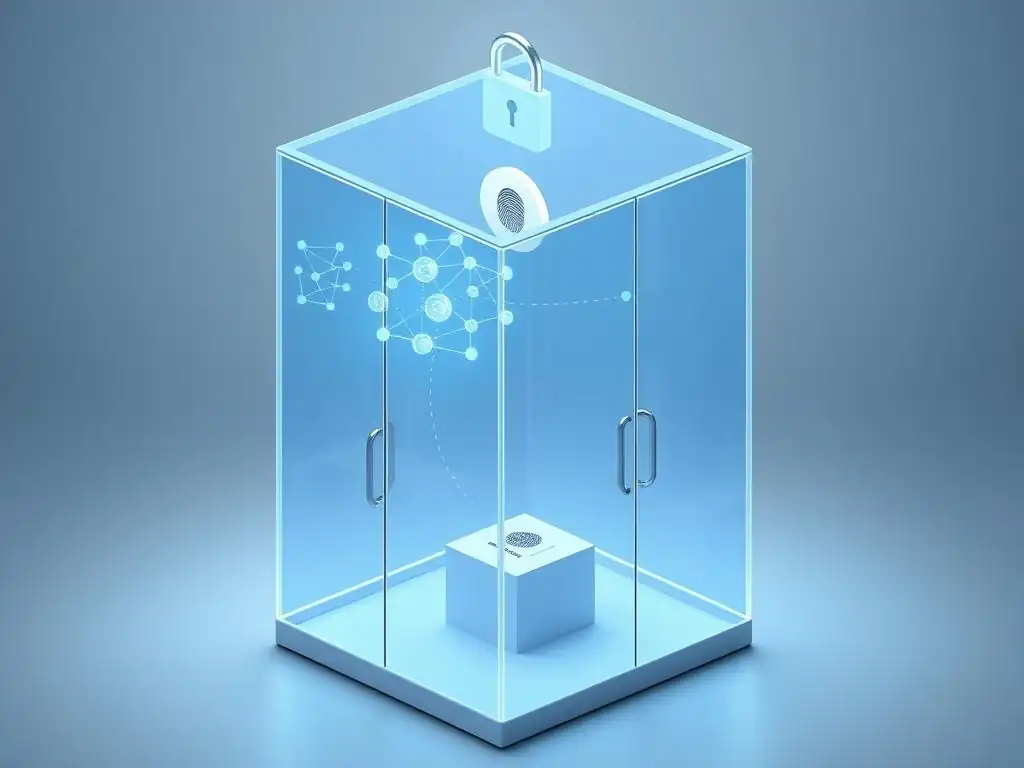
Ensuring the integrity and security of voting systems is paramount for democratic processes. Traditional voting methods, whether paper ballots or electronic machines, can be susceptible to fraud, errors in counting, and lack of public trust in the process. Blockchain’s real enterprise applications in this domain focus on leveraging the technology's immutability and transparency to create more secure and verifiable elections.
By casting votes as transactions on a blockchain, it becomes possible to create a public, auditable record of every vote cast. Once a transaction is added to the blockchain, it cannot be altered or removed, preventing tampering with individual votes or the overall count. While practical implementation for large-scale public elections faces significant hurdles (like ensuring voter anonymity while maintaining verifiability, and addressing digital divide issues), pilot projects have shown promising results in smaller-scale or private elections, such as shareholder votes or internal organizational polls.
Ensuring Fair and Accurate Elections Through Blockchain Implementation
The core benefit of using blockchain in voting is the potential to ensure fairness and accuracy through cryptographic security and distributed ledger technology. Each vote can be cryptographically signed by the voter (using a secure, verified digital identity) and added to the blockchain. This process provides a verifiable receipt for the voter that their vote was cast and recorded correctly, without revealing their identity to the public ledger.
Furthermore, the distributed nature of the blockchain means that the ledger of votes is held by multiple parties, making it extremely difficult for any single entity to manipulate the results without being detected. The public nature of the ledger (while maintaining voter anonymity) allows anyone to audit the total vote count, building trust in the electoral process. While full implementation for national elections is still a long-term prospect requiring significant technological and regulatory advancements, the potential for improving election integrity makes it one of the compelling blockchain’s real enterprise applications being explored.
Identity Management: Secure and Decentralized Digital Identities
In an increasingly digital world, managing and verifying our identities online is a growing challenge. Centralized identity systems are prone to data breaches, leading to identity theft and fraud. Users also often lack control over their personal data, which is scattered across numerous websites and services. Blockchain’s real enterprise applications offer a pathway towards creating secure, self-sovereign digital identities that put control back in the hands of the individual.
A blockchain-based identity system allows users to create a unique, cryptographic identity that is stored on a distributed ledger. Instead of relying on a third party to verify identity every time, users can selectively and securely share verified attributes about themselves (like age, address, or qualifications) using cryptographic proofs, without revealing the underlying sensitive data. This approach minimizes the amount of personal information stored in vulnerable centralized databases and significantly reduces the risk of identity theft.
Protecting Personal Data and Preventing Identity Theft with Blockchain
One of the most impactful blockchain’s real enterprise applications in identity management is the enhanced protection of personal data and the prevention of identity theft. With a self-sovereign identity model enabled by blockchain, individuals control their digital credentials. They can choose which verified information to share with whom and for how long, using cryptographic keys to grant access.
For instance, instead of submitting copies of your passport and utility bills to rent an apartment or open a bank account, you could use a blockchain-based identity wallet to provide cryptographic proof that you are over 18, live at a verified address, and have a good credit score, without ever revealing your actual date of birth, full address, or bank account details to the service provider. This granular control over data sharing drastically reduces the attack surface for hackers and empowers individuals in the digital realm.
Frequently Asked Questions
What are some real enterprise applications of blockchain beyond cryptocurrency?
Blockchain's real potential lies in areas like supply chain management, ensuring transparency and traceability, and digital identity verification, streamlining processes and enhancing security.
How can blockchain technology benefit businesses outside of the financial sector?
Businesses can leverage blockchain for improved data security, enhanced operational efficiency through automation, and reduced costs by eliminating intermediaries in various processes.
What role does blockchain play in addressing concerns about data security and privacy?
Blockchain provides a tamper-proof and immutable ledger, enhancing data security. It can also facilitate decentralized identity management, giving users more control over their personal information.
What are the main regulatory hurdles hindering the widespread adoption of blockchain in enterprises?
Lack of clear regulatory frameworks and standardized guidelines are major obstacles. Uncertainty around data privacy laws and cross-border transactions also poses challenges.
What is the future outlook for blockchain adoption in the enterprise space?
The future looks promising as enterprise-grade blockchain platforms mature. Increased understanding and acceptance will drive broader adoption across various industries seeking enhanced efficiency and security.
Final Reflection: Beyond the Hype, Towards Tangible Transformation
The journey through blockchain's potential, as explored in this article, reveals that the technology is far more than fleeting hype. Blockchain's real enterprise applications are not just theoretical possibilities; they are actively reshaping industries, streamlining processes, and fostering unprecedented levels of trust and transparency. The shift from speculative excitement to practical implementation is underway, marking a significant turning point for this revolutionary technology.
The influence of blockchain extends beyond mere technological advancement; it's reshaping the very fabric of how we interact and transact. Witnessing this evolution firsthand underscores the profound impact blockchain will have on our future, demanding that we move beyond skepticism and embrace its potential for positive change. The future is already here – it's just not evenly distributed.
- William Gibson. This quote resonates deeply as we consider blockchain's uneven adoption, highlighting the urgent need for broader understanding and strategic implementation.
Now, as you reflect on the possibilities presented, consider how blockchain can be integrated into your own sphere of influence. Are there inefficiencies that can be streamlined, trust gaps that can be bridged, or opportunities for greater transparency within your organization or community? The power to harness blockchain's real enterprise applications lies within each of us. Embrace the challenge, explore the possibilities, and become a part of the transformative wave that is reshaping our world.
Ignite Your Blockchain Journey!
Thank you for exploring the true potential of blockchain with us! We hope this article has provided a clearer understanding of its capabilities beyond the hype. Now, it's time to take action and dive deeper into this transformative technology.
Here's how you can get started:
- Identify a specific industry or problem you’re passionate about and research how blockchain could provide a practical solution. Focus on tangible applications and start small.
- Join the conversation! Share this article with your network and spark discussions about the most promising use cases you've discovered.
- Subscribe to our weekly newsletter for curated content, expert insights, and exclusive opportunities to stay ahead of the curve.
What is one concrete step you'll take this week to move beyond the hype and explore blockchain's genuine potential? Share your plans in the comments below!
Leave a Reply