
Blockchain's Role in the Metaverse: Shaping Virtual Economies and Ownership


Welcome to Blockchain Trends, your guide to navigating the revolutionary world of blockchain technology! Delve into the transformative potential that extends far beyond cryptocurrencies, uncovering its impact on DeFi, enterprise solutions, and the evolving regulatory landscape. Are you ready to explore how this groundbreaking technology is reshaping virtual experiences? In this article, we'll be examining the fascinating intersection of blockchain and immersive digital realms, focusing on blockchain metaverse virtual economies and how they're redefining ownership and engagement. Discover the future being built, one block at a time.
- Blockchain's Role in the Metaverse: Shaping Virtual Economies and Ownership
- How Blockchain is Transforming Virtual Economies in the Metaverse
- Real-World Examples of Blockchain-Powered Metaverse Projects
- Challenges and Opportunities: The Future of Blockchain in the Metaverse
- Conclusion: Blockchain's Enduring Impact on the Metaverse and Beyond
-
Frequently Asked Questions
- How is blockchain technology being utilized to create virtual economies within the metaverse?
- What role do NFTs play in establishing ownership and value in the blockchain metaverse?
- How does blockchain contribute to the security and transparency of transactions within the metaverse?
- What are some potential regulatory challenges associated with blockchain-based virtual economies in the metaverse?
- Beyond NFTs and virtual currencies, what other applications of blockchain technology are relevant to the metaverse?
- Final Reflection: Embracing Decentralized Futures
- Embrace the Metaverse Revolution!
Blockchain's Role in the Metaverse: Shaping Virtual Economies and Ownership
Introduction: The Convergence of Blockchain and the Metaverse
The concept of the metaverse, a persistent, interconnected network of virtual worlds, has captured the global imagination, promising new frontiers for social interaction, entertainment, and commerce. As this digital realm takes shape, a fundamental question emerges: how will value be created, exchanged, and owned within it?
This is where blockchain technology enters the picture, offering a robust framework for building secure, transparent, and decentralized virtual economies that can underpin the metaverse's complex interactions and transactions. The synergy between blockchain and the metaverse is not merely theoretical; it is actively being built, enabling novel forms of digital ownership and economic activity.
This article delves into the critical role blockchain plays in the development of metaverse virtual economies. We will explore how core blockchain principles like transparency, security, and immutability provide the necessary infrastructure for digital ownership and trust. Furthermore, we will examine specific applications such as Non-Fungible Tokens (NFTs) for asset ownership, decentralized marketplaces for trade, and smart contracts for automating agreements. By looking at real-world examples and addressing the challenges and opportunities ahead, we can gain a deeper understanding of how blockchain is fundamentally shaping the future of digital interaction and value creation within the burgeoning metaverse.
Understanding the Metaverse: A New Frontier for Digital Interaction
The metaverse represents an evolution of the internet, moving beyond browsing flat pages or interacting within siloed applications towards a more immersive, three-dimensional, and persistent digital environment. It is envisioned as a space where users can interact with each other, digital objects, and AI agents in real-time, transcending the limitations of physical space.
This persistent digital universe allows for a continuity of identity, possessions, and experiences across different virtual spaces, fostering a sense of presence and community that is distinct from current online interactions. The potential applications span from gaming and social gatherings to virtual work environments, education, and large-scale digital events.
Crucially, the metaverse is not expected to be a single, monolithic entity but rather an interconnected network of diverse virtual worlds, much like the internet is a network of websites. The goal is often interoperability, allowing users to move between different experiences while potentially carrying their digital identity and assets with them. This vision requires underlying technologies capable of managing complex interactions, ensuring secure data handling, and facilitating reliable value exchange – requirements that blockchain technology is uniquely positioned to address, particularly concerning the creation and management of robust blockchain metaverse virtual economies.
Defining the Metaverse: Key Characteristics and Components
While still evolving, the metaverse is generally characterized by several core features that distinguish it from traditional online platforms. Persistence is key; the virtual world continues to exist and evolve even when individual users are offline. It is also characterized by real-time interaction, allowing for synchronous experiences among many users.
A sense of presence, often facilitated by immersive technologies like VR/AR, allows users to feel "there." Interoperability, the ability to move between different metaverse experiences with assets and identity, is a widely desired, though challenging, goal. Finally, a functioning economy, where users can create, own, invest, and trade digital assets, is seen as fundamental to a vibrant and self-sustaining metaverse.
These characteristics necessitate a robust technological foundation. Components include networking infrastructure to handle massive real-time data flow, rendering engines for creating immersive 3D environments, and sophisticated identity systems. Critically, a system for managing digital assets and transactions is required, one that can handle unique items, establish clear ownership, and enable peer-to-peer exchange without relying solely on centralized authorities. This economic layer is where blockchain technology offers a transformative approach, providing the mechanisms for secure, transparent, and decentralized blockchain metaverse virtual economies, which are essential for the metaverse's long-term viability and user engagement.
The Evolution of Virtual Worlds: From Early Platforms to Immersive Experiences
The concept of virtual worlds is not new, with precursors dating back decades. Early examples include text-based MUDs (Multi-User Dungeons) in the late 1970s and early 1980s, which allowed multiple users to interact in shared virtual spaces. The 1990s and early 2000s saw the rise of graphical virtual worlds like EverQuest, World of Warcraft, and Second Life.
These platforms built expansive digital environments where users could socialize, participate in activities, and even engage in rudimentary virtual economies, trading in-game items and currencies. Second Life, launched in 2003, was particularly notable for allowing users to create and own content and even exchange its virtual currency (Linden Dollars) for real-world money, showcasing early potential for digital economies.
However, these earlier virtual worlds typically operated on centralized servers controlled by a single company. This meant the platform owner had ultimate authority over the world, its rules, and the assets within it. Users did not truly own their digital items; they merely possessed a license granted by the company.
The emergence of blockchain technology introduced the possibility of decentralized ownership and economies, shifting power from the platform to the users. This fundamental change is propelling the development of the modern blockchain metaverse, where digital assets can be genuinely owned, traded freely on open markets, and potentially carried across different experiences, laying the groundwork for truly open blockchain metaverse virtual economies.
Blockchain Technology: The Backbone of Decentralized Metaverse Economies
Blockchain technology provides a distributed, immutable ledger that records transactions across a network of computers. This decentralized structure eliminates the need for a central authority to validate or store data, making it highly resistant to censorship and manipulation.
For the metaverse, blockchain offers a foundational layer of trust and security, essential for managing digital assets, identities, and transactions in a way that empowers users and creators. It moves away from the traditional model where platform operators dictate the terms of service and control all aspects of the virtual economy, towards a system where rules are enforced by code and ownership is cryptographically secured.
The application of blockchain in the metaverse is multifaceted. It enables the creation and management of unique digital assets via NFTs, provides a transparent record of ownership and transaction history, and facilitates the automation of agreements through smart contracts.
These capabilities are crucial for building robust and fair blockchain metaverse virtual economies where users can confidently trade, invest, and earn from their activities and creations. The immutability of the blockchain ensures that once an asset is recorded or a transaction is completed, it cannot be altered or reversed by any single party, providing a level of security and permanence previously unattainable in centralized virtual worlds.
Blockchain Fundamentals: Transparency, Security, and Immutability
At its core, blockchain provides three critical features vital for the metaverse: transparency, security, and immutability. Transparency comes from the fact that the ledger is public (on public blockchains), allowing anyone to verify transactions and ownership records. While identities can be pseudonymous, the transaction history is open for inspection. Security is derived from cryptographic principles; each block of transactions is linked to the previous one using complex algorithms, making it extremely difficult to alter past records without invalidating the entire chain. The distributed nature means there's no single point of failure.
Immutability is perhaps the most groundbreaking feature for digital ownership. Once data is added to the blockchain and validated, it is practically impossible to change or delete it. This permanence is fundamental for establishing true digital ownership of assets within the metaverse. Users can be confident that their virtual land, avatars, or collectibles are recorded on an immutable ledger, protecting them from being arbitrarily removed or altered by a platform operator. These combined properties provide a trustworthy foundation for the complex economic interactions that will define blockchain metaverse virtual economies.
Smart Contracts: Automating Agreements and Transactions in Virtual Worlds
Smart contracts are self-executing contracts with the terms of the agreement directly written into lines of code. These contracts run on the blockchain, automatically executing actions when predetermined conditions are met, without the need for intermediaries. In the context of the metaverse, smart contracts are essential for automating a wide range of processes, from buying and selling digital assets (like NFTs) to managing decentralized autonomous organizations (DAOs) that govern virtual worlds, distributing royalties to creators, or executing complex in-game logic for play-to-earn mechanics.
For example, a smart contract can facilitate the sale of a virtual item: when the buyer sends the agreed-upon cryptocurrency to the contract address, the contract automatically verifies the payment and transfers the NFT representing the item to the buyer's wallet. This process is trustless and efficient, eliminating the need for escrow services or relying on a platform's internal marketplace system. Smart contracts are the programmatic glue that enables complex, automated interactions within blockchain metaverse virtual economies, ensuring that rules are enforced reliably and transparently based on code, not centralized human intervention.
How Blockchain is Transforming Virtual Economies in the Metaverse
Blockchain technology is not just providing a new layer for the metaverse; it is fundamentally restructuring how value is created, exchanged, and perceived within digital environments. By enabling true digital ownership, facilitating peer-to-peer transactions, and ensuring transparency, blockchain is shifting the paradigm from closed, platform-controlled economies to open, user-centric ones. This transformation impacts everything from how creators are compensated to how users interact with and invest in virtual goods and services. The integration of blockchain is paving the way for dynamic and inclusive blockchain metaverse virtual economies that mirror aspects of real-world economic activity but within a digital context.
The core of this transformation lies in granting users verifiable ownership of their digital assets. In traditional online games or virtual worlds, users might spend considerable time and money acquiring items, but these items are typically licensed, not owned.
Blockchain, through technologies like NFTs, changes this by making digital assets unique, scarce, and ownable outside the confines of a single platform. This shift unlocks new economic possibilities, allowing users to freely trade assets, earn income from their creations or gameplay, and participate directly in the governance and growth of the virtual worlds they inhabit, driving the evolution of blockchain metaverse virtual economies.
Enabling Digital Ownership and Scarcity with NFTs
One of the most impactful applications of blockchain in the metaverse is the use of Non-Fungible Tokens (NFTs) to represent unique digital assets. Unlike cryptocurrencies like Bitcoin or Ethereum, where each coin is interchangeable (fungible), each NFT is distinct and holds unique information, making it ideal for representing individual items such as virtual land plots, avatars, clothing, artwork, or collectibles.
The NFT acts as a digital certificate of authenticity and ownership, recorded on the blockchain ledger. This cryptographic proof of ownership is revolutionary for digital assets, bringing scarcity and verifiability to the virtual realm in a way that was previously difficult or impossible within centralized systems.
NFTs empower users by granting them verifiable control over their digital possessions. If a user owns an NFT representing a virtual sword in a game, they can prove they are the rightful owner on the blockchain. This ownership is not dependent on the game developer's database but is secured by the decentralized network.
This enables users to hold, trade, or sell their digital assets on open marketplaces, potentially outside the original platform where the asset was created or used. This newfound control and the introduction of verifiable scarcity are crucial drivers for the economic models emerging within blockchain metaverse virtual economies.
Non-Fungible Tokens (NFTs): Verifying Ownership of Virtual Assets
NFTs are typically created using specific blockchain standards, such as ERC-721 or ERC-1155 on the Ethereum network, although other blockchains like Flow, Polygon, and Solana also support NFT creation. When an NFT is minted, a unique token is generated and linked to specific digital content or metadata, which could be an image file, a 3D model, or data defining a virtual land plot. This token is then recorded on the blockchain along with its owner's address. The blockchain transaction serves as a public and immutable record of who owns that specific, unique digital item at any given time.
This on-chain verification is fundamentally different from owning items in traditional digital platforms. In games like World of Warcraft, owning a rare sword means having an entry in Blizzard's database associated with your account. Blizzard controls that database and can modify or delete entries. With an NFT, the ownership record exists on a decentralized ledger, independent of any single company. This verifiable, immutable proof of ownership is the cornerstone of digital property rights in the metaverse, providing the necessary trust and security for users to invest real resources into blockchain metaverse virtual economies.
Use Cases of NFTs in the Metaverse: Land, Avatars, Art, and Collectibles
NFTs have found diverse and compelling applications within the metaverse, forming the basis of its digital asset ecosystem. One of the most prominent use cases is virtual land ownership. Projects like Decentraland and The Sandbox represent their finite virtual land plots as NFTs. Owning a land NFT grants the holder the right to build upon that land, host experiences, and potentially monetize activities, much like owning real-world property. Sales of virtual land have sometimes reached significant values; for example, a plot in Decentraland sold for a reported $2.43 million in November 2021.
Beyond land, NFTs are used for avatar customization, allowing users to own unique digital identities and clothing that can potentially be used across different metaverse platforms. Digital art and collectibles are also represented as NFTs, enabling artists to sell unique digital creations directly to collectors in the metaverse. In blockchain-based games like Axie Infinity, game assets like the Axie creatures themselves, land plots, and items are all NFTs, enabling a player-owned economy. These examples illustrate how NFTs are creating scarcity, enabling ownership, and facilitating trade, thereby building the foundational layers of blockchain metaverse virtual economies.
Creating Decentralized Marketplaces and Trading Platforms
The existence of ownable digital assets represented by NFTs necessitates efficient ways to buy, sell, and trade them. Blockchain technology facilitates the creation of decentralized marketplaces, often built using smart contracts, where users can list their NFT assets for sale and potential buyers can browse and purchase them directly from the seller. These marketplaces operate on the principles of peer-to-peer exchange, cutting out the need for a central platform operator to act as an intermediary in every transaction. Popular examples include OpenSea, Rarible, and marketplace features built directly into metaverse platforms like Decentraland and The Sandbox.
These decentralized platforms offer several advantages over traditional, centralized in-game marketplaces. They typically feature lower transaction fees compared to the significant cuts often taken by game developers or platform operators. They also offer greater transparency, as all transactions are recorded on the public blockchain. Furthermore, they enable a truly open market where assets can be traded freely, not confined to the rules or limitations set by a single company. This open trading environment is vital for liquidity and price discovery within blockchain metaverse virtual economies, allowing users to realize the value of their digital assets.
Empowering Creators and Users: Cutting Out Intermediaries
Decentralized marketplaces fundamentally shift the power dynamic from platform operators to creators and users. For creators of digital assets – whether artists selling NFT art, developers building virtual experiences, or users designing avatar wearables – these marketplaces provide direct access to a global market. Smart contracts can even be programmed to automatically pay royalties to creators on secondary sales of their NFTs, providing a continuous revenue stream that is often absent in traditional digital content platforms. This empowers creators to build sustainable businesses within the metaverse.
For users, decentralized trading platforms mean they have full control over their assets and can trade them whenever they wish, without needing permission or adhering to platform-specific trading rules that might restrict sales or impose unfavorable conditions. The ability to freely buy, sell, and swap assets enhances user agency and participation in the blockchain metaverse virtual economies. This direct, peer-to-peer interaction fosters a more dynamic and user-driven economic environment compared to the closed economies of many legacy virtual worlds, where the platform owner acts as the gatekeeper for all economic activity.
Interoperability and Cross-Platform Asset Transfer
A key promise of the metaverse is interoperability, the ability for users and their assets to move seamlessly between different virtual worlds and experiences. Blockchain, particularly standards like ERC-721 and ERC-1155, plays a crucial role in enabling this vision. Since NFTs representing assets are held in a user's cryptocurrency wallet on a public blockchain, they are not tied to a specific platform's database. This means that theoretically, if different metaverse platforms choose to recognize and support the same NFT standard, a user could potentially use an asset purchased or earned in one virtual world in another.
While true, widespread interoperability is still an emerging challenge, the underlying blockchain infrastructure provides the necessary technical foundation. Projects are actively working on standards and protocols to allow assets like avatars or wearables to be recognized and rendered across different environments. For instance, some projects are developing universal avatar systems where the avatar's components are NFTs. This potential for cross-platform asset transfer adds significant value to digital assets, making them more than just items within a single game but portable elements of a persistent digital identity and inventory within the broader landscape of blockchain metaverse virtual economies.
Enhancing Security and Trust in Metaverse Transactions
Security and trust are paramount for any economy, digital or physical. In the metaverse, where users will be investing significant time, creativity, and financial resources, the ability to trust the integrity of transactions and the security of their digital assets is non-negotiable. Blockchain technology provides inherent security features that are highly beneficial for building a trustworthy metaverse economy. Its decentralized nature, cryptographic security, and transparent ledger significantly reduce the risks associated with fraud, counterfeiting, and unauthorized data manipulation that plague centralized digital systems.
By recording transactions on an immutable, distributed ledger, blockchain ensures that every asset transfer and ownership record is verifiable and tamper-proof. This eliminates the possibility of double-spending digital assets or falsely claiming ownership. Furthermore, smart contracts automate transactions based on code, removing the need to trust a third party to execute an agreement fairly. This robust security framework builds confidence among users and participants, encouraging greater engagement and investment in the complex and evolving blockchain metaverse virtual economies.
Reducing Fraud and Counterfeiting with Blockchain Verification
Counterfeiting and fraud are significant issues in digital environments, where assets can often be easily duplicated. Blockchain and NFTs offer a powerful solution to this problem by providing a verifiable and unique digital identity for each asset. When an asset is minted as an NFT on the blockchain, its authenticity and origin can be traced back to the creator or the initial minting event. The unique token ID and the immutable record on the ledger make it impossible to create identical, fraudulent copies that can pass as the original.
For example, if a renowned digital artist sells an NFT of their artwork in the metaverse, collectors can verify on the blockchain that the NFT is the genuine one minted by the artist's wallet address, distinguishing it from any unofficial copies. Similarly, in gaming, blockchain ensures that a rare in-game item is truly unique and not a duplicate. This provable scarcity and authenticity are critical for establishing value and trust in the digital goods traded within blockchain metaverse virtual economies, protecting both creators and consumers from fraudulent activities.
Identity Management and Data Privacy in Virtual Environments
While blockchain transactions are transparent, the identities behind the wallet addresses can be pseudonymous, offering a degree of privacy compared to systems requiring extensive personal information. This pseudonymous nature allows users to participate in metaverse economies without necessarily revealing their real-world identity for every transaction. However, managing digital identity in a way that balances privacy with the need for reputation, security, and potentially regulatory compliance is a complex challenge that blockchain can help address through decentralized identity solutions.
Decentralized identity (DID) frameworks, often built on blockchain, aim to give users more control over their personal data and digital credentials. Instead of relying on centralized platforms to manage their identity and data, users can control their own verifiable credentials, selectively sharing information as needed. This approach enhances user privacy and security within the metaverse, reducing the risk of large-scale data breaches associated with centralized databases. As blockchain metaverse virtual economies mature, robust, user-controlled identity solutions will be essential for fostering trust and enabling secure interactions while respecting individual privacy.
Real-World Examples of Blockchain-Powered Metaverse Projects
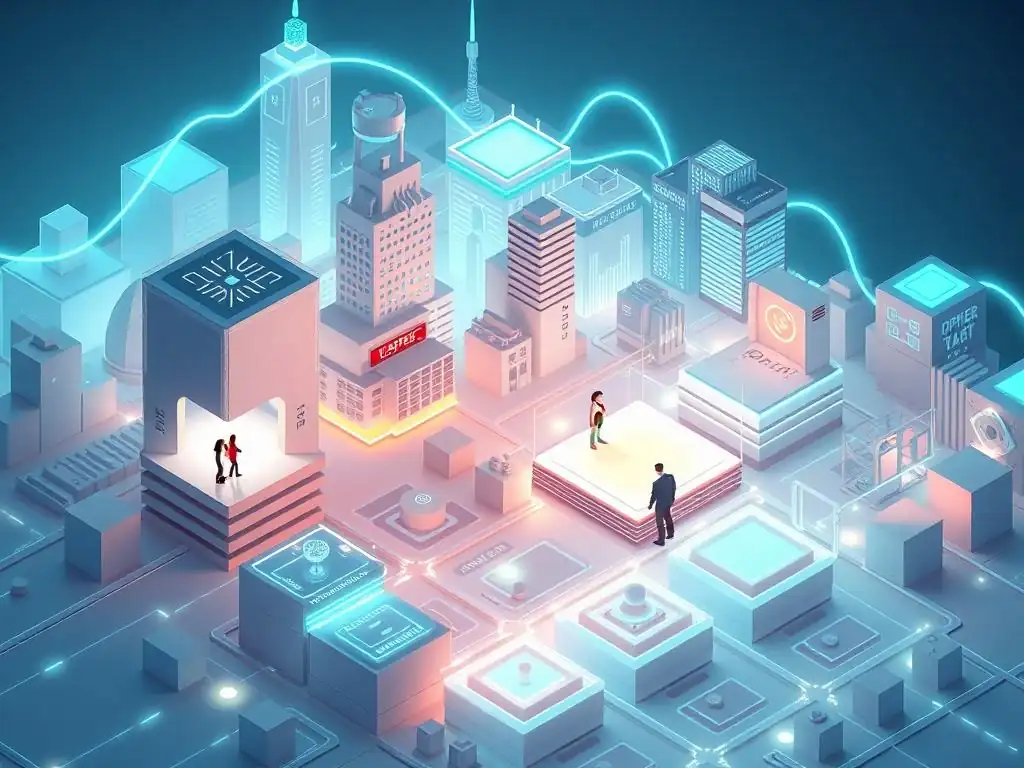
The potential of blockchain in the metaverse is already being demonstrated by several pioneering projects that are actively building and operating virtual worlds with integrated blockchain economies. These platforms serve as living laboratories for testing and refining the concepts of digital ownership, decentralized governance, and play-to-earn models. Examining these real-world examples provides valuable insights into the practical applications and current state of blockchain metaverse virtual economies, showcasing both successes and ongoing challenges.
Two prominent examples that illustrate different facets of blockchain's impact are Decentraland and Axie Infinity. Decentraland focuses on user-owned virtual land and experiences, emphasizing decentralized governance and content creation. Axie Infinity, on the other hand, popularized the play-to-earn model, demonstrating how NFT-based gaming can create real economic opportunities for players. These projects, while distinct, highlight the transformative potential of integrating blockchain technology to create dynamic, user-centric digital economies within virtual worlds.
Decentraland - Showcasing Virtual Land Ownership and User-Created Content
Decentraland is a decentralized virtual world built on the Ethereum blockchain. It allows users to buy, sell, and manage virtual land plots (represented as NFTs called LAND) and other in-world assets. Unlike traditional virtual worlds, Decentraland is not controlled by a single corporation. Instead, key decisions regarding the platform's operations, future developments, and policies are made by a Decentralized Autonomous Organization (DAO), which is controlled by holders of the platform's native tokens, MANA and LAND.
This structure puts control and ownership directly into the hands of its users, making it a prime example of a user-governed blockchain metaverse virtual economy. Landowners have complete control over the content they deploy on their parcels, ranging from static 3D scenes and interactive games to virtual stores and art galleries. This focus on user-generated content and decentralized governance distinguishes Decentraland and demonstrates a model where the virtual world's evolution is shaped by its community, facilitated by blockchain technology.
MANA Token, DAO Governance, and Community Events
The Decentraland economy revolves around its native cryptocurrency, MANA. Users spend MANA to purchase LAND parcels, avatar wearables, and other items within the Decentraland marketplace. MANA can also be used to pay for services and experiences within the world. Beyond its utility as currency, holding MANA grants users voting power in the Decentraland DAO, allowing them to participate in governance proposals. Holding LAND also provides voting power, further aligning the interests of virtual landowners with the platform's future.
The DAO governs various aspects of Decentraland, including upgrades to smart contracts, allocation of grants from the DAO's treasury to fund ecosystem development, and managing the list of approved wearables. This decentralized governance mechanism, powered by blockchain, allows the community to collectively steer the project's direction. Decentraland also hosts numerous community-organized events, from art exhibitions and music festivals to conferences and games, showcasing the vibrant user activity and the diverse economic opportunities enabled by its open, blockchain-based structure.
Land Sales, User Engagement Metrics, and Future Development Plans
Virtual land sales in Decentraland have garnered significant attention, with some prime parcels fetching prices equivalent to real-world property in major cities. While the peak of the NFT boom saw record-breaking sales, the underlying economic activity continues. Data on land sales and virtual asset trading provides insights into the perceived value within this blockchain metaverse virtual economy. User engagement metrics, such as daily or monthly active users, event attendance, and marketplace transaction volume, offer further indicators of the health and activity within the world.
Future development plans for Decentraland, often guided by DAO proposals, focus on improving the user experience, enhancing performance, expanding the capabilities for creators (e.g., more complex scripting for interactive scenes), and fostering greater interoperability with other platforms. The ongoing evolution is driven by community input and funded through the DAO treasury, demonstrating a unique model for virtual world development. The continued focus on user ownership, decentralized governance, and facilitating diverse economic activities underscores Decentraland's role as a key example of a blockchain metaverse virtual economy in action.
Axie Infinity - Exploring Play-to-Earn Mechanics and NFT-Based Gaming
Axie Infinity is a blockchain-based game where players collect, breed, battle, and trade creatures known as Axies, which are represented as NFTs. It is widely credited with popularizing the "play-to-earn" model, where players can earn cryptocurrency and NFTs through gameplay, which can then be traded on open markets for real-world value. The game's economy is driven by two primary tokens: Axie Infinity Shards (AXS), the governance token, and Smooth Love Potion (SLP), an in-game currency earned through battling.
Axie Infinity demonstrated the potential for blockchain-powered games to not only be a source of entertainment but also a significant source of income for players, particularly in developing countries. The game's economic model incentivized active participation and strategic gameplay, linking in-game effort directly to tangible value in the real world. This intersection of gaming and economics, facilitated by NFTs and cryptocurrency, represents a powerful paradigm shift in how virtual economies can function, making Axie Infinity a crucial case study for blockchain metaverse virtual economies.
AXS and SLP Tokens, Breeding Mechanics, and Scholarship Programs
The Axie Infinity economy is a complex ecosystem centered around its tokens and NFT assets. AXS holders have governance rights and can stake their tokens to earn rewards. SLP is earned by winning battles and is primarily used along with AXS for breeding new Axies. The breeding process is central to the economy, creating new NFT assets (Axies) that can be used in gameplay or sold to new players. The cost of breeding, determined by the price of AXS and SLP, influences the supply of new Axies.
A notable social innovation stemming from Axie Infinity is the "scholarship" program. Asset owners (managers) could lend their Axies to new players (scholars) who could not afford the initial investment, sharing the SLP earned through gameplay. This created a form of decentralized employment and income generation, showcasing how blockchain-based games could have real-world socio-economic impacts. While the SLP price has been volatile, the scholarship model illustrated a unique way to distribute economic opportunity within a blockchain metaverse virtual economy.
Player Base Growth, Economic Impact in Developing Countries, and Esports Integration
Axie Infinity experienced explosive growth in 2021, reaching a peak of over 2 million daily active users. Much of this growth was concentrated in countries like the Philippines, where the income earned from playing Axie became a significant source of livelihood for many during the pandemic. This demonstrated the potential for blockchain-based play-to-earn models to create economic opportunities in regions with limited traditional employment options, highlighting the real-world impact of blockchain metaverse virtual economies.
The game has also seen the development of a competitive esports scene, with tournaments offering significant prizes in AXS. This integration into competitive gaming further validates the value and skill involved in playing blockchain-based games. While the game's economy has faced challenges related to tokenomics sustainability and market fluctuations, its impact on popularizing play-to-earn and demonstrating the potential for NFT-based gaming economies is undeniable, making it a foundational example in the landscape of blockchain metaverse virtual economies.
Challenges and Opportunities: The Future of Blockchain in the Metaverse
While blockchain offers immense potential for shaping metaverse virtual economies, its widespread adoption faces significant challenges. These hurdles include technical limitations related to scalability and transaction costs, regulatory uncertainties, and the need to improve user experience to onboard a mainstream audience. Addressing these issues is crucial for the vision of a truly decentralized, interoperable, and economically vibrant metaverse to be fully realized.
Despite these challenges, the opportunities presented by blockchain in the metaverse are equally compelling. The potential for truly user-owned digital economies, empowered creators, novel forms of social interaction, and the creation of entirely new digital asset classes represents a significant paradigm shift. Navigating the current obstacles while capitalizing on these opportunities will define the future trajectory of blockchain metaverse virtual economies and their impact on the digital world.
Scalability and Transaction Fees: Addressing Limitations for Mass Adoption
One of the primary technical challenges facing blockchain adoption in the metaverse is scalability. Current major blockchains, such as Ethereum (though improving with Ethereum 2.0), can process a limited number of transactions per second compared to the potentially millions of interactions that could occur simultaneously in a large, active metaverse. High network congestion can lead to slow transaction times and prohibitively high transaction fees (gas fees), making frequent, small value transactions economically unviable for many users.
For a metaverse economy to function smoothly, users need to be able to buy, sell, and interact with digital assets quickly and cheaply. High fees deter microtransactions and casual trading, limiting economic activity. Solutions are urgently needed to support the scale required for millions of users to participate in real-time economic activities within blockchain metaverse virtual economies without encountering frustrating delays or excessive costs.
Layer-2 Solutions and Alternative Consensus Mechanisms
To address scalability and high transaction fees, several solutions are being developed and implemented. Layer-2 scaling solutions, such as rollups (Optimistic and zk-Rollups), state channels, and sidechains, process transactions off the main blockchain (Layer 1) and then periodically submit summarized or verified data back to Layer 1. These solutions can drastically increase transaction throughput and reduce costs, making frequent in-world transactions more feasible. Polygon, a Layer-2 scaling platform for Ethereum, is already being used by several metaverse projects.
Alternative blockchains with different consensus mechanisms, such as Proof-of-Stake (PoS) or delegated Proof-of-Stake (DPoS), are also being explored and used. These mechanisms are often designed to be more energy-efficient and capable of handling a higher volume of transactions at lower costs compared to Proof-of-Work (PoW) systems like the original Ethereum or Bitcoin. Flow, a blockchain designed specifically for consumer applications and NFTs, is an example of an alternative chain used by some metaverse projects. These technological advancements are critical for building scalable blockchain metaverse virtual economies capable of supporting mass user participation.
Optimizing Blockchain Performance for Metaverse Applications
Beyond general scaling solutions, specific optimizations are needed to tailor blockchain performance for the unique demands of metaverse applications. This includes improving the efficiency of rendering and interacting with NFT assets, reducing the data load associated with complex virtual environments, and optimizing smart contract code for speed and cost-effectiveness. The need for real-time interaction in the metaverse requires very low latency for economic actions, such as picking up an item or making a quick purchase within a scene.
Furthermore, the infrastructure supporting the metaverse needs to handle not just transactions but also the streaming of complex 3D data and user interactions. Integrating blockchain verification seamlessly into this real-time environment requires careful design and optimization. Projects are exploring technologies like decentralized storage networks for storing large asset files (like 3D models) associated with NFTs, and developing more efficient protocols for communication between the virtual world client and the blockchain layer. These ongoing efforts are vital for ensuring blockchain can effectively power the immersive, real-time experiences of blockchain metaverse virtual economies.
The rapid growth of blockchain technology and the metaverse has outpaced the development of clear regulatory and legal frameworks in many jurisdictions. This creates uncertainty for developers, businesses, and users operating within blockchain metaverse virtual economies. Questions surrounding the legal status of virtual assets (Are they property? Securities? Collectibles? ), consumer protection in virtual environments, taxation of virtual income and asset sales, and responsibility for activities within decentralized platforms remain largely unanswered or vary significantly globally.
Navigating this complex and evolving legal landscape is a major challenge. Regulatory bodies worldwide are beginning to examine blockchain, NFTs, and the metaverse, but a unified or comprehensive approach is still nascent. This lack of clarity can hinder investment, slow innovation, and pose risks for participants. Establishing clear and adaptable legal frameworks is essential for the long-term stability and growth of blockchain metaverse virtual economies, providing necessary protections for users and a predictable environment for businesses.
Defining Ownership Rights and Intellectual Property in Virtual Worlds
One of the most critical legal challenges is defining and enforcing ownership rights and intellectual property (IP) within the metaverse, particularly concerning assets represented by NFTs. While blockchain immutably records who owns a specific token, the legal rights associated with that ownership can be ambiguous. Does owning an NFT of a digital artwork grant the owner copyright or reproduction rights, or merely ownership of that specific digital instance? What happens when user-created content within a metaverse incorporates third-party IP?
These questions become even more complex when assets can potentially move across different platforms with varying terms of service or are used in ways not originally intended by the creator. Legal frameworks need to address how real-world IP laws apply to digital creations and assets in the metaverse, how ownership disputes over virtual property are resolved, and how creators' rights are protected in a decentralized environment. Clearer definitions are needed to ensure that the verifiable ownership provided by blockchain translates into meaningful and enforceable legal rights within blockchain metaverse virtual economies.
Ensuring Compliance with Data Privacy and Security Regulations
Operating within the metaverse and utilizing blockchain technology also raises significant questions regarding data privacy and security compliance. While blockchain itself offers privacy through pseudonymity, interactions within the metaverse often involve sharing personal data, behavioral information, and potentially linking real-world identities to virtual avatars and assets. How do regulations like GDPR or CCPA apply to data generated and stored within decentralized metaverse platforms?
Ensuring the security of user wallets, preventing scams and phishing attacks targeting digital assets, and establishing mechanisms for recourse in case of theft or fraud are also paramount. While blockchain's security features are robust, user-level security practices and the security of associated platforms (like marketplaces or wallet interfaces) remain critical points of vulnerability. Future development of blockchain metaverse virtual economies must address these data privacy and security concerns proactively, building in safeguards and compliance mechanisms to protect users and foster trust.
The Potential for a Truly Decentralized and User-Owned Metaverse
Despite the challenges, the potential for blockchain to enable a truly decentralized and user-owned metaverse remains a powerful vision. In this future, the virtual worlds are not controlled by a single entity but governed by their communities through DAOs. Users don't just participate; they are stakeholders, owning the land, assets, and even contributing to the rules and direction of the world. This model promises a more equitable distribution of value, where the wealth generated within the metaverse flows back to the users and creators who build and inhabit it, rather than being captured by a central platform operator.
A decentralized metaverse could foster unprecedented levels of creativity and innovation. With open standards and user ownership, anyone can create assets, build experiences, and launch services without needing permission from a gatekeeper. This permissionless innovation can lead to a more diverse, dynamic, and resilient digital universe. Blockchain provides the essential infrastructure for this vision, enabling the verifiable ownership, transparent economies, and decentralized governance necessary to move beyond corporate-controlled virtual experiences towards genuinely user-centric blockchain metaverse virtual economies.
Empowering Communities and Fostering Innovation
Blockchain's role in enabling DAOs allows for community-driven governance, giving users a direct voice in how their virtual worlds evolve. This empowerment can lead to more responsive development, better alignment between the platform and its users, and a stronger sense of community ownership. When users have a stake and a say, they are more invested in the success and sustainability of the virtual environment.
Furthermore, the open and permissionless nature of blockchain fosters innovation. Developers and creators don't need to seek approval to build on top of or integrate with existing metaverse platforms or create new ones that leverage blockchain assets. This allows for rapid experimentation and the development of novel applications and services within the metaverse. The ability for anyone to mint an NFT, launch a decentralized marketplace, or build an interactive experience on virtual land owned by users unlocks immense creative potential, driving the growth of vibrant blockchain metaverse virtual economies.
Shaping the Future of Digital Interaction and Virtual Economies
The integration of blockchain is fundamentally shaping how we will interact digitally and how virtual economies will function in the future. It is moving us towards a model where digital identity and assets have persistent value and utility across different platforms, blurring the lines between the physical and digital worlds. The ability to earn real-world value from digital activities, own digital property, and participate in decentralized governance structures represents a significant evolution from the current state of the internet.
As blockchain technology matures and scalability solutions improve, the vision of a vast, interconnected network of blockchain metaverse virtual economies becomes increasingly attainable. This future could see individuals earning a significant portion of their income, building businesses, socializing, and experiencing culture within these digital realms, all underpinned by the secure, transparent, and user-owned infrastructure that blockchain provides. The ongoing developments in this space are not just about creating new games or social spaces; they are about redefining digital interaction and value in the 21st century.
Conclusion: Blockchain's Enduring Impact on the Metaverse and Beyond
The convergence of blockchain technology and the metaverse is not merely a technological trend; it is a fundamental shift in how digital worlds are built, owned, and governed. Blockchain provides the essential infrastructure for creating robust, transparent, and user-centric virtual economies that are critical for the metaverse's long-term success and widespread adoption. By enabling verifiable digital ownership through NFTs, facilitating decentralized marketplaces, and securing transactions, blockchain empowers users and creators, moving away from centralized control towards a more open and equitable digital future.
While challenges related to scalability, regulation, and user experience remain, the ongoing innovation in Layer-2 solutions, alternative blockchains, and decentralized identity frameworks is actively addressing these hurdles. Real-world examples like Decentraland and Axie Infinity have already demonstrated the transformative potential of blockchain in enabling virtual land ownership, decentralized governance, and play-to-earn economies, showcasing the early stages of dynamic blockchain metaverse virtual economies.
The Synergistic Relationship Between Blockchain and the Metaverse
The relationship between blockchain and the metaverse is deeply synergistic. The metaverse provides a compelling use case and a vast potential market for blockchain technology, driving innovation in areas like scalability, interoperability, and user interface design for decentralized applications. In return, blockchain provides the metaverse with the critical components needed to fulfill its promise of persistence, interoperability, and a functional digital economy where users have true ownership and control.
Without blockchain, the metaverse risks becoming a collection of siloed, centralized virtual worlds, replicating the limitations of current digital platforms where users are merely tenants, not owners. Blockchain enables the necessary economic rails and trust layer for a truly open and interconnected metaverse where digital assets have real and verifiable value, fostering vibrant and sustainable blockchain metaverse virtual economies that benefit the participants.
Looking Ahead: Future Developments and Emerging Trends in Blockchain Metaverse virtual economies.
Looking ahead, the future of blockchain in the metaverse will likely see continued advancements in scalability solutions, making transactions faster and cheaper. We can expect increased efforts towards achieving true interoperability, allowing assets and identities to move more freely between different virtual environments. The regulatory landscape will likely become clearer, providing more certainty for developers and users.
Emerging trends include the integration of AI within blockchain metaverse virtual economies, potentially powering more sophisticated NPC interactions or dynamic content generation. Decentralized identity solutions will likely become more prevalent, enhancing user privacy and security. As technology matures and adoption grows, we will see increasingly complex and innovative economic models emerge, further solidifying blockchain's role as the foundational technology underpinning the rich and diverse virtual economies of the metaverse. The ongoing evolution promises a future where digital interaction and value creation are intrinsically linked to the power of decentralization and user ownership enabled by blockchain.
Frequently Asked Questions
How is blockchain technology being utilized to create virtual economies within the metaverse?
Blockchain enables true ownership of digital assets through NFTs, allowing users to buy, sell, and trade virtual land, items, and experiences within the metaverse. This creates a decentralized and secure marketplace.
What role do NFTs play in establishing ownership and value in the blockchain metaverse?
NFTs act as unique digital certificates representing ownership of virtual assets. They provide provable scarcity and authenticity, which is crucial for establishing value and trade in metaverse virtual economies.
How does blockchain contribute to the security and transparency of transactions within the metaverse?
Blockchain's immutable ledger records all transactions, making them transparent and auditable. This reduces fraud and builds trust among users participating in the metaverse economy.
What are some potential regulatory challenges associated with blockchain-based virtual economies in the metaverse?
Regulatory challenges include defining legal ownership of virtual assets, addressing tax implications on metaverse transactions, and combating potential money laundering or illicit activities.
Beyond NFTs and virtual currencies, what other applications of blockchain technology are relevant to the metaverse?
Blockchain can be used for decentralized governance of metaverse platforms, identity management, and secure data storage, enhancing the overall user experience and building trust in the virtual world.
Final Reflection: Embracing Decentralized Futures
The exploration of blockchain's integration within the metaverse reveals a profound shift in how we perceive and interact with virtual economies. The promise of decentralized ownership and transparent transactions, once a futuristic concept, is rapidly becoming a tangible reality within these burgeoning digital worlds. This convergence is not merely a technological advancement; it represents a fundamental reimagining of value, identity, and community in the digital age.
The transformative power of blockchain in the metaverse extends far beyond simple transactions. It fosters a sense of genuine ownership and empowers creators, reshaping the cultural and social landscape of these virtual spaces. Witnessing this evolution firsthand underscores the importance of understanding and embracing these technologies, as they will undoubtedly shape the future of our digital interactions. The metaverse is coming, and it will affect every product, company, and person that we touch. The question is, will you be making it, or watching it?
- Matthew Ball.
As we stand on the cusp of this decentralized future, let us consider the implications of these advancements. How can we ensure equitable access and responsible development within the blockchain metaverse? Let us not simply be passive observers, but active participants, shaping these virtual economies and ownership models to reflect our values and aspirations. Let us embrace the potential of blockchain to build a more inclusive, transparent, and empowering digital world for all.
Okay, I'm ready to craft a CTA for the end of the web article "Blockchain's Role in the Metaverse: Shaping Virtual Economies and Ownership" on Blockchain Trends (blockchaintrends.org). Here's my attempt:
Embrace the Metaverse Revolution!
Thank you for diving into the exciting world of blockchain and the Metaverse! We hope you've gained valuable insights into how these technologies are shaping the future of virtual economies and digital ownership. Now, it's time to take your understanding to the next level.
Here are a few actions you can take right now:
- Explore a Metaverse Platform: Immerse yourself in a virtual world like Decentraland or Sandbox. Purchase a small piece of virtual land or participate in a community event. This is the best way to understand the real-world applications of blockchain in the Metaverse.
- Research the concept of "DAOs" (Decentralized Autonomous Organizations) and their potential impact on Metaverse governance. You might be surprised at how much power they can provide to users.
- Share this article with your network on social media and tag us @BlockchainTrends. Let's spark a conversation about the future of digital ownership!
What innovative use case of blockchain in the Metaverse are you most excited to see developed? Share your thoughts in the comments below!
Leave a Reply