
The Cryptographic Risks and Mitigation Strategies in DeFi Protocols

Welcome to Blockchain Trends, your gateway to understanding the revolutionary impact of blockchain technology!
Dive into the fascinating world beyond cryptocurrencies and discover how blockchain is reshaping industries. This week, we're focusing on Fundamentals of Blockchain and tackling a critical aspect of decentralized finance: DeFi security risks mitigation. What are the key vulnerabilities that could compromise your digital assets, and what innovative strategies are being developed to protect them? Explore the cryptographic challenges and uncover the robust solutions that are essential for a secure and thriving DeFi ecosystem. Curious to learn more and safeguard your investments? Let's begin!
Cryptographic Risks and Mitigation Strategies in DeFi Protocols
- Introduction to DeFi Security Risks and Mitigation
- Core Cryptographic Risks in DeFi Protocols
- DeFi Security Risks Mitigation Strategies: A Comprehensive Approach
- The Future of DeFi Security: Emerging Trends and Technologies
- Conclusion: Prioritizing DeFi Security Risks Mitigation for Sustainable Growth
-
Frequently Asked Questions
- What are the most significant DeFi security risks related to cryptography?
- How can DeFi protocols mitigate risks associated with weak cryptographic key management?
- What role does formal verification play in reducing cryptographic risks in DeFi?
- What are some common DeFi attack vectors that exploit cryptographic weaknesses?
- How are regulatory bodies addressing DeFi security risks and promoting safer DeFi practices?
- Final Reflection: Fortifying the Future of Finance
- Unleash Your DeFi Security Potential!
Introduction to DeFi Security Risks and Mitigation
Understanding the Growing Importance of DeFi
Decentralized Finance (DeFi) has rapidly emerged as a transformative force within the blockchain ecosystem, offering a suite of financial services – including lending, borrowing, trading, and asset management – without relying on traditional intermediaries like banks. Its growth has been exponential, with the total value locked (TVL) in DeFi protocols soaring from less than $1 billion in early 2020 to highs exceeding $100 billion. This growth underscores its potential to revolutionize finance, providing greater accessibility, transparency, and efficiency. The open and permissionless nature of DeFi, while a core strength, also introduces unique vulnerabilities that necessitate robust security measures.
The complexity and interconnectedness of DeFi protocols mean that a single vulnerability can have cascading effects across the ecosystem. As more capital and users migrate to DeFi, the stakes for maintaining security become increasingly high. Ensuring the integrity and resilience of these systems is paramount for fostering continued adoption and trust. Addressing DeFi security risks mitigation is not just a technical challenge but a fundamental requirement for the sustainability and credibility of decentralized finance as a whole.
The Unique Security Challenges in Decentralized Finance (DeFi)
Unlike traditional financial systems where security is managed by centralized entities with established regulatory frameworks and physical infrastructure, DeFi operates on immutable public blockchains using self-executing smart contracts. This decentralized architecture eliminates single points of failure often found in traditional systems but introduces new vectors for attack. The code is the law, and errors in code can lead to irreversible financial losses. The transparency of public blockchains, while beneficial for audits, also exposes potential vulnerabilities to malicious actors.
The speed and global reach of DeFi transactions mean that exploits can propagate rapidly, causing significant damage in minutes. Furthermore, the pseudonymity offered by blockchain can make it challenging to identify and pursue attackers. These inherent characteristics — the immutability of code, the transparency of transactions, the speed of execution, and the decentralized nature — create a unique security landscape that requires specialized strategies for DeFi security risks mitigation that go beyond traditional cybersecurity practices.
Core Cryptographic Risks in DeFi Protocols
Smart Contract Vulnerabilities and Exploits
Common Smart Contract Bugs Leading to DeFi Exploits
Smart contracts, the backbone of DeFi, are programs stored on a blockchain that automatically execute when predetermined conditions are met. Written in languages like Solidity or Vyper, they manage significant amounts of digital assets. However, bugs or logic errors within this code can be exploited, leading to substantial financial losses. Common vulnerabilities include reentrancy attacks (where an attacker repeatedly calls a function before the first execution is complete, draining funds), integer overflows/underflows (manipulating numbers to exceed/fall below storage limits, often affecting balances), and access control issues (improperly restricted function calls).
Other prevalent issues involve improper handling of external calls, reliance on insecure oracles, and logic errors in complex token interactions or governance mechanisms. These vulnerabilities are often subtle and can be difficult to detect through manual review alone. The immutable nature of smart contracts means that once deployed, fixing a bug can be challenging or impossible without migrating to a new, audited version, a process that carries its own risks. Effective DeFi security risks mitigation heavily relies on identifying and eliminating these coding flaws before deployment.
Real-World Examples of Cryptographic Vulnerabilities in Smart Contracts
History is replete with examples of catastrophic DeFi exploits stemming from smart contract vulnerabilities. One of the earliest and most infamous was The DAO hack in 2016, where a reentrancy vulnerability allowed an attacker to drain over $60 million worth of Ether, ultimately leading to the Ethereum hard fork. More recently, the Poly Network hack in August 2021 saw attackers exploit a vulnerability related to how cross-chain messages were handled, resulting in the theft of over $600 million across multiple chains, although most funds were later returned.
Another significant incident involved the Wormhole bridge in February 2022, where a bug in signature verification allowed an attacker to mint 120,000 wrapped Ether (valued at over $320 million at the time) on the Solana network. These cases highlight that even seemingly minor coding errors or architectural flaws can be exploited for massive gains, demonstrating the critical need for rigorous security checks as part of DeFi security risks mitigation efforts.
Risks Associated with Private Key Management in DeFi
The Importance of Secure Private Key Storage for DeFi Users
In decentralized finance, control over assets is directly tied to the control of private keys. A private key is a cryptographic secret that allows users to sign transactions, proving ownership of their digital assets and authorizing operations like sending tokens or interacting with smart contracts. If a private key is compromised, the associated assets can be stolen immediately and often without recourse. Unlike traditional banking where a forgotten password can be reset, losing a private key means permanent loss of access to funds; conversely, a compromised private key means someone else gains permanent, undetectable access.
Secure private key management is therefore arguably the most critical aspect of personal DeFi security risks mitigation. Users must employ robust methods to store their keys, whether through hardware wallets (physical devices designed specifically for secure key storage), reputable software wallets with strong encryption and backup procedures, or even multi-signature schemes for shared control. Relying on insecure methods, such as storing keys as plain text on a computer or using weak passwords for encrypted files, exposes users to significant risk of theft.
Potential Consequences of Private Key Compromise
The consequences of a private key compromise in DeFi are immediate and severe. An attacker gaining access to a private key can drain the associated wallet of all its digital assets within moments. This can involve sending tokens to their own address, withdrawing liquidity from DeFi protocols, or even executing malicious smart contract interactions using the victim's identity. Unlike a credit card compromise where transactions can often be disputed and reversed, blockchain transactions signed with the correct private key are immutable and irreversible.
Beyond direct financial loss, a compromised key can also impact a user's participation in governance or other protocol functions if their tokens are used for voting or staking. The loss of trust and potential identity theft within the decentralized ecosystem are also significant, albeit less tangible, consequences. For institutions or protocols managing large treasuries, a key compromise could lead to catastrophic losses, potentially destabilizing the protocol itself. Implementing strong key management practices is foundational to effective DeFi security risks mitigation at both the individual and organizational levels.
Oracle Manipulation and Data Integrity
How Oracle Manipulation Can Lead to DeFi Protocol Failure
DeFi protocols often require external data, such as asset prices, interest rates, or sports results, to function correctly. Oracles are services that feed this real-world data onto the blockchain. However, if the data provided by an oracle is inaccurate or manipulated, it can lead to devastating consequences for protocols that rely on it. For instance, a lending protocol might liquidate a user's collateral based on a manipulated, artificially low price feed, or a synthetic asset protocol might allow attackers to profit by skewing the price of an underlying asset.
A notable example occurred in November 2020, when an attacker exploited a vulnerability in the price oracle used by the Harvest Finance protocol, manipulating stablecoin prices on a decentralized exchange to drain funds totaling over $33 million. Flash loans exacerbated the attack, allowing the attacker to borrow large sums to execute the manipulation rapidly. This highlights how oracle manipulation, especially when combined with other DeFi primitives, represents a significant vector for attack and necessitates robust strategies as part of DeFi security risks mitigation.
Ensuring Data Integrity in DeFi Systems
Ensuring the integrity of data fed into DeFi protocols is paramount. Various strategies are employed to mitigate oracle risks. Decentralized oracles, like Chainlink, use networks of independent nodes to source and aggregate data from multiple sources, reducing reliance on a single point of failure. This multi-source approach makes it significantly harder and more expensive for an attacker to manipulate the data.
Another approach involves using time-weighted average prices (TWAPs) from decentralized exchanges rather than spot prices, which are more susceptible to sudden manipulation via flash loans or large trades. Protocols can also implement circuit breakers or delay mechanisms that pause operations if price feeds exhibit extreme volatility or deviation, allowing time for verification. Combining multiple data sources, aggregating data securely, and implementing checks and balances within the protocol logic are essential components of effective DeFi security risks mitigation against oracle manipulation.
Consensus Mechanism Weaknesses
Vulnerabilities in Proof-of-Stake (PoS) and Other Consensus Algorithms
While blockchain consensus mechanisms like Proof-of-Work (PoW) and Proof-of-Stake (PoS) are designed to secure the network, they are not immune to theoretical or practical vulnerabilities that can impact DeFi protocols operating on top of them. In PoW, a 51% attack, where a single entity controls the majority of mining power, could theoretically allow double-spending or censorship of transactions. While extremely expensive and difficult on large chains like Bitcoin or Ethereum (currently transitioning), it remains a theoretical risk for smaller chains.
PoS introduces different considerations. While often more energy-efficient, PoS networks can be susceptible to "nothing at stake" issues (where validators have no cost in validating multiple chain histories) or potential centralization risks if a small number of entities control a large portion of the staked assets. Long-range attacks, where an attacker creates a malicious fork from a distant point in the chain's history, are also theoretical concerns in some PoS designs, although various mechanisms like checkpoints are implemented to counter this.
Potential for Consensus-Related Exploits
While direct attacks on the core consensus mechanism are rare and costly on established blockchains, weaknesses can still indirectly affect DeFi. For instance, transaction reordering or censorship by validators could potentially be exploited in complex arbitrage or liquidation scenarios. A validator with malicious intent could potentially delay or prioritize certain transactions to gain an advantage, although the economic incentives and penalties within well-designed PoS systems aim to prevent this.
Furthermore, the reliance of DeFi protocols on the underlying blockchain's finality is critical. If a blockchain experiences a consensus issue or a significant reorg (reorganization of blocks), transactions that were thought to be final could be reversed, leading to incorrect states within DeFi protocols and potential losses. While not a direct cryptographic exploit of the DeFi code itself, the integrity and security of the underlying consensus mechanism are foundational to overall DeFi security risks mitigation.
DeFi Security Risks Mitigation Strategies: A Comprehensive Approach
Robust Smart Contract Auditing and Formal Verification
The Role of Smart Contract Audits in Preventing Exploits
Smart contract auditing is a critical step in the DeFi security risks mitigation process. It involves a detailed, line-by-line review of the smart contract code by security experts to identify vulnerabilities, logic errors, and deviations from intended behavior. Professional audit firms employ experienced security researchers who use a combination of manual code review, automated analysis tools, and penetration testing to uncover potential flaws before deployment. A thorough audit examines aspects like reentrancy, integer overflows, access control, gas limits, external calls, and adherence to best practices.
While audits significantly reduce the likelihood of exploits, they are not a silver bullet. The quality of an audit depends on the auditor's expertise, the time allocated, and the complexity of the code. Even audited contracts have been exploited. However, a public audit report from a reputable firm provides a level of assurance and transparency for users and investors. Many protocols undergo multiple audits, and continuous auditing post-deployment is becoming more common as part of ongoing DeFi security risks mitigation.
Utilizing Formal Verification Techniques for Enhanced Security
Formal verification is a more rigorous method than traditional auditing, involving the use of mathematical proofs to verify that a smart contract's code behaves exactly as intended under all possible scenarios. Instead of testing for specific bugs, formal verification aims to prove the absence of certain classes of errors or to prove that the contract satisfies specific security properties. This approach uses specialized tools and logic to model the contract's behavior and mathematically demonstrate its correctness against a set of formal specifications.
While complex and resource-intensive, formal verification can provide a higher degree of assurance for critical components of DeFi protocols, such as core logic for handling assets, access control, or complex state transitions. Tools like CertiK's Formal Verification platform or frameworks like Dafny are used in this process. Integrating formal verification alongside traditional audits represents an advanced strategy for DeFi security risks mitigation, particularly for high-value or highly complex smart contracts where the cost of failure is immense.
Multi-Signature Wallets and Threshold Cryptography
Implementing Multi-Sig Wallets for Enhanced Asset Protection
Multi-signature (multi-sig) wallets require multiple private keys to authorize a transaction, rather than just one. For example, a 3-of-5 multi-sig wallet requires any three out of five designated private keys to sign a transaction before it can be executed. This significantly enhances security by eliminating a single point of failure. If one key is compromised, the attacker cannot move funds without also compromising other keys. This is particularly valuable for managing protocol treasuries, large individual holdings, or shared funds.
Implementing multi-sig wallets is a fundamental aspect of DeFi security risks mitigation for managing significant amounts of capital. While they add a layer of complexity to transaction execution, the increased security protection against theft or loss of a single key is a compelling benefit. Protocols often use multi-sigs for upgrade approvals, treasury management, or pausing/unpausing critical functions in emergencies.
Exploring Threshold Cryptography for Distributed Key Management
Threshold cryptography is a more advanced technique that distributes the ability to perform a cryptographic operation (like signing a transaction) among a group of participants such that a minimum number (the threshold) of participants must cooperate. Unlike traditional multi-sig where each participant holds a full private key, in threshold cryptography, no single participant holds the entire key.
Instead, each holds a 'share' of the key, and the threshold number of shares must be combined to reconstruct the key or, in more advanced schemes like Threshold Signature Schemes (TSS), collectively generate a valid signature without ever reconstructing the full key in one place.
Threshold cryptography offers enhanced security and privacy compared to standard multi-sig. It can reduce the attack surface by ensuring the private key never exists in one location and can improve efficiency by producing a single, standard signature compatible with existing blockchain addresses. Projects are exploring TSS for securing validators, managing large protocol treasuries, and enabling more secure and user-friendly key management solutions, representing a cutting-edge approach to DeFi security risks mitigation.
Decentralized Insurance and Risk Management
The Growing Importance of DeFi Insurance Protocols
Given the inherent risks of smart contract exploits, oracle failures, and other technical vulnerabilities in DeFi, decentralized insurance protocols have emerged as a crucial layer of DeFi security risks mitigation. These protocols allow users to purchase coverage against specific risks, such as a smart contract hack on a particular protocol, oracle failure leading to incorrect liquidations, or even stablecoin de-pegging. Users pay a premium, and if a covered event occurs, they can file a claim, which is typically assessed and approved or rejected by a decentralized community or governance process.
Protocols like Nexus Mutual, InsurAce, and yearn.finance's coverage vaults provide mechanisms for users to hedge against potential losses. The capital for paying out claims is typically pooled from other users who stake funds in exchange for a portion of the premiums. As the DeFi ecosystem matures, the availability and adoption of decentralized insurance are becoming increasingly vital for attracting risk-averse users and institutions, providing a safety net that contributes to overall ecosystem stability and DeFi security risks mitigation.
Mitigating Losses Through Decentralized Insurance Mechanisms
Decentralized insurance provides a direct method for users to mitigate potential financial losses resulting from unforeseen events within DeFi. By purchasing coverage, a user exposed to a specific protocol (e.g., lending assets on Compound or providing liquidity to Uniswap) can recoup a portion or all of their lost funds if that protocol is exploited or suffers a covered incident. This transfers the risk from the individual user to the insurance pool, which is collectively managed by stakers.
The effectiveness of this risk mitigation depends on the specific coverage terms, the solvency of the insurance pool, and the claims assessment process. While not eliminating the underlying security risks, decentralized insurance acts as a crucial financial cushion, making participation in DeFi less daunting for those concerned about the technical risks. It's a key component in building a more resilient and attractive DeFi ecosystem, complementing technical security measures as a form of financial DeFi security risks mitigation.
On-Chain Monitoring and Anomaly Detection
Leveraging On-Chain Data to Detect Suspicious Activity
The transparency of public blockchains, while posing challenges, also offers significant advantages for security monitoring. Every transaction, contract interaction, and state change is publicly recorded, creating a rich dataset that can be analyzed for suspicious patterns. On-chain monitoring involves continuously scanning and analyzing this data to identify activities that deviate from normal behavior or match known attack vectors. This can include tracking large or unusual transfers, sudden changes in protocol parameters, rapid token movements, or interactions with known malicious addresses.
Tools and services specialize in providing real-time or near-real-time alerts based on predefined rules or machine learning models trained on historical data. This allows protocols and users to potentially detect attacks in progress or identify compromised addresses quickly. Leveraging this transparent data is a powerful technique for proactive DeFi security risks mitigation, enabling faster response times to potential threats.
Implementing Real-Time Anomaly Detection Systems
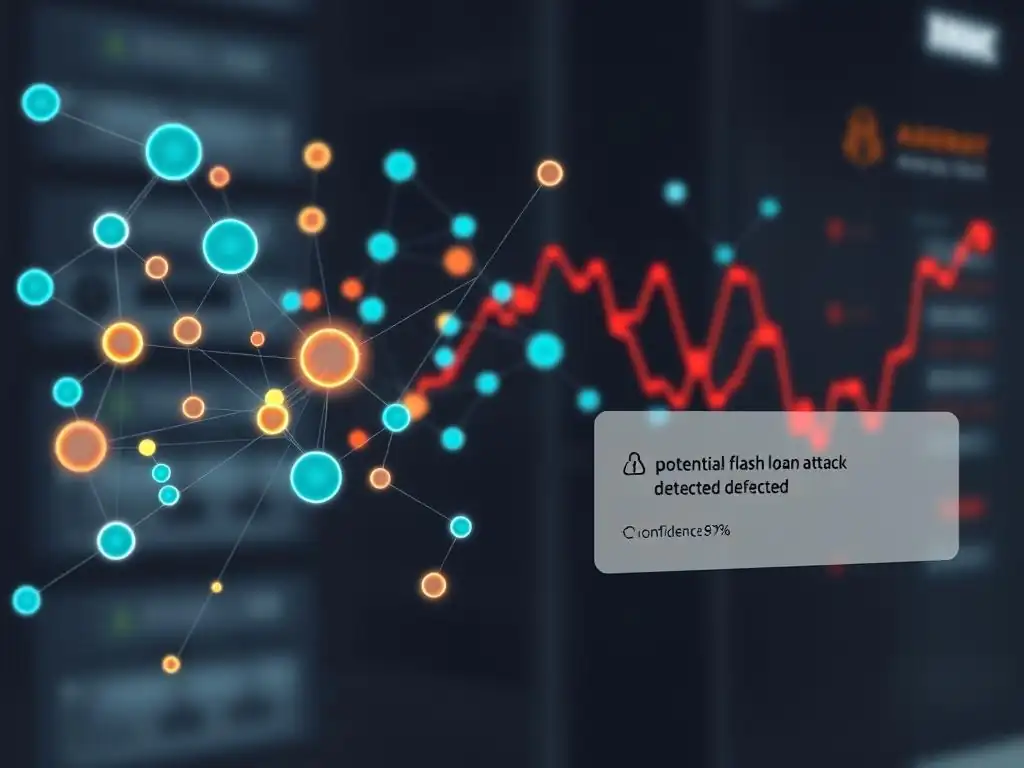
Building upon basic on-chain monitoring, real-time anomaly detection systems use sophisticated algorithms, including machine learning, to identify deviations that may indicate an ongoing exploit or malicious activity. These systems can look for complex patterns that might not be obvious from simple rule-based monitoring, such as unusual transaction sequences, sudden spikes in gas usage for a specific contract, or interactions between addresses that have never interacted before in a suspicious manner.
For example, a flash loan attack often involves a sequence of rapid transactions within a single block or a few blocks – borrowing funds, manipulating prices, executing an action (like liquidation or arbitrage), and repaying the loan. An anomaly detection system can be trained to recognize these specific patterns and trigger alerts instantly. Implementing such systems provides an early warning mechanism, potentially allowing protocols to pause operations or take mitigating actions before significant damage occurs, forming a critical layer of real-time DeFi security risks mitigation.
Enhanced Oracle Security and Data Validation
Strategies for Securing Oracles and Preventing Manipulation
Securing oracles is fundamental to protecting DeFi protocols that rely on external data. The most widely adopted strategy is decentralization: sourcing data from multiple independent nodes and aggregating it securely on-chain or through a decentralized network. Reputable decentralized oracle networks (DONs) employ cryptographic proofs to verify data authenticity and cryptoeconomic incentives (like staking and slashing) to penalize malicious or inaccurate reporting, making attacks economically unfeasible or prohibitively expensive.
Other strategies include using time-weighted average prices (TWAPs) from deep liquidity pools on decentralized exchanges rather than relying on potentially thin and easily manipulated spot prices. Protocols can also integrate multiple oracle providers or implement fallback mechanisms if a primary oracle feed becomes unreliable. Robust oracle design, incorporating redundancy, data source diversity, and cryptoeconomic security, is paramount for effective DeFi security risks mitigation against data manipulation.
Implementing Data Validation Techniques to Ensure Oracle Accuracy
Beyond securing the oracle mechanism itself, protocols can implement internal data validation techniques to add another layer of defense. This involves sanity checks on the data received from oracles. For instance, a protocol could set upper and lower bounds for price changes within a certain time frame, or compare the received price against a simple average from a few different, less critical sources as a plausibility check.
If the oracle data falls outside expected parameters or deviates significantly from other checks, the protocol can trigger warnings, pause operations related to that data feed, or revert transactions. While these validation checks might not catch sophisticated manipulations, they can prevent simple errors or obvious attacks. Combining robust decentralized oracles with internal data validation logic strengthens the overall resilience of DeFi protocols against manipulated or inaccurate external data, contributing significantly to DeFi security risks mitigation.
Formal Methods and Static Analysis
Automated tools for detecting and preventing vulnerabilities
Automated tools play a crucial role in scanning smart contract code for known vulnerabilities and anti-patterns. Static analysis tools examine the code without executing it, identifying potential issues like reentrancy possibilities, integer overflows, gas limit issues, and improper access controls based on predefined rules and patterns. Examples include Slither, Mythril, and Oyente. These tools can quickly scan large codebases and flag potential risks, providing developers with actionable insights.
Fuzz testing is another automated technique where the contract is bombarded with a large number of unexpected or random inputs to see how it behaves and identify edge cases or inputs that cause errors or unintended state changes. While automated tools cannot find every bug, they are highly effective at catching common and well-understood vulnerabilities early in the development lifecycle, significantly enhancing the efficiency and coverage of DeFi security risks mitigation efforts.
Applying formal methods for rigorous verification of smart contracts
As discussed earlier, formal methods use mathematical logic to prove the correctness of a program against a formal specification. For smart contracts, this means defining exactly what the contract should do and should not do under all possible circumstances (e.g., "the total supply of tokens should never exceed X", "only the owner can call this function", "funds can only be withdrawn by the depositor"). Formal verification tools then attempt to mathematically prove that the code adheres to these properties.
This approach is particularly valuable for verifying critical, high-value components where any error could be catastrophic. While requiring specialized skills and significant effort to create the formal specifications and models, it offers the highest level of assurance that certain types of bugs are absent. Applying formal methods to core DeFi logic is a sophisticated, albeit complex, strategy for achieving a higher standard of DeFi security risks mitigation.
The Future of DeFi Security: Emerging Trends and Technologies
Zero-Knowledge Proofs (ZKPs) for Enhanced Privacy and Security
How ZKPs Can Improve Privacy and Security in DeFi
Zero-Knowledge Proofs (ZKPs) are cryptographic methods that allow one party (the prover) to prove to another party (the verifier) that a statement is true, without revealing any information beyond the validity of the statement itself. In the context of DeFi, ZKPs can enhance both privacy and security. For privacy, ZKPs can enable users to prove they meet certain criteria (e.g., having sufficient funds, being a whitelisted address) without revealing the specific details of their assets or identity on the public blockchain, thereby reducing the privacy concerns associated with transparent ledgers.
From a security perspective, ZKPs can be used to verify the correctness of computations performed off-chain (e.g., complex calculations for derivatives pricing or solvency checks) before settling them on-chain. This allows for more complex and potentially more secure logic to be executed without incurring high gas costs or exposing sensitive data on the blockchain. By verifying computation integrity without revealing inputs, ZKPs can reduce the attack surface related to complex on-chain logic and data privacy, contributing to advanced DeFi security risks mitigation.
Potential Applications of ZKPs in DeFi Protocols
The applications of ZKPs in DeFi are numerous and rapidly evolving. Privacy-preserving transactions, similar to those on Zcash or Tornado Cash (though the latter faced regulatory challenges), could be integrated into DeFi to allow users to interact with protocols without revealing their entire transaction history. ZKPs could also be used for private balance proofs, enabling users to prove solvency to a lending protocol without disclosing their exact portfolio.
Furthermore, ZKPs are central to scaling solutions like ZK-rollups, which bundle thousands of off-chain transactions into a single batch and generate a ZKP to prove the validity of the entire batch. This proof is then posted on the main chain, allowing transactions to be verified without re-executing them. By enabling scalable and verifiable off-chain computation, ZKPs can facilitate more complex and secure DeFi applications that are currently constrained by blockchain limitations, presenting a promising avenue for future DeFi security risks mitigation.
Account Abstraction and Key Management Innovation
Improving User Experience and Security Through Account Abstraction
Account abstraction is a proposed change (e.g., Ethereum's EIP-4337) that aims to blur the lines between externally owned accounts (EOAs, controlled by private keys) and contract accounts (controlled by code). The goal is to allow users to interact with the blockchain using accounts that are smart contracts themselves. This opens up possibilities for highly customizable and potentially more secure account management. For instance, users could define complex security policies for their accounts, such as requiring multiple signers for transactions above a certain value, setting daily spending limits, or enabling social recovery mechanisms if a key is lost.
Account abstraction can significantly improve both user experience and security. It can eliminate the need for users to manage a single, critical private key directly, replacing it with more flexible and resilient security models. It can also enable features like gas payment in tokens other than the native blockchain currency. By abstracting away the direct management of raw private keys, account abstraction provides a pathway to more robust and user-friendly key management, representing a significant step forward in individual-level DeFi security risks mitigation.
Innovative Approaches to Key Management in DeFi
Beyond account abstraction, innovation in key management includes techniques like Multi-Party Computation (MPC) and secure enclaves. MPC allows multiple parties to jointly compute a function (like generating a signature) without any single party ever knowing the private inputs (like key shares) of the others. This differs from traditional multi-sig by never having the full key exist anywhere. MPC is being used by custodians and some wallet providers to enhance the security of digital asset management.
Secure enclaves, like those offered by Intel SGX or similar technologies, are isolated environments within a processor that can execute code and handle sensitive data (like private keys) in a way that is protected from the rest of the system, including the operating system. While introducing hardware dependencies and potential side-channel risks, they offer a way to perform cryptographic operations in a highly secure environment. These innovative approaches to key management are crucial for enhancing the security infrastructure underlying DeFi and advancing DeFi security risks mitigation practices.
Regulatory Landscape and Compliance in DeFi
The Impact of Regulation on DeFi Security Standards
The regulatory landscape for DeFi is rapidly evolving, with jurisdictions worldwide grappling with how to classify and oversee decentralized protocols. While regulation is often viewed with skepticism by the decentralized community, it can potentially drive higher security standards. Regulators may require protocols to implement robust Know Your Customer (KYC) and Anti-Money Laundering (AML) procedures, which, while impacting pseudonymity, can help track illicit funds and potentially deter some forms of exploitation.
Furthermore, regulatory bodies may push for greater transparency regarding smart contract risks, require security audits as a standard practice, or even mandate certain levels of insurance or capital reserves. While the specifics are still being debated, increased regulatory scrutiny is likely to push DeFi projects towards more mature security practices and greater accountability, indirectly bolstering DeFi security risks mitigation efforts across the ecosystem by setting baseline requirements.
Ensuring Compliance with Evolving Regulatory Requirements
Navigating the complex and changing regulatory environment is a significant challenge for DeFi protocols. Projects must stay informed about relevant regulations in the jurisdictions where their users or operators are based. This can involve seeking legal counsel, implementing compliance tools (which may interact with on-chain data), and potentially making design choices that align with expected regulatory trajectories, such as incorporating optional identity verification layers or improving traceability where possible without compromising decentralization principles.
Compliance is not just about avoiding legal penalties; it's also about building trust with users, partners, and traditional financial institutions that may wish to interact with DeFi. Demonstrating a commitment to security and compliance can help onboard a broader user base and facilitate the integration of DeFi into the wider financial system. Proactive engagement with regulators and the development of compliance-aware protocol designs are becoming increasingly important aspects of long-term DeFi security risks mitigation and ecosystem sustainability.
Conclusion: Prioritizing DeFi Security Risks Mitigation for Sustainable Growth
The Importance of Proactive Security Measures in DeFi
The rapid growth and innovation in the DeFi space have unfortunately been accompanied by significant security incidents, resulting in billions of dollars in losses. These incidents underscore a critical truth: the decentralized and immutable nature of blockchain technology means that security cannot be an afterthought. Proactive and comprehensive security measures, integrated throughout the design, development, deployment, and monitoring phases of DeFi protocols, are not merely desirable; they are essential for the ecosystem's survival and maturation.
Relying solely on the promise of decentralization is insufficient; the underlying code and the surrounding infrastructure must be rigorously secured. A single vulnerability can erode user trust, attract regulatory scrutiny, and set back innovation. Therefore, prioritizing DeFi security risks mitigation is the single most important factor for building a robust, trustworthy, and sustainable decentralized financial system that can fulfill its promise of reshaping global finance.
Building a More Secure and Trustworthy DeFi Ecosystem
Building a more secure and trustworthy DeFi ecosystem requires a multi-faceted approach involving developers, auditors, users, and the broader community. It necessitates a culture of security awareness, continuous learning from past incidents, and a commitment to implementing best practices. This includes mandatory smart contract audits, formal verification for critical components, robust oracle security, innovative key management solutions, real-time monitoring, and the strategic use of decentralized insurance.
Furthermore, educating users about the importance of secure wallet management and recognizing potential scams is vital. As the technology evolves with advancements like ZKPs and account abstraction, new tools and techniques for DeFi security risks mitigation will emerge. By collectively prioritizing security and implementing these comprehensive strategies, the DeFi community can work towards creating a more resilient, reliable, and ultimately, more impactful decentralized financial future.
Frequently Asked Questions
The most significant risks involve vulnerabilities in smart contract code, such as reentrancy attacks, and weaknesses in cryptographic key management. These can lead to theft of funds.
How can DeFi protocols mitigate risks associated with weak cryptographic key management?
Protocols can implement multi-signature wallets, hardware security modules (HSMs), and decentralized key management systems to enhance the security of private keys.
What role does formal verification play in reducing cryptographic risks in DeFi?
Formal verification uses mathematical techniques to prove the correctness of smart contract code, thereby identifying and preventing potential vulnerabilities before deployment.
What are some common DeFi attack vectors that exploit cryptographic weaknesses?
Examples include oracle manipulation, where external data feeds are compromised, and front-running, where attackers exploit knowledge of pending transactions to their advantage.
How are regulatory bodies addressing DeFi security risks and promoting safer DeFi practices?
Regulators are focusing on establishing clear guidelines for DeFi protocols, including requirements for audits, KYC/AML compliance, and risk management frameworks to protect users.
Final Reflection: Fortifying the Future of Finance
The exploration of cryptographic risks within DeFi protocols, as detailed in this article, is not merely an academic exercise; it is a critical imperative for the continued viability and trustworthiness of decentralized finance. The vulnerabilities exposed and the mitigation strategies proposed are directly relevant to the billions of dollars currently locked within these systems, and their security directly impacts the financial well-being of countless individuals.
The ongoing evolution of DeFi necessitates a constant vigilance and proactive approach to security. The inherent transparency and immutability of blockchain technology, while strengths, also amplify the consequences of cryptographic flaws. Security is always excessive until it's not enough.
This quote underscores the need for rigorous auditing, formal verification, and continuous monitoring to safeguard against potential exploits and ensure the long-term stability of the DeFi ecosystem.
Now, as you navigate the ever-expanding world of decentralized finance, remember that knowledge is your strongest defense. Take the insights gleaned from this exploration of DeFi security risks and mitigation strategies and apply them to your own investments and development practices. By prioritizing security and demanding transparency, you can contribute to a more robust and resilient future for DeFi, one where innovation and trust can flourish together.
Unleash Your DeFi Security Potential!
Thank you for exploring the cryptographic risks associated with DeFi protocols. We hope you've gained valuable insights into protecting your investments and understanding the vulnerabilities present in this dynamic space. Now, it's time to translate that knowledge into action.
Here are some essential steps to enhance your DeFi security:
- Deepen Your Understanding of Audits: Carefully review audit reports of DeFi protocols before investing. Focus on identified cryptographic weaknesses and the mitigation strategies recommended by auditors.
- Explore Advanced Security Tools: Go beyond the basics by investigating emerging security techniques such as formal verification and fuzzing, which are used to uncover vulnerabilities in DeFi code.
- Engage with the Community: Share your insights and questions in the Blockchain Trends community forum. Discuss your experiences and learn from other DeFi enthusiasts about the latest best practices in security.
What cryptographic risk do you believe poses the greatest threat to the DeFi ecosystem, and what proactive measures are you implementing to safeguard your portfolio?
Leave a Reply