
Exploring ProofofBurn: A Controversial but Intriguing Consensus Mechanism

Welcome to Blockchain Trends, your guide to navigating the ever-evolving landscape of decentralized technologies. Beyond the hype surrounding cryptocurrencies, blockchain is revolutionizing industries and reshaping how we interact with the world.
Delve into the Fundamentals of Blockchain with us as we explore the intriguing – and often controversial – world of consensus mechanisms. Ever heard of burning coins to secure a network? Our deep dive into the Proof of Burn Consensus Mechanism reveals its innovative approach, potential benefits, and inherent drawbacks. Intrigued? Keep reading to uncover the secrets behind this unique method and its place in the future of decentralized systems.
Exploring Proof-of-Burn: A Controversial but Intriguing Consensus Mechanism
- Introduction to Proof-of-Burn (PoB) Consensus
- How Proof-of-Burn Works: Burning Coins for Block Creation
- Advantages of Proof-of-Burn
- Disadvantages and Criticisms of Proof-of-Burn
- Proof-of-Burn vs. Other Consensus Mechanisms: A Comparison
- Real-World Implementations of Proof-of-Burn
- The Future of Proof-of-Burn in the Blockchain Ecosystem
- Proof-of-Burn and Blockchain Security
- Conclusion: Evaluating Proof-of-Burn's Potential and Limitations.
-
Frequently Asked Questions
- What is the basic principle behind Proof of Burn?
- How does Proof of Burn differ from Proof of Work (PoW) and Proof of Stake (PoS)?
- What are the perceived advantages of using Proof of Burn?
- What are some of the criticisms leveled against Proof of Burn?
- Are there any real-world blockchain projects currently using Proof of Burn, and if so, which ones?
- Final Reflection: The Enduring Ember of Innovation
- Ignite Your Blockchain Journey: Dive Deeper!
Introduction to Proof-of-Burn (PoB) Consensus
Understanding Blockchain Consensus Mechanisms
Blockchain technology relies fundamentally on consensus mechanisms to achieve agreement among distributed network participants on the state of the ledger. These mechanisms are critical for validating transactions, creating new blocks, and preventing malicious activity like double-spending without a central authority. Different blockchains employ various consensus protocols, each with its own approach to determining which participant gets to add the next block and how network security is maintained. The efficiency, security, and decentralization levels of a blockchain are heavily influenced by its chosen consensus mechanism.
The necessity for robust consensus arises from the inherent challenges of a distributed system operating in a trustless environment. Without a central coordinator, nodes must collectively agree on the order and validity of transactions. Early mechanisms like Proof-of-Work (PoW), popularized by Bitcoin, require participants to expend computational energy to solve complex puzzles. Later innovations introduced Proof-of-Stake (PoS), where validators are chosen based on the amount of cryptocurrency they hold and are willing to "stake" as collateral. The evolution of these mechanisms reflects an ongoing search for more efficient, scalable, and environmentally friendly ways to secure decentralized networks.
Alternative Consensus Protocols: Beyond Proof-of-Work and Proof-of-Stake
While Proof-of-Work and Proof-of-Stake dominate the blockchain landscape, the exploration of alternative consensus protocols continues. Researchers and developers are constantly innovating to address the specific limitations of PoW (like high energy consumption) and PoS (like potential centralization of stake). Mechanisms such as Delegated Proof-of-Stake (DPoS), Proof-of-Authority (PoA), and Proof-of-History (PoH) represent different trade-offs between decentralization, performance, and security. Each alternative aims to optimize specific aspects crucial for various blockchain applications, from public cryptocurrencies to private enterprise ledgers.
These alternative mechanisms often introduce novel concepts to achieve consensus. For instance, PoA relies on the reputation and identity of validators, making it suitable for permissioned networks. PoH, used by Solana, creates a historical record that proves events occurred at a specific moment in time, significantly speeding up transaction processing. The diversity in consensus mechanisms highlights the flexibility and ongoing development within the blockchain space, demonstrating a continuous effort to tailor network governance and security to diverse use cases and performance requirements.
Proof-of-Burn: A Novel Approach to Blockchain Validation
Proof-of-Burn (PoB) presents a unique and somewhat counter-intuitive approach to achieving consensus. Instead of expending computational power (like PoW) or locking up assets (like PoS), participants in a Proof of Burn Consensus Mechanism deliberately destroy or "burn" a certain amount of cryptocurrency. This act of burning coins is intended to simulate the concept of investing resources, similar to the energy expenditure in PoW, but without the ongoing energy cost. The burned coins are sent to an unspendable address, permanently removing them from circulation and demonstrating a long-term commitment to the network.
The core idea behind Proof of Burn is that by destroying value, a participant signals their long-term belief in the network's success. The more coins a participant burns, the higher their chance of being selected to create the next block. This mechanism aims to incentivize participants to act honestly, as their investment (the burned coins) is permanently lost if they attempt to defraud the system. While not as widely adopted as PoW or PoS, the Proof of Burn Consensus Mechanism offers an intriguing alternative that attempts to combine aspects of both predecessors while introducing its own distinct characteristics.
How Proof-of-Burn Works: Burning Coins for Block Creation
Virtual Mining in Proof-of-Burn
The concept of "virtual mining" is central to the Proof of Burn Consensus Mechanism. Unlike the physical mining of Proof-of-Work, which requires significant hardware and electricity, PoB simulates this investment through the destruction of cryptocurrency. Participants "mine" by sending a specific amount of the network's native coin, or sometimes a different cryptocurrency, to a verifiably unspendable address. This act is akin to investing in mining equipment and energy in PoW, but the investment is digital and permanent. The amount of coins burned corresponds to the participant's "mining power" or probability of being selected to forge the next block.
The more coins a participant burns, the greater their proportional stake or influence in the virtual mining process. This burned amount doesn't represent ongoing expenditure but rather a one-time cost that grants them a chance to participate in block creation over time. Some implementations might decay this "burning power" over time, requiring participants to burn more coins periodically to maintain their influence, further simulating the ongoing costs of traditional mining operations or the time-locked nature of staking. This virtual investment is the foundation upon which the Proof of Burn Consensus Mechanism determines block producers.
Cryptocurrency Burning: The Mechanism Explained
The act of "burning" cryptocurrency in a Proof of Burn Consensus Mechanism involves sending coins to a special address for which no private key exists or is known. These addresses are designed to be verifiably unspendable, meaning anyone can confirm that the coins sent there can never be retrieved or used again. Examples of such addresses might include a randomly generated string that doesn't correspond to a valid private key, or a specific, publicly known burn address designated by the protocol. This process permanently removes the burned coins from the total circulating supply of the cryptocurrency.
The burning process is typically initiated by a participant broadcasting a transaction that sends coins to the burn address. This transaction is then validated and included in a block like any other transaction. Once confirmed, the burned coins are irreversibly destroyed. The protocol then registers this burn event, associating the burned amount with the participant's address. This registered burn amount is what grants the participant the right to participate in the block selection process, effectively serving as their "stake" or "mining power" within the Proof of Burn Consensus Mechanism.
Selecting Burned Coins: Random Selection and Weighted Systems
In a Proof of Burn Consensus Mechanism, the selection of which participant gets to create the next block is typically based on a probabilistic algorithm that considers the amount of coins each participant has burned. The system often employs a weighted random selection process.
Participants who have burned more coins generally have a higher probability of being chosen compared to those who have burned fewer. This probability might be directly proportional to the amount burned, or it could follow a more complex formula that potentially includes factors like the age of the burn or the total number of coins burned by the participant over time.
For instance, if participant A burned 100 coins and participant B burned 50 coins, participant A might have twice the chance of being selected in a given round. Some PoB implementations introduce variations, such as decaying the "burning power" over time. This means that the influence gained from burning coins gradually decreases, encouraging participants to burn more coins periodically to maintain their selection probability. This decaying aspect adds a dynamic element to the Proof of Burn Consensus Mechanism, ensuring that past burns don't grant perpetual advantage and encouraging ongoing commitment.
Block Creation and Validation in PoB
Once a participant is selected through the weighted random process based on their burned coins, they are granted the right to propose and create the next block. This process is similar to how a miner in PoW or a validator in PoS creates a block: they gather valid transactions from the network's memory pool, assemble them into a block, and add necessary metadata. The selected participant then broadcasts this proposed block to the network.
Other participants in the network, often those also participating in the Proof of Burn Consensus Mechanism, are responsible for validating the proposed block. They verify the transactions within the block, check the block's structure, and confirm that the participant who created the block was indeed selected according to the protocol's rules based on their burned stake.
Upon successful validation by a sufficient number of nodes, the block is added to the blockchain, and the process repeats for the next block. The selected participant may receive transaction fees from the block as a reward for their contribution, although block rewards in the form of newly minted coins are less common in pure PoB systems, given the deflationary nature implied by burning.
Advantages of Proof-of-Burn
Energy Efficiency: A Greener Alternative to Proof-of-Work
One of the most frequently cited advantages of the Proof of Burn Consensus Mechanism is its significantly lower energy consumption compared to Proof-of-Work. PoW requires vast amounts of electricity to power competitive computational processes aimed at solving cryptographic puzzles. This has led to concerns about the environmental impact of major PoW blockchains like Bitcoin, which consumes energy comparable to that of medium-sized countries. In contrast, PoB eliminates this energy-intensive computation. The energy used in PoB is primarily limited to the standard operations of running nodes and processing transactions, similar to a PoS network.
The act of burning coins is a transaction like any other, requiring minimal energy compared to the continuous, high-power computations needed for PoW mining. By substituting energy expenditure with the destruction of cryptocurrency value, the Proof of Burn Consensus Mechanism offers a pathway to achieving consensus without the substantial environmental footprint associated with traditional mining. This makes PoB a potentially more sustainable option for blockchain networks, aligning better with growing global concerns about energy use and climate change.
Long-Term Commitment: Demonstrating Skin in the Game
The Proof of Burn Consensus Mechanism inherently demands a strong, long-term commitment from participants. By burning coins, users permanently remove value from their possession. This is a non-recoverable investment, unlike staking in PoS where staked coins can typically be retrieved after an unbonding period. This permanent loss signifies a deep belief in the future value and success of the network, as the only potential return on the burned investment is through the appreciation of the remaining coins or the rewards earned from participating in consensus.
This "skin in the game" model incentivizes participants to act in the best interest of the network. Any attempt to disrupt the network or act maliciously would jeopardize the value of the coins they still hold, including the potential future earnings from their burned stake. The irreversible nature of the burn creates a powerful economic disincentive for bad behavior, fostering a sense of shared responsibility and commitment among those participating in the Proof of Burn Consensus Mechanism.
Potential for Decentralization
Compared to Proof-of-Work, which can lead to mining pools consolidating power due to economies of scale in hardware and electricity, Proof-of-Burn potentially offers a more decentralized path. While wealth concentration remains a factor (those with more coins can burn more and gain higher selection probability), PoB avoids the geographical concentration of mining farms and the reliance on specialized, expensive hardware (ASICs). Anyone with the network's native cryptocurrency can participate by burning coins, theoretically lowering the barrier to entry compared to setting up a competitive PoW mining operation.
Furthermore, the selection process in PoB is typically based on a probabilistic algorithm applied to the burned stake across all participants, rather than the deterministic race to solve a puzzle in PoW. This can lead to a more distributed set of block producers over time, provided that the burning power doesn't decay too quickly or that mechanisms are in place to prevent disproportionate advantage from early, large burns. While challenges exist in preventing centralization of wealth, the technical architecture of the Proof of Burn Consensus Mechanism avoids some of the centralizing forces inherent in PoW mining infrastructure.
Disadvantages and Criticisms of Proof-of-Burn
Initial Wastefulness: Ethical Concerns
A primary criticism of the Proof of Burn Consensus Mechanism is the seemingly wasteful act of permanently destroying cryptocurrency. Critics argue that burning coins represents a direct loss of value that could otherwise be used for productive purposes, invested, or circulated within the economy. Unlike PoW, where energy is consumed but results in a physical output (heat) and secures the network, or PoS, where capital is locked but remains owned by the staker, PoB involves the irreversible elimination of assets.
From an ethical standpoint, some find the destruction of potentially valuable resources problematic, especially in a world where economic resources are finite. While proponents argue it's a necessary cost for securing the network and demonstrating commitment, the act of burning itself is seen by some as inherently non-productive and potentially damaging to the overall supply and utility of the cryptocurrency in the short term. This initial "waste" is a significant point of contention surrounding the Proof of Burn Consensus Mechanism.
Centralization Risks
Despite the potential for decentralization compared to PoW, the Proof of Burn Consensus Mechanism is not immune to centralization risks. The probability of being selected to create a block is directly tied to the amount of coins burned. This creates a system where those with more capital to burn can effectively gain a disproportionately higher chance of earning future block rewards and transaction fees. This can lead to a concentration of block production power in the hands of early adopters or wealthy individuals/entities who can afford to burn large quantities of coins.
If a small number of participants control a large percentage of the burned stake, they could potentially exert undue influence over the network, including censoring transactions or attempting other forms of manipulation. While the burned coins are lost, the potential rewards from block creation can be substantial, creating an incentive for capital concentration. This potential for wealth to translate directly into network control is a significant concern for the long-term decentralization of a Proof of Burn Consensus Mechanism.
Long-Term Sustainability Concerns
The long-term sustainability of a pure Proof of Burn Consensus Mechanism faces questions, particularly regarding the incentive structure and potential deflationary pressures. If the primary way to gain block creation rights is by continuously burning coins, this could lead to a perpetually decreasing circulating supply, potentially driving up the price but also making the coin scarcer and possibly less liquid for everyday use. Furthermore, without a mechanism for new coin issuance (like block rewards in PoW or some PoS systems), the only reward for block producers might be transaction fees.
If transaction volume or fees are low, the incentive to burn coins and participate in securing the network diminishes over time, as the cost of burning might outweigh the potential fee rewards. This could lead to reduced participation and potentially compromise network security. While some PoB implementations combine burning with other mechanisms or include fee distribution models to address this, the pure Proof of Burn Consensus Mechanism faces inherent challenges in maintaining robust participation and economic viability over the long term without careful design.
Proof-of-Burn vs. Other Consensus Mechanisms: A Comparison
Proof-of-Burn vs. Proof-of-Work: Energy and Security
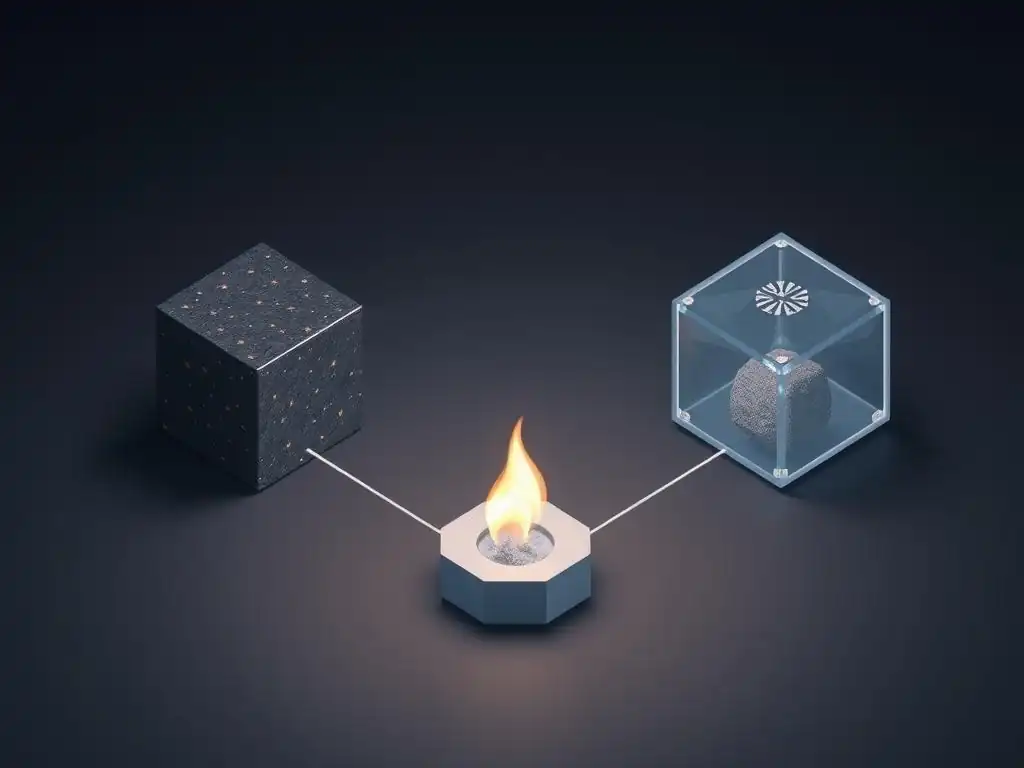
When comparing the Proof of Burn Consensus Mechanism to Proof-of-Work, the most striking difference lies in energy consumption. PoB is vastly more energy-efficient, using minimal power compared to PoW's massive energy requirements. This makes PoB significantly more environmentally friendly.
In terms of security, both mechanisms aim to make malicious attacks economically prohibitive. PoW requires an attacker to control over 50% of the network's total hashing power, which is incredibly expensive due to hardware and electricity costs. PoB requires an attacker to burn over 50% of the total burned coins that grant block production rights, which is also costly due to the value of the coins burned and the potential loss of future rewards.
However, the nature of the cost differs. PoW's cost is ongoing operational expense (electricity, hardware depreciation), while PoB's cost is a one-time, irreversible capital expenditure (burning coins). This means a successful attack in PoB results in a permanent loss of the burned investment, whereas in PoW, the attacker could potentially repurpose hardware. PoW has proven robust over time for large networks like Bitcoin, while PoB's security in highly adversarial environments at scale is less tested. PoB avoids the hardware arms race and geographical centralization of PoW mining, but introduces risks related to wealth concentration in burning.
Proof-of-Burn vs. Proof-of-Stake: Capital and Decentralization
Comparing Proof of Burn with Proof-of-Stake reveals differences in how capital is used. In PoS, participants "stake" their coins by locking them up, but they retain ownership and can typically retrieve them later. In PoB, participants permanently destroy their coins. This makes PoB's investment irreversible, potentially signaling a stronger long-term commitment but also representing a permanent loss of assets. Both mechanisms tie influence to capital: stake amount in PoS, burned amount in PoB.
Decentralization is a complex comparison. Pure PoS faces potential centralization risks if a few entities hold a large proportion of the total stake. Similarly, PoB faces risks if a few entities burn a large proportion of the coins that grant block production rights.
Some argue that PoB might be more decentralized than pure PoS in certain scenarios because the "burning power" might decay, requiring continuous burning and potentially preventing early stakers from holding perpetual dominance without further investment. However, the barrier to entry in PoS (staking) might be lower than the barrier in PoB (permanently destroying value) for smaller participants. Both mechanisms are generally considered more energy-efficient than PoW.
Delegated Proof-of-Burn (DPoB)
Delegated Proof-of-Burn (DPoB) is a variation of the Proof of Burn Consensus Mechanism that introduces a delegation layer, similar to Delegated Proof-of-Stake (DPoS). In DPoB, participants who burn coins don't necessarily become block producers themselves. Instead, they vote for delegates who will be responsible for validating transactions and creating blocks. The weight of their vote is proportional to the amount of coins they have burned. These elected delegates are then responsible for maintaining the network and are typically rewarded for their services, often sharing a portion of these rewards with those who voted for them.
DPoB aims to increase efficiency and potentially scalability by reducing the number of active block producers to a smaller, elected set of delegates. It also allows smaller participants who may not have burned enough coins to have a direct chance of being selected, to still have a voice and influence through their votes. However, like DPoS, this introduces a layer of representation and potential for cartelization among delegates, which could be seen as a move away from pure decentralization compared to a direct Proof of Burn Consensus Mechanism where every burner has a chance based on their individual burn.
Real-World Implementations of Proof-of-Burn
Slimcoin: Implementing PoB for Energy Efficiency
Slimcoin is one of the notable examples of a cryptocurrency that implemented a Proof of Burn Consensus Mechanism, or more accurately, a hybrid system combining PoW, PoS, and PoB. Its primary motivation for including PoB was to address the energy consumption issues associated with PoW. In Slimcoin, users could burn SLM coins to gain "mining power" alongside traditional PoW mining and PoS staking. The PoB aspect was designed to offer an alternative way to participate in securing the network and earning rewards without the need for specialized hardware or significant electricity bills.
The PoB implementation in Slimcoin allowed participants to send SLM to a specific burn address. The amount burned influenced their probability of finding a block, decaying over time to encourage continuous engagement. While Slimcoin's adoption remained relatively niche compared to major cryptocurrencies, its use of Proof of Burn demonstrated a practical application of the concept as part of a multi-layered consensus approach, aiming to leverage the strengths of different mechanisms while mitigating their weaknesses, particularly the energy intensity of PoW.
Factom: Using Proof-of-Burn for Data Integrity
Factom (now part of Factom Protocol) utilized a form of Proof-of-Burn, though not as its primary consensus mechanism for block creation in the traditional sense of a cryptocurrency ledger. Factom's core function was to provide an immutable record-keeping system by anchoring large amounts of data into a single hash recorded on a base blockchain (like Bitcoin or Ethereum). To anchor data entries and entry blocks onto the Factom blockchain, users and servers needed Entry Credits (ECs). ECs were obtained by burning Factoids (FCT), the network's utility token.
The burning of FCT to acquire ECs served as a fee mechanism and a form of PoB. By burning FCT, users paid for the ability to write data onto the Factom ledger. This act of burning provided economic security for the data anchoring process; the cost of writing data (burning FCT) had to be less than the potential gain from manipulating the anchored data.
While not a Proof of Burn Consensus Mechanism for block creation of the Factom blockchain itself (which used a federated server system), it effectively used burning as a mechanism for securing data entries and controlling access based on economic investment (burned FCT). This demonstrated a utility of burning beyond just currency consensus.
Case Studies: Successes and Failures of PoB
Examining projects that have implemented or experimented with the Proof of Burn Consensus Mechanism provides insights into its practical viability. Slimcoin's hybrid approach showed that PoB could coexist with other mechanisms, offering an alternative participation route, though its overall impact on decentralization and security compared to the other components is debated. Factom's use of burning for Entry Credits highlights PoB's potential as a fee or access control mechanism, effectively securing data anchoring through economic cost rather than computational work or stake.
However, pure Proof of Burn Consensus Mechanism networks have not achieved widespread adoption or scale comparable to Bitcoin (PoW) or Ethereum (moving to PoS). Challenges include the psychological barrier of permanently destroying value, the difficulty in designing decay rates and reward structures that ensure long-term participation, and the persistent risk of centralization based on the ability to acquire and burn large quantities of coins. The relatively limited number of pure PoB implementations suggests that while intriguing in concept, the mechanism faces significant hurdles in practical, large-scale deployment compared to its more established counterparts.
The Future of Proof-of-Burn in the Blockchain Ecosystem
Potential Applications Beyond Cryptocurrency
While the Proof of Burn Consensus Mechanism is most commonly discussed in the context of cryptocurrencies, its underlying principle of demonstrating commitment through irreversible value destruction could find applications beyond digital currencies. Consider decentralized identity systems where burning a small amount of a token could signify the permanent registration or verification of an identity component. In decentralized autonomous organizations (DAOs), burning tokens could be used as a mechanism for weighted voting on critical proposals, ensuring that participants have a significant, non-recoverable stake in the decision-making process.
Another potential area is in digital collectibles or NFTs, where burning a token could represent the permanent destruction of a digital asset, perhaps to prove scarcity or migrate to a new standard, akin to retiring a physical object. The core idea of using irreversible economic cost as a signal of commitment or a fee for specific actions could be adapted for various decentralized applications requiring proof of intent or investment without ongoing resource expenditure like PoW. This expands the potential relevance of the Proof of Burn Consensus Mechanism beyond simple block production.
The Role of PoB in Emerging Blockchain Technologies
As blockchain technology continues to evolve, the principles behind the Proof of Burn Consensus Mechanism might be integrated into newer architectures or hybrid models. For instance, sharded blockchains or layer-2 scaling solutions could potentially use burning mechanisms for specific functions, such as registering a shard validator or committing data to a roll-up, where a small, irreversible cost could provide economic security for that particular operation. The concept of "burning" might also evolve, perhaps involving the locking of assets for an extremely long, effectively permanent, period rather than outright destruction.
Furthermore, research into novel consensus mechanisms could draw inspiration from PoB's unique approach to incentivization and commitment. Combining elements of burning with other concepts, such as reputation systems, zero-knowledge proofs, or novel cryptographic techniques, could lead to entirely new consensus protocols. The fundamental idea of using irreversible value as a security anchor remains a powerful concept that could be adapted and refined for future decentralized systems, influencing the design of next-generation blockchain consensus.
The Evolution of Consensus: Adaptation and Thrive?
The history of blockchain consensus mechanisms is one of continuous evolution and adaptation. From the initial PoW to the rise of PoS and the proliferation of various alternatives, the field is constantly seeking more efficient, scalable, and secure ways to achieve distributed agreement. The Proof of Burn Consensus Mechanism, despite its current limited adoption, represents a significant branch in this evolutionary tree, exploring a distinct approach to the fundamental problem of trustless coordination.
Whether pure PoB networks will thrive in the future remains uncertain, given the challenges they face. However, the core concepts pioneered by PoB – using irreversible economic commitment as a security measure and an alternative to energy expenditure – are likely to influence the design of future consensus mechanisms. Hybrid models that strategically incorporate burning for specific purposes, or entirely new protocols that build upon PoB's principles, could emerge. The Proof of Burn Consensus Mechanism may not dominate the future, but its innovative approach is poised to contribute to the ongoing evolution of blockchain technology.
Proof-of-Burn and Blockchain Security
Security Considerations in Proof-of-Burn Networks
The security of a Proof of Burn Consensus Mechanism relies on the economic disincentive created by the irreversible burning of coins. The theory is that an attacker would need to acquire and burn a significant portion of the network's total "burning power" to gain control, and the cost of doing so would outweigh the potential gains from malicious activity. The value lost through burning acts as the primary security expenditure, analogous to the electricity and hardware costs in PoW or the staked capital at risk in PoS.
Key security considerations include determining the appropriate decay rate for burning power (if any) to prevent early burners from holding disproportionate, permanent control, and ensuring the integrity of the random selection process. The distribution of the native currency is also critical; a highly centralized initial distribution could make a 51% attack (or equivalent in PoB, controlling enough burning power to manipulate block production) more feasible for a wealthy entity. The security model assumes that participants are rational economic actors motivated by profit and loss.
Addressing Potential Attacks on PoB Systems
Like other consensus mechanisms, the Proof of Burn Consensus Mechanism is theoretically vulnerable to attacks, most notably the equivalent of a 51% attack. An attacker could attempt to acquire and burn enough coins to control a majority of the block production selection probability. With this control, they could potentially double-spend their coins (by creating a fork where their transaction is reversed) or censor transactions. The defense against this is the immense cost required to acquire and permanently destroy the necessary amount of cryptocurrency. For a valuable network, this cost should theoretically exceed the potential profit from an attack.
Another potential issue is a "long-range attack" in some PoS-based systems, where attackers could create a fraudulent chain from the distant past. In PoB, the irreversible nature of burning provides some defense against this, as the attacker would have had to perform the burns on the actual historical chain. However, specific implementations need careful design to prevent issues like 'nothing-at-stake' problems where participants could potentially vote on multiple chain histories without penalty, although the burning mechanism itself provides a form of stake. Robust security requires careful tuning of parameters, including decay rates and selection algorithms.
Security Trade-offs of Burning Mechanisms
Implementing a Proof of Burn Consensus Mechanism involves inherent security trade-offs. While it eliminates the energy waste of PoW, it introduces the "waste" of destroying value. While it avoids the lock-up periods of PoS, it makes the investment irreversible. The security relies heavily on the economic value of the burned asset and the assumption that attackers are purely motivated by financial gain. If an attacker has non-financial motivations (e.g., state-sponsored disruption), the economic disincentive might be less effective.
Furthermore, the security derived from burning is tied to the market value of the burned coin. Significant price drops could potentially lower the cost of a 51% attack. The design must also account for the potential for burning power to become overly concentrated, which could weaken the network's security against coordinated attacks by wealthy entities. The Proof of Burn Consensus Mechanism offers a unique security model, but it comes with its own set of dependencies and potential vulnerabilities that must be carefully managed through protocol design and economic incentives.
Conclusion: Evaluating Proof-of-Burn's Potential and Limitations.
The Proof of Burn Consensus Mechanism stands as an intriguing alternative in the diverse landscape of blockchain consensus protocols. By requiring participants to permanently destroy cryptocurrency, PoB creates a unique form of economic commitment that serves as the basis for network security and block production rights. Its primary advantages lie in its superior energy efficiency compared to Proof-of-Work and the strong signal of long-term commitment from participants due to the irreversible nature of the burn. It also offers potential for decentralization by avoiding the hardware dependencies of PoW.
However, the Proof of Burn Consensus Mechanism is not without its significant limitations and criticisms. The act of burning itself is seen by some as wasteful and ethically questionable. Concerns about centralization persist, as wealth can directly translate into control over block production probability.
Long-term sustainability and incentive structures in pure PoB systems also pose challenges, particularly regarding maintaining participation if rewards are solely reliant on transaction fees. While pure PoB networks have seen limited widespread adoption compared to PoW and PoS, its principles have found application in hybrid models and specific use cases like data anchoring. The Proof of Burn Consensus Mechanism may not be the dominant consensus protocol of the future, but its innovative approach to security and commitment through irreversible value destruction offers valuable insights and potential for incorporation into future blockchain designs and applications.
Frequently Asked Questions
What is the basic principle behind Proof of Burn?
Proof of Burn (PoB) is a consensus mechanism where miners burn or destroy their cryptocurrency tokens to gain the right to mine new blocks. This burning process is a virtual cost that demonstrates commitment.
How does Proof of Burn differ from Proof of Work (PoW) and Proof of Stake (PoS)?
Unlike PoW, PoB doesn't require expensive hardware. Unlike PoS, PoB doesn't rely on the amount of stake held. Instead, it uses the act of burning as a measure of commitment and selection criteria.
What are the perceived advantages of using Proof of Burn?
Potential advantages include lower energy consumption compared to PoW and a more democratic approach than PoS, as anyone can participate by burning tokens. It offers a long-term commitment signal.
What are some of the criticisms leveled against Proof of Burn?
Critics argue that it's still wasteful because it involves destroying valuable tokens. There are also concerns about the long-term sustainability and economic incentives of the system.
Are there any real-world blockchain projects currently using Proof of Burn, and if so, which ones?
Yes, some projects have experimented with it. Slimcoin and Counterparty are two examples; however, it's not as widely adopted as PoW or PoS. Its popularity remains relatively limited.
Final Reflection: The Enduring Ember of Innovation
The exploration of Proof-of-Burn, as we've seen, is more than just a technical deep dive; it's a reflection on the very nature of value and sacrifice in decentralized systems. The enduring relevance of Proof-of-Burn lies in its audacious attempt to solve the energy consumption problem inherent in Proof-of-Work, while still maintaining a level of security and decentralization. As the blockchain landscape continues to evolve, understanding these alternative consensus mechanisms becomes crucial for building a sustainable and equitable future.
The concept of deliberately destroying digital assets to secure a network, while seemingly counterintuitive, highlights the innovative spirit driving the crypto world. This exploration has personally reinforced the importance of questioning established norms and embracing unconventional solutions in the pursuit of progress. It reminds us that true innovation often requires a willingness to challenge the status quo and explore paths less traveled. The reasonable man adapts himself to the world; the unreasonable one persists in trying to adapt the world to himself. Therefore all progress depends on the unreasonable man.
- George Bernard Shaw. This quote perfectly encapsulates the spirit of Proof-of-Burn and its potential to reshape our understanding of consensus.
As we conclude this exploration, I invite you to consider the implications of Proof-of-Burn and other innovative consensus mechanisms. How can we, as individuals and as a community, foster a culture of experimentation and critical thinking to build more sustainable and equitable blockchain ecosystems? Let us embrace the challenge of finding innovative solutions, even if they seem unconventional at first glance, and work together to shape a future where technology serves humanity in a responsible and sustainable manner.
Ignite Your Blockchain Journey: Dive Deeper!
Thank you for exploring the intricacies of Proof-of-Burn with us! We hope this article has illuminated its potential and challenges within the rapidly evolving blockchain space. Now, it's time to turn that knowledge into action.
Ready to explore further?
- Research active Proof-of-Burn projects and analyze their implementations firsthand. This is your chance to see theory in practice!
- Join our Blockchain Trends forum and share your insights on the future viability of Proof-of-Burn. Let's debate its advantages and disadvantages!
- Explore less common consensus mechanisms, such as Proof-of-Stake variants, to compare their efficiency and security trade-offs with Proof-of-Burn.
What innovative blockchain applications do you envision Proof-of-Burn enabling in the future? Share your thoughts in the comments below!
Leave a Reply