
Hashing, Cryptography, and Blocks: The Building Blocks of Blockchain Security


Welcome to Blockchain Trends, your guide to navigating the revolutionary world of decentralized technology.
Ever wondered how blockchain keeps your data safe and secure? In this article, we delve into the Blockchain security fundamentals explained, uncovering the core principles of hashing, cryptography, and block structures that underpin this groundbreaking technology. Prepare to demystify the intricate layers that safeguard your digital assets and transactions, and discover why blockchain is more than just cryptocurrency. Let's unlock the secrets together...
Blockchain Security: Hashing, Cryptography, and Blocks
- Understanding Blockchain Security Fundamentals
- Hashing: Ensuring Data Integrity
- Cryptography: Securing Transactions and Identities
- Blocks: Data Containers
- Hashing, Cryptography, and Blocks: A Security Ecosystem
- Blockchain Security in Action
- Addressing Blockchain Security Threats
- The Future of Blockchain Security
- Conclusion: The Importance of Blockchain Security
-
Frequently Asked Questions
- What is the role of hashing in blockchain security?
- How does cryptography contribute to the security of blockchain?
- What are blocks and how do they relate to blockchain security?
- What are some blockchain security fundamentals that businesses should understand?
- Beyond cryptocurrencies, how does blockchain security impact other applications like DeFi?
- Final Reflection: Securing the Future with Immutable Trust
- Uncover the Power of Blockchain Security: Secure Your Future Today!
Understanding Blockchain Security Fundamentals
The Importance of Security in Decentralized Systems
The inherent promise of blockchain technology lies in its ability to create decentralized, transparent, and immutable ledgers. However, achieving these properties relies heavily on robust security mechanisms. Unlike traditional centralized databases that are protected by perimeter defenses and trust in a single entity, decentralized systems distribute data across a network, making them potentially more resilient to single points of failure but also introducing new security challenges. Ensuring the integrity and authenticity of data and transactions in such an environment is paramount to building trust and enabling widespread adoption.
Without a strong foundation in blockchain security fundamentals explained, decentralized applications and networks would be vulnerable to manipulation, fraud, and loss of assets. The security of the blockchain is not just about protecting against external attacks; it's also about ensuring the internal consistency and reliability of the distributed ledger itself. This includes preventing double-spending, ensuring that only authorized parties can initiate transactions, and guaranteeing that once data is recorded, it cannot be retroactively altered. The success of blockchain applications, from finance to supply chain management, hinges on the reliability of these fundamental security principles.
Core Components of Blockchain Security
The security architecture of a blockchain is built upon a synergy of several interconnected technological components. At its heart are cryptographic principles, specifically hashing and public-key cryptography, which provide the foundational layers for data integrity and transaction security. These cryptographic tools are then applied to the data structures known as blocks, which are linked together to form the chain. The way these blocks are created and validated across the decentralized network is governed by consensus mechanisms, adding another critical layer to the overall security model.
Understanding the blockchain security fundamentals explained requires delving into each of these core components individually and then examining how they interact. Hashing ensures that any change to the data within a block is immediately detectable. Cryptography secures individual transactions, verifying the identity of the sender and ensuring that transactions are authorized. Blocks act as secure containers for bundles of transactions, and their sequential linking through hashing creates an immutable history. Finally, consensus mechanisms ensure that all participants agree on the valid state of the ledger, preventing malicious actors from unilaterally altering the chain.
Hashing: Ensuring Data Integrity
Hashing Explained
Hashing is a fundamental cryptographic process that takes input data of any size—a file, a message, a transaction, or a block of data—and produces a fixed-size string of bytes, typically a seemingly random sequence of characters. This output is called a hash value or digest.
A key property of a cryptographic hash function is that even a tiny change in the input data will result in a drastically different hash value. This makes hashing an incredibly powerful tool for detecting data tampering; if you calculate the hash of a dataset and later recalculate it, any discrepancy between the two hash values indicates that the data has been modified.
Consider a document you want to verify hasn't been changed. You could compute its hash and keep the hash value. Later, to check the document's integrity, you simply recompute its hash and compare it to the stored value. If they match, you can be highly confident the document is unchanged. This principle is directly applied in blockchain security fundamentals explained, where hashing is used extensively to ensure that the data stored within each block and the links between blocks remain unaltered.
Hashing Algorithms and Data Integrity
The strength of hashing in ensuring data integrity depends entirely on the quality of the hashing algorithm used. Cryptographic hash functions are designed with specific properties that make them suitable for security applications, including preimage resistance (hard to find the input given the output), second preimage resistance (hard to find a different input with the same output as a given input), and collision resistance (hard to find two different inputs that produce the same output). These properties are crucial for preventing malicious actors from creating fraudulent data that produces the same hash as legitimate data.
In the context of blockchain security fundamentals explained, hashing algorithms are applied to the entire contents of a block, creating a unique "fingerprint" for that specific set of transactions and metadata. This block hash serves as a crucial integrity check. If even a single bit of data within the block is changed after the hash is calculated and the block is added to the chain, the re-calculated hash will be different, immediately indicating that the block has been tampered with. This cryptographic link is a cornerstone of blockchain's immutability.
Hash Functions and Collision Resistance
Collision resistance is perhaps the most vital property for blockchain applications. A "collision" occurs when two different inputs produce the exact same hash output. While collisions are theoretically possible for any hash function (because the input space is infinite, but the output space is finite), cryptographic hash functions are designed so that finding a collision is computationally infeasible. This means it would require an astronomical amount of computing power and time, far beyond current capabilities, to deliberately create a different set of transactions or data that results in the same hash as the original, valid block.
The practical implication of strong collision resistance for blockchain security fundamentals explained is that it makes it virtually impossible for an attacker to substitute a fraudulent block of data for a legitimate one while maintaining the correct hash value. Any attempt to alter the transactions within a historical block would change the block's hash, breaking the cryptographic link to the next block in the chain and invalidating that block and all subsequent blocks, which would be immediately detectable by the network participants.
Blockchain Hashing Algorithms: SHA-256 and Keccak-256
Two prominent hashing algorithms used in major blockchains are SHA-256 and Keccak-256. SHA-256 (Secure Hash Algorithm 256-bit) is part of the SHA-2 family developed by the NSA. It's famously used in Bitcoin's proof-of-work mining process and for generating block hashes. SHA-256 produces a 256-bit (32-byte) hash value, a long string of characters that represents the input data. The immense computational effort required to find a hash that meets specific criteria (like starting with a certain number of zeros, as in Bitcoin mining) is what secures the network and prevents rapid block generation or tampering.
Keccak-256, often referred to as SHA-3 (though technically a variant), is the hashing algorithm used in Ethereum and many other blockchain platforms, particularly those focusing on smart contracts. While also producing a 256-bit hash, Keccak-256 has a different internal structure compared to SHA-256. Its adoption in Ethereum was partly due to concerns about potential future vulnerabilities in the SHA-2 family, although SHA-256 is still considered highly secure. Both algorithms serve the same core purpose within their respective blockchains: providing a unique, fixed-size fingerprint for data to ensure integrity as a key part of the blockchain security fundamentals explained.
Hashing for Linking Blocks
Beyond ensuring the integrity of the data within a single block, hashing is also the mechanism used to link blocks together, forming the "chain" in blockchain. Each block contains not only its own data (transactions, timestamp, etc.) and its unique hash but also the hash of the previous block in the chain. This creates a cryptographic link, like a digital chain, extending back to the very first block, known as the genesis block.
This linking mechanism is critical for blockchain security fundamentals explained. If an attacker were to modify a historical block, its hash would change. Since the next block contains the original hash of the modified block, the link would be broken.
This inconsistency would be flagged by any node validating the chain, invalidating the modified block and all subsequent blocks. To successfully tamper with a historical block without being detected, an attacker would not only have to recompute the hash of the modified block but also recompute the hash of every subsequent block up to the most recent one, as each subsequent block's hash depends on the hash of the one before it. This computationally intensive task, especially on large, established blockchains with significant hashing power protecting them, makes retroactive tampering practically impossible.
Cryptography: Securing Transactions and Identities
Cryptography: Protecting Data with Algorithms
Cryptography, at its core, is the practice and study of techniques for secure communication in the presence of adversaries. It involves using mathematical algorithms to transform data in ways that protect its confidentiality, integrity, and authenticity. While hashing focuses primarily on data integrity (detecting changes), other cryptographic techniques, particularly asymmetric or public-key cryptography, are essential for securing transactions and verifying identities within a decentralized network, forming another pillar of blockchain security fundamentals explained.
Modern cryptography provides the tools necessary to ensure that transactions on a blockchain are not only correctly recorded but also legitimately initiated by the owner of the assets being transferred. It allows participants to prove their ownership of funds without revealing a central identity and to sign transactions cryptographically, providing irrefutable proof of authorization. This is a significant departure from traditional systems where identity and authorization are often managed by centralized authorities like banks.
Public Key Cryptography for Secure Transactions
Public key cryptography, also known as asymmetric cryptography, uses a pair of mathematically related keys: a public key and a private key. These keys are generated together, but one cannot be easily derived from the other. The public key can be freely shared with anyone, while the private key must be kept secret by its owner. This key pair forms the basis for creating digital identities and securing transactions in blockchain technology, a fundamental aspect of blockchain security fundamentals explained.
In the context of cryptocurrencies like Bitcoin or Ethereum, a user's public key is often used to generate their blockchain address, which is where assets are received. The private key is used to authorize transactions sending assets from that address. This setup ensures that only the person who controls the private key can spend the funds associated with the corresponding public key (and address).
Public and Private Keys
The relationship between public and private keys is central to blockchain security. Think of the public key as a mailbox address that anyone can send a letter to, and the private key as the unique key that can open that specific mailbox to retrieve the mail. In blockchain, assets are sent to an address derived from the public key. To move those assets, the owner must use their corresponding private key to create a digital signature for the transaction.
A critical point in blockchain security fundamentals explained is the absolute necessity of keeping the private key secret. If someone gains access to your private key, they can spend your assets as if they were you. Losing your private key means you lose access to your assets forever, as there is no central authority to recover it. This places a significant responsibility on users for managing their private keys securely, often through hardware wallets or robust backup procedures.
Digital Signatures for Transaction Verification
Digital signatures are a cryptographic method used to verify the authenticity and integrity of a digital message or document. In blockchain, the private key is used to create a digital signature for a transaction. This signature is generated by applying a signing algorithm to the transaction data (details like sender, recipient, amount) and the sender's private key. The output is a unique signature tied to both the specific transaction data and the specific private key.
Anyone on the network can then use the sender's public key to verify this signature. The verification algorithm checks if the signature was indeed created by the private key corresponding to the public key provided, and if the transaction data has not been altered since it was signed.
If the verification is successful, it proves two things: 1) the transaction was authorized by the owner of the private key (and thus the associated assets), and 2) the transaction details have not been tampered with. This process ensures the authenticity and non-repudiation of transactions, crucial elements of blockchain security fundamentals explained.
Encryption vs. Hashing
While both encryption and hashing are cryptographic techniques, they serve different purposes and are often confused. Understanding the distinction is vital for grasping blockchain security fundamentals explained. Encryption is a two-way process: it scrambles data (plaintext) into an unreadable format (ciphertext) using a key, and it can be unscrambled back into plaintext using the correct key (or key pair in asymmetric encryption). Encryption is used to protect the confidentiality of data, ensuring that only authorized parties can read it.
Hashing, as discussed earlier, is a one-way process: it transforms data into a fixed-size hash value. There is no key used in the process (though algorithms differ), and crucially, it is computationally infeasible to reverse the process – you cannot reconstruct the original data from the hash value alone.
Hashing is used to ensure data integrity and create unique identifiers, not to hide the data itself. While blockchain uses cryptography extensively for signatures and securing links, the transaction data within public blockchains is typically hashed, not encrypted, meaning the data itself is often publicly viewable, though linked to pseudonymous addresses.
Blocks: Data Containers
What is a Block?
In the context of blockchain technology, a block is a fundamental data structure that serves as a container for a collection of validated transactions. Think of it as a page in a digital ledger. Each block bundles together a certain number of transactions that have occurred over a specific period. Before transactions are included in a block, they are typically broadcast to the network and held in a temporary pool (often called the mempool or transaction pool) until they are selected and validated by network participants (miners or validators), depending on the consensus mechanism.
Once a set of valid transactions is gathered, they are packaged into a block. This block also includes important metadata, such as a timestamp, a reference to the previous block, and a unique identifier generated through hashing. The process of creating and adding new blocks to the chain is what continuously updates the distributed ledger, building upon the blockchain security fundamentals explained by leveraging hashing and cryptography within this structure.
Block Structure
While the specific details can vary slightly between different blockchains (e.g., Bitcoin vs. Ethereum), the general structure of a block includes two main parts: the block header and the transaction data.
Block Header: Metadata and Hashing
The block header contains vital metadata about the block itself and its place in the chain. This is a relatively small amount of data compared to the transaction payload but is critical for linking blocks and verifying the integrity of the chain. Common elements found in a block header include:
- Version: Indicates the block version number, relevant for software upgrades.
- Previous Block Hash: The hash value of the immediately preceding block in the chain. This is the cryptographic link that connects blocks.
- Merkle Root: A hash of all the transactions included in this block, organized in a specific tree structure called a Merkle tree. This allows for efficient verification of whether a specific transaction is included in the block without having to download the entire block's transaction data.
- Timestamp: The time when the block was created.
- Difficulty Target / Nonce: Parameters related to the mining or validation process, particularly in Proof-of-Work systems. The 'nonce' is a number that miners adjust until the block's hash meets the required difficulty target.
The entire block header is then hashed using a specific algorithm (like SHA-256 or Keccak-256) to produce the unique hash of the current block. This block hash is what the next block will reference, reinforcing the chain's integrity based on blockchain security fundamentals explained.
Transaction Data
The bulk of a block's content consists of the actual transaction data. This section contains a list of all the transactions that have been validated and included in this specific block. Each transaction typically includes details such as:
- Sender's address (derived from their public key)
- Recipient's address
- Amount of cryptocurrency or assets being transferred
- Transaction fee
- Digital signature of the sender (created using their private key)
The number of transactions included in a block varies depending on the blockchain's design parameters, such as the block size limit (e.g., Bitcoin's block size limit of around 1 MB, which typically allows for 1500-2500 transactions per block, though this can vary with SegWit) and the average transaction size. Ethereum's block size is limited by a "gas limit" per block, which can accommodate a variable number of transactions depending on their computational complexity (gas usage), often ranging from dozens to hundreds or more transactions per block depending on network conditions and transaction types.
Block Validation and Consensus
Once a block is created (or "mined" in Proof-of-Work systems), it is broadcast to the network. Other participants (nodes) then validate the block. This validation process involves several checks, including:
- Verifying that the block's format is correct.
- Checking that the hash of the previous block in the header matches the actual hash of the previous block in their copy of the chain.
- Verifying the validity of each transaction within the block (e.g., checking digital signatures, ensuring the sender had sufficient funds at the time of the transaction).
- In Proof-of-Work, verifying that the block header's hash meets the current difficulty target (i.e., checking the "proof of work").
Only blocks that pass all validation checks are accepted by the nodes. The process by which the decentralized network agrees on which blocks are valid and should be added to the main chain is governed by the blockchain's consensus mechanism (e.g., Proof-of-Work, Proof-of-Stake).
This consensus mechanism is a vital layer of the blockchain security fundamentals explained, as it prevents conflicting versions of the ledger and makes it extremely difficult for a single entity or small group to alter the chain. For instance, in Bitcoin's Proof-of-Work, adding a block requires significant computational power, making it economically unfeasible for an attacker to outpace the honest network majority and rewrite history.
Hashing, Cryptography, and Blocks: A Security Ecosystem
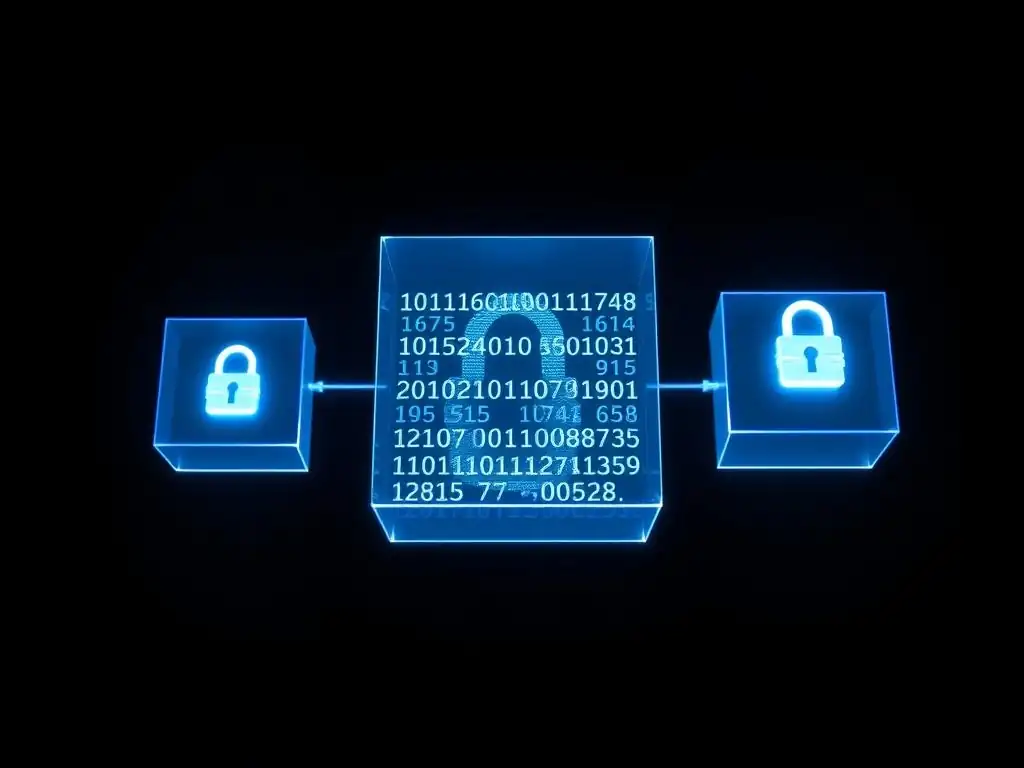
The Interplay of Hashing, Cryptography, and Blocks
The true strength of blockchain security lies not in any single component but in the sophisticated interplay between hashing, cryptography, and the block structure, all reinforced by the consensus mechanism. These elements form a cohesive security ecosystem where each part contributes to the overall integrity, authenticity, and immutability of the distributed ledger. Understanding this synergy is key to fully grasping the blockchain security fundamentals explained.
Cryptography, specifically public-key cryptography, secures individual transactions by proving ownership and authorizing transfers via digital signatures. These signed and validated transactions are then grouped into blocks. Hashing is applied to the contents of each block to create a unique fingerprint (the block hash) and, critically, to link each new block to the previous one by including the previous block's hash in the current block's header. This chain of hashed links, validated through the network's consensus mechanism, creates a ledger that is incredibly resistant to tampering.
Immutability Through Hashing
The immutability of the blockchain is a direct consequence of the way blocks are linked using hashing. As discussed, each block's header contains the hash of the block immediately preceding it. If an attacker were to alter the data within an old block (even by a single character), the hash of that block would change completely. This would break the link with the next block in the chain, as the next block's stored "previous hash" would no longer match the altered block's new hash.
To fix this broken link and attempt to propagate the change, the attacker would need to recompute the hash of the altered block. Then, they would need to alter the next block's header to include this new hash and recompute that block's hash.
This cascading effect would require recomputing the hash of every subsequent block all the way to the most recent block. On a large, active blockchain secured by significant computational power (like Bitcoin), performing this amount of computation to catch up to and rewrite the longest chain is practically impossible for a single entity, reinforcing the blockchain security fundamentals explained.
While hashing secures the integrity of the blocks and the chain structure, public-key cryptography secures the rights to initiate transactions and move assets. Every transaction on a blockchain is associated with a digital signature created using the sender's private key. This signature cryptographically proves that the transaction was authorized by the legitimate owner of the funds linked to the corresponding public key (blockchain address).
When a transaction is broadcast to the network, nodes use the sender's public key to verify the digital signature. This verification confirms that the transaction originated from the correct private key holder and that the transaction details haven't been altered since being signed. This cryptographic authorization prevents unauthorized spending and ensures that only the rightful owners can control their assets on the ledger, a core element of blockchain security fundamentals explained.
Building a Tamper-Proof Ledger
The combination of these elements—transactions secured by digital signatures, bundled into blocks, linked by cryptographic hashes, and validated through a decentralized consensus mechanism—creates a ledger that is highly tamper-proof. Any attempt to:
- Alter a historical transaction would change the block's hash.
- Insert a fraudulent transaction would require a valid digital signature from the asset owner's private key (which the attacker shouldn't have).
- Change the order of transactions within a block would change the Merkle root, thus changing the block's hash.
- Insert a fraudulent block would require computing a valid block hash that links correctly to the previous block and then convincing the majority of the network to accept this fraudulent chain, which is economically and computationally prohibitive on established networks.
This multi-layered security approach, built upon blockchain security fundamentals explained like hashing and cryptography applied within the block structure, makes the blockchain ledger incredibly resilient to manipulation, offering a level of transparency and immutability difficult to achieve in traditional centralized systems.
Blockchain Security in Action
Securing Supply Chains with Blockchain
Blockchain security fundamentals explained are being applied to enhance transparency and security in supply chain management. In traditional supply chains, tracking goods from origin to destination involves multiple intermediaries and disparate databases, leading to potential data silos, delays, and opportunities for fraud or error. A blockchain can provide a shared, immutable ledger accessible to all authorized participants (manufacturers, distributors, logistics providers, retailers, regulators).
By recording each step of a product's journey—from raw material sourcing and manufacturing to shipping and delivery—as transactions on a blockchain, companies can create a verifiable and tamper-proof history. For example, a consortium of food retailers might use blockchain to track produce. Each time the produce changes hands or undergoes a quality check, a transaction is recorded, cryptographically signed by the involved parties, and added to a block.
If an issue arises (e.g., contamination), the immutable ledger allows for rapid tracing back to the source, potentially reducing recall times from days or weeks to hours. Major companies like Walmart have piloted blockchain for food traceability, demonstrating significant reductions in the time needed to trace products back to their origin compared to manual methods.
Protecting Digital Identities on Blockchain
Blockchain security fundamentals explained are also relevant to managing and protecting digital identities. Traditional identity systems often rely on centralized databases managed by governments or corporations, which are vulnerable to data breaches and identity theft. Blockchain offers the potential for self-sovereign identity, where individuals have more control over their personal data and how it is shared.
In a blockchain-based identity system, certain verifiable claims about an individual (e.g., "is over 18," "holds a specific degree") can be cryptographically signed by trusted issuers (governments, universities) and stored on the blockchain or referenced via a hash on the chain while the sensitive data is stored off-chain. When an individual needs to prove a claim, they can selectively share the necessary signed credentials, verified against the public key of the issuer recorded on the blockchain.
This approach, sometimes called Decentralized Identifiers (DIDs) and Verifiable Credentials (VCs), leverages cryptographic signatures and the blockchain's integrity to provide a more secure, privacy-preserving, and user-controlled method of managing digital identity compared to relying on vulnerable centralized databases. Estimates suggest the cost of identity theft globally runs into billions of dollars annually, highlighting the need for more robust security approaches like those enabled by blockchain security fundamentals.
Blockchain for Secure Voting
The application of blockchain security fundamentals explained to voting systems is another area of exploration, aiming to improve transparency, security, and verifiability. Traditional electronic voting systems can face concerns about security vulnerabilities, lack of transparency, and the difficulty for voters to verify that their vote was accurately recorded and counted.
A blockchain-based voting system could record each valid vote as a cryptographically signed transaction on an immutable ledger. Each voter would have a unique identifier (perhaps a public key alias) and would sign their ballot using their private key. This ensures that only eligible voters can cast ballots and that each ballot is authentic and cast only once.
The transparent nature of the public ledger (while maintaining voter privacy through cryptographic techniques or zero-knowledge proofs) would allow anyone to audit that all recorded votes were counted and that no votes were altered or removed. While significant challenges remain regarding voter privacy, scalability, and preventing coercion, pilot projects, such as West Virginia's mobile voting application using blockchain for overseas military personnel in the 2018 and 2020 elections, demonstrate the potential for blockchain to enhance the security and verifiability of democratic processes.
Addressing Blockchain Security Threats
Potential Vulnerabilities
Despite the robust security provided by blockchain security fundamentals explained like hashing and cryptography, blockchain systems are not entirely immune to threats. These vulnerabilities often arise not from flaws in the core cryptographic primitives themselves, but from how they are implemented, the design of the network, or interactions with external systems.
It's important to distinguish between vulnerabilities inherent to the protocol and those stemming from applications built on the protocol (like smart contracts) or user behavior (like losing private keys). Awareness of these potential attack vectors is crucial for building and interacting with blockchain systems securely.
51% Attacks
A 51% attack is a theoretical, though potentially practical, vulnerability in Proof-of-Work (PoW) blockchains where a single entity or group gains control of more than 50% of the network's total mining hash rate. With this majority of processing power, the attacker could potentially disrupt the network by preventing new transactions from being confirmed, reversing completed transactions (leading to double-spending), and preventing other miners from finding blocks.
While technically possible, a 51% attack on large, established PoW blockchains like Bitcoin or Ethereum Classic (which has experienced such attacks) is extremely difficult and costly due to the immense amount of computational power required. For instance, controlling 51% of Bitcoin's current hash rate would require an estimated expenditure of millions of dollars per hour on electricity and hardware. However, smaller blockchains with less total hash power are more susceptible to such attacks. The financial cost and the potential damage to the network's reputation (and thus the value of the attacker's holdings) act as significant deterrents on large networks.
Smart Contract Vulnerabilities
Smart contracts, self-executing code stored on the blockchain, introduce a new layer of potential vulnerabilities. While the underlying blockchain security fundamentals explained secure the recording of transactions, the code within smart contracts can contain bugs or logical flaws that malicious actors can exploit. These vulnerabilities have led to significant losses of funds.
Notable examples include the DAO hack in 2016, where a recursive call vulnerability in the smart contract code led to the theft of over $50 million worth of Ether, requiring a hard fork of the Ethereum network to recover funds. More recently, exploits in DeFi protocols built on smart contracts have resulted in losses totaling billions of dollars annually. Common smart contract vulnerabilities include reentrancy attacks, integer overflows/underflows, and access control issues. Rigorous auditing, formal verification, and secure coding practices are essential to mitigate these risks.
Private Key Management
Perhaps the most common vulnerability in practice relates to the management of private keys. As highlighted earlier, the private key is the sole means of authorizing transactions from a blockchain address. If a private key is compromised (stolen, leaked, or lost), the assets associated with the corresponding address are vulnerable.
Users can lose private keys through various means, including malware on their devices, phishing attacks, insecure storage methods (e.g., storing keys in plain text), or physical loss of devices containing keys. The security of funds ultimately rests on the user's ability to protect their private key. Best practices include using hardware wallets (which store keys offline), strong encryption for software wallets, using multi-signature wallets requiring multiple keys to authorize transactions, and secure backup procedures, all critical components of practical blockchain security fundamentals explained.
Best Practices for Blockchain Security
Securing blockchain systems involves a multi-faceted approach, combining technical measures with user education and operational procedures. For developers building on blockchain:
- Rigorous smart contract auditing and testing is paramount.
- Utilizing formal verification methods to mathematically prove smart contract correctness.
- Employing secure coding standards specific to blockchain development.
- Using multi-signature wallets for managing shared funds or critical operations.
For users interacting with blockchain systems:
- Safeguard private keys diligently using secure methods like hardware wallets.
- Be wary of phishing attempts and social engineering scams.
- Verify transaction details carefully before signing.
- Use reputable exchanges and wallets with strong security track records.
- Enable two-factor authentication wherever possible.
- Educate yourself on common attack vectors.
[x] Use hardware wallets for significant holdings
[x] Regularly audit smart contracts
[x] Backup private keys securely (e.g., offline, encrypted)
[ ] Stay informed about common blockchain exploits
[x] Verify recipient addresses before sending transactions
Implementing these practices helps bolster the overall security posture of the blockchain ecosystem, complementing the inherent security provided by the blockchain security fundamentals explained.
The Future of Blockchain Security
Emerging Cryptographic Techniques
The field of cryptography is constantly evolving, and advancements are being explored to further enhance blockchain security fundamentals. One area of research is the use of more advanced cryptographic proofs, such as Zero-Knowledge Proofs (ZKPs). ZKPs allow one party (the prover) to prove to another party (the verifier) that a statement is true, without revealing any information beyond the validity of the statement itself.
In blockchain, ZKPs could be used to verify the validity of transactions or computations off-chain and then generate a cryptographic proof that is verified on-chain. This could significantly improve scalability and privacy. For example, a ZKP could prove that a user has sufficient funds for a transaction without revealing their exact balance or the transaction amount. While computationally intensive, implementations like zk-SNARKs and zk-STARKs are being integrated into scaling solutions (Layer 2s) and privacy-focused blockchains, representing an exciting evolution in blockchain security fundamentals explained.
Quantum-Resistant Cryptography
A potential long-term threat to current blockchain security lies in the advent of powerful quantum computers. While current quantum computers are not capable of breaking the cryptographic algorithms used in blockchain, future advancements could potentially break the public-key cryptography (like ECDSA used for digital signatures) that secures transactions. Shor's algorithm, for instance, could theoretically break the asymmetric cryptography used to sign transactions, allowing an attacker to potentially spend funds if they could compute a private key from a public key.
Researchers are actively developing "quantum-resistant" or "post-quantum" cryptographic algorithms that are designed to be secure against attacks by future quantum computers. Integrating these new algorithms into blockchain protocols is a significant area of research and development for ensuring the long-term viability and security of blockchain systems. This transition will be a complex undertaking, requiring careful planning and likely hard forks for existing blockchains, but it is a necessary step to maintain the integrity based on blockchain security fundamentals explained in a post-quantum world.
Evolving Consensus Mechanisms
Consensus mechanisms, the rules by which a blockchain network agrees on the validity of new blocks, are also evolving to enhance security and efficiency. While Proof-of-Work (PoW) relies on computational power, Proof-of-Stake (PoS) relies on validators "staking" cryptocurrency to participate in block creation and validation. PoS is often seen as more energy-efficient and can offer different security properties.
Other consensus mechanisms like Delegated Proof-of-Stake (DPoS), Proof-of-Authority (PoA), and various Byzantine Fault Tolerance (BFT) variants are used in different blockchain designs, often optimized for specific use cases like enterprise blockchains or faster transaction speeds. Each mechanism has its own security considerations, trade-offs (e.g., between decentralization and performance), and susceptibility to different types of attacks.
Research continues into hybrid models and novel approaches to improve scalability, reduce energy consumption, and enhance security, adding new dimensions to the blockchain security fundamentals explained. For example, Ethereum's transition from PoW to PoS significantly changed its security model, relying more on the economic incentives of stakers rather than raw computational power.
Conclusion: The Importance of Blockchain Security
Blockchain technology's transformative potential across various industries is inextricably linked to the strength of its underlying security architecture. The robust security properties of blockchain, including immutability, transparency, and resistance to censorship, are not accidental but are meticulously engineered through the synergistic application of cryptographic hashing, public-key cryptography, and the structured linking of data in blocks, all orchestrated by decentralized consensus mechanisms. These blockchain security fundamentals explained provide the bedrock of trust in a trustless environment.
Hashing ensures the integrity of data within blocks and creates an unbreakable chain of historical records. Cryptography secures individual transactions, verifying authenticity and preventing unauthorized access to assets. Blocks serve as the containers that bundle data and link the chain, forming the immutable ledger.
Together, these components create a system where tampering with historical data is computationally prohibitive and easily detectable by the network. While challenges and potential vulnerabilities exist, particularly in the implementation of smart contracts and the management of private keys, continuous research and development in cryptography and consensus mechanisms are actively working to address these issues and further enhance the resilience of blockchain systems. As blockchain adoption grows, a solid understanding of these fundamental security principles becomes ever more critical for developers, businesses, and users alike.
Frequently Asked Questions
What is the role of hashing in blockchain security?
Hashing provides a way to create a unique fingerprint of data. This fingerprint is used to verify the integrity of the data stored within blocks on the blockchain, making tampering easily detectable.
How does cryptography contribute to the security of blockchain?
Cryptography enables secure transactions and data encryption. Techniques like public-key cryptography allow users to control their digital assets and communicate securely on the blockchain.
What are blocks and how do they relate to blockchain security?
Blocks are the fundamental units of data storage on a blockchain. They contain transactions and a cryptographic hash of the previous block, creating a chain that is resistant to alteration.
What are some blockchain security fundamentals that businesses should understand?
Businesses should understand concepts like immutability, consensus mechanisms, and the importance of secure key management. Proper implementation of these safeguards is vital for blockchain adoption.
Beyond cryptocurrencies, how does blockchain security impact other applications like DeFi?
In DeFi, robust security is paramount to prevent smart contract exploits and financial losses. Blockchain security fundamentals are essential for building trust and stability in decentralized financial systems.
Final Reflection: Securing the Future with Immutable Trust
The journey through hashing, cryptography, and blocks reveals more than just the mechanics of blockchain security; it unveils a fundamental shift in how we perceive and implement trust. The principles of immutability and transparency, once abstract concepts, are now tangible realities shaping the future of finance, governance, and data management. Understanding these core elements is no longer optional; it's essential for navigating a world increasingly reliant on decentralized systems.
This exploration has underscored the profound impact of blockchain technology on our cultural and social landscape. The ability to verify information without relying on centralized authorities represents a powerful tool for empowerment and accountability. It challenges traditional power structures and opens doors for innovation in countless sectors. The blockchain is not just a technology. It is a revolution in trust.
- Don Tapscott
As we conclude this exploration of blockchain security fundamentals, I invite you to consider the implications of this technology in your own life. How can you leverage the principles of transparency and immutability to build more secure and trustworthy systems? How can you contribute to a future where information is verifiable and power is decentralized? The building blocks are in place; now, it's up to us to construct a future worthy of their potential.
Uncover the Power of Blockchain Security: Secure Your Future Today!
Thanks for diving into the world of hashing, cryptography, and blocks! You now have a foundational understanding of the security that underpins blockchain technology. Ready to put that knowledge to use?
Here's how you can take the next step:
- Begin exploring different hashing algorithms like SHA-256 and their specific security properties. Understanding these nuances is crucial for comprehending real-world blockchain implementations.
- Share this article with a friend who's also curious about blockchain technology! Helping others learn reinforces your own understanding.
- Challenge yourself: Try to manually hash a simple message using a hashing algorithm calculator! Witnessing the process firsthand solidifies the concept.
What's the most innovative application of blockchain security you can imagine building?
Leave a Reply