
The Role of Validators in Consensus: Securing and Maintaining Blockchain Networks


Welcome to Blockchain Trends, your gateway to understanding the revolutionary impact of blockchain technology beyond the hype. Ever wondered how blockchain networks remain secure and trustworthy? Our article dives deep into the crucial, often-overlooked world of blockchain validator roles security. Uncover the mechanisms that safeguard these decentralized systems and the vital part validators play in maintaining consensus. Ready to explore the backbone of blockchain? Let's begin!
The Role of Validators in Consensus: Securing and Maintaining Blockchain Networks
- Introduction to Blockchain Validators and Consensus Mechanisms
- Deep Dive into Blockchain Validator Roles and Responsibilities
- How Validators Secure Blockchain Networks: A Multi-Layered Approach
- Different Types of Blockchain Validators and Their Functions
- The Economic Incentives for Becoming a Blockchain Validator
-
The Future of Blockchain Validator Roles and Security
- The Evolution of Consensus Mechanisms: Addressing Scalability and Efficiency
- Emerging Technologies: Sharding, Layer-2 Solutions, and Their Impact on Validators
- The Role of Validators in Decentralized Finance (DeFi) and Other Applications
- Future of Validator Technology: Increased Specialization and Hardware Acceleration
- Challenges and Considerations for Blockchain Validators
- Conclusion: The Vital Importance of Validators in Blockchain Ecosystems
-
Frequently Asked Questions
- How do blockchain validators contribute to network security?
- What are the primary responsibilities of a blockchain validator?
- What is the relationship between blockchain validators and the consensus mechanism?
- How does the selection process for blockchain validators typically work?
- What are some potential security risks associated with blockchain validator roles?
- Final Reflection: Guardians of Trust
- Strengthen Blockchain Security: Support Validators and Their Role
Introduction to Blockchain Validators and Consensus Mechanisms
Understanding Consensus in Blockchain Technology
Consensus mechanisms are fundamental to the operation of any blockchain network. They represent the set of rules and processes by which all participating nodes agree on the current state of the distributed ledger, specifically which transactions are valid and the order in which they occurred.
Without a robust consensus mechanism, a decentralized system would quickly fall into disagreement, leading to inconsistencies in the shared ledger and undermining the very purpose of blockchain technology – providing a single, immutable source of truth. This collective agreement is crucial for preventing malicious activities and ensuring the integrity of the data recorded on the chain.
The challenge of achieving consensus in a distributed, trustless environment is often framed by the Byzantine Generals' Problem, a theoretical computer science dilemma concerning how unreliable parties can agree on a single strategy. Blockchain consensus mechanisms provide practical solutions to this problem, enabling disparate computers across the globe to collectively validate and append new blocks of transactions to the chain. Different blockchains employ various consensus protocols, such as Proof-of-Work (PoW), Proof-of-Stake (PoS), and others, each with its own method for selecting participants responsible for validating transactions and creating new blocks, directly impacting the security and efficiency of the network.
Defining Blockchain Validators: Guardians of the Network
Blockchain validators are participants in a blockchain network responsible for verifying transactions and proposing or voting on new blocks to be added to the chain, based on the network's specific consensus mechanism. In Proof-of-Stake (PoS) systems, these participants are explicitly called "validators." They typically stake a certain amount of the network's native cryptocurrency as collateral to gain the right to participate in the consensus process. This stake acts as an economic incentive to behave honestly, as malicious behavior can result in the loss of their staked funds.
Unlike miners in Proof-of-Work systems who expend computational power to solve complex mathematical problems, PoS validators are selected based on the amount of stake they hold and sometimes other factors like age of stake or randomization. Their role is less about competitive computation and more about reliable participation in the protocol's block validation and proposal process. The effectiveness of Blockchain validator roles security is directly tied to the design of the staking and selection mechanisms, aiming to ensure a decentralized and reliable set of participants.
The Importance of Validators for Blockchain Security and Integrity
Validators are the backbone of blockchain security and integrity in many modern networks. By diligently verifying the authenticity of transactions and the validity of new blocks according to the network's rules, they prevent fraudulent activities like double-spending – where a user attempts to spend the same funds more than once. Their participation in the consensus process ensures that only legitimate transactions are added to the distributed ledger, maintaining its accuracy and trustworthiness.
Furthermore, validators play a critical role in decentralization. A large, distributed set of independent validators makes the network resistant to single points of failure and censorship. If a significant portion of validators are honest and follow the protocol, the network can maintain its integrity even if some participants are malicious or offline. The economic incentives and penalties (like slashing in PoS) are designed to align validator interests with the network's health, making robust Blockchain validator roles security essential for the long-term viability and security of the blockchain.
Deep Dive into Blockchain Validator Roles and Responsibilities
Verifying Transactions: The Primary Role of Validators
One of the most critical responsibilities of blockchain validators is the verification of transactions. When a user initiates a transaction, it is broadcast to the network. Validators receive this transaction and must check several criteria to ensure its validity. This includes verifying that the sender has sufficient funds to cover the transaction amount and any associated fees, checking the digital signature to confirm the transaction originated from the legitimate owner of the private key, and ensuring the transaction format adheres to the network's specific rules.
This meticulous verification process is performed by multiple validators independently. Only once a transaction has been validated by a sufficient number of validators (as defined by the consensus protocol) can it be included in a candidate block. This distributed verification significantly enhances Blockchain validator roles security, making it extremely difficult for invalid or fraudulent transactions to be confirmed and added to the ledger. For instance, on the Ethereum network, validators download the current state of the chain and check each transaction against it before proposing a block.
Participating in Block Creation and Validation
Beyond verifying individual transactions, validators are also responsible for participating in the creation and validation of new blocks. In PoS systems, selected validators propose new blocks containing a bundle of verified transactions. Other validators on the network then review this proposed block, verifying all the transactions within it and checking the block's structure and integrity. If the block is deemed valid by a supermajority of validators (the exact threshold varies by protocol, often around two-thirds), it is added to the blockchain, and the proposing validator, along with the validating validators, receive rewards.
This two-step process of proposal and validation by different sets of validators adds another layer to Blockchain validator roles security. It prevents a single malicious validator from easily inserting fraudulent blocks into the chain. The consensus mechanism ensures that agreement is reached across the distributed network of validators before any block becomes a permanent part of the immutable ledger, reinforcing the trust model of the blockchain.
Maintaining the Distributed Ledger: Ensuring Data Consistency
Validators play a continuous role in maintaining the integrity and consistency of the distributed ledger across the entire network. By participating in the consensus process, they ensure that all nodes eventually agree on the same sequence of blocks and the same state of the ledger. Every time a new block is added, validators update their local copy of the blockchain, synchronizing with the rest of the network.
This ongoing process of validation and synchronization prevents discrepancies from arising between different copies of the ledger held by nodes. If a validator detects an inconsistency or a block that violates the protocol rules, they will reject it, signaling potential issues to the network. This constant vigilance by a decentralized set of validators is fundamental to ensuring that the distributed ledger remains accurate, consistent, and tamper-evident, solidifying the importance of robust Blockchain validator roles security for data integrity.
Preventing Double-Spending and Other Malicious Activities
One of the primary security challenges in digital currencies is preventing double-spending, where a user attempts to spend the same digital asset twice. Validators are the frontline defense against this. By verifying that a transaction's inputs have not already been spent in a previously confirmed transaction and by ensuring transactions are ordered chronologically within blocks, validators make double-spending practically impossible on a secure blockchain.
Beyond double-spending, validators also help prevent other malicious activities, such as forging transactions or attempting to alter historical data. Because validators collectively agree on the validity of each new block and its connection to the previous block, any attempt to tamper with past transactions would require re-validating and re-building all subsequent blocks and achieving consensus on this altered chain, which is computationally or economically infeasible on a robust network with many honest validators. This active role in policing the network is a core component of Blockchain validator roles security.
How Validators Secure Blockchain Networks: A Multi-Layered Approach
Securing Against 51% Attacks: Validator Decentralization
A 51% attack is a hypothetical scenario where a single entity or coordinated group gains control of a majority of the network's validation power (e.g., hash rate in PoW, staked amount in PoS). With this majority, they could potentially manipulate the ledger by preventing new transactions from being confirmed, reversing confirmed transactions, or double-spending coins. Validator decentralization is a key strategy to mitigate this risk.
By having a large number of independent validators distributed geographically and controlled by different entities, the network makes it significantly more difficult and expensive for any single group to amass enough validation power to execute a 51% attack. For example, the Ethereum network aims for thousands of independent validators. The cost and logistical challenge of acquiring and coordinating 51% of the staked Ether (worth billions of dollars) across diverse entities acts as a powerful deterrent, reinforcing the critical link between validator distribution and Blockchain validator roles security.
Implementing Byzantine Fault Tolerance (BFT) Mechanisms
Many modern Proof-of-Stake and other consensus protocols are designed to be Byzantine Fault Tolerant (BFT). BFT systems can reach consensus even if some participants (the "Byzantine" nodes) are malicious or fail in arbitrary ways. These mechanisms require a supermajority of honest validators (typically two-thirds) to agree on the state of the ledger.
Protocols like Practical Byzantine Fault Tolerance (PBFT) and its derivatives used in blockchains ensure that even if a significant portion of validators are attempting to cheat or are offline, the remaining honest validators can still reach consensus and continue processing transactions. This resilience is fundamental to maintaining network liveness and safety in the face of adversarial conditions, highlighting how BFT principles underpin robust Blockchain validator roles security.
Staking and Slashing: Incentivizing Good Behavior and Punishing Malicious Actions
In Proof-of-Stake systems, staking is the mechanism where validators lock up a certain amount of cryptocurrency as collateral. This stake serves as an economic bond. If a validator behaves honestly and participates correctly in the consensus process, they are rewarded with staking rewards and transaction fees. This provides a strong economic incentive to act in the best interest of the network.
Conversely, slashing is a mechanism designed to punish malicious or negligent behavior. If a validator attempts to double-sign a block (propose two different blocks for the same slot) or goes offline for an extended period, a portion or all of their staked cryptocurrency can be "slashed" or forfeited by the protocol. This potential loss of significant capital acts as a powerful deterrent against dishonest behavior, making the economic cost of attacking the network prohibitive and bolstering Blockchain validator roles security. On Ethereum, for instance, significant slashing penalties exist for actions like double-signing.
Tendermint BFT, HotStuff, and Avalanche Consensus Protocols
Various BFT-inspired consensus protocols are employed by different blockchain networks, each with its own approach to validator coordination and security. Tendermint BFT, used by networks like Cosmos and Binance Chain (initially), is a proof-of-stake protocol that provides instant finality – once a block is committed, it cannot be reverted. Validators engage in multiple rounds of voting to agree on the next block.
HotStuff, adopted by systems like Libra (now Diem, though the project was shut down) and implemented in protocols like the one used by Polygon's PoS chain, is another BFT protocol known for its efficiency and ability to scale consensus among a large set of validators. Avalanche, used by the Avalanche network, employs a novel "gossip" protocol where validators repeatedly sample small, random subsets of other validators and update their own opinion based on the majority, quickly converging towards a network-wide consensus. These diverse protocols showcase different engineering approaches to achieving robust Blockchain validator roles security and consensus finality.
Different Types of Blockchain Validators and Their Functions
Proof-of-Stake (PoS) Validators: Staking and Block Creation
Proof-of-Stake (PoS) validators are central figures in networks that utilize this consensus mechanism, such as Ethereum 2.0, Cardano, and Solana. Instead of competing through computational power like PoW miners, PoS validators are selected to propose or validate blocks based on the amount of cryptocurrency they have "staked" or locked up as collateral. The more a validator stakes, the higher their chance of being selected to propose a block or participate in the validation committee.
Once selected, a PoS validator's primary functions include listening for new transactions, verifying their validity, aggregating them into a new block, and proposing this block to the network. Other validators then attest to the validity of the proposed block. Successful participation is rewarded with newly minted cryptocurrency and transaction fees, while misbehavior can lead to slashing of their staked funds. This economic model directly aligns the validator's financial interest with the network's security and health, forming the core of PoS Blockchain validator roles security.
Delegated Proof-of-Stake (DPoS) Validators: Voting and Representation
Delegated Proof-of-Stake (DPoS) is a variation of PoS used by networks like EOS, Tron, and Lisk. In DPoS, token holders do not directly participate in validation but instead vote for a limited number of delegates (often called block producers or witnesses) who are responsible for validating transactions and creating blocks. These delegates are essentially elected validators who perform the actual consensus work.
Token holders' voting power is usually proportional to their stake. The elected delegates then take on the role of block production in a scheduled manner. This system aims to achieve faster consensus and higher transaction throughput compared to pure PoS or PoW, as the consensus group is smaller and more controlled. However, it introduces a layer of representation and potential for centralization if voting power becomes concentrated, presenting a different set of considerations for Blockchain validator roles security compared to pure PoS.
Proof-of-Work (PoW) Miners vs. Validators: A Comparative Analysis
While the term "validator" is most commonly associated with PoS systems, it's useful to compare their roles to "miners" in Proof-of-Work (PoW) networks like Bitcoin and older Ethereum. PoW miners compete by using significant computational power to solve cryptographic puzzles. The first miner to solve the puzzle gets to propose the next block and earns block rewards and transaction fees.
The core difference lies in the mechanism for participation and security. PoW relies on energy expenditure and computational competition (hash rate) for security, making a 51% attack require immense computing power. PoS relies on economic stake and active participation in a consensus protocol, making a 51% attack require control of a majority of the staked tokens. While both roles are crucial for securing their respective networks, PoS validators typically have lower operational costs (less electricity) but face risks associated with slashing and active protocol participation, defining distinct models for Blockchain validator roles security.
Proof-of-Authority (PoA) is a consensus mechanism where block validators are chosen based on their reputation or identity. This is often used in private or consortium blockchains where participants are known and trusted entities, such as companies in a supply chain consortium. The number of validators is usually small and permissioned. While efficient and fast, PoA sacrifices decentralization compared to public PoS or PoW networks, as trust is placed in specific entities, impacting its suitability for public, permissionless contexts.
Federated Byzantine Agreement (FBA), used by networks like Stellar and Ripple, is another category. In FBA, nodes choose which other nodes they trust to agree with, forming "quorum slices." Consensus is achieved when transactions are approved by intersecting quorum slices across the network. This differs from PoS or PoW as there isn't a single set of validators or miners competing; instead, trust relationships are defined locally. FBA offers flexibility but relies heavily on the structure and composition of these trust relationships for its security and decentralization properties, presenting a unique model for Blockchain validator roles security.
The Economic Incentives for Becoming a Blockchain Validator
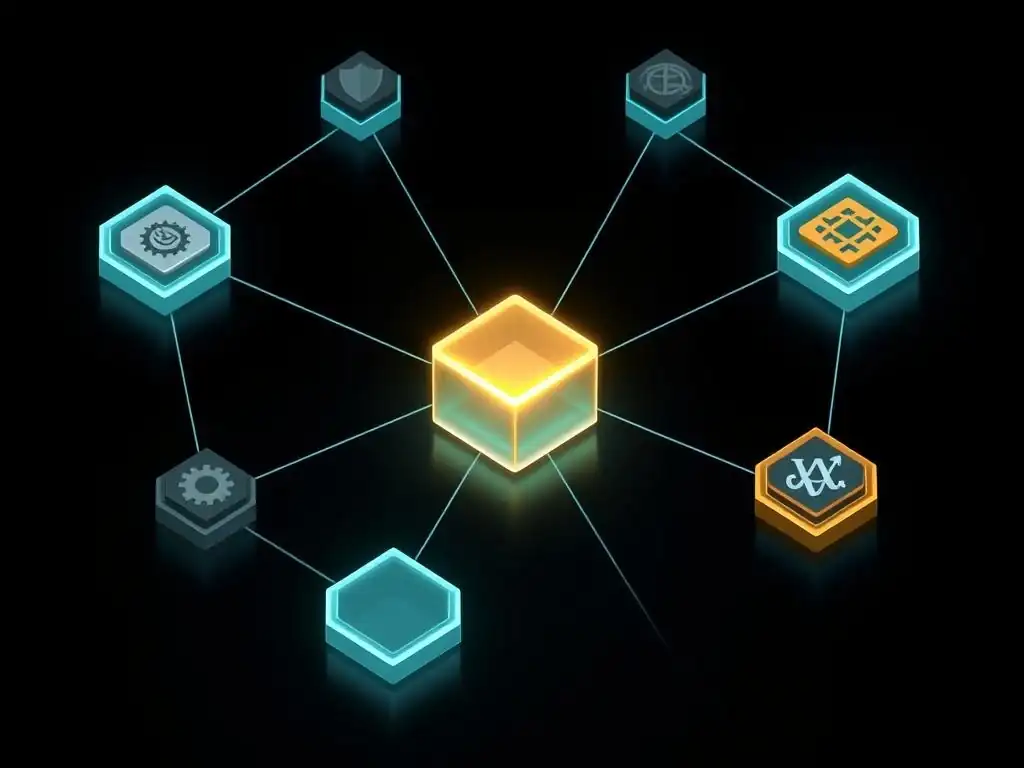
Staking Rewards: Earning Cryptocurrency for Validation Efforts
A primary economic incentive for individuals and entities to become blockchain validators in PoS networks is the earning of staking rewards. These rewards are typically newly minted cryptocurrency from the network's protocol inflation or a portion of transaction fees, distributed to validators for successfully proposing and validating blocks. The amount of reward often depends on factors like the amount staked, the network's participation rate, and the validator's uptime and performance.
For example, on the Ethereum network after the Merge, validators can earn an annual percentage yield (APY) on their staked Ether, currently fluctuating but historically ranging around 3-6% depending on the total amount staked across the network. This passive income stream provides a compelling motivation for token holders to lock up their assets and contribute to network security, directly linking financial gain to robust Blockchain validator roles security.
Transaction Fees: Receiving Compensation for Processing Transactions
In addition to staking rewards, validators often receive transaction fees from the transactions included in the blocks they validate or propose. When users send transactions on a blockchain, they typically include a small fee to incentivize validators (or miners in PoW) to include their transaction in a block. These fees can accumulate, especially on networks with high transaction volume.
On some networks, like Ethereum, transaction fees are split between the network (burned) and validators, while on others, the full fee goes to the validator. This fee structure provides a direct economic incentive for validators to process transactions efficiently and include as many valid transactions as possible in the blocks they create, further contributing to the network's functionality and reinforcing the economic model behind Blockchain validator roles security.
The Cost of Becoming a Validator: Hardware, Software, and Staking Requirements
Becoming a blockchain validator involves significant costs and technical requirements. The most substantial cost in PoS systems is the staking requirement – the minimum amount of native cryptocurrency that must be locked up. For example, running a full validator on Ethereum requires staking 32 ETH, a considerable investment currently worth tens of thousands of dollars. Other networks may have lower or higher staking requirements.
Beyond the stake, validators need reliable hardware (servers or dedicated machines) capable of running the blockchain node software 24/7, ensuring high uptime. This includes sufficient processing power, memory, and storage (often requiring fast SSDs to keep up with chain growth). They also need a stable, high-bandwidth internet connection and technical expertise to set up, maintain, and monitor the validator software, manage keys securely, and react to network upgrades or issues. These operational costs and technical hurdles are important considerations when evaluating the feasibility and economics of Blockchain validator roles security.
Analyzing Validator ROI for Ethereum, Cardano, and Solana
Analyzing the potential Return on Investment (ROI) for validators varies greatly depending on the specific blockchain network, the current network conditions (like participation rate, transaction volume), and the validator's operational efficiency. For Ethereum validators staking 32 ETH, the ROI comes primarily from staking rewards, currently offering an APY that fluctuates but provides a return on the staked capital.
Cardano's PoS system, Ouroboros, allows stake pooling, where individuals can delegate their ADA stake to a stake pool operated by a validator. The rewards are shared proportionally. Running a stake pool involves costs but can yield returns based on the total stake delegated to the pool and its performance.
Solana validators require significant hardware resources and a substantial stake to be competitive due to the network's high throughput requirements and consensus mechanism (Proof of History combined with PoS). Their ROI depends on block rewards and transaction fees. Evaluating the ROI for these different networks highlights the diverse economic models underpinning Blockchain validator roles security across the ecosystem.
The Future of Blockchain Validator Roles and Security
The Evolution of Consensus Mechanisms: Addressing Scalability and Efficiency
The future of blockchain validator roles is intrinsically linked to the evolution of consensus mechanisms. As blockchain technology aims for wider adoption, there's an ongoing drive to improve scalability, efficiency, and sustainability. Future consensus protocols may move towards even more energy-efficient designs than current PoS, or incorporate features like sharding (dividing the network into smaller, interconnected segments) that require validators to specialize in validating specific shards rather than the entire chain.
This evolution will redefine validator responsibilities, potentially requiring more specialized hardware or software and introducing new inter-validator communication protocols. The goal remains to maintain or enhance Blockchain validator roles security while enabling networks to handle significantly higher transaction volumes at lower costs, making decentralized applications more viable for mass use.
Emerging Technologies: Sharding, Layer-2 Solutions, and Their Impact on Validators
Emerging technologies like sharding and Layer-2 scaling solutions will significantly impact the roles of blockchain validators. In sharded networks, validators may be assigned to validate only a specific shard, reducing the computational and storage burden on individual validators but requiring coordination mechanisms between shards. This changes the dynamics of validation and introduces new security considerations related to cross-shard communication.
Layer-2 solutions, such as rollups (Optimistic and Zero-Knowledge), process transactions off the main chain and submit compressed proofs or data bundles to the Layer-1 chain. While Layer-1 validators still secure the base layer, the validation of transactions within the Layer-2 environment might involve different types of participants or specialized validators (e.g., sequencers or provers in rollups). These advancements necessitate adapting the understanding and implementation of Blockchain validator roles security at different layers of the blockchain stack.
The Role of Validators in Decentralized Finance (DeFi) and Other Applications
Validators are already playing a crucial role in securing the underlying infrastructure for Decentralized Finance (DeFi) and other blockchain applications. As DeFi protocols handle billions of dollars in value, the security provided by validators is paramount. Future applications, whether in supply chain, digital identity, or gaming, will similarly rely on the integrity and security guaranteed by the network's validators.
As decentralized autonomous organizations (DAOs) and other on-chain governance mechanisms evolve, validators may also take on more explicit roles in network governance, voting on protocol upgrades or parameter changes based on their stake or reputation. This expands the scope of Blockchain validator roles security beyond just transaction validation to include active participation in the evolution and direction of the network itself.
Future of Validator Technology: Increased Specialization and Hardware Acceleration
The technology used by validators is also likely to evolve, potentially leading to increased specialization and the use of hardware acceleration. As blockchain protocols become more complex and require processing larger amounts of data or executing complex smart contracts, validators might benefit from specialized hardware (like FPGAs or ASICs, though different from PoW mining hardware) optimized for specific validation tasks or cryptographic operations.
Furthermore, the development of more sophisticated validator software, potentially incorporating artificial intelligence for anomaly detection or automated response to threats, could enhance operational efficiency and security. This technological advancement in validator infrastructure will be key to meeting the demands of future high-performance blockchain networks and strengthening Blockchain validator roles security against increasingly sophisticated attacks.
Challenges and Considerations for Blockchain Validators
One of the significant challenges facing blockchain validators is navigating the evolving global regulatory landscape. Governments and financial authorities worldwide are increasingly scrutinizing cryptocurrency and blockchain activities. Validators, particularly those operating professionally or as businesses, may face requirements related to licensing, Know Your Customer (KYC), Anti-Money Laundering (AML), and taxation depending on their jurisdiction and the specific network they are validating for.
The lack of clear, consistent regulations across different regions creates uncertainty and complexity. Validators must stay informed about relevant laws and ensure their operations comply, which can involve significant legal and administrative overhead. This regulatory uncertainty adds a layer of risk to the business of providing Blockchain validator roles security services.
Security Risks: Protecting Against Hacking and Cyberattacks
Validators are prime targets for hackers and cyberattacks due to their critical role in network operation and the valuable assets (staked cryptocurrency, rewards) they control. Security risks include attacks on the validator's infrastructure (servers, network), theft of private keys, and denial-of-service attacks aimed at disrupting their ability to participate in consensus.
Maintaining robust security practices is paramount. This includes implementing strong access controls, encrypting sensitive data, regularly patching software, using hardware security modules (HSMs) for key management, and having incident response plans. A security breach affecting a validator can not only result in financial loss through slashing or theft but also potentially impact the network's stability, underscoring the importance of prioritizing security in Blockchain validator roles security.
The Importance of Validator Governance and Community Participation
In decentralized networks, validator governance and active community participation are crucial for long-term health and resilience. Validators often have a voice in proposing or voting on protocol upgrades and changes. Their engagement in governance discussions and decision-making processes helps ensure that the network evolves in a way that benefits the entire ecosystem and maintains decentralization.
Apathy or concentration of governance power among a few large validators can lead to centralization risks. Encouraging broad participation from diverse validators in governance is essential for maintaining the decentralized ethos of blockchain and ensuring that decisions reflect the community's will. This aspect of community involvement is a less technical but equally vital component of overall Blockchain validator roles security and network health.
Addressing Centralization Risks Through Liquid Staking and Protocol Design
Despite efforts towards decentralization, there are inherent risks of validator power becoming concentrated, especially in PoS systems where large token holders can command significant influence. The rise of liquid staking protocols (like Lido or Rocket Pool on Ethereum) allows users to stake their tokens without locking them directly, receiving liquid tokens in return. While increasing staking accessibility, this can potentially lead to a concentration of staked assets under a few large liquid staking providers, who then control a significant portion of validator power.
Addressing this requires careful protocol design that encourages diversity among validators, potentially limiting the effective stake any single entity can control or implementing mechanisms that favor smaller or newer validators. Community awareness and promoting delegation to diverse validators are also key. Mitigating centralization risks through conscious design and user behavior is an ongoing challenge critical for maintaining the integrity and long-term Blockchain validator roles security.
Conclusion: The Vital Importance of Validators in Blockchain Ecosystems
Reinforcing the Crucial Role of Validators in Maintaining Blockchain Integrity
Validators are indispensable components of modern blockchain networks, particularly those employing Proof-of-Stake and similar consensus mechanisms. Their diligent work in verifying transactions, proposing and validating blocks, and maintaining the distributed ledger forms the bedrock of network integrity. Without a robust and active set of validators, a blockchain network cannot reliably achieve consensus, prevent fraud, or maintain its immutable history. They are the active participants who translate the theoretical rules of the protocol into practical, secure operation.
Their role goes beyond mere technical execution; they are economic actors incentivized to secure the network through staking rewards and transaction fees, while simultaneously deterred from malicious behavior by the risk of slashing. This economic framework, combined with cryptographic verification and consensus protocols, creates a self-reinforcing system where honest participation is rewarded and dishonesty is penalized, making validators central to the trust model of decentralized systems.
Blockchain validator roles security: Key to the Future of Decentralized Systems
The concept of Blockchain validator roles security is not just a technical detail but a fundamental pillar supporting the growth and adoption of decentralized systems. As blockchain technology expands beyond cryptocurrencies into areas like DeFi, NFTs, supply chain management, and digital identity, the reliability and security of the underlying infrastructure become even more critical. The ability of validators to effectively secure the network against attacks, ensure data consistency, and participate in the evolution of the protocol will directly impact the trustworthiness and utility of these applications.
Future developments in consensus mechanisms, scaling solutions, and validator technology will continue to shape these roles, potentially increasing specialization and efficiency. However, the core responsibility of validating data and securing the shared ledger will remain paramount. The ongoing focus on enhancing Blockchain validator roles security is essential for realizing the full transformative potential of decentralized technologies.
Call to Action: Encouraging Responsible Participation in Blockchain Validation
Given their vital importance, encouraging responsible and decentralized participation in blockchain validation is crucial for the health of the ecosystem. Whether by running a validator node, delegating stake to reputable and diverse validators, or participating in network governance discussions, individuals and organizations can contribute to the security and decentralization of the networks they use.
Understanding the complexities and responsibilities involved in Blockchain validator roles security is the first step. By supporting independent validators, choosing decentralized staking options, and advocating for protocol designs that promote broad participation, the community can help ensure that blockchain networks remain secure, resilient, and true to their decentralized principles for years to come.
Frequently Asked Questions
How do blockchain validators contribute to network security?
Blockchain validators are crucial for network security because they verify and validate transactions, ensuring that only legitimate transactions are added to the blockchain. This process significantly reduces the risk of fraudulent or malicious activities on the network.
What are the primary responsibilities of a blockchain validator?
The main responsibilities include validating new transactions, participating in the consensus mechanism to agree on the state of the blockchain, and maintaining the integrity of the blockchain by preventing double-spending.
What is the relationship between blockchain validators and the consensus mechanism?
Validators actively participate in the consensus mechanism, such as Proof-of-Stake or Proof-of-Work, to reach an agreement on the valid state of the blockchain. Their actions directly impact the security and reliability of the system.
How does the selection process for blockchain validators typically work?
The selection process varies depending on the blockchain's consensus mechanism. In Proof-of-Stake, validators are often chosen based on the amount of cryptocurrency they stake, while in Proof-of-Work, they compete to solve complex cryptographic puzzles.
What are some potential security risks associated with blockchain validator roles?
Potential risks include collusion among validators to manipulate the blockchain, vulnerabilities in the validator software, and Distributed Denial-of-Service (DDoS) attacks aimed at disrupting validator operations. Proper security measures are essential to mitigate these risks.
Final Reflection: Guardians of Trust
The intricate mechanisms of blockchain consensus, particularly the critical role of validators in maintaining network security, are not merely theoretical concepts confined to technical whitepapers. They are the very foundation upon which decentralized trust is built, enabling secure transactions and fostering innovation across countless industries in our increasingly digital world. The stability and reliability we often take for granted in blockchain applications are directly attributable to the diligent work and robust security protocols implemented by these essential actors.
The ongoing evolution of blockchain technology and the increasing sophistication of cyber threats underscore the vital importance of continuously refining validator roles and security measures. The future of decentralized systems hinges on our ability to adapt and strengthen these defenses. As Satoshi Nakamoto famously stated: The root problem with conventional currency is all the trust that's required to make it work. The central bank must be trusted not to debase the currency, but the history of fiat currencies is full of breaches of that trust.
This quote reminds us that the trustless nature of blockchain, secured by validators, is a powerful alternative, but only if we remain vigilant in its protection.
Now, consider your own role in this evolving landscape. Whether you are a developer, an investor, or simply a curious observer, take a moment to appreciate the complex dance of consensus and the dedication of those who safeguard these networks. Reflect on how the principles of decentralized security can be applied to other aspects of your life, fostering greater transparency and accountability. The future of trust is being written today, and your understanding and engagement are crucial to shaping a more secure and equitable digital tomorrow.
Strengthen Blockchain Security: Support Validators and Their Role
Thank you for exploring the crucial function of validators in securing and maintaining blockchain networks. You now better understand how these participants are fundamental to ensuring trust and reliability in decentralized systems. Are you ready to take action?
- Consider learning how to become a validator yourself by researching the requirements and opportunities within various blockchain platforms.
- Share this article with your network to raise awareness about the importance of validators and their contributions to blockchain security.
- Join online communities dedicated to blockchain validation. Engage in discussions and provide feedback to help improve consensus mechanisms.
What actions will you take today to promote stronger and more secure blockchain networks? Share your thoughts in the comments below!
Leave a Reply