
Smart Contracts for Decentralized Governance: Empowering Communities and DAOs


Welcome to Blockchain Trends, your compass in the ever-evolving landscape of decentralized technology. Delve deeper than the hype and discover how blockchain is reshaping industries, empowering communities, and redefining trust.
Are you ready to unlock the secrets of decentralized governance? This week, we're exploring the intricate world of decentralized governance smart contract design. Join us as we examine how these innovative contracts are revolutionizing DAOs and more, offering insights straight from leading blockchain experts. Curious to learn more? Let's begin!
- Smart Contracts for Decentralized Governance: Empowering Communities and DAOs
- Understanding Decentralized Governance and DAOs
- Key Considerations in Decentralized Governance Smart Contract Design
- Smart Contract Design Patterns for Decentralized Governance
- Developing and Deploying Decentralized Governance Smart Contracts
- Real-World Examples of Decentralized Governance Smart Contracts in Action
- Challenges and Future Trends in Decentralized Governance Smart Contracts
- Best Practices for Designing Effective Decentralized Governance Systems
- Conclusion: The Power of Smart Contracts in Shaping Decentralized Governance
-
Frequently Asked Questions
- What are the key benefits of using smart contracts for decentralized governance?
- How does smart contract design impact the effectiveness of a Decentralized Autonomous Organization (DAO)?
- What are some common challenges in developing smart contracts for decentralized governance?
- How can decentralized governance through smart contracts enhance transparency and accountability in organizations?
- What role does regulation play in the future adoption of smart contracts for decentralized governance?
- Final Reflection: Architecting Tomorrow's Governance
- Seize the Future: Build Your Decentralized Community Today!
Smart Contracts for Decentralized Governance: Empowering Communities and DAOs
A Deep Dive into Decentralized Governance Smart Contract Design
Understanding Decentralized Governance and DAOs
Defining Decentralized Governance: Principles and Benefits
Decentralized governance represents a paradigm shift from traditional hierarchical or centralized decision-making structures. At its core, it distributes power and decision-making authority across a network of participants, typically token holders or stakeholders, rather than concentrating it within a single entity or small group. Key principles include transparency, where all proposals and votes are recorded on an immutable ledger; immutability, ensuring decisions cannot be altered or reversed arbitrarily; and censorship resistance, meaning no single party can block or prevent legitimate participation or outcomes. This approach aims to build more resilient, equitable, and community-driven systems.
The primary benefits derived from decentralized governance are multifaceted. Enhanced transparency fosters trust among participants as all actions are publicly verifiable. Increased censorship resistance protects the system from external interference or malicious control. Furthermore, it allows for broader community involvement, potentially leading to more robust and aligned decisions that reflect the collective will of the network's users and stakeholders. While designing decentralized governance smart contracts, it's crucial to bake these principles into the core logic to ensure the system truly embodies decentralization and delivers these advantages effectively.
The Role of DAOs (Decentralized Autonomous Organizations) in Modern Governance
Decentralized Autonomous Organizations (DAOs) are a prime manifestation of decentralized governance in action. These entities are structured around rules encoded as computer programs, specifically smart contracts, which execute automatically when predefined conditions are met. Unlike traditional organizations with explicit hierarchies and legal frameworks, DAOs operate based on transparent, verifiable code and collective decision-making processes managed by participants, often token holders. They are used for a wide range of purposes, from managing decentralized finance (DeFi) protocols and venture funds to governing social communities and digital art collectives.
The operational framework of a DAO is inherently tied to its underlying smart contract architecture. These contracts define membership criteria, voting mechanisms, proposal submission processes, and how funds are managed or distributed. By automating these functions through code, DAOs reduce reliance on intermediaries, lower operational costs, and enforce governance rules transparently. The design of these decentralized governance smart contracts is paramount, as any flaw or oversight in the code can have significant implications for the organization's security, efficiency, and ability to function autonomously.
How Smart Contracts Enable Decentralized Autonomous Governance
Smart contracts serve as the foundational technology that makes decentralized autonomous governance possible. They provide a secure, transparent, and automated way to encode the rules, procedures, and logic of a governance system directly onto a blockchain. Instead of relying on legal documents and human enforcement, governance rules for a DAO are written into code that automatically executes when conditions are met, such as processing votes, executing proposals, or distributing treasury funds. This eliminates the need for trust in a central authority, as trust is placed in the verifiable code and the underlying blockchain infrastructure.
The immutability of smart contracts deployed on a blockchain is a critical feature for decentralized governance. Once deployed, the core governance rules are difficult or impossible to alter without following the predefined upgrade mechanisms, which themselves are often subject to governance votes. This permanence ensures stability and prevents arbitrary rule changes. Furthermore, the transparency of blockchain transactions means that all governance activities – proposal submissions, voting records, and execution results – are publicly visible and auditable. This level of transparency, enforced by the decentralized governance smart contract design, builds confidence and accountability within the community.
Key Considerations in Decentralized Governance Smart Contract Design
Security Audits and Best Practices for Smart Contract Security
Security is arguably the most critical consideration in decentralized governance smart contract design. Given that these contracts often control significant amounts of treasury funds and dictate the rules of operation for an entire organization, vulnerabilities can lead to catastrophic losses or the hijacking of the governance process. Best practices mandate rigorous security audits by reputable third-party firms specializing in smart contract security. These audits involve static analysis, dynamic analysis, and manual code review to identify potential bugs, reentrancy issues, integer overflows, access control flaws, and other common vulnerabilities.
Beyond external audits, developers must adhere to secure coding standards throughout the development lifecycle. This includes using established libraries, avoiding experimental features, implementing robust access control mechanisms (e.g., using onlyOwner or multi-signature wallets for critical functions if a degree of centralization is unavoidable for certain operations), and carefully managing contract upgradeability. The history of blockchain is unfortunately littered with examples of governance-related hacks or exploits, some resulting in the loss of hundreds of millions of dollars. A meticulous approach to the decentralized governance smart contract design, prioritizing security at every step, is non-negotiable.
Scalability Solutions for Decentralized Governance Platforms
As DAOs and decentralized governance systems grow, the volume of proposals, votes, and on-chain interactions can become substantial, potentially leading to scalability issues on the underlying blockchain. High transaction fees (gas costs) and slow confirmation times can hinder participation, especially for smaller stakeholders, making governance prohibitively expensive or cumbersome. This is a significant challenge that decentralized governance smart contract design must address. Solutions often involve leveraging Layer 2 scaling technologies such as optimistic rollups or zero-knowledge rollups, which can process many transactions off-chain before submitting a summary back to the main chain, drastically reducing costs and increasing throughput.
Alternative approaches include designing governance mechanisms that minimize on-chain interactions. This could involve off-chain voting where results are then executed on-chain, or using snapshot voting where token balances are checked at a specific block height, and voting happens cryptographically off-chain, with only the final outcome potentially requiring an on-chain transaction. While these methods introduce different trust assumptions or complexities, they are often necessary compromises to ensure that decentralized governance remains accessible and efficient for a large and active community. The choice of scalability solution significantly impacts the overall decentralized governance smart contract design.
Transparency and Immutability in Governance Smart Contracts
Transparency and immutability are foundational pillars of decentralized governance, and smart contracts are the technical enforcers of these principles. The inherent nature of public blockchains means that once a governance smart contract is deployed and transactions related to governance (like proposal submissions, votes, and execution calls) are recorded, they are publicly visible and extremely difficult to alter. This ensures that the governance process is open to scrutiny by anyone, fostering trust and preventing hidden agendas or manipulations.
However, achieving true transparency and immutability in decentralized governance smart contract design requires careful consideration of implementation details. For instance, while the core logic might be immutable, mechanisms for upgrading the contract or modifying parameters (like voting thresholds or proposal durations) must be clearly defined within the contract itself and subject to the governance process. Poorly designed upgrade mechanisms or reliance on privileged multi-signature wallets controlled by a few individuals can introduce points of centralization that compromise immutability and transparency. Therefore, the design must balance the need for potential future adaptability with the core requirement of trustlessness and permanence.
Smart Contract Design Patterns for Decentralized Governance
Token-Based Voting Mechanisms: Design and Implementation
Token-based voting is the most prevalent design pattern for decentralized governance smart contract design. In this model, the right to vote is directly proportional to the number of governance tokens a participant holds. A common implementation is the "one token, one vote" system, where possessing one unit of the governance token grants one vote on proposals.
This is straightforward to implement in smart contracts by checking a user's token balance at a specific block number or during a voting period. The smart contract typically includes functions for submitting proposals, casting votes (often weighted by token balance), and executing proposals that meet predefined quorum and approval thresholds.
Implementing token-based voting requires careful consideration of several factors. The contract must handle snapshotting token balances to prevent users from acquiring tokens just before a vote and selling them immediately after. It also needs to manage proposal lifecycles, including submission periods, voting periods, and execution delays.
While simple "one token, one vote" is common, variations exist, such as vote delegation, where token holders can delegate their voting power to another address, or time-weighted voting, where holding tokens for longer periods grants more voting power. These variations add complexity to the decentralized governance smart contract design but can help address issues like voter apathy and short-term speculation.
Reputation-Based Systems for Governance Participation
Beyond purely token-based models, reputation-based systems offer an alternative or supplementary approach in decentralized governance smart contract design. Instead of relying solely on token holdings, these systems grant governance power based on a participant's past contributions, expertise, or on-chain activity within the ecosystem. Reputation could be earned through submitting valuable proposals, actively participating in discussions, successfully completing tasks, or receiving endorsements from other reputable members. This approach aims to empower active and knowledgeable community members who may not hold significant token balances.
Implementing reputation requires a more complex smart contract design. It often involves tracking various metrics, assigning reputation scores, and defining how reputation translates into voting power or proposal submission rights. The contract might include functions for staking reputation, slashing reputation for malicious behavior, or allowing reputation delegation. While potentially leading to more meritocratic governance, reputation systems face challenges in accurately measuring and preventing manipulation of reputation scores. The design must carefully define how reputation is earned, maintained, and lost to ensure fairness and prevent sybil attacks.
Quadratic Voting and Other Advanced Governance Models
Quadratic voting is an advanced governance model gaining traction, particularly in public goods funding and decentralized governance smart contract design. Instead of "one person, one vote" or "one token, one vote," quadratic voting allows participants to express the intensity of their preference. The cost of casting additional votes for a single option increases quadratically.
For example, casting one vote costs 1 unit (token or credit), casting two votes costs 4 units, and casting three votes costs 9 units. This encourages participants to vote for issues they care about most deeply, potentially leading to outcomes that better reflect the collective preferences of the community rather than just the simple majority or the will of large token holders.
Other advanced models include liquid democracy, which combines direct democracy with delegated voting, allowing participants to vote directly or delegate their vote to someone they trust; and conviction voting, where voting power accrues over time that a token is staked for a particular proposal, rewarding long-term conviction. Implementing these models requires sophisticated decentralized governance smart contract design to handle the complex logic of vote weighting, delegation paths, or time-based power accumulation. While more complex, these models aim to create more nuanced, fair, and resistant-to-capture governance systems.
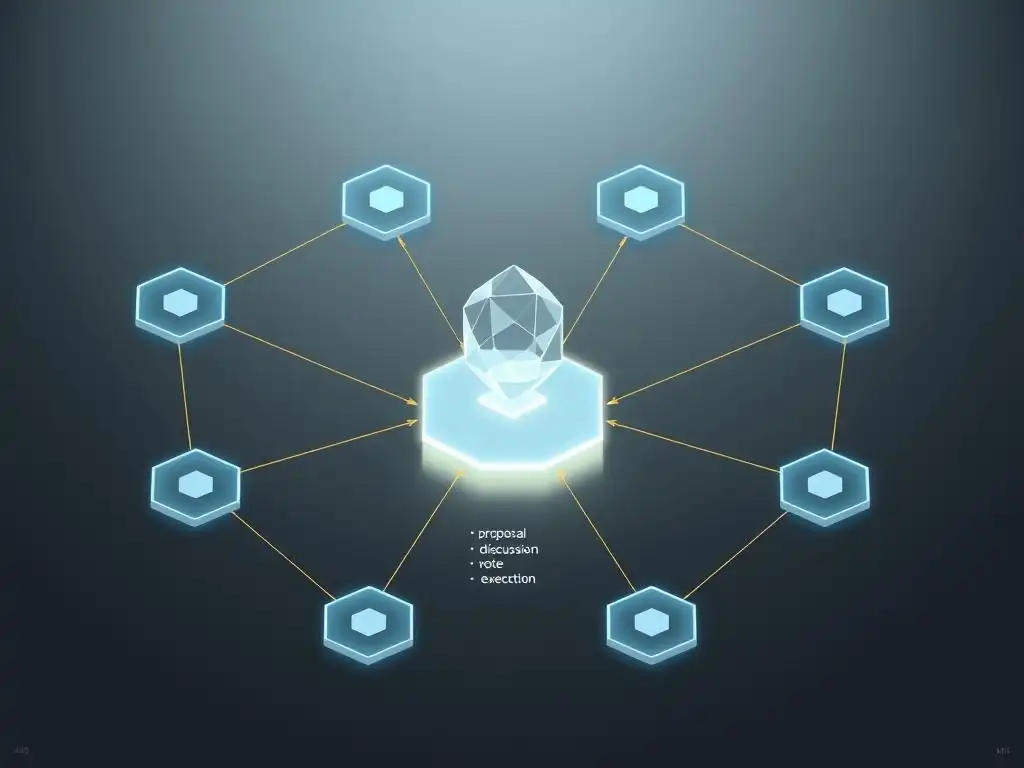
Developing and Deploying Decentralized Governance Smart Contracts
Choosing the Right Blockchain Platform: Ethereum, Polkadot, and Beyond
The choice of blockchain platform is a fundamental decision in developing decentralized governance smart contracts. Ethereum has historically been the dominant platform due to its maturity, large developer community, and the Solidity programming language, which is widely used for smart contracts. Many prominent DAOs and DeFi protocols, such as MakerDAO and Uniswap, are built on Ethereum. However, Ethereum's scalability issues and high gas costs, particularly during periods of high network congestion, can be a significant drawback for frequent governance interactions.
Alternative platforms offer different trade-offs. Polkadot, for instance, provides a framework for building application-specific blockchains (parachains) that can have their own governance mechanisms and interact with a central relay chain. Other platforms like Solana, Avalanche, and Binance Smart Chain offer higher transaction throughput and lower fees, which can be attractive for governance systems requiring frequent on-chain actions. When considering decentralized governance smart contract design, developers must evaluate the platform's security model, scalability, transaction costs, developer tools, and community support in relation to the specific needs of their governance system.
Smart Contract Languages: Solidity vs. Other Options
Solidity is the most widely used programming language for writing smart contracts on the Ethereum Virtual Machine (EVM), which is supported by Ethereum and several other blockchain platforms. Its syntax is similar to JavaScript, making it relatively accessible to many developers. Solidity is well-documented, has a large community, and benefits from extensive tooling for development, testing, and deployment. Most existing decentralized governance smart contracts are written in Solidity, and there is a vast amount of open-source code and libraries available.
However, other languages are used for smart contract development on different platforms or for specific purposes. Rust is used for writing smart contracts on platforms like Solana, Polkadot (via ink! ), and Near.
Vyper is an alternative Python-like language for the EVM, designed with security and simplicity in mind, though less feature-rich than Solidity. Haskell is used for Plutus smart contracts on Cardano. The choice of language is often dictated by the chosen blockchain platform, but developers should also consider the language's security features, tooling, and the availability of developers proficient in that language when embarking on decentralized governance smart contract design.
Testing and Deployment Strategies for Governance Smart Contracts
Thorough testing is paramount before deploying decentralized governance smart contracts to a live network. Due to their immutability and the financial value they often control, bugs can be irreversible and costly. Testing strategies include unit testing individual contract functions, integration testing to ensure different parts of the governance system interact correctly, and end-to-end testing simulating realistic governance scenarios (e.g., proposal submission, voting, execution, edge cases like tie votes or failed quorums). Testnets provide a crucial environment for deploying and testing contracts under conditions similar to the mainnet without risking real assets.
Deployment strategies for decentralized governance smart contracts also require careful planning. Contracts must be deployed to the correct network address, and initialization parameters (like initial token distribution, voting periods, or required thresholds) must be set accurately. For critical governance contracts, deploying via a multi-signature wallet or a time-locked contract can add an extra layer of security, preventing a single point of failure during the deployment process.
Ongoing monitoring after deployment is also essential to detect unexpected behavior or potential exploits early. The robustness of the testing and deployment strategy directly impacts the reliability and security of the decentralized governance smart contract design in practice.
Real-World Examples of Decentralized Governance Smart Contracts in Action
Case Study 1: MakerDAO - Implementing Token-Based Governance
MakerDAO is a pioneering example of a decentralized autonomous organization and a robust implementation of decentralized governance smart contract design. It governs the Maker Protocol, which issues the stablecoin DAI. Governance in MakerDAO is primarily conducted by holders of the MKR token. MKR holders can propose and vote on various parameters affecting the protocol, such as stability fees, debt ceilings for different collateral types, and risk parameters. This token-based voting system is managed by a suite of smart contracts on the Ethereum blockchain.
The MakerDAO governance contracts handle proposal submission, voting periods (typically lasting several days), and execution. Proposals that receive sufficient MKR votes and meet quorum requirements can be executed on-chain, directly modifying the protocol's parameters. This system has successfully managed the protocol through various market conditions and upgrades, demonstrating the power of on-chain governance. However, it has also faced challenges, including voter apathy on less critical proposals and the concentration of voting power among larger MKR holders, highlighting areas for potential refinement in decentralized governance smart contract design for token-weighted systems.
Case Study 2: Aragon - Utilizing Governance Modules for Decision-Making
Aragon is a platform designed to facilitate the creation and management of Decentralized Autonomous Organizations. It provides a modular framework, allowing users to deploy DAOs with customizable governance structures through a set of interconnected smart contracts. Aragon's approach emphasizes flexibility in decentralized governance smart contract design, offering various pre-built governance modules that DAOs can adopt or adapt, such as token-based voting, reputation systems, and even more complex voting mechanisms.
Aragon's modular architecture allows DAOs to select and combine different governance functions, such as treasury management, identity management, and voting, as distinct smart contract modules. This enables organizations to tailor their governance mechanisms to their specific needs, rather than being confined to a single, rigid model. For instance, a DAO could use a token-weighted voting module for major treasury decisions but a reputation-based system for more frequent operational votes. This case study illustrates how abstracting governance logic into reusable smart contract components can empower diverse organizational structures within the decentralized space.
Analyzing the Successes and Challenges of Existing Governance Models
Analyzing existing decentralized governance smart contract designs reveals both significant successes and persistent challenges. Successes include enabling large, distributed communities to collectively manage complex protocols and treasuries, as seen with MakerDAO and Uniswap. These systems have proven capable of making critical decisions regarding protocol upgrades, parameter changes, and fund allocation without relying on centralized control. They demonstrate the potential for increased resilience and community alignment.
However, challenges are also evident. Low voter participation remains a widespread issue across many DAOs; some proposals see participation rates well below 10%. This can lead to decisions being made by a small subset of the community, potentially large token holders (whales), raising concerns about plutocracy. The complexity of governance proposals can also be a barrier to entry for many participants. Furthermore, even with audited smart contracts, the risk of unforeseen vulnerabilities or governance attacks (like flash loan attacks exploiting voting mechanisms) persists. Addressing these issues requires ongoing innovation in decentralized governance smart contract design and community engagement strategies.
Challenges and Future Trends in Decentralized Governance Smart Contracts
Overcoming Governance Participation Barriers
One of the most significant challenges facing decentralized governance is overcoming low participation rates. While the potential for broad community involvement exists, many DAOs struggle to get a substantial percentage of token holders to vote on proposals. Barriers include the technical complexity of submitting votes, high transaction costs on some networks, voter apathy, and the sheer volume and complexity of proposals that require significant time and expertise to understand. Effective decentralized governance smart contract design needs to consider how to minimize these friction points.
Future trends aim to address these barriers through several avenues. User-friendly interfaces and simplified voting processes are being developed. The adoption of Layer 2 solutions is reducing transaction costs, making participation more affordable. Furthermore, innovative governance models are being explored, such as delegated voting (allowing users to assign their voting power to a trusted representative) or conviction voting (where voting power grows over time, rewarding sustained engagement). Designing smart contracts that support these mechanisms is crucial for fostering more active and inclusive governance.
Addressing Security Risks and Vulnerabilities
Despite significant advancements, security risks remain a critical concern in decentralized governance smart contract design. Smart contracts are immutable once deployed, meaning bugs or vulnerabilities are difficult or impossible to fix without complex upgrade mechanisms. Exploits targeting governance systems can lead to the loss of treasury funds or malicious control over the protocol. Flash loan attacks, for example, have sometimes been used to temporarily acquire enough governance tokens to pass a malicious proposal before returning the loan.
The future of securing decentralized governance smart contracts involves continuous improvement in auditing practices, formal verification methods to mathematically prove contract correctness, and the development of more secure programming languages and frameworks. Additionally, the design of the governance process itself can incorporate security measures, such as time locks on proposal execution (allowing time for detection and reaction to malicious proposals) or requiring multi-signature confirmations for critical actions, even after a governance vote. Robust decentralized governance smart contract design must anticipate and mitigate potential attack vectors.
The Future of On-Chain Governance and Decentralized Decision-Making
The future of on-chain governance and decentralized decision-making appears poised for significant evolution. We are likely to see increased sophistication in governance mechanisms, moving beyond simple token-weighted voting towards more complex, nuanced systems that incorporate elements of reputation, identity, and potentially even liquid democracy or quadratic voting on a larger scale. The technical infrastructure, particularly Layer 2 scaling solutions and cross-chain interoperability, will improve, making on-chain governance more efficient and accessible across different blockchain networks.
Furthermore, the integration of decentralized governance into a wider array of applications, from managing digital identities and personal data to coordinating complex supply chains and real-world assets, is anticipated. As DAOs mature, their decentralized governance smart contract design will need to become more flexible, composable, and capable of interacting with a broader digital and physical environment. The development of standardized governance frameworks and tools will also lower the barrier to entry for creating and participating in decentralized organizations.
Best Practices for Designing Effective Decentralized Governance Systems
Community Engagement and Participation Strategies
Effective decentralized governance is not solely about the smart contract code; it's equally about fostering an engaged and active community. Best practices for design include creating clear and accessible documentation explaining how the governance system works, how to participate, and the significance of different proposals. Platforms for off-chain discussion and proposal refinement (like forums or dedicated governance portals) are essential before proposals are submitted on-chain.
Designing incentives for participation can also be effective. This might include token rewards for voting, delegating votes, or contributing to governance discussions. Simplifying the technical process of voting and minimizing costs through efficient decentralized governance smart contract design and platform choices are also crucial. Ultimately, a governance system thrives when its community feels empowered, informed, and motivated to participate actively in decision-making.
Legal and Regulatory Considerations for DAOs
The legal and regulatory landscape for DAOs and decentralized governance is still nascent and complex. In many jurisdictions, the legal status of a DAO is unclear, potentially exposing participants to legal liabilities. Regulatory bodies are beginning to scrutinize DAOs, particularly those involved in financial activities (DeFi). Designing decentralized governance smart contracts must increasingly consider these evolving legal realities.
While smart contracts automate rules, they do not exist in a legal vacuum. Best practices include seeking legal counsel to understand potential risks and incorporating legal considerations into the governance structure where possible. Some jurisdictions, like Wyoming in the US, have begun enacting specific legislation to recognize DAOs, offering potential frameworks for legal incorporation. As the space matures, the interplay between the code-based rules of decentralized governance smart contract design and traditional legal systems will become increasingly important.
Ensuring Fairness and Inclusivity in Decentralized Governance
Ensuring fairness and inclusivity is a core goal of decentralized governance, but it presents significant design challenges. Token-weighted voting can lead to plutocracy, where wealth dictates power. Reputation systems can be gamed or lead to new forms of centralization. Avoiding these pitfalls requires thoughtful decentralized governance smart contract design and governance process engineering.
Strategies to enhance fairness include implementing mechanisms like quadratic voting or conviction voting that give more weight to the intensity of preference or sustained engagement rather than just raw token count. Exploring identity solutions that allow for "one person, one vote" or sybil-resistant reputation systems is also critical, though technically challenging. Designing governance interfaces and processes that are accessible to non-technical users and promoting diverse participation from different segments of the community are also vital best practices for building truly inclusive decentralized governance systems.
Conclusion: The Power of Smart Contracts in Shaping Decentralized Governance
The Evolution of Decentralized Autonomous Governance
Decentralized autonomous governance, powered by smart contracts, represents a significant evolutionary step in how organizations and communities can be managed. From early, simple on-chain voting mechanisms to today's complex DAOs governing multi-billion dollar protocols, the field has grown rapidly. This evolution is driven by the increasing sophistication of blockchain technology and the continuous innovation in decentralized governance smart contract design. We have moved from basic token-weighted polls to systems incorporating delegation, reputation, and advanced voting mechanisms, all encoded and enforced by immutable code.
The power of this evolution lies in its ability to create systems that are potentially more transparent, resilient, and aligned with the interests of their participants than traditional structures. While challenges remain, particularly around participation, security, and regulatory clarity, the fundamental technical building blocks provided by smart contracts offer a compelling path towards more decentralized and autonomous forms of organization.
Key Takeaways for Smart Contract Developers
For smart contract developers interested in this domain, several key takeaways are paramount. Firstly, a deep understanding of security best practices is non-negotiable; the financial and operational integrity of decentralized systems hinges on the robustness of the underlying code. Secondly, familiarity with various governance design patterns – from token-based voting to quadratic mechanisms – is essential for building systems tailored to specific needs. Thirdly, considering scalability from the outset and leveraging appropriate Layer 2 solutions or off-chain strategies is crucial for ensuring long-term viability and accessibility.
Finally, effective decentralized governance smart contract design extends beyond pure code; it requires understanding the human element, including incentives for participation, community dynamics, and the need for clear communication interfaces. Developers must collaborate closely with economists, legal experts, and community managers to build truly effective decentralized governance systems.
The Future of DAOs and Decentralized Organizations
The future of DAOs and decentralized organizations appears bright, positioned to play an increasingly important role in various sectors. As the technology matures and decentralized governance smart contract design becomes more refined and accessible, we can expect to see DAOs governing a wider array of digital and potentially even physical assets. They may become the standard operational model for open protocols, digital communities, and collaborative ventures.
The ongoing innovation in governance models, security practices, and underlying blockchain infrastructure will continue to push the boundaries of what is possible with decentralized autonomy. While challenges related to regulation, scalability, and participation will require ongoing effort, the core promise of building trustless, transparent, and community-owned systems through smart contracts remains a powerful driver for the future of decentralized organizations. The journey of refining decentralized governance smart contract design is central to realizing this potential.
Frequently Asked Questions
What are the key benefits of using smart contracts for decentralized governance?
Smart contracts automate decision-making processes, ensuring transparency and immutability. This reduces the need for intermediaries and builds trust within the community. They also facilitate efficient and secure voting mechanisms.
How does smart contract design impact the effectiveness of a Decentralized Autonomous Organization (DAO)?
The smart contract's code defines the DAO's rules and processes. A poorly designed contract can lead to vulnerabilities, exploitation, and ultimately, the DAO's failure to achieve its goals.
What are some common challenges in developing smart contracts for decentralized governance?
Security vulnerabilities are a major concern. Ensuring the contract is free from bugs and resistant to attacks requires rigorous auditing and testing. Scalability and gas fees can also present challenges.
How can decentralized governance through smart contracts enhance transparency and accountability in organizations?
All actions and transactions are recorded on the blockchain, creating an immutable and auditable record. This makes it easier to track decisions and hold individuals accountable for their actions within the governance system.
What role does regulation play in the future adoption of smart contracts for decentralized governance?
Clear regulatory frameworks are needed to provide legal certainty and protect participants. Without it, widespread adoption may be hindered by concerns about liability and enforcement.
Final Reflection: Architecting Tomorrow's Governance
The exploration of decentralized governance through smart contracts isn't just a theoretical exercise; it's a direct response to the growing demand for transparency and accountability in our institutions. As trust in centralized authorities wanes, the potential of decentralized governance smart contract design to reshape how communities and organizations operate becomes increasingly vital.
This journey into the intricacies of smart contract-based governance has profoundly underscored the power of technology to democratize decision-making. Witnessing the evolution of DAOs and the increasing adoption of these technologies has solidified my belief in their transformative potential. The future of governance is not about replacing leaders, but about empowering communities to lead themselves.
This quote encapsulates the essence of what we've explored, highlighting the shift from hierarchical structures to collaborative ecosystems.
Now, I invite you to consider how these principles of decentralized governance can be applied within your own spheres of influence. How can you leverage the power of smart contracts and transparent systems to foster greater participation and trust in your communities, organizations, or even your personal life? The future of governance is being written now, and your contribution is essential in shaping a more equitable and empowered world.
Seize the Future: Build Your Decentralized Community Today!
Thank you for exploring how smart contracts are transforming governance. You've gained a clear understanding of their role in shaping decentralized organizations and community-led initiatives. Now, are you ready to take the next step?
Here are some ways to move forward:
- Begin designing your own DAO: Outline a governance framework utilizing smart contracts that addresses a specific issue within your community. This is your opportunity to apply what you've learned directly.
- Learn from existing projects: Study current decentralized organizations and review their smart contract implementations on platforms like GitHub to understand their successes and obstacles.
- Share this article: Pass it along to someone interested in blockchain technology and discuss how decentralized governance could influence their field.
What questions do you have about implementing smart contract governance in your ideal decentralized organization? Share your thoughts below and let’s start the conversation!
Leave a Reply