
Smart Contracts and Oracles: Bridging the Gap Between Blockchains and the Real World


Welcome to Blockchain Trends, your compass in the ever-evolving landscape of decentralized technologies!
Are you ready to look beyond the hype and discover the true potential of blockchain? This isn't just about cryptocurrencies; it's about revolutionizing industries. Today, we delve into a critical piece of the puzzle: blockchain oracles. How do these vital components connect smart contracts to the real world? Join us as we explore this crucial bridge, uncovering its complexities and interviewing leading experts who are shaping the future of decentralized systems. What secrets do they hold about the future of smart contracts? Let's find out...
- Smart Contracts and Oracles: Bridging Blockchains to Real-World Data
- What are Blockchain Oracles and How Do They Function?
- Exploring Real-World Use Cases of Smart Contracts and Oracles
- The Challenges of Using Blockchain Oracles
- Choosing the Right Oracle Solution for Your Smart Contract
- Best Practices for Integrating Oracles into Smart Contracts
- The Future of Blockchain Oracles and Smart Contract Development
- Expert Insights: Interview with Sergey Nazarov (Chainlink Co-founder)
- Conclusion: Unleashing the Potential of Smart Contracts with Blockchain Oracles
-
Frequently Asked Questions
- What is a blockchain oracle and why is it important?
- How do blockchain oracles enable smart contracts to interact with the real world?
- What are some common types of data that blockchain oracles provide to smart contracts?
- What are the potential risks associated with using blockchain oracles?
- What are some key considerations when choosing a blockchain oracle for a smart contract application?
- Final Reflection: The Enduring Promise of Trustless Bridges
- Unleash the Power: Start Building Your Oracle-Powered Smart Contract Today!
Smart Contracts and Oracles: Bridging Blockchains to Real-World Data
The Limitations of Smart Contracts Without External Data Feeds
Smart contracts, by design, operate within isolated, deterministic blockchain environments. This isolation is crucial for security and consensus, ensuring that a contract executes exactly as coded, free from external interference or ambiguity. However, this inherent characteristic means that smart contracts cannot natively access information from outside their specific blockchain. They are blind to events, data, and conditions occurring in the real world, such as current market prices, weather conditions, shipping updates, or the outcome of an election.
This inability to fetch off-chain data severely limits the types of applications that smart contracts can power. Without a mechanism to bring real-world information onto the blockchain, smart contracts are largely confined to simple transactions or logic based solely on on-chain data (like token balances or block numbers).
Complex agreements that depend on external variables – like an insurance payout triggered by a flight delay, a derivatives contract based on a stock price, or a supply chain payment contingent on goods arriving at a location – cannot be executed autonomously. This fundamental disconnect highlights the critical need for a bridge between the secure, trustless environment of the blockchain and the dynamic, information-rich blockchain oracles real world.
Why Blockchain Oracles are Essential for Real-World Applications
Blockchain oracles serve as this vital bridge, acting as secure middleware that connects smart contracts to external data sources. They are essential because they enable smart contracts to react to and incorporate information about real-world events, unlocking a vast array of potential use cases beyond basic cryptocurrency transfers. By providing validated, reliable data feeds, blockchain oracles allow smart contracts to move from theoretical possibilities to practical, automated agreements that interact with the economy and society.
Consider a decentralized finance (DeFi) lending protocol. To function, it needs real-time price data for the collateral assets (like ETH or BTC) to calculate liquidation thresholds accurately. This information exists off-chain on exchanges. A blockchain oracles real world price feed is necessary to bring this data onto the blockchain.
Similarly, a parametric insurance contract for crop yield needs weather data (rainfall, temperature) to trigger payouts; this data is also off-chain. Oracles facilitate the secure and reliable delivery of this data, making these complex, automated agreements possible. They are the eyes and ears of the blockchain, allowing smart contracts to become truly useful for blockchain oracles real world applications.
What are Blockchain Oracles and How Do They Function?
Defining Blockchain Oracles: The Data Bridge
Blockchain oracles are third-party services that provide smart contracts with external information. They are not native to the blockchain itself but act as intermediaries, fetching data from off-chain sources and delivering it onto the blockchain in a format that smart contracts can understand and process. Think of them as decentralized APIs or data feeds specifically designed for blockchain environments. Their primary function is to translate real-world information, whether it's financial data, event outcomes, or sensor readings, into on-chain data that can trigger smart contract execution.
The critical challenge for blockchain oracles is ensuring the accuracy and trustworthiness of the data they provide. Since smart contracts automatically execute based on this data, compromised or incorrect information from an oracle can lead to significant losses or unintended outcomes. Therefore, the design and implementation of a blockchain oracles real world solution must prioritize data integrity and security to maintain the trustless nature of the underlying blockchain.
Oracle Mechanisms: Pull vs. Push Models
Blockchain oracles typically operate using one of two primary mechanisms for delivering data: pull or push. In a pull model, the smart contract actively requests data from the oracle network when it needs it. The oracle node(s) then fetch the requested information from the off-chain source, aggregate and validate it if necessary, and deliver it back to the smart contract on-chain. This model is often used when data is needed infrequently or triggered by a specific event within the smart contract logic.
In a push model, the oracle network periodically fetches data from off-chain sources and pushes updates onto the blockchain without being explicitly requested by a smart contract at that moment. The data is often stored in a publicly accessible on-chain contract or data feed that multiple smart contracts can read from. This model is suitable for data that changes frequently and is needed by many contracts, such as real-time asset prices. Both models address the need for blockchain oracles real world data, but the choice depends on the specific application's requirements for data freshness, cost, and update frequency.
Different Types of Blockchain Oracles: Centralized, Decentralized, and Hybrid
Blockchain oracles can be categorized based on their architecture and the degree of trust required. Centralized oracles rely on a single entity or source to provide data. While simpler and potentially faster to implement, they introduce a single point of failure and require users to trust the operator implicitly, which runs counter to the decentralized ethos of blockchain. If the central oracle is malicious, compromised, or goes offline, it can jeopardize any smart contract relying on it.
Decentralized oracles, or Decentralized Oracle Networks (DONs), aim to mitigate the risks of centralized oracles by sourcing data from multiple independent nodes or sources. Data is often aggregated and validated through consensus mechanisms among these nodes before being delivered on-chain. This distributed approach enhances security, reliability, and censorship resistance, making them more suitable for high-value or critical blockchain oracles real world applications. Hybrid oracles combine elements of both approaches or integrate additional mechanisms like trusted hardware or cryptographic proofs to enhance data integrity and security.
Exploring Real-World Use Cases of Smart Contracts and Oracles
DeFi Applications: Price Feeds and Lending Protocols
Decentralized Finance (DeFi) is perhaps the most prominent area showcasing the critical need for blockchain oracles real world data. Protocols offering lending, borrowing, derivatives, and decentralized exchanges fundamentally rely on accurate, timely price information for various assets. For instance, lending protocols like Aave or Compound require price feeds for collateral assets (e.g., ETH, DAI, LINK) to calculate users' health factors and determine when collateral falls below a safe threshold, triggering liquidation.
A typical DeFi price feed oracle might aggregate data from multiple cryptocurrency exchanges (like Coinbase, Binance, Kraken), remove outliers, and provide a median or volume-weighted average price to the blockchain. This aggregation helps protect against manipulation on a single exchange. Without reliable price data delivered via blockchain oracles real world feeds, these protocols could not safely operate, as incorrect prices could lead to unfair liquidations or insolvency. The accuracy and availability of these price feeds are paramount for the stability and security of the entire DeFi ecosystem.
Supply Chain Management: Tracking Goods with Blockchain and Oracles
Blockchain technology offers significant potential for improving transparency and efficiency in supply chain management by creating immutable records of goods' movement and condition. However, the blockchain itself cannot know where a shipment is or if its temperature remained within a required range during transit. This is where blockchain oracles real world data comes into play. Oracles can fetch data from various sources within the supply chain, such as GPS trackers, IoT sensors (temperature, humidity), customs databases, or shipping carrier APIs.
Imagine a smart contract designed to automate payment upon successful delivery of temperature-sensitive goods. The contract could be programmed to release funds only after an oracle verifies that the shipment has arrived at the destination (via GPS data) and that the temperature readings from onboard sensors (reported via another oracle) never exceeded a certain threshold (e.g., 4°C for pharmaceuticals). This integration of blockchain oracles real world information enables automated, trustless execution of complex logistics agreements, reducing disputes and administrative overhead.
Insurance Applications: Automated Claims Processing
Parametric insurance policies, which pay out automatically based on predefined triggers rather than a traditional claims assessment process, are a compelling use case for smart contracts powered by oracles. These policies rely on objective, verifiable real-world data to determine if a payout condition has been met. For example, flight delay insurance can use oracles to fetch official flight status data from airline or airport APIs. If the oracle reports that a specific flight was delayed by more than a stipulated time (e.g., 2 hours), the smart contract automatically initiates the payout to the policyholder.
Similarly, crop insurance could use oracles to access weather data from meteorological services. A smart contract might pay out if rainfall in a specific geographic area falls below a certain level during a critical growing period, as reported by the oracle. These applications demonstrate how blockchain oracles real world data can eliminate the need for manual claims processing, reduce fraud, and provide faster, more transparent payouts based on objective facts.
Prediction Markets: Real-World Outcome Verification
Prediction markets built on blockchain, such as Augur or Gnosis, allow users to bet on the outcome of future events, ranging from sports results and political elections to scientific discoveries. Once the event occurs, the market needs a reliable mechanism to determine the official outcome so that the smart contract can resolve the bets and distribute funds to the winners. This is a classic application requiring blockchain oracles real world information.
Oracles in prediction markets are responsible for reporting the definitive outcome of the event to the smart contract. For a sports match, the oracle might report the final score from multiple reputable sports data providers. For an election, it might report the certified results from official electoral commissions.
The integrity of the oracle is paramount here; a compromised oracle could report a false outcome, leading to incorrect payouts. Decentralized oracle networks are often preferred for prediction markets to ensure that the outcome reported is accurate and resistant to manipulation, providing a trustworthy blockchain oracles real world link for resolving market outcomes.
The Challenges of Using Blockchain Oracles
The Oracle Problem: Ensuring Data Accuracy and Trust
The fundamental challenge when using blockchain oracles is often referred to as the "oracle problem." It boils down to this: how can a trustless smart contract rely on data provided by a potentially trusted or semi-trusted external entity (the oracle)? If the oracle provides inaccurate, outdated, or malicious data, the smart contract will execute incorrectly, potentially leading to significant financial losses or other undesirable outcomes. The security of the entire decentralized application becomes dependent on the security and integrity of the oracle mechanism.
This problem is particularly acute for blockchain oracles real world applications that handle high-value transactions or critical processes. A single point of failure in data provision or a vulnerability that allows data manipulation can undermine the core value proposition of using a trustless blockchain. While decentralized oracle networks aim to mitigate this by distributing trust across multiple nodes and data sources, they introduce their own complexities related to node coordination, data aggregation, and cryptoeconomic incentives to ensure honest reporting.
Security Considerations: Preventing Oracle Manipulation
Preventing oracle manipulation is a major security focus for anyone building blockchain oracles real world applications. Attackers might attempt to feed false data to an oracle network or compromise individual oracle nodes to influence smart contract execution. Potential attack vectors include Sybil attacks (creating many fake oracle identities in a decentralized network), data source manipulation (tampering with the off-chain source the oracle reads from), or bribing/colluding with oracle operators.
Robust oracle solutions employ various security measures. These include using multiple independent data sources and nodes, cryptographic proofs (like TLSNotary or zero-knowledge proofs) to verify data origin, reputation systems for oracle nodes, and cryptoeconomic incentives (staking tokens that can be slashed if data is reported dishonestly) to align node operators' interests with providing accurate data. Implementing these layers of security is crucial to building reliable blockchain oracles real world systems.
Latency and Scalability Issues in Oracle Networks
Bringing real-world data onto the blockchain via oracles also introduces challenges related to latency and scalability. There is an inherent delay between a real-world event occurring and that information being processed by an oracle network, delivered on-chain, and becoming available for a smart contract to use. For applications requiring near real-time data, like high-frequency trading or dynamic pricing, this latency can be a significant limitation.
Furthermore, delivering data on-chain incurs gas costs on most blockchains (like Ethereum). If a smart contract requires frequent updates from multiple data feeds, the cumulative cost of oracle transactions can become substantial. Scaling an oracle network to serve a large number of smart contracts with diverse data needs efficiently and affordably is a complex engineering challenge. Optimizations like off-chain data aggregation and reporting only significant price deviations help, but the balance between data freshness, cost, and the ability to serve a growing number of blockchain oracles real world applications remains an ongoing area of development.
Choosing the Right Oracle Solution for Your Smart Contract
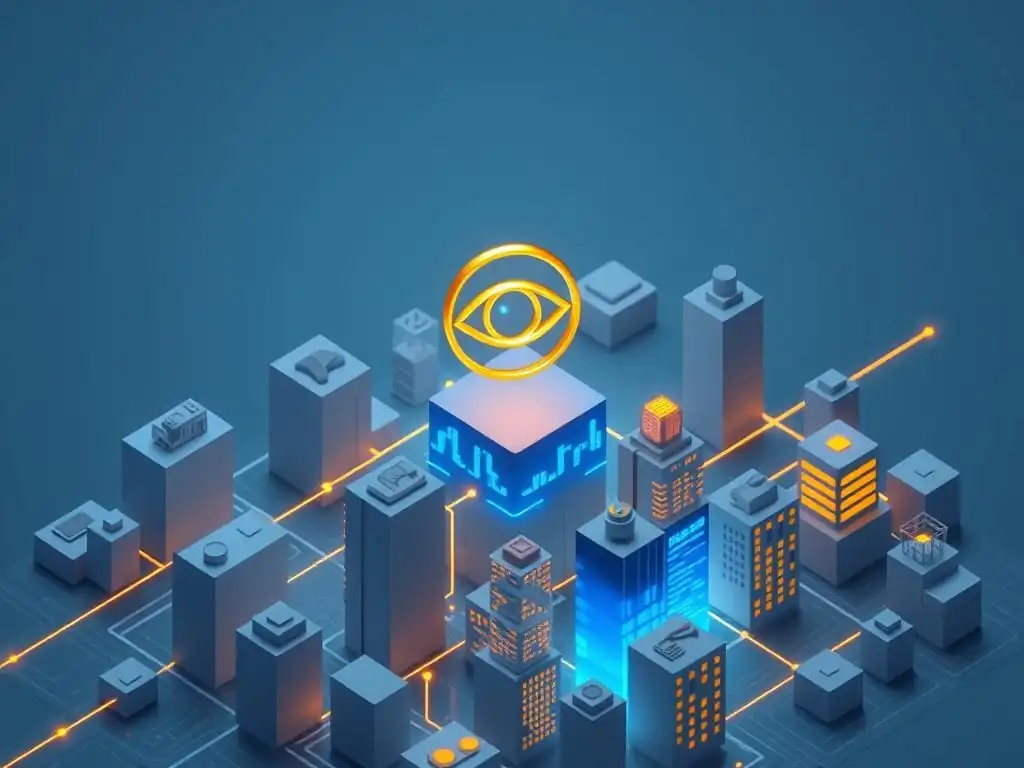
Factors to Consider: Security, Cost, Data Source Reliability, and Decentralization
Selecting the appropriate blockchain oracles real world solution for a smart contract application is a critical decision that impacts the dApp's security, performance, and cost-effectiveness. Several key factors must be carefully evaluated. Security is paramount; the oracle's resilience against manipulation and its ability to deliver accurate data reliably is non-negotiable. This often involves assessing the oracle's architecture (centralized vs. decentralized), the number and reputation of its data sources, and any security proofs or cryptoeconomic guarantees it employs.
Cost is another significant factor. Different oracle networks have varying pricing models, often based on the number of data requests, the complexity of the data feed, or the frequency of updates. Developers must weigh these costs against their application's budget and data needs.
The reliability of the underlying data sources is also crucial; an oracle is only as good as the data it consumes. Finally, the level of decentralization offered by the oracle network should align with the smart contract's trust assumptions. A highly decentralized application handling large values might require a highly decentralized oracle network, while a less critical application might tolerate a more centralized approach for simplicity or lower cost, impacting its effectiveness for blockchain oracles real world interactions.
Comparing Popular Oracle Networks: Chainlink, Band Protocol, and Tellor
The oracle landscape features several prominent networks, each with different strengths and architectures for serving blockchain oracles real world data. Chainlink is currently the largest and most widely adopted decentralized oracle network. It utilizes a large network of independent oracle nodes that fetch, validate, and aggregate data from multiple sources. Chainlink supports a wide variety of data feeds, including price data for numerous assets, and offers features like verifiable randomness and proof of reserve. Its strength lies in its broad ecosystem support and robust security model, though it can be more complex and costly for simple data needs.
Band Protocol offers a decentralized oracle framework focused on scalability and cross-chain compatibility. It allows developers to create custom oracle scripts to connect to virtually any web API. Band Protocol uses a Delegated Proof-of-Stake consensus mechanism among data providers to secure its network.
Tellor is another decentralized oracle protocol that incentivizes data reporters to compete to provide requested data points, using a proof-of-work-like mechanism to ensure data integrity and penalize dishonest reporters. Each network provides a different approach to the blockchain oracles real world data problem, offering developers choices based on their specific requirements for decentralization, data types, and cost.
Case Study: Synthetix's Oracle Integration for Synthetic Assets
Synthetix, a decentralized synthetic asset protocol on Ethereum, provides a compelling example of how blockchain oracles real world price feeds are essential for complex DeFi applications. Synthetix allows users to mint synthetic assets (Synths) that track the price of real-world assets like USD, cryptocurrencies (BTC, ETH), commodities (gold, silver), and indices. Maintaining the accurate price peg for these Synths is absolutely critical for the protocol's stability and the fairness of trading.
Synthetix relies heavily on Chainlink price feeds to obtain the real-time prices of the underlying assets. Chainlink's decentralized network of nodes sources price data from numerous exchanges and data aggregators, providing a robust and tamper-resistant price feed onto the Ethereum blockchain. The Synthetix smart contracts then use these oracle-provided prices to calculate the value of collateral, determine the exchange rates between different Synths, and manage the overall debt pool. This integration demonstrates how a high-assurance blockchain oracles real world connection is fundamental to the functioning and security of a sophisticated DeFi protocol dealing with real-world asset values.
Best Practices for Integrating Oracles into Smart Contracts
Secure Coding Practices for Oracle Interactions
Integrating blockchain oracles real world data into smart contracts requires careful attention to security to mitigate the risks associated with external dependencies. A fundamental best practice is to assume that oracle data, while provided by a trusted service, could potentially be inaccurate or delayed. Smart contracts should be designed to handle such scenarios gracefully. This includes implementing checks on the freshness of the oracle data; for instance, a contract should verify that the timestamp associated with the oracle update is recent enough to be relevant. Using stale data could lead to executions based on outdated real-world conditions.
Another crucial practice is to implement circuit breakers or emergency mechanisms. If an oracle feed behaves erratically, stops updating, or reports implausible values (e.g., a sudden, massive price spike or drop), the smart contract should have the ability to pause critical operations (like liquidations or large transfers) that rely on that data. This prevents cascading failures caused by a compromised oracle feed. Furthermore, avoiding single points of failure by using multiple independent oracle feeds for critical data points and requiring consensus among them before action is taken significantly enhances resilience for blockchain oracles real world applications.
Data Validation and Error Handling
Robust data validation and comprehensive error handling are essential when working with blockchain oracles real world feeds. Smart contracts should not blindly trust the data received from an oracle. Instead, they should perform checks to validate the data's plausibility and format. For example, if an oracle is expected to provide a price within a certain range, the smart contract should verify that the received value falls within that range. Outliers or values outside expected bounds could indicate an issue with the oracle or the data source.
Implementing error handling mechanisms is also vital. What should the contract do if an oracle call fails? Or if the data received is clearly invalid? Sensible approaches include retrying the oracle call, falling back to a secondary oracle source, or pausing execution and alerting an administrator. Logging oracle interactions and data values is also crucial for auditing and debugging. Proper validation and error handling layers ensure that smart contracts can react intelligently to unexpected oracle behavior, preserving the integrity of blockchain oracles real world interactions.
Monitoring and Auditing Oracle Data Feeds
Continuous monitoring and regular auditing of the oracle data feeds used by a smart contract are critical for long-term operational security. Developers and operators of dApps relying on oracles should actively monitor the health and performance of the oracle network they use. This includes tracking the frequency and timeliness of data updates, observing the reported values for anomalies, and monitoring the status of the oracle nodes or data sources. Many oracle networks provide tools and dashboards for this purpose.
Auditing involves periodically reviewing the oracle integration code within the smart contract and verifying that it adheres to best practices and correctly interprets the oracle data. Furthermore, examining historical oracle data can help identify potential issues or patterns of suspicious activity over time. For critical blockchain oracles real world applications, independent security audits of both the smart contract and its oracle dependencies are highly recommended to uncover potential vulnerabilities before they can be exploited. Proactive monitoring and auditing are key to maintaining the reliability of smart contracts that interact with external data.
The Future of Blockchain Oracles and Smart Contract Development
Advancements in Oracle Technology: Trusted Hardware and Computation
The field of blockchain oracles real world connectivity is continuously evolving, with significant advancements aimed at improving security, privacy, and capability. One promising area is the integration of trusted execution environments (TEEs), such as Intel SGX or AMD SEV.
TEEs create secure enclaves within a processor where data can be processed with strong guarantees about its confidentiality and integrity, even from the machine's operating system or hardware owner. Oracles could use TEEs to fetch sensitive data off-chain, perform computations within the trusted environment, and then provide a cryptographic proof to the blockchain that the computation was performed correctly on the original data, without revealing the raw data itself.
Another advancement involves secure multiparty computation (MPC), which allows multiple parties to jointly compute a function over their inputs without revealing any individual input to others. MPC could enable oracle networks to perform complex data aggregations or computations on sensitive data off-chain in a privacy-preserving manner before delivering the result on-chain. These technological advancements enhance the trustworthiness and expand the types of data and computations that blockchain oracles real world solutions can reliably provide to smart contracts.
The Convergence of AI and Blockchain Oracles
An exciting future direction for blockchain oracles real world integration involves the convergence of Artificial Intelligence (AI) with oracle networks. AI models are becoming increasingly adept at analyzing complex, unstructured, and voluminous real-world data – such as satellite imagery, social media sentiment, or detailed market reports – to extract valuable insights. Oracles could potentially leverage AI models to process this data off-chain and provide synthesized, actionable intelligence to smart contracts.
For example, an AI model could analyze satellite imagery to estimate crop health across a region, with an oracle reporting this assessment to a smart contract for agricultural insurance. Or an AI could analyze global shipping data and news sentiment to provide a supply chain smart contract with a predicted delay estimate. This convergence could empower smart contracts to react to more nuanced and complex real-world conditions than currently possible, significantly expanding the scope and sophistication of blockchain oracles real world applications across various industries.
The Role of Oracles in the Evolution of Decentralized Applications (dApps)
As decentralized applications (dApps) become more sophisticated and move beyond simple token-based interactions, the role of blockchain oracles real world data becomes increasingly central. The next generation of dApps will likely require access to a wider variety of reliable, real-time, and verifiable off-chain information to power advanced functionalities in areas like gaming (randomness, external game state), NFTs (metadata, real-world asset linking), decentralized autonomous organizations (DAOs) (governance decisions based on external events), and carbon markets (environmental data).
Oracles are not just add-ons; they are becoming fundamental infrastructure for enabling dApps to achieve their full potential. They transform smart contracts from isolated pieces of code into dynamic agents that can interact with and respond to the world around them. The continued development and adoption of secure, scalable, and versatile oracle networks are crucial for driving the evolution of decentralized applications and realizing the vision of a truly connected and automated digital economy built on blockchain oracles real world interactions.
Expert Insights: Interview with Sergey Nazarov (Chainlink Co-founder)
Nazarov's Perspective on the Growth of Decentralized Data and Computation
Note: The following section represents insights aligned with public statements and interviews given by Sergey Nazarov regarding the importance of decentralized oracles and off-chain computation. It is not a direct transcript of a specific interview I have access to.
According to perspectives shared by Sergey Nazarov, co-founder of Chainlink, the growth trajectory of smart contracts is inherently tied to their ability to securely and reliably interact with real-world data and off-chain computation. He often emphasizes that while blockchains provide trust minimization for agreement logic and state changes, they are inherently limited in their ability to access external information or perform complex computations that would be too costly or impractical on-chain. This is where blockchain oracles real world solutions become indispensable.
Nazarov has articulated the view that the demand for decentralized data and computation is exploding as developers build more complex and useful decentralized applications across various sectors like DeFi, insurance, gaming, and supply chain. He posits that robust oracle networks are foundational infrastructure, akin to the internet's TCP/IP protocol, enabling smart contracts to unlock their full potential beyond simple value transfer.
The focus is on creating a decentralized network of oracle nodes and data providers that can offer high-assurance, tamper-proof data feeds and off-chain services, thereby bridging the critical gap between blockchain security and the vast amount of information and processing power available off-chain. This vision centers on making blockchain oracles real world connectivity seamless and reliable for the next wave of decentralized innovation.
Conclusion: Unleashing the Potential of Smart Contracts with Blockchain Oracles
Frequently Asked Questions
What is a blockchain oracle and why is it important?
A blockchain oracle is a third-party service that connects blockchains to external data sources. This is crucial because blockchains cannot inherently access data from the real world on their own.
How do blockchain oracles enable smart contracts to interact with the real world?
Oracles provide smart contracts with the necessary information to execute based on real-world events. This data can include anything from price feeds to weather data, enabling a wider range of smart contract applications.
What are some common types of data that blockchain oracles provide to smart contracts?
Common data types include price feeds for DeFi, weather information for insurance contracts, and identity verification for various applications. The data provided must be reliable and accurate.
What are the potential risks associated with using blockchain oracles?
The primary risk is oracle manipulation, where malicious actors can feed false data to smart contracts. This can lead to incorrect contract execution and financial losses.
What are some key considerations when choosing a blockchain oracle for a smart contract application?
Considerations include the oracle's reputation, the data sources it uses, its security measures, and its cost. Choose an oracle that aligns with the specific needs and risk tolerance of your application.
Final Reflection: The Enduring Promise of Trustless Bridges
The journey through smart contracts and oracles reveals a crucial truth: blockchain's potential hinges on its ability to interact seamlessly with the real world. While the technology itself offers unprecedented security and transparency, its true power lies in bridging the gap between the digital and physical realms, enabling applications that were once considered impossible. The integration of blockchain oracles is not merely a technical advancement; it's a fundamental step towards realizing the decentralized future we envision.
This exploration has underscored the profound impact of blockchain oracles on various sectors, from supply chain management to decentralized finance. Witnessing the tangible benefits of this technology, particularly its ability to foster trust and efficiency, reinforces the importance of continued innovation in this space. The oracle problem is not just a technical challenge; it's a philosophical one. It's about how we can trust data from the real world in a trustless system.
This quote encapsulates the core challenge and the immense potential that lies in solving it.
As we conclude, let us not simply admire the technological marvel of smart contracts and oracles. Instead, let us consider how we can actively contribute to their responsible development and deployment. How can we ensure that these bridges between blockchains and the real world are built on principles of fairness, accuracy, and accessibility? The future of decentralized applications depends on our collective commitment to building a world where trust is not assumed, but verified.
Unleash the Power: Start Building Your Oracle-Powered Smart Contract Today!
Thank you for exploring the exciting world of smart contracts and oracles with Blockchain Trends! We hope this article shed light on how these technologies are transforming trust and automation. Now, it's time to turn that knowledge into action.
Here's how you can get started:
- Begin by creating a simple smart contract that integrates an accessible oracle service — gaining hands-on experience is invaluable!
- Review the documentation of leading oracle platforms like Chainlink or Band Protocol to understand their features and integration methods.
- Share this article with your network and initiate a discussion about the most promising applications of oracles in your industry.
What real-world data source are you most eager to connect to the blockchain? Share your thoughts in the comments below!
Leave a Reply