
Community and Blockchain Startups: The Power of Decentralized Ecosystems


Welcome to Blockchain Trends, your guide to understanding the revolutionary impact of blockchain beyond the hype.
Intrigued by how blockchain is shaping the future of business and community? Dive into our exploration of decentralized startup community building and discover how this innovative approach is empowering entrepreneurs and fostering unprecedented collaboration. Ready to unlock the potential of decentralized ecosystems? Let's explore.
- Decentralized Startup Community Building: Fueling Blockchain Innovation
- Why Decentralized Communities are Essential for Blockchain Startups
- Key Elements of a Thriving Decentralized Startup Community
- Strategies for Building a Successful Decentralized Startup Community
- The Role of Decentralized Startup Accelerators and Incubators
- Case Studies: Successful Decentralized Startup Communities
- Challenges and Opportunities in Decentralized Community Building
- The Future of Decentralized Startup Ecosystems
-
Frequently Asked Questions
- What are the key benefits of building a decentralized startup community using blockchain technology?
- How does blockchain facilitate stronger community governance in startups?
- Beyond cryptocurrencies, what are some practical blockchain applications for startup community building?
- What role do DAOs (Decentralized Autonomous Organizations) play in the context of decentralized startup community building?
- What are some potential regulatory challenges that decentralized startup communities might face?
- Final Reflection: Embracing the Decentralized Future
- Unlock the Potential: Join the Decentralized Revolution!
Decentralized Startup Community Building: Fueling Blockchain Innovation
Investing in the Future: Blockchain Startups and Community
Investing in blockchain startups represents a leap into the future of technology, finance, and digital interaction. Unlike traditional ventures, the success and resilience of many decentralized projects are intrinsically linked to the strength and engagement of their communities.
This focus on decentralized startup community building is not merely a marketing strategy; it is fundamental to the project's architecture, governance, and long-term viability. A vibrant community provides crucial feedback, contributes code, participates in governance, and acts as early adopters and evangelists, creating a powerful network effect that can accelerate growth and adoption far beyond what a centralized team could achieve alone.
The capital flowing into the blockchain space underscores this trend. While exact figures fluctuate, venture capital funding for blockchain and crypto startups has consistently reached billions of dollars annually in recent years, with significant portions directed towards projects emphasizing decentralized governance and community ownership.
For example, funding rounds exceeding tens or even hundreds of millions for promising Web3 protocols highlight investor confidence in projects with strong community foundations. These investments often recognize that a decentralized startup's true value lies not just in its technology, but in the collective intelligence and commitment of its user base and contributors, making decentralized startup community building a critical investment area.
Why Decentralized Communities are Essential for Blockchain Startups
The Limitations of Traditional Startup Ecosystems
Traditional startup ecosystems, while effective in many sectors, often operate within hierarchical structures where decisions are concentrated within a core team, board of directors, or venture capital investors. This centralization can lead to slower adaptation to user needs, reduced transparency, and a potential disconnect between the product vision and the community using it. Feedback loops can be cumbersome, and reliance on traditional funding models can introduce pressures that may not align with long-term decentralized principles or community benefit. Furthermore, scaling user engagement beyond a consumer base to active contributors is often challenging in a centralized model.
These limitations become particularly apparent in the context of blockchain technology, which inherently promotes decentralization, transparency, and user ownership. A centralized approach can undermine the core value proposition of a blockchain project, potentially leading to community mistrust or apathy. For instance, projects that promise decentralization but retain centralized control over key decisions or infrastructure risk alienating potential users and contributors who are drawn to the space precisely for its decentralized ethos. This highlights why traditional models are often insufficient for effective decentralized startup community building.
The Power of Open Source and Collaboration in Blockchain
The blockchain space draws heavily from the principles of open-source software development, where collaboration and transparency are paramount. Most foundational blockchain protocols, like Bitcoin and Ethereum, are open source, allowing anyone to audit the code, propose improvements, and contribute to their development. This culture permeates the ecosystem and is a cornerstone of effective decentralized startup community building. By making their code open source, blockchain startups invite global participation, leveraging a diverse pool of talent that extends far beyond their immediate team.
Collaboration within a decentralized community enables faster innovation and more robust solutions. Developers from around the world can contribute code, identify bugs, build tools, and integrate the project with other protocols. This collaborative environment fosters network effects, where the value of the project increases with each new integration and contribution. Projects like Uniswap, an automated market maker, thrive because developers can build on its open protocol, creating a vast ecosystem of tools and services without requiring explicit permission, showcasing the power of open collaboration in building decentralized applications.
Building Trust and Transparency Through Decentralization
Trust is perhaps the most critical component for any financial or technological system, and in the decentralized world, trust is often built through transparency and verifiable actions rather than reliance on intermediaries. Blockchain technology provides an unprecedented level of transparency, where transactions and protocol rules are often recorded on an immutable public ledger. This transparency is a powerful tool for decentralized startup community building, allowing participants to verify the system's integrity.
Decentralized governance models, such as those implemented by DAOs (Decentralized Autonomous Organizations), further enhance trust by allowing community members to participate in decision-making processes. Proposals and votes are often recorded on-chain, providing a transparent record of how decisions are made. This democratic approach, where token holders or stakeholders have a voice in the project's evolution, builds stronger trust and alignment between the core team (if one exists) and the community. For example, protocols like Compound have transitioned significant control to their token holders, who vote on parameters like interest rates and supported assets, demonstrating a commitment to community-driven governance.
Key Elements of a Thriving Decentralized Startup Community
Governance Models in Blockchain Communities: DAOs and Beyond
Governance is the backbone of a decentralized community, determining how decisions are made and conflicts are resolved. Decentralized Autonomous Organizations (DAOs) have emerged as a prominent model, using smart contracts and token-based voting to enable community members to propose and vote on changes to a protocol or project. While DAOs are a leading example, governance models vary widely, from simple token-weighted voting systems to more complex delegated or quadratic voting mechanisms. The choice of governance model significantly impacts how power is distributed and how effectively the community can steer the project's future.
Effective DAO governance requires careful consideration of voter participation, proposal complexity, and potential attack vectors (like whale accumulation of tokens). Projects are experimenting with various approaches to encourage broader participation, such as gas fee subsidies for voting, off-chain signaling followed by on-chain execution, or reputation-based systems. For instance, the Aragon project provides tools and frameworks for creating and managing DAOs, highlighting the growing infrastructure dedicated to facilitating decentralized governance and supporting decentralized startup community building efforts.
Incentive Structures: Tokenomics and Community Rewards
Tokenomics, the economic model of a cryptocurrency or token, plays a crucial role in aligning the incentives of the community with the goals of the project. Utility tokens can grant access to services, while governance tokens can provide voting rights. Distribution mechanisms, such as airdrops, yield farming, or staking rewards, can incentivize specific community behaviors like providing liquidity, participating in governance, or contributing to development. A well-designed token model can encourage long-term holding and active participation, fostering a committed community.
Beyond the core tokenomics, explicit community reward programs are vital for recognizing and compensating contributions that may not be directly tied to protocol usage. This includes bounties for bug fixes, grants for building ecosystem tools, rewards for creating educational content, or compensation for moderating community channels. Gitcoin, for example, has successfully used quadratic funding and grants to incentivize development on open-source projects, demonstrating how structured incentives can fuel community contributions and aid in decentralized startup community building.
Open Communication Channels: Forums, Chats, and Meetups
Transparent and accessible communication channels are the lifeblood of a decentralized community. Forums (like Discourse), chat applications (like Discord and Telegram), and regular community calls or meetups provide platforms for discussion, support, and collaboration. These channels allow community members to ask questions, share ideas, report issues, and connect with other users and the core team. Maintaining open channels builds trust and ensures that information flows freely within the ecosystem.
Managing these diverse channels effectively requires dedicated effort. Community managers play a key role in fostering positive interactions, moderating discussions, disseminating information, and gathering feedback. Regular updates on development progress, governance proposals, and ecosystem news keep the community informed and engaged. Hosting AMAs (Ask Me Anything) with the core team or key contributors can further strengthen the connection and transparency, proving essential for vibrant decentralized startup community building.
Strategies for Building a Successful Decentralized Startup Community
Identifying and Engaging Key Community Members: Core Contributors, Technical Experts, Early Adopters
Successful decentralized startup community building begins with identifying and nurturing the individuals who can have the most significant impact. This includes core contributors who actively develop the protocol, technical experts who can provide valuable insights and build integrations, and early adopters who provide crucial feedback and help evangelize the project. Recognizing these key members and actively engaging them is paramount.
Strategies for engagement can include inviting technical experts to review code, providing grants or bounties for specific development tasks, giving early adopters access to beta features, and elevating active community members to moderator or ambassador roles. Creating clear pathways for contribution, whether through GitHub pull requests, governance proposals, or content creation, empowers individuals to participate meaningfully. For instance, many protocols have established grant programs specifically to fund external teams building tools or services on their platform, directly investing in community-led development.
Fostering a Culture of Collaboration and Contribution
Beyond identifying key individuals, cultivating a broader culture that encourages collaboration and contribution is vital for scaling decentralized startup community building. This involves setting clear expectations, providing necessary resources (documentation, developer tools), and celebrating community achievements. A culture where asking for help is welcomed and contributing is recognized fosters a supportive environment.
Initiatives like hackathons, coding challenges, and educational workshops can onboard new contributors and stimulate innovation within the community. Establishing mentorship programs where experienced contributors guide newcomers can lower the barrier to entry. Publicly acknowledging contributions, whether through social media shoutouts, community calls, or dedicated sections on the project's website, reinforces the value of community involvement and encourages others to participate.
Utilizing On-Chain and Off-Chain Tools for Community Management
Effective decentralized startup community building leverages a blend of on-chain and off-chain tools. On-chain tools include smart contracts for token distribution, staking, governance voting, and managing treasury funds transparently. These tools automate processes, enforce rules, and provide verifiable records of community activity.
Off-chain tools support communication, collaboration, and organization. This includes platforms like Discord, Telegram, and Discourse for discussion; project management tools like GitHub or Linear for tracking contributions; and event platforms for organizing virtual or in-person meetups. Integrating these tools and ensuring seamless interaction between the on-chain and off-chain aspects is crucial for managing a complex, distributed community effectively. For example, Snapshot.org is a popular off-chain voting tool that integrates with on-chain governance, allowing gas-free signaling votes while maintaining a verifiable record.
The Role of Decentralized Startup Accelerators and Incubators
Funding and Mentorship for Blockchain Projects
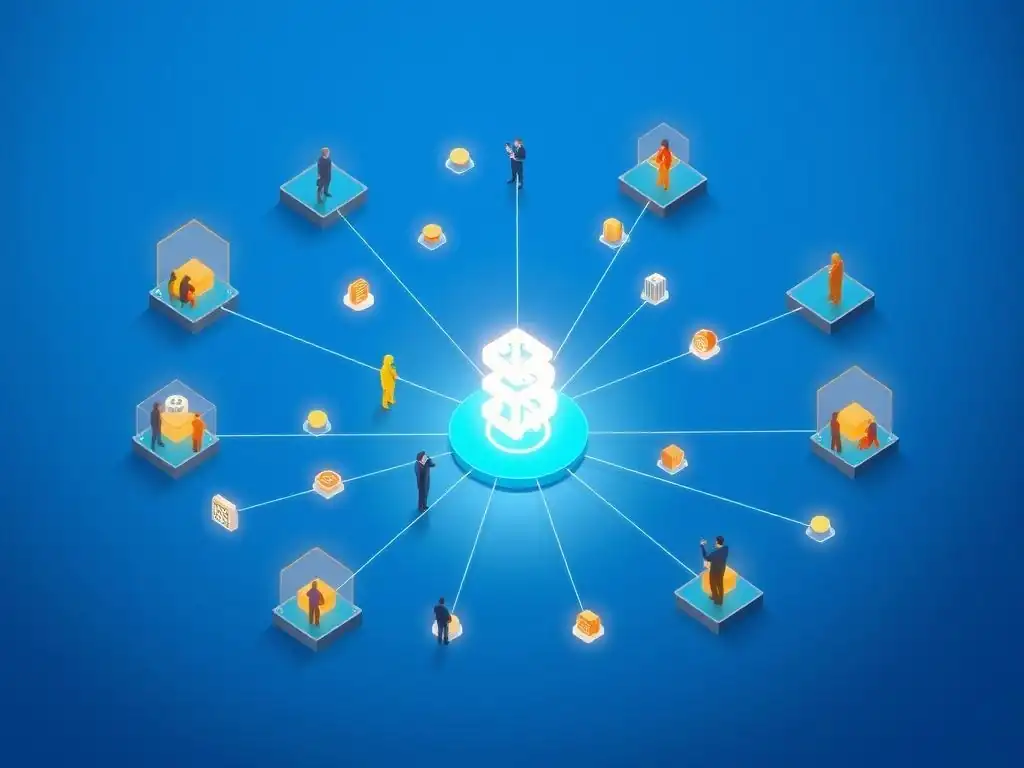
Decentralized startup accelerators and incubators play a crucial role in nurturing early-stage blockchain projects and fostering decentralized startup community building. Unlike traditional programs that may focus solely on business models and fundraising, these specialized programs often provide tailored mentorship on tokenomics design, decentralized governance structures, and strategies for community engagement. They typically offer initial funding in exchange for equity or tokens, helping startups build their initial team and develop their minimum viable product.
These programs also connect startups with experienced mentors from the blockchain industry, including protocol developers, legal experts specializing in decentralized tech, and community-building veterans. The mentorship can be invaluable for navigating the unique technical, regulatory, and community challenges inherent in the decentralized space. Examples include programs run by organizations like Outlier Ventures or specific protocol ecosystems like the Ethereum Foundation grants program or Polygon Village, which offer resources specifically for building within their networks.
Connecting Startups with the Right Resources and Partners
Beyond funding and mentorship, decentralized accelerators and incubators act as crucial connectors within the broader blockchain ecosystem. They help startups find the right technical resources, such as auditors for smart contracts or infrastructure providers. More importantly, they facilitate introductions to potential partners, investors, and other projects that can lead to valuable integrations and collaborations.
By joining an accelerator cohort, startups become part of a peer group, fostering a sense of camaraderie and mutual support. This network can provide ongoing advice, shared learnings, and potential future collaborations. The connections forged within these programs are essential for navigating the often complex and rapidly evolving decentralized landscape, significantly aiding in decentralized startup community building by connecting projects with potential contributors and early users within the program's network.
Creating a Supportive Environment for Innovation
Ultimately, the goal of decentralized accelerators and incubators is to create a supportive environment where blockchain innovation can flourish, guided by decentralized principles. They help startups think through the implications of decentralization from day one, encouraging the development of open, community-governed protocols rather than closed, proprietary systems.
This supportive environment includes access to shared knowledge bases, best practices in security and development, and insights into effective decentralized startup community building strategies. By providing a structured program within the often chaotic world of blockchain development, these accelerators help increase the chances of success for decentralized projects, ensuring they are built on strong technical foundations and supported by engaged communities.
Case Studies: Successful Decentralized Startup Communities
MakerDAO: A Pioneer in Decentralized Finance Governance
MakerDAO stands as a prime example of successful decentralized startup community building and governance in the DeFi space. Launched with the goal of creating a stable cryptocurrency (DAI) backed by collateral, MakerDAO transitioned to full decentralized governance by its token holders (MKR). MKR holders vote on critical parameters such as the types of collateral accepted, stability fees, and risk parameters for the protocol. This model has allowed MakerDAO to manage a system with billions of dollars in locked value, adapting to market conditions through community consensus.
The MakerDAO community engages through forums, weekly governance calls, and dedicated chat channels. Proposals are debated extensively before formal on-chain votes occur. While challenges remain, such as achieving high voter turnout for every proposal, the system has proven resilient and capable of complex decision-making. The transition from a core team-led project to a truly decentralized autonomous organization highlights the power of community-driven governance and stands as a significant case study in decentralized startup community building.
Gitcoin: Funding Open-Source Development Through Community
Gitcoin has built a robust decentralized community focused on funding open-source software development, particularly within the Ethereum ecosystem. Using mechanisms like quadratic funding, Gitcoin empowers individuals to support public goods projects through matching pools funded by larger entities. This model decentralizes the funding process, giving smaller contributors a more significant voice in determining which projects receive support.
The Gitcoin community consists of developers seeking funding, contributors working on funded projects, and individuals and organizations donating to causes they believe in. The platform has facilitated the distribution of tens of millions of dollars to thousands of open-source projects, fostering a vibrant ecosystem of developers building public infrastructure for Web3. Gitcoin's success demonstrates how targeted incentives and a clear mission can rally a community around a shared goal, proving effective in decentralized startup community building for public goods.
Lessons Learned and Best Practices
These case studies offer valuable lessons. Key takeaways include the importance of progressive decentralization, gradually handing over control to the community; the need for clear, accessible governance processes; and the power of aligning incentives through well-designed tokenomics and reward systems. Both MakerDAO and Gitcoin show that decentralized startup community building is an ongoing process requiring continuous engagement, education, and adaptation. Transparency in decision-making and financial flows is also crucial for maintaining community trust and participation.
Challenges and Opportunities in Decentralized Community Building
Overcoming Coordination and Governance Issues
Building and managing a decentralized community is not without its challenges. Coordination among dispersed, pseudonymous participants can be difficult. Reaching consensus on complex technical or strategic issues through decentralized governance mechanisms can be slow and cumbersome compared to centralized decision-making. Voter apathy is another hurdle, as not all token holders may have the time or expertise to participate in every vote.
Projects are exploring various solutions, including delegated voting (where token holders delegate their voting power to elected representatives), creating specialized sub-DAOs focused on specific areas, and developing more user-friendly governance interfaces. Despite these challenges, the opportunity lies in tapping into the collective intelligence of a global community, potentially leading to more robust, resilient, and innovative outcomes than could be achieved by a small, centralized team. Effective decentralized startup community building requires persistent effort to streamline coordination and governance.
Ensuring Inclusivity and Diversity
Another significant challenge is ensuring that decentralized communities are inclusive and diverse. Participation can be limited by technical barriers, language differences, or the concentration of governance power among a few large token holders ("whales"). Building a truly decentralized ecosystem requires actively working to lower barriers to entry and encourage participation from a wide range of backgrounds and perspectives.
Opportunities exist in creating educational resources translated into multiple languages, designing governance mechanisms that give weight to factors other than just token holdings (e.g., reputation, proof-of-contribution), and actively recruiting contributors from underrepresented groups. Initiatives focused on improving user experience for non-technical users and providing funding for community-led initiatives in different regions can also foster greater inclusivity, strengthening the foundation for decentralized startup community building.
Scaling Decentralized Communities Effectively
As blockchain projects grow, scaling the community while maintaining decentralization and engagement becomes increasingly complex. More users mean more feedback, more proposals, and a greater need for effective communication and moderation. Maintaining a sense of shared ownership and purpose across a rapidly expanding global community is a significant undertaking.
Leveraging technology, such as automated tools for managing community channels, using AI for content moderation, and developing sophisticated on-chain governance tools that can handle a high volume of proposals and votes, is crucial for scaling. Creating clear structures for different levels of community involvement, from passive users to core contributors, can also help manage complexity. Successful decentralized startup community building at scale requires continuous innovation in tools, processes, and community management strategies.
The Future of Decentralized Startup Ecosystems
The Convergence of Blockchain and Web3 Technologies
The future of decentralized startup ecosystems is deeply intertwined with the broader evolution of Web3 technologies. As blockchain integrates with other decentralized technologies like IPFS (InterPlanetary File System) for decentralized storage, decentralized identity solutions, and zero-knowledge proofs for enhanced privacy, the potential for truly decentralized applications and communities expands dramatically.
This convergence will enable the creation of more complex, user-friendly, and powerful decentralized applications that can compete with or surpass their centralized counterparts. For example, decentralized social networks, gaming platforms with truly owned in-game assets, and supply chain systems with transparent, immutable tracking are becoming increasingly feasible. This technological evolution provides fertile ground for new decentralized startups and amplifies the importance of decentralized startup community building as the engine for adoption and development.
The Potential for Mass Adoption of Decentralized Solutions
While blockchain technology has seen significant adoption in specific niches like cryptocurrency trading and DeFi, mass adoption of broader decentralized solutions still lies ahead. The user experience often remains complex, scalability limitations persist for some networks, and regulatory clarity is still evolving in many jurisdictions. However, ongoing innovation is addressing these barriers.
As solutions like Layer 2 scaling networks mature, user interfaces become more intuitive, and regulatory frameworks adapt, decentralized applications will become accessible to a much wider audience. This mass adoption will not only bring more users but also potential contributors and stakeholders into decentralized communities, creating a positive feedback loop. The potential for billions of users participating in decentralized ecosystems highlights the immense scale and impact that successful decentralized startup community building could eventually achieve.
Investing in the Long-Term Growth of Decentralized Communities
Investing in the future of decentralized startup ecosystems means recognizing that the community is a core asset, not just a user base. It involves supporting projects that prioritize decentralized governance, open development, and inclusive community building. This includes investing capital, but also contributing expertise, participating in governance, and helping to educate others about the potential of decentralized technologies.
The long-term growth of these ecosystems depends on the continued health and vitality of their communities. By fostering strong, engaged, and decentralized communities, startups can build resilient, innovative, and truly censorship-resistant applications that embody the core promise of blockchain technology. Effective decentralized startup community building is therefore not just a strategy for success; it is an investment in the decentralized future itself.
Frequently Asked Questions
What are the key benefits of building a decentralized startup community using blockchain technology?
Decentralized startup communities benefit from increased transparency and trust, fostering a more equitable and collaborative environment. Blockchain also enables direct community governance and efficient resource allocation.
How does blockchain facilitate stronger community governance in startups?
Blockchain enables token-based voting systems, granting community members a direct say in decision-making processes. This promotes participatory governance and empowers stakeholders.
Beyond cryptocurrencies, what are some practical blockchain applications for startup community building?
Blockchain can be used for secure identity management, transparent funding and investment tracking, and incentivized contribution systems within the community.
What role do DAOs (Decentralized Autonomous Organizations) play in the context of decentralized startup community building?
DAOs provide a framework for automated governance and resource management within the community. They ensure transparency and immutability in decision-making processes.
What are some potential regulatory challenges that decentralized startup communities might face?
Regulatory uncertainties surrounding token offerings and decentralized finance (DeFi) can present challenges. It's crucial to navigate these regulations to ensure long-term sustainability and compliance.
Final Reflection: Embracing the Decentralized Future
The exploration of community-driven blockchain startups reveals a profound truth: the future of innovation lies in decentralized collaboration. The principles of transparency, shared ownership, and collective governance are not merely buzzwords, but the very foundation upon which resilient and impactful ecosystems are built. These ecosystems, fueled by blockchain technology, are poised to reshape industries and empower individuals in unprecedented ways.
This shift towards decentralized startup community building is not just a trend; it's a fundamental change in how we organize and create value. Witnessing the rise of these communities underscores the power of shared purpose and the potential for individuals to contribute meaningfully to something larger than themselves. Never doubt that a small group of thoughtful, committed citizens can change the world; indeed, it's the only thing that ever has.
- Margaret Mead. This quote perfectly encapsulates the spirit of these decentralized movements, highlighting the transformative potential of collective action.
As you consider the implications of decentralized ecosystems, I urge you to reflect on your own role in shaping this future. How can you contribute to building more inclusive, transparent, and equitable communities? How can you leverage the power of blockchain to empower others and drive positive change? The opportunity to participate in this revolution is now. Embrace the challenge, explore the possibilities, and become an active architect of the decentralized future.
Unlock the Potential: Join the Decentralized Revolution!
Thank you for exploring the exciting world of community-driven blockchain startups. We hope you now have a better understanding of how decentralized ecosystems can empower innovation and strengthen communities. Now, it’s time to turn your knowledge into action.
Here are a few ways you can get involved:
- Join our community forum to connect with founders, investors, and developers actively building decentralized solutions. Share your ideas, ask questions, and become part of the conversation.
- Browse the directory of blockchain startups to discover opportunities for collaboration or investment. Find a project that resonates with you and reach out.
- Attend a local blockchain meetup or workshop. You might be surprised by the vibrant community right in your neighborhood.
What’s one small step you can take today to contribute to the growth of decentralized ecosystems? Share your ideas in the comments below!
Leave a Reply