
The Role of Tokenomics in Web3: Building Sustainable Decentralized Applications


Welcome to Blockchain Trends, your compass in the rapidly evolving world of decentralized innovation. Dive deep into how blockchain is reshaping industries beyond just digital currencies.
Ever wondered how to build a sustainable Web3 ecosystem? Our latest exploration uncovers the crucial role of Tokenomics driving Web3 sustainability. Discover the strategies and models that are powering the next generation of decentralized applications, and how they're shaping the future of blockchain investment. Read on to unlock the secrets to creating robust and thriving Web3 projects.
- Tokenomics Driving Web3 Sustainability: Real-World Examples and Case Studies
-
Frequently Asked Questions
- What is tokenomics and why is it crucial for Web3 sustainability?
- How does effective tokenomics design contribute to the success of decentralized applications (dApps)?
- What are some common challenges in designing sustainable tokenomics models for Web3 projects?
- How can regulatory uncertainty impact the development and implementation of tokenomics models?
- Beyond financial incentives, what other factors contribute to the long-term sustainability of Web3 ecosystems driven by tokenomics?
- Final Reflection: Tokenomics Driving Web3 Sustainability
- Unleash the Power of Tokenomics!
Tokenomics Driving Web3 Sustainability: Real-World Examples and Case Studies
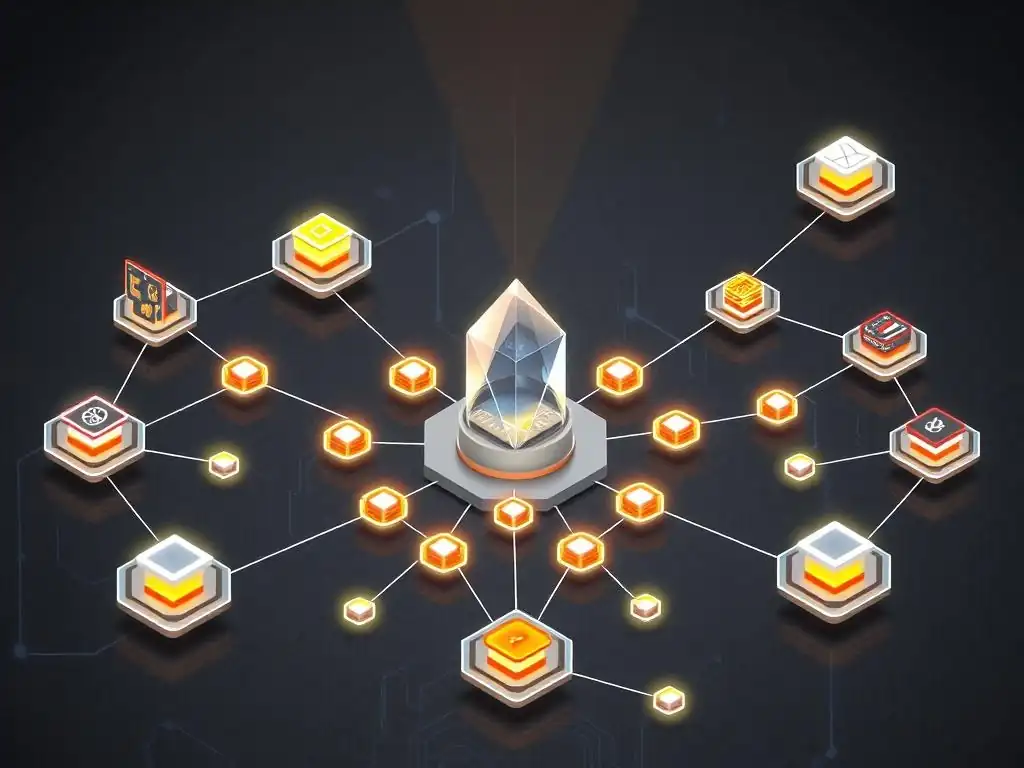
Case Study 1: Uniswap - A Successful Tokenomics Model in DeFi
Uniswap stands as a foundational decentralized exchange (DEX) within the decentralized finance (DeFi) ecosystem. Its tokenomics, centered around the UNI governance token, were designed not merely for fundraising but to decentralize control and incentivize participation. The initial distribution included a significant airdrop of 150 million UNI tokens to historical users and liquidity providers, immediately distributing protocol ownership widely. The total supply of UNI is capped at 1 billion tokens over four years, with allocations for the community, team, investors, and advisors, aiming for a predictable supply schedule crucial for long-term planning and understanding Tokenomics driving Web3 sustainability.
The success of Uniswap's tokenomics lies in its focus on governance and community alignment. UNI token holders possess the power to propose and vote on significant changes to the protocol, including fee structures, treasury allocation, and future upgrades. This decentralized governance model fosters a sense of ownership among users and developers, encouraging active participation in the protocol's evolution. Furthermore, liquidity providers are incentivized through a portion of trading fees and, historically, through liquidity mining programs, directly aligning their interests with the protocol's growth and stability. This model demonstrates how well-designed Tokenomics driving Web3 sustainability can create a virtuous cycle of participation, governance, and value accrual.
Case Study 2: Axie Infinity - Overcoming Tokenomics Challenges in Play-to-Earn Gaming
Axie Infinity pioneered the play-to-earn (P2E) gaming model, achieving massive adoption by allowing players to earn tokens (Smooth Love Potion - SLP) through gameplay. The game utilizes a dual-token system: Axie Infinity Shards (AXS) as the governance and staking token, and SLP as the utility token used for breeding new Axies. Initially, this model was highly successful, attracting millions of players, particularly in developing economies, and showcasing the potential of Tokenomics driving Web3 sustainability in gaming. AXS captured speculative and governance value, while SLP provided the in-game economy's engine.
However, Axie Infinity faced significant tokenomics challenges, primarily related to hyperinflation of the SLP token. The rate at which SLP was minted through gameplay vastly outpaced the rate at which it was burned (primarily through breeding fees). This imbalance led to a continuous increase in SLP supply without corresponding demand, causing its price to plummet dramatically. This devaluation severely impacted players' earnings and the sustainability of the P2E model, illustrating the critical importance of carefully balancing token supply and demand dynamics for Tokenomics driving Web3 sustainability. The team has since implemented various measures, such as reducing SLP rewards and introducing new burning mechanisms, attempting to restore equilibrium and ensure the long-term viability of the game's economy.
Analyzing Tokenomics Failures: Lessons Learned for Web3 Developers
Examining cases like Axie Infinity and others that have struggled provides crucial insights into the pitfalls of designing Tokenomics driving Web3 sustainability. A common failure point is underestimating the impact of token inflation, particularly in models where utility tokens are easily generated without sufficient corresponding sinks (burning mechanisms or high-demand use cases). Projects often prioritize initial growth through high rewards, overlooking the long-term consequences of an unsustainable supply schedule. Another frequent issue is the lack of meaningful utility or value accrual for the governance token beyond speculation, leading to apathy among token holders and ineffective decentralized governance.
Lessons learned emphasize the necessity of rigorous economic modeling before launching a token. This includes simulating various scenarios for supply, demand, and user behavior. It highlights the need for dynamic tokenomics that can be adjusted based on real-world usage data and market conditions, often through the very governance mechanisms the token enables. Furthermore, successful Tokenomics driving Web3 sustainability requires aligning the incentives of all stakeholders – users, developers, investors, and validators – to ensure everyone benefits from the network's growth and stability. Transparency in token distribution and a clear roadmap for future utility and value capture are paramount to building trust and fostering a resilient decentralized ecosystem.
Frequently Asked Questions
What is tokenomics and why is it crucial for Web3 sustainability?
Tokenomics refers to the economics of a digital token within a blockchain ecosystem. It's crucial because it directly influences the long-term viability and sustainability of Web3 applications by incentivizing participation and managing supply/demand.
How does effective tokenomics design contribute to the success of decentralized applications (dApps)?
Effective tokenomics can attract and retain users, developers, and investors. It does this by creating a clear value proposition and rewarding positive behaviors, which is vital for dApp adoption and growth.
What are some common challenges in designing sustainable tokenomics models for Web3 projects?
Some challenges include managing token inflation, preventing token dumping by early investors, and ensuring the token utility remains relevant and valuable over time as the project evolves.
How can regulatory uncertainty impact the development and implementation of tokenomics models?
Regulatory uncertainty can create legal ambiguity and compliance risks, potentially hindering the adoption and development of tokenomics models, particularly those operating across international jurisdictions.
Beyond financial incentives, what other factors contribute to the long-term sustainability of Web3 ecosystems driven by tokenomics?
Community governance, developer support, and the creation of a strong use case are also essential. These factors foster a thriving ecosystem where the token has real-world utility and value beyond speculation.
Final Reflection: Tokenomics Driving Web3 Sustainability
The exploration of tokenomics within Web3 reveals more than just economic models; it unveils the very architecture of sustainable decentralized applications. In a world increasingly reliant on digital infrastructure, understanding how these economic incentives can foster long-term growth and community engagement is not just relevant, it's crucial for the future of the internet itself. The principles discussed throughout this article highlight the power of well-designed tokenomics to transform Web3 from a nascent technology into a robust and enduring ecosystem.
The impact of tokenomics extends far beyond the technical specifications of a blockchain. It shapes the cultural and social dynamics within decentralized communities, influencing participation, governance, and ultimately, the success or failure of these projects. Witnessing the evolution of these models, and the real-world consequences of their implementation, underscores the profound responsibility developers and users alike bear in shaping this new frontier. The future of finance is decentralized, but the future of decentralization depends on sustainable tokenomics.
This quote encapsulates the essence of our journey, reminding us that the economic engine of Web3 must be carefully crafted to ensure its longevity and benefit all participants.
As we conclude this exploration, I invite you to consider your own role in shaping the future of Web3. How can you contribute to the development of more sustainable and equitable tokenomic models? How can you use your knowledge to advocate for responsible innovation within this space? The power to build a better, more decentralized future lies within each of us. Let us embrace this opportunity and work together to ensure that tokenomics truly drives Web3 sustainability, creating a digital world that is both innovative and enduring.
Unleash the Power of Tokenomics!
Thank you for exploring the crucial role of tokenomics in shaping the future of Web3 and decentralized applications. We hope you've gained valuable insights into creating sustainable and thriving decentralized ecosystems. Now, it's time to put that knowledge into action!
Here are a few ways to deepen your understanding and contribute to the evolution of Web3:
- Begin designing a basic tokenomic model for a hypothetical decentralized application, considering factors like supply, demand, and governance. This practical exercise will solidify your understanding and prepare you for real-world applications.
- Share this article with fellow Web3 enthusiasts on social media to spark discussion and expand the collective knowledge of tokenomics. Let's learn together!
- Explore the tokenomics of lesser-known, emerging Web3 projects and document your findings on the Blockchain Trends forum. You might uncover the next big thing!
What innovative tokenomic strategies are you most excited to see implemented in the coming years, and how do you think they will impact the overall sustainability of Web3 applications? Share your thoughts below!
Leave a Reply