
Token Utility and Value Accrual: Key Metrics for Blockchain Startup Investments


Welcome to Blockchain Trends, your premier source for understanding the transformative potential of blockchain technology.
Are you navigating the complex world of blockchain startup investments? Our in-depth analysis of blockchain startup investment metrics, starting with a close look at Token Utility and Value Accrual, will equip you with the knowledge to make informed decisions. Discover the crucial factors that separate promising ventures from fleeting trends – the future of decentralized systems depends on it. Ready to dive in and uncover the secrets to successful blockchain investing?
Token Utility and Value Accrual: Key Metrics for Blockchain Startup Investments
- Introduction: Evaluating Blockchain Startup Investment Opportunities
- Understanding Token Utility in Blockchain Startups
- Value Accrual Mechanisms for Blockchain Tokens
- Key Metrics for Assessing Token Utility and Value Accrual
- Case Studies: Analyzing Blockchain Startup Investment Metrics
- Due Diligence Checklist for Blockchain Startup Investments
- Conclusion: The Future of Blockchain Startup Investment Metrics
-
Frequently Asked Questions
- What are the most crucial metrics to consider when evaluating a blockchain startup for investment?
- How does token utility influence a blockchain startup's long-term viability and attractiveness to investors?
- Beyond tokenomics, what other factors should investors assess when considering a blockchain startup?
- How can investors effectively measure the value accrual potential of a blockchain startup's token?
- What role does regulation play in influencing investment decisions related to blockchain startups?
- Final Reflection: Navigating the Future of Blockchain Investment
- Unlock Your Blockchain Investment Potential!
Introduction: Evaluating Blockchain Startup Investment Opportunities
The Growing Landscape of Blockchain Startups and Investment
The blockchain sector has experienced explosive growth over the past decade, evolving from a niche technology primarily associated with cryptocurrencies into a foundational layer for a wide range of decentralized applications and enterprise solutions. This expansion has fueled significant investment activity, attracting capital from venture capitalists, institutional investors, and individual participants eager to capitalize on the transformative potential of distributed ledger technology.
The sheer volume and diversity of blockchain startups emerging across various industries – from decentralized finance (DeFi) and supply chain management to gaming and digital identity – necessitate a sophisticated approach to evaluating investment opportunities. Traditional venture capital metrics, while still relevant in part, often fail to capture the unique dynamics and value drivers inherent in token-based blockchain projects.
Navigating this complex landscape requires investors to look beyond conventional financial statements and user acquisition numbers alone. As the market matures, understanding the underlying mechanisms that drive the adoption and long-term sustainability of blockchain networks becomes paramount. This is where specialized blockchain startup investment metrics come into play.
The ability to assess not just the team, technology, and market, but critically, the design and function of the project's native token, is increasingly becoming a differentiator for successful investment strategies in this space. Analyzing metrics related to token utility and value accrual provides deeper insights into a project's potential for network effects and sustainable economic models.
Why Traditional Metrics Fall Short for Blockchain Investments
Traditional startup evaluation metrics, such as revenue growth, profitability, customer acquisition cost (CAC), and lifetime value (LTV), are well-established for analyzing centralized businesses. However, applying these metrics directly to many blockchain startups, especially those building decentralized protocols or ecosystems centered around a native token, presents significant challenges.
Many early-stage blockchain projects may not generate traditional revenue streams in their initial phases, instead relying on token emissions or transaction fees that accrue to the protocol or token holders rather than a central entity. The concept of a "customer" is also often blurred, as users can be developers, validators, token holders, or consumers of decentralized services, each interacting with the network in different ways.
Furthermore, the value of a decentralized network is often intrinsically tied to the utility and adoption of its native token. A project might have high user engagement (e.g., many transactions), but if the token lacks compelling utility or mechanisms for value accrual, its long-term economic viability and investment potential may be limited.
Conversely, a project with a smaller initial user base but a well-designed tokenomics model that incentivizes participation and captures network value could represent a more attractive long-term blockchain startup investment. Therefore, solely relying on metrics designed for equity investments in centralized companies can lead to an incomplete or even misleading picture of a blockchain project's true potential and risk profile.
Focusing on Tokenomics: Utility and Value Accrual
Tokenomics, the economics of a token, is a critical framework for evaluating blockchain startups. It encompasses the design of the token's supply, distribution, and, crucially, its utility and mechanisms for value accrual. Understanding how a token is used within its ecosystem (utility) and how the value generated by the network is captured by the token (value accrual) provides essential insights into the project's economic model and potential for sustainable growth. These are fundamental blockchain startup investment metrics that go beyond surface-level activity.
A token with strong utility is one that is essential for accessing services, participating in governance, or interacting meaningfully within the network. This inherent need for the token drives demand as the network grows. Value accrual mechanisms, on the other hand, are features that link the success and activity of the network directly to the token's value.
Examples include fee distribution to stakers, token burns that reduce supply, or buybacks funded by protocol revenue. Analyzing these aspects of tokenomics allows investors to assess the potential for network effects to translate into token value, offering a more nuanced perspective on a blockchain startup investment compared to traditional metrics alone.
Understanding Token Utility in Blockchain Startups
Defining Token Utility: Beyond Speculation
Token utility refers to the functional use cases of a token within its native blockchain ecosystem. It is the practical application or necessity of holding and using the token to access services, participate in activities, or gain specific rights within the network. This contrasts sharply with speculative value, which is driven purely by market sentiment and the hope of price appreciation without any underlying functional need for the asset. A token with high utility is integrated into the core operations and incentives of the protocol, making it a necessary component for users, developers, or validators interacting with the system.
For investors evaluating blockchain startup investment metrics, identifying genuine token utility is crucial. A token that is merely a speculative asset with no intrinsic use case within its ecosystem is unlikely to sustain long-term value, regardless of initial hype. True utility creates organic demand linked directly to the growth and activity of the network.
For instance, a token required to pay transaction fees on a popular network has utility directly proportional to the network's usage. Similarly, a token granting voting rights in a decentralized autonomous organization (DAO) has utility tied to participation in governance. Assessing the depth and breadth of a token's utility provides a strong indicator of its potential for sustainable demand beyond speculative trading.
Types of Token Utility: Governance, Access, and Functionality
Token utility manifests in various forms, depending on the specific design and purpose of the blockchain project. One common type is governance utility, where holding tokens grants the right to propose and vote on changes to the protocol. Projects like MakerDAO (MKR) or Uniswap (UNI) utilize governance tokens to enable decentralized decision-making by their communities.
This empowers token holders and aligns incentives, as those with a vested interest in the protocol's success (token holders) have a say in its future direction. Analyzing the level of participation in governance provides insights into community engagement, a key factor in blockchain startup investment metrics.
Another significant type is access utility, where tokens are required to access specific services or features within the ecosystem. This can range from paying for computation or storage on a decentralized network (like ETH for gas on Ethereum) to accessing premium features on a decentralized application (dApp).
Functional utility encompasses tokens used for specific operations, such as staking to secure the network (Proof-of-Stake protocols like Cardano's ADA or Solana's SOL), participating in decentralized finance activities like lending or borrowing, or being used as a medium of exchange within a specific dApp or game. A token that combines multiple forms of utility often presents a stronger case for sustainable demand and is a positive signal when assessing blockchain startup investment metrics.
How Token Utility Drives Network Adoption and Growth
Strong token utility is a powerful catalyst for network adoption and growth. When a token is essential for participating in a valuable ecosystem, its demand naturally increases as the ecosystem expands.
For example, if a decentralized exchange (DEX) token is required to access liquidity pools or participate in yield farming, the growth in trading volume and total value locked (TVL) on the DEX directly translates into increased demand for the token. This creates a virtuous cycle: more users need the token for utility, increasing demand; increased demand can potentially raise the token's value; higher token value can attract more users and developers, further boosting network activity and utility demand.
Consider a decentralized storage network where users pay for storage space using the native token. As more users require decentralized storage, the demand for the token increases. This increased demand can incentivize more providers to offer storage, expanding the network's capacity and reliability, which in turn attracts even more users.
This network effect, driven by the token's utility as a medium of exchange for the network's core service, is a crucial factor in evaluating the long-term potential of a blockchain startup investment. Analyzing metrics that track the actual use of the token within the network provides tangible evidence of utility-driven adoption, offering valuable blockchain startup investment metrics.
Value Accrual Mechanisms for Blockchain Tokens
What is Value Accrual in the Context of Blockchain?
Value accrual in the context of blockchain tokens refers to the mechanisms by which the economic value generated by the network or protocol is captured by the token itself. While token utility drives demand based on functionality, value accrual ensures that the success and growth of the underlying project directly translate into value for token holders.
It's the process by which the network's activity, revenue (if any), or inherent benefits are reflected in the token's market value beyond mere speculation. Understanding these mechanisms is fundamental for evaluating blockchain startup investment metrics, as they indicate how token holders benefit from the network's prosperity.
Without effective value accrual mechanisms, a token with high utility might see significant transaction volume, but the economic benefits might not necessarily flow back to the token holders. For instance, if transaction fees are paid in a different asset or simply disappear, the native token might only see fleeting demand for initial acquisition, rather than sustained demand linked to the network's ongoing success.
Robust value accrual ensures that as the network becomes more valuable (e.g., more users, higher transaction volume, increased revenue), the token's value is supported or enhanced, creating a stronger alignment between the project's performance and the token's investment potential.
Common Value Accrual Models: Buy-Back-and-Burn, Staking, and Revenue Sharing
Several models are commonly employed by blockchain projects to facilitate value accrual for their native tokens. These mechanisms aim to reduce supply, reward holding, or distribute protocol earnings to token holders, thereby linking token value to network success. Identifying and analyzing these models is a key part of assessing blockchain startup investment metrics. The effectiveness and sustainability of these models vary significantly and depend heavily on the specific design and economics of the protocol.
Examples of these models include Buy-Back-and-Burn, Staking Rewards, and Revenue Sharing. Each model operates differently but shares the common goal of creating economic incentives for token holders and capturing network value. Evaluating which models are employed and how effectively they are implemented is crucial due diligence for potential blockchain startup investments. Investors need to understand not just that a mechanism exists, but how it functions, its potential impact on token supply and demand, and its long-term viability.
Buy-Back-and-Burn Explained
The Buy-Back-and-Burn mechanism involves the protocol or a designated entity using a portion of the revenue generated by the network (e.g., transaction fees, service fees) to buy the native token on the open market and then permanently remove those tokens from circulation (burning them). By reducing the total supply of the token while demand remains constant or increases, this mechanism is deflationary and can theoretically lead to an increase in the value of the remaining tokens. This method directly links network revenue to a reduction in token supply.
A notable example, though now evolved, was the BNB token on the Binance exchange, which historically used a portion of its profits to buy back and burn BNB, although their mechanism has since shifted. The effectiveness of a buy-back-and-burn depends heavily on the amount of revenue generated by the protocol and the proportion of that revenue allocated to buying back the token. A project with significant, sustainable revenue streams implementing a consistent burn schedule can create a strong value accrual loop, making this a positive signal when assessing blockchain startup investment metrics related to token economics.
Staking Rewards and Their Impact on Token Value
Staking is a mechanism primarily associated with Proof-of-Stake (PoS) blockchains, where token holders lock up (stake) their tokens to participate in network consensus and validation. In return for securing the network and validating transactions, stakers receive rewards, typically in the form of newly minted tokens or a share of transaction fees. This mechanism serves a dual purpose: it secures the network and provides an incentive for token holders to lock up their tokens, reducing the circulating supply available on exchanges and potentially driving up demand.
The impact of staking on token value comes from both the reduction in liquid supply (as tokens are staked) and the potential yield earned by stakers. A high staking ratio (percentage of total supply being staked) suggests strong holder conviction and reduces selling pressure. Projects offering competitive staking yields can attract more stakers, further locking up supply.
However, it's important to analyze the source of staking rewards (inflationary new tokens vs. transaction fees) and the sustainability of the yield when using this as a blockchain startup investment metric. High inflationary rewards can dilute existing holders if not offset by sufficient demand or network growth.
Revenue Sharing: Distributing Value to Token Holders
Revenue sharing is a value accrual model where a portion of the revenue generated by the protocol is directly distributed to token holders. This distribution can take various forms, such as paying out a percentage of transaction fees or platform income to token stakers or holders. This model closely mirrors traditional dividend payments in equity markets, providing token holders with a direct financial benefit derived from the network's economic activity.
For example, some decentralized exchanges or lending protocols might distribute a percentage of the trading fees or interest earned to users who stake their governance tokens. This creates a clear link between the protocol's success (higher trading volume, more lending activity) and the value received by token holders.
Analyzing the amount of revenue generated and the percentage distributed to token holders is a crucial metric for assessing the effectiveness of this value accrual mechanism as part of evaluating blockchain startup investment metrics. Sustainable and growing revenue sharing indicates a healthy ecosystem where token holders directly benefit from the protocol's performance.
Analyzing the Sustainability of Value Accrual Models
While value accrual mechanisms are vital blockchain startup investment metrics, their mere existence is not enough; their sustainability must be carefully analyzed. The long-term effectiveness of models like buy-back-and-burn, staking, and revenue sharing depends on the underlying economics of the protocol.
A buy-back-and-burn program is only sustainable if the protocol generates sufficient revenue to fund the buybacks without jeopardizing its operations or development. Similarly, staking rewards funded solely by high token inflation might attract stakers in the short term but can lead to significant selling pressure from reward recipients and long-term dilution for non-stakers if network growth doesn't keep pace with inflation.
Investors must look beyond the headline yield or burn rate and understand the source and reliability of the value being distributed or removed from supply. Is the revenue generated from real user activity and demand for the protocol's services, or is it reliant on temporary incentives or speculative trading?
Is the staking yield sustainable, or does it depend on an ever-increasing token supply? Evaluating the economic model's robustness, the project's ability to generate sustainable activity or revenue, and the potential for external factors to impact these mechanisms is essential for assessing the long-term viability and investment potential of a blockchain startup based on its value accrual design.
Key Metrics for Assessing Token Utility and Value Accrual
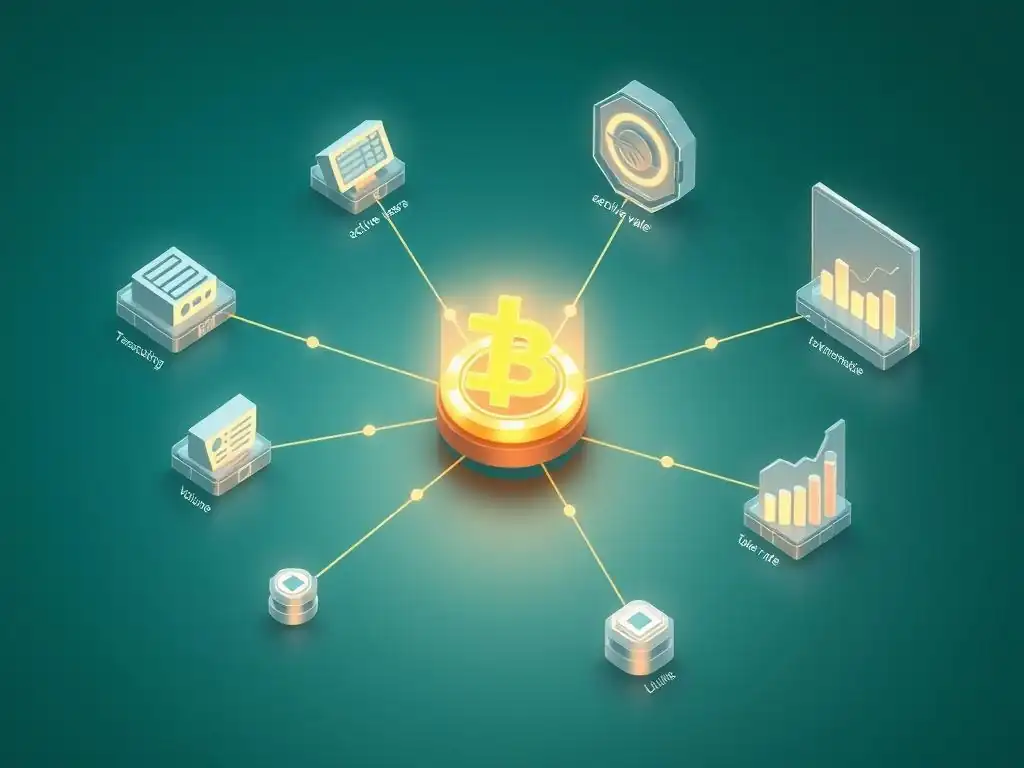
Utility Metrics: Daily Active Users, Transaction Volume, and Network Usage
Assessing the actual utility of a token requires looking at metrics that demonstrate how the token is being used within the network. These operational metrics provide tangible evidence of adoption and utility-driven demand, serving as crucial blockchain startup investment metrics. While market price reflects speculation and overall sentiment, utility metrics reveal the underlying health and activity of the ecosystem.
Analyzing trends in these utility metrics over time can indicate whether the project is gaining traction and if its token is becoming increasingly integrated into user behavior. Stagnant or declining utility metrics, despite marketing efforts or price pumps, could signal a lack of genuine product-market fit or insufficient token utility, raising red flags for a potential blockchain startup investment.
Tracking Daily Active Users (DAU)
Daily Active Users (DAU) is a fundamental metric, adapted from traditional software, that measures the number of unique users interacting with the protocol or dApp on a given day. In the context of blockchain, defining a "user" can vary – it might be a unique wallet address initiating a transaction, a user logged into a dApp front-end, or an address participating in a specific protocol function like swapping or lending. While wallet address counting can be imperfect (one user can have multiple addresses), tracking DAU provides a proxy for the level of human engagement and activity on the network.
A growing DAU suggests increasing adoption and organic demand for the services provided by the blockchain startup. Comparing DAU to other metrics, such as transaction volume or total value locked, can offer deeper insights. For example, high transaction volume but low DAU might indicate wash trading or automated bot activity rather than genuine user adoption. Analyzing DAU trends over several months or quarters offers a clearer picture of the project's growth trajectory and the extent to which its token utility is driving real-world use.
Analyzing Transaction Volume on the Blockchain
Transaction volume measures the total value or number of transactions processed on the network over a specific period. This metric provides a direct measure of the level of economic activity occurring on the blockchain. High transaction volume, especially when associated with core functions tied to token utility (e.g., token transfers, smart contract interactions requiring the native token for gas fees, trading volume on a decentralized exchange), indicates that the network is being actively used.
For projects where the native token is used for transaction fees or as the primary medium of exchange, transaction volume is a critical indicator of utility-driven demand. A decentralized payment network, for instance, would rely heavily on increasing transaction volume as a sign of adoption. Analyzing the nature of transactions (e.g., small vs. large value, interactions with specific smart contracts) can further refine the assessment of transaction volume as a blockchain startup investment metric, helping to distinguish between meaningful activity and less impactful movements.
Measuring Network Usage and Adoption Rates
Beyond raw user counts and transaction volume, measuring specific network usage metrics provides granular insights into token utility and adoption. This can include metrics tailored to the specific type of project, such as:
- Total Value Locked (TVL): For DeFi protocols, TVL represents the total value of assets deposited in smart contracts. Growth in TVL often correlates with increased usage of the protocol's services (lending, swapping, yield farming), which may require or generate demand for the native token. For example, a lending protocol with a growing TVL likely sees increasing demand for borrowing/lending, potentially driving utility for a governance or fee-sharing token.
- Number of Active Smart Contracts: For platform blockchains, this metric indicates developer activity and the deployment of dApps. A growing number of active contracts suggests a thriving developer ecosystem building applications that will likely utilize the native token for gas or other functions.
- Specific dApp Usage Metrics: For a gaming blockchain, metrics might include the number of active players, in-game transactions using the token, or value of in-game assets traded. For a supply chain platform, it could be the number of tracked shipments or verified data points recorded on the chain using the token.
These tailored metrics are essential blockchain startup investment metrics because they directly measure the adoption of the core functionality that gives the token its utility. Analyzing trends in these specific usage patterns offers compelling evidence of whether the project is achieving product-market fit and if its token utility is translating into real-world adoption.
Value Accrual Metrics: Token Burn Rate, Staking Ratio, and Dividend Yield
Metrics for value accrual quantify how the network's success translates into economic benefit for token holders, going beyond just usage to look at the token's economic design. These are crucial blockchain startup investment metrics for assessing the long-term investment case.
These metrics provide quantitative measures of the effectiveness of the chosen value accrual mechanisms and their potential impact on token supply and demand dynamics.
Monitoring the Token Burn Rate
For projects employing a buy-back-and-burn mechanism, the token burn rate is a key metric to monitor. This measures the number or percentage of tokens being permanently removed from the circulating supply over a given period. A consistent and significant burn rate, especially one that is growing in line with network activity, indicates that the value accrual mechanism is actively reducing supply.
Calculating the total number of tokens burned to date and projecting future burn rates based on protocol revenue and burn policy allows investors to estimate the potential impact on the token's future supply. While a high burn rate doesn't guarantee price appreciation (demand must also be present), it quantifies the deflationary pressure being applied. Analyzing the source of funds used for the buy-back (e.g., transaction fees, protocol revenue, treasury funds) is also important for assessing the sustainability of the burn rate as a blockchain startup investment metric.
Assessing the Staking Ratio and its Implications
The staking ratio is the percentage of the total token supply that is currently locked up in staking or validation mechanisms. A high staking ratio indicates that a significant portion of the supply is illiquid, reducing potential selling pressure on exchanges. It also suggests strong confidence among token holders, who are willing to lock up their assets for staking rewards rather than selling them.
A growing staking ratio can be a positive signal, indicating increasing participation in network security and governance, as well as reduced circulating supply. However, it's also important to consider the yield offered for staking. An unsustainably high yield could attract stakers but lead to inflation and subsequent selling pressure from reward recipients. Analyzing the staking ratio alongside the staking yield and the source of rewards provides a more complete picture of this value accrual mechanism's impact when evaluating blockchain startup investment metrics.
Calculating Dividend Yield for Revenue-Sharing Tokens
For tokens that distribute protocol revenue to holders (often through staking or holding in a specific wallet), the dividend yield is a relevant metric. Similar to traditional stock dividends, this yield measures the annual revenue payout per token relative to the token's price. It provides a direct measure of the economic return token holders receive from the protocol's operations.
Calculating the dividend yield requires knowing the total revenue distributed over a period and the average token price during that time. A growing dividend yield, driven by increasing protocol revenue, indicates that the value generated by the network is effectively being captured and distributed to token holders. Comparing the dividend yield to yields from other investment opportunities (both crypto and traditional) can help investors assess the attractiveness of the token as a yield-generating asset, adding another dimension to blockchain startup investment metrics.
Integrating Qualitative Factors: Team, Community, and Market Opportunity
While quantitative metrics related to token utility and value accrual are essential, they must be integrated with qualitative factors for a comprehensive blockchain startup investment analysis. The strength and experience of the core team are paramount; a brilliant whitepaper and tokenomics design can fail without capable execution. Assess the team's track record in blockchain, technology development, and relevant industry domains. Look for clear roles, relevant expertise, and a demonstrated ability to deliver on roadmap milestones. A team with prior startup success or deep technical knowledge in distributed systems is often a stronger bet.
The community surrounding a blockchain project is another critical qualitative factor. A vibrant, engaged, and supportive community can contribute to network effects, provide valuable feedback, and act as advocates. Gauge the size and activity of the community on platforms like Discord, Telegram, and forums. Look for genuine engagement beyond just price discussion. A strong community often signifies a project that resonates with its target audience and has the potential for viral growth, influencing long-term adoption and, consequently, token utility and value accrual.
Finally, the market opportunity and competitive landscape must be thoroughly analyzed. Is the project addressing a real problem with a large potential market? How does its technology and tokenomics design compare to existing solutions, both in the blockchain space and traditional industries? A project targeting a niche market with limited growth potential or facing intense competition from established players, regardless of strong tokenomics on paper, may present a less attractive blockchain startup investment. Understanding the project's positioning, competitive advantages, and potential for market penetration is crucial for contextualizing the quantitative metrics.
Case Studies: Analyzing Blockchain Startup Investment Metrics
- Case Study 1: A DeFi Lending Protocol
- Tokenomics: Native token used for governance, staking to earn a share of protocol revenue (interest paid by borrowers), and potentially as collateral.
- Utility Metrics: High and growing TVL indicates strong adoption by lenders and borrowers. Increasing transaction volume (loan originations, repayments, liquidations) shows active use of core functions. Number of unique addresses interacting with the protocol is steadily rising.
- Value Accrual Metrics: A significant portion of interest revenue is distributed to token stakers, resulting in a competitive dividend yield. The staking ratio is high, indicating strong conviction and reduced circulating supply. No burn mechanism is currently implemented, but the focus is on revenue sharing and staking rewards.
- Analysis: Strong utility is evident in the high TVL and transaction volume, showing the protocol is actively used. The revenue-sharing model provides clear value accrual, directly linking protocol success to token holder returns. The high staking ratio supports price stability by reducing liquid supply. The blockchain startup investment metrics here suggest a healthy, utility-driven ecosystem with a clear mechanism for token holders to benefit from network growth.
- Case Study 2: A Decentralized Gaming Platform
- Tokenomics: Native token used for in-game purchases, trading in-game assets on a marketplace, participating in governance, and earning rewards for gameplay (play-to-earn). A portion of marketplace transaction fees are used for token buybacks and burns.
- Utility Metrics: Number of daily active players is high but volatile, often correlating with new game releases or events. In-game transaction volume using the token is substantial, showing active use within the ecosystem. Number of unique wallets holding in-game assets tied to the token is increasing.
- Value Accrual Metrics: A percentage of marketplace fees (e.g., 2%) is used to buy back the token daily, with half burned and half distributed to stakers. The burn rate is directly tied to marketplace activity. Staking is available for governance participation and earning a portion of the buyback tokens, resulting in a moderate staking ratio.
- Analysis: Utility is strong within the gaming ecosystem (purchases, trading, rewards). The value accrual mechanism combines buy-back-and-burn (deflationary pressure tied to economic activity) and staking (rewarding participation). The buy-back-and-burn mechanism creates a direct link between marketplace success and token supply reduction. However, volatility in player numbers (DAU) could impact the consistency of the burn rate. These blockchain startup investment metrics highlight a model where entertainment value drives economic activity, which in turn supports token value.
Due Diligence Checklist for Blockchain Startup Investments
Evaluating the Whitepaper and Tokenomics Design
The whitepaper is the foundational document for any blockchain project, outlining its vision, technology, and tokenomics. A thorough review is the first step in assessing blockchain startup investment metrics. Does the whitepaper clearly articulate the problem being solved and how the blockchain solution provides a unique advantage? Is the technology described feasible and innovative?
Pay close attention to the tokenomics section: Is the token's utility clearly defined and compelling? Are the value accrual mechanisms logical and sustainable? Analyze the token distribution plan – is it fair and does it avoid excessive concentration in the hands of early investors or the team? Red flags include vague descriptions, unrealistic claims, or tokenomics that primarily benefit insiders without creating value for the broader ecosystem.
Assessing the Team's Expertise and Track Record
The team behind a blockchain startup is arguably the most critical factor. Evaluate the core members' relevant experience in blockchain technology, software development, cryptography, and the specific industry the project targets. Do they have a history of successfully building and launching products? Have they been involved in previous blockchain projects, and what were the outcomes?
Look for evidence of technical prowess and business acumen. A team with public profiles, active communication, and a willingness to engage with the community instills more confidence. Conversely, anonymous teams or those with a history of failed projects or controversial behavior warrant extreme caution when considering a blockchain startup investment.
Analyzing the Competitive Landscape and Market Opportunity
Understand where the blockchain startup fits within the broader market. Who are their direct and indirect competitors, both in the blockchain space and traditional sectors? What are their competitive advantages? Is the total addressable market (TAM) large enough to support significant growth? A thorough market analysis involves researching existing solutions, identifying market gaps, and assessing the project's potential for adoption. A project entering a saturated market with no clear differentiation faces an uphill battle, regardless of its tokenomics. Evaluating the market opportunity helps contextualize the potential scale and impact of the utility and value accrual mechanisms being proposed.
Conducting a Security Audit and Smart Contract Review
Given that blockchain projects often rely on complex smart contracts to manage tokens, enforce logic, and handle user funds, a security audit is a non-negotiable step in due diligence for blockchain startup investments. Review whether the project has undergone audits by reputable third-party security firms. Examine the audit reports to understand the findings and whether identified vulnerabilities have been remediated.
For projects with publicly available code, consider having a technical expert review the smart contracts for potential bugs, exploits, or unintended behaviors. Smart contract vulnerabilities have led to significant financial losses in the past, making security a paramount concern that can undermine even the most promising tokenomics.
Conclusion: The Future of Blockchain Startup Investment Metrics
The Importance of a Holistic Approach to Investment Analysis
Evaluating blockchain startup investments requires a holistic approach that moves beyond simplistic metrics or pure speculation. While traditional financial and operational metrics provide some context, the unique nature of token-based networks necessitates a deep understanding of tokenomics, specifically token utility and value accrual. These metrics, such as Daily Active Users, Transaction Volume, Network Usage, Token Burn Rate, Staking Ratio, and Dividend Yield, offer crucial insights into the health and economic viability of a decentralized project. However, they are most powerful when considered alongside qualitative factors like the team's expertise, community strength, market opportunity, and the robustness of security measures.
A successful blockchain startup investment strategy integrates this diverse set of blockchain startup investment metrics to form a comprehensive picture. It recognizes that a project's long-term value is derived from its ability to build a thriving ecosystem where the token plays an essential role (utility) and where the economic benefits of that ecosystem are captured by token holders (value accrual). This integrated analysis helps investors distinguish between projects with sustainable potential and those built on hype alone.
Focusing on Long-Term Sustainability and Value Creation
Ultimately, the goal of analyzing blockchain startup investment metrics like token utility and value accrual is to assess the project's potential for long-term sustainability and genuine value creation. Projects with strong, utility-driven network effects and well-designed, sustainable value accrual mechanisms are better positioned to weather market volatility and achieve lasting success. Investors should prioritize projects where the tokenomics align the incentives of users, developers, and token holders, fostering an ecosystem where everyone benefits from the network's growth.
Sustainable value creation in blockchain stems from providing real-world utility and capturing that value effectively within the token's economic model. This stands in contrast to projects whose token value is based purely on speculative demand or unsustainable inflationary models. By focusing on these fundamental blockchain startup investment metrics, investors can identify projects with the potential to build durable networks that generate value over the long haul.
The landscape of blockchain startup investment is constantly evolving, with new token models, governance structures, and value accrual mechanisms emerging regularly. Staying informed about these developments is crucial for investors. As the industry matures, the methods for evaluating projects will continue to refine, placing an even greater emphasis on demonstrable utility and sustainable economics.
The metrics discussed here – centered on how tokens are used and how they capture value – will remain fundamental pillars of any robust evaluation framework. Navigating this dynamic environment successfully requires continuous learning, diligent analysis, and a commitment to understanding the core drivers of value in decentralized systems. Mastering these blockchain startup investment metrics is key to unlocking the potential of this transformative technology.
Frequently Asked Questions
What are the most crucial metrics to consider when evaluating a blockchain startup for investment?
The most crucial metrics often revolve around token utility and how effectively the token drives network adoption. Another vital aspect is understanding how the token’s design facilitates value accrual.
How does token utility influence a blockchain startup's long-term viability and attractiveness to investors?
Token utility is paramount as it dictates the token's purpose within the ecosystem. A strong utility leads to increased demand and ultimately, greater investor confidence.
Beyond tokenomics, what other factors should investors assess when considering a blockchain startup?
Beyond tokenomics, investors should assess the team's expertise, the market opportunity being addressed, and the competitive landscape. These factors contribute to the startup's overall potential for success.
How can investors effectively measure the value accrual potential of a blockchain startup's token?
Investors can assess value accrual by examining the token's burn mechanisms, staking rewards, and other features designed to reduce supply and increase demand.
Regulation significantly impacts investment decisions. Uncertainty or restrictive policies can deter investment, while clear and supportive frameworks can foster growth and attract capital.
The intricate dance between token utility and value accrual is no longer a theoretical exercise confined to whitepapers; it's the very heartbeat of sustainable blockchain projects. Understanding and applying the metrics discussed throughout this article is crucial, as the current landscape demands rigorous due diligence and a discerning eye for projects built on solid foundations, not just hype.
The journey of understanding tokenomics has been a constant evolution, mirroring the rapid advancements within the blockchain space itself. It's a reminder that investment decisions should be rooted in tangible utility and demonstrable value, not fleeting trends. As Warren Buffett wisely stated: Price is what you pay. Value is what you get.
This principle rings especially true in the volatile world of blockchain startup investments.
Now, armed with a deeper understanding of blockchain startup investment metrics, I encourage you to reflect on your own approach to this burgeoning field. Are you prioritizing projects with genuine utility and sustainable value accrual? Let this knowledge empower you to make informed decisions, fostering a future where innovation thrives and blockchain technology reaches its full potential.
Unlock Your Blockchain Investment Potential!
Thank you for exploring the concepts of token utility and value accrual. We hope this article has provided valuable insights into evaluating blockchain startup investments. Ready to apply this knowledge?
Here’s how you can take the next step:
- Analyze a promising blockchain startup’s tokenomics using the discussed metrics. Practical application is essential!
- Explore lesser-known blockchains that serve specific utility niches and identify hidden gems with strong potential for value growth.
- Share this article with fellow investors or startup founders on social media to spark discussions about effective token utility models.
Which blockchain startup are you most excited to analyze, and which utility metric will you focus on first? Share your thoughts in the comments below!
Leave a Reply