
Tokenomics and Decentralized Autonomous Organizations (DAOs): Governing Crypto Communities


Welcome to Blockchain Trends, your guide to understanding the real-world impact of blockchain technology. Forget the hype, we delve into the transformative potential beyond cryptocurrencies. Curious about how decentralized communities are shaping the future? Our featured article explores crucial DAO tokenomics governance strategies. Discover how these strategies are revolutionizing decision-making and investment within DAOs, and what this means for the future of decentralized systems. Are you ready to unlock the secrets to effective DAO governance and investment?
- What are Decentralized Autonomous Organizations (DAOs)?
- Understanding Tokenomics: The Foundation of DAO Governance
- DAO Tokenomics Governance Strategies: Optimizing for Success
- Analyzing Different DAO Tokenomics Examples
- Challenges and Opportunities in DAO Tokenomics Governance
- Maximizing DAO Success with Strategic Tokenomics Governance
-
Frequently Asked Questions
- What is the fundamental role of tokenomics in a DAO's governance?
- How do different DAO governance strategies impact the distribution of power within the organization?
- Can you provide examples of successful DAO tokenomics models and explain what made them effective?
- What are the key challenges in designing effective DAO tokenomics governance strategies?
- How are regulatory bodies approaching the governance and tokenomics of DAOs, and what implications does this have for DAO operators?
- Final Reflection: Shaping Decentralized Futures
- Unleash Your DAO Potential!
What are Decentralized Autonomous Organizations (DAOs)?
Defining DAOs: Autonomy, Transparency, and Community Governance
Decentralized Autonomous Organizations (DAOs) represent a new form of organizational structure built on blockchain technology. At their core, DAOs are governed by code, specifically smart contracts, rather than a central authority. This code defines the rules of operation, decision-making processes, and treasury management, making the organization's activities transparent and auditable on the blockchain. The autonomy stems from the fact that once deployed, the core rules are immutable unless altered through a predefined governance process involving token holders.
Transparency is a hallmark of DAOs, as all transactions and governance proposals are recorded on a public ledger. This allows any participant or observer to verify the organization's activities and treasury balance. Community governance is facilitated through native tokens, which grant holders voting rights proportional to their stake. This empowers a distributed network of participants to collectively make decisions regarding the DAO's direction, funding allocation, and protocol upgrades, embodying the principles of decentralized governance and potentially influencing DAO tokenomics governance strategies.
The Role of Blockchain in DAO Functionality
Blockchain technology provides the essential infrastructure for DAOs to function autonomously and transparently. The immutable ledger ensures that the rules coded into smart contracts are enforced consistently and cannot be tampered with by any single entity. Transactions, including the flow of funds within the DAO's treasury and the recording of votes, are permanently logged, providing a verifiable history of all operations. This foundational layer of trust and security is paramount for an organization designed to operate without central oversight.
Furthermore, blockchain enables the creation and distribution of governance tokens, which are fundamental to DAO participation. These tokens, often adhering to standards like ERC-20 on Ethereum, represent ownership and voting power within the DAO. Smart contracts automate the execution of decisions approved by token holders, such as distributing funds for grants or implementing protocol changes. This seamless integration of tokenomics, governance, and automated execution on the blockchain is critical for the effective implementation of DAO tokenomics governance strategies.
Understanding Tokenomics: The Foundation of DAO Governance
Tokenomics Defined: Economics of Tokens within a DAO Ecosystem
Tokenomics, a portmanteau of "token" and "economics," refers to the study and design of the economic system governing a cryptocurrency or, in this context, a DAO's native token. It encompasses all factors influencing a token's value and utility within its ecosystem, including its distribution, supply, demand, and how it is used for governance, incentives, and access to services. Effective DAO tokenomics are crucial for aligning the incentives of token holders with the long-term health and growth of the organization, directly impacting DAO tokenomics governance strategies.
The specific design of a DAO's tokenomics dictates how power is distributed, how participation is incentivized, and how resources are managed. For instance, a tokenomics model might allocate a percentage of tokens for community grants, another for protocol development, and a significant portion for governance voting. The economic principles embedded in the token design aim to create a self-sustaining ecosystem where token holders are motivated to contribute positively to the DAO's goals, as their actions can influence the token's value and their own stake.
Key Elements of DAO Tokenomics Models
Token Distribution Mechanisms: Fair and Equitable Allocation
The initial distribution of a DAO's governance token is a critical determinant of who holds power and how decentralized the organization truly is. Common distribution mechanisms include fair launches (where tokens are distributed based on participation or contribution rather than a pre-sale), airdrops to specific user groups (e.g., early adopters of a protocol), public sales, and allocations to core contributors, treasury, and ecosystem development funds. A distribution model that concentrates too much power in the hands of a few early investors or insiders can undermine the decentralized nature of the DAO.
Ensuring a wide and equitable distribution is vital for robust DAO tokenomics governance strategies. For example, some protocols have airdropped tokens to thousands or even millions of users who interacted with the service, aiming to decentralize control from day one. While perfect equality is often unattainable, strategies that avoid excessive concentration of tokens in a few wallets are preferred to prevent potential collusion or manipulation of governance votes, promoting broader community participation.
Token Utility: Governance, Staking, and Incentives
The utility of a DAO's token extends beyond simple ownership; it grants specific rights and provides incentives within the ecosystem. The primary utility is often governance, allowing token holders to propose, discuss, and vote on proposals that affect the DAO's operations, parameters, and future direction. The weight of a vote is typically proportional to the amount of tokens held, though some DAOs explore alternative voting mechanisms to address this proportionality.
Tokens can also be used for staking, where holders lock up their tokens to secure the network or participate in specific protocol functions, often earning rewards in return. This staking mechanism can also be tied to governance, requiring staked tokens to vote or participate in proposal delegation. Furthermore, tokens are frequently used to incentivize desired behaviors within the ecosystem, such as providing liquidity to a decentralized exchange, contributing to development, or participating actively in governance discussions, all contributing to the effectiveness of DAO tokenomics governance strategies.
Token Supply and Demand: Balancing Scarcity and Liquidity
The economic health of a DAO token is significantly influenced by its supply and demand dynamics. The total supply, emission schedule (how new tokens are created), and burning mechanisms (how tokens are destroyed) are key aspects of tokenomics design. A fixed or capped supply can create scarcity, potentially increasing value as demand grows, while an inflationary supply might be used to continuously incentivize participation or fund ecosystem development, though it risks diluting existing holdings.
Balancing scarcity with sufficient liquidity is crucial. Tokens need to be readily available for users to acquire for utility (like governance or staking) and for participants to exit positions if desired. Mechanisms like liquidity mining or automated market makers on decentralized exchanges help ensure liquidity. The interplay between programmed supply changes and market demand, driven by the DAO's success and utility, forms the core economic engine and is a vital consideration when designing DAO tokenomics governance strategies.
DAO Tokenomics Governance Strategies: Optimizing for Success
Designing Effective DAO Governance Models
On-Chain vs. Off-Chain Governance: Striking the Right Balance
DAO governance mechanisms typically involve a combination of on-chain and off-chain processes. On-chain governance refers to proposals and votes that are directly executed by smart contracts on the blockchain once passed. This offers high security and automation but can be costly (due to gas fees) and slow for frequent or complex decisions. Examples include changing protocol parameters or allocating funds directly from the treasury via a multi-signature wallet controlled by governance.
Off-chain governance, conversely, involves discussions and informal signaling that happen on forums, Discord, or dedicated platforms before a formal, often simplified, on-chain vote occurs. This allows for richer deliberation, lower costs for discussion, and faster iteration on ideas. A balanced approach often involves off-chain discussion and temperature checks followed by a binding on-chain vote for critical decisions. Effective DAO tokenomics governance strategies often leverage off-chain channels for debate and proposal refinement before committing to the more expensive and immutable on-chain execution.
Voting Mechanisms: Quadratic Voting and Beyond
Most DAOs utilize a simple token-weighted voting system where one token equals one vote. While straightforward, this can lead to plutocracy, where large token holders dominate decisions. To mitigate this, some DAOs explore alternative voting mechanisms. Quadratic voting, for instance, requires participants to pay a cost proportional to the square of the votes they cast, making it increasingly expensive for large token holders to cast many votes on a single issue and potentially giving smaller holders a relatively stronger voice on issues they care deeply about.
Other mechanisms include delegation, where token holders can assign their voting power to elected delegates or domain experts, aiming for more informed decision-making. Some DAOs also implement conviction voting, where the longer a token holder holds their tokens and votes on a proposal, the more weight their vote gains over time, incentivizing long-term commitment. Choosing the right voting mechanism is a critical component of designing effective DAO tokenomics governance strategies to ensure fair and representative participation.
Proposal Submission and Execution: Streamlining the Process
The process by which proposals are submitted, debated, and ultimately executed is crucial for a DAO's efficiency and effectiveness. Typically, a threshold of token ownership is required to submit a formal proposal on-chain (e.g., 0.1% or 1% of total supply), preventing spam.
Proposals then enter a review period, followed by a voting period (often lasting several days). If a proposal meets a predefined quorum (minimum percentage of total supply voting) and passes a simple or super-majority threshold, it is then executed, often automatically by a smart contract or via a multi-sig transaction initiated by elected guardians or the passing vote itself.
Streamlining this process involves clear guidelines for proposal formatting, dedicated forums for discussion, and user-friendly interfaces for voting. Some DAOs implement a two-tier system with " 온도 체크 (temperature check)" or "시그널링 (signaling)" votes that are non-binding and cheaper to gauge community sentiment before a formal, expensive on-chain vote. Optimizing this pipeline is key for responsive and agile DAO tokenomics governance strategies, ensuring that the community can effectively steer the organization.
Implementing and Managing DAO Tokenomics
Initial Token Offering (ITO) Strategies for DAOs
While traditional Initial Coin Offerings (ICOs) have faced scrutiny, DAOs often utilize various strategies to initially distribute their governance tokens. Fair launches, where tokens are distributed based on participation or provision of value (like liquidity mining) rather than a sale to investors, have gained popularity as they aim to create a more decentralized base from the start. Another method is a Lockdrop, where users lock existing tokens (like ETH) for a period to receive new governance tokens, rewarding committed users without requiring a direct purchase.
Other strategies might involve distributing tokens through a public sale with mechanisms to prevent whales from acquiring too large a share, or allocating significant portions to a treasury controlled by the DAO's future governance. The chosen ITO strategy profoundly impacts the initial distribution of power and sets the stage for the subsequent dynamics of DAO tokenomics governance strategies, influencing who participates and how decisions are made from the outset.
Community Engagement and Tokenholder Incentives
A vibrant and engaged community is the lifeblood of a successful DAO. Tokenomics design plays a significant role in fostering this engagement. Beyond the intrinsic motivation of contributing to a project, tokenholders are often incentivized financially. This includes rewards for staking tokens, providing liquidity, or actively participating in governance (e.g., receiving a small token reward for voting). Grant programs, funded by the DAO's treasury, are also crucial for funding community initiatives, development, and content creation.
Effective communication channels, educational resources about the protocol and governance process, and platforms for healthy debate are non-tokenomic factors critical for engagement. Regular updates, transparent reporting on treasury usage, and responsiveness from core contributors (even in a decentralized structure) help build trust and encourage active participation. Strong community engagement is essential for the health and efficacy of DAO tokenomics governance strategies.
Monitoring and Adjusting Tokenomics Parameters
DAO tokenomics are not static; they often require monitoring and adjustment over time based on community needs, market conditions, and protocol evolution. Parameters such as voting thresholds (quorum and approval percentages), proposal submission requirements, inflation rates, and fee structures can be subject to governance votes. For example, a DAO might vote to decrease the required quorum if voter turnout is consistently low, or adjust fee distribution to incentivize liquidity providers differently.
Monitoring key metrics is vital: voter participation rates, the diversity of voters, the concentration of token holdings, the success rate of different proposal types, and treasury growth/usage. Data analytics platforms and dashboards specifically designed for DAOs help track these metrics. The ability of the community to collectively recognize issues and propose adjustments to the tokenomics parameters through governance is a key strength of DAOs and a core aspect of managing DAO tokenomics governance strategies effectively.
Analyzing Different DAO Tokenomics Examples
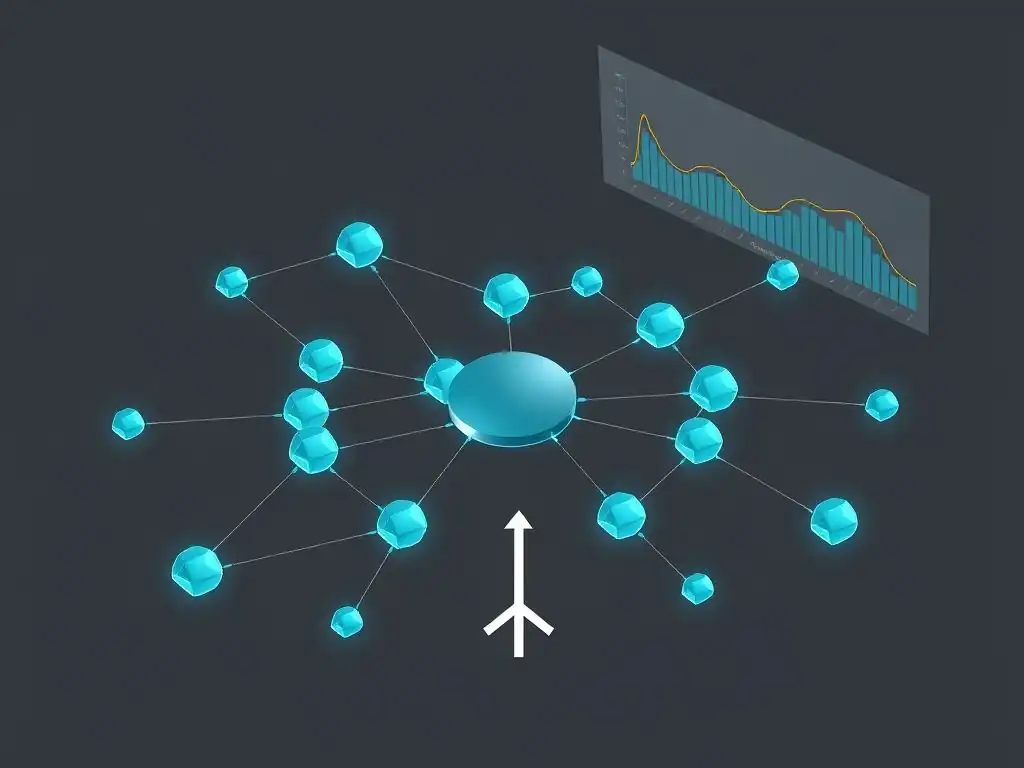
Case Study 1: MakerDAO - Tokenomics and Governance Structure
MakerDAO is one of the earliest and most prominent DAOs, governing the Maker Protocol and the DAI stablecoin. Its governance token, MKR, is used to vote on key parameters of the protocol, such as the Stability Fee for DAI, the Debt Ceiling for various collateral types, and the addition of new collateral assets. MKR holders also act as a lender of last resort; if the system faces a deficit, new MKR tokens are minted and sold to recapitalize it, effectively diluting existing holders – a powerful incentive for prudent governance.
The MKR token supply is capped at 1 million, though it can fluctuate based on the protocol's financial health (minting for recapitalization or burning from surplus revenue). Governance requires active participation; proposals go through an Executive Vote process, which, if passed, directly modifies the protocol's smart contracts. The distribution of MKR initially involved private sales and allocations to the Maker Foundation, leading to some concentration, though efforts have been made over time to broaden participation and refine their specific DAO tokenomics governance strategies.
Case Study 2: Uniswap - Tokenomics and Governance Structure
Uniswap, a leading decentralized exchange, introduced its governance token, UNI, via a massive airdrop to historical users in September 2020. This distribution method aimed to decentralize control widely from the outset, distributing 15% of the total supply (1 billion tokens over 4 years) to over 250,000 unique addresses. The UNI token grants holders the right to vote on governance proposals that control the Uniswap protocol's 1 billion UNI treasury and future upgrades.
UNI governance requires a minimum threshold (e.g., 1% of total supply) to submit a proposal. Once submitted, proposals go through a voting period, requiring a significant majority (e.g., 4% of total supply) to vote 'yes' for the proposal to pass. Token holders can also delegate their voting power to others. While the airdrop fostered wide distribution, the voting thresholds still require significant coordination among smaller holders or reliance on delegates, highlighting the challenges and considerations within their DAO tokenomics governance strategies.
Comparing and Contrasting Tokenomics Models
Comparing MakerDAO and Uniswap highlights different approaches to DAO tokenomics governance strategies. MakerDAO's MKR token has a deflationary pressure mechanism tied to protocol revenue and a "buyback and burn" process (from excess stability fees), while Uniswap's UNI token has a fixed supply schedule with a significant portion allocated to the treasury and community. MakerDAO's governance structure is deeply tied to risk parameters for a stablecoin, requiring highly specialized knowledge, whereas Uniswap's governance focuses more on protocol upgrades and treasury allocation for ecosystem growth.
Distribution methods also differ significantly: MakerDAO initially relied more on traditional funding rounds and foundation control, gradually transitioning to full decentralization, while Uniswap opted for a large-scale retroactive airdrop to decentralize power rapidly. These differences illustrate that effective DAO tokenomics governance strategies are highly context-dependent, tailored to the specific goals, technical requirements, and desired community structure of the underlying protocol or organization.
Challenges and Opportunities in DAO Tokenomics Governance
Regulatory Considerations for DAO Tokenomics
The regulatory landscape for DAOs and their associated tokens is still evolving and poses significant challenges. The classification of governance tokens – whether they are considered securities, commodities, or something else – varies across jurisdictions and remains largely unclear. This ambiguity creates legal uncertainty for DAO participants, core contributors, and token holders, impacting how DAO tokenomics governance strategies can be implemented and managed globally.
Different jurisdictions are beginning to propose or implement frameworks for DAOs, such as Wyoming's DAO LLC law. However, the lack of international consensus means DAOs operating across borders face complex compliance issues. Smart contract code may need to adapt to future regulatory requirements, and the decentralized nature of DAAs makes identifying responsible parties for compliance difficult. Navigating this uncertain environment is a major hurdle for the widespread adoption and stable operation of DAOs and their tokenomics.
Security Risks and Mitigation Strategies
Despite being built on secure blockchain technology, DAOs are susceptible to unique security risks, particularly related to their governance mechanisms and smart contracts. Vulnerabilities in the smart contracts that define tokenomics or governance rules can be exploited, potentially leading to loss of funds or malicious governance attacks. Examples include reentrancy attacks or flaws in proposal execution logic. Furthermore, governance attacks like "vampire attacks" (incentivizing users to leave a protocol) or flash loan attacks used to acquire temporary governance power have been observed.
Mitigation strategies involve rigorous smart contract auditing by multiple independent firms before deployment. Using battle-tested code libraries and modular design also reduces risk. For governance, implementing time locks on proposal execution (allowing time for reaction if a malicious vote passes), minimum voting periods, and requiring significant quorum and approval thresholds can make attacks more difficult and expensive. Educating the community about potential risks and encouraging active monitoring are also crucial for maintaining the security of DAO tokenomics governance strategies.
// Example (Illustrative - Not functional code)
contract Governance {
    // ... state variables ...

    function executeProposal(uint proposalId) external {
        require(proposals[proposalId].passed, "Proposal not passed");
        require(block.timestamp > proposals[proposalId].executionTime, "Timelock not expired");
        // ... execute proposal logic ...
    }
}
The Future of DAO Tokenomics and Decentralized Governance
The field of DAO tokenomics and decentralized governance is rapidly innovating. Future developments are likely to focus on improving scalability, efficiency, and inclusivity. Layer 2 scaling solutions are being explored to reduce the cost and increase the speed of on-chain governance votes. Research into novel voting mechanisms, identity solutions (like soulbound tokens) to grant non-transferable rights, and reputation systems may lead to governance models less reliant solely on token weight.
Inter-DAO communication and collaboration are also emerging areas, potentially allowing DAOs to interact and even govern aspects of each other's protocols. The ongoing development of legal wrappers and clearer regulatory guidance will provide a more stable foundation. As DAOs mature, their tokenomics governance strategies will likely become more sophisticated, incorporating elements of traditional organizational structures while retaining their decentralized, transparent, and community-driven core.
Maximizing DAO Success with Strategic Tokenomics Governance
Key Takeaways for Effective DAO Tokenomics
Effective DAO tokenomics are foundational to successful decentralized governance. A well-designed token distribution mechanism is paramount for establishing a broad and engaged participant base from the outset. The utility of the token must extend meaningfully into governance rights, staking opportunities, and incentives that align token holder interests with the long-term prosperity of the DAO. Furthermore, careful consideration of token supply dynamics—whether inflationary, deflationary, or fixed—is essential for managing the token's economic properties and fostering a sustainable ecosystem.
Balancing on-chain security and automation with off-chain flexibility and low-cost discussion is crucial for practical governance. Implementing robust and potentially innovative voting mechanisms beyond simple token weighting can help mitigate centralization risks and encourage wider participation. Ultimately, the most effective DAO tokenomics governance strategies are those that are transparent, clearly communicated to the community, and adaptable over time through the very governance process they enable.
Best Practices for Governing Crypto Communities with Tokenomics
Governing crypto communities effectively requires more than just deploying smart contracts; it demands active management of the social and economic dynamics enabled by tokenomics. Best practices include maintaining clear documentation of the tokenomics model and governance process, fostering vibrant and accessible community forums for discussion, and providing educational resources for token holders. Regularly soliciting feedback and actively monitoring key governance metrics are also essential for identifying areas for improvement.
Establishing clear guidelines for proposal submission and evaluation, potentially involving community-elected delegates or committees for initial filtering, can help manage the flow of governance activity. Implementing mechanisms for treasury management that are transparent and accountable to token holders builds trust. Finally, being prepared to propose and implement adjustments to tokenomics parameters or governance procedures via the established process demonstrates responsiveness and commitment to optimizing the DAO's operation and reinforcing sound DAO tokenomics governance strategies.
- [x] Define DAOs and their characteristics.
- [x] Explain blockchain's role in DAOs.
- [x] Define Tokenomics in the DAO context.
- [x] Detail key elements of DAO tokenomics (Distribution, Utility, Supply/Demand).
- [x] Discuss designing effective governance models (On/Off-chain, Voting, Proposals).
- [x] Cover implementing and managing tokenomics (ITO, Engagement, Monitoring).
- [x] Analyze MakerDAO and Uniswap tokenomics.
- [x] Compare different tokenomics models.
- [x] Discuss challenges (Regulation, Security).
- [x] Explore future opportunities.
- [x] Provide key takeaways.
- [x] Outline best practices.
- [x] Ensure each ### has >= 2 paragraphs.
- [x] Use real/approximate data/examples.
- [x] Integrate keyword "DAO tokenomics governance strategies".
- [x] Use Markdown elements.
- [x] Maintain informative/professional tone.
- [x] Avoid prohibited elements.
Frequently Asked Questions
What is the fundamental role of tokenomics in a DAO's governance?
Tokenomics directly influences how a DAO operates by defining the distribution, utility, and value of its tokens, which are crucial for participation and decision-making. This system also promotes long-term sustainability.
How do different DAO governance strategies impact the distribution of power within the organization?
Different governance models, such as quadratic voting or liquid democracy, distribute power in varied ways. Some models promote more equitable participation, while others prioritize efficiency and expertise.
Can you provide examples of successful DAO tokenomics models and explain what made them effective?
Examples include DAOs with deflationary token models that incentivize holding, or those with staking rewards that encourage active participation. Success often hinges on aligning incentives with the DAO's long-term goals.
What are the key challenges in designing effective DAO tokenomics governance strategies?
Challenges include preventing token concentration, mitigating governance attacks, and ensuring the long-term sustainability of the token economy. Community engagement is also vital.
How are regulatory bodies approaching the governance and tokenomics of DAOs, and what implications does this have for DAO operators?
Regulatory bodies are increasingly scrutinizing DAOs, focusing on issues like securities laws and tax implications. This means DAO operators need to prioritize legal compliance and transparency in their tokenomics and governance structures.
Final Reflection: Shaping Decentralized Futures
The exploration of DAO tokenomics governance strategies reveals more than just technical mechanisms; it unveils the very blueprint for the future of collaborative decision-making. In a world increasingly demanding transparency and community ownership, DAOs, powered by thoughtfully designed tokenomics, offer a compelling alternative to traditional hierarchical structures. The potential for these systems to reshape industries and empower individuals is immense, making their understanding crucial in today's rapidly evolving digital landscape.
The impact of DAO tokenomics extends far beyond the realm of cryptocurrency. It represents a fundamental shift in how we organize and participate in collective endeavors, offering a pathway towards more equitable and inclusive governance models. This resonates deeply with the growing desire for agency and control over the systems that shape our lives. The power of the DAO lies not just in its technology, but in its ability to foster a sense of shared purpose and collective responsibility.
This sentiment underscores the profound social and cultural implications of DAOs, suggesting a future where communities, not corporations, are at the heart of innovation and progress.
As we stand at the cusp of this decentralized revolution, let us embrace the principles of DAO tokenomics governance strategies. Consider how you can contribute to building more transparent, equitable, and community-driven systems in your own life and work. Reflect on the power of collective action and the potential for DAOs to unlock a future where everyone has a voice. The future of governance is decentralized, and it is up to us to shape it responsibly and thoughtfully.
Unleash Your DAO Potential!
Thank you for exploring the world of tokenomics and decentralized autonomous organizations! We hope you now have a clearer understanding of how these powerful tools are shaping the future of decentralized governance. Ready to take the next step?
Here are a few actions you can take right now to dive deeper:
- Join a DAO related to your interests and actively participate in its governance processes. Experiment with voting, proposing changes, and contributing to the community.
- Explore different tokenomic models used by various DAOs. Analyze their effectiveness in driving engagement and aligning incentives within the community.
- Share this article with your network on social media and spark a discussion about the future of decentralized governance.
What innovative tokenomic model would you design to incentivize active participation within a DAO? Share your ideas in the comments below!
Leave a Reply