
Beginner's Guide to Tracking Your DeFi Investments and Performance


Welcome to Blockchain Trends, your guide to navigating the revolutionary world of blockchain technology. Beyond the hype of cryptocurrencies, lies a vast landscape of innovation. Are you ready to unlock the secrets to successful DeFi investment? This week, we delve into essential DeFi investment tracking strategies, providing a beginner-friendly roadmap to monitor your portfolio and optimize your performance. Discover how to confidently navigate the decentralized finance space and stay ahead of the curve. Intrigued? Let's begin!
Beginner's Guide to Tracking Your DeFi Investments and Performance
- Understanding DeFi Investment Tracking Strategies
- Key Metrics for Tracking DeFi Investments
- Essential Tools for DeFi Investment Tracking
- Effective DeFi Investment Tracking Strategies
- Analyzing Your DeFi Investment Performance
-
Frequently Asked Questions
- What are the main challenges in tracking DeFi investments?
- Why is tracking DeFi investment performance important?
- What are some popular DeFi investment tracking tools?
- How can I manually track my DeFi investments if I don't want to use a tool?
- What should I consider when choosing a DeFi investment tracking strategy?
- Final Reflection: Empowering Your DeFi Journey
- Unleash Your DeFi Potential: Start Tracking Smarter Today!
Understanding DeFi Investment Tracking Strategies
What is DeFi and Why is Tracking Important?
Decentralized Finance, or DeFi, refers to a financial ecosystem built on blockchain technology, primarily Ethereum, that operates without traditional intermediaries like banks. It encompasses a wide range of applications, including lending and borrowing platforms, decentralized exchanges (DEXs), yield farming protocols, and stablecoins. Unlike traditional finance, DeFi operates 24/7, offers global accessibility, and is often characterized by transparency through public ledgers. The rapid growth of DeFi has opened up new avenues for investment, but it also presents unique challenges due to its complexity and volatility.
Tracking your DeFi investments is not just recommended; it's crucial for success. The decentralized nature means you are solely responsible for managing your assets and understanding their performance. Without proper DeFi investment tracking strategies, it's incredibly difficult to assess profitability, manage risk, and make informed decisions. For instance, participating in a yield farming pool might offer a high Annual Percentage Yield (APY), but without tracking, you wouldn't know if the returns are offset by impermanent loss or the decline in the value of the underlying assets. Effective tracking provides clarity in a dynamic and sometimes opaque environment.
The Role of DeFi Investment Tracking in Maximizing Returns
Implementing robust DeFi investment tracking strategies is fundamental to maximizing your potential returns. By diligently monitoring your portfolio, you gain insights into which investments are performing well and which are underperforming. This allows you to allocate capital more effectively, shifting funds from less profitable ventures to those generating higher yields or showing stronger growth potential. For example, if tracking reveals that a specific liquidity pool is consistently experiencing high impermanent loss despite a seemingly attractive APY, you can re-evaluate your participation and potentially withdraw funds to deploy them elsewhere.
Furthermore, comprehensive DeFi investment tracking helps you understand the true costs and risks associated with your activities. Transaction fees on blockchains like Ethereum can add up, impacting net returns. Tracking helps you account for these costs. It also aids in identifying potential issues like smart contract risks or changes in protocol mechanics that could affect your investment. By keeping a close eye on all these factors through systematic DeFi investment tracking strategies, you are better positioned to optimize your portfolio's performance and navigate the complexities of the decentralized financial landscape.
Key Metrics for Tracking DeFi Investments
Volume and Liquidity: Why They Matter for Your Portfolio
Volume and liquidity are critical metrics for anyone engaging in DeFi investment tracking. Volume refers to the total amount of a specific asset or pair traded within a given period on a decentralized exchange or platform. High volume indicates strong market activity and demand, making it easier to buy or sell assets without significantly impacting their price. Low volume, conversely, can lead to price slippage and difficulty executing trades, especially for larger positions. Monitoring the trading volume of assets in your portfolio, or the pairs you provide liquidity for, is essential for understanding market sentiment and execution efficiency.
Liquidity, on the other hand, refers to how easily an asset can be converted into cash or another asset without affecting its market price. In DeFi, liquidity is often provided by users to pools on DEXs like Uniswap or Curve.
High liquidity in a pool means there are ample assets available for trading, resulting in lower slippage for traders and potentially more stable returns for liquidity providers (though still subject to impermanent loss). Tracking the liquidity of the pools you are involved in, or the overall liquidity of the protocols you use, is a vital part of effective DeFi investment tracking strategies, as it directly impacts your ability to enter or exit positions and the stability of your yield farming or trading activities.
Understanding APY and Yield Farming Returns
Annual Percentage Yield (APY) is a widely cited metric in DeFi, particularly in lending protocols and yield farming, representing the projected annual rate of return including compounding interest. While APY can look attractive, it's crucial to understand that it's often variable and depends on factors like market demand, protocol usage, and the value of reward tokens. A reported APY of, say, 500% might be based on volatile reward tokens whose price could plummet, or it might be unsustainable as more participants join the pool, diluting rewards. Simply looking at the headline APY is insufficient for proper DeFi investment tracking.
To truly understand yield farming returns, you need to track the actual amount of tokens earned over time and their current market value. This involves monitoring the rate at which reward tokens accumulate, the price fluctuations of these tokens, and any changes in the protocol's APY calculation or reward distribution mechanism.
Some platforms might show a high APY but have significant deposit or withdrawal fees, or require locking funds for a period, impacting the real yield. Effective DeFi investment tracking strategies involve calculating your realized yield, accounting for token price volatility, fees, and the actual rate of token accumulation, rather than relying solely on the often-optimistic projected APY figures.
Monitoring Price Fluctuations and Market Trends
The price volatility of cryptocurrencies and DeFi tokens is a defining characteristic of the space, making diligent price monitoring a cornerstone of any effective DeFi investment tracking strategy. The value of your portfolio is directly tied to the market price of the assets you hold, whether they are base assets like ETH, governance tokens of protocols you use, or the reward tokens you earn from yield farming. Tracking daily, weekly, and monthly price movements helps you understand the performance of individual assets and the overall health of your portfolio in fiat or a stable cryptocurrency like USDC.
Beyond individual asset prices, monitoring broader market trends is equally important for comprehensive DeFi investment tracking. This includes observing the total value locked (TVL) in various protocols, the market capitalization of major DeFi tokens, and overall sentiment indicators.
Understanding market trends can help you anticipate potential shifts, such as a sector-wide downturn or a surge in interest for a particular type of DeFi activity (e.g., liquid staking). By combining individual price tracking with an awareness of macro DeFi trends, you can make more informed decisions about when to enter or exit positions and how to adjust your DeFi investment tracking strategies accordingly.
Essential Tools for DeFi Investment Tracking
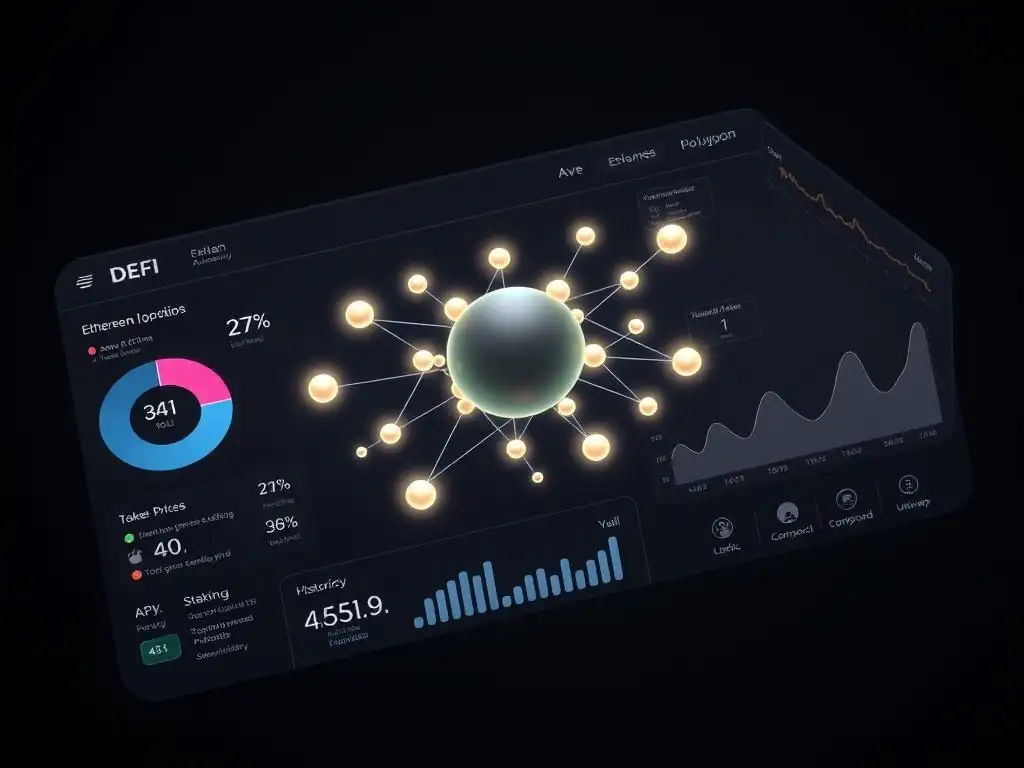
Best DeFi Portfolio Trackers
1. DeBank: Features and Benefits for Beginners
DeBank is a popular and user-friendly DeFi portfolio tracker that aggregates data from numerous protocols across various blockchains, including Ethereum, Polygon, Binance Smart Chain, and many others. It allows users to simply enter their public wallet address to view a comprehensive overview of their assets, including tokens held, liquidity pool positions, lending/borrowing activities, yield farming stakes, and NFTs. This aggregation capability is a major benefit for beginners who might be interacting with multiple DeFi protocols and blockchains simultaneously.
The platform provides detailed breakdowns of your positions within each protocol, showing the amount invested, current value, and often estimated earnings. It also offers features like token swap aggregators and a TVL ranking of protocols, helping users discover new opportunities and understand the market landscape. For beginners implementing DeFi investment tracking strategies, DeBank's intuitive interface and broad protocol coverage make it an excellent starting point for getting a clear, consolidated view of their scattered DeFi holdings without needing to manually visit each protocol's website.
2. Zapper: Managing Multiple Assets in One Place
Zapper is another widely used DeFi dashboard designed to simplify the process of managing assets across the decentralized ecosystem. Similar to DeBank, Zapper supports multiple blockchains and protocols, providing a unified view of your portfolio by simply connecting or entering your wallet address. It excels in presenting complex DeFi positions, such as LP tokens or staked assets, in an easily digestible format, showing the underlying assets and their current value.
Beyond tracking, Zapper also offers interactive features that allow users to manage their positions directly from the dashboard. This includes depositing or withdrawing liquidity, staking assets, and swapping tokens, although interacting directly might still incur gas fees. For users employing diverse DeFi investment tracking strategies involving various yield farming and liquidity providing activities, Zapper's ability to visualize and manage these complex positions from a single interface is a significant advantage, streamlining portfolio oversight.
3. CoinGecko: Analyzing Market Data Effectively
While primarily known as a cryptocurrency price tracking website, CoinGecko also offers useful features for DeFi investment tracking, particularly for analyzing market data related to DeFi tokens and protocols. Users can track the prices of thousands of cryptocurrencies, including a vast array of DeFi tokens, and view key metrics such as market cap, trading volume, and historical price charts. CoinGecko provides dedicated sections for DeFi, showing the total DeFi market cap and ranking protocols by TVL.
For effective DeFi investment tracking strategies, CoinGecko's data is invaluable for researching potential investments, monitoring the performance of tokens you hold, and understanding overall market trends. While it doesn't offer the detailed, wallet-specific portfolio breakdown of tools like DeBank or Zapper, its comprehensive market data, including information on tokenomics, historical data, and links to protocol websites, makes it an essential resource for supplementing your portfolio tracking efforts and conducting market analysis.
Comparing DeFi Wallets for Investment Tracking
1. MetaMask: User-Friendly Interface for Beginners
MetaMask is arguably the most popular non-custodial wallet for interacting with the Ethereum blockchain and EVM-compatible networks, making it a primary tool for most DeFi users. Its browser extension and mobile app provide a straightforward interface to manage Ether and other tokens. While not a dedicated portfolio tracker like DeBank, MetaMask allows users to view their token balances and transaction history directly within the wallet interface, offering a basic level of DeFi investment tracking.
For beginners, MetaMask's ease of use in connecting to various DeFi protocols is a significant advantage. It simplifies the process of signing transactions for swaps, staking, or providing liquidity. Although it doesn't automatically aggregate complex positions like LP tokens across different protocols, its integrated token list and transaction log provide a fundamental layer for tracking asset holdings and activity, forming a basic component of initial DeFi investment tracking strategies.
2. Trust Wallet: Mobile Solutions for DeFi Tracking
Trust Wallet, acquired by Binance, is a popular mobile-first non-custodial wallet that supports a wide range of cryptocurrencies and blockchains, including many prominent in the DeFi space. It offers a user-friendly mobile interface for managing assets and interacting with decentralized applications (dApps) through its integrated dApp browser. This makes it convenient for users who primarily manage their DeFi activities from their smartphones.
Similar to MetaMask, Trust Wallet provides basic asset tracking by displaying token balances and transaction history. While its dApp browser facilitates interaction with DeFi protocols, detailed position tracking within those protocols typically requires visiting the protocol's site or using a dedicated portfolio tracker. However, for users seeking a secure and convenient mobile solution for holding assets and initiating DeFi interactions, Trust Wallet serves as a key tool in their mobile-centric DeFi investment tracking strategies.
3. Gnosis Safe: Advanced Security for Your Investments
Gnosis Safe (now Safe) is a multi-signature wallet that offers enhanced security features, making it particularly suitable for managing larger amounts of capital or for groups managing funds together. A multi-sig wallet requires a predefined number of owners to approve a transaction before it can be executed (e.g., 2 out of 3 owners). This significantly reduces the risk of a single point of failure or unauthorized access compared to a standard single-key wallet like MetaMask or Trust Wallet.
While primarily focused on security, Gnosis Safe also provides a dashboard view of the assets held within the multi-sig wallet. It integrates with various DeFi protocols, allowing users to view and interact with their positions securely. For individuals or organizations prioritizing security in their DeFi investment tracking strategies, especially when dealing with substantial assets, Gnosis Safe offers robust protection, although its interface might be slightly less intuitive for beginners compared to single-user wallets.
Effective DeFi Investment Tracking Strategies
Setting Up Alerts for Market Movements
A proactive DeFi investment tracking strategy involves setting up alerts to stay informed about significant market movements or changes affecting your portfolio. Given the 24/7 nature and volatility of the crypto market, manually checking prices and protocol performance constantly is impractical. Automated alerts can notify you via email, push notification, or other channels when specific conditions are met, such as an asset reaching a target price, a sudden drop in the value of tokens in a liquidity pool, or a change in the APY of a yield farming position.
Various platforms and tools, including some of the portfolio trackers mentioned earlier or dedicated crypto alert services, offer customizable alert features. For instance, you could set an alert if the price of ETH drops below a certain threshold, potentially signaling a need to re-evaluate leveraged positions. Or, an alert about a significant decrease in the TVL of a protocol you use might indicate potential risks. Integrating alerts into your DeFi investment tracking strategies allows you to react promptly to market changes without constant manual monitoring, improving efficiency and risk management.
Utilizing Spreadsheets for Manual Tracking
Despite the availability of automated tools, utilizing spreadsheets remains a fundamental and highly customizable method for implementing DeFi investment tracking strategies, especially for beginners or those who prefer granular control. A spreadsheet allows you to manually record every transaction – deposits, withdrawals, swaps, staking, claiming rewards, paying gas fees – along with dates, amounts, and the value in fiat at the time of the transaction. This provides a detailed historical record of your activities.
With a spreadsheet, you can create custom formulas to calculate metrics important to you, such as the cost basis of your investments, realized gains or losses from selling assets or claiming rewards, and the total value of your portfolio over time. While time-consuming, manual tracking via spreadsheets offers unparalleled insight into the specifics of your DeFi journey and can be particularly useful for tax reporting purposes. It complements automated trackers by providing a deep dive into the mechanics and profitability of each individual transaction, enhancing your overall DeFi investment tracking capabilities.
Integrating APIs for Automated Tracking Solutions
For more advanced users or those with significant DeFi activity, integrating APIs (Application Programming Interfaces) offers the potential for highly automated and sophisticated DeFi investment tracking solutions. Many blockchain networks and DeFi protocols provide APIs that allow developers to programmatically access data, such as wallet balances, transaction histories, protocol positions, and market data. This enables the creation of custom dashboards or integration with specialized accounting software.
Using APIs requires technical knowledge or the use of platforms that leverage APIs to provide automated data feeds. Services exist that can pull data from your wallet address across various protocols and blockchains, automating the process of aggregating your positions and calculating performance metrics. While this approach is more complex than using off-the-shelf trackers or spreadsheets, it offers the highest degree of automation and customization for implementing comprehensive DeFi investment tracking strategies at scale, providing real-time or near real-time updates on your portfolio's status and performance.
Analyzing Your DeFi Investment Performance
Evaluating Returns: How to Calculate Your Gains
Calculating returns in DeFi can be more complex than in traditional finance due to variable yields, multiple income streams (like trading fees, staking rewards, and governance tokens), and fluctuating asset values. A fundamental method for DeFi investment tracking involves calculating your total portfolio value at different points in time and comparing it to your initial investment and subsequent deposits, accounting for withdrawals. For example, if you started with $10,000, deposited another $5,000 later, and your portfolio is now worth $18,000, your net gain is $18,000 - ($10,000 + $5,000) = $3,000.
To get a more granular view as part of your DeFi investment tracking strategies, you should track the performance of individual investments. For a liquidity pool position, this involves tracking the initial value of assets deposited, the value of LP tokens received, the amount and value of claimed rewards, and the value of assets withdrawn.
Comparing the final value received (initial deposit value + claimed rewards value - gas fees) to the initial value deposited gives you the net return for that specific activity. Remember to also account for the opportunity cost and the time value of money, although this adds further complexity.
Understanding Impermanent Loss in Liquidity Pools
Impermanent Loss (IL) is a critical concept to understand and track when providing liquidity to automated market maker (AMM) pools, a common DeFi activity. IL occurs when the price of your deposited assets changes relative to each other after you deposit them in an LP pool. The greater the price difference, the greater the impermanent loss.
It's called "impermanent" because the loss is only realized if you withdraw your assets from the pool; if the prices return to their original ratio when you deposited, the impermanent loss disappears. However, in volatile markets, IL can significantly erode potential gains from trading fees or yield farming rewards.
Effective DeFi investment tracking strategies for LP positions must include monitoring the potential impermanent loss. Tools like some portfolio trackers or dedicated IL calculators can estimate this based on the initial deposit ratio and the current price ratio of the assets in the pool.
For instance, if you deposited ETH and USDC when 1 ETH was worth 2000 USDC, and now 1 ETH is worth 3000 USDC, you would have fewer ETH and more USDC than if you had simply held the assets outside the pool, resulting in impermanent loss. Tracking IL helps you assess if the fees and rewards earned are sufficient to compensate for the loss compared to simply holding the assets.
Case Study: Successful DeFi Investment
Consider a simplified case study for illustrating DeFi investment tracking strategies. Sarah decides to participate in a yield farming opportunity on a decentralized exchange, providing liquidity to an ETH/DAI pool. She initially deposits 1 ETH (valued at $2500) and 2500 DAI, totaling $5000. The pool offers trading fees and rewards paid in the DEX's governance token, let's call it DEFITOKEN. Sarah uses a DeFi portfolio tracker to monitor her position daily.
Over three months, the price of ETH fluctuates, ending at $3000. The portfolio tracker shows her LP position is now worth $5200, reflecting some impermanent loss as the ETH price increased relative to DAI. However, she has also claimed 100 DEFITOKEN rewards, which are currently trading at $5 each. Her total claimed rewards are worth $500. Accounting for $50 in gas fees over the period for claiming rewards and monitoring, her total return is ($5200 portfolio value + $500 claimed rewards) - ($5000 initial deposit + $50 gas fees) = $650. This detailed tracking allows Sarah to see that despite some impermanent loss, the trading fees and DEFITOKEN rewards resulted in a profitable outcome, validating her DeFi investment tracking strategies and informing future decisions.
Frequently Asked Questions
What are the main challenges in tracking DeFi investments?
The decentralized nature of DeFi presents challenges, including the lack of standardized reporting and the fragmented nature of data across various platforms. This necessitates using specialized tools or manually compiling information.
Why is tracking DeFi investment performance important?
Tracking is crucial for understanding profitability, identifying successful strategies, and managing risk. Without it, investors operate blindly and can't make informed decisions about their DeFi portfolio allocation.
What are some popular DeFi investment tracking tools?
Popular tools include Zapper, DeBank, and Zerion, which aggregate data from multiple DeFi protocols. Many also offer features like portfolio performance visualization and tax reporting assistance.
How can I manually track my DeFi investments if I don't want to use a tool?
Manually tracking involves recording all transactions (deposits, withdrawals, swaps, etc.) in a spreadsheet. You'll need to monitor token prices and calculate investment gains/losses periodically, which can be time-consuming.
What should I consider when choosing a DeFi investment tracking strategy?
Consider your technical expertise, the complexity of your portfolio, and your budget. Some tools offer free versions with limited features, while others require a subscription. Choose what best suits your needs.
Final Reflection: Empowering Your DeFi Journey
The complexities of decentralized finance can feel overwhelming, but as we've explored in this guide to DeFi investment tracking strategies, understanding and monitoring your portfolio is paramount to success. In today's rapidly evolving landscape, where new protocols and opportunities emerge daily, a proactive approach to tracking your DeFi investments isn't just beneficial; it's essential for navigating the inherent risks and maximizing potential returns.
This journey into DeFi investment tracking has highlighted not only the practical tools and techniques available but also the underlying importance of financial literacy and responsible participation in this nascent ecosystem. The ability to accurately assess performance, identify trends, and adapt your strategies is crucial for long-term success in DeFi. In the world of crypto, knowledge is power. Tracking your investments is the key to unlocking that power.
This quote encapsulates the sentiment that informed decision-making, driven by diligent tracking, is the cornerstone of a thriving DeFi portfolio.
Now, armed with these insights and strategies, it's time to take control of your DeFi investments. Don't let the complexities of the space deter you. Embrace the tools, refine your tracking methods, and continuously learn and adapt. Your journey to financial empowerment in the decentralized world begins with a single step: start tracking your DeFi investments today, and watch your understanding – and your portfolio – grow.
Unleash Your DeFi Potential: Start Tracking Smarter Today!
Thank you for exploring the world of DeFi tracking with Blockchain Trends. We hope this guide has helped you understand how to monitor your investments effectively and improve your performance. Ready to take control of your DeFi journey? Here's how:
- Immediately set up a tracking spreadsheet or begin using a DeFi portfolio tracker to keep an eye on your key investments. Staying organized is essential for staying ahead!
- Explore different DeFi platforms to find opportunities for higher yields and better diversification, and share your thoughts and experiences in the comments.
- Share this guide with friends and fellow investors who could benefit from a clearer understanding of DeFi tracking.
What are the first three DeFi investments you'll be monitoring, and why? Share your strategy in the comments below!
Leave a Reply