
Bitcoin Investment and Alternative Cryptocurrencies: Diversification within Crypto


Welcome to Blockchain Trends, your compass in the ever-evolving world of decentralized innovation. Are you ready to look beyond Bitcoin and explore the hidden gems within the crypto universe? This week, we dive deep into Bitcoin diversification crypto strategies, uncovering how to strategically expand your portfolio beyond the original cryptocurrency. Discover how to navigate the complexities of DeFi, enterprise blockchain adoption, and the crucial regulatory landscape – all while optimizing your crypto investments. Intrigued? Keep reading to unlock the secrets to a more resilient and profitable crypto portfolio!
-
Bitcoin Investment and Alternative Cryptocurrencies: Diversification within Crypto
- Why Diversify Your Crypto Portfolio Beyond Just Bitcoin?
- Understanding Crypto Diversification Strategies for Bitcoin Holders
- The Risks of a Bitcoin-Only Portfolio
- Benefits of Adding Altcoins to Your Bitcoin Investments
- Identifying Potential Altcoins for Diversification
- Categories of Altcoins for Strategic Diversification
- Large-Cap Altcoins: Stability and Growth Potential (e.g., Ethereum, Cardano, Solana)
- DeFi Protocols and Tokens: Participating in Decentralized Finance
-
Frequently Asked Questions
- How can diversifying within the crypto space help Bitcoin investors?
- What are some popular alternative cryptocurrencies to consider for Bitcoin diversification?
- What factors should investors consider when evaluating alternative cryptos for Bitcoin diversification?
- How does DeFi play a role in Bitcoin diversification crypto strategies?
- What are the regulatory considerations when using Bitcoin diversification crypto strategies?
- Final Reflection: Embracing the Evolving Crypto Landscape
- Ignite Your Crypto Portfolio: Explore Beyond Bitcoin!
Bitcoin Investment and Alternative Cryptocurrencies: Diversification within Crypto
Why Diversify Your Crypto Portfolio Beyond Just Bitcoin?
While Bitcoin remains the leading cryptocurrency by market capitalization and is often seen as a store of value akin to "digital gold," concentrating an entire crypto investment portfolio solely in BTC exposes investors to significant risks. The cryptocurrency market, though maturing, is highly volatile and influenced by a multitude of factors, including regulatory news, technological developments, macroeconomic trends, and market sentiment.
Relying on a single asset, even one as prominent as Bitcoin, means that the portfolio's performance is entirely tied to that asset's specific price movements and vulnerabilities. This lack of diversification can lead to substantial drawdowns during periods when Bitcoin underperforms or faces unique challenges.
Furthermore, the crypto ecosystem is vast and constantly evolving, with thousands of alternative cryptocurrencies (altcoins) emerging with distinct use cases, technologies, and market dynamics. Many of these altcoins operate in sectors like decentralized finance (DeFi), non-fungible tokens (NFTs), supply chain management, or privacy-focused applications, offering growth potential independent of Bitcoin's primary narrative.
Implementing Bitcoin diversification crypto strategies allows investors to potentially capture growth in these emerging areas, reduce overall portfolio volatility by spreading risk across different asset classes within crypto, and improve risk-adjusted returns over the long term. Diversification is a fundamental principle of sound investment, and applying it to crypto, even starting from a Bitcoin base, is crucial for navigating this complex market effectively.
Understanding Crypto Diversification Strategies for Bitcoin Holders
For investors primarily holding Bitcoin, implementing effective crypto diversification strategies involves consciously allocating a portion of their capital to other digital assets. This isn't about abandoning Bitcoin but rather about supplementing it with assets that ideally have different risk profiles, use cases, or correlation patterns relative to BTC.
A common approach is to diversify across different categories of altcoins, such as large-cap cryptocurrencies, tokens associated with specific blockchain sectors like DeFi or NFTs, or even smaller, more speculative assets. The goal is to build a portfolio where the performance of one asset class can potentially offset negative movements in another.
Successful Bitcoin diversification crypto strategies require careful research and a clear investment thesis for each altcoin included. Simply buying random altcoins is not diversification; it's speculation that can increase risk. Investors should consider factors like an altcoin's market capitalization, trading volume, underlying technology, development team, community support, and real-world utility.
Rebalancing the diversified portfolio periodically is also a critical component. As asset prices shift, the original allocation percentages will change. Rebalancing involves selling some assets that have grown significantly and buying more of those that have lagged (while maintaining the investment thesis), bringing the portfolio back to its target allocation and disciplined risk management.
The Risks of a Bitcoin-Only Portfolio
Holding a portfolio consisting solely of Bitcoin, while simple, concentrates risk significantly. Bitcoin's price, despite its large market cap (often exceeding $500 billion, sometimes reaching over $1 trillion), is subject to dramatic swings. For example, after reaching an all-time high near $69,000 in November 2021, Bitcoin experienced a significant downturn throughout 2022, dropping below $20,000 at times – a decline of over 70%. An investor holding only Bitcoin would have seen their entire portfolio value plummet during this period. While Bitcoin has shown resilience and recovered significantly from past crashes, its volatility remains a core characteristic.
Beyond general market volatility, a Bitcoin-only portfolio is susceptible to risks specific to Bitcoin itself. These can include potential regulatory crackdowns focused on Bitcoin's use cases or energy consumption, competition from newer blockchain technologies, or issues related to its specific network mechanics (like transaction fees or confirmation times during peak demand). By not diversifying into other assets, investors miss out on opportunities presented by innovations happening elsewhere in the blockchain space.
For instance, the explosion of decentralized applications and NFTs primarily occurred on platforms like Ethereum, offering growth vectors distinct from Bitcoin's store-of-value narrative. Implementing Bitcoin diversification crypto strategies helps mitigate these concentrated risks and provides exposure to a broader range of potential outcomes within the digital asset landscape.
Benefits of Adding Altcoins to Your Bitcoin Investments
Adding selected altcoins to a portfolio primarily composed of Bitcoin offers several potential advantages. Firstly, it can help reduce overall portfolio volatility. While many altcoins are highly correlated with Bitcoin, especially during major market movements, some may exhibit different price behaviors over certain periods or react differently to specific news events related to their niche.
For example, a privacy-focused coin might react more strongly to regulatory news impacting anonymity than Bitcoin does, while a DeFi token's price might be heavily influenced by activity and innovation within the decentralized finance sector, sometimes independent of Bitcoin's immediate price action. This variation can smooth out portfolio returns compared to a single-asset holding.
Secondly, altcoins can offer significantly higher growth potential than Bitcoin, albeit with commensurately higher risk. While Bitcoin's market cap is already massive, limiting its percentage growth potential compared to smaller assets, many altcoins are still in earlier stages of development and adoption. A successful altcoin project with a strong use case and growing network effect could see its market capitalization increase by hundreds or even thousands of percent, a feat far less likely for Bitcoin at its current scale.
By strategically allocating a small portion of a Bitcoin-heavy portfolio to promising altcoins, investors can gain exposure to these high-growth opportunities. This is a key component of effective Bitcoin diversification crypto strategies – balancing the relative stability (within crypto) of Bitcoin with the aggressive growth potential of carefully chosen altcoins.
Identifying Potential Altcoins for Diversification
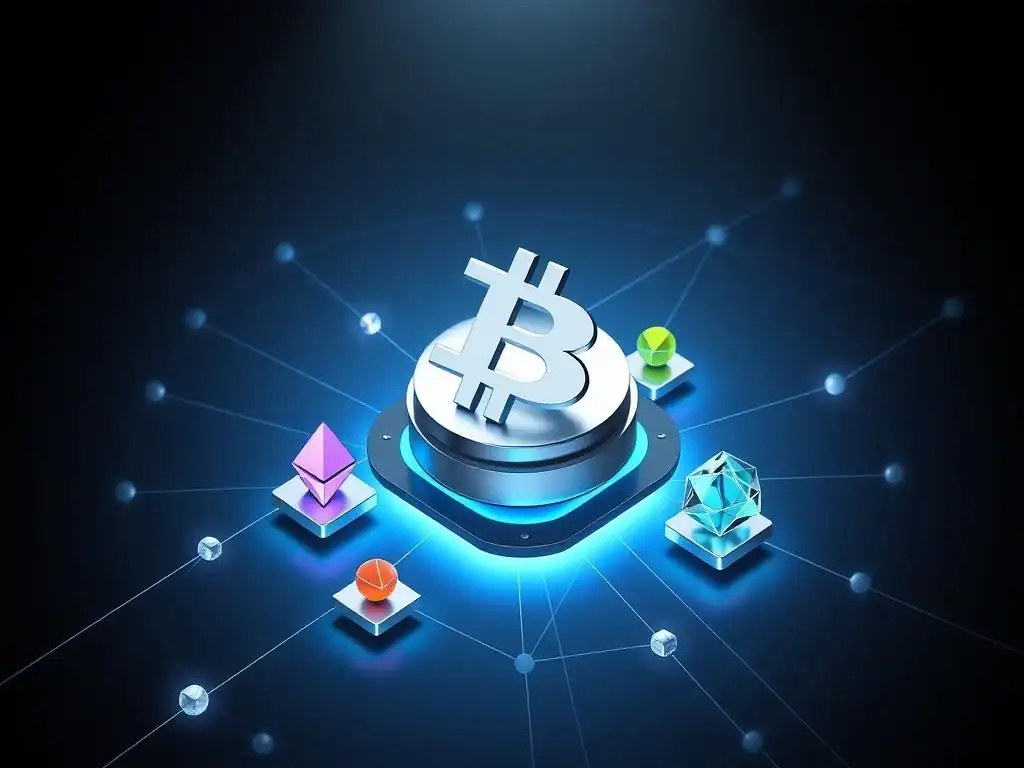
Identifying suitable altcoins for diversification requires thorough research and a critical evaluation process. It's not enough to simply pick coins that have recently pumped in price. Investors should start by understanding the different categories of altcoins and their underlying technologies and use cases. Key factors to research include the project's whitepaper, the problem it aims to solve, the strength and experience of the development team, the size and activity of its community, and the clarity of its roadmap. Look for projects with working products or significant partnerships, rather than just abstract ideas.
Furthermore, analyze the altcoin's tokenomics – how the token is distributed, its supply schedule, and what utility it has within the project's ecosystem. A token with strong utility, like being required for network fees, staking, or governance, often has more sustainable demand than a simple speculative token. Consider the project's competitive landscape; are there other projects attempting to solve the same problem?
If so, what gives this altcoin a competitive edge? Examining metrics like trading volume across reputable exchanges and the distribution of token holdings can also provide insights into market health and potential manipulation risks. Applying these research steps is fundamental to building robust Bitcoin diversification crypto strategies that go beyond mere speculation.
Categories of Altcoins for Strategic Diversification
To implement effective Bitcoin diversification crypto strategies, it's helpful to categorize altcoins based on their function or the sector they operate within. Diversifying across different categories can provide exposure to various growth drivers and technological trends within the crypto space. Common categories include:
- Layer 1 Blockchains: These are foundational blockchains like Ethereum, Cardano, Solana, Polkadot, etc., which provide the infrastructure for decentralized applications. Investing in L1 tokens gives exposure to the growth of entire ecosystems.
- Decentralized Finance (DeFi): Tokens associated with protocols offering financial services like lending, borrowing, trading, and yield farming without intermediaries (e.g., Uniswap, Aave, MakerDAO).
- Non-Fungible Tokens (NFTs) & Metaverse: Tokens related to platforms or projects focused on digital collectibles, gaming, and virtual worlds (e.g., Decentraland, The Sandbox).
- Oracles: Projects that provide external data to smart contracts (e.g., Chainlink).
- Privacy Coins: Cryptocurrencies designed for anonymous transactions (e.g., Monero, Zcash).
- Utility Tokens: Tokens that grant access to a specific product or service.
Strategic diversification involves selecting promising projects from different categories rather than concentrating all altcoin investments within a single niche like DeFi or L1s. This approach helps spread risk across various segments of the crypto market, each potentially influenced by different factors.
Large-Cap Altcoins: Stability and Growth Potential (e.g., Ethereum, Cardano, Solana)
Large-cap altcoins, typically those ranking among the top 10 or 20 by market capitalization (excluding Bitcoin), offer a balance of relative stability within the volatile altcoin market and significant growth potential. These projects are generally more established, have larger development teams, stronger brand recognition, and greater liquidity compared to smaller-cap altcoins. Examples include Ethereum (ETH), which consistently holds the second-largest market cap after Bitcoin, Cardano (ADA), and Solana (SOL). Including these in Bitcoin diversification crypto strategies provides exposure to major blockchain ecosystems beyond Bitcoin.
Ethereum, for instance, powers the vast majority of the DeFi and NFT markets. Investing in ETH provides exposure to the growth of these sectors. As of recent data, Ethereum's market cap often exceeds $200-$300 billion, making it a significant asset class in itself.
Cardano focuses on a research-driven approach to blockchain development and has a substantial community, while Solana is known for its high transaction throughput and speed. While these assets are still volatile, their larger size and established networks often make them less susceptible to the extreme pumps and dumps seen in micro-cap altcoins, offering a potentially less risky way to diversify a Bitcoin portfolio into the broader altcoin market.
DeFi Protocols and Tokens: Participating in Decentralized Finance
Decentralized Finance (DeFi) represents a significant and rapidly growing sector within the blockchain ecosystem, aiming to replicate traditional financial services like lending, borrowing, trading, and asset management using smart contracts on blockchains, primarily Ethereum. Investing in tokens associated with major DeFi protocols is a popular way to implement Bitcoin diversification crypto strategies, offering exposure to this innovative financial paradigm. Tokens like UNI (Uniswap), AAVE (Aave), MKR (MakerDAO), and COMP (Compound) represent ownership, governance rights, or utility within their respective protocols.
The DeFi sector has seen explosive growth, with the total value locked (TVL) in DeFi protocols often reaching tens of billions of dollars. This growth is driven by demand for decentralized financial services, which can offer higher yields, greater transparency, and accessibility compared to traditional finance.
However, investing in DeFi tokens comes with unique risks, including smart contract vulnerabilities, regulatory uncertainty, and the complexity of the protocols themselves. Despite these risks, the potential for high returns and exposure to a transformative technology makes DeFi tokens a compelling category for investors looking to diversify their Bitcoin holdings and participate in the future of finance.
Frequently Asked Questions
How can diversifying within the crypto space help Bitcoin investors?
Diversification helps mitigate risk by spreading investments across different assets. This reduces the impact of Bitcoin's volatility and allows investors to explore alternative crypto opportunities.
What are some popular alternative cryptocurrencies to consider for Bitcoin diversification?
Examples include Ethereum for smart contracts, Cardano for its proof-of-stake consensus, and Solana for its high transaction speed. Research each thoroughly before investing.
What factors should investors consider when evaluating alternative cryptos for Bitcoin diversification?
Consider the project's fundamentals, market capitalization, liquidity, and the team behind it. Assess the risk tolerance and investment goals.
How does DeFi play a role in Bitcoin diversification crypto strategies?
DeFi offers opportunities to earn passive income on Bitcoin holdings through lending, staking, and yield farming. However, understand the associated risks, like impermanent loss.
What are the regulatory considerations when using Bitcoin diversification crypto strategies?
Regulations surrounding cryptocurrencies are constantly evolving. Stay informed about tax implications and potential compliance requirements in your jurisdiction when investing in alternative cryptos.
Final Reflection: Embracing the Evolving Crypto Landscape
The exploration of Bitcoin diversification crypto strategies reveals not just a path to potentially mitigate risk, but a fundamental shift in how we perceive and interact with the future of finance. The strategies discussed, from altcoin allocation to DeFi participation, are not merely theoretical exercises; they represent real-world tools for navigating the increasingly complex and dynamic digital asset market.
The rise of alternative cryptocurrencies and the growing sophistication of investment strategies have profoundly impacted the cultural and social landscape surrounding finance. This evolution underscores the importance of continuous learning and adaptation in a space that rewards informed decision-making. The only constant in life is change,
as Heraclitus wisely stated, and this holds especially true in the rapidly evolving world of cryptocurrency.
As we conclude this exploration of Bitcoin diversification crypto strategies, I invite you to reflect on your own financial journey. Consider how these insights can empower you to make more informed decisions, not just in the crypto space, but in all aspects of your financial life. The future of finance is being written now – will you be a passive observer, or an active participant shaping your own destiny?
Ignite Your Crypto Portfolio: Explore Beyond Bitcoin!
Thank you for exploring the world of cryptocurrencies and alternative digital assets! You've gained valuable insights into diversification and risk management in the crypto space. Now, it's time to put that knowledge into action and take control of your financial future.
Here's how you can continue your journey:
- Commit to researching one altcoin each week for the next month, focusing on projects with real-world applications. Understanding the landscape is the first step toward smart diversification.
- Consider sharing this article with a friend or colleague interested in learning more about the crypto market. Knowledge is power, and sharing helps build a stronger community.
- Brainstorm three different assets outside of cryptocurrencies you could diversify into, listing the advantages and disadvantages of each.
What unexpected cryptocurrency or asset are you most excited to research, and why? Share your insights in the comments below!
Leave a Reply