
Ethereum vs. Bitcoin: Which Crypto Giant is the Better Investment?

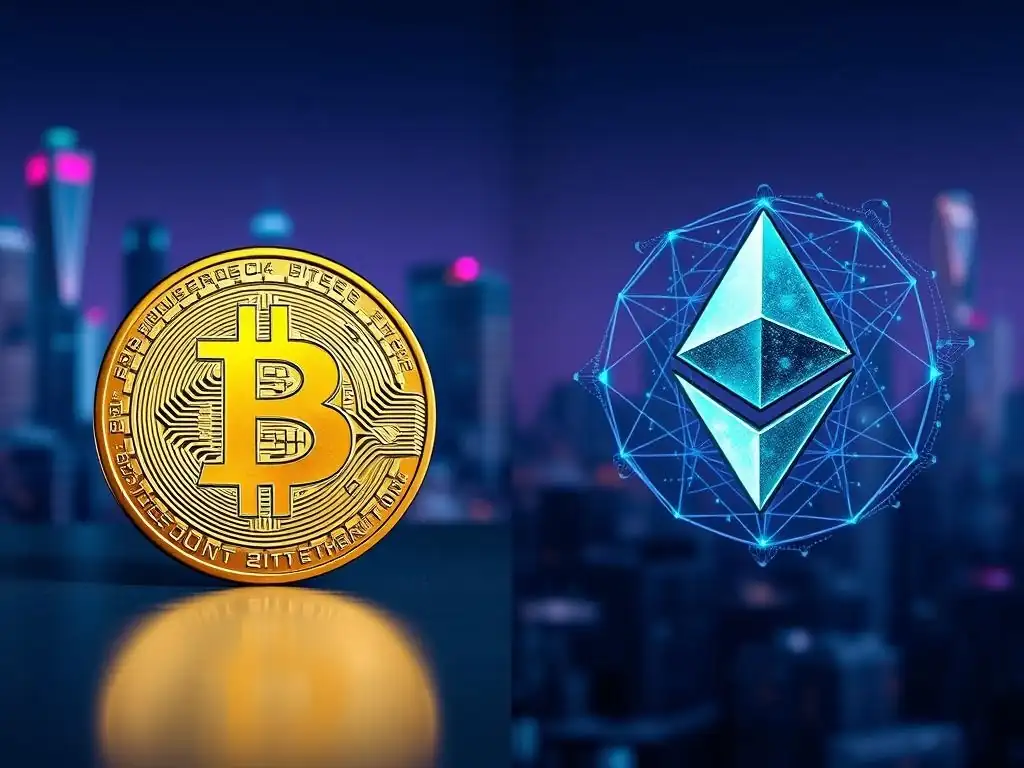
Welcome to Blockchain Trends, your guide to navigating the evolving world of decentralized technology.
Ever wondered which crypto titan reigns supreme in the investment arena? Dive into our in-depth analysis of Ethereum vs. Bitcoin investment and discover the key differences, potential risks, and long-term rewards that separate these digital behemoths. Prepare to unravel the complexities and gain the insights you need to make informed decisions in the exciting realm of crypto investing.
- Ethereum vs. Bitcoin: Which Crypto Giant is the Better Investment?
-
Frequently Asked Questions
- What are the key differences between Ethereum and Bitcoin as potential investments?
- How does the regulatory landscape affect Ethereum versus Bitcoin investments?
- What are the potential risks associated with investing in Ethereum compared to Bitcoin?
- How do Ethereum and Bitcoin differ in terms of their underlying technology and use cases?
- Which crypto giant, Ethereum or Bitcoin, offers greater potential for future growth, and why?
- Final Reflection: Navigating the Crypto Frontier
- Chart Your Crypto Course: Begin Your Investment Journey!
Ethereum vs. Bitcoin: Which Crypto Giant is the Better Investment?
Deciding between Bitcoin (BTC) and Ethereum (ETH) is a fundamental question for many entering the world of digital assets. Both are titans in the cryptocurrency space, yet they serve different purposes and possess distinct characteristics that appeal to various types of investors. Understanding these differences is crucial when evaluating an Ethereum vs Bitcoin investment strategy. While Bitcoin pioneered the concept of decentralized digital money, Ethereum introduced a platform for decentralized applications, fundamentally expanding the potential of blockchain technology.
This section delves into the origins, purpose, and key features of Bitcoin, laying the groundwork for a comprehensive comparison and helping investors evaluate its role in a diversified digital asset portfolio. Analyzing Bitcoin's historical performance, its established market position, and its perceived value proposition are essential steps before comparing it directly with Ethereum for investment purposes. The ultimate goal is to provide clarity on what makes Bitcoin a compelling asset for many and how it contrasts with the ecosystem built around Ethereum.
Understanding Bitcoin: The Original Digital Asset
Bitcoin burst onto the scene in 2009, introduced by the pseudonymous Satoshi Nakamoto. It was the first successful implementation of a decentralized, peer-to-peer electronic cash system, designed to operate without intermediaries like banks or payment processors. This innovation addressed long-standing issues with traditional finance, such as censorship, double spending, and reliance on trusted third parties. Its creation marked a pivotal moment, demonstrating the feasibility of a digital currency controlled by its users and governed by cryptographic principles rather than central authorities.
The initial vision for Bitcoin was primarily as a medium of exchange, a digital form of cash for everyday transactions. However, its trajectory has evolved significantly over the past decade. While still usable for payments, its characteristics—particularly its fixed supply and increasing adoption—have led many to view it predominantly through the lens of a store of value, a digital asset comparable to traditional commodities like gold. This shift in perception is a critical factor when considering an Ethereum vs Bitcoin investment comparison.
What is Bitcoin (BTC) and Its Purpose?
Bitcoin (BTC) is the native cryptocurrency of the Bitcoin network. It is a decentralized digital currency that operates on a blockchain, a distributed ledger that records all transactions across a network of computers. Unlike traditional currencies issued by central banks, Bitcoin's supply is capped at 21 million coins, and new coins are introduced through a process called mining, which involves solving complex computational puzzles. This fixed supply is a core tenet of its design, intended to prevent inflation and preserve its value over time.
The primary purpose of Bitcoin, as outlined in Nakamoto's white paper, was to create "an electronic payment system based on cryptographic proof instead of trust." It aimed to provide a way for individuals anywhere in the world to send and receive value securely and transparently without needing permission from or relying on a financial institution. While its use as a direct payment method has faced challenges related to scalability and transaction costs for small purchases, its role as a robust, censorship-resistant digital asset for larger transfers and wealth storage has solidified its position in the global financial landscape.
Bitcoin as a Store of Value: Digital Gold
Over the years, Bitcoin has increasingly been characterized as "digital gold." This comparison stems from several key attributes it shares with the precious metal. Both are scarce assets with a limited supply. Gold must be mined from the earth, while Bitcoin must be mined computationally, with the rate of new supply decreasing over time (halving approximately every four years). Both are durable, divisible (Bitcoin can be divided into tiny fractions called satoshis), portable (Bitcoin can be transferred globally with relative ease), and difficult to counterfeit.
Furthermore, Bitcoin operates outside the control of any single government or central bank, making it a potential hedge against inflation and economic instability, similar to how some investors view gold. Its price is determined purely by supply and demand on open markets worldwide. This decentralized nature and resistance to confiscation or censorship appeal to investors seeking an asset that is independent of traditional financial systems and governmental policies. This perceived role as a store of value is a major driver for long-term Bitcoin investment.
Key Features of the Bitcoin Blockchain

The Bitcoin blockchain is the technological backbone that enables the cryptocurrency's existence and functionality. It is a public, immutable ledger where every Bitcoin transaction is recorded and verified. The blockchain is composed of blocks of transactions linked together chronologically using cryptography, forming a chain. Once a transaction is added to a block and that block is added to the chain, it is virtually impossible to alter or remove it, ensuring the integrity and transparency of the network.
A critical feature is its consensus mechanism, known as Proof-of-Work (PoW). Miners use computational power to validate transactions and add new blocks to the chain.
This process is energy-intensive but provides a high level of security against malicious attacks, as it would require an attacker to control a majority of the network's computing power (a 51% attack), which is economically prohibitive given the scale of the network. Other key features include its pseudonymous nature (transactions are linked to addresses, not identities), its open-source code, and the predetermined, fixed supply limit of 21 million BTC, which is hardcoded into the protocol.
Why Investors Consider Bitcoin for Long-Term Holdings
Many investors are drawn to Bitcoin for long-term holdings due to its unique combination of characteristics and its position in the crypto market. As the first and most well-known cryptocurrency, it benefits from a significant first-mover advantage, a large and established network effect, and the highest liquidity among digital assets. Its brand recognition and widespread availability on exchanges make it an accessible entry point for new investors. This established status is a major consideration when comparing it to newer assets like Ethereum for a long-term Ethereum vs Bitcoin investment strategy.
The narrative of Bitcoin as "digital gold" also plays a significant role. In an era of increasing global debt and potential currency devaluation, Bitcoin's fixed supply and decentralized nature are seen by many as a compelling hedge. Investors looking to diversify their portfolios away from traditional assets or protect against inflationary pressures often allocate a portion of their capital to Bitcoin with a long-term horizon. The belief in its continued adoption by individuals, institutions, and even corporations further fuels the conviction that its value will appreciate over time, despite its inherent price volatility.
Frequently Asked Questions
What are the key differences between Ethereum and Bitcoin as potential investments?
Bitcoin is primarily seen as a digital store of value and a hedge against inflation. Ethereum, on the other hand, aims to be a decentralized computing platform supporting a wide range of applications, including DeFi.
How does the regulatory landscape affect Ethereum versus Bitcoin investments?
Currently, both face regulatory scrutiny, but the regulatory clarity around Bitcoin is generally more advanced. Uncertainty around Ethereum's security status (is it a security or not?) continues to be a concern for some investors.
What are the potential risks associated with investing in Ethereum compared to Bitcoin?
Ethereum's complexity and its transition to Proof-of-Stake (PoS) introduce potential risks related to network stability and centralization concerns. Bitcoin's risks are more focused on market volatility and long-term adoption.
How do Ethereum and Bitcoin differ in terms of their underlying technology and use cases?
Bitcoin's technology is designed for secure peer-to-peer transactions. Ethereum's technology supports smart contracts and decentralized applications (dApps), enabling a broader range of use cases.
Which crypto giant, Ethereum or Bitcoin, offers greater potential for future growth, and why?
While both have growth potential, Ethereum's broader functionality and role in DeFi suggest it could have greater growth potential, but this comes with increased risk. Bitcoin's simplicity and first-mover advantage also make it a contender.
Okay, here's a final reflection you can use for your "Ethereum vs. Bitcoin: Which Crypto Giant is the Better Investment?" article, designed to resonate with readers and encourage further thought:
The debate surrounding Ethereum vs. Bitcoin investment remains incredibly pertinent in today's rapidly evolving financial landscape. While this article has explored the nuances of each cryptocurrency, highlighting their strengths and weaknesses, the ultimate decision rests on individual risk tolerance, investment goals, and a deep understanding of the underlying technology. The future of finance is being written now, and these two giants are undoubtedly key players.
The influence of both Bitcoin and Ethereum on the cultural and social landscape is undeniable. Their very existence challenges traditional financial systems and empowers individuals with greater control over their assets. The blockchain is more than just a technology. It's a social and political movement.
This quote encapsulates the transformative potential of these technologies, pushing us to reconsider established norms and explore new possibilities for economic empowerment and decentralized governance.
As you navigate the complex world of cryptocurrency investment, remember that knowledge is your greatest asset. Reflect on the information presented here, consider your own financial circumstances, and approach the future with informed optimism. The crypto frontier is vast and uncharted, but with careful planning and a willingness to learn, you can chart your own course toward financial independence.
Okay, here's a CTA for an article titled "Ethereum vs. Bitcoin: Which Crypto Giant is the Better Investment?" on a website called "Blockchain Trends" with the domain "blockchaintrends.org":
Chart Your Crypto Course: Begin Your Investment Journey!
Thanks for diving into the world of crypto giants with us! We hope this breakdown of Ethereum and Bitcoin has given you the insights you need to make informed decisions. Now, let's put that knowledge into action:
- Dive into your crypto journey by doing further research into the technology and market trends of either Bitcoin or Ethereum - this tailored research will solidify your knowledge and identify potential opportunities.
- Explore Blockchain Trend's analysis on the latest crypto market to spot emerging signals that might influence your investments.
- Share this article with your network and spark a discussion on which crypto asset they think has the brightest future!
Which crypto giant are you most excited to invest in, and what are the key factors influencing your decision? Let's discuss in the comments below!
Leave a Reply