
Liquidity Pools in DeFi: Beginner Insights into Earning Trading Fees

Welcome to Blockchain Trends, your compass in the rapidly evolving world of decentralized technologies. Beyond the headlines about cryptocurrencies, lies a universe of innovation. Intrigued by the potential of DeFi liquidity pools and how they're reshaping the financial landscape? Our insights begin here. Dive into our analysis to uncover how you can explore the possibilities of DeFi liquidity pool earning and the role they play in the future of finance. Let's explore together.
- What is a DeFi Liquidity Pool? Understanding the Basics
- How to Earn Trading Fees by Providing Liquidity in DeFi
- Step-by-Step Guide to DeFi Liquidity Pool Earning
- Maximizing Your DeFi Liquidity Pool Earnings
- Risks of Providing Liquidity in DeFi
-
Frequently Asked Questions
- What exactly is a DeFi liquidity pool and how does it function?
- How can I earn trading fees by participating in a DeFi liquidity pool?
- What are the primary risks associated with participating in a DeFi liquidity pool?
- What are some key factors to consider when choosing a DeFi liquidity pool to invest in?
- How does regulation impact DeFi liquidity pools and my potential earnings?
- Final Reflection: Embracing the Evolving Landscape of DeFi
What is a DeFi Liquidity Pool? Understanding the Basics
Decentralized Finance (DeFi) has introduced innovative ways for users to interact with financial services without intermediaries. At the core of many DeFi applications, particularly decentralized exchanges (DEXs), are liquidity pools. A liquidity pool is essentially a shared pot of cryptocurrency tokens locked in a smart contract. These pools facilitate trading by providing the necessary assets for users to swap one token for another directly on the blockchain. Instead of relying on traditional order books where buyers and sellers must be matched, users trade against the assets within the pool.
The primary function of these pools is to ensure there is always liquidity available for trades. Without sufficient assets in the pools, large trades would cause significant price slippage, making DEXs impractical for many users. Anyone holding the required tokens can contribute to these pools, becoming a liquidity provider (LP) and, in return, earning a portion of the trading fees generated by the pool. This mechanism is fundamental to the operation of automated market makers (AMMs), which power the majority of today's DEX activity and enable the concept of DeFi liquidity pool earning.
Automated Market Makers (AMMs) Explained
Automated Market Makers (AMMs) are protocols that use mathematical formulas to price assets in liquidity pools, eliminating the need for traditional buyers and sellers to create markets. Instead, the price of an asset pair within a pool is determined by the ratio of the two assets it contains. For example, in an ETH-DAI pool, if someone buys ETH using DAI, the amount of DAI in the pool increases while the amount of ETH decreases. This shifts the ratio, making ETH relatively more expensive and DAI relatively cheaper according to the AMM's algorithm.
Popular AMM models, like the constant product formula used by Uniswap v2 ( x * y = k, where x and y are the quantities of the two tokens and k is a constant), ensure that the product of the quantities of the two tokens always remains the same before and after a trade (minus the trading fee). More advanced models, such as those used in Uniswap v3 or Curve Finance, introduce concepts like concentrated liquidity or stablecoin-specific formulas to improve capital efficiency and reduce slippage for certain asset types. Understanding the specific AMM model is crucial for providers interested in maximizing their DeFi liquidity pool earning potential and managing associated risks.
How Trading Fees are Generated in Liquidity Pools
Trading fees are the primary incentive for users to provide liquidity to DeFi pools. When a trader performs a token swap using a liquidity pool on a DEX, they typically pay a small fee on the transaction amount. This fee is automatically deducted from the trade and added back into the liquidity pool itself, increasing the total value of the assets held within the pool. The fee percentage varies depending on the DEX and the specific pool, but common rates range from 0.01% to 1%.
For instance, on Uniswap v2, the standard trading fee is 0.3% of the trade value. If a user swaps 1000 DAI for ETH, a 3 DAI fee is added to the pool. This collected fee is then distributed proportionally among all liquidity providers based on their share of the total pool's liquidity. This mechanism allows LPs to generate passive income from the trading activity occurring within the pools they contribute to, forming the basis of DeFi liquidity pool earning. The higher the trading volume in a specific pool, the more fees are generated and distributed among LPs.
How to Earn Trading Fees by Providing Liquidity in DeFi
Providing liquidity to DeFi pools is the direct method to earn a share of the trading fees generated on decentralized exchanges. Instead of actively trading, you act as a market maker, contributing assets that facilitate trades for others. This passive income stream can be an attractive aspect of DeFi investing, especially for those looking to utilize idle crypto assets. The process involves depositing an equal value of two different tokens into a designated liquidity pool on a DEX.
By supplying both sides of a trading pair, you help ensure that traders can always swap between those two assets. For example, if you provide liquidity to an ETH-USDC pool, you would deposit an equivalent dollar value of both ETH and USDC. This contribution is essential for the smooth operation of the DEX, as it reduces slippage for traders and keeps the market functioning. In return for this service, the smart contract automatically allocates a portion of every trade fee collected by that specific pool to you, proportional to the amount of liquidity you have provided relative to the total in the pool.
The Role of Liquidity Providers (LPs)
Liquidity providers (LPs) are the backbone of the AMM model in DeFi. They are individuals or entities who deposit pairs of tokens into liquidity pools, thereby supplying the capital necessary for decentralized trading to occur. Without LPs, liquidity pools would be empty, and token swaps on DEXs would be impossible or prohibitively expensive due to extreme slippage. LPs essentially replace the traditional market makers found in centralized exchanges, performing the vital function of providing buy and sell side depth for asset pairs.
Their contribution allows traders to execute swaps quickly and efficiently, often with lower fees than centralized platforms, particularly for niche or long-tail assets. In exchange for locking up their assets and taking on potential risks like impermanent loss, LPs are rewarded with a share of the trading fees generated by the pool. This creates a symbiotic relationship: traders benefit from available liquidity and lower slippage, while LPs benefit from earning trading fees, driving the growth and utility of the DeFi ecosystem and making DeFi liquidity pool earning a viable strategy.
As a liquidity provider, your earnings from transaction fees are automatically accrued by the smart contract governing the liquidity pool. Every time a trade occurs in the pool you contributed to, a small percentage of the trade value is added back into the pool's total assets. This increase in the pool's value represents the accumulated trading fees. Your share of these fees is proportional to the percentage of the total pool's liquidity that you provided.
For instance, if you contributed 1% of the total liquidity to an ETH-DAI pool that has collected $1000 in trading fees over a period, you would be entitled to $10 worth of assets from those fees (before considering the impact of price changes on the pool's asset mix). These fees are not paid out separately but are reinvested back into the pool, increasing the value of your stake. When you decide to withdraw your liquidity, you will receive your initial deposit plus your accumulated share of the trading fees, minus any potential losses from factors like impermanent loss. This mechanism ensures that earning trading fees in DeFi liquidity pools is a seamless, automated process for LPs.
Step-by-Step Guide to DeFi Liquidity Pool Earning
Embarking on your journey to earning trading fees in DeFi liquidity pools involves a few key steps. While the specific interface might vary slightly depending on the decentralized exchange (DEX) you choose, the underlying process is largely similar across most platforms. This guide provides a general overview to help beginners navigate the process of becoming a liquidity provider and engaging in DeFi liquidity pool earning. It's important to start small and understand the risks involved before committing significant capital.
Successfully providing liquidity requires careful consideration of platform choice, asset selection, and understanding how your contribution is tracked. The goal is to find pools with sufficient trading volume to generate meaningful fees, while also managing the potential downsides. By following these steps, you can begin participating in the market-making function of DeFi and start potentially earning passive income from transaction fees.
Choosing a Decentralized Exchange (DEX) Platform
The first step in pursuing DeFi liquidity pool earning is selecting a suitable decentralized exchange (DEX). The DeFi space offers numerous DEXs, each with its own strengths, supported networks, fee structures, and available liquidity pools. Popular options include Uniswap (on Ethereum, Polygon, Arbitrum, etc. ), PancakeSwap (on BNB Chain), and Sushiswap (across multiple chains). Factors to consider when choosing a DEX include the blockchain network it operates on (affecting gas fees and available tokens), the variety and depth of its liquidity pools, the trading volume on the platform, and its reputation and security history.
For beginners, starting with a well-established DEX like Uniswap or PancakeSwap on a network with lower gas fees (like Polygon or BNB Chain compared to Ethereum mainnet) might be advisable to minimize transaction costs during the learning phase. Researching the specific DEX's user interface, community support, and any unique features or risks associated with it is also crucial. The choice of DEX directly impacts which liquidity pools are available to you and, consequently, your potential for DeFi liquidity pool earning.
Connecting Your Cryptocurrency Wallet
Once you've chosen a DEX, you'll need to connect your cryptocurrency wallet to the platform. DEXs are non-custodial, meaning they do not hold your funds directly; all interactions are performed through your personal wallet. Popular wallet options include MetaMask, WalletConnect-compatible mobile wallets, Ledger (for hardware security), and others. Ensure your wallet is set up for the correct blockchain network that the DEX operates on (e.g., Ethereum mainnet, Polygon network, BNB Chain).
Connecting typically involves clicking a "Connect Wallet" button on the DEX website. Your wallet application will then prompt you to approve the connection. This connection grants the DEX permission to see your wallet address and token balances, but it does not give the DEX permission to move funds without your explicit approval for each transaction (like depositing liquidity or withdrawing). Always double-check that you are on the official website of the DEX to avoid phishing scams when connecting your wallet for DeFi liquidity pool earning activities.
Selecting a Suitable Liquidity Pool Pair
With your wallet connected, the next critical step is selecting the specific liquidity pool pair you wish to contribute to. Liquidity pools typically consist of two different tokens (e.g., ETH-DAI, BNB-CAKE, USDC-USDT). When choosing a pair, consider several factors relevant to DeFi liquidity pool earning. Firstly, you must hold both tokens in roughly equal value in your wallet to provide liquidity. Secondly, look at the trading volume for that specific pair on the DEX; higher volume generally means more fees are generated, leading to potentially higher earnings.
Thirdly, consider the volatility of the asset pair. Pairs with highly volatile assets or assets that are likely to diverge significantly in price carry a higher risk of impermanent loss, which can erode your fee earnings. Stablecoin pairs ( USDC-USDT, DAI-USDC) typically have lower trading volume but also significantly lower impermanent loss risk. Choosing a pair you are comfortable holding long-term, regardless of price fluctuations, is also a good strategy, as your funds will be locked in the pool.
Depositing Your Tokens and Becoming a Liquidity Provider
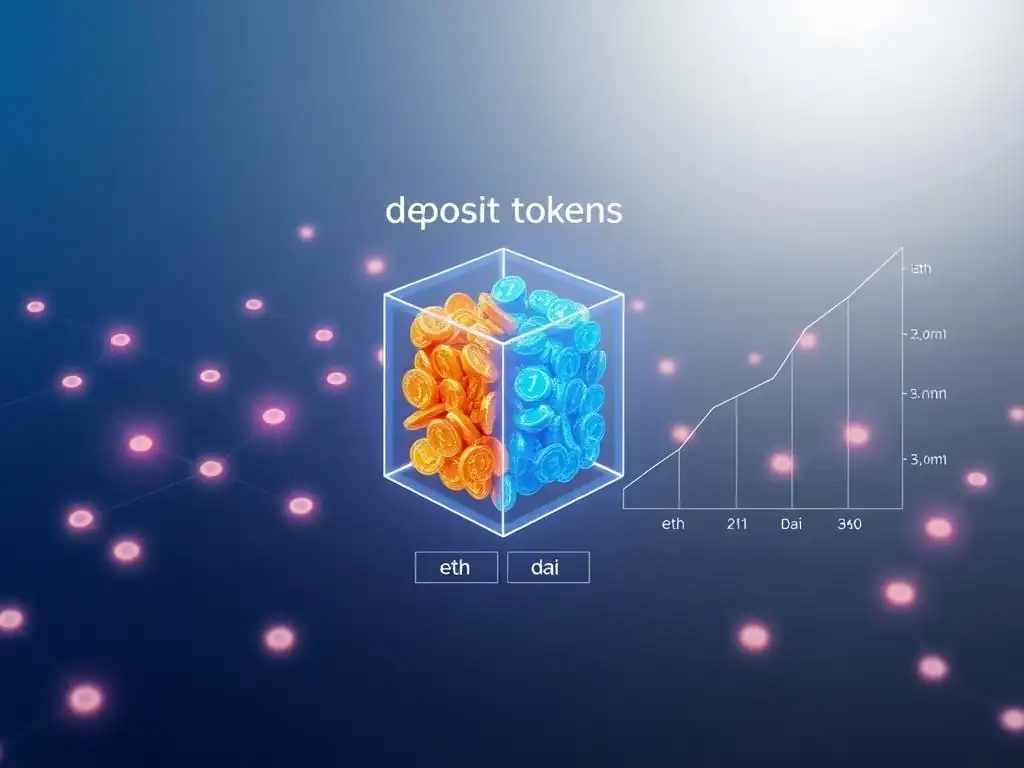
After selecting your desired pool pair, the process of depositing tokens is straightforward on most DEX interfaces. Navigate to the "Pool" or "Liquidity" section of the DEX, find your chosen pair, and select the option to "Add Liquidity." The interface will typically show you the current ratio of the tokens in the pool and ask you to input the amount of one of the tokens you wish to deposit. The system will automatically calculate the required amount of the other token based on the pool's current ratio to maintain balance.
You will need to approve the DEX's smart contract to spend your tokens (this is usually a one-time approval per token pair on a specific DEX). This requires a blockchain transaction and associated gas fee. After approval, you will perform the actual deposit transaction, which also incurs a gas fee. Once this transaction is confirmed on the blockchain, your tokens are added to the liquidity pool, and you officially become a liquidity provider, participating in DeFi liquidity pool earning.
Understanding LP Tokens and What They Represent
When you deposit your tokens into a liquidity pool, the DEX's smart contract issues you special tokens called LP tokens (Liquidity Provider tokens). These tokens represent your share of the total liquidity in that specific pool. For example, if you provide 1% of the total liquidity to an ETH-DAI pool, you will receive LP tokens that represent that 1% share. The name of the LP token often reflects the pair, such as UNI-V2 LP tokens for a Uniswap v2 ETH-DAI pool.
The value of your LP tokens is not fixed; it fluctuates based on two main factors: the amount of trading fees accumulated in the pool and the changing ratio of the underlying assets due to trading and impermanent loss. As trading fees are added to the pool, the total value of the assets in the pool increases, and consequently, the value represented by each LP token increases.
When you decide to withdraw your liquidity, you "burn" or return your LP tokens to the smart contract, and it returns your proportional share of the current assets in the pool. These LP tokens are also often used in yield farming activities to earn additional rewards, further enhancing potential DeFi liquidity pool earning.
Maximizing Your DeFi Liquidity Pool Earnings
Earning trading fees by providing liquidity is a passive strategy, but there are ways to potentially maximize your returns and optimize your DeFi liquidity pool earning potential. This involves understanding the factors that influence profitability and exploring additional yield opportunities available in the DeFi ecosystem. Simply depositing tokens isn't the end of the story; active management and strategic decisions can significantly impact your overall yield.
Maximization often involves selecting pools with high volume and favorable fee structures, while also considering the risks. Furthermore, the ability to leverage LP tokens in yield farming protocols can add another layer to your earning strategy. However, each optimization strategy comes with its own set of complexities and risks that must be carefully evaluated.
Factors Influencing Earning Potential
Several factors directly influence how much you can earn from providing liquidity in DeFi. The most significant is the trading volume of the specific liquidity pool. Pools with high trading activity generate more fees, leading to higher earnings for LPs.
A pool with millions of dollars in daily volume at a 0.3% fee rate will distribute significantly more fees than a pool with only thousands in volume. Secondly, the fee tier of the pool is important. While higher fees (e.g., 1%) might seem more attractive, they can also deter traders, potentially resulting in lower overall volume compared to a pool with lower fees (e.g., 0.05%) that attracts high-frequency trading.
Thirdly, the amount of liquidity already in the pool affects your share of the earnings. If a pool has a total of $1 million in liquidity and you contribute $10,000, you own 1% of the pool and receive 1% of the fees. If the pool grows to $10 million total liquidity, your $10,000 now represents only 0.1% of the pool, and your share of fees decreases accordingly, unless you add more liquidity.
Lastly, impermanent loss can significantly impact net earnings by reducing the value of your underlying assets compared to simply holding them, potentially offsetting or even exceeding the fees earned. Careful analysis of these factors is key to optimizing DeFi liquidity pool earning.
Yield Farming: Earning Additional Tokens by Staking LP Tokens
Beyond earning trading fees, a common strategy to boost DeFi liquidity pool earning is through yield farming. Many DEXs and other DeFi protocols offer incentives for users to stake their LP tokens. By staking your LP tokens in a designated farm (often a smart contract provided by the DEX or a partner protocol), you can earn additional tokens, typically the protocol's native governance token (like UNI, CAKE, SUSHI) or other project tokens.
For example, a DEX might offer a farm where users staking BNB-CAKE LP tokens can earn extra CAKE tokens as a reward. This allows LPs to earn two streams of income simultaneously: the trading fees generated by the liquidity pool and the yield farming rewards. These yield farming rewards are often distributed from a predetermined allocation and can represent a substantial boost to overall yield, particularly in newer or high-incentive farms designed to attract liquidity. However, the value of these reward tokens can be volatile, adding another layer of risk.
Strategies for Potential Yield Optimization
Optimizing your DeFi liquidity pool earning through yield farming requires strategic thinking. One common strategy is to seek out pools and farms offering the highest Annual Percentage Yield (APY) or Annual Percentage Rate (APR). However, high yields often come with higher risks, such as newer or less audited protocols, or pools with extremely volatile or less established token pairs. Diversifying your liquidity across multiple pools and DEXs can help spread risk.
Another strategy involves actively managing your positions. This might include moving liquidity between pools or farms as yields change, or harvesting earned reward tokens regularly to reinvest or secure profits. Some advanced strategies involve using leverage or complex DeFi legos, but these are generally not recommended for beginners due to the significantly increased risk. Always research the specific yield farming program, understand the duration of incentives, and be aware of potential smart contract vulnerabilities before staking your valuable LP tokens to maximize your DeFi liquidity pool earning safely.
Risks of Providing Liquidity in DeFi
While DeFi liquidity pool earning can be a rewarding way to generate passive income, it is not without significant risks. Unlike traditional savings accounts or fixed-income investments, providing liquidity in DeFi exposes your capital to volatility, smart contract risks, and other potential downsides. Understanding these risks is paramount before committing funds, especially for beginners.
The most prominent risk is impermanent loss. This occurs when the price of the tokens you deposited into a pool changes relative to each other after you deposit them. The greater the price divergence, the higher the impermanent loss. This loss is "impermanent" because if the token prices eventually return to their original ratio when you deposited, the impermanent loss disappears. However, if you withdraw your liquidity before the prices return, the loss becomes permanent compared to simply holding the original tokens outside the pool. For example, if ETH's price doubles relative to DAI after you deposit into an ETH-DAI pool, you would likely have fewer ETH and more DAI than your initial deposit, and the dollar value might be less than if you had just held the original amounts of ETH and DAI.
Another critical risk is smart contract risk. Liquidity pools operate based on smart contracts. If there is a bug or vulnerability in the smart contract code, the pooled funds could be lost or stolen. While established DEXs like Uniswap and PancakeSwap have undergone audits, risks still exist, especially with newer or smaller protocols. Rug pulls are a related risk, where the developers of a liquidity pool or protocol suddenly withdraw all the pooled assets, leaving LPs with worthless tokens. This is more common with pools involving new, unaudited, or low-cap tokens.
Furthermore, providing liquidity exposes you to the general market risk associated with the underlying assets. If the value of the tokens in the pool drops significantly, the dollar value of your liquidity position will also decrease, regardless of the fees earned. Gas fees can also be a considerable cost, particularly on networks like Ethereum mainnet.
Depositing, approving, withdrawing, and claiming yield farming rewards all require transactions that incur gas fees, which can eat into potential profits, especially with smaller amounts of capital or frequent interactions. Carefully weighing the potential for DeFi liquidity pool earning against these inherent risks is essential for responsible participation.
Frequently Asked Questions
What exactly is a DeFi liquidity pool and how does it function?
A DeFi liquidity pool is a smart contract that holds two or more tokens, allowing users to trade them directly. It works by incentivizing users to deposit their tokens into the pool, enabling decentralized trading.
How can I earn trading fees by participating in a DeFi liquidity pool?
You earn trading fees by providing liquidity to the pool. As traders swap tokens within the pool, a small percentage of each trade is distributed proportionally to all liquidity providers based on their share of the pool.
What are the primary risks associated with participating in a DeFi liquidity pool?
The main risk is impermanent loss, which occurs when the price ratio of the tokens in the pool changes significantly, leading to a decrease in the value of your deposited assets relative to simply holding them. Smart contract vulnerabilities are also a risk.
What are some key factors to consider when choosing a DeFi liquidity pool to invest in?
Consider the pool's trading volume, the annual percentage yield (APY) offered, the underlying tokens involved, and the reputation of the platform hosting the pool.
How does regulation impact DeFi liquidity pools and my potential earnings?
Regulations are still evolving, but future rules may affect how DeFi platforms operate, potentially impacting liquidity pool earnings through new compliance requirements or restrictions on certain activities.
Final Reflection: Embracing the Evolving Landscape of DeFi
The exploration of DeFi liquidity pools and their potential for earning trading fees reveals a fundamental shift in how we perceive and interact with financial systems. What was once the exclusive domain of centralized institutions is now being democratized, empowering individuals to participate directly in the market-making process and reap the rewards. This isn't just about generating passive income; it's about reshaping the future of finance.
The rise of DeFi liquidity pools has profoundly influenced the financial landscape, fostering innovation and challenging traditional models. Witnessing this evolution firsthand has been both exhilarating and humbling, highlighting the power of decentralized technologies to reshape our world. The future of finance is decentralized, and liquidity pools are a cornerstone of that future.
This quote encapsulates the transformative potential of DeFi, urging us to embrace the opportunities and navigate the challenges that lie ahead.
As you delve deeper into the world of DeFi, remember that knowledge is your greatest asset. Explore, experiment, and contribute to the growth of this revolutionary ecosystem. The potential for financial freedom and innovation is immense, and by understanding the intricacies of DeFi liquidity pools, you are not just participating in the future – you are helping to build it.
Unleash Your DeFi Potential: Start Earning Today!
Thank you for exploring the world of DeFi and liquidity pools! We hope this article has helped you understand how to participate in decentralized finance and potentially earn trading fees. Now, it's time to take action.
Here are some steps you can follow:
- Get Started Safely: Consider exploring a reputable DeFi platform such as Uniswap or PancakeSwap, and contribute a small amount of crypto to a liquidity pool you understand. Be sure to research impermanent loss and start with amounts you're comfortable risking.
- Analyze Opportunities: Use tools like DeFi Pulse or CoinGecko to evaluate different liquidity pools. Compare their annual percentage yields, trading volumes, and assets to find promising options.
- Share and Discuss: Help others learn by sharing this article with friends interested in DeFi or by discussing your findings in online communities.
Are you ready to dive into the world of liquidity pools and start earning passive income? What specific strategy will you research further this week?
Leave a Reply