
NFTs vs. Traditional Art Investment: Comparing Risks and Rewards

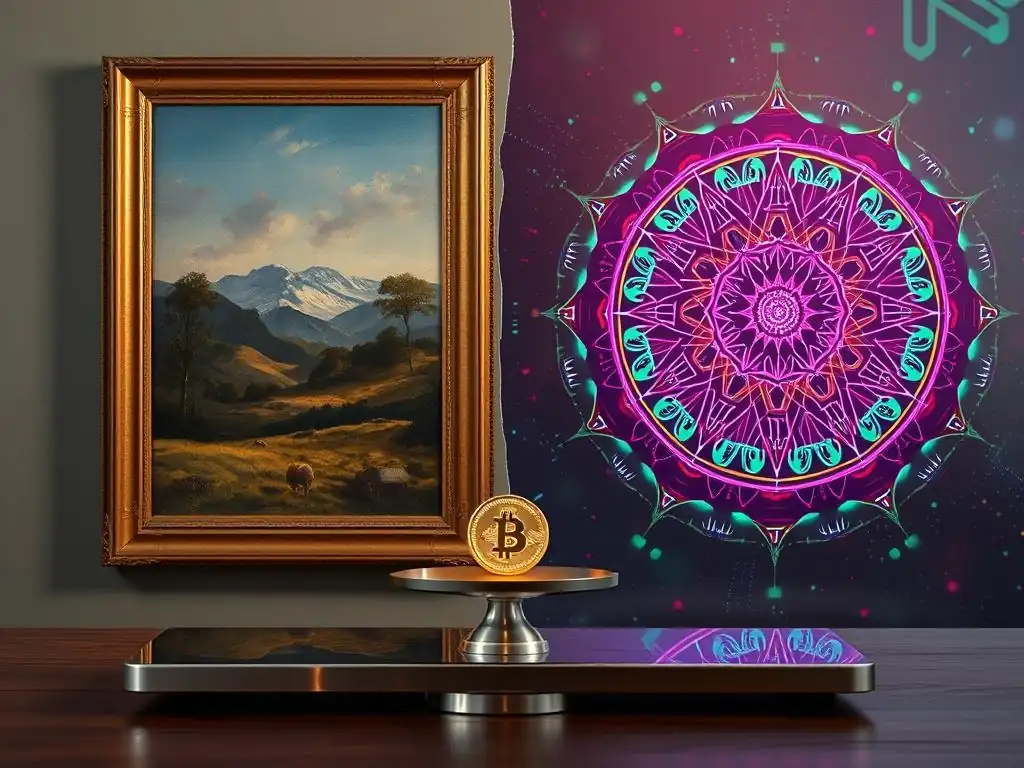
Welcome to Blockchain Trends, your guide to navigating the evolving world of decentralized technologies!
Are you considering diving into the world of NFTs or sticking with more traditional art investments? Before you make a move, it's crucial to understand the landscape. This article provides a detailed NFTs art investment comparison risks, exploring the potential pitfalls and opportunities lurking in both the digital and physical realms. Discover the key factors to consider when diversifying your portfolio and determine which asset class truly aligns with your investment goals. Intrigued? Keep reading to unlock the secrets to smart art investing in the age of blockchain!
-
NFTs vs. Traditional Art Investment: Comparing Risks and Rewards
- Understanding NFTs and Traditional Art Investments
- Key Differences in NFTs and Traditional Art Investment
- Financial Risks of NFTs vs. Traditional Art
- Potential Rewards of Investing in NFTs and Traditional Art
- Tax Implications and Legal Considerations
- The Future of Art Investment: Digital and Traditional Methods
- Conclusion: Making Informed Investment Choices
-
Frequently Asked Questions
- What are the primary differences between investing in NFTs and traditional art?
- What are some of the key risks associated with NFT art investment?
- How does the potential for return on investment (ROI) compare between NFTs and traditional art?
- What are the regulatory considerations for NFT art investment compared to traditional art?
- How does the accessibility and liquidity of the market differ between NFTs and traditional art?
- Final Reflection: Navigating the Digital Canvas of Value
- Ignite Your Art Investment Journey!
NFTs vs. Traditional Art Investment: Comparing Risks and Rewards
Understanding NFTs and Traditional Art Investments
What Are Non-Fungible Tokens?
Non-Fungible Tokens, or NFTs, represent unique digital assets stored on a blockchain. Unlike cryptocurrencies like Bitcoin or Ethereum, which are fungible (each unit is interchangeable), each NFT possesses distinct properties and cannot be exchanged on a one-to-one basis. This uniqueness allows NFTs to represent ownership of a wide range of digital items, including digital art, collectibles, music, virtual real estate, and more.
The underlying blockchain technology ensures the verifiable authenticity and ownership history of each token, providing a digital equivalent to a certificate of authenticity. The explosion in popularity of NFTs has created a new market dynamic, drawing significant attention from investors and collectors alike, fundamentally altering the landscape of digital asset ownership and value.
The market for NFTs experienced rapid growth, peaking in early 2022 with significant trading volumes and high-profile sales. For instance, digital artist Beeple's "Everydays: The First 5000 Days" sold for a staggering $69.3 million at Christie's in March 2021, a landmark moment that brought NFTs into mainstream consciousness.
While market activity has since moderated from its peak, the technology continues to evolve, finding applications beyond speculative collectibles, including utility within gaming, decentralized finance (DeFi), and digital identity. Understanding the foundational nature of these unique digital assets is the first step in any NFTs art investment comparison, particularly when evaluating the inherent risks and potential rewards.
The Essence of Traditional Fine Art Investment
Traditional fine art investment involves acquiring physical artworks, such as paintings, sculptures, drawings, and prints, created by established or emerging artists. This asset class has historically been considered a store of value, often uncorrelated with traditional financial markets like stocks and bonds.
Investment in traditional art is typically driven by factors including the artist's reputation, the artwork's provenance (its history of ownership and authenticity), condition, rarity, and market demand. Major auction houses like Sotheby's and Christie's, as well as galleries and private dealers, serve as primary marketplaces for these transactions, offering a degree of established market infrastructure built over centuries.
Investing in traditional art often requires significant capital, especially for blue-chip pieces by renowned artists. The global art market is estimated to be worth tens of billions of dollars annually, with significant sales occurring at major auctions. For example, Pablo Picasso's "Les Femmes d'Alger (Version 'O')" sold for $179.4 million in 2015, illustrating the potential for extremely high values in this market.
While accessible entry points exist through prints or works by lesser-known artists, the perception of traditional art as an investment often centers on high-value, physical assets that require specialized knowledge for authentication, valuation, and preservation. Comparing NFTs art investment risks necessitates understanding this established, physical market's characteristics.
Key Differences in NFTs and Traditional Art Investment
Authentication and Provenance
A critical difference in NFTs art investment comparison risks lies in authentication and provenance. For traditional art, authentication relies on expert analysis, certificates of authenticity issued by artists or reputable bodies, exhibition history, and documented ownership trails (provenance). Fakes and forgeries are a significant risk in the traditional art market, requiring careful due diligence and expertise. Establishing clear provenance is vital for value and legitimacy, often involving physical documentation and historical records that can sometimes be incomplete or disputed, leading to potential investment risks.
In contrast, NFTs leverage blockchain technology to provide an immutable and transparent record of ownership and transaction history. Once an NFT is minted on a blockchain like Ethereum or Flow, its unique identifier and metadata are recorded, creating a permanent, verifiable history.
While the NFT itself guarantees the ownership of the token on the blockchain, it does not inherently guarantee the authenticity or quality of the digital asset it represents, nor does it prevent copies of the digital file from being made. However, it does offer a level of provenance tracking for the token's journey that is often more transparent and resistant to falsification than traditional paper trails, fundamentally altering the nature of authentication challenges when considering NFTs art investment comparison risks.
Market Access and Liquidity
Market access and liquidity present another stark contrast when performing an NFTs art investment comparison. The traditional art market can be relatively illiquid and opaque.
Buying and selling significant pieces often involves intermediaries, auctions, and private sales that can take considerable time, incur high transaction fees (buyer's premiums at auction can exceed 20%), and may not always result in a quick sale at the desired price. Access to the most valuable pieces is often limited to wealthy collectors and institutions, with information about market trends and private sales not always publicly available, contributing to higher barriers to entry for smaller investors.
NFTs, on the other hand, are traded on various online marketplaces accessible to anyone with an internet connection and cryptocurrency wallet. Platforms like OpenSea, Rarible, and Nifty Gateway facilitate peer-to-peer trading around the clock. This digital infrastructure offers significantly greater potential liquidity compared to traditional art, allowing for potentially faster transactions and lower relative fees (though gas fees on some blockchains can be substantial during peak times).
However, this ease of access also contributes to market volatility and makes it easier for speculative bubbles to form and burst. The difference in market structure significantly impacts the NFTs art investment comparison risks related to buying and selling speed and accessibility.
Financial Risks of NFTs vs. Traditional Art
Volatility and Speculation in NFT Markets
A primary concern in any NFTs art investment comparison risks analysis is the extreme volatility and speculative nature of the NFT market. Prices can surge dramatically based on hype, celebrity endorsements, or market sentiment, only to plummet just as quickly. The market is relatively young and lacks the long-term historical data and established valuation methodologies common in traditional asset classes. Many NFT values are driven by subjective factors, community perception, and the Greater Fool Theory, where value is based on the hope that someone else will pay more later, rather than intrinsic value or yield.
This speculative environment means that investors face a significant risk of losing a substantial portion, or even all, of their investment. While some high-profile NFTs have fetched millions, the vast majority may hold little to no value over time.
Factors like rug pulls (where creators disappear after selling NFTs), market saturation, and changing trends in digital culture can severely impact the value of specific NFTs. The rapid boom-and-bust cycles observed in the NFT market highlight the inherent financial risks associated with this nascent asset class, a key point of divergence when looking at NFTs art investment comparison risks relative to more established markets.
Market Stability and Physical Risks of Traditional Art
Compared to the rapid fluctuations in the NFT space, the traditional art market is generally considered more stable, particularly for established artists and blue-chip pieces. While not immune to economic downturns, the high end of the market has historically shown resilience and acted as a hedge against inflation for some investors.
Valuation is often based on a longer history of sales data, critical acclaim, and cultural significance, providing a more grounded basis for price assessment than the often-ephemeral hype surrounding NFTs. However, this stability also means slower appreciation compared to the potential for exponential, albeit risky, gains in the NFT market.
Despite its relative market stability, traditional art investment carries unique physical risks. These include the risk of damage from handling, environmental factors (humidity, light), theft, or natural disasters. Insurance is necessary to mitigate these risks, adding to ownership costs. Furthermore, the physical nature of the asset requires secure storage and potentially costly conservation over time to maintain its condition and value. While these are different from the digital risks of NFTs (like smart contract vulnerabilities or platform failures), they represent tangible, ongoing costs and potential losses that are crucial considerations in an NFTs art investment comparison risks assessment.
Potential Rewards of Investing in NFTs and Traditional Art
Opportunities for High Growth in NFTs
One of the most compelling aspects driving interest in NFTs art investment is the potential for extremely high returns in a short period. Early investors in successful NFT projects, like CryptoPunks or Bored Ape Yacht Club, saw their initial investments multiply exponentially as these collections gained popularity and cultural significance. The digital nature allows for rapid global reach and community building, which can fuel demand and price surges. Furthermore, some NFTs offer utility beyond just ownership, such as access to exclusive communities, events, or even passive income streams through staking or fractional ownership models, potentially enhancing their value proposition.
The relatively low entry cost for some NFTs (compared to high-value traditional art) also opens the market to a broader range of investors, potentially creating new demand dynamics. While the market has matured and initial speculative frenzy has cooled, opportunities still exist for identifying promising artists or projects early. The potential for disruptive innovation in how art is created, distributed, and valued through NFTs presents unique upside potential that is distinct from the traditional art market, making it a key differentiator when considering the rewards side of an NFTs art investment comparison.
Long-Term Appreciation of Traditional Art
Traditional art, particularly works by historically significant artists, has a track record of long-term appreciation. While returns may not match the speculative peaks seen in some NFTs, established art has demonstrated its ability to hold and increase value over decades, often outperforming inflation. This is driven by factors like limited supply (the artist is deceased or has a finite body of work), increasing demand from global collectors, and the cultural significance that solidifies over time. Investing in traditional art is often viewed as a long-term strategy, focusing on wealth preservation and steady growth rather than rapid speculative gains.
Major auction results consistently show strong performance for blue-chip artists, with works often setting new price records years or decades after their creation. For example, a painting by a renowned artist purchased decades ago might now be worth many times its original price. While market cycles exist, the inherent scarcity and cultural value of significant physical artworks provide a foundation for sustained appreciation. This slower, more predictable growth trajectory offers a different risk-reward profile than NFTs, highlighting a key difference in the potential returns when undertaking an NFTs art investment comparison risks analysis.
Tax Implications and Legal Considerations

Taxation on Digital Asset Transactions
Navigating the tax implications is a crucial part of understanding NFTs art investment comparison risks. The tax treatment of NFTs and other digital assets is still evolving in many jurisdictions, but generally, they are treated as property for tax purposes. This means that selling an NFT for a profit typically results in a capital gain, subject to capital gains tax rates which can vary based on how long the asset was held (short-term vs. long-term). Swapping one NFT for another, or for cryptocurrency, can also be considered a taxable event.
Furthermore, creators selling NFTs may face income tax obligations on the revenue generated from primary sales and potentially royalties from secondary sales. The complexity arises from tracking transaction histories across multiple platforms and determining the cost basis in a volatile market. Investors must accurately report their gains and losses, and failure to do so can result in penalties. The regulatory landscape is constantly changing, adding a layer of uncertainty and compliance burden to NFTs art investment, which is a significant risk factor compared to the more established tax norms for physical assets.
Legal Frameworks for Physical Art Investment
The legal framework surrounding traditional art investment is far more established, though not without its complexities. Transactions are typically governed by contract law, and issues of authenticity, title, and provenance are handled through established legal processes. Laws regarding import/export, cultural heritage protection, and anti-money laundering regulations (AML) apply to the traditional art market, particularly for high-value transactions. Disputes over ownership, authenticity, or condition are resolved through litigation or arbitration, leveraging centuries of legal precedent.
While more established, legal issues in traditional art can still be challenging and costly to resolve, especially in cases of disputed attribution or provenance. However, the legal principles are generally clearer than those currently applied to NFTs. The legal risks in traditional art often relate to verifying clear title and navigating international regulations for transportation and sale. Understanding these established, albeit sometimes cumbersome, legal processes is essential when conducting an NFTs art investment comparison risks assessment, as they represent a different set of challenges than the emerging legal landscape for digital assets.
The Future of Art Investment: Digital and Traditional Methods
Emerging Trends in Digital Art Investment
The future of digital art investment is likely to see continued innovation beyond simple collectible NFTs. Emerging trends include fractional ownership of high-value NFTs, allowing more investors to own a piece of a sought-after digital asset. The integration of NFTs into the metaverse and gaming environments is expected to grow, providing utility and potentially driving value based on in-world demand. Furthermore, artists are exploring dynamic NFTs that can change based on external data or interactions, adding new dimensions to digital art.
Platforms are also improving infrastructure for discovering, displaying, and managing digital art collections. While the speculative frenzy has subsided, the underlying technology offers new ways for artists to connect directly with collectors and for digital assets to be owned and traded transparently. The long-term viability of specific NFT projects remains a key risk, but the potential for digital art investment to evolve and find sustainable models is evident, influencing how one views the future landscape in an NFTs art investment comparison.
The Enduring Relevance of Traditional Art
Despite the rise of digital assets, traditional art is expected to maintain its enduring relevance as an investment class. Its historical significance, tangible nature, and proven track record as a store of value over centuries contribute to its lasting appeal. Demand from museums, institutions, and high-net-worth individuals worldwide provides a stable base for the market. While new collectors may emerge from the digital space, the fundamental appeal of owning a physical masterpiece is likely to persist.
The traditional art market is also adapting, with major auction houses increasingly incorporating digital strategies, including selling NFTs themselves. This suggests a potential convergence or coexistence rather than a complete replacement. The value drivers for traditional art—scarcity, provenance, condition, and cultural significance—are deeply ingrained and distinct from those driving NFT values. The continued strength of the traditional market underscores its distinct position when undertaking an NFTs art investment comparison risks analysis, highlighting its role as a more conservative, long-term investment option.
Conclusion: Making Informed Investment Choices
Evaluating Investment Risks and Rewards
When comparing NFTs art investment risks with those of traditional art, it becomes clear that each presents a unique profile. NFTs offer the potential for disruptive innovation, rapid growth, and accessible markets, but come with significant risks related to extreme volatility, speculative pricing, regulatory uncertainty, and potential lack of intrinsic value. Traditional art, conversely, offers relative stability, a proven track record of long-term appreciation, and established legal frameworks, but involves high entry costs for top-tier pieces, illiquidity, and physical ownership risks.
Making informed investment choices requires a thorough understanding of one's own risk tolerance, investment goals, and time horizon. Investors must conduct rigorous due diligence, whether researching the blockchain project and smart contract security for an NFT or verifying the provenance and condition for a physical artwork. Diversification across different asset classes, including potentially both digital and traditional art, may also be a strategy to mitigate risk. The landscape of art investment is evolving, and understanding the specific challenges and opportunities presented by both NFTs and traditional art is paramount for navigating this complex market successfully.
Frequently Asked Questions
What are the primary differences between investing in NFTs and traditional art?
NFTs offer digital ownership and fractionalization, while traditional art involves physical ownership and higher initial investment. NFTs also rely on blockchain technology, whereas traditional art depends on established art markets.
What are some of the key risks associated with NFT art investment?
NFTs are susceptible to market volatility, scams, and copyright infringements. The value can fluctuate rapidly, and the long-term viability of projects can be uncertain.
How does the potential for return on investment (ROI) compare between NFTs and traditional art?
NFTs can offer high ROI potential due to rapid price appreciation, but also carry higher risk. Traditional art provides more stable returns over longer periods, although with less immediate gains.
What are the regulatory considerations for NFT art investment compared to traditional art?
NFT regulation is still evolving, creating uncertainty. Traditional art has established regulations regarding authenticity, provenance, and taxation, offering more legal clarity.
How does the accessibility and liquidity of the market differ between NFTs and traditional art?
NFTs offer greater accessibility and liquidity through online marketplaces. Traditional art has limited accessibility and liquidity, often requiring specialized auctions or galleries.
The exploration of NFTs versus traditional art investment reveals a landscape where innovation clashes with established norms, demanding a careful assessment of risks and rewards. The digital art world, fueled by blockchain technology, presents both unprecedented opportunities and novel challenges that investors must understand to navigate successfully.
The allure of NFTs lies in their accessibility and potential for rapid appreciation, yet the volatility and regulatory uncertainty surrounding them cannot be ignored. This comparison underscores the importance of due diligence and a balanced portfolio approach, reminding us that every investment, whether tangible or digital, carries inherent risks. The best investment you can make is an investment in yourself... The more you learn, the more you'll earn.
- Warren Buffett. This quote, though not specific to art, highlights the crucial need for education and understanding before venturing into any investment arena.
As we stand at the intersection of art and technology, let us not be blinded by the hype, but rather, empowered by knowledge. Consider the insights shared here, not just as investment advice, but as a call to cultivate a discerning eye and a strategic mind.
How will you approach the evolving art market, balancing the allure of the new with the wisdom of the old? The future of art investment belongs to those who dare to explore, but do so with informed caution and a deep appreciation for the beauty and value that art, in all its forms, can bring.
Ignite Your Art Investment Journey!
Thank you for exploring the world of art investment with us! We hope you've gained valuable insights into navigating the risks and rewards of both digital assets and traditional art. Now, it's time to put that knowledge into action!
Ready to take the next step? Here are a few ideas:
- Dive into your own research! Explore different online marketplaces and auction houses, comparing prices and historical performance.
- Join the conversation! Share this article with fellow art enthusiasts and discuss the future of art investment on social media using a dedicated hashtag.
- Consider a micro-investment. Purchase a small piece of digital artwork or a share in a fractionalized physical artwork to gain firsthand experience in the market.
What are your biggest hesitations about investing in digital assets or traditional art? Share your thoughts in the comments below!
Leave a Reply