
Understanding Bitcoin Mining: Its Influence on Investment and Price


Welcome to Blockchain Trends, your compass in the rapidly evolving world of decentralized technologies. Ever wondered how the intricate processes behind blockchain fuel innovation far beyond just digital currencies? We're diving deep into DeFi, enterprise applications, and the regulatory landscape shaping this revolution.
Our latest exploration delves into the heart of the crypto world with "Understanding Bitcoin Mining: Its Influence on Investment and Price," offering insights into Bitcoin mining investment strategies and how they impact the market. Intrigued by the potential profits and risks? Read on to uncover the forces at play and learn how to navigate this complex, yet potentially lucrative, domain.
- Understanding Bitcoin Mining: Its Influence on Investment and Price
-
Frequently Asked Questions
- How does Bitcoin mining influence the investment landscape?
- What are some effective Bitcoin mining investment strategies beyond direct mining?
- How does the difficulty adjustment in Bitcoin mining affect investment returns?
- What regulatory factors should investors consider when investing in Bitcoin mining?
- How is the future of decentralized systems impacted by the evolution of Bitcoin mining?
- Final Reflection: The Enduring Allure of Digital Gold
- Unlock Your Bitcoin Investment Potential!
Understanding Bitcoin Mining: Its Influence on Investment and Price
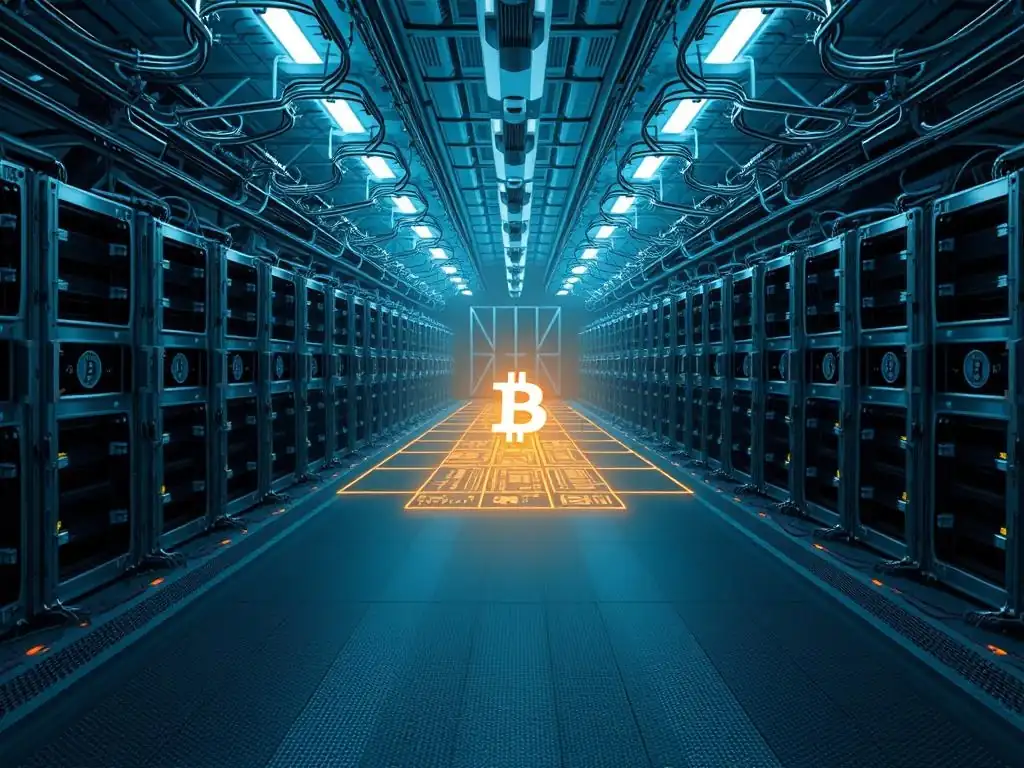
What is Bitcoin Mining and Its Role in the Blockchain Network?
Bitcoin mining is the process by which new bitcoins are entered into circulation. It is also the critical backbone of the Bitcoin network, responsible for verifying and adding new transactions to the blockchain. This process involves powerful computers competing to solve complex mathematical problems. The first miner to solve the problem gets to add the next block of transactions to the chain and is rewarded with newly minted bitcoins and transaction fees. This activity is fundamental to the network's integrity, preventing double-spending and maintaining the decentralized ledger that underpins all Bitcoin transactions.
Beyond the creation of new currency, mining plays a vital security role. By requiring significant computational effort (Proof-of-Work), it makes altering past transactions virtually impossible. Any attempt to tamper with a block would require recalculating the proof-of-work for that block and all subsequent blocks, a task demanding immense and impractical computing power, often referred to as a "51% attack." The distributed nature of mining, where thousands of independent participants contribute processing power globally, further strengthens the network's resilience against centralized control or malicious attacks. Understanding this foundational process is key to exploring effective Bitcoin mining investment strategies.
How Does Bitcoin Mining Work? (Proof-of-Work Explained)
Bitcoin mining operates on a consensus mechanism called Proof-of-Work (PoW). In PoW, miners use specialized hardware to repeatedly guess a specific random number (a nonce) that, when combined with the data in the block and passed through a cryptographic hash function (SHA-256 for Bitcoin), produces an output hash that meets certain criteria set by the network's difficulty. This criteria is typically that the hash must start with a certain number of zeros. The process is essentially trial-and-error on a massive scale, requiring significant computational power and, consequently, energy.
When a miner finds a valid nonce, they broadcast their solution to the network. Other nodes verify the solution's validity, and if it's correct, the block is added to the blockchain, and the successful miner receives the block reward.
This computationally intensive competition ensures that adding a new block is difficult and costly, aligning the interests of miners with the security and stability of the network. The difficulty of the mathematical problem adjusts approximately every two weeks (specifically, every 2016 blocks) to ensure that, on average, a new block is found roughly every 10 minutes, regardless of the total hashing power on the network.
The Critical Influence of Bitcoin Mining on BTC Price and Market Dynamics
Bitcoin mining has a profound, multifaceted influence on the price of BTC and the broader cryptocurrency market dynamics. The cost of mining, primarily driven by electricity prices and hardware costs, sets a sort of fluctuating "floor" for Bitcoin's value; if the price drops significantly below the cost of production, miners may cease operations, reducing hash rate and potentially signaling market distress, though the relationship is complex and not a direct cost-plus pricing model.
Furthermore, miners are often large holders of BTC, and their decisions to hold or sell mined coins can significantly impact market supply and liquidity. Large-scale selling by mining operations to cover operational costs or capitalize on high prices can exert downward pressure, while holding can reduce circulating supply.
The continuous effort and investment required for mining underscore the scarcity and value proposition of Bitcoin. The energy consumed and the capital deployed in mining operations represent a tangible cost associated with securing the network and producing new coins. This inherent cost contributes to Bitcoin's perceived value, differentiating it from fiat currencies that can be printed at will.
Moreover, key events within the mining cycle, such as the halving, directly affect the rate at which new bitcoins are introduced, creating predictable supply shocks that have historically correlated with significant price movements. Understanding these influences is vital for anyone considering Bitcoin mining investment strategies or simply investing in BTC itself.
Bitcoin Halving Events and Their Impact on Supply and Price
One of the most significant influences of Bitcoin mining on price comes from the halving events. Approximately every four years, or specifically every 210,000 blocks, the block reward miners receive for successfully adding a block is cut in half. This mechanism is hardcoded into Bitcoin's protocol to control inflation and ensure a finite supply of 21 million coins.
The initial block reward was 50 BTC, which halved to 25 BTC in 2012, then to 12.5 BTC in 2016, and most recently to 6.25 BTC in May 2020. The next halving is anticipated around April 2024, reducing the reward to 3.125 BTC.
Historically, each halving event has been followed by a significant bull run in the price of Bitcoin. This is largely attributed to the sudden reduction in the supply of new bitcoins entering the market, while demand either remains constant or increases.
With fewer new coins being mined and sold, the existing supply becomes scarcer, potentially driving up the price if buying pressure persists. While past performance is not indicative of future results, the predictable nature of the halving makes it a closely watched event by investors and analysts, often shaping expectations and influencing Bitcoin mining investment strategies leading up to and following the event.
Mining Difficulty Adjustments and Network Security
The Bitcoin network's mining difficulty is a dynamic parameter that adjusts based on the total computational power (hash rate) dedicated to mining. As more miners join the network and compete, the total hash rate increases. Without difficulty adjustments, blocks would be found faster than the target 10-minute interval. Therefore, the difficulty increases to make the mathematical problem harder to solve, slowing down block discovery back towards the 10-minute average. Conversely, if miners leave the network and the hash rate decreases, the difficulty decreases, making it easier to find blocks. This adjustment happens roughly every two weeks (2016 blocks).
This self-regulating difficulty mechanism is crucial for the network's security and stability. It ensures a consistent rate of block creation and new Bitcoin issuance, regardless of fluctuations in the number of participating miners. A higher difficulty indicates a more robust and secure network, as it signifies a larger amount of processing power dedicated to validating transactions and makes a 51% attack prohibitively expensive. For miners, difficulty adjustments directly impact profitability; an increase means more competition for the same block reward, while a decrease can improve earnings. This dynamic is a key factor when evaluating potential Bitcoin mining investment strategies.
Energy Consumption Debates and Investor Sentiment
Bitcoin mining's energy consumption has become a prominent and often controversial topic, significantly influencing public perception and investor sentiment. Due to the Proof-of-Work mechanism requiring vast computational power, the aggregate energy usage of the global Bitcoin mining network is substantial, comparable to that of some small to medium-sized countries. Critics highlight the environmental impact, particularly when electricity is sourced from fossil fuels, raising concerns about sustainability and carbon footprint. This debate has led to calls for regulation, bans in certain regions (like China's comprehensive ban on crypto mining), and increased scrutiny from environmental groups and policymakers.
However, proponents argue that a significant and growing portion of Bitcoin mining utilizes renewable energy sources, such as hydro, solar, geothermal, and wind, often leveraging energy that would otherwise be wasted or stranded. They also point out that other industries and financial systems have considerable energy footprints. While the debate continues, the energy narrative undeniably impacts investor sentiment.
Negative press surrounding energy consumption can deter environmentally conscious investors and put pressure on institutions considering Bitcoin exposure. Conversely, advancements in energy efficiency for mining hardware and the shift towards renewable sources can improve sentiment and potentially attract a broader range of investors interested in sustainable Bitcoin mining investment strategies.
Exploring Profitable Bitcoin Mining Investment Strategies
Engaging in Bitcoin mining can be a potentially profitable endeavor, but it requires significant capital investment, technical expertise, and a tolerance for volatility. Unlike simply buying and holding Bitcoin, mining involves operational costs, hardware depreciation, and direct exposure to changes in network difficulty and block rewards. Successful strategies hinge on optimizing efficiency, minimizing costs, and accurately forecasting potential revenue based on fluctuating Bitcoin prices and network conditions. There isn't a single "best" approach; instead, various Bitcoin mining investment strategies cater to different levels of technical skill, capital availability, and risk appetite.
The two primary avenues for participating in Bitcoin mining are investing in and operating your own mining hardware or joining a mining pool. Each path presents its own set of challenges and opportunities. Evaluating factors like electricity costs, hardware efficiency (measured in terahashes per second per watt, TH/W), network hash rate, and the current block reward is crucial for estimating profitability. As the mining landscape evolves with more powerful ASICs and increasing competition, staying informed about technological advancements and market dynamics is essential for anyone pursuing Bitcoin mining investment strategies.
Strategy 1: Direct Investment in Bitcoin Mining Hardware
One of the most direct Bitcoin mining investment strategies involves purchasing and operating your own mining hardware. This typically means investing in specialized machines known as Application-Specific Integrated Circuits (ASICs) designed specifically for the SHA-256 algorithm used by Bitcoin. Owning your hardware gives you complete control over your operation, allowing you to pocket the full block reward (if you're lucky enough to solve a block solo) or your proportional share plus transaction fees from a mining pool without paying pool fees.
However, this strategy demands substantial upfront capital, technical knowledge for setup and maintenance, access to cheap and reliable electricity, and a suitable physical location with adequate cooling and ventilation. The profitability is highly sensitive to electricity rates, as power consumption is the largest ongoing cost. For example, a single modern ASIC might consume around 3-4 kW, meaning electricity costs can quickly outweigh potential earnings if rates are high. Furthermore, ASICs become obsolete relatively quickly as newer, more efficient models are released, necessitating future hardware upgrades to remain competitive.
Pros and Cons of Owning Your Own Mining Rig
Owning your own Bitcoin mining rig offers several potential advantages. Firstly, you have full control over your operation, from selecting the specific hardware model to managing the software and directing your hash rate. This autonomy allows for optimization tailored to your specific conditions, such as leveraging exceptionally low electricity rates.
Secondly, if you mine solo (though highly improbable for smaller operations today due to network difficulty), you receive the entire block reward and transaction fees for any block you successfully mine, which can be a substantial payoff. Finally, owning the physical assets provides a tangible investment, unlike cloud mining contracts.
However, the disadvantages are significant and often outweigh the pros for smaller investors. The initial capital investment for modern, competitive ASICs is very high, often thousands of dollars per machine. Operational costs, primarily electricity, are substantial and ongoing. Hardware requires technical setup, maintenance, and troubleshooting.
You face the risk of hardware failure and rapid obsolescence. Furthermore, mining solo offers extremely sporadic payouts; with the current network hash rate in the hundreds of Exahashes per second (EH/s), a single miner with a few ASICs has a near-zero chance of finding a block independently. This is why most individual miners join pools, even when owning their hardware.
Identifying Leading Bitcoin Mining Hardware
Selecting the right hardware is crucial for successful direct Bitcoin mining investment strategies. The market is dominated by ASIC manufacturers, with Bitmain's Antminer series and Canaan's AvalonMiner series being among the most prominent. When evaluating hardware, key specifications to consider are the hash rate (measured in Terahashes per second, TH/s), which indicates the machine's processing power; the power consumption (measured in Watts, W); and the efficiency (measured in Joules per Terahash, J/TH, or Watts per Terahash, W/TH). A lower J/TH or W/TH figure signifies higher efficiency, meaning less electricity is used per unit of hash rate.
For example, models like the Bitmain Antminer S19 series or Canaan AvalonMiner 1246 were leading models upon their release, offering high hash rates (e.g., 90-110 TH/s) with relatively good efficiency (around 30-35 J/TH). However, newer models like the Antminer S19 XP or S21 boast even higher hash rates (up to 140-200 TH/s or more) and significantly improved efficiency (potentially below 20 J/TH).
The rapid pace of technological advancement means that hardware purchased today could be significantly less efficient than models available in a year or two, impacting long-term profitability. Therefore, staying updated on the latest releases and comparing efficiency metrics against current market prices is essential.
Setting Up and Maintaining Your Bitcoin Mining Equipment
Setting up Bitcoin mining equipment involves more than just plugging in a machine. First, you need a suitable location that can handle the heat and noise generated by ASICs and has access to sufficient, stable power and internet connectivity. ASICs produce significant heat; for instance, a single S19 miner can output heat comparable to a small space heater, requiring robust cooling solutions like fans or even dedicated HVAC systems, especially for multiple units. The noise levels are also very high, often exceeding 70-80 decibels, making residential setups challenging.
Once the physical environment is ready, the hardware needs to be connected to power and the internet. Configuration involves accessing the miner's web interface (usually via its IP address) and entering the details of the mining pool you plan to join, including the pool address and your worker name/ID. Ongoing maintenance includes monitoring the miner's temperature and performance, ensuring stable power and internet, and occasionally updating firmware.
Dust accumulation can cause overheating, so regular cleaning is necessary. Troubleshooting might involve diagnosing network issues, power supply problems, or hardware malfunctions. This hands-on requirement is a key aspect of direct Bitcoin mining investment strategies.
Strategy 2: Participating in a Bitcoin Mining Pool
Given the immense difficulty of mining Bitcoin solo, the most common approach for individual miners, even those with their own hardware, is to join a Bitcoin mining pool. A mining pool is a group of miners who combine their computational resources (hash rate) to increase their chances of finding a block.
When the pool successfully mines a block, the block reward and transaction fees are distributed among all participants in the pool, proportional to the amount of hash rate they contributed. This provides miners with smaller, more frequent, and predictable payouts compared to the highly variable and unlikely chance of mining a block alone.
Joining a pool significantly reduces the variance in earnings, making it a more stable and less speculative way to engage in Bitcoin mining. Instead of waiting potentially years for a solo block reward that may never come, pool participants receive a fraction of the reward much more regularly, often daily or weekly, depending on the pool's payout threshold.
This strategy is particularly attractive for individuals or smaller operations that cannot command a significant portion of the global hash rate. Exploring different pools and their payout methods is a crucial step in developing effective Bitcoin mining investment strategies centered around pooling resources.
How Mining Pools Increase Your Chances of Earning Bitcoin
Mining pools operate by aggregating the hash rate of many individual miners. The combined power of the pool is much larger than that of any single participant, dramatically increasing the probability that the pool will be the one to find the next valid block hash.
When the pool finds a block, the reward (currently 6.25 BTC plus transaction fees) is shared among all members based on the amount of work (shares) they contributed to finding that block. A "share" is typically defined as a hash that is easier to find than the target hash but still demonstrates that the miner is performing work.
This pooling of resources transforms mining from a high-variance lottery into a more consistent revenue stream. For example, if the global hash rate is 500 EH/s and your single ASIC provides 100 TH/s (0.0001 EH/s), your chance of finding a block solo in 10 minutes is infinitesimally small. However, if you join a pool with a combined hash rate of 5 EH/s, that pool has a 1% chance of finding the block.
If the pool finds a block, you receive 100 TH/s / 5 EH/s = 0.000002% of the reward, which is a small amount but received frequently as the pool finds blocks. Different pools use different methods for calculating and distributing rewards, such as Pay-Per-Share (PPS), Proportional (PROP), or Full Pay-Per-Share (FPPS), each with slightly different risk/reward profiles and fee structures.
Evaluating and Selecting Bitcoin Mining Pools
Choosing the right Bitcoin mining pool is a critical decision within Bitcoin mining investment strategies. Key factors to evaluate include the pool's size (total hash rate), its fee structure, payout methods, minimum payout thresholds, reliability (uptime), and user interface/reporting capabilities. Larger pools find blocks more frequently, leading to more consistent payouts, but your share of the reward will be smaller. Smaller pools find blocks less often, but when they do, your proportional share might be larger.
Pool fees typically range from 1% to 4% of the block reward earned by the pool. Payout methods like FPPS (Full Pay-Per-Share) tend to be more stable as they pay miners for every share they submit, plus a share of transaction fees, regardless of whether the pool successfully finds a block in that specific round. PROP (Proportional) methods pay based on shares submitted during the round that successfully found a block, which can be more variable.
Reliable pools have stable servers and minimal downtime, ensuring your hardware is mining effectively around the clock. Checking reviews, pool statistics, and community feedback can help inform your decision.
Factors to Consider When Joining a Mining Pool
When deciding which Bitcoin mining pool to join, several factors beyond just the fee percentage are important for optimizing your Bitcoin mining investment strategies. Consider the pool's reputation and history; established pools with a track record of fair payouts and good support are generally preferable. Look at the minimum payout threshold – some pools require you to accumulate a certain amount of BTC before they send it to your wallet, which might take a long time for smaller miners or if you prefer more frequent access to funds.
Furthermore, examine the pool's server locations and latency. Connecting to a server geographically closer to your mining operation can reduce latency and potentially increase the efficiency of your submitted shares. Understand the pool's payout scheme (e.g., PPS, FPPS, PROP) and how it handles transaction fees, as this can significantly impact your total earnings. Finally, evaluate the user interface and reporting provided by the pool; clear dashboards showing your hash rate, shares submitted, and estimated earnings are essential for monitoring performance and profitability.
Frequently Asked Questions
How does Bitcoin mining influence the investment landscape?
Bitcoin mining impacts investment by creating new digital assets and influencing the supply of Bitcoin, which can affect its price and create opportunities for investors.
What are some effective Bitcoin mining investment strategies beyond direct mining?
Investing in mining companies, mining equipment manufacturers, or Bitcoin mining ETFs are alternative strategies to direct mining, offering diversification and potentially lower risk.
How does the difficulty adjustment in Bitcoin mining affect investment returns?
The difficulty adjustment ensures a consistent block creation rate, meaning increased competition requires more hash power, potentially impacting the profitability of mining investments.
What regulatory factors should investors consider when investing in Bitcoin mining?
Regulations surrounding energy consumption, environmental impact, and digital asset taxation can significantly affect the viability and risk profile of Bitcoin mining investments.
How is the future of decentralized systems impacted by the evolution of Bitcoin mining?
Evolving mining technologies and consensus mechanisms can lead to more efficient and sustainable decentralized systems, potentially influencing the long-term value of Bitcoin and related investments.
Final Reflection: The Enduring Allure of Digital Gold
The intricacies of Bitcoin mining, as explored throughout this article, are not merely technical curiosities but fundamental drivers of Bitcoin's value and investment potential in today's volatile market. Understanding these mechanisms is no longer optional for investors; it's a crucial prerequisite for navigating the complex landscape of cryptocurrency and making informed decisions. The interplay between mining difficulty, energy consumption, and reward halving directly impacts profitability and, consequently, Bitcoin's price trajectory.
The enduring influence of Bitcoin mining extends far beyond the financial realm, shaping technological innovation and sparking debates about sustainable energy practices. My own fascination with this process stems from its inherent paradox: a decentralized system that relies on a resource-intensive activity. This tension forces us to confront critical questions about the future of digital currencies and their environmental footprint. The beauty of Bitcoin is that it is a finite resource, and its scarcity is enforced by a decentralized network. But this scarcity comes at a cost, and we must strive to minimize that cost through innovation and responsible mining practices.
As we conclude this exploration of Bitcoin mining investment strategies, I invite you to reflect on your own role in this evolving ecosystem. Consider the ethical implications of your investment choices, explore opportunities to support sustainable mining initiatives, and above all, remain informed and adaptable in the face of constant change. The future of Bitcoin, and indeed the broader digital economy, depends on our collective wisdom and responsible action.
Unlock Your Bitcoin Investment Potential!
Thank you for exploring the fascinating world of Bitcoin mining with us. We hope you now have a clearer understanding of its vital role in the Bitcoin ecosystem and its influence on investment strategies. Are you ready to take the next step?
Here's how you can dive deeper:
- Use our exclusive calculator on the website to determine your potential Bitcoin mining profitability. This will help you decide whether mining aligns with your investment goals.
- Explore other cryptocurrencies and their mining processes. Comparing them with Bitcoin can expand your investment knowledge.
- Share this article with fellow investors to help them understand the complexities of Bitcoin mining and make informed decisions.
What surprising insight about Bitcoin mining stood out to you the most, and how will it shape your investment approach moving forward? Share your thoughts in the comments below!
Leave a Reply