
The EU's MiCA Regulation: A New Dawn for Blockchain in Europe?


Welcome to Blockchain Trends, your compass in the rapidly evolving world of decentralized innovation. Dive into our latest exploration of how blockchain is reshaping industries beyond just digital currencies.
Is Europe on the cusp of a blockchain revolution? Our in-depth analysis of the EU blockchain regulation impact, specifically the MiCA regulation, uncovers the potential opportunities and challenges this landmark legislation presents. Will it foster innovation or stifle growth? Uncover the answer and more – the future of blockchain in Europe is being written now.
- The EU's MiCA Regulation: A New Dawn for Blockchain in Europe?
- Understanding MiCA: The Markets in Crypto-Assets Regulation
- MiCA's Impact on Different Blockchain Applications
- EU Blockchain Regulation Impact: Key Provisions and Compliance Requirements
- MiCA vs. Other Global Blockchain Regulations: A Comparative Analysis
- Benefits of MiCA for the European Blockchain Ecosystem
- Challenges and Concerns Regarding MiCA Implementation
- The Future of Blockchain in Europe Under MiCA
- Preparing for MiCA: Steps for Blockchain Businesses to Take Now
-
Frequently Asked Questions
- What is the MiCA regulation and what does it aim to achieve?
- How will MiCA impact existing blockchain projects within the EU?
- Beyond cryptocurrencies, how does MiCA affect other blockchain applications like DeFi?
- What are the potential benefits of MiCA for the European blockchain ecosystem?
- What are some of the potential challenges businesses face in complying with the EU's MiCA regulation?
- Final Reflection: Navigating the Future of Blockchain in Europe
- Shape the Future: Dive Deeper into MiCA!
The EU's MiCA Regulation: A New Dawn for Blockchain in Europe?
Exploring the EU's Comprehensive Approach to Blockchain Regulation
The European Union has embarked on a significant journey to establish a clear and comprehensive regulatory framework for digital assets, recognizing the transformative potential of blockchain technology. This initiative stems from a desire to harness the benefits of innovation while mitigating risks associated with volatile and often opaque crypto markets.
The approach has been deliberate, moving from initial discussions and consultations to the landmark Markets in Crypto-Assets (MiCA) regulation, which represents a unified stance across the 27 member states. The development of MiCA underscores the EU's ambition to be a frontrunner in digital finance, setting a precedent for global EU blockchain regulation impact.
This strategic move is not merely about controlling cryptocurrencies but about creating a stable and predictable environment for the broader blockchain ecosystem. By providing legal certainty, the EU aims to attract investment and talent, fostering the development of innovative blockchain applications beyond speculative assets, such as tokenization, supply chain management, and digital identity solutions. The comprehensive nature of MiCA reflects a deep analysis of the market's complexities and a commitment to ensuring that technological advancements align with financial stability, consumer protection, and anti-money laundering efforts, thereby shaping the future EU blockchain regulation impact.
Understanding MiCA: The Markets in Crypto-Assets Regulation
What is MiCA and Why is it Important for the European Blockchain Landscape?
MiCA, or the Markets in Crypto-Assets regulation, is a pioneering legislative framework introduced by the European Union to govern crypto-assets and related services within its member states. Adopted in 2023 and set to become fully applicable in phases by late 2024 and early 2025, MiCA provides a much-needed legal definition for various types of crypto-assets and establishes rules for their issuance and trading.
Its significance lies in creating a single, harmonized regulatory regime across the entire EU, replacing the patchwork of national rules that previously existed. This harmonization is crucial for fostering a true single market for crypto-assets and understanding the full EU blockchain regulation impact.
The importance of MiCA for the European blockchain landscape cannot be overstated. By standardizing regulations, it removes significant barriers for businesses operating across borders within the EU, reducing compliance costs and increasing operational efficiency. For consumers and investors, MiCA offers enhanced protection through clear rules on transparency, disclosure, and the conduct of service providers. This regulatory clarity is expected to boost confidence in the market, encouraging broader adoption of crypto-assets and blockchain technology, and fundamentally altering the EU blockchain regulation impact landscape.
Key Objectives of the MiCA Framework: Investor Protection and Market Stability
At its core, MiCA is designed with two primary objectives: ensuring investor protection and maintaining market stability. Recognizing the inherent risks in the nascent crypto-asset market, including volatility, fraud, and lack of recourse, MiCA imposes stringent requirements on issuers and service providers to safeguard consumers. This includes mandatory disclosures, clear communication regarding risks, and robust operational standards for platforms handling client assets. The framework aims to prevent market manipulation and ensure fair trading practices, critical components for building trust and facilitating positive EU blockchain regulation impact.
Simultaneously, MiCA seeks to contribute to the financial stability of the EU. It pays particular attention to stablecoins, especially those intended for widespread use as a means of payment, imposing stricter requirements related to reserve assets, capital, and liquidity. By regulating these assets, which could potentially pose systemic risks if widely adopted without proper oversight, MiCA aims to prevent disruption to traditional financial systems. These dual objectives of protection and stability are central to the intended positive EU blockchain regulation impact.
MiCA's Scope: Defining Crypto-Assets and Service Providers
MiCA provides legal definitions and regulatory treatment for a range of crypto-assets, primarily categorizing them into three types: electronic money tokens (e-money tokens), asset-referenced tokens (ARTs), and utility tokens. Security tokens, which qualify as financial instruments under existing EU securities law (like MiFID II), are generally excluded from MiCA's scope but are subject to those specific regulations. This classification is vital as it determines the specific rules and obligations that apply to each type of asset, delineating the boundaries of the EU blockchain regulation impact.
The regulation also defines and regulates various Crypto-Asset Service Providers (CASPs). This includes entities offering services such as exchange between crypto-assets and fiat currencies, exchange between different crypto-assets, execution of orders for crypto-assets, placing of crypto-assets, transfer services, portfolio management, and providing advice on crypto-assets. Any entity providing one or more of these services within the EU will generally need to comply with MiCA's requirements, highlighting the broad reach of the EU blockchain regulation impact on market participants.
MiCA's Impact on Different Blockchain Applications
Impact on Cryptocurrencies: Stablecoins, Utility Tokens, and Security Tokens
MiCA's impact varies significantly across different types of crypto-assets. For stablecoins, particularly large ones or those designated as 'significant', the regulation imposes demanding requirements. Issuers of Asset-Referenced Tokens (ARTs) and E-Money Tokens must be authorized as credit institutions or electronic money institutions, and they face strict rules on reserve management, capital requirements (e.g., minimum capital or 2% of average outstanding ART amount), and governance. This is a direct response to concerns about financial stability, aiming to ensure that stablecoins are truly stable and well-backed, thereby influencing their viability and the broader EU blockchain regulation impact.
Utility tokens, which provide access to a product or service, face lighter requirements under MiCA, primarily related to information disclosure via a 'crypto-asset whitepaper' that must be notified to regulators. However, the distinction between token types can be complex, and tokens initially intended as utility tokens might inadvertently fall under stricter categories depending on their features and use. Security tokens, regulated under existing financial laws, remain outside MiCA's direct scope but benefit from the overall regulatory clarity provided by MiCA's definitions, contributing indirectly to the overall EU blockchain regulation impact by clarifying the regulatory boundaries.
The application of MiCA to Decentralized Finance (DeFi) remains one of the most complex and debated areas. MiCA was primarily designed with centralized entities and identifiable service providers in mind. Many DeFi protocols operate through automated smart contracts and lack a clear central issuer or service provider. This structure poses a challenge in identifying responsible parties for compliance under MiCA, impacting how the EU blockchain regulation impact will be felt in this space.
While MiCA doesn't explicitly regulate decentralized protocols themselves, it may apply to interfaces, front-end services, or entities that provide services related to DeFi protocols, such as wallet providers facilitating access, or platforms offering derivatives based on DeFi assets. Furthermore, if a DeFi protocol is controlled or significantly influenced by an identifiable group or individual that effectively acts as a CASP (e.g., managing upgrades, controlling funds), they might fall under MiCA's scope.
Regulatory bodies like ESMA are expected to provide further guidance, but navigating MiCA's application to DeFi requires careful analysis of each specific protocol's structure and governance, highlighting the evolving nature of the EU blockchain regulation impact.
Enterprise Blockchain Solutions: How MiCA Affects Business Adoption
MiCA's primary focus is on public, permissionless blockchains used for transferable crypto-assets and related services offered to the public. Private or permissioned blockchain networks used internally by enterprises, or consortia for specific business processes (like supply chain tracking or interbank settlements) without involving public offerings of crypto-assets covered by MiCA, are generally not directly regulated by the framework. This distinction is crucial for understanding the direct EU blockchain regulation impact on enterprise adoption.
However, MiCA can still influence enterprise blockchain adoption indirectly. If an enterprise solution involves issuing tokens that fall under MiCA's definitions (e.g., an asset-referenced token representing a fractional ownership in real estate offered to external investors), then the issuing entity and potentially related service providers would need to comply. Moreover, the overall regulatory clarity provided by MiCA reduces uncertainty around blockchain technology in general, which can encourage businesses to explore and invest in both public and private blockchain solutions, fostering trust and facilitating broader EU blockchain regulation impact across the economy.
EU Blockchain Regulation Impact: Key Provisions and Compliance Requirements
A cornerstone of MiCA is the requirement for most Crypto-Asset Service Providers (CASPs) operating within the EU to obtain authorization from a national competent authority in one member state. This authorization process is rigorous, requiring CASPs to demonstrate compliance with various organizational, financial, and prudential requirements.
For instance, CASPs must meet minimum capital requirements, which vary depending on the services provided, ranging from approximately €50,000 for execution services to €150,000 for operating trading platforms or portfolio management. Obtaining this license allows a CASP to provide services across the entire EU under the 'passporting' principle, significantly shaping the EU blockchain regulation impact on market access.
The application for authorization requires submitting detailed information about the business plan, governance arrangements, internal control mechanisms, risk management procedures, and IT systems. Competent authorities have up to three months to assess complete applications. This licensing framework aims to ensure that only reputable and well-managed entities can operate in the crypto-asset market, enhancing market integrity and investor confidence, which is a key intended EU blockchain regulation impact.
Operational Requirements and Governance Standards for CASPs
Beyond initial authorization, MiCA imposes ongoing operational requirements and governance standards on CASPs. These include rules on safeguarding client funds and crypto-assets, handling complaints, managing conflicts of interest, and establishing robust IT security protocols. CASPs must segregate client assets from their own and implement measures to prevent unauthorized access or loss. For example, rules around safeguarding client assets mandate specific technical and organizational measures to ensure asset safety and accessibility.
Governance standards require CASPs to have clear organizational structures, sound administrative procedures, and effective internal control mechanisms. Management bodies must be fit and proper, possessing sufficient expertise and experience in crypto-assets. These requirements are designed to ensure that CASPs operate in a safe, reliable, and professional manner, reducing operational risks and protecting clients. Adherence to these standards is critical for demonstrating compliance and navigating the practical EU blockchain regulation impact on daily operations.
Transparency and Disclosure Obligations for Issuers of Crypto-Assets
MiCA places significant transparency and disclosure obligations on entities issuing crypto-assets, particularly for ARTs and utility tokens. Before offering crypto-assets to the public or seeking admission to trading on a platform, issuers must publish a 'crypto-asset whitepaper'. This whitepaper must contain detailed, fair, clear, and not misleading information about the issuer, the crypto-asset itself, the rights and obligations associated with it, the underlying technology, and the risks involved. The whitepaper must be notified to the relevant national competent authority, though it is generally not subject to prior approval (except for ARTs and e-money tokens).
Issuers are liable for the information presented in the whitepaper, meaning investors can seek compensation if they suffer losses due to misleading or inaccurate statements. For ARTs and e-money tokens, additional ongoing disclosure requirements apply, such as reporting on the composition and management of reserve assets. These transparency rules are fundamental to enabling informed investment decisions and are a direct component of the EU blockchain regulation impact on market integrity.
Addressing Market Abuse and Insider Trading in the Crypto-Asset Space
MiCA explicitly prohibits market abuse in the crypto-asset market, mirroring concepts found in traditional financial regulations like the Market Abuse Regulation (MAR). Prohibited activities include insider dealing, unlawful disclosure of inside information, and market manipulation. Insider information is defined as precise information not made public, relating directly or indirectly to one or more crypto-assets or related events, which, if it were made public, would be likely to have a significant effect on the price of those crypto-assets.
CASPs and other market participants are required to establish and maintain systems and procedures to detect and prevent market abuse. They must report suspicious transactions and orders to the relevant authorities. These provisions are critical for building a fair and orderly market, deterring fraudulent activities, and increasing confidence among investors. The inclusion of these anti-market abuse rules is a strong signal of the EU's commitment to creating a mature and trustworthy crypto-asset market, significantly shaping the EU blockchain regulation impact on market conduct.
MiCA vs. Other Global Blockchain Regulations: A Comparative Analysis
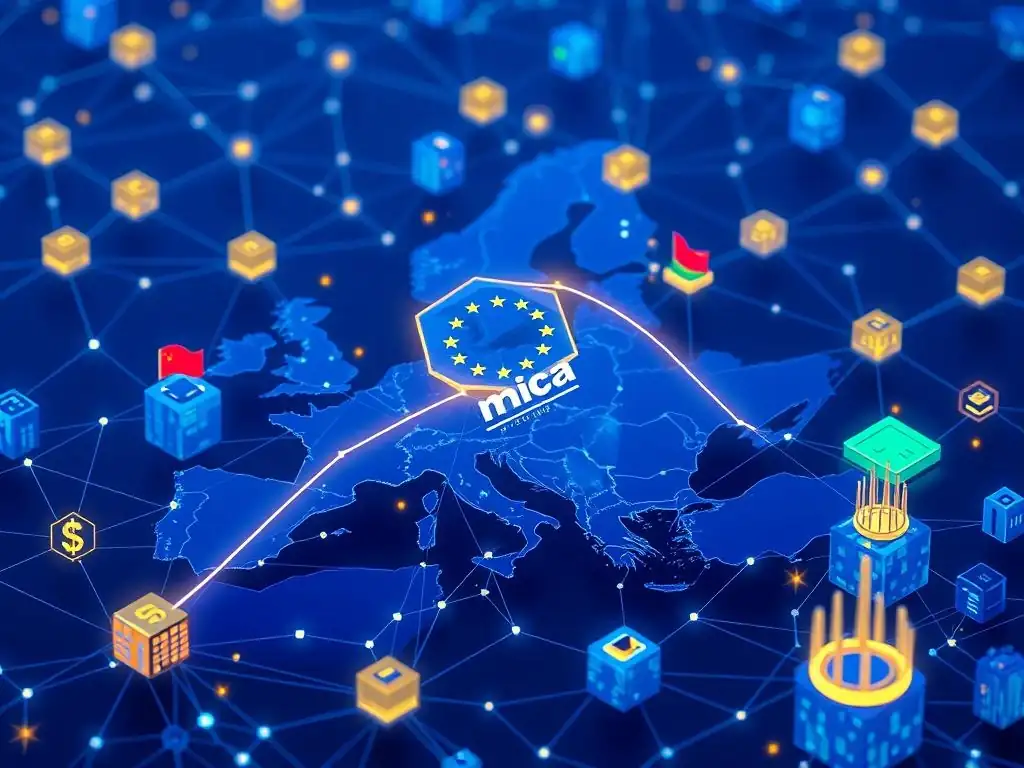
Contrasting MiCA with Regulatory Approaches in the US, Asia, and Other Regions
MiCA stands out globally due to its comprehensive and unified approach, providing a single regulatory framework across a large economic bloc. This contrasts sharply with the fragmented approach in the United States, where regulation is split across multiple federal agencies (like the SEC, CFTC, FinCEN, IRS) and state-level regulators, leading to significant legal uncertainty and inconsistency.
While the US has primarily focused on applying existing securities or commodities laws to certain crypto-assets and activities, MiCA creates a bespoke regime specifically for crypto-assets not covered by existing financial law, highlighting a key difference in the EU blockchain regulation impact philosophy compared to the US.
In Asia, regulatory landscapes vary widely. Jurisdictions like Japan and Singapore have established relatively clear frameworks for certain crypto activities, often focusing on licensing exchanges and stablecoins. Others, like China, have imposed outright bans on many crypto activities. While some Asian countries have adopted specific crypto regulations, none currently match the broad scope and detailed harmonization of MiCA across multiple jurisdictions. This makes MiCA a unique model, potentially influencing future regulatory developments elsewhere and demonstrating a distinct EU blockchain regulation impact on global policy trends.
The EU's Pioneering Role in Setting Global Standards for Crypto-Asset Regulation
With the implementation of MiCA, the European Union has positioned itself as a pioneer in establishing a dedicated, comprehensive legal framework for crypto-assets. This proactive step provides a level of regulatory certainty that is currently unparalleled in major global markets. By defining different categories of crypto-assets, setting clear rules for issuance and service provision, and addressing key risks like market abuse, the EU is effectively laying down a potential blueprint for other jurisdictions to follow. This pioneering role amplifies the potential global EU blockchain regulation impact.
The detailed requirements for stablecoins, in particular, are being closely watched internationally, as regulatory bodies worldwide grapple with the potential systemic risks posed by these assets. MiCA's 'passporting' regime, allowing authorized firms to operate across the EU, is also a significant innovation that could inspire similar cross-border regulatory cooperation models. As other countries develop or refine their own crypto regulations, they are likely to look to MiCA as a significant reference point, cementing the EU's influence on global standards for the crypto-asset space and demonstrating a tangible EU blockchain regulation impact beyond its borders.
Benefits of MiCA for the European Blockchain Ecosystem
Fostering Innovation and Investment in Blockchain Technologies
Paradoxically, clear regulation like MiCA can significantly foster innovation and attract investment in blockchain technologies. Regulatory uncertainty is often cited by traditional financial institutions and large corporations as a major barrier to entering the crypto-asset space. By providing a predictable legal environment, MiCA reduces this uncertainty, making it safer for established players and venture capital firms to invest in European blockchain startups and projects. This clarity is expected to unlock substantial capital flows, potentially fueling growth across the ecosystem and enhancing the positive EU blockchain regulation impact.
Furthermore, by setting clear rules for different token types and activities, MiCA enables innovators to design products and services with regulatory compliance in mind from the outset. This can streamline development and reduce the risk of future regulatory challenges. While compliance costs exist, the benefit of operating within a well-defined legal framework across a market of over 450 million people is a significant advantage that can spur innovation, particularly in areas like regulated tokenization of real-world assets, showcasing a beneficial EU blockchain regulation impact.
Enhancing Consumer Confidence and Trust in Crypto-Assets
A lack of trust, often fueled by high-profile failures, scams, and market volatility, has been a major impediment to mainstream adoption of crypto-assets. MiCA directly addresses this by imposing stringent requirements aimed at protecting consumers and investors. Rules around disclosure, transparency, asset safeguarding, and complaint handling provide users with greater assurance when interacting with crypto-asset services. For example, the requirement for CASPs to hold client assets separately and securely provides a layer of protection against insolvency risks, a significant concern after events like the FTX collapse.
By requiring service providers to be authorized and supervised by competent authorities, MiCA creates a system of accountability. Consumers know who they are dealing with and have avenues for recourse if something goes wrong. This enhanced level of protection and accountability is vital for building confidence, attracting new users to the market, and encouraging the use of crypto-assets for various applications, thereby strengthening the positive EU blockchain regulation impact on public perception and adoption.
Creating a Level Playing Field for Blockchain Businesses in Europe
Prior to MiCA, the regulatory landscape for crypto-assets in Europe was fragmented, with different rules applying in different member states. This created an uneven playing field, where businesses in some countries faced stricter requirements than those in others, leading to regulatory arbitrage and hindering cross-border operations. A crypto exchange authorized in one member state might face significant hurdles or require separate registrations to serve customers in another.
MiCA harmonizes these rules across the EU. Once authorized in one member state, a CASP can 'passport' its services to all other EU countries, subject to notification requirements. This creates a single market for crypto-asset services, allowing businesses to scale more easily and compete on equal terms regardless of their country of origin within the EU. This simplification of cross-border operations is a major benefit, fostering competition and efficiency across the European blockchain ecosystem and demonstrating a significant EU blockchain regulation impact on business operations.
Challenges and Concerns Regarding MiCA Implementation
Potential Compliance Costs and Burdens for Smaller Blockchain Startups
While MiCA promises regulatory clarity and market access, the cost and complexity of compliance pose significant challenges, particularly for smaller blockchain startups. Obtaining and maintaining a CASP authorization involves substantial expenses, including legal fees, consulting fees, system upgrades, and the cost of hiring compliance personnel. Estimates for initial compliance costs can range from tens of thousands to several hundred thousand euros, depending on the scale and complexity of services offered.
These upfront and ongoing costs can be particularly burdensome for early-stage startups with limited funding, potentially hindering their ability to compete with larger, more established players. The detailed requirements for governance, risk management, and IT security demand sophisticated infrastructure and expertise that might be disproportionately difficult for small teams to implement. Addressing these challenges will require careful planning and potentially tailored support mechanisms to ensure MiCA doesn't stifle the very innovation it aims to foster, impacting the distribution of the EU blockchain regulation impact across businesses of different sizes.
The Risk of Regulatory Arbitrage and the Need for International Cooperation
Despite MiCA's comprehensive nature within the EU, there remains a risk of regulatory arbitrage, where businesses might choose to relocate or base their operations in jurisdictions outside the EU that have less stringent regulations. Countries like Switzerland, Singapore, the UAE, or others with more permissive or tailored crypto regimes could potentially attract businesses seeking to avoid the full weight of MiCA compliance. This could limit the EU's ability to fully capture the economic benefits of the blockchain industry.
Mitigating this risk requires ongoing international cooperation among regulators. Dialogue and coordination with authorities in other major financial centers are necessary to prevent a global race to the bottom in terms of regulatory standards. While perfect harmonization is unlikely, a degree of convergence on core principles can help ensure a globally level playing field and prevent significant regulatory gaps that could be exploited. The long-term effectiveness of the EU blockchain regulation impact will partly depend on this international dimension.
Adapting to Technological Advancements and Evolving Crypto-Asset Landscape
The blockchain and crypto-asset space is characterized by rapid technological innovation and constant evolution. New types of crypto-assets, decentralized protocols, and business models emerge frequently. MiCA, while comprehensive for the current landscape, faces the challenge of remaining relevant and effective in the face of future developments. The fixed nature of regulation can struggle to keep pace with the dynamic nature of the technology.
Regulators will need to remain agile and adaptable, potentially issuing guidance or considering amendments to MiCA as the market evolves. The framework includes provisions for review and adaptation, but the process can be slow. Ensuring that MiCA does not inadvertently stifle future innovation while still managing risks is a delicate balancing act. The ongoing monitoring and potential future iterations of the regulation will be crucial in determining the sustained EU blockchain regulation impact on the pace and direction of technological development.
The Future of Blockchain in Europe Under MiCA
Expected Trends and Developments in the European Crypto-Asset Market
Under MiCA, the European crypto-asset market is expected to undergo significant transformation. We will likely see consolidation among service providers, with smaller, less compliant entities exiting the market or being acquired by larger, authorized players. There will be a strong focus on professionalization, with CASPs investing heavily in compliance, security, and governance infrastructure. This will likely lead to a more mature and stable market environment.
Furthermore, the clarity provided by MiCA is anticipated to encourage the development and adoption of regulated crypto-asset products and services. This could include regulated stablecoins used for payments, tokenized securities issued and traded under clear rules, and compliant platforms offering a range of services. The focus may shift from purely speculative trading to more practical applications of crypto-assets and blockchain technology, influencing the overall EU blockchain regulation impact on market structure.
Opportunities for Blockchain Innovation and Growth in a Regulated Environment
While compliance presents challenges, a regulated environment also creates significant opportunities for blockchain innovation and growth in Europe. Regulatory certainty reduces risk for both innovators and investors, making it easier to build and fund compliant businesses. This could accelerate development in areas where regulatory clarity is particularly needed, such as the tokenization of real-world assets like real estate, art, or financial instruments, which could unlock trillions in value globally.
MiCA provides a clear path for businesses offering services like crypto portfolio management or advice, opening up opportunities for traditional financial advisors to enter the space compliantly. The focus on robust technology and security within MiCA also encourages innovation in these areas. Overall, while the initial adjustment may be challenging, the long-term prospect is a more robust, trustworthy, and innovative European blockchain ecosystem, a key part of the intended EU blockchain regulation impact.
The Long-Term Impact of EU Blockchain Regulation on the Global Stage
The EU's MiCA regulation is poised to have a significant long-term impact on the global stage. As the first major jurisdiction to implement such a comprehensive framework, MiCA will serve as a benchmark for other countries considering how to regulate crypto-assets. Its approach to defining assets, licensing services, and addressing stablecoins is likely to inform policy discussions and regulatory development worldwide. This 'Brussels effect', where EU regulations set de facto global standards due to the size of the EU market, is a distinct possibility in the crypto space.
Furthermore, by creating a large, single market with clear rules, the EU could become a more attractive hub for global blockchain businesses seeking regulatory certainty. This could draw talent and investment that might otherwise go to other regions. The success and challenges of MiCA's implementation will provide valuable lessons for regulators globally, shaping the trajectory of crypto-asset regulation far beyond Europe's borders and solidifying the global influence of EU blockchain regulation impact.
Preparing for MiCA: Steps for Blockchain Businesses to Take Now
Conducting a Compliance Assessment and Gap Analysis
For any blockchain business operating or planning to operate in the EU, a critical first step is to conduct a thorough compliance assessment against the MiCA requirements. This involves understanding which parts of MiCA apply to their specific activities and crypto-assets. A gap analysis should then be performed to identify the differences between their current operations, governance, and systems and those mandated by MiCA.
This analysis should cover areas such as legal entity structure, required authorizations, minimum capital requirements, operational procedures (e.g., asset safeguarding, order execution), IT security, risk management frameworks, and disclosure obligations (e.g., whitepaper requirements). Identifying these gaps early allows businesses to develop a clear roadmap for achieving compliance, which is essential for navigating the practical EU blockchain regulation impact.
Implementing Robust Governance and Risk Management Frameworks
MiCA places significant emphasis on sound internal governance and effective risk management. Businesses must establish clear organizational structures, define roles and responsibilities, and implement robust internal control mechanisms. This includes having appropriate policies and procedures for compliance, internal audit, and reporting lines. Management bodies must demonstrate they are fit and proper and have the necessary expertise.
Implementing comprehensive risk management frameworks is also crucial. This involves identifying, assessing, and mitigating various risks, including operational risk, IT and security risk, market risk, liquidity risk, and compliance risk. For CASPs, this includes specific requirements for safeguarding client assets and managing conflicts of interest. Investing in these foundational elements is not just about compliance but also about building a sustainable and trustworthy business model under the EU blockchain regulation impact.
Seeking Legal and Regulatory Guidance from Experts
Given the complexity and novelty of MiCA, seeking expert legal and regulatory guidance is highly advisable for blockchain businesses. Specialized lawyers and consultants with deep knowledge of both blockchain technology and financial regulation can provide tailored advice on how MiCA applies to specific business models, assist with the authorization process, and help implement the necessary compliance measures.
Navigating the nuances of token classification, understanding the specific requirements for different types of CASP services, and ensuring whitepapers meet the required standards are areas where expert input is invaluable. Engaging with professionals early in the process can help businesses avoid costly mistakes, streamline their path to compliance, and position themselves effectively to benefit from the regulated European market, ensuring they are well-prepared for the full EU blockchain regulation impact.
- [ ] Conduct a detailed MiCA gap analysis.
- [ ] Assess required CASP authorizations based on services offered.
- [ ] Review and update governance structure and internal controls.
- [ ] Develop or enhance risk management policies and procedures.
- [ ] Plan for meeting minimum capital requirements (if applicable).
- [ ] Prepare draft whitepapers for relevant crypto-assets.
- [ ] Consult with legal and compliance experts specializing in MiCA.
Frequently Asked Questions
What is the MiCA regulation and what does it aim to achieve?
MiCA stands for Markets in Crypto-Assets. It's a comprehensive EU regulation aiming to establish a legal framework for crypto-assets, promoting market stability and consumer protection.
How will MiCA impact existing blockchain projects within the EU?
MiCA will require blockchain projects operating within the EU to comply with strict licensing requirements and disclosure obligations. This may necessitate significant adjustments to their business models and operations.
Beyond cryptocurrencies, how does MiCA affect other blockchain applications like DeFi?
MiCA primarily focuses on crypto-assets, but its implications extend to DeFi projects that issue or trade crypto-assets. The regulation's reach into DeFi is still being clarified, but compliance will be crucial.
What are the potential benefits of MiCA for the European blockchain ecosystem?
MiCA could foster greater trust and legitimacy in the blockchain space, attracting institutional investment and encouraging wider adoption by businesses and consumers.
What are some of the potential challenges businesses face in complying with the EU's MiCA regulation?
Businesses may face challenges in navigating the complex regulatory landscape, adapting to new compliance requirements, and ensuring they have the necessary resources and expertise to meet MiCA's demands.
The journey through the intricacies of the EU's MiCA regulation reveals a landscape poised for significant transformation. The true impact of EU blockchain regulation is only beginning to unfold, promising both opportunities and challenges for businesses and innovators alike. Understanding these nuances is crucial for anyone seeking to navigate the evolving digital economy and harness the power of blockchain technology within the European Union.
This regulation isn't just about compliance; it's about shaping the future of finance and technology. The potential for MiCA to foster innovation while protecting consumers is immense, but its success hinges on careful implementation and ongoing adaptation. Regulation is not an end in itself, but a means to an end: to create a level playing field, to protect consumers, and to foster innovation.
This quote encapsulates the delicate balance MiCA strives to achieve, a balance that will ultimately determine its legacy.
As we stand at this pivotal moment, let us not simply observe the unfolding of these regulations. Instead, let us actively engage in shaping their impact. Consider how you, whether as an entrepreneur, investor, or simply an interested citizen, can contribute to a future where blockchain technology thrives within a responsible and innovative European framework. The future of blockchain in Europe is not predetermined; it is being written now, and your voice matters.
Shape the Future: Dive Deeper into MiCA!
Thank you for exploring the implications of the MiCA regulation and its potential to reshape the European blockchain landscape. Now that you're informed, it's time to put that knowledge into action!
- Advocate for clarity: Reach out to your local EU representative to share your opinions on how the regulation should be implemented and refined. Your voice can influence its development.
- Explore open-source, MiCA-compliant blockchain tools available on platforms like GitHub to understand both the technical challenges and the benefits of the regulation for developers and testers.
- Share this article with your network to foster broader discussion on the impact of MiCA and how we can embrace the opportunities it presents.
How will you contribute to shaping the future of blockchain in Europe under MiCA? Share your thoughts and predictions in the comments below!
Leave a Reply