
Secure MultiParty Computation on Blockchain: Collaborative Data Privacy


Welcome to Blockchain Trends, your compass in the ever-evolving landscape of decentralized technology. Beyond the hype, lies a revolution reshaping industries and redefining trust. In this article, we delve into the crucial topic of secure blockchain data privacy, exploring how cutting-edge solutions like Secure MultiParty Computation (MPC) are paving the way for collaborative data management within regulatory frameworks. Curious about how blockchain can balance transparency with confidentiality? Read on to unlock the future of decentralized data security.
- Secure Multi-Party Computation on Blockchain: Collaborative Data Privacy
- Deep Dive into Secure Multi-Party Computation (SMPC)
- Blockchain-Based Secure Multi-Party Computation: Architecture and Implementation
- Use Cases of Secure Multi-Party Computation in Blockchain
- Advantages and Disadvantages of Using SMPC for Secure Blockchain Data Privacy
- Overcoming Challenges in SMPC-Blockchain Integration
- The Future of Secure Multi-Party Computation and Blockchain Data Privacy
- Conclusion: Embracing Collaborative Data Privacy with SMPC and Blockchain
-
Frequently Asked Questions
- How does Secure MultiParty Computation (MPC) contribute to secure blockchain data privacy?
- What are some practical applications of MPC on blockchain beyond just financial transactions?
- What challenges exist in implementing MPC solutions on blockchain networks?
- How does MPC differ from other privacy-enhancing technologies like zero-knowledge proofs?
- What is the future outlook for MPC in the context of blockchain and secure data privacy?
- Final Reflection: Embracing Secure Blockchain Data Privacy
- Unleash Collaborative Privacy: Your Next Steps
Secure Multi-Party Computation on Blockchain: Collaborative Data Privacy
The Growing Need for Enhanced Data Privacy in Decentralized Applications
The proliferation of decentralized applications (dApps) on blockchain technology has brought about revolutionary changes in various industries, from finance and supply chains to healthcare and identity management. While blockchain offers inherent benefits like transparency, immutability, and security through cryptography and distributed consensus, the very nature of its public or permissioned ledgers can pose significant challenges for data privacy. Many blockchain use cases involve sensitive information – personal data, proprietary business intelligence, confidential transaction details – that cannot be exposed to all network participants.
This creates a critical need for robust methods to ensure secure blockchain data privacy, allowing collaboration and computation on sensitive data without revealing the underlying values. Regulations like GDPR and CCPA further underscore the urgency of implementing privacy-preserving techniques within decentralized systems, demanding that user data be protected even when processed on a distributed ledger.
The inherent transparency of many blockchain architectures, where transaction details might be visible to nodes or the public, conflicts directly with privacy requirements for handling sensitive information. For instance, in a decentralized identity system, revealing a user's full transaction history could compromise their privacy. In decentralized finance (DeFi), detailed trading strategies or loan terms might need to remain confidential between participants.
Similarly, in healthcare applications built on blockchain, patient records must be strictly private. Simply encrypting data on-chain isn't always sufficient, as computation on encrypted data is complex, and keys still need management. Therefore, achieving comprehensive secure blockchain data privacy requires innovative cryptographic solutions that enable data utilization and analysis while maintaining strict confidentiality, addressing the limitations of traditional on-chain data storage and processing.
Understanding Secure Multi-Party Computation (SMPC)
Secure Multi-Party Computation (SMPC) is a cryptographic subfield that enables multiple parties to jointly compute a function over their private inputs without revealing any individual input to any other party. The core principle is to distribute the computation and the data in such a way that no single participant or even a coalition of participants (up to a certain threshold) can learn anything about the inputs beyond what can be inferred from the output of the function itself.
Imagine a group of individuals who want to calculate their average salary without anyone revealing their actual salary to the others; SMPC provides the protocols to perform this calculation securely and privately. This capability is paramount for scenarios where data is distributed among multiple entities, and aggregating or analyzing this data is necessary, but privacy must be preserved.
SMPC protocols typically involve complex cryptographic techniques such as secret sharing, homomorphic encryption, and garbled circuits. Secret sharing, for example, allows a secret value to be split into multiple shares, distributed among parties, such that the secret can only be reconstructed if a sufficient number of shares are combined. Homomorphic encryption allows computations to be performed directly on encrypted data, yielding an encrypted result that, when decrypted, matches the result of the computation performed on the plaintext data.
Garbled circuits enable two parties to compute any function represented as a Boolean circuit on their private inputs without revealing their inputs to each other. These techniques, often combined, form the basis of sophisticated SMPC protocols designed for various computational tasks, from simple sums and averages to complex machine learning model training, all while ensuring the secure blockchain data privacy of the underlying information.
Bridging the Gap: How SMPC Enhances Blockchain Data Confidentiality
Blockchain technology, with its distributed ledger and consensus mechanisms, provides a robust infrastructure for trust and agreement among disparate parties. However, its inherent transparency often conflicts with the need for data confidentiality, especially in enterprise or regulated environments. Secure Multi-Party Computation offers a powerful method to bridge this gap by allowing computations involving sensitive data to occur off-chain or semi-on-chain in a privacy-preserving manner, with the results or proofs of computation recorded on the blockchain.
This integration enhances secure blockchain data privacy by ensuring that the sensitive inputs used in a computation are never exposed on the public ledger, or even to the other participating parties directly. The blockchain then serves as an immutable, verifiable record of the computation's outcome or the state changes resulting from it.
Consider a scenario where several companies want to share data for a market analysis without revealing their individual sales figures. Using SMPC, they can jointly compute aggregate statistics (like total market share or average price) without any company seeing another's raw data. The integrity and agreement on this computed result can then be anchored on the blockchain.
This approach leverages the strengths of both technologies: SMPC provides the necessary cryptographic tools for secure, private computation, while the blockchain offers a decentralized, tamper-proof platform for coordination, verification, and recording the outcome. By combining these technologies, organizations can unlock the value of collaborative data analysis and secure blockchain data privacy without compromising confidentiality, paving the way for new types of decentralized applications that handle highly sensitive information.
Deep Dive into Secure Multi-Party Computation (SMPC)
Core Principles of Secure Multi-Party Computation
At its heart, Secure Multi-Party Computation is built upon fundamental cryptographic principles designed to ensure correctness and privacy during distributed computations. The primary goal is to compute a function
Key principles and techniques underpinning SMPC include:
- Secret Sharing: Distributing a secret value among multiple parties as shares, such that the original secret can only be reconstructed by combining a sufficient number of shares. Additive secret sharing or Shamir's Secret Sharing are common methods. For example, using Shamir's scheme, a secret can be split into
n shares such that anyk shares can reconstruct the secret, butk-1 shares reveal nothing. This is crucial for distributing inputs and intermediate computation results. - Commitment Schemes: Allowing a party to commit to a value while keeping it secret, with the ability to later reveal the value and prove that it matches the committed value. This prevents parties from changing their inputs or intermediate results during the computation.
- Oblivious Transfer (OT): A two-party protocol where a sender has multiple items, and a receiver wants to receive one item, such that the sender does not know which item the receiver received, and the receiver does not learn anything about the items they did not choose. OT is a fundamental building block for many general-purpose SMPC protocols.
- Homomorphic Encryption (HE): Enabling computations directly on encrypted data. While fully homomorphic encryption (FHE) allows arbitrary computations, it is currently very computationally expensive. Partially homomorphic encryption (PHE) or somewhat homomorphic encryption (SHE) schemes, which support limited types of operations (e.g., only addition or only multiplication, or a limited number of both), are more practical and often used in specific SMPC constructions or for specific parts of a computation. These techniques are vital for maintaining secure blockchain data privacy during computation phases.
These principles are combined in various ways to construct protocols tailored for different types of computations (e.g., arithmetic circuits for numerical calculations, Boolean circuits for general functions) and different security models, all aimed at achieving secure blockchain data privacy in collaborative settings.
Key Benefits of SMPC for Blockchain Security
Integrating Secure Multi-Party Computation with blockchain technology offers significant advantages for enhancing security and privacy in decentralized applications. One of the most compelling benefits is enhanced data confidentiality. Unlike storing raw, sensitive data on a blockchain (even in encrypted form where the computation might reveal patterns), SMPC ensures that the actual private inputs used in a computation are never revealed to any party, including those participating in the computation itself.
Only the agreed-upon output is made public or shared among the parties. This is crucial for use cases involving highly sensitive data like financial records, health information, or proprietary business data, significantly improving secure blockchain data privacy. For instance, in a decentralized credit scoring system, SMPC could allow multiple lenders to contribute data to compute a score without revealing individual customer transaction histories to each other or the blockchain.
Another key benefit is enabling collaborative computation without a trusted third party. Traditionally, aggregating or analyzing sensitive data from multiple sources requires a central authority or data custodian that all parties trust. SMPC eliminates this need, allowing parties to collaborate directly in a decentralized manner, aligning perfectly with the ethos of blockchain.
The blockchain then provides the trustless infrastructure for coordinating the SMPC protocol, verifying participation, and immutably recording the computation's outcome. This distributed trust model reduces counterparty risk and eliminates single points of failure or data breaches associated with centralized data repositories. Furthermore, SMPC can facilitate regulatory compliance by ensuring that sensitive data remains private while still allowing necessary computations or audits to occur, addressing stringent data protection requirements and contributing to robust secure blockchain data privacy architectures.
Different SMPC Protocols and Their Applications
The field of Secure Multi-Party Computation has developed a variety of protocols, each with different strengths, weaknesses, and suitability for specific applications and security models. Protocols can broadly be categorized based on the underlying cryptographic techniques used, the number of parties involved (two-party vs. multi-party), and the type of computation supported (arithmetic vs. Boolean circuits).
For two-party computation, Garbled Circuits (Yao's Protocol) are a seminal technique for computing any function represented as a Boolean circuit securely and privately between two parties. This is particularly useful for functions that can be efficiently represented as circuits, such as private set intersection or comparing values without revealing them.
For multi-party settings, secret sharing-based protocols are common, especially for arithmetic computations. Protocols like SPDZ (pronounced "Speedz") are highly efficient for computing arithmetic circuits over finite fields and offer security against active adversaries. These protocols often involve an "offline" phase for generating correlated randomness followed by a more efficient "online" phase for the actual computation on the inputs.
Another class includes protocols based on homomorphic encryption, which allow parties to encrypt their inputs and send them to a server (or a set of servers), which performs the computation on the encrypted data. While fully homomorphic encryption is still computationally intensive, its potential for general-purpose private computation is immense.
Combining these different protocols or techniques is also common to build more efficient and secure systems for specific tasks, contributing to the diverse landscape of solutions for secure blockchain data privacy. The choice of protocol depends heavily on factors like the number of parties, the complexity of the function, the required security level (honest-but-curious vs. malicious), and performance requirements, all of which impact the feasibility and efficiency of achieving secure blockchain data privacy in practice.
Blockchain-Based Secure Multi-Party Computation: Architecture and Implementation
Integrating SMPC with Blockchain Technology: Architectural Overview
Integrating Secure Multi-Party Computation with blockchain technology requires a careful architectural design to leverage the strengths of both systems while mitigating their limitations. A common architectural pattern involves using the blockchain as a coordination layer and a source of truth for the SMPC computation, while the computation itself happens off-chain among the participating parties. In this model, the blockchain can be used for:
- Registration and Discovery: Parties register their participation and capabilities for an SMPC computation on-chain.
- Input Commits: Parties commit cryptographic hashes of their inputs on-chain before the computation begins, ensuring inputs are fixed.
- Protocol Coordination: Smart contracts can manage the flow of the SMPC protocol, triggering steps or verifying intermediate results.
- Output Recording: The final, agreed-upon output of the SMPC computation, or a cryptographic proof of its correctness, is recorded immutably on the blockchain.
This architecture ensures that sensitive inputs never reside on the public ledger, upholding secure blockchain data privacy. The blockchain's role is to provide a decentralized, tamper-proof mechanism for setting up, verifying, and recording the outcome of the private computation. The actual heavy lifting of the SMPC protocol – the secret sharing, cryptographic operations, and communication between parties – occurs off-chain, where it is not constrained by blockchain transaction limits or gas costs. This hybrid approach allows for complex, privacy-preserving computations while maintaining the integrity and decentralization benefits of the blockchain.
Implementing SMPC on Smart Contract Platforms
Implementing Secure Multi-Party Computation in conjunction with smart contract platforms like Ethereum, Binance Smart Chain, or others involves defining interfaces and logic within the smart contracts that interact with the off-chain SMPC processes. Smart contracts act as orchestrators and verifiers. For example, a smart contract could define the parameters of an SMPC task (e.g., the function to be computed, the participating parties, the required threshold of honest parties). Parties participating in the SMPC would then interact with this smart contract to signal their readiness, submit commitments to their inputs, and ultimately submit the final computed output or a proof.
The smart contract can verify certain aspects of the SMPC process, although verifying the entire computation correctness on-chain is often too computationally expensive due to gas costs and execution limits. Verification might involve checking if the submitted output is consistent with the initial input commitments (if the SMPC protocol supports this via zero-knowledge proofs or similar mechanisms), or verifying that a sufficient number of parties signed off on the result.
For instance, a smart contract facilitating a private auction using SMPC could verify that the winning bid recorded on-chain is indeed the highest bid among the committed, but hidden, bids, perhaps using a zero-knowledge proof submitted alongside the winning bid. Developing the off-chain SMPC software that correctly interacts with the on-chain smart contracts, handles secure peer-to-peer communication between parties, and efficiently executes the cryptographic protocols is a significant technical challenge in building systems for secure blockchain data privacy.
Challenges and Considerations in Implementing SMPC on Blockchain
Implementing Secure Multi-Party Computation on blockchain faces several significant challenges. One primary hurdle is computational overhead. SMPC protocols, by their nature, are significantly more computationally intensive and require more communication rounds than performing computations on plaintext data.
For example, a simple sum or average computation that takes milliseconds on plaintext data might take seconds or even minutes using state-of-the-art SMPC, depending on the number of parties and the complexity of the function. This overhead can limit the complexity and frequency of computations that are practical using this approach, directly impacting the usability and scalability of dApps relying on SMPC for secure blockchain data privacy.
Another challenge is complexity of implementation. Designing, implementing, and deploying secure SMPC protocols requires deep expertise in advanced cryptography, distributed systems, and secure coding practices. Integrating these complex off-chain processes with on-chain smart contract logic adds another layer of difficulty. Ensuring the security of the entire system, including the off-chain communication channels and the interaction points with the blockchain, is paramount.
Furthermore, scalability remains a concern. As the number of participating parties increases, the communication and computation costs of many SMPC protocols grow, sometimes quadratically or even exponentially, making it challenging to apply SMPC to scenarios involving a large number of participants. Addressing these challenges through protocol optimization, hardware acceleration, and careful system design is critical for the widespread adoption of SMPC for secure blockchain data privacy.
Use Cases of Secure Multi-Party Computation in Blockchain
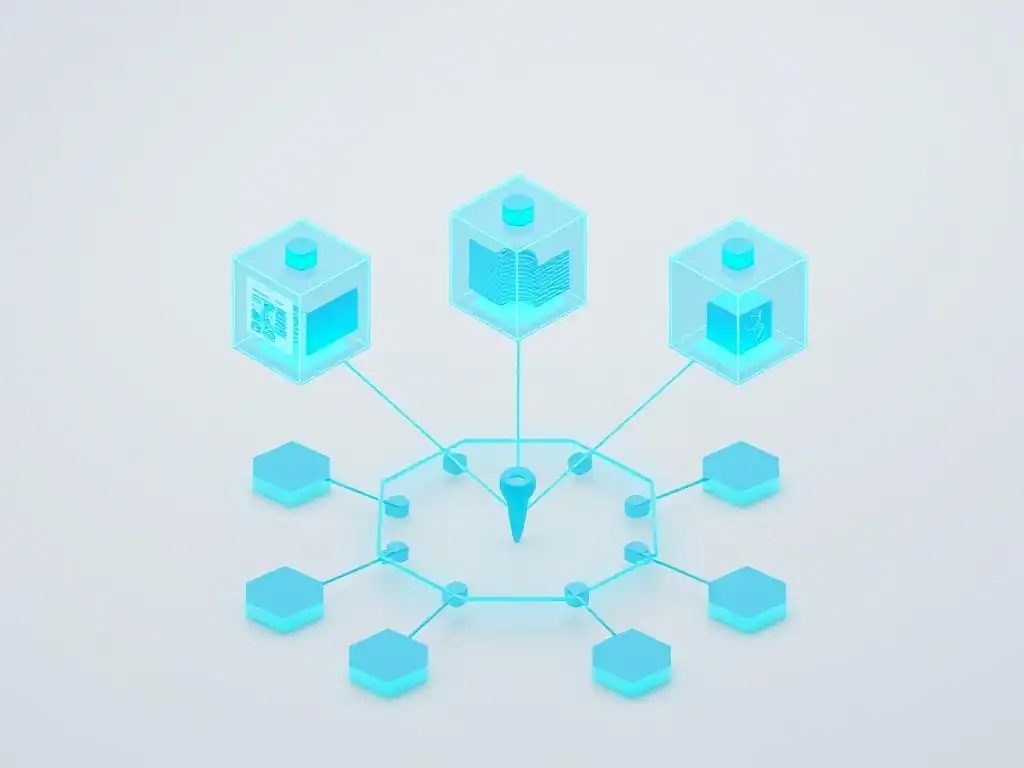
Secure Data Aggregation for Decentralized Clinical Trials
One compelling application of Secure Multi-Party Computation on blockchain is in decentralized clinical trials. Clinical trials involve collecting and analyzing highly sensitive patient data from various sources (hospitals, clinics, wearable devices).
Aggregating this data for statistical analysis is crucial for determining the efficacy and safety of new treatments, but patient privacy regulations (like HIPAA in the US or GDPR in Europe) strictly limit how this data can be shared and processed. Using SMPC, multiple research institutions or data custodians can collaborate to compute aggregate statistics (e.g., average patient response, median recovery time, correlation between factors) on their combined patient datasets without ever revealing individual patient records to each other or to a central server.
In this scenario, a blockchain can be used to register the participating institutions, define the data aggregation task, commit to the datasets being used (e.g., via cryptographic hashes), and record the final, verifiable aggregate results. The SMPC computation occurs off-chain, where each institution processes its encrypted data shares or participates in the interactive protocol. This ensures secure blockchain data privacy for patients while enabling valuable research collaboration.
For example, institutions could collectively calculate the average reduction in a specific biomarker across all patients in the trial, distributed across different locations, without any single institution seeing the raw biomarker levels of patients from another. This method preserves patient confidentiality and complies with stringent data privacy regulations, demonstrating a powerful application of secure blockchain data privacy.
Decentralized Finance (DeFi): Private and Secure Trading on Blockchain
Decentralized Finance (DeFi) platforms offer open and transparent financial services on blockchain, but this transparency can be a double-edged sword. While beneficial for auditability, revealing all transaction details, trading strategies, and liquidity positions publicly can expose users to front-running, market manipulation, and loss of privacy regarding their financial activities.
Secure Multi-Party Computation can significantly enhance secure blockchain data privacy in DeFi by enabling private computations for sensitive operations. For instance, in a decentralized exchange (DEX), users could submit encrypted buy or sell orders, and an SMPC protocol involving the users and potentially liquidity providers could match orders and compute trade execution prices without revealing the individual order details to the public or even to the matching parties until the trade is settled.
Another application in DeFi is private lending or borrowing pools. Lenders and borrowers might want to contribute capital or request loans based on certain criteria without revealing their exact financial status or loan terms to everyone on the blockchain.
SMPC could facilitate the computation of interest rates, collateral requirements, or even creditworthiness scores based on private data inputs from participants, with only the final, agreed-upon loan parameters recorded on-chain. This allows for more sophisticated and private financial interactions within the decentralized ecosystem, addressing the privacy concerns that currently hinder the adoption of DeFi for institutional or privacy-conscious users and bolstering secure blockchain data privacy within financial applications.
Enhancing Supply Chain Traceability with SMPC-Enabled Blockchain
Supply chains involve numerous parties – producers, manufacturers, distributors, retailers, regulators – each holding sensitive information about their part of the process (e.g., production costs, supplier identities, transportation routes, quality control data). While blockchain is increasingly used for supply chain traceability to provide transparency and immutability regarding product origin and movement, revealing all details publicly can expose proprietary information or sensitive commercial relationships.
Secure Multi-Party Computation can be integrated into blockchain-based supply chain solutions to enable privacy-preserving data analysis and verification. For example, auditors or regulators might need to verify that certain ethical sourcing standards or quality control thresholds are met across the entire supply chain, but individual companies might not want to reveal their specific suppliers or internal process data.
Using SMPC, parties in the supply chain could collectively compute whether the aggregated data meets the required standards without revealing their individual contributions. A food producer, a transporter, and a retailer could collectively verify the temperature history of a sensitive shipment throughout its journey, ensuring it stayed within acceptable limits, without any single party seeing the detailed temperature logs of the others.
The blockchain would record the commitment to the data and the verifiable outcome of the SMPC computation (e.g., "Temperature standard met" or "Standard not met"). This allows for enhanced traceability and compliance checking while maintaining the confidentiality of sensitive business data, providing secure blockchain data privacy in complex, multi-party supply chain networks.
Advantages and Disadvantages of Using SMPC for Secure Blockchain Data Privacy
Pros: Enhanced Security, Data Privacy, and Compliance
The integration of Secure Multi-Party Computation with blockchain offers significant advantages, primarily centered around enhancing security and privacy. The most prominent benefit is strong data confidentiality: SMPC guarantees that sensitive input data remains private throughout the computation process, visible only to its owner, not even to the other parties involved in the computation or observers of the blockchain.
This is a fundamental improvement over simply encrypting data on a public ledger, where patterns or metadata might still be exposed. By keeping sensitive data off-chain and processing it privately, SMPC directly addresses the transparency challenge of blockchain, enabling secure blockchain data privacy for sensitive applications.
Furthermore, SMPC facilitates trustless collaboration: it allows multiple parties who may not trust each other to jointly compute a function on their combined private data without needing a trusted intermediary. This aligns perfectly with the decentralized nature of blockchain and opens up possibilities for new types of collaborative data analysis and value creation in decentralized ecosystems. Coupled with the immutability and verifiability of the blockchain, this creates a powerful platform for secure, privacy-preserving computations.
Finally, using SMPC can help organizations achieve regulatory compliance with strict data protection laws like GDPR, which mandate privacy by design and minimize data exposure. By ensuring that private data is processed without being revealed, SMPC provides a technical mechanism to meet these legal requirements while still leveraging the benefits of decentralized technologies, significantly bolstering secure blockchain data privacy efforts.
Cons: Computational Overhead, Complexity, and Scalability Challenges
Despite its powerful privacy guarantees, integrating Secure Multi-Party Computation with blockchain technology comes with notable disadvantages and challenges. A major drawback is the significant computational overhead. SMPC protocols are inherently more resource-intensive than standard plaintext computations.
This results in higher processing times and energy consumption, which can be a bottleneck, especially for complex functions or large datasets. Compared to executing a simple addition in milliseconds, an SMPC-based addition involving several parties might take orders of magnitude longer, potentially seconds or minutes, depending on the protocol and network conditions. This overhead can limit the types of applications where SMPC is currently practical for achieving secure blockchain data privacy.
Another critical issue is the complexity of implementation and deployment. Designing and coding secure SMPC protocols requires highly specialized cryptographic expertise. Integrating these off-chain protocols with on-chain smart contract logic adds layers of complexity, increasing the risk of errors or vulnerabilities. Debugging and auditing such systems are also challenging.
Furthermore, scalability remains a significant hurdle for many SMPC protocols, particularly as the number of participating parties increases. Communication costs between parties can grow substantially, potentially limiting the applicability of SMPC to scenarios involving a relatively small number of participants. While research is actively working on more efficient and scalable protocols, these factors currently pose practical limitations on the widespread adoption of SMPC for achieving secure blockchain data privacy in all potential use cases.
Overcoming Challenges in SMPC-Blockchain Integration
Optimizing Computational Efficiency in SMPC
Addressing the computational overhead of Secure Multi-Party Computation is crucial for its practical adoption alongside blockchain technology for secure blockchain data privacy. Researchers and developers are actively working on various techniques to optimize SMPC efficiency. One approach involves protocol design improvements. Developing new SMPC protocols or refining existing ones (like SPDZ variants) to reduce the number of communication rounds or the amount of computation per round can yield significant performance gains. For example, protocols leveraging techniques like oblivious transfer extensions or batching operations can process multiple computations more efficiently.
Another avenue is hardware acceleration. Utilizing specialized hardware, such as FPGAs (Field-Programmable Gate Arrays) or ASICs (Application-Specific Integrated Circuits), designed for cryptographic operations can drastically speed up the computationally intensive parts of SMPC protocols. While still in early stages for general-purpose SMPC, hardware acceleration holds promise for specific, repetitive computations.
Furthermore, combining SMPC with other cryptographic primitives can improve efficiency. For instance, using homomorphic encryption for certain parts of a computation that are more amenable to it, or using zero-knowledge proofs to verify computation correctness more efficiently on-chain, can offload work and reduce the overall computational burden, thereby enhancing the feasibility of secure blockchain data privacy solutions.
Improving Scalability of SMPC on Blockchain
Scalability is a key challenge for SMPC, particularly in scenarios involving a large number of parties, which limits its applicability for widespread secure blockchain data privacy. Efforts to improve SMPC scalability often focus on reducing the communication complexity, which tends to be the primary bottleneck as the number of parties grows. Protocols with better asymptotic complexity concerning the number of parties are being developed. For example, some protocols aim for communication complexity that is linear or quasi-linear in the number of parties, rather than quadratic.
Techniques like preprocessing or offline phases can also help. In protocols with an offline phase, the most computationally and communication-intensive parts (like generating correlated randomness) are performed once before the parties have their inputs. The online phase, which involves computing on the actual inputs, is then much faster and requires less communication.
This shifts the cost to a setup phase that can be amortized over multiple computations. Additionally, hierarchical or layered SMPC structures could be explored, where computations involving many parties are broken down into smaller computations among subgroups, with results aggregated in a privacy-preserving way. These approaches aim to make SMPC practical for larger-scale decentralized applications requiring secure blockchain data privacy.
Simplifying SMPC Implementation for Wider Adoption
The high complexity of implementing Secure Multi-Party Computation is a significant barrier to its wider adoption, including for achieving secure blockchain data privacy. Simplifying the development process is essential. One way to address this is through the development of high-level programming frameworks and libraries specifically designed for SMPC.
These frameworks aim to abstract away the intricate cryptographic details, allowing developers to express the function they want to compute privately using more familiar programming constructs. Examples include libraries that allow developers to define functions using Python or other languages, which are then automatically compiled into the underlying arithmetic or Boolean circuits required by SMPC protocols.
Another approach is to provide modular and reusable SMPC components. Instead of building every private computation from scratch, developers could use pre-built, audited modules for common tasks like private summation, private comparison, or private intersection. This would reduce development time and decrease the likelihood of introducing security vulnerabilities.
Furthermore, better tools for testing, debugging, and verifying SMPC implementations are needed. Given the sensitivity of the data involved, ensuring the correctness and security of the protocol implementation is paramount. Simplified interfaces for interacting with blockchain smart contracts and clearer documentation also contribute to making SMPC more accessible to a broader range of developers, thereby accelerating the deployment of solutions for secure blockchain data privacy.
The Future of Secure Multi-Party Computation and Blockchain Data Privacy
Emerging Trends in SMPC and Blockchain Integration
The integration of Secure Multi-Party Computation and blockchain is a rapidly evolving field, driven by the increasing demand for secure blockchain data privacy in decentralized systems. Several key trends are emerging. One significant trend is the development of more efficient and general-purpose SMPC protocols. Researchers are pushing the boundaries to create protocols that can handle more complex functions, involve a larger number of parties, and perform computations faster, potentially closing the performance gap with plaintext computation for certain tasks. This includes advancements in areas like actively secure protocols that can tolerate malicious adversaries with better efficiency.
Another trend is the tightening integration between SMPC and other privacy-enhancing technologies (PETs), such as Zero-Knowledge Proofs (ZKPs) and Homomorphic Encryption (HE). Combining these techniques can create more robust and efficient privacy solutions. For instance, ZKPs can be used to prove the correctness of an SMPC computation's output on-chain without revealing the inputs or the computation steps, providing verifiable secure blockchain data privacy.
Furthermore, there is growing interest in developing SMPC-friendly hardware and specialized computing environments that can accelerate the execution of SMPC protocols, potentially making complex private computations feasible in real-time for certain applications. These trends indicate a future where privacy-preserving computation becomes a standard feature in decentralized applications, fundamentally enhancing secure blockchain data privacy.
Potential Applications and Future Developments
The potential applications of Secure Multi-Party Computation on blockchain extend across numerous sectors and are expected to grow significantly as the technology matures. Beyond the current examples like private data aggregation in healthcare, confidential transactions in DeFi, and enhanced supply chain privacy, future developments could unlock even more sophisticated use cases.
For instance, privacy-preserving machine learning on blockchain could become feasible, allowing multiple parties to collaboratively train or use machine learning models on their combined private data without revealing that data. This could revolutionize areas like fraud detection, risk assessment, or personalized medicine in a privacy-compliant manner, relying on secure blockchain data privacy.
Another area of potential growth is decentralized identity and data marketplaces. SMPC could enable users to share specific attributes about themselves or monetize their data for analysis without revealing the raw data itself. For example, a user could prove they are over 18 or that their income is within a certain range to a dApp or service provider using SMPC, without disclosing their exact age or income.
Furthermore, as regulatory pressures around data privacy continue to mount globally, the demand for technical solutions like SMPC integrated with blockchain will likely increase. Future developments will focus on creating user-friendly platforms and standardized protocols that abstract away the underlying cryptographic complexity, making secure blockchain data privacy more accessible to mainstream developers and businesses.
The Role of SMPC in Shaping the Future of Secure Decentralized Systems
Secure Multi-Party Computation is poised to play a pivotal role in shaping the future of secure decentralized systems. As blockchain technology moves beyond its initial focus on cryptocurrencies and public, transparent ledgers towards more complex enterprise and application-specific uses, the need for robust data privacy solutions becomes paramount. SMPC provides a fundamental cryptographic primitive that directly addresses the challenge of performing computations on sensitive data in a decentralized environment without compromising confidentiality. It enables trustless collaboration on private information, a capability essential for numerous real-world applications that cannot operate with full data transparency.
By allowing parties to derive collective insights or execute agreements based on confidential inputs, SMPC facilitates the creation of dApps that were previously impossible due to privacy constraints. It is a key enabler for building truly secure and privacy-preserving decentralized ecosystems that can handle sensitive personal, financial, or business data.
As research continues to improve the efficiency and scalability of SMPC protocols, and as development frameworks mature, its integration with blockchain will become more seamless and widespread. Ultimately, SMPC is critical for realizing the full potential of decentralized technologies, ensuring that innovation in this space does not come at the cost of individual or organizational data privacy, thereby solidifying the foundation for secure blockchain data privacy in the decentralized future.
Conclusion: Embracing Collaborative Data Privacy with SMPC and Blockchain
Key Takeaways on Secure Blockchain Data Privacy
Achieving secure blockchain data privacy in decentralized applications is a complex but critical challenge. While blockchain offers transparency, immutability, and security through its distributed nature and cryptography, its inherent openness often conflicts with the need to protect sensitive information. Simply encrypting data on-chain provides limited privacy if the computation or access patterns reveal underlying information.
Secure Multi-Party Computation (SMPC) emerges as a powerful cryptographic solution that directly addresses this gap by enabling multiple parties to compute a function on their private data without revealing their individual inputs. Integrating SMPC with blockchain leverages the strengths of both technologies: SMPC provides the privacy-preserving computation capability, while blockchain offers a decentralized, verifiable, and immutable platform for coordination and recording outcomes.
The key takeaways are that secure blockchain data privacy requires more than just encryption; it necessitates methods for computing on private data without exposing it. SMPC provides this capability, allowing for collaborative data analysis, private transactions, and confidential verification in a decentralized setting. While challenges related to computational overhead, implementation complexity, and scalability exist, ongoing research and development are actively working to mitigate these issues. The future of decentralized applications, particularly in regulated industries handling sensitive data, will heavily rely on privacy-enhancing technologies like SMPC to ensure secure blockchain data privacy and foster trust.
The Importance of SMPC for Building Trust in Blockchain Applications
Trust is a cornerstone of any successful system, and in decentralized applications built on blockchain, trust is often derived from transparency and cryptographic security. However, for applications dealing with sensitive or proprietary data, excessive transparency can erode trust by compromising privacy.
Secure Multi-Party Computation is vital for building trust in these scenarios because it allows parties to participate in computations and agreements while being confident that their private information remains confidential. By guaranteeing that individual inputs are not revealed, SMPC enables collaboration among parties who might otherwise be unwilling to share their data, such as competing businesses, healthcare providers, or financial institutions.
Integrating SMPC into blockchain architectures demonstrates a commitment to protecting user and business data, which is essential for broader adoption, especially in enterprise and regulated sectors. It moves blockchain beyond just providing transparent transaction ledgers to enabling private, yet verifiable, interactions and computations. This capability is crucial for fostering confidence among users and organizations that need to leverage the benefits of decentralization without sacrificing privacy. Therefore, SMPC is not just a technical add-on but a fundamental component for building trustworthy, privacy-preserving, and secure blockchain data privacy solutions that can meet the demands of real-world applications.
Looking Ahead: The Future of Data Privacy in the Blockchain Ecosystem
The future of data privacy in the blockchain ecosystem will undoubtedly be shaped by the continued advancement and integration of privacy-enhancing technologies like Secure Multi-Party Computation. As blockchain technology matures and its applications become more sophisticated, the need to handle sensitive data privately and securely will only increase. We can anticipate further development in more efficient and user-friendly SMPC protocols, potentially tailored for specific blockchain use cases like DeFi, supply chain, or identity management. The convergence of SMPC with other PETs, such as Zero-Knowledge Proofs and Homomorphic Encryption, will lead to more comprehensive and flexible privacy solutions.
As these technologies become more accessible through improved frameworks and tools, developers will be empowered to build a new generation of decentralized applications that are not only secure and transparent where appropriate but also fundamentally privacy-preserving. This will unlock the potential of blockchain for a wider range of industries and applications that are currently hesitant to adopt the technology due to privacy concerns.
The ongoing evolution of secure blockchain data privacy solutions, with SMPC as a key component, is essential for building a decentralized future where data can be leveraged for collective benefit without compromising individual or organizational confidentiality, paving the way for a more trusted and widely adopted blockchain ecosystem.
Frequently Asked Questions
How does Secure MultiParty Computation (MPC) contribute to secure blockchain data privacy?
MPC allows multiple parties to compute a function over their inputs while keeping those inputs private. This is crucial for blockchain as it enables data collaboration without revealing sensitive information to any single party, thus boosting data privacy.
What are some practical applications of MPC on blockchain beyond just financial transactions?
Beyond finance, MPC can be used in supply chain management to share inventory data without revealing proprietary information, in healthcare for collaborative research on patient data, and in voting systems to ensure privacy and integrity.
What challenges exist in implementing MPC solutions on blockchain networks?
Challenges include the computational overhead associated with MPC protocols, ensuring compatibility with different blockchain platforms, and addressing potential regulatory hurdles related to data privacy and security.
How does MPC differ from other privacy-enhancing technologies like zero-knowledge proofs?
While both enhance privacy, MPC focuses on collaborative computation without revealing inputs, whereas zero-knowledge proofs allow one party to prove the validity of a statement without revealing the statement itself. They serve different, though sometimes complementary, privacy needs.
What is the future outlook for MPC in the context of blockchain and secure data privacy?
The future looks promising as research continues to improve MPC efficiency and address scalability concerns. MPC is expected to play an increasingly important role in enabling more secure and private blockchain applications across various industries, especially in data sensitive areas.
Final Reflection: Embracing Secure Blockchain Data Privacy
The exploration of Secure MultiParty Computation (SMPC) on blockchain, as detailed in this article, underscores a critical need in today's digital landscape: the imperative for secure blockchain data privacy. While blockchain technology promises transparency and immutability, the inherent exposure of data necessitates innovative solutions like SMPC to safeguard sensitive information. The convergence of these technologies isn't just a theoretical exercise; it's a practical response to the growing demand for data sovereignty and user empowerment in a decentralized world.
The ongoing influence of this topic is undeniable, shaping the future of data governance and trust in digital interactions. The ability to collaboratively analyze data without revealing individual contributions is a paradigm shift, fostering innovation while preserving privacy. This shift resonates deeply with the ethical considerations surrounding data collection and usage. Privacy is not an option, and it shouldn't come with the price tag of 'only if you can afford it.' Privacy must be the default.
- Tim Cook. This quote encapsulates the urgency and importance of implementing secure blockchain data privacy solutions for all.
Now, consider the implications of this technology for your own digital footprint. How can you advocate for and adopt solutions that prioritize secure blockchain data privacy? Reflect on the data you share and the platforms you use. Embrace the power of informed choices and demand transparency and control over your information. The future of data privacy is not just a technological challenge, but a collective responsibility. Let us all strive to build a more secure and equitable digital world, one where privacy is not a privilege, but a fundamental right.
Unleash Collaborative Privacy: Your Next Steps
Thank you for exploring the transformative potential of secure multi-party computation and its role in enhancing data privacy on the blockchain. We hope this article has shed light on how collaborative data analysis can be achieved without compromising security. Interested in taking the next step?
Here are some ways you can deepen your understanding and contribute to this exciting field:
- Try out an open-source multi-party computation library and run a demonstration to see how it works in practice. Hands-on experience is the best way to innovate!
- Share this article with your network to encourage discussions about the importance of data privacy in blockchain technology. Spreading knowledge can inspire others to get involved.
- Consider contributing to a community-driven multi-party computation project or developing your own algorithm focused on privacy preservation.
What do you see as the main challenges to widespread adoption of multi-party computation in blockchain? How can we work together to overcome these obstacles? Share your thoughts in the comments below!
Leave a Reply