
US Blockchain Regulation: Navigating the Shifting Sands of State and Federal Laws


Welcome to Blockchain Trends, your compass in the rapidly evolving world of decentralized technology. Beyond the hype, blockchain is reshaping industries, and understanding its legal landscape is paramount. Are you ready to navigate the complexities? Dive into our US Blockchain Regulation Compliance Guide to unlock the secrets of staying compliant in this dynamic environment and discover what the future holds for blockchain innovation in the United States.
- US Blockchain Regulation Compliance Guide: Navigating the Shifting Sands of State and Federal Laws
- Federal Blockchain Regulations in the United States: An Overview
- State-Level Blockchain Regulations: A Patchwork of Laws
- Key Areas of US Blockchain Regulation Compliance
- Challenges and Opportunities in US Blockchain Regulation
- Practical Guide to US Blockchain Regulation Compliance
- Resources for Navigating US Blockchain Laws
-
Frequently Asked Questions
- What are the primary challenges businesses face when trying to achieve US blockchain regulation compliance?
- How does the "US Blockchain Regulation Compliance Guide" help businesses understand the legal framework?
- What key areas of blockchain technology are currently under the most regulatory scrutiny in the US?
- Is there a single, comprehensive federal law governing all blockchain activities in the US?
- What role do state laws play in the US blockchain regulatory landscape?
- Final Reflection: Charting a Course Through Blockchain's Regulatory Seas
- Unravel the Future: Take Charge of Your Blockchain Journey!
Understanding the Complex Landscape of US Blockchain Laws
Navigating the regulatory environment for blockchain technology in the United States presents a significant challenge for businesses and innovators. Unlike many other jurisdictions, the US operates under a dual system of federal and state laws, creating a complex patchwork where different agencies and states assert varying levels of authority over digital assets and related activities.
This fragmentation means that a single blockchain project or business might be subject to regulations from multiple federal bodies like the SEC, CFTC, and FinCEN, as well as specific laws enacted by individual states like New York or Wyoming. The lack of a unified federal framework often leads to uncertainty, making it difficult for companies to ensure comprehensive US blockchain regulation compliance.
The rapid evolution of blockchain technology further complicates the regulatory landscape. Regulators are often playing catch-up, attempting to apply existing laws designed for traditional financial systems or technologies to novel decentralized applications and tokens. This can result in inconsistent interpretations, enforcement actions based on novel legal theories, and a general lack of clear guidance on how specific blockchain use cases fit within the current legal structure.
For example, the classification of a digital asset as a security, commodity, or currency can drastically alter the applicable regulatory requirements, and this classification often depends on subjective analysis based on frameworks like the Howey Test. Successfully achieving US blockchain regulation compliance requires not just understanding current rules but also anticipating potential regulatory shifts and interpretations.
Federal Blockchain Regulations in the United States: An Overview
Key Federal Agencies and Their Roles in Blockchain Oversight
Multiple federal agencies share oversight responsibilities concerning blockchain technology and digital assets in the United States, reflecting the diverse potential applications and risks of the technology. This overlapping jurisdiction can create complexity for businesses trying to determine which rules apply to their specific activities.
The primary players include the Securities and Exchange Commission (SEC), the Commodity Futures Trading Commission (CFTC), the Financial Crimes Enforcement Network (FinCEN), and the Internal Revenue Service (IRS), each focusing on different aspects such as securities, commodities, financial crime, and taxation. Understanding the specific mandates and interpretations of each of these bodies is fundamental to developing a robust US blockchain regulation compliance guide.
The varying perspectives and priorities of these agencies contribute to the fragmented federal approach. While the SEC primarily focuses on investor protection and market integrity, often viewing digital assets through the lens of securities law, the CFTC is concerned with preventing fraud and manipulation in markets involving digital assets classified as commodities. FinCEN's focus is squarely on anti-money laundering (AML) and counter-terrorist financing (CTF) measures, requiring businesses dealing with virtual currencies to implement robust compliance programs.
Meanwhile, the IRS treats virtual currency as property for tax purposes, imposing reporting obligations on users and businesses. Navigating this multi-agency environment requires a nuanced understanding of each agency's domain and how they interact, making effective US blockchain regulation compliance a specialized field.
Securities and Exchange Commission (SEC) and Digital Assets
The SEC has been a key player in the US blockchain regulation space, particularly concerning the issuance and trading of digital assets. Their primary focus has been on identifying and pursuing actions against initial coin offerings (ICOs) and other token sales that they deem to be unregistered securities offerings.
Using the long-standing Howey Test, derived from a 1946 Supreme Court case, the SEC analyzes whether a digital asset constitutes an "investment contract" and therefore falls under federal securities laws. As of late 2023, the SEC had brought dozens of enforcement actions against blockchain projects and individuals, resulting in millions, sometimes billions, in penalties and disgorgement, underscoring their aggressive stance on what they consider unregistered securities.
The SEC's position is that many tokens sold during ICOs were sold as investment contracts, meeting the criteria of the Howey Test. This means that issuers are required to register the offering with the SEC or qualify for an exemption, and platforms trading these tokens must register as securities exchanges or broker-dealers.
The lack of clear, bright-line rules on when a token is not a security remains a significant challenge, although SEC officials have suggested that truly decentralized networks or tokens used purely for consumption within a functional network might not be securities. Businesses involved in token issuance or trading must conduct thorough legal analysis to navigate this complex area and ensure US blockchain regulation compliance with securities laws.
Commodity Financial Trading Commission (CFTC) and Cryptocurrency Regulation
The CFTC oversees the commodity markets in the United States and has asserted jurisdiction over certain digital assets, specifically those it classifies as commodities. The CFTC has consistently stated that virtual currencies like Bitcoin and Ether are commodities. Their regulatory authority primarily extends to preventing fraud and manipulation in the derivatives markets tied to these digital assets, such as Bitcoin futures. While they do not regulate the spot markets for commodities directly in the same way the SEC regulates securities exchanges, they can pursue enforcement actions against fraud or manipulation occurring in the underlying spot markets that impacts derivatives.
The CFTC's approach complements, but also sometimes overlaps with, the SEC's jurisdiction. For instance, while the SEC might view a token sale as a securities offering, the CFTC might consider the underlying asset a commodity if it is used in derivatives trading. The CFTC has also taken enforcement actions against platforms offering illegal derivatives trading to US persons without proper registration. For businesses offering crypto derivatives or operating platforms where such trading occurs, understanding the CFTC's regulations and ensuring US blockchain regulation compliance related to commodities is essential alongside securities compliance.
Financial Crimes Enforcement Network (FinCEN) and Anti-Money Laundering (AML) Compliance for Blockchain Businesses
FinCEN, a bureau of the U.S. Department of the Treasury, is the primary regulator responsible for enforcing anti-money laundering (AML) and counter-terrorist financing (CTF) laws within the US financial system, including activities involving virtual currency. FinCEN considers businesses that transmit virtual currency on behalf of others, or engage in activities deemed "money transmission," to be Money Service Businesses (MSBs). As MSBs, these entities are subject to the Bank Secrecy Act (BSA) and its implementing regulations, requiring them to register with FinCEN.
Compliance with FinCEN regulations mandates the implementation of a comprehensive AML program. This program typically includes appointing a compliance officer, developing internal policies and procedures, conducting independent testing, and providing ongoing training. Crucially, MSBs dealing with virtual currency must also implement Know Your Customer (KYC) procedures to verify the identity of their customers and conduct ongoing monitoring of transactions to detect and report suspicious activity. Failure to comply with these requirements can result in significant civil and criminal penalties, making FinCEN compliance a cornerstone of any US blockchain regulation compliance guide.
IRS Guidance on Cryptocurrency Taxation
The Internal Revenue Service (IRS) has provided guidance on the taxation of virtual currency, classifying it as property for federal tax purposes. This means that the general tax principles applicable to property transactions apply to transactions using virtual currency.
Taxable events occur when a taxpayer sells virtual currency for fiat currency, exchanges one virtual currency for another, or uses virtual currency to pay for goods or services. In these instances, the taxpayer must calculate the capital gain or loss based on the difference between the virtual currency's fair market value at the time of the transaction and its cost basis (what the taxpayer paid for it).
For individuals and businesses holding virtual currency, understanding the tax implications is a critical part of US blockchain regulation compliance. Gains from virtual currency held for one year or less are taxed at ordinary income rates (short-term capital gains), while gains from virtual currency held for more than one year are taxed at lower long-term capital gains rates.
Taxpayers are required to report all virtual currency transactions on their tax returns, often using specific forms like Form 8949, Sales and Other Dispositions of Capital Assets, and Schedule D, Capital Gains and Losses. The IRS has increased its efforts to identify non-compliant taxpayers through data analytics and third-party information reporting, emphasizing the importance of accurate reporting.
State-Level Blockchain Regulations: A Patchwork of Laws
Examining Key State Blockchain Laws and Initiatives
Beyond the federal framework, individual states have adopted a diverse range of approaches to regulating blockchain technology and digital assets, creating a complex and often inconsistent landscape. Some states have actively sought to attract blockchain businesses by enacting favorable legislation, while others have implemented strict licensing requirements or applied existing financial regulations.
This state-by-state variation means that a business operating across different states must navigate a patchwork of unique rules, adding layers of complexity to achieving comprehensive US blockchain regulation compliance. The divergence in state laws reflects differing views on the potential benefits and risks of the technology, as well as varying priorities for economic development and consumer protection.
Examples of state initiatives range from specific laws addressing the legal status of blockchain records and digital signatures to comprehensive licensing frameworks for virtual currency businesses. States like Wyoming have positioned themselves as leaders in creating a favorable legal environment, while others like New York have implemented stringent regulations that have been criticized by some industry participants. This fragmented approach necessitates careful consideration of the regulatory requirements in each state where a blockchain business operates or serves customers. Understanding these specific state-level nuances is vital for any effective US blockchain regulation compliance guide.
Wyoming: A Pro-Blockchain State
Wyoming has emerged as one of the most proactive states in the US in creating a welcoming legal and regulatory environment for blockchain businesses. The state has enacted a series of laws aimed at providing regulatory clarity and legal certainty for digital assets and blockchain technology. Notably, Wyoming passed legislation recognizing different types of digital assets, including virtual currencies, digital securities, and utility tokens, and clarified their legal status as intangible personal property.
Further demonstrating its commitment, Wyoming created a new type of state-chartered bank specifically for digital asset businesses, known as Special Purpose Depository Institutions (SPDIs). These institutions are designed to provide banking services to crypto businesses and hold digital assets in custody, addressing a significant challenge faced by many in the industry who struggle to access traditional banking services. Wyoming's legislative efforts also include exemptions for utility tokens from state securities laws under certain conditions, making it a key state to study for US blockchain regulation compliance strategies focused on favorable state environments.
Delaware: Blockchain and Corporate Governance
Delaware, a leading state for corporate domicile in the US, has explored the potential of blockchain technology to enhance corporate governance and record-keeping. Recognizing the potential for blockchain to create more efficient and secure systems for managing corporate records, tracking stock ownership, and facilitating shareholder communications and voting, Delaware amended its General Corporation Law.
These amendments allow Delaware corporations to use distributed ledger technology, or blockchain, for maintaining corporate records, including stock ledges. While adoption has been gradual, these legal changes signal a forward-thinking approach to integrating blockchain into traditional corporate structures. For companies incorporated in Delaware that utilize or plan to utilize blockchain for corporate functions, understanding these specific state-level provisions is an important aspect of their overall US blockchain regulation compliance strategy.
New York's BitLicense and its Impact
New York State implemented one of the earliest and most comprehensive state-level regulatory frameworks for virtual currency businesses: the "BitLicense," officially known as the regulation governing virtual currency business activity. Issued by the New York State Department of Financial Services (NYDFS), the BitLicense requires any business engaged in virtual currency business activity involving New York residents or located in New York to obtain a license.
The BitLicense covers activities such as receiving virtual currency for transmission, storing, holding, or maintaining custody of virtual currency, and performing exchange services. The application process is notoriously rigorous and costly, requiring detailed information about business plans, financial health, and compliance programs.
While intended to protect consumers and prevent illicit activity, the strictness of the BitLicense has led some companies to avoid operating in New York, impacting the state's position in the digital asset industry. For any business planning to serve customers in New York, obtaining or understanding the implications of the BitLicense is a critical step in US blockchain regulation compliance.
California: The California Consumer Privacy Act (CCPA) and Blockchain
While California has not enacted comprehensive blockchain-specific legislation akin to New York or Wyoming, its broad data privacy law, the California Consumer Privacy Act (CCPA), has significant implications for blockchain applications that handle personal data. The CCPA grants California consumers specific rights regarding their personal information, including the right to know what data is collected about them, the right to request deletion of their personal information, and the right to opt-out of the sale of their data.
The immutable nature of many blockchain designs presents challenges when complying with rights like the right to deletion under the CCPA. If personal data is stored directly on a public, immutable blockchain, fulfilling a deletion request is technically impossible.
This requires businesses to carefully consider how they handle personal data in blockchain applications, potentially storing sensitive data off-chain with on-chain references, or using permissioned blockchains with mechanisms for data obfuscation or deletion if feasible within the technical design. Navigating the intersection of blockchain technology and general data privacy laws like CCPA is a growing area of focus for US blockchain regulation compliance.
State-by-State Comparison of Blockchain Regulations
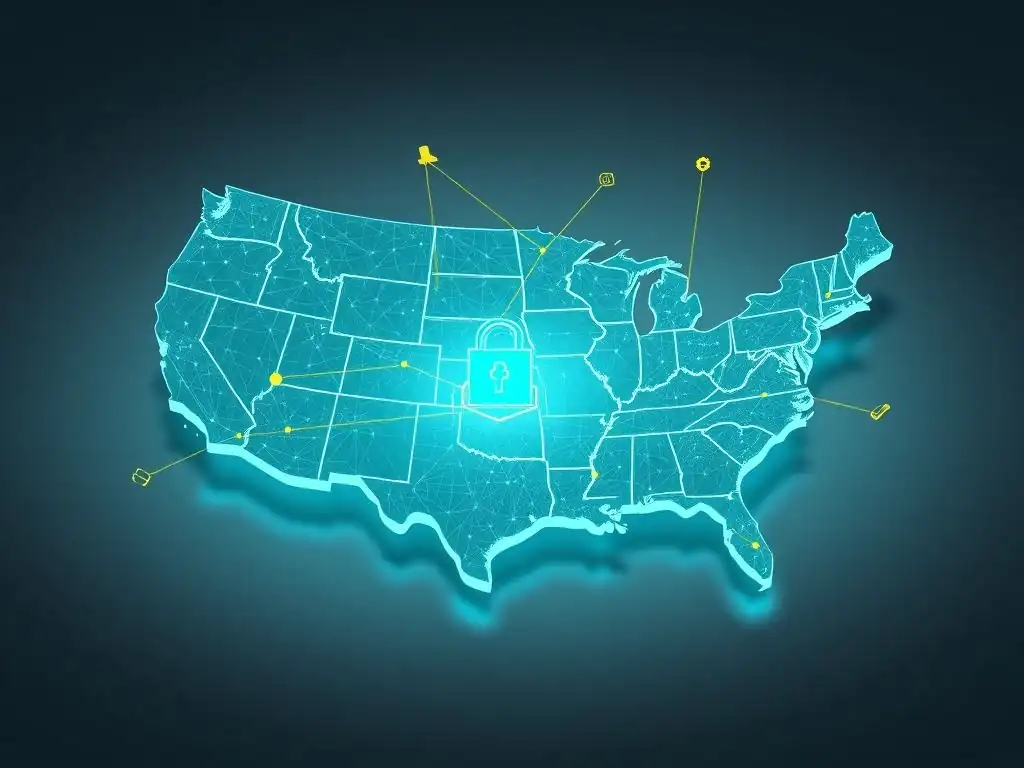
The divergence in state-level approaches creates a complex compliance environment that often resembles a patchwork rather than a unified system. While states like Wyoming have adopted a supportive stance with specific legislation aimed at fostering the industry, others like New York have implemented strict licensing regimes. Many states fall somewhere in between, either applying existing money transmission laws to virtual currency businesses or taking a wait-and-see approach.
This lack of uniformity means that a business operating nationally must potentially comply with dozens of different state-level requirements in addition to federal regulations. For example, state money transmitter laws vary significantly in their scope, licensing requirements, and exemptions. Some states may have specific guidance on virtual currency, while others do not. This necessitates a detailed state-by-state analysis for businesses seeking comprehensive US blockchain regulation compliance, often requiring engagement with multiple state regulatory bodies. The fragmented nature of state laws is a primary reason why many in the industry advocate for clearer federal guidance or preemption.
Key Areas of US Blockchain Regulation Compliance
Securities Laws and Initial Coin Offerings (ICOs)
One of the most significant areas of regulatory scrutiny for blockchain projects in the US has been the application of securities laws, particularly concerning Initial Coin Offerings (ICOs) and other forms of token distribution. The SEC's position is that many tokens offered and sold, especially during early-stage fundraising, qualify as investment contracts and are therefore securities subject to federal registration requirements unless an exemption applies.
This focus stems from the SEC's mandate to protect investors and maintain fair and orderly markets. Failure to comply with securities laws can result in severe penalties, including fines, disgorgement of funds, and injunctions preventing further activity.
The SEC's enforcement actions have targeted a wide range of projects, from large-scale ICOs raising hundreds of millions of dollars to smaller token sales. These actions highlight the risk that simply labeling a token a "utility token" does not automatically exempt it from being classified as a security under the SEC's analysis.
Projects must carefully structure their token sales and ongoing operations to avoid triggering securities registration requirements, or alternatively, comply with those requirements, which can be complex and costly. Navigating this area is paramount for any project involving the issuance or sale of digital assets aiming for robust US blockchain regulation compliance.
The Howey Test and Token Classifications
The cornerstone of the SEC's analysis for determining if a digital asset is an investment contract is the Howey Test. This test originated from the 1946 Supreme Court case SEC v. W.J. Howey Co. and defines an investment contract as:
- An investment of money
- In a common enterprise
- With an expectation of profits
- Derived solely from the efforts of others
The SEC applies this four-pronged test to digital assets, examining the circumstances surrounding the offer and sale of the token, the promises made by the promoters, and the economic realities of the transaction. For example, if investors purchase tokens with the expectation that the value will appreciate based on the efforts of the project team to build out a platform or network, it is likely to be considered an investment contract.
The application of the Howey Test to digital assets is highly fact-specific and has led to ongoing debate regarding the distinction between "security tokens" and "utility tokens." While the SEC has acknowledged that some tokens might evolve over time from being securities to potentially not being securities once a network is sufficiently decentralized and the token is primarily used for consumption within that network, they have emphasized that this transition is not automatic and requires careful analysis. Understanding how the Howey Test applies to a specific token's characteristics and distribution model is crucial for ensuring US blockchain regulation compliance.
Complying with Securities Regulations for Blockchain Projects
For blockchain projects planning to issue tokens, ensuring compliance with US securities laws requires careful planning and legal counsel from the outset. One approach is to structure the token sale to qualify for an exemption from registration under the Securities Act of 1933, such as Regulation D (for accredited investors) or Regulation S (for non-US persons). Another strategy, particularly for projects developing a functional network, is to structure the token distribution as a Simple Agreement for Future Tokens (SAFT), which is sold as a security to accredited investors, with the tokens delivered later upon network launch.
Alternatively, projects might attempt to structure their token and distribution model in a way that argues the token is not a security under the Howey Test, often by focusing on the token's immediate utility within a functional network or by promoting decentralization to argue profits are not derived solely from the efforts of a central group. This approach carries significant risk, however, given the SEC's broad interpretation of the test.
For projects where the token clearly functions like a share or ownership stake in an entity, registering the offering as a security might be necessary, though this is a complex and expensive process. Regardless of the chosen strategy, robust legal analysis and documentation are essential components of US blockchain regulation compliance for token issuers.
Anti-Money Laundering (AML) and Know Your Customer (KYC) Requirements for Crypto Businesses
Businesses operating in the virtual currency space in the US are subject to stringent Anti-Money Laundering (AML) and Know Your Customer (KYC) regulations, primarily enforced by FinCEN. These requirements stem from the recognition that digital assets, while offering innovation, can also be exploited for illicit activities such as money laundering, terrorist financing, and sanctions evasion. Entities classified as Money Service Businesses (MSBs), which often includes virtual asset service providers (VASPs) like exchanges, custodians, and certain wallet providers, must comply with the Bank Secrecy Act (BSA).
Compliance with FinCEN rules is a non-negotiable aspect of US blockchain regulation compliance for many businesses. It requires implementing a comprehensive AML program tailored to the specific risks of the business model and the types of virtual currency handled. This includes not only identity verification but also risk assessment, transaction monitoring, and reporting suspicious activity. Failure to establish and maintain an effective AML/KYC program can lead to significant fines and even criminal prosecution, highlighting the critical importance of this area for the industry.
Implementing Effective AML/KYC Programs
An effective AML/KYC program for a virtual currency business typically involves several key components. First, it requires the establishment of a Customer Identification Program (CIP) to verify the identity of customers opening accounts. This usually involves collecting identifying information (name, address, date of birth, identification number) and verifying it using reliable independent sources, such as government-issued IDs or public databases. Enhanced Due Diligence (EDD) may be required for higher-risk customers or transactions.
Second, the program must include policies and procedures for monitoring transactions to detect suspicious activity. This involves setting up systems to analyze transaction patterns, amounts, and parties involved against established risk profiles. Third, the program needs a designated compliance officer responsible for overseeing the AML efforts, training staff, and keeping policies updated. Finally, periodic independent testing is required to assess the effectiveness of the program. Implementing these measures is fundamental to achieving US blockchain regulation compliance with AML/KYC requirements.
Reporting Suspicious Activity
A critical component of AML compliance for virtual currency businesses is the obligation to report suspicious activity. Under the Bank Secrecy Act, MSBs are required to file Suspicious Activity Reports (SARs) with FinCEN when they detect transactions or patterns of activity that suggest potential money laundering, terrorist financing, or other illicit financial activity. This includes transactions that appear unusual for the customer or lack a clear economic purpose.
While specific thresholds and criteria apply, suspicious activity often involves transactions exceeding certain monetary amounts (e.g., over $5,000 for certain types of suspicious activity) or patterns of smaller transactions designed to evade reporting requirements (structuring). Businesses must train their staff to identify red flags and establish clear internal procedures for escalating potential suspicious activity to the compliance officer and filing SARs within the mandated timeframe (typically 30 days after the initial detection). Proper and timely SAR filing is a key indicator of a compliant AML program under US blockchain regulation.
Data Privacy and Blockchain: GDPR and CCPA Implications
The inherent design of many blockchain technologies, particularly public, immutable ledgers, presents unique challenges when interacting with data privacy regulations like Europe's General Data Protection Regulation (GDPR) and California's Consumer Privacy Act (CCPA). These regulations grant individuals rights over their personal data, including the right to access, rectify, and, crucially, the "right to erasure" or deletion of their data. The immutable nature of blockchain, where data, once recorded, is exceptionally difficult or impossible to alter or remove, creates a direct tension with these privacy rights.
Businesses operating blockchain applications that handle personal data of individuals covered by GDPR or CCPA must carefully consider how to reconcile blockchain's design principles with data protection requirements. Storing sensitive personal data directly on a public blockchain is generally not advisable due to the immutability issue and potential for data breaches. Instead, strategies must be employed to ensure that personal data is handled in a compliant manner, which is a growing area of focus for US blockchain regulation compliance, especially as global data privacy standards evolve.
Ensuring Data Protection in Decentralized Systems
To address the conflict between blockchain immutability and data privacy rights, various technical and architectural approaches are being explored and implemented. One common strategy is to avoid storing personal data directly on the blockchain. Instead, only hashes or cryptographic proofs of the data are stored on-chain, while the actual personal data is kept off-chain in traditional databases or storage systems that allow for modification and deletion. When a data deletion request is received, the data can be removed from the off-chain storage, rendering the on-chain hash useless.
Another approach involves using permissioned or private blockchains where access is restricted and, in some designs, mechanisms for data deletion or obfuscation might be technically feasible, although this often compromises the core principles of immutability and decentralization. Tokenization of data rights or using zero-knowledge proofs are also advanced techniques being explored. Regardless of the method, ensuring that personal data handled by a blockchain application can meet privacy requirements like the right to deletion is a complex technical and legal challenge fundamental to US blockchain regulation compliance concerning data privacy.
Impact of CCPA on Permissioned Blockchain Data
While the most significant privacy challenge arises with public, immutable blockchains, data stored on permissioned blockchains can also fall under the purview of regulations like the CCPA if it constitutes "personal information" of California consumers. In a permissioned blockchain, a governing entity or consortium typically controls access and validates transactions. If this entity collects, uses, or controls the personal information stored on or processed by the blockchain, they would likely be considered a "business" under CCPA.
In such cases, the business would need to comply with CCPA obligations, including responding to requests from consumers to know what data is held about them and to request deletion of that data. Even if data is stored on a permissioned ledger, the controlling entity must have mechanisms in place to fulfill these requests.
This might involve modifying data on the ledger (if the design allows) or providing consumers with sufficient information about the data stored and its purpose. For businesses utilizing permissioned blockchains that handle personal data of California residents, understanding and implementing CCPA compliance measures is essential for their overall US blockchain regulation compliance.
Taxation of Cryptocurrency and Blockchain Assets
The taxation of cryptocurrency and other digital assets is a significant area of US blockchain regulation compliance for both individuals and businesses. As established by the IRS, virtual currency is treated as property, meaning that holding it does not automatically trigger a tax event, but disposing of it generally does. This property classification has wide-ranging implications for how gains and losses are calculated and reported.
Understanding the specific tax rules and tracking all virtual currency transactions are crucial steps to avoid potential penalties for non-compliance. The IRS has been increasingly focused on cryptocurrency tax enforcement, sending letters to taxpayers they believe may have unreported virtual currency transactions and including questions about virtual currency on tax forms. Accurate record-keeping is paramount for demonstrating compliance with US blockchain regulation related to taxation.
Understanding US Cryptocurrency Tax Laws
Under US tax law, common taxable events involving cryptocurrency include:
- Selling cryptocurrency for US dollars or other fiat currency.
- Exchanging one cryptocurrency for another (e.g., Bitcoin for Ether).
- Using cryptocurrency to purchase goods or services.
- Receiving cryptocurrency as payment for services or as mining/staking rewards (taxed as ordinary income).
In most cases, selling or exchanging cryptocurrency triggers a capital gain or loss, calculated as the difference between the sale price (or fair market value at the time of exchange/use) and the cost basis of the cryptocurrency. If the cryptocurrency was held for one year or less before the taxable event, the gain or loss is short-term; if held for more than one year, it's long-term.
Short-term capital gains are taxed at ordinary income rates, while long-term capital gains are taxed at lower rates. Properly classifying and calculating these gains and losses is fundamental to US blockchain regulation compliance regarding taxation.
Reporting Cryptocurrency Transactions to the IRS
Taxpayers are required to report all taxable virtual currency transactions on their federal income tax returns. Capital gains and losses from cryptocurrency sales or exchanges are typically reported on Form 8949, Sales and Other Dispositions of Capital Assets, and then summarized on Schedule D, Capital Gains and Losses. Income received in the form of cryptocurrency (e.g., from mining, staking, or as payment) must be reported as ordinary income on forms like Schedule 1 or Schedule C (for businesses).
Accurate reporting necessitates meticulous record-keeping, including the date of acquisition, cost basis, date of disposition, and fair market value at the time of disposition for every transaction. Using cryptocurrency tax software or consulting with a tax professional experienced in digital assets can be highly beneficial for ensuring accurate calculations and reporting, which are critical for maintaining US blockchain regulation compliance with IRS requirements.
Challenges and Opportunities in US Blockchain Regulation
The Need for Regulatory Clarity in the Blockchain Space
One of the most significant challenges facing the blockchain industry in the United States is the pervasive lack of clear and consistent regulatory guidance. Businesses and developers often operate in a state of uncertainty, unsure how existing laws apply to their novel applications or whether new regulations are forthcoming. This ambiguity stems from several factors, including the rapid pace of technological development outpacing traditional legislative and regulatory processes, and the differing interpretations and jurisdictional claims of various federal and state agencies.
This regulatory uncertainty acts as a significant impediment to innovation and mainstream adoption. Companies may hesitate to launch new products or services, or invest heavily in the US market, due to the risk of unknowingly violating regulations or facing unexpected enforcement actions. The absence of a clear US blockchain regulation compliance guide from official sources forces businesses to rely heavily on legal interpretations and risk assessments, adding cost and complexity. Industry stakeholders widely agree that greater clarity, perhaps through dedicated federal legislation or enhanced inter-agency coordination, is essential to foster a predictable environment for growth.
Balancing Innovation and Consumer Protection
Regulators face the delicate task of balancing the promotion of technological innovation with the crucial need to protect consumers and investors from fraud, manipulation, and financial instability. Blockchain technology offers immense potential for efficiency, transparency, and new economic models, but it also introduces new risks, including volatility, cybersecurity vulnerabilities, and the potential for illicit use. Crafting regulations that effectively mitigate these risks without stifling the development of beneficial applications is a major challenge.
An overly restrictive or punitive regulatory approach could drive innovation and talent overseas, causing the US to fall behind in a rapidly evolving global industry. Conversely, a hands-off approach could leave consumers vulnerable and potentially create systemic risks. The ongoing debate reflects this tension: should regulators prioritize strict enforcement based on existing rules, even if they don't perfectly fit the technology, or should they adopt a more flexible, innovation-friendly stance, potentially through pilot programs or tailored frameworks? Finding the right balance is key to developing a sustainable and effective US blockchain regulation compliance framework.
The Future of Blockchain Regulation in the United States
Predicting the exact trajectory of US blockchain regulation is challenging due to the dynamic nature of both the technology and the political landscape. However, several trends suggest potential future developments. There is increasing pressure from industry, academics, and some policymakers for Congress to pass comprehensive federal legislation that would provide a clearer framework for digital assets, potentially defining different asset classes and clarifying agency jurisdictions. Such legislation could significantly reduce the current regulatory fragmentation and provide a clearer path for US blockchain regulation compliance.
Another likely development is continued focus on specific areas deemed high-risk by regulators, such as stablecoins, Decentralized Finance (DeFi), and Non-Fungible Tokens (NFTs). As these sectors grow, regulators are scrutinizing them more closely to assess potential risks related to financial stability, consumer protection, and illicit finance. Enhanced international cooperation on regulatory approaches is also probable, given the borderless nature of blockchain networks. The future regulatory landscape is likely to involve a combination of new legislation, updated guidance from existing agencies, and continued enforcement actions targeting non-compliant actors.
Predictions for Future Regulatory Developments
Based on current trends and discussions, several predictions can be made regarding the future of US blockchain regulation. First, expect continued efforts towards federal legislation, though the exact form and scope remain uncertain. Bipartisan proposals have been introduced in Congress aiming to provide clarity, particularly around the classification of digital assets and the roles of the SEC and CFTC. Second, regulatory focus is likely to intensify on stablecoins, with potential requirements for issuers regarding reserves, audits, and capital requirements, driven by concerns about financial stability.
Third, DeFi is anticipated to face increased scrutiny, with regulators exploring how existing rules apply to decentralized protocols and who might be held responsible for compliance obligations like AML/KYC and securities laws. Fourth, the IRS will likely continue refining its guidance and enforcement efforts on cryptocurrency taxation, potentially seeking increased information reporting from exchanges and platforms. Finally, state-level activity will persist, although comprehensive federal action could potentially preempt some state laws, simplifying the overall US blockchain regulation compliance challenge.
Practical Guide to US Blockchain Regulation Compliance
Conducting a Regulatory Risk Assessment for Your Blockchain Project
A crucial first step for any blockchain project operating or planning to operate in the US is to conduct a thorough regulatory risk assessment. This involves analyzing the specific characteristics of the project, including its technical architecture, the nature of the digital asset(s) involved (if any), the business model, the target audience, and the geographical scope of operations. The goal is to identify potential areas where the project might intersect with federal and state regulations, including securities laws, money transmission laws, AML/KYC requirements, data privacy laws, and tax laws.
The risk assessment should consider various factors, such as whether the token could be deemed a security under the Howey Test, whether the project's activities constitute money transmission in any state, how personal data is handled, and what tax obligations arise from token issuance or operations. This proactive evaluation helps identify potential compliance gaps and allows the project to structure its operations, tokenomics, and legal documentation to mitigate risks. A comprehensive risk assessment is the foundation for building an effective US blockchain regulation compliance strategy.
Seeking Legal Counsel for Blockchain Compliance
Given the complexity and evolving nature of US blockchain regulation, engaging experienced legal counsel specializing in digital assets and blockchain technology is not merely advisable but essential. Navigating the nuances of securities law, FinCEN guidance, state-specific requirements, and tax regulations requires specialized expertise that goes beyond general corporate or financial law. Legal professionals who are knowledgeable about both the technology and the relevant legal frameworks can provide tailored advice based on the specific details of a project.
Legal counsel can assist with critical tasks such as conducting the initial regulatory risk assessment, structuring token sales to comply with securities exemptions, drafting terms of service and privacy policies that meet regulatory requirements, advising on AML/KYC program design, and representing the business in interactions with regulators. While legal services come at a cost, it is generally far less than the potential penalties and legal expenses associated with regulatory non-compliance. Expert legal guidance is a cornerstone of effective US blockchain regulation compliance.
Staying Updated on the Latest Regulatory Changes
The regulatory landscape for blockchain in the US is exceptionally dynamic, with new guidance, enforcement actions, proposed legislation, and state laws emerging regularly. Therefore, staying continuously updated on the latest developments is critical for maintaining US blockchain regulation compliance. What was compliant yesterday might not be tomorrow, and new interpretations or rules can significantly impact existing operations.
Businesses should implement processes for monitoring regulatory news from key agencies like the SEC, CFTC, FinCEN, and IRS, as well as relevant state regulatory bodies. Following legislative developments in Congress and key states is also important. Subscribing to legal updates from specialized law firms, participating in industry association briefings, and attending relevant conferences are valuable ways to stay informed. Proactive monitoring allows businesses to adapt their compliance programs in a timely manner and avoid potential pitfalls.
Key Government Websites and Documents
Accessing official information directly from government sources is a fundamental step in understanding US blockchain regulation. Key federal agencies involved in regulating digital assets publish guidance, advisories, enforcement actions, and proposed rules on their official websites.
- The Securities and Exchange Commission (SEC) website provides press releases on enforcement actions against blockchain projects, speeches from commissioners offering insights into their views on digital assets, and official guidance documents related to securities laws and digital assets.
- The Commodity Futures Trading Commission (CFTC) website offers information on their approach to virtual currencies as commodities, enforcement actions related to fraud or manipulation in crypto derivatives markets, and educational resources.
- The Financial Crimes Enforcement Network (FinCEN) website is the primary source for guidance on AML/KYC requirements for virtual currency businesses, including advisories, interpretations, and registration information for Money Service Businesses (MSBs).
- The Internal Revenue Service (IRS) website provides official notices, revenue rulings, and FAQs regarding the taxation of virtual currency, outlining how various transactions are treated for tax purposes and reporting requirements.
Reviewing these official sources is essential for any entity navigating US blockchain regulation compliance.
Blockchain Industry Associations and Advocacy Groups
Several industry associations and advocacy groups play a significant role in shaping the US blockchain regulation landscape and providing resources for businesses. These organizations often engage directly with policymakers, conduct research, and offer guidance or best practices to their members.
- The Chamber of Digital Commerce is a leading trade association representing the digital asset and blockchain industry. They advocate for clear and predictable regulation and provide educational resources and networking opportunities for members.
- Coin Center is a non-profit research and advocacy center focused on the public policy issues facing cryptocurrency and decentralized computing technologies. They publish research papers and engage in lobbying efforts to promote favorable regulation.
- The Blockchain Association is another industry group working to shape blockchain policy in the US. They focus on educating policymakers and promoting a regulatory environment that supports innovation.
Joining and participating in these groups can provide businesses with valuable insights into ongoing regulatory discussions, access to compliance resources, and opportunities to contribute to shaping future US blockchain regulation.
Legal Experts Specializing in Blockchain Regulation
Given the highly specialized nature of US blockchain regulation, consulting with legal professionals who have deep expertise in both blockchain technology and the relevant areas of law (securities, financial regulation, AML, privacy, tax) is invaluable. A growing number of law firms and individual attorneys specialize specifically in digital assets and blockchain law.
These experts can provide tailored advice on specific business models, token structures, and operational procedures to help ensure compliance with federal and state laws. They stay abreast of the latest regulatory developments, enforcement trends, and legal interpretations. Engaging specialized legal counsel is often necessary for conducting thorough regulatory risk assessments, structuring complex transactions, responding to regulatory inquiries, and developing robust US blockchain regulation compliance programs. Finding a lawyer with a proven track record in the blockchain space is key.
Frequently Asked Questions
What are the primary challenges businesses face when trying to achieve US blockchain regulation compliance?
The main challenges involve the fragmented regulatory landscape across different states and federal agencies, coupled with the lack of clear, unified guidance. This makes it difficult to navigate and interpret applicable laws.
How does the "US Blockchain Regulation Compliance Guide" help businesses understand the legal framework?
The guide provides a comprehensive overview of existing and emerging regulations, offering practical insights and examples to help businesses understand their obligations under both state and federal laws.
What key areas of blockchain technology are currently under the most regulatory scrutiny in the US?
Areas like DeFi (Decentralized Finance), stablecoins, and NFTs (Non-Fungible Tokens) are receiving significant attention from regulators due to concerns about consumer protection, financial stability, and money laundering.
Is there a single, comprehensive federal law governing all blockchain activities in the US?
Currently, there isn't a single, overarching federal law. Regulation is scattered across various agencies and existing laws, requiring businesses to navigate a complex web of compliance requirements.
What role do state laws play in the US blockchain regulatory landscape?
State laws are increasingly important, as many states are actively developing their own regulations related to blockchain, digital assets, and cryptocurrency. Businesses must be aware of and comply with applicable state-specific laws in addition to federal regulations.
Final Reflection: Charting a Course Through Blockchain's Regulatory Seas
The complexities outlined in this article highlight a critical truth: US blockchain regulation is not a static landscape, but a dynamic and evolving ecosystem. The interplay between state and federal laws creates a challenging environment for businesses seeking to innovate responsibly. Understanding these nuances is no longer optional; it's a prerequisite for sustainable growth and long-term success in the blockchain space.
The ongoing evolution of blockchain regulation profoundly impacts the cultural and social landscape, shaping how we interact with technology and trust digital systems. The need for clear and consistent guidelines is paramount, not just for businesses, but for fostering public confidence and preventing the misuse of this powerful technology. The price of freedom is eternal vigilance.
- Thomas Jefferson. This quote resonates deeply when considering the balance between innovation and regulation, reminding us that proactive engagement and informed participation are crucial to shaping a future where blockchain benefits all.
As you navigate the exciting, yet complex, world of blockchain, remember that knowledge is your most valuable asset. Let the insights shared in this guide serve as a compass, empowering you to make informed decisions, build compliant solutions, and contribute to a future where blockchain technology flourishes responsibly within a well-defined regulatory framework. Embrace the challenge, stay informed, and help shape the future of blockchain in the United States.
Unravel the Future: Take Charge of Your Blockchain Journey!
Thank you for exploring the evolving landscape of US blockchain regulation with us. We hope you've gained valuable insights into navigating these complexities. Now, it's time to put that knowledge into action!
Ready to dive deeper? Here are a few steps you can take right now:
- Analyze how your current or planned blockchain projects align with the regulatory framework in your specific state. This is crucial for long-term success.
- Explore the nuances of recent regulatory changes. Consider attending a webinar or workshop focused on blockchain law to stay updated.
- Join the conversation! Share your thoughts and experiences on blockchain regulation in our community forum. Help others navigate these complex waters.
What specific regulatory hurdle are you currently facing in the blockchain space, and how are you planning to address it? Share your insights below!
Leave a Reply