
Carbon Credit Markets: Smart Contracts for Environmental Accountability


Welcome to Blockchain Trends, your premier source for understanding the revolutionary power of blockchain beyond the hype. Dive into a world where decentralized technology reshapes industries and creates new possibilities. This month, we're exploring the groundbreaking potential of blockchain carbon credit trading. Can smart contracts unlock genuine environmental accountability? Read on to discover how blockchain is transforming the way we approach sustainability, and what the future holds for this vital application.
- Carbon Credit Markets: Smart Contracts for Environmental Accountability
- Understanding Carbon Credits and Environmental Accountability
- Smart Contracts: Revolutionizing Carbon Credit Trading
- Benefits of Using Smart Contracts for Carbon Credits
- Implementing Smart Contracts for Carbon Credit Trading: A Technical Overview
- Case Studies: Successful Blockchain Carbon Credit Implementations
- Challenges and Considerations for Blockchain Carbon Credit Trading
- The Future of Carbon Credit Markets with Smart Contracts
- Conclusion: Towards a More Sustainable Future with Blockchain Carbon Credit Trading
-
Frequently Asked Questions
- What is the significance of using blockchain for carbon credit trading?
- How can smart contracts enhance the carbon credit lifecycle?
- What are the potential benefits of blockchain-based carbon credit trading for enterprises?
- What are the regulatory challenges facing blockchain-based carbon credit markets?
- How might blockchain impact the future of global carbon markets?
- Final Reflection: Embracing Blockchain for a Sustainable Future
- Empower Your Climate Impact: Start Today!
Carbon Credit Markets: Smart Contracts for Environmental Accountability
Introduction to Blockchain Carbon Credit Trading
The global challenge of climate change necessitates effective mechanisms for reducing greenhouse gas emissions. Carbon credit markets, designed to incentivize emission reductions and removals, play a crucial role in this effort. However, traditional carbon markets often face issues related to transparency, verification, and transaction efficiency. These limitations hinder their full potential in driving meaningful environmental action. The emergence of blockchain technology offers a promising solution, particularly through the application of smart contracts to streamline and secure the trading of carbon credits.
Blockchain carbon credit trading, facilitated by smart contracts, introduces a new paradigm for environmental accountability. By leveraging the immutable ledger and automated execution capabilities of blockchain, it becomes possible to create a more trustworthy and efficient system for generating, tracking, and trading carbon credits. This approach addresses core pain points in the existing market, such as double-counting, fraud, and slow settlement times, paving the way for increased participation and investment in climate mitigation projects.
Understanding Carbon Credits and Environmental Accountability
What are Carbon Credits? A Primer
Carbon credits represent a verifiable, transferable instrument certified by governments or independent certification bodies to represent an emission reduction of one metric ton of carbon dioxide equivalent (CO2e). These credits are generated through various projects, such as renewable energy installations, reforestation efforts, or energy efficiency improvements, which either prevent emissions from occurring or remove existing greenhouse gases from the atmosphere. They function as a market-based mechanism, allowing entities that reduce emissions below a certain level (or sequester carbon) to sell credits to entities that exceed their emission limits or voluntarily wish to offset their footprint.
The lifecycle of a carbon credit typically involves project development, validation by an accredited third party, verification of emission reductions achieved, issuance of credits by a registry, and subsequent trading on a market. There are generally two main types: compliance credits, issued under mandatory regulatory schemes (like the EU Emissions Trading System), and voluntary credits, generated from projects verified against standards like Verra's Verified Carbon Standard (VCS) or Gold Standard, purchased by companies or individuals aiming for corporate social responsibility or net-zero goals.
The integrity of this process is paramount; a single credit must represent a real, additional, and permanently avoided or removed ton of CO2e.
The Importance of Environmental Accountability in a Changing Climate
Environmental accountability is the responsibility of individuals, organizations, and governments to mitigate their impact on the environment and contribute to sustainability efforts. In the context of climate change, this translates to accurately measuring, reporting, and reducing greenhouse gas emissions. Carbon credit markets are designed to be a tool for achieving this accountability, providing a quantifiable way for entities to offset unavoidable emissions and fund projects that contribute to global emission reduction targets, such as those outlined in the Paris Agreement.
Holding entities accountable requires robust systems for tracking emissions, verifying reductions, and ensuring that carbon credits genuinely represent environmental benefit. Without strong accountability mechanisms, there is a risk of greenwashing, where credits do not represent real reductions, undermining trust in the market and slowing down genuine climate action. The transparency and immutability offered by blockchain technology are seen as critical components in building more accountable carbon markets, improving the integrity of every step from project registration to carbon credit trading.
Current Limitations of Traditional Carbon Markets
Traditional carbon credit markets, while functional, suffer from several significant limitations. One major issue is a lack of transparency regarding project details, emission reduction methodologies, and the lineage of credits. It can be difficult for buyers to verify the authenticity and environmental integrity of credits, leading to concerns about quality and potential double-counting, where the same emission reduction is claimed by multiple parties. This opacity erodes confidence and can depress market demand.
Furthermore, the processes for validating projects and verifying emission reductions are often manual, slow, and costly. This creates high transaction costs and acts as a barrier for smaller projects entering the market. Settlement times for trades can also be lengthy, reducing market liquidity. The centralized nature of traditional registries can also present a single point of failure and may lack the global accessibility needed for a truly efficient and inclusive market. These limitations highlight the need for innovation, which blockchain carbon credit trading aims to provide.
Smart Contracts: Revolutionizing Carbon Credit Trading
How Smart Contracts Enable Transparency in Carbon Markets
Smart contracts are self-executing contracts with the terms of the agreement directly written into lines of code. Deployed on a blockchain, they operate transparently and immutably. In the context of carbon markets, smart contracts can embed the rules for generating, issuing, and transferring carbon credits. For example, a smart contract could automatically issue credits to a project developer once verified data confirming emission reductions is received via an oracle, making the issuance process verifiable and auditable by anyone on the network.
This inherent transparency means that the entire history of a carbon credit – from its origin project, validation and verification reports, to every subsequent trade – can be recorded on the blockchain. Unlike traditional systems where data might be siloed or difficult to access, the blockchain ledger provides a single, shared, and tamper-proof source of truth. This level of visibility significantly reduces the potential for fraud and increases confidence among market participants involved in blockchain carbon credit trading.
Automated Verification and Validation of Carbon Offsets via Smart Contracts
Smart contracts can automate key aspects of the carbon credit lifecycle, particularly verification and validation processes. While third-party auditors will still be necessary for initial project validation and periodic verification, smart contracts can handle the automated processing of verified data inputs.
For instance, if a solar farm project is generating credits, sensors (IoT devices) could feed energy generation data to an oracle, which then provides this data to a smart contract. The contract could be programmed to calculate the equivalent CO2 emissions avoided based on pre-defined methodologies and automatically trigger the issuance of credits once a certain threshold or reporting period is met, based on verified data inputs.
This automation reduces the manual effort and potential for human error in the verification process. It ensures that credits are only issued when predefined conditions, based on validated methodologies and verified data, are met. This streamlined and automated approach to verification and validation, powered by smart contracts, enhances the integrity of the credits and accelerates the timeline from emission reduction to credit issuance, making blockchain carbon credit trading more efficient.
Enhancing Security and Reducing Fraud with Blockchain Carbon Credit Trading
The fundamental security properties of blockchain technology significantly enhance the security and reduce fraud in carbon credit markets. Transactions recorded on a blockchain are cryptographically secured and immutable, meaning they cannot be altered or deleted once added to the ledger. This prevents malicious actors from manipulating credit records, such as creating fake credits or double-selling existing ones. Each carbon credit token on the blockchain can have a unique digital identity, making it impossible to duplicate.
Furthermore, smart contracts enforce the rules of the market programmatically. For example, a smart contract can be designed to prevent a credit from being retired (used to offset emissions) if it has already been retired or is designated for a different purpose. This programmatic enforcement eliminates common fraud vectors found in less secure, centralized databases. By providing a secure, transparent, and immutable record of all credit activities, blockchain carbon credit trading builds a foundation of trust that is often lacking in traditional markets.
Benefits of Using Smart Contracts for Carbon Credits
Increased Transparency and Traceability in Carbon Offset Projects
One of the most significant advantages of using smart contracts and blockchain for carbon credits is the unparalleled transparency and traceability they offer. Every step, from the registration of a carbon reduction project and its validation details to the issuance of credits and every subsequent trade or retirement, can be immutably recorded on a public or permissioned blockchain ledger. This creates a complete audit trail accessible to all authorized participants.
For example, a buyer of carbon credits can trace the credit back to its specific origin project, review the validation and verification reports linked on-chain (or via hashes), and confirm that the underlying environmental activity actually occurred and was properly certified. This level of granular traceability helps combat greenwashing and provides buyers with confidence in the environmental integrity of the credits they are purchasing. This enhanced visibility is a core benefit of blockchain carbon credit trading platforms.
Streamlined Carbon Credit Trading and Reduced Transaction Costs
Smart contracts can automate and streamline many of the manual processes involved in traditional carbon credit trading, leading to significant reductions in transaction costs and time. Marketplaces built on blockchain can facilitate peer-to-peer trading of tokenized carbon credits, eliminating the need for intermediaries for every transaction. Smart contracts handle the atomic swap of tokens for payment, ensuring that both parties fulfill their obligations simultaneously.
Registry functions, such as credit issuance, transfer, and retirement, can also be automated via smart contracts based on predefined rules and verified data inputs. This automation reduces administrative overhead and the fees associated with traditional registry services and brokers. Reports from early blockchain carbon credit trading platforms suggest potential cost reductions of 10-20% compared to traditional methods, making the market more accessible and efficient for a wider range of participants.
Improved Liquidity and Accessibility for Carbon Credit Investors
Tokenizing carbon credits using blockchain technology, often facilitated by smart contracts that define the token's behavior and attributes, can significantly improve market liquidity. Tokenization breaks down large volumes of credits into smaller, more tradable units, making them more accessible to a broader range of investors, including individuals and smaller corporations who might be priced out of traditional markets. This fractional ownership potential lowers the barrier to entry.
Furthermore, blockchain-based marketplaces can operate 24/7, offering continuous trading opportunities compared to traditional exchanges with fixed hours. The streamlined processes and reduced transaction costs facilitated by smart contracts also encourage more frequent trading. Increased participation and ease of transaction contribute to deeper liquidity, making it easier for both project developers to sell credits and buyers to acquire them at fair market prices, boosting overall investment in blockchain carbon credit trading initiatives.
Enhanced Trust and Credibility in Carbon Reduction Initiatives
The inherent transparency, security, and automation provided by smart contracts on a blockchain build greater trust and credibility in carbon reduction initiatives. Participants can trust that the credits they are trading represent verified emission reductions because the verification process is transparent and the credit's history is immutable on the ledger. The prevention of double-counting through unique token identifiers and smart contract logic is particularly crucial for maintaining market integrity.
When the market is perceived as trustworthy and credible, it attracts more investment and encourages more organizations to participate in carbon offsetting and reduction efforts. Project developers benefit from a more efficient market to finance their projects, while buyers gain confidence that their investments are contributing to real environmental outcomes. This virtuous cycle, underpinned by the reliable operation of smart contracts in blockchain carbon credit trading, is essential for scaling climate finance.
Implementing Smart Contracts for Carbon Credit Trading: A Technical Overview
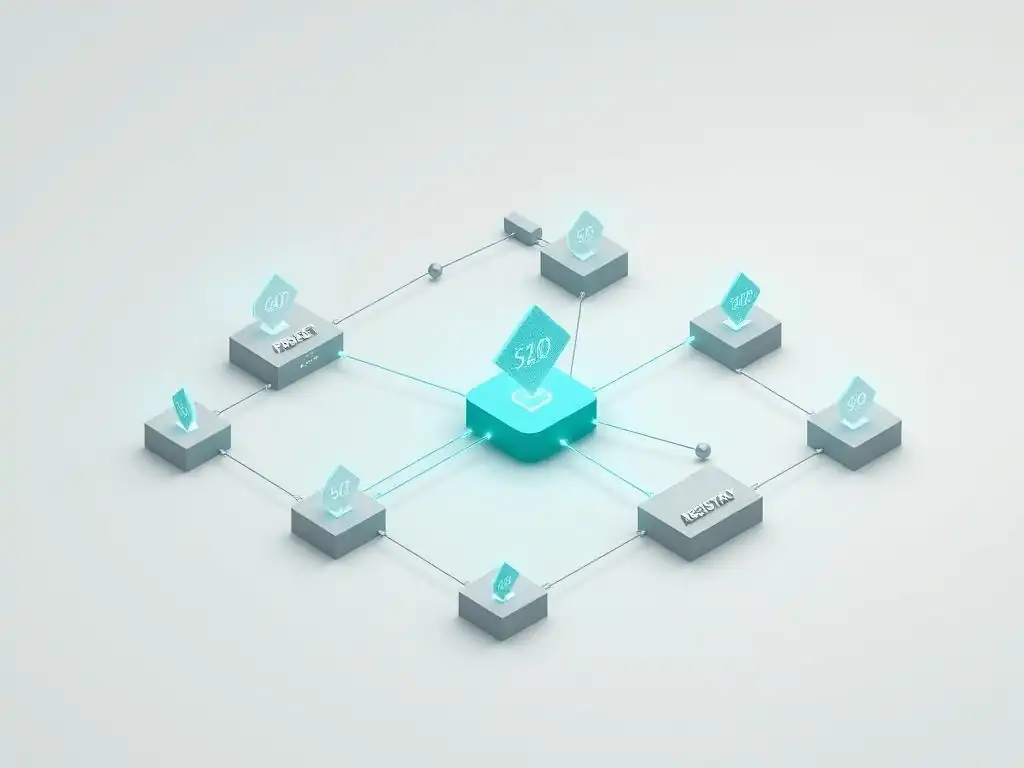
Choosing the Right Blockchain Platform for Carbon Credit Applications
Selecting the appropriate blockchain platform is a critical first step in developing smart contract solutions for carbon credit trading. Key considerations include the platform's consensus mechanism, scalability, transaction costs (gas fees), smart contract capabilities, developer community, and whether it is public or permissioned. Public blockchains like Ethereum, with its large developer community and robust smart contract features (though historically facing scalability and cost issues, improving with Ethereum 2.0), or newer, faster chains like Polygon, Solana, or Algorand, offer high transparency and decentralization.
Permissioned blockchains, such as Hyperledger Fabric or R3 Corda, might be preferred by consortia of corporations or financial institutions due to their focus on privacy, controlled access, and high transaction throughput, though they sacrifice some degree of decentralization. The choice depends heavily on the specific requirements of the carbon market platform being built, including the desired level of transparency, transaction volume, and regulatory considerations. For instance, some initiatives focused on voluntary markets might lean towards public chains for maximum transparency, while compliance markets might prefer permissioned ones for regulatory control.
Developing Secure and Auditable Smart Contract Code for Carbon Credits
Developing secure smart contracts is paramount, as vulnerabilities can lead to significant financial losses or undermine the integrity of the carbon credits they manage. Smart contract code for carbon credit trading must be rigorously designed and tested. This involves defining clear logic for token issuance (e.g., based on verified data inputs), transfer rules, retirement mechanisms, and potentially fractionalization or staking features. Using established token standards, such as ERC-20 for fungible credits or ERC-721/ERC-1155 for unique or project-specific credits on Ethereum-compatible chains, is standard practice.
Code must be written following best practices to avoid common vulnerabilities like reentrancy attacks, integer overflows, or access control issues. Regular security audits by independent third parties are essential before deploying contracts to a live network. Furthermore, the code should be auditable, meaning it is well-documented and structured logically so that it can be reviewed and understood by security experts and potentially market participants, fostering trust in the underlying technology of the blockchain carbon credit trading platform.
Integrating Smart Contracts with Environmental Data Sources and Oracles
Smart contracts on their own cannot access real-world data, such as energy generation from a solar farm, carbon sequestration rates in a forest, or emissions data from an industrial facility. To automate the issuance or verification of carbon credits, smart contracts need to receive this external environmental data reliably and securely. This is where oracles come in. Oracles are services that connect smart contracts to external data feeds.
For carbon markets, oracles would need to fetch data from verified sources, such as validated monitoring equipment, official environmental registries, or reports from accredited verifiers. The design of the oracle mechanism is critical; it must be robust, resistant to manipulation, and provide accurate, timely data. Decentralized oracle networks, like Chainlink, offer a potential solution by sourcing data from multiple independent nodes, reducing reliance on a single data provider and enhancing the security and reliability of the data used by smart contracts in blockchain carbon credit trading applications.
Building a Carbon Credit Token on Ethereum
Building a carbon credit token on Ethereum, or an Ethereum-compatible blockchain, typically involves deploying a smart contract that adheres to a token standard. For fungible carbon credits (where one credit is equivalent to another), the ERC-20 standard is commonly used. The smart contract defines the total supply of tokens, how they are transferred, and how balances are managed. Extensions can be added to include metadata about the vintage (year of issuance) or project type associated with the credits.
For non-fungible or semi-fungible credits (e.g., representing specific project batches or unique offset types), ERC-721 or ERC-1155 standards might be more suitable. The smart contract for a carbon credit token would also include functions for minting (issuing new credits, likely triggered by another smart contract or authorized party based on verified data), transferring tokens between wallets, and burning or retiring tokens once they are used to offset emissions. Developers must carefully consider gas costs and network congestion when designing and deploying these contracts on Ethereum mainnet, though layer-2 solutions offer scalability improvements for high-volume blockchain carbon credit trading.
Case Studies: Successful Blockchain Carbon Credit Implementations
Tokenized Carbon Credits for Solar Energy Projects in Southeast Asia
Several initiatives in Southeast Asia have successfully implemented blockchain solutions for tokenizing carbon credits generated from renewable energy projects, particularly solar farms. For example, a project in Thailand utilized a blockchain platform to track energy generation from small-scale solar installations. Smart contracts were configured to automatically calculate the equivalent carbon emission reductions based on verified methodologies and issue tokenized carbon credits directly to project owners on a predetermined schedule, based on verified energy production data.
This approach significantly reduced the time and cost associated with traditional verification and issuance processes, which could take months. By issuing credits as tokens on a blockchain, these projects gained direct access to global voluntary carbon markets, improving liquidity and enabling smaller project developers to participate more easily in blockchain carbon credit trading. Reports from these pilot projects indicated a reduction in verification-to-issuance time by up to 50% compared to traditional methods.
Blockchain Tracking and Verification of Reforestation Efforts in the Amazon
Tracking the impact of nature-based solutions like reforestation is complex but crucial for generating credible carbon credits. A project focused on the Amazon rainforest implemented a blockchain system to enhance the transparency and verification of its reforestation efforts. The platform uses satellite imagery, ground sensor data, and potentially drone footage, fed through oracles, to monitor tree growth and forest health. Smart contracts are used to process this verified data and calculate the amount of sequestered carbon.
Based on these calculations, tokenized carbon credits are issued to the project stakeholders. The blockchain ledger records the location of the reforestation area, the monitoring data history, and the issuance details of each credit, providing an immutable record of the project's environmental impact. This transparency helps combat concerns about the permanence and additionality of forest carbon projects and builds confidence among buyers interested in supporting verifiable reforestation through blockchain carbon credit trading.
Smart Contracts for Carbon Offset Programs in the Commercial Aviation Industry
The commercial aviation industry is exploring innovative ways to manage its significant carbon footprint, including using blockchain for offset programs. An initiative involving several airlines and technology partners is piloting a system where smart contracts manage the lifecycle of carbon offsets purchased by airlines or their passengers. When a passenger or airline purchases an offset for a specific flight, a smart contract can be triggered to retire a corresponding number of tokenized carbon credits from a verified source.
The smart contract ensures that the retired credits are permanently removed from circulation and records the retirement event immutably on the blockchain, linking it to the specific flight or purchase. This provides passengers and airlines with verifiable proof that their offset purchase resulted in the retirement of a real credit, enhancing trust in voluntary offset programs within the industry. The transparency and automation offered by smart contracts streamline the process and improve accountability in blockchain carbon credit trading for aviation.
Challenges and Considerations for Blockchain Carbon Credit Trading
Regulatory Hurdles and Compliance Requirements for Carbon Credit Tokenization
Navigating the existing and evolving regulatory landscape is a significant challenge for blockchain carbon credit trading. Carbon markets, both compliance and voluntary, are subject to specific rules and standards set by governments, international bodies (like the UNFCCC), and independent registries (like Verra, Gold Standard). Tokenizing credits on a blockchain must comply with these established rules regarding methodologies, validation, verification, issuance, and retirement.
Furthermore, the tokenization of assets, including carbon credits, raises questions about their legal classification (e.g., utility token, security token) in different jurisdictions. This can impact requirements related to financial regulations, KYC/AML procedures for platform users, and exchange operations. Ensuring that blockchain platforms and smart contracts adhere to both carbon market regulations and financial regulations across various operating regions requires careful legal analysis and collaboration with regulatory bodies, presenting a complex challenge for widespread adoption of blockchain carbon credit trading.
Scalability and Performance Issues of Blockchain Networks
While blockchain technology offers many benefits, the scalability and performance of certain networks, particularly public ones like Ethereum (though improving with Eth2), can pose challenges for high-volume carbon markets. Processing a large number of transactions – including credit issuance, trading, and retirement – can lead to network congestion, slow transaction speeds, and high transaction costs (gas fees). This is particularly problematic for projects generating large volumes of credits or markets with frequent, small-value trades.
Layer-2 scaling solutions (e.g., rollups on Ethereum) and alternative blockchain platforms designed for higher throughput are being explored and utilized to address these issues. However, ensuring that these solutions maintain the necessary security, decentralization, and transparency properties is crucial. As the demand for blockchain carbon credit trading grows, the underlying infrastructure must be capable of handling the transaction load efficiently and affordably.
Data Privacy and Security Concerns in Environmental Data Management
While blockchain transparency is beneficial for credit traceability, managing the privacy and security of the underlying environmental data is also important. Data from sensitive monitoring equipment, proprietary project methodologies, or specific location details might need to be handled with care, especially on public blockchains where all transaction data is visible. While the credit transaction itself can be public, the raw data feeding into the verification process might require different handling.
Solutions involve storing sensitive data off-chain in secure databases, with only cryptographic hashes of the data stored on-chain for verification purposes. Access control mechanisms can be implemented using smart contracts or network permissions (on permissioned chains) to restrict who can view specific data points. Ensuring robust security measures for oracles and off-chain data storage is also critical to prevent data tampering that could impact the integrity of the carbon credits issued via blockchain carbon credit trading platforms.
Ensuring Interoperability Between Different Carbon Credit Platforms
As multiple blockchain platforms and initiatives emerge for carbon credit trading, ensuring interoperability between them becomes crucial for creating a unified and efficient global market. Different platforms might use different blockchain protocols, token standards, or smart contract implementations, making it difficult to transfer credits or data seamlessly between them. This fragmentation can hinder liquidity and limit the reach of projects and buyers.
Developing common standards for tokenizing carbon credits (e.g., defining metadata structures, retirement processes) and implementing cross-chain communication protocols are necessary steps to address interoperability challenges. Initiatives working on token standards specifically for environmental assets (like carbon tokens) are underway. Achieving greater interoperability will be key to unlocking the full potential of blockchain carbon credit trading by allowing credits from diverse projects on different platforms to be traded and retired on a single, interconnected global market.
The Future of Carbon Credit Markets with Smart Contracts
Potential for Decentralized Autonomous Organizations (DAOs) in Carbon Governance
Decentralized Autonomous Organizations (DAOs) offer a potential future model for governing carbon credit markets. A DAO is an organization represented by rules encoded as a transparent computer program, controlled by organization members, and not influenced by a central government. In carbon markets, a DAO could govern aspects like the approval of new project methodologies, updates to token standards, or the allocation of market fees.
Members of the DAO could include project developers, buyers, verifiers, and other stakeholders, whose voting power might be based on their holdings of a governance token or their verified participation in the market. This decentralized governance model could increase fairness, reduce the influence of single entities, and allow the market rules to evolve transparently based on collective decision-making. Integrating DAOs into blockchain carbon credit trading platforms could foster a more community-driven and resilient market structure.
Integration with the Internet of Things (IoT) for Real-Time Carbon Monitoring
The integration of smart contracts with the Internet of Things (IoT) devices holds immense potential for real-time or near real-time monitoring and verification of carbon reduction activities. IoT sensors can collect data directly from project sites – such as energy output from renewables, methane levels at a landfill, or biomass growth in a forest. This data can then be securely transmitted via oracles to smart contracts.
Smart contracts could process this incoming data stream to continuously calculate emission reductions or sequestration and potentially issue credits more frequently (e.g., monthly or even daily), rather than relying solely on annual manual verification. This real-time monitoring increases the accuracy and timeliness of credit issuance, reduces verification costs over time, and provides granular data to buyers about the ongoing performance of the projects generating their credits. This synergy between IoT, oracles, and smart contracts is a key trend in the future of blockchain carbon credit trading.
The Role of Central Bank Digital Currencies (CBDCs) in Carbon Credit Settlements
The potential introduction of Central Bank Digital Currencies (CBDCs) could further streamline the settlement of carbon credit trades on blockchain platforms. Currently, most blockchain carbon credit trading involves stablecoins or other cryptocurrencies, which can introduce volatility or require conversion from traditional fiat currencies. CBDCs, as digital forms of national fiat currencies issued by central banks, could offer a stable, regulated, and widely accepted medium of exchange directly on blockchain networks.
Using CBDCs for settling carbon credit transactions via smart contracts would eliminate the need for conversion steps, reduce counterparty risk, and potentially integrate more seamlessly with traditional financial systems. This could make blockchain carbon credit trading more appealing and accessible to large corporations and financial institutions accustomed to transacting in fiat currencies. The development of CBDCs is still in early stages in many countries, but their potential integration with tokenized environmental assets is a promising future trend.
Future Trends in Blockchain Carbon Credit Trading
Beyond DAOs, IoT integration, and CBDCs, other future trends in blockchain carbon credit trading include the development of more sophisticated smart contracts for complex financial instruments related to carbon (e.g., carbon futures, options), the creation of decentralized exchanges (DEXs) specifically for environmental assets, and the integration with other sustainability data platforms. There is also growing interest in using Zero-Knowledge Proofs (ZKPs) to allow verification of sensitive project data without revealing the underlying information itself, balancing transparency with privacy.
Furthermore, we may see the convergence of compliance and voluntary carbon markets on blockchain infrastructure, potentially creating a more unified global market. The ongoing evolution of blockchain technology itself, with improvements in scalability, energy efficiency (e.g., proof-of-stake networks), and interoperability protocols, will continue to drive innovation in how carbon credits are managed and traded. The focus will increasingly be on building robust, scalable, and interconnected ecosystems for environmental asset trading.
Conclusion: Towards a More Sustainable Future with Blockchain Carbon Credit Trading
Frequently Asked Questions
What is the significance of using blockchain for carbon credit trading?
Blockchain offers increased transparency and traceability in carbon credit markets, reducing the risk of fraudulent activities and ensuring environmental accountability.
How can smart contracts enhance the carbon credit lifecycle?
Smart contracts automate the issuance, transfer, and retirement of carbon credits, streamlining the process and reducing administrative overhead.
What are the potential benefits of blockchain-based carbon credit trading for enterprises?
Enterprises can benefit from improved reputation, easier access to carbon offset markets, and enhanced compliance with environmental regulations.
What are the regulatory challenges facing blockchain-based carbon credit markets?
Regulatory bodies are grappling with issues such as standardization, verification, and the jurisdictional oversight of decentralized carbon credit platforms.
How might blockchain impact the future of global carbon markets?
Blockchain could lead to more efficient, transparent, and accessible carbon markets, fostering greater participation and driving climate action on a global scale.
Final Reflection: Embracing Blockchain for a Sustainable Future
The exploration of carbon credit markets and their potential transformation through blockchain technology underscores a critical truth: environmental accountability is no longer a distant aspiration, but a tangible possibility. As we've seen, smart contracts offer a transparent, secure, and efficient mechanism for trading carbon credits, paving the way for a more robust and trustworthy system that can genuinely impact climate change.
The promise of blockchain in this arena is profound, influencing not only the financial landscape but also our collective responsibility towards the planet. The ability to track and verify carbon offsets with unprecedented accuracy is a game-changer, empowering individuals and organizations to make informed choices and contribute meaningfully to a greener future. We are the first generation to feel the effect of climate change and the last generation who can do something about it.
- Barack Obama. This quote resonates deeply, reminding us of the urgency and the potential we hold to leverage technology for positive change.
Now, consider how you can contribute to this evolving ecosystem. Reflect on the choices you make, the organizations you support, and the technologies you embrace. Let us all strive to be informed participants in the blockchain carbon credit trading revolution, driving a future where environmental sustainability and technological innovation go hand in hand.
Empower Your Climate Impact: Start Today!
Thank you for exploring how smart contracts are transforming carbon credit markets and promoting environmental accountability. We hope you found these insights helpful. Now, it's time to turn knowledge into action!
- Explore specific smart contract platforms used in carbon credit projects. Find one that aligns with your values and assess its potential.
- Share this article with your network! Let's expand the conversation about using blockchain technology to build a sustainable future.
- Contribute to the discussion: Which existing carbon credit initiatives could benefit most from blockchain integration, and why?
Are you ready to be part of the solution?
Leave a Reply