
Enhancing Retail with Smart Contracts: Loyalty Programs and Supply Chain Visibility


Welcome to Blockchain Trends, your go-to source for understanding the real-world impact of blockchain technology. Beyond the hype, lies a revolution. Intrigued by how blockchain can reshape industries? Today, we delve into the practical applications of smart contracts retail supply chain, exploring how they're revolutionizing everything from loyalty programs to supply chain visibility. Discover how these decentralized agreements are creating unprecedented transparency and efficiency. But how far can this technology really go? Let's unlock the potential together...
Enhancing Retail with Smart Contracts: Loyalty Programs and Supply Chain Visibility
- Introduction: Transforming Retail with Smart Contracts
- Smart Contracts for Enhanced Retail Loyalty Programs
- Improving Retail Supply Chain Visibility with Smart Contracts
- Smart Contracts Retail Supply Chain: Implementation Considerations
- The Future of Smart Contracts in Retail
- Conclusion: Smart Contracts – Revolutionizing Retail
-
Frequently Asked Questions
- How can smart contracts improve retail loyalty programs?
- What role do smart contracts play in supply chain visibility?
- How does blockchain technology, specifically smart contracts, impact the efficiency of retail operations?
- What are the main regulatory considerations for implementing smart contracts in the retail sector?
- What is the future outlook for smart contracts in the retail supply chain and loyalty programs?
- Final Reflection: Reimagining Retail Through Trust
- Unlock Your Retail Revolution: Step into the Future!
Introduction: Transforming Retail with Smart Contracts
The Rise of Blockchain in Retail: Beyond Cryptocurrency
Blockchain technology, initially popularized by cryptocurrencies like Bitcoin, is now demonstrating its transformative potential across various industries, including retail. Retailers are beginning to explore how decentralized ledger technology can address long-standing challenges related to trust, transparency, and efficiency. This shift marks a significant evolution from blockchain's initial applications, moving towards tangible business solutions that impact operations and customer interactions directly.
The retail sector, characterized by complex supply chains and the need for robust customer engagement strategies, finds blockchain's inherent characteristics – immutability, transparency, and security – particularly appealing. While cryptocurrency adoption in retail is still nascent, the underlying blockchain technology is being piloted and implemented for specific use cases. Reports suggest that retail spending on blockchain solutions is projected to grow significantly, indicating a clear trend towards leveraging this technology for operational improvements rather than just financial transactions.
Smart Contracts: A New Era for Retail Efficiency and Transparency
At the heart of many blockchain applications in retail lies the smart contract. These self-executing contracts, with the terms of the agreement directly written into code, run on a blockchain network. They automatically execute predefined actions when specific conditions are met, eliminating the need for intermediaries and reducing the potential for errors or fraud. This automation and trustless execution capability is poised to revolutionize how retailers manage agreements, track assets, and interact with customers.
For retailers, smart contracts offer a pathway to unprecedented levels of efficiency and transparency. Consider transaction processing: instead of relying on manual verification and lengthy settlement periods, smart contracts can automate payments based on confirmed delivery or service completion. This not only speeds up business processes but also provides an immutable record of all transactions, enhancing accountability. The application of smart contracts spans from automating simple processes to orchestrating complex multi-party agreements across vast networks.
Article Overview: Loyalty Programs and Supply Chain Optimization
This article will explore two key areas where smart contracts are making a significant impact on the retail industry: enhancing customer loyalty programs and improving supply chain visibility. We will delve into the limitations of traditional methods in these areas and demonstrate how smart contract technology offers compelling solutions. The discussion will cover the specific benefits, technical considerations, and provide examples or case studies to illustrate the practical application of smart contracts in retail.
By examining both loyalty programs and supply chain management, we aim to provide a comprehensive view of how smart contracts can drive efficiency, build trust, and create new opportunities for retailers. The integration of smart contracts into the retail value chain represents a fundamental shift towards more automated, transparent, and secure operations. Understanding these applications is crucial for retailers looking to stay competitive in an increasingly digital and interconnected marketplace.
Smart Contracts for Enhanced Retail Loyalty Programs
Traditional Loyalty Programs: Limitations and Challenges
Traditional retail loyalty programs, often based on points or stamps, face several inherent limitations that hinder their effectiveness and cost-efficiency. One major challenge is the administrative burden associated with tracking points, managing rewards, and handling redemptions manually or through siloed, legacy systems. This often leads to high operational costs and potential for errors or delays in crediting points or allowing redemptions. Furthermore, customers often find these programs inflexible, with points having limited usability or expiring before they can be redeemed, leading to frustration and reduced engagement.
Another significant challenge is the lack of interoperability between different loyalty programs. Customers accumulate points across various retailers but cannot combine them or easily exchange them, fragmenting their loyalty value. Fraud is also a persistent issue, ranging from duplicate accounts to fraudulent redemption attempts. The opaque nature of some traditional programs can also lead to distrust among customers who question the fairness or transparency of how points are calculated and managed. Industry reports indicate that a significant percentage of issued loyalty points go unredeemed, representing lost potential value for both customers and retailers.
Blockchain-Based Loyalty Programs: A Smart Contract Solution
Blockchain technology, specifically through the use of smart contracts, offers a robust solution to many of the challenges faced by traditional loyalty programs. By issuing loyalty points as digital tokens on a blockchain, retailers can create a transparent, secure, and highly automated system. Smart contracts govern the rules of the loyalty program – such as how tokens are earned (e.g., 1 token per $50 spent), how they can be redeemed (e.g., 10 tokens for a 10% discount), and any expiration rules. These rules are embedded in the code and automatically executed, ensuring fairness and consistency.
The use of a shared, distributed ledger means that transactions (earning or redeeming tokens) are recorded immutably, significantly reducing the risk of fraud or errors. Smart contracts handle the automatic distribution and management of tokens, eliminating the need for manual tracking and reducing administrative overhead. Moreover, if built on an interoperable blockchain platform, these tokenized loyalty points could potentially be exchanged or used across different participating retailers, creating a more valuable and flexible ecosystem for customers. This shift transforms loyalty points from liabilities on a company's balance sheet into potentially tradable or usable digital assets for the customer.
Benefits of Smart Contract Loyalty Programs in Retail
Increased Customer Engagement and Personalization
Smart contract-based loyalty programs can dramatically increase customer engagement by offering greater transparency and flexibility. Customers can see their token balance in real-time and understand exactly how they earn and redeem rewards, fostering trust. The programmable nature of smart contracts also allows for highly personalized reward structures.
For instance, a smart contract could automatically issue bonus tokens for specific purchasing behaviors (e.g., buying products from a new collection, visiting a store multiple times in a month) or demographic profiles, tailoring incentives more effectively than traditional systems. This level of dynamic personalization can lead to higher participation rates and repeat business.
Automated Rewards and Redemption Processes
One of the most significant operational benefits is the automation facilitated by smart contracts. Earning points or tokens becomes instantaneous upon a qualifying purchase, as the transaction is recorded on the blockchain and triggers the smart contract logic. Similarly, redemption is often seamless; a customer simply initiates the redemption request through an app or point-of-sale system, the smart contract verifies eligibility (checking token balance), and the reward (e.g., discount, free item) is applied automatically. This automation eliminates manual processing delays and reduces the workload on staff, leading to a smoother, faster experience for both customers and employees.
Enhanced Security and Fraud Prevention
The inherent security features of blockchain technology provide a strong defense against fraud in loyalty programs. Each transaction (earning or spending tokens) is cryptographically secured and recorded on the distributed ledger, making it extremely difficult to alter or forge records. Smart contracts execute rules impartially based on verified data, preventing fraudulent activities like double-spending tokens or creating fake accounts to accumulate rewards. While no system is entirely impervious, the decentralized and immutable nature of blockchain significantly raises the barrier for fraudulent actors compared to centralized databases which are often targets for data breaches.
Reduced Administrative Costs
By automating key processes like point issuance, balance tracking, and redemption, smart contracts drastically reduce the administrative burden and associated costs of running a loyalty program. Less manual data entry, fewer reconciliation issues, and reduced need for dedicated staff to manage the program backend translate into significant savings. While there are initial development costs for setting up the blockchain infrastructure and smart contracts, the long-term operational costs are often lower compared to maintaining complex traditional loyalty systems, especially for large-scale programs. Some estimates suggest potential administrative cost reductions of 15-25% annually for large retailers adopting such systems.
Examples of Smart Contract Loyalty Programs in Action
While widespread public adoption is still growing, several companies have piloted or launched blockchain-based loyalty initiatives using smart contracts. Starbucks, for example, has explored using blockchain for its rewards program, aiming to allow customers to track their points more easily and potentially exchange them for other digital assets or even with partners. Rakuten, a global e-commerce giant, launched its own blockchain platform and has integrated loyalty token systems, allowing customers to earn and spend Rakuten points (now potentially tokenized) across various services.
Another instance involves smaller consortiums of retailers forming alliances to create shared loyalty networks. Using a common blockchain and smart contracts, customers can earn tokens at one participating store (say, a bookstore) and redeem them at another (like a coffee shop within the same mall). The smart contracts manage the inter-retailer value transfer and redemption rules automatically. While specific widespread "smart contract loyalty program" examples from major global retailers are still emerging, these pilot projects and early initiatives demonstrate the practical feasibility and potential benefits of leveraging smart contracts for loyalty.
Improving Retail Supply Chain Visibility with Smart Contracts
The Challenges of Traditional Retail Supply Chains
Lack of Transparency and Traceability
Traditional retail supply chains are notoriously opaque, making it difficult to track goods accurately from their origin point through various intermediaries (manufacturers, distributors, logistics providers) to the final retail store or customer. This lack of end-to-end visibility means retailers often have limited real-time information about the location, status, or condition of their inventory in transit. When issues arise, such as delays or quality problems, pinpointing the exact point of failure or the responsible party can be a complex and time-consuming process, often relying on fragmented data across disparate systems.
Inefficient Processes and Delays
Manual processes, paper-based documentation, and reliance on multiple intermediaries contribute to significant inefficiencies and delays in traditional retail supply chains. Each handover point often requires manual verification, data entry, and communication, creating bottlenecks. Payment processes can be slow, requiring manual invoice matching and approval, often taking 30 to 60 days or even longer. Disputes over deliveries, quality, or quantities further exacerbate delays and add administrative overhead. These inefficiencies translate into increased costs and longer lead times for getting products to market.
Counterfeit Products and Quality Control Issues
Ensuring product authenticity and maintaining quality control throughout a complex supply chain is a major challenge. Counterfeit goods can infiltrate the supply chain at various points, damaging brand reputation and potentially posing risks to consumers. Verifying the origin and authenticity of products, especially for high-value or sensitive items, is difficult with traditional methods. Similarly, monitoring and ensuring that goods are handled properly (e.g., temperature control for perishables) across multiple logistics partners is challenging, leading to potential quality degradation or spoilage before products reach the customer.
Smart Contracts: A Solution for Supply Chain Transparency
Smart contracts running on a blockchain provide a powerful solution to enhance transparency and trust within the retail supply chain. By creating a shared, immutable ledger of transactions and events, all participants in the supply chain – from suppliers and manufacturers to logistics providers and retailers – can access the same real-time information (or authorized subsets of it). Each step in the product's journey, from raw material sourcing to final delivery, can be recorded as a transaction on the blockchain.
The smart contract acts as the automated enforcer of the supply chain agreement. For instance, a smart contract can be programmed to require confirmation from a logistics partner that a shipment has been picked up before triggering the next step in the process or releasing a partial payment. This creates a verifiable, auditable trail of the product's movement and status, significantly improving visibility for all authorized parties.
The inherent trust provided by the blockchain's distributed nature means participants can rely on the data recorded without needing to trust a single central authority. This forms the backbone of a more efficient and trustworthy smart contracts retail supply chain.
How Smart Contracts Enhance Supply Chain Management
Real-Time Tracking and Traceability of Goods
Implementing smart contracts within the smart contracts retail supply chain allows for unprecedented real-time tracking and traceability. As goods move through the supply chain, data from various sources – such as RFID tags, IoT sensors (monitoring temperature, humidity, location), and manual scans at checkpoints – can be fed into the blockchain, triggering updates via smart contracts. This provides retailers and consumers with granular, up-to-the-minute information about a product's journey. If a recall is necessary, for example, tracing the affected batch back to its origin becomes much faster and more accurate, potentially reducing costs and risks associated with widespread recalls.
Automated Payments and Settlements
Smart contracts can automate payment processes based on predefined conditions being met, such as successful delivery at a distribution center or confirmation of goods passing a quality check. Instead of waiting for manual invoice processing, the smart contract, upon receiving verified data (e.g., a digital signature confirming receipt, sensor data confirming correct temperature maintained), can automatically release payment to the supplier or logistics provider. This speeds up cash flow for suppliers, reduces administrative work for the retailer, and minimizes disputes related to payment triggers. This automation is a key benefit of using smart contracts retail supply chain solutions.
Improved Inventory Management and Forecasting
With enhanced visibility into the location and status of goods in transit, retailers can achieve more accurate inventory management. Real-time data from the smart contracts retail supply chain allows for better forecasting of arrival times, reducing instances of stockouts or excess inventory. Knowing exactly where goods are and when they are expected allows retailers to optimize warehousing, plan staffing more effectively, and improve overall supply chain responsiveness. This leads to reduced holding costs and improved customer satisfaction due to better product availability.
Enhanced Quality Control and Authentication
Smart contracts can be linked to quality control protocols. For instance, a smart contract could require verification that goods meet specific quality standards at different points in the supply chain before payment is released or the goods are allowed to proceed. Using IoT sensors, a smart contract can automatically trigger alerts or actions if conditions like temperature or humidity deviate from acceptable ranges for sensitive goods.
For authentication, a digital twin of a product can be created on the blockchain, linked to a physical identifier (like a QR code or NFC tag). Consumers or retailers can scan the tag, and a smart contract can verify its authenticity against the immutable record on the blockchain, helping to combat counterfeiting.
Case Study: Smart Contract Implementation in a Retail Supply Chain
While specific detailed public case studies from major global retailers are still emerging, several initiatives highlight the potential of smart contracts retail supply chain applications. Walmart, for instance, has famously piloted a blockchain system for tracking leafy greens, drastically reducing the time it takes to trace produce from farm to store from weeks to mere seconds. While this specific example might use the blockchain as the core ledger, smart contracts are essential for automating the rules around data entry, verification, and triggering actions within such a system.
Another example involves luxury goods retailers. Companies are exploring using smart contracts to create a digital provenance record for high-value items. When a luxury watch or handbag is manufactured, its details are recorded on a blockchain via a smart contract.
Each subsequent sale or transfer of ownership can be recorded, creating an immutable history. The smart contract can also be programmed to enforce warranty terms or even facilitate resales, automatically transferring ownership and potentially a portion of the resale value back to the original owner or brand. This application of smart contracts retail supply chain tracking builds trust and adds value throughout the product's lifecycle.
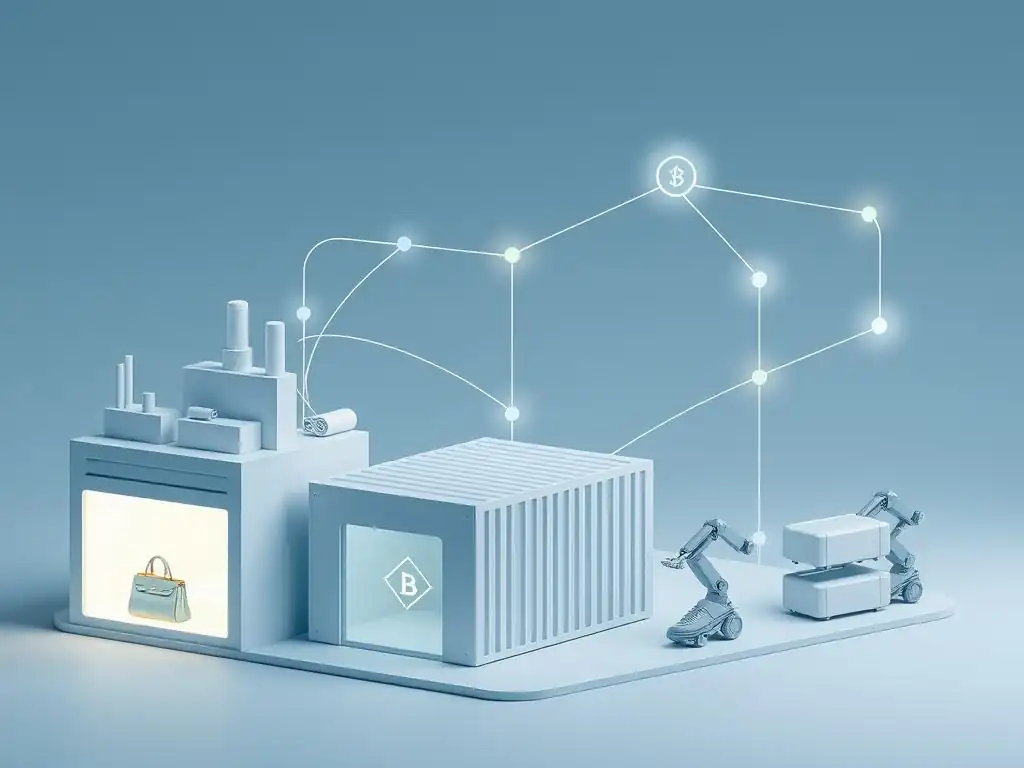
Smart Contracts Retail Supply Chain: Implementation Considerations
Choosing the Right Blockchain Platform
Implementing a smart contracts retail supply chain solution requires careful consideration of the underlying blockchain platform. Different platforms offer varying levels of scalability, transaction speed, cost (gas fees), and support for complex smart contract logic. Public blockchains like Ethereum or potentially newer ones like Solana or Polygon offer decentralization and broad developer communities but may present challenges regarding privacy and predictable transaction costs.
Private or consortium blockchains (like Hyperledger Fabric or Corda) can offer better privacy control, higher transaction throughput, and lower costs, making them potentially more suitable for enterprise supply chain use cases where data sharing is limited to known participants. The choice depends heavily on the specific requirements regarding privacy, participants, transaction volume, and the need for interoperability.
Smart Contract Security and Auditing
Security is paramount when deploying smart contracts in a retail supply chain. Flaws or vulnerabilities in the smart contract code can lead to significant financial losses, data breaches, or disruptions in operations. It is critical to follow best practices for smart contract development, including rigorous testing and formal verification.
Independent security audits by experienced blockchain security firms are essential before deploying smart contracts to a production environment. These audits help identify potential bugs, reentrancy issues, or other vulnerabilities that could be exploited. Ongoing monitoring and the ability to upgrade or patch contracts (if designed with upgradeability in mind) are also important considerations.
Data Privacy and Compliance
While blockchain offers transparency, privacy is a key concern, especially in a smart contracts retail supply chain involving sensitive business data (e.g., pricing, quantities, supplier details). Public blockchains may not be suitable for all data types due to their inherent transparency. Private or consortium blockchains allow for more control over data access permissions.
Additionally, retailers must ensure compliance with data protection regulations like GDPR or CCPA when handling any personal data within the blockchain system, including loyalty programs. Solutions might involve storing sensitive data off-chain and using the blockchain only for hashes or references, with smart contracts managing access to the off-chain data store.
Integration with Existing Retail Systems
A significant technical challenge is integrating the new blockchain and smart contract system with existing legacy retail systems, such as Enterprise Resource Planning (ERP), Warehouse Management Systems (WMS), Point of Sale (POS), and Customer Relationship Management (CRM) systems. Data needs to flow seamlessly between these systems and the blockchain. This often requires developing Application Programming Interfaces (APIs) and middleware to connect disparate systems. Successful integration is crucial for the smart contracts retail supply chain to function effectively without disrupting current operations. This phase can be complex and requires careful planning and execution.
Overcoming Adoption Barriers
Beyond technical hurdles, there are significant organizational and psychological barriers to adopting smart contracts retail supply chain solutions. Resistance to change from employees accustomed to traditional processes, the need for training on new systems, and the challenge of getting all supply chain partners (who may be hesitant or lack the technical capabilities) to participate are common issues. Building consensus, demonstrating clear return on investment (ROI), providing adequate training, and potentially offering incentives for participation are important strategies for overcoming these adoption barriers and successfully implementing a smart contracts retail supply chain.
The Future of Smart Contracts in Retail
Emerging Trends and Innovations
Decentralized E-commerce Platforms
The future of smart contracts in retail extends to the potential rise of decentralized e-commerce platforms. These platforms, built on blockchain and powered by smart contracts, could remove intermediaries, reducing fees for sellers and potentially lowering prices for consumers. Smart contracts could manage marketplace rules, payment escrow, dispute resolution based on predefined criteria, and even product authenticity verification, creating a more transparent and trustless online shopping environment. While still in early stages, this trend could fundamentally alter the e-commerce landscape.
Tokenized Assets and Digital Ownership
Smart contracts are enabling the tokenization of retail assets, creating new possibilities for ownership and loyalty. High-value goods could be tokenized, representing digital proof of ownership recorded on a blockchain. This facilitates easier transfer of ownership and verification of authenticity. Furthermore, retailers could tokenize fractional ownership of assets or experiences, creating exclusive clubs or investment opportunities. Tokenized loyalty points, as discussed earlier, are just one example of this trend, potentially evolving into universal retail tokens usable across a wide ecosystem.
Personalized Shopping Experiences
Leveraging data recorded on a blockchain (with appropriate privacy controls), smart contracts could facilitate highly personalized shopping experiences. By analyzing aggregated, anonymized customer data or data the customer explicitly consents to share, smart contracts could trigger personalized offers, recommendations, or dynamic pricing based on purchasing history, loyalty status (token balance), or even real-time location within a store (if linked to IoT). This moves beyond simple segmentation to truly individualized interactions governed by code.
Predictions for the Smart Contracts Retail Supply Chain
Looking ahead, the smart contracts retail supply chain is expected to become increasingly sophisticated and integrated. We will likely see wider adoption of IoT devices integrated with smart contracts for real-time condition monitoring of goods (e.g., food, pharmaceuticals, luxury items) throughout transit. This will enhance quality control and reduce waste. Automated customs clearance facilitated by smart contracts verifying shipment data against regulations is another potential development.
Furthermore, smart contracts will play a crucial role in enabling circular economy initiatives in retail. They could manage the lifecycle of products, facilitating returns, recycling processes, and even incentivizing customers for returning packaging or old products by automatically issuing tokens or discounts via smart contracts. The smart contracts retail supply chain will evolve into a fully automated, transparent, and interconnected ecosystem, significantly improving efficiency, reducing costs, and building greater trust between all parties involved.
Conclusion: Smart Contracts – Revolutionizing Retail
Key Takeaways: Loyalty and Supply Chain Benefits
Smart contracts offer transformative potential for the retail industry, particularly in enhancing customer loyalty programs and improving supply chain visibility. For loyalty, smart contracts enable secure, transparent, and automated systems that increase customer engagement, streamline reward redemption, prevent fraud, and reduce administrative costs compared to traditional methods. For the supply chain, smart contracts provide unprecedented transparency, allowing for real-time tracking, automating payments based on verified events, improving inventory management, and enhancing quality control and authentication processes throughout the smart contracts retail supply chain.
The Transformative Potential of Smart Contracts for the Retail Industry
The application of smart contracts is poised to revolutionize retail operations, moving towards more efficient, transparent, and trustworthy systems. By automating processes, providing immutable records, and enabling trustless interactions, smart contracts can significantly reduce operational friction, minimize errors and fraud, and build stronger relationships with both supply chain partners and customers. From streamlining back-end logistics to personalizing front-end customer experiences, smart contracts are a cornerstone technology for the future of retail.
Call to Action: Embracing Blockchain Technology for Retail Innovation
Retailers looking to stay competitive in an evolving market must explore the potential of blockchain and smart contract technology. Evaluating specific use cases within loyalty programs and the smart contracts retail supply chain is a critical first step. While implementation requires careful planning, investment, and collaboration, the long-term benefits in terms of efficiency, cost savings, security, and enhanced customer and partner relationships are substantial. Embracing these innovations is not just about adopting new technology; it's about building a more resilient, transparent, and customer-centric retail business for the future.
Frequently Asked Questions
How can smart contracts improve retail loyalty programs?
Smart contracts can automate the distribution of loyalty points and rewards, ensuring transparency and preventing fraud. They offer a more secure and efficient way to manage customer loyalty. This leads to enhanced customer trust and engagement.
What role do smart contracts play in supply chain visibility?
Smart contracts can track products throughout the entire supply chain, from origin to delivery. This creates an immutable and transparent record, enhancing traceability and accountability. This reduces the risk of counterfeit goods and delays.
How does blockchain technology, specifically smart contracts, impact the efficiency of retail operations?
Smart contracts can automate various processes, such as payments, inventory management, and order fulfillment, leading to significant efficiency gains. They streamline operations by removing intermediaries and reducing manual paperwork.
What are the main regulatory considerations for implementing smart contracts in the retail sector?
Compliance with data privacy regulations (e.g., GDPR) and consumer protection laws is crucial. Retailers must also address legal aspects related to contract enforceability and smart contract security.
What is the future outlook for smart contracts in the retail supply chain and loyalty programs?
The future involves wider adoption, improved scalability, and integration with other technologies like IoT. Expect more sophisticated and personalized customer experiences and more resilient supply chains.
Okay, here's a final reflection designed to close your article "Enhancing Retail with Smart Contracts: Loyalty Programs and Supply Chain Visibility," optimized for the keyword "Smart contracts retail supply chain," and following the structure you provided:
Final Reflection: Reimagining Retail Through Trust
The potential of smart contracts to revolutionize retail is no longer a futuristic fantasy, but a tangible reality unfolding before our eyes. As we've explored, the enhanced transparency and efficiency they bring to loyalty programs and supply chain management are not just theoretical improvements; they represent a fundamental shift towards a more trustworthy and customer-centric retail landscape.
The integration of smart contracts into the retail supply chain is profoundly impacting how businesses operate and how consumers interact with brands. This shift towards verifiable trust and automated processes is not just about efficiency; it's about building stronger, more resilient relationships between all stakeholders. Trust is the glue of life. It's the most essential ingredient in effective communication. It's the foundational principle that holds all relationships.
- Stephen Covey. This quote perfectly encapsulates the transformative power of smart contracts in fostering trust within the retail ecosystem.
As we move forward, let us not simply observe this technological evolution from the sidelines. Instead, consider how you, as a consumer, a retailer, or a technology enthusiast, can contribute to shaping this future. Embrace the potential of smart contracts to build a more transparent, efficient, and ultimately, more trustworthy retail experience for everyone. The power to redefine the future of retail, powered by smart contracts, lies within our collective vision and action.
Unlock Your Retail Revolution: Step into the Future!
Thank you for exploring how smart contracts are transforming retail. You've seen how they can enhance loyalty programs and provide greater transparency in supply chains. Are you ready to implement these innovations?
Here are your next steps:
- Begin by identifying a key area in your retail operations—whether it's loyalty programs or supply chain management—where a pilot project could have an immediate impact. Start small, and expand as you see results.
- Look into existing open-source smart contract templates tailored for retail. Experiment with customizing one to suit your specific needs and test it on a secure test network.
- Share this article with a colleague in the retail industry who could benefit from understanding smart contract applications. Let’s foster a community of blockchain innovators!
What is the first small step you will take this week to explore the potential of smart contracts in your retail business? Share your thoughts in the comments!
Leave a Reply