
Fuzzing Smart Contracts: Automated Security Testing Techniques Revealed


Welcome to Blockchain Trends, your guide to navigating the evolving landscape of blockchain technology. Dive deep into a world beyond cryptocurrencies, where decentralized finance, enterprise solutions, and innovative regulations are reshaping industries. Are your smart contracts truly secure? Discover the power of smart contract fuzzing security testing and unlock automated techniques to fortify your code against vulnerabilities, starting right here. Explore the future of decentralized systems and learn how to build a more secure blockchain future.
Fuzzing Smart Contracts: Automated Security Testing Techniques Revealed
- Introduction to Smart Contract Fuzzing
-
Frequently Asked Questions
- What is smart contract fuzzing and why is it important?
- How does fuzzing differ from traditional security auditing of smart contracts?
- What types of vulnerabilities can smart contract fuzzing typically detect?
- What are some popular fuzzing tools used for smart contract security testing?
- How can organizations integrate smart contract fuzzing into their development lifecycle?
- Final Reflection: Embracing Automated Security in the Blockchain Era
- Ignite Your Smart Contract Security: Start Fuzzing Today!
Introduction to Smart Contract Fuzzing
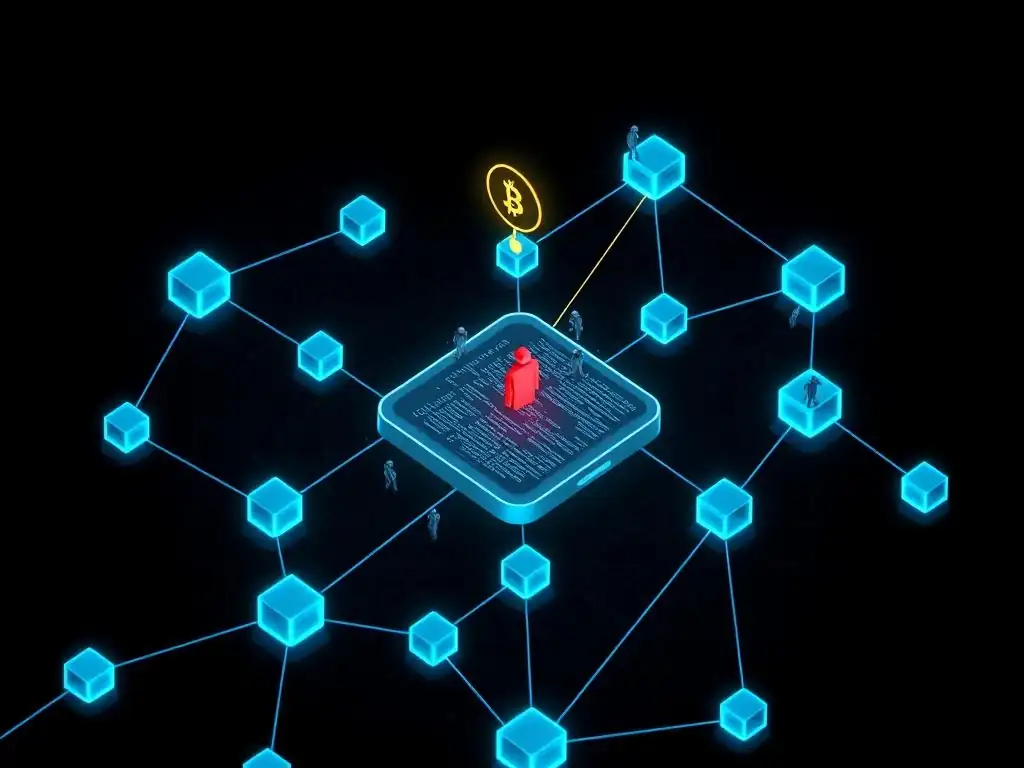
The Growing Need for Smart Contract Security
The proliferation of decentralized applications (dApps) across various blockchain platforms has significantly amplified the complexity and value locked within smart contracts. These self-executing agreements, with terms directly written into code, manage billions of dollars in assets across DeFi protocols, NFTs, supply chains, and more. Unlike traditional software, smart contracts often operate in immutable environments, making post-deployment bug fixes difficult or impossible. A single vulnerability can lead to catastrophic financial losses and severe reputational damage, as demonstrated by past incidents.
For instance, the notorious DAO hack in 2016 resulted in the loss of Ether valued at approximately $150 million at the time, primarily due to a reentrancy vulnerability. The subsequent Parity Wallet incidents also led to the freezing of hundreds of millions of dollars worth of Ether. These events underscore the critical imperative for robust smart contract security testing to prevent exploitation.
Given the high stakes and the irreversible nature of blockchain transactions governed by smart contracts, relying solely on manual code audits is insufficient. While expert audits are invaluable, they are time-consuming, expensive, and can still miss subtle or complex edge cases. The scale and pace of smart contract development necessitate automated methods to complement human review.
Smart contract fuzzing security testing emerges as a powerful technique in this landscape, offering an automated approach to uncover vulnerabilities by systematically exploring the contract's state space with generated inputs. This automated testing helps catch bugs that might elude static analysis or traditional unit tests, significantly bolstering the security posture of decentralized applications before they are deployed to mainnet.
Understanding Common Smart Contract Vulnerabilities
Smart contracts are susceptible to a range of vulnerabilities inherent to their execution environment and programming paradigms. One of the most well-known is the reentrancy vulnerability, where an external call can recursively call back into the originating contract before its state has been updated, leading to unintended multiple executions. This was the exploit vector in The DAO attack.
Another common class involves integer issues, such as overflows or underflows, which occur when arithmetic operations exceed the maximum or fall below the minimum value representable by a data type, potentially manipulating balances or other critical state variables incorrectly. Access control vulnerabilities, where functions intended for privileged users can be executed by anyone, also pose a significant risk, leading to unauthorized state changes or fund transfers.
Beyond these, developers must also guard against denial-of-service (DoS) attacks, often stemming from uncontrolled loops or excessive gas consumption; issues with external calls, such as unexpected failures or malicious return values; and timestamp dependencies, where logic relies on the block timestamp which can be slightly manipulated by miners. The complexity arises because smart contracts interact with external accounts, other contracts, and the blockchain environment itself, creating a large attack surface.
Effective smart contract fuzzing security testing specifically targets the detection of these types of vulnerabilities by bombarding the contract with varied inputs designed to trigger unexpected behavior or edge cases that might lead to security flaws.
Fuzzing for Smart Contract Security
Fuzzing, or fuzz testing, is an automated software testing technique that involves injecting semi-valid or unexpected data inputs into a program to detect software bugs, including security vulnerabilities. In the context of smart contracts, smart contract fuzzing security testing involves generating a large number of diverse inputs (transaction parameters, function calls, state changes) and executing the target smart contract with these inputs to observe its behavior.
The goal is to trigger crashes, assertion failures, unexpected state transitions, or violations of predefined security properties that indicate a potential vulnerability. Unlike static analysis, which examines code without executing it, or symbolic execution, which explores paths analytically, fuzzing is a dynamic testing method that executes the code under test.
The power of smart contract fuzzing lies in its ability to uncover bugs in complex code paths and interactions that might be difficult for human auditors or static analyzers to identify. By exploring a vast space of possible inputs and execution scenarios, fuzzers can stumble upon edge cases that reveal vulnerabilities like reentrancy, integer overflows, or unexpected logic errors.
Modern fuzzing techniques for smart contracts often incorporate feedback mechanisms (like code coverage) or integrate with other analysis methods (like symbolic execution) to guide the input generation process towards interesting or unexplored parts of the contract's code, making the smart contract fuzzing security testing process more efficient and effective at finding critical flaws.
Frequently Asked Questions
What is smart contract fuzzing and why is it important?
Smart contract fuzzing is an automated security testing technique that involves feeding a smart contract with random or unexpected inputs to uncover vulnerabilities. It's crucial because it helps identify bugs before deployment, preventing potential exploits and financial losses.
How does fuzzing differ from traditional security auditing of smart contracts?
Traditional audits are often manual and time-consuming, relying on human expertise. Fuzzing provides a more automated and scalable approach, quickly exploring a wider range of potential attack vectors that might be missed by human auditors.
What types of vulnerabilities can smart contract fuzzing typically detect?
Fuzzing can detect vulnerabilities like integer overflows, reentrancy attacks, and gas limit issues. It's particularly effective at uncovering unexpected behavior in response to unusual input combinations.
What are some popular fuzzing tools used for smart contract security testing?
Several tools are available, including Echidna, Mythril, and Foundry's built-in fuzzing capabilities. These tools offer different features and cater to varying levels of expertise and project needs.
How can organizations integrate smart contract fuzzing into their development lifecycle?
Organizations should incorporate fuzzing as a regular part of their testing process, running it alongside other security measures like audits and static analysis. Integrating it early in the development cycle allows for faster and cheaper remediation of detected issues.
Final Reflection: Embracing Automated Security in the Blockchain Era
The insights shared throughout this article underscore the critical importance of proactive security measures in the rapidly evolving landscape of blockchain technology. As smart contracts become increasingly integral to our digital infrastructure, the potential ramifications of vulnerabilities grow exponentially. Ignoring the lessons learned from automated security testing, specifically smart contract fuzzing, is no longer an option, but a risk we cannot afford to take.
The relentless pursuit of secure smart contracts has profoundly shaped the development process, pushing developers to adopt more rigorous testing methodologies. This evolution, driven by the need to protect user assets and maintain trust in decentralized systems, is a testament to the power of community-driven security. Security is not a product, but a process.
This quote perfectly encapsulates the ongoing and iterative nature of smart contract security, highlighting the necessity of continuous improvement and adaptation in the face of emerging threats.
Now, as you navigate the complexities of smart contract development and deployment, consider the power of smart contract fuzzing security testing. Embrace the tools and techniques discussed, not as a mere checklist item, but as a fundamental pillar of your development workflow. By prioritizing automated security, you contribute to a more robust and trustworthy blockchain ecosystem, safeguarding the future of decentralized applications for all.
Ignite Your Smart Contract Security: Start Fuzzing Today!
Thank you for exploring the world of smart contract fuzzing! We hope you've gained valuable insights into automating security testing and safeguarding your decentralized applications. Now, it's time to put that knowledge into practice.
You can immediately enhance your smart contract security by beginning to fuzz your own contracts with the tools we've discussed. Don't wait for a security breach—proactively identify and fix vulnerabilities.
Additionally, explore more advanced fuzzing techniques and methodologies through online resources and developer communities to deepen your understanding. Share this article with fellow developers and security enthusiasts to raise awareness about the importance of automated security testing in blockchain.
Which fuzzing tool will you try first, and what vulnerabilities are you most eager to discover? Share your thoughts and plans in the comments below!
Leave a Reply