
Gaming Transformed: Smart Contracts and the Rise of PlaytoEarn Economies

Welcome to Blockchain Trends, your guide to navigating the evolving landscape of blockchain technology!
Are you ready to delve into the next generation of gaming? This week, we explore how innovative PlaytoEarn smart contract development is revolutionizing the gaming industry, creating vibrant digital economies and empowering players like never before. Discover the key concepts, challenges, and opportunities shaping this exciting new frontier, and find out how you can be a part of it. Intrigued? Let's dive in and unlock the potential of decentralized gaming!
Gaming Transformed: Smart Contracts and the Rise of Play-to-Earn Economies
- Introduction: The Evolution of Gaming with Blockchain
- What are Play-to-Earn (P2E) Games?
- The Role of Smart Contracts in Play-to-Earn Games
- Smart Contract Development: A Deep Dive
- Benefits of Using Smart Contracts in Play-to-Earn Games
- Challenges in Smart Contract Development
- Smart Contract Development Best Practices
- The Future of Play-to-Earn and Smart Contract Gaming
- Conclusion: Embracing the Play-to-Earn Revolution
-
Frequently Asked Questions
- What are the core principles behind PlaytoEarn (P2E) gaming economies enabled by blockchain?
- How do smart contracts facilitate the functionalities of PlaytoEarn games?
- Beyond gaming, what other industries can benefit from the use of smart contracts for similar reward systems?
- What are the key considerations when undertaking PlaytoEarn smart contract development?
- What is the future outlook for PlaytoEarn games and the wider adoption of blockchain technology in gaming?
- Final Reflection: Embracing the PlaytoEarn Revolution
- Dive Deeper: Unlock the Future of Play!
Introduction: The Evolution of Gaming with Blockchain
Gaming has undergone several significant transformations throughout its history, from arcade machines and home consoles to online multiplayer and mobile gaming. Each evolution has brought new business models, from one-time purchases to subscriptions and free-to-play with microtransactions. The latest paradigm shift is being driven by blockchain technology, particularly through the emergence of Play-to-Earn (P2E) economies, fundamentally altering the relationship between players and game developers.
This shift is powered by core blockchain concepts like smart contracts and non-fungible tokens (NFTs). Understanding how these technologies integrate into game design and economics is crucial for anyone interested in the future of interactive entertainment. The demand for expertise in areas like Play-to-Earn smart contract development is growing rapidly as more studios explore decentralized models.
From Pay-to-Play to Play-to-Earn: A Paradigm Shift
Traditionally, players purchase games (pay-to-play) or spend money within free games (free-to-play) without retaining true ownership or the ability to realize monetary value from their in-game efforts and assets. The model is unidirectional, with value flowing from the player to the developer. The rise of P2E flips this script, allowing players to earn tangible value, often in the form of cryptocurrency or NFTs, simply by playing the game and contributing to its ecosystem.
This represents a profound change in the gaming economy. Instead of being mere consumers, players become participants and even stakeholders who can benefit directly from their time and skill investment. This shift has attracted millions of players and billions of dollars in investment, with the blockchain gaming market projected to reach significant valuations in the coming years, driving intense interest in Play-to-Earn smart contract development.
Understanding the Core Concepts: Blockchain, Smart Contracts, and NFTs in Gaming
At the heart of the Play-to-Earn revolution are foundational blockchain technologies. Blockchain provides a decentralized, transparent, and immutable ledger for recording transactions and ownership, eliminating the need for a central authority. This is critical for verifiable ownership of digital assets within games.
Smart contracts are self-executing contracts with the terms of the agreement directly written into code. Deployed on a blockchain, they automatically execute predefined actions when specific conditions are met, making game mechanics deterministic and trustless. Non-fungible tokens (NFTs) are unique digital assets whose ownership is recorded on the blockchain. In gaming, NFTs typically represent in-game items, characters, virtual land, or collectibles, granting players true ownership and the ability to trade or sell these assets outside the game's ecosystem, which is a key outcome of effective Play-to-Earn smart contract development.
What are Play-to-Earn (P2E) Games?
Play-to-Earn games are a genre of video games that integrate blockchain technology and cryptocurrencies to enable players to earn real-world value through various in-game activities. Unlike traditional games where in-game items are locked within the game's ecosystem, P2E games allow players to own, trade, and sell their digital assets, often represented as NFTs, on open marketplaces.
The core loop of a P2E game typically involves gameplay that rewards players with cryptocurrency tokens or valuable NFTs. These rewards can be obtained through competitive play, completing quests, breeding digital creatures, acquiring and developing virtual land, or participating in the game's economy by crafting or trading items. The value of these earnings is often tied to external cryptocurrency markets and the demand for the game's specific NFTs.
Defining Play-to-Earn: Earning Real-World Value Through Gameplay
The defining characteristic of Play-to-Earn is the tangible value players can derive from their gaming activities. This value is typically realized when players sell the cryptocurrency tokens or NFTs they earn to other players or on external cryptocurrency exchanges and NFT marketplaces. For example, a player might spend hours battling monsters or completing daily tasks within a game and be rewarded with the game's native token. This token can then be exchanged for other cryptocurrencies like Ethereum or Bitcoin, or fiat currency.
Similarly, a player might breed a rare digital creature or acquire a unique in-game item (as an NFT) through gameplay. Because this NFT is owned by the player on the blockchain, they are free to sell it on secondary markets. The price is determined by supply and demand, potentially far exceeding the cost or effort put into acquiring it within the game. This direct link between effort and potential financial reward is the primary driver behind the P2E phenomenon and heavily relies on robust Play-to-Earn smart contract development.
The Key Components of P2E Games: NFTs and Cryptocurrency Rewards
Play-to-Earn games fundamentally rely on two main blockchain components: NFTs and native cryptocurrencies. NFTs serve as the representation of unique in-game assets, granting verifiable digital ownership to the player. These can range from cosmetic items and character skins to functional assets like weapons, armor, virtual land parcels, or even entire playable characters. The use of NFTs ensures that these items are scarce, unique, and truly belong to the player, independent of the game's central server.
Native cryptocurrencies act as the in-game currency and reward mechanism. Players earn these tokens through gameplay, and they can be used for various purposes within the game, such as upgrading items, paying entry fees, or participating in governance. Crucially, these tokens are also exchangeable on external markets, providing the "earn" aspect of P2E. The design and implementation of these tokenomics, including how tokens are minted, distributed, and potentially burned, are complex tasks handled by the underlying Play-to-Earn smart contract development.
Examples of Popular Play-to-Earn Games and Their Economies
Several games have pioneered the Play-to-Earn model, demonstrating its potential and challenges. Axie Infinity is perhaps the most well-known example, featuring collectible digital creatures called Axies. Players battle, breed, and trade these Axie NFTs, earning Small Love Potion (SLP) tokens through gameplay and Axie Infinity Shards (AXS) for competitive achievements. At its peak, Axie Infinity boasted millions of daily active users and generated substantial revenue, showcasing the scale achievable with successful Play-to-Earn smart contract development and economic design.
Other notable examples include The Sandbox and Decentraland, virtual world platforms where users can own, build upon, and monetize virtual land parcels (LAND NFTs). Players can create experiences, host events, and trade assets within these metaverses, often using native tokens like SAND and MANA. Splinterlands is a popular blockchain-based trading card game where players earn cryptocurrency (DEC) and valuable card NFTs through battles and tournaments. These diverse examples highlight the varied implementations of P2E economies and the underlying need for tailored Play-to-Earn smart contract development.
The Role of Smart Contracts in Play-to-Earn Games
Smart contracts are indispensable to the functionality and integrity of Play-to-Earn games. They automate and enforce the rules of the game's economy and mechanics directly on the blockchain, removing the need for trust in a central game server for critical operations like asset ownership, transfers, and reward distribution. This decentralized automation is what distinguishes P2E games built on blockchain from traditional online games.
Every core interaction involving valuable assets or economic transactions in a P2E game is typically governed by one or more smart contracts. This includes everything from minting new NFTs for earned items, transferring ownership of an NFT from one player to another during a trade, distributing cryptocurrency rewards after a completed quest, or managing staking pools where players can earn passive income by locking their tokens. The security and efficiency of these operations depend entirely on the quality of the Play-to-Earn smart contract development.
Smart Contracts as the Backbone of P2E Game Mechanics
Smart contracts serve as the fundamental programming layer for many core game mechanics in P2E titles. They define the rules for how assets behave, how interactions affect ownership or value, and how economic activities are processed. For instance, a smart contract might govern the breeding mechanics of digital creatures, determining the cost in tokens, the probability of generating specific traits, and the minting of the resulting creature as a new NFT. Another contract could manage a decentralized in-game marketplace, automatically handling the escrow and transfer of tokens and NFTs between buyer and seller upon agreement.
Complex game logic that directly impacts player ownership or earning potential is often encoded within smart contracts. This ensures that these critical rules are transparent, verifiable, and executed without human intervention or potential developer bias. While not every single game event (like character movement or basic combat calculations) needs to be on-chain due to performance limitations, any action involving the game's economy or valuable assets is a prime candidate for smart contract implementation during Play-to-Earn smart contract development.
Ensuring Transparency and Fairness: Smart Contracts for In-Game Transactions
One of the major advantages of using smart contracts in P2E games is the inherent transparency and fairness they provide for in-game transactions. Because smart contracts reside on a public blockchain, the code governing transactions and asset transfers is often open for anyone to inspect. This allows players to verify how the game's economy works, how rewards are calculated, and how asset ownership is managed.
Every transaction executed by a smart contract is recorded on the blockchain's immutable ledger. This creates a tamper-proof history of all asset transfers, sales, and token distributions. Players can independently verify the ownership of their NFTs and the legitimacy of their earned tokens. This level of transparency builds trust within the player base, assuring them that the game's economic rules are being enforced consistently and fairly, which is a direct benefit of careful Play-to-Earn smart contract development.
Automating Reward Distribution with Smart Contracts
Smart contracts are particularly effective at automating the distribution of rewards in Play-to-Earn games. Based on predefined conditions coded into the contract, rewards (either native tokens or newly minted NFTs) can be automatically sent to players' wallets upon the completion of specific tasks, winning battles, achieving milestones, or participating in economic activities like staking or providing liquidity.
This automation eliminates the need for manual intervention by game developers for every single reward payout, significantly increasing efficiency and reducing potential delays or errors. For example, a smart contract might be programmed to automatically distribute a certain amount of the game's token to a player's wallet immediately after they successfully complete a daily quest, as verified by an oracle or another trusted mechanism. This deterministic and automated reward system is a cornerstone of the Play-to-Earn model and a key function of effective Play-to-Earn smart contract development.
Smart Contract Development: A Deep Dive
Developing smart contracts for Play-to-Earn games is a specialized field requiring expertise in blockchain technology, smart contract programming languages (like Solidity for Ethereum Virtual Machine-compatible chains), and game economics. It involves designing, coding, testing, and deploying contracts that will manage core game logic, asset ownership, marketplaces, and reward systems securely and efficiently on a chosen blockchain.
The process goes beyond just writing code; it includes careful consideration of tokenomics, game design integration, scalability solutions, and security protocols. A single vulnerability in a smart contract can have catastrophic consequences, potentially leading to the loss of valuable player assets or the collapse of the game's economy. Therefore, rigorous testing and auditing are paramount in Play-to-Earn smart contract development.
Choosing the Right Blockchain Platform for P2E Development
Selecting the appropriate blockchain platform is a critical initial decision in Play-to-Earn smart contract development. Different blockchains offer varying trade-offs in terms of transaction speed (transactions per second or TPS), transaction costs (gas fees), security models, development environments, and ecosystem size. Ethereum, while secure and having the largest established ecosystem, historically suffers from high gas fees and lower TPS, which can hinder fast-paced or transaction-heavy games.
Scaling solutions like Polygon (a Layer 2 scaling platform for Ethereum) or alternative Layer 1 blockchains such as Binance Smart Chain, Solana, Flow, or gaming-specific chains like Immutable X offer faster transactions and lower fees. Each platform has its own smart contract language or variations (e.g., Solidity for EVM chains, Rust for Solana), developer tools, and user base. The choice depends on the game's specific needs, target audience, and economic model, heavily influencing the subsequent Play-to-Earn smart contract development process.
Designing Secure and Efficient Smart Contracts for Gaming Applications
Security and efficiency are paramount in designing smart contracts for gaming. Given that these contracts handle valuable assets and currency, they are prime targets for malicious actors. Developers must adhere to best practices to prevent common vulnerabilities such as reentrancy attacks, integer overflows/underflows, and access control issues. This involves writing clean, audited code and minimizing complexity where possible.
Efficiency is also crucial, particularly concerning gas costs on platforms like Ethereum. Poorly optimized smart contracts can lead to prohibitively high transaction fees for players, hindering gameplay and economic activity. Techniques like minimizing state changes, optimizing data storage, and using efficient data structures are vital. Designing upgradeable contracts can also be important to allow for bug fixes or feature additions without requiring players to transfer assets to new contracts, a key consideration in ongoing Play-to-Earn smart contract development.
Integrating NFTs (Non-Fungible Tokens) into Smart Contracts
Integrating NFTs into Play-to-Earn smart contract development involves utilizing specific token standards and managing asset lifecycle. The most common standards are ERC-721 (for unique, non-divisible tokens like a specific character or land plot) and ERC-1155 (for semi-fungible tokens, suitable for items where multiple copies exist but each copy can still have unique metadata, like a specific sword with unique stats).
Smart contracts are used to:
- Mint: Create new NFT instances based on game events or player actions (e.g., breeding a new creature, crafting a unique item).
- Transfer: Facilitate the secure transfer of NFT ownership between players, either through direct transfers or marketplace transactions.
- Manage Metadata: Link the on-chain token ID to off-chain metadata (often stored on decentralized storage like IPFS) that describes the item's properties, appearance, or stats.
- Define Ownership Logic: Implement rules around who can own, use, or transfer the NFT within the game's context.
The smart contract code defines the total supply (if applicable), permissions for minting and burning, and the rules for transferring the token, all essential aspects of Play-to-Earn smart contract development.
Benefits of Using Smart Contracts in Play-to-Earn Games
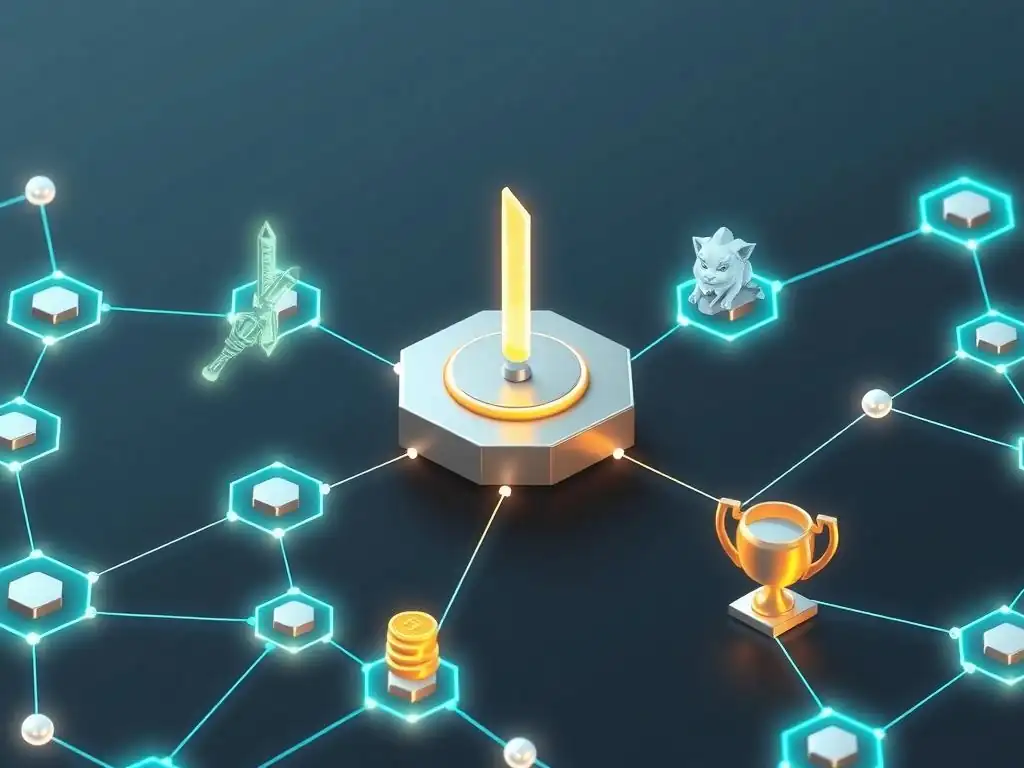
The integration of smart contracts brings several significant benefits to the Play-to-Earn gaming model, fundamentally improving the player experience and enabling novel economic structures. These benefits stem directly from the inherent properties of blockchain technology: decentralization, transparency, and immutability.
Smart contracts remove the need for players to trust the game developer entirely regarding asset ownership, transaction fairness, and reward distribution. This shift in trust from a central authority to verifiable code on a public ledger is a game-changer for digital economies.
Enhanced Security and Transparency for Players
Smart contracts deployed on a blockchain offer unparalleled security and transparency for in-game transactions and asset ownership. Every transaction involving an NFT or game token is recorded on the public ledger, providing a verifiable history that players can inspect. This prevents hidden transactions or secret changes to asset ownership by the developer.
Furthermore, because the logic governing critical actions (like transferring an item or distributing a reward) is encoded in the smart contract, players can be confident that these actions will execute exactly as programmed. This reduces the risk of fraud or manipulation compared to traditional game systems where the database is controlled solely by the developer. The open nature of Play-to-Earn smart contract development, where contract code is often public, allows for community scrutiny and verification.
Ownership and Control of In-Game Assets via NFTs
One of the most compelling benefits for players is the true digital ownership and control provided by NFTs managed by smart contracts. Unlike traditional games where players merely license the right to use in-game items, NFTs mean players genuinely own the underlying digital asset. This ownership is recorded on the blockchain and is independent of the game's servers.
Players can freely trade, sell, or even transfer their NFT assets to other compatible games or platforms (if interoperability is designed). This gives players agency and the potential to recoup or even profit from their in-game investments of time and money. This shift empowers players, turning digital items from mere cosmetic enhancements or temporary power-ups into potentially valuable, liquid assets, all enabled by robust Play-to-Earn smart contract development.
Creating Sustainable and Scalable Game Economies
Well-designed smart contracts are essential for building sustainable and scalable economies within P2E games. They can automate complex economic interactions, such as:
- Managing decentralized marketplaces for buying and selling NFTs and tokens.
- Implementing staking mechanisms where players lock tokens to earn rewards or participate in governance.
- Facilitating crafting or breeding systems that consume resources and mint new assets.
- Governing token sinks (mechanisms that remove tokens from circulation) to combat inflation.
By automating these processes, smart contracts allow the game's economy to function dynamically based on player activity and market forces, rather than requiring constant manual intervention from developers. This infrastructure, built through careful Play-to-Earn smart contract development, is crucial for supporting a large and active player base and fostering a thriving in-game ecosystem.
Challenges in Smart Contract Development
Despite the significant advantages, Play-to-Earn smart contract development presents unique and complex challenges. These challenges span technical hurdles related to blockchain limitations, economic design complexities, and evolving regulatory landscapes. Addressing these issues is crucial for the long-term viability and success of any blockchain-based game.
Developers must navigate issues of scalability, economic balance, and security in an environment where errors can be permanent and costly. Unlike traditional software, smart contract code, once deployed, is often immutable, making bug fixes difficult or impossible without complex upgrade mechanisms.
Addressing Scalability Issues in Blockchain Gaming
Scalability remains a major challenge for many blockchain platforms, directly impacting the performance of P2E games. Games can generate a high volume of transactions (e.g., battles, item usage, trades), and processing all of these on a public blockchain can lead to network congestion, slow transaction times, and high fees. For example, during the peak popularity of some P2E games on Ethereum, gas fees soared, making simple in-game actions prohibitively expensive for many players.
Solutions involve utilizing Layer 2 scaling technologies (like rollups or sidechains) or building on blockchains designed for higher throughput and lower costs. However, implementing these solutions adds complexity to Play-to-Earn smart contract development and might involve trade-offs in terms of decentralization or security compared to the base layer. Designing game mechanics to minimize on-chain transactions is also a key strategy.
Combating Inflation and Maintaining Economic Balance
Designing a sustainable in-game economy is notoriously difficult, and the Play-to-Earn model adds layers of complexity. A primary challenge is combating inflation, particularly with native game tokens. If tokens are constantly generated as rewards without sufficient "sinks" (mechanisms to take tokens out of circulation, like crafting fees, repair costs, or burning mechanisms), the token's value can plummet, undermining the "Earn" aspect for players.
Maintaining economic balance requires careful tokenomics design and potentially dynamic adjustments, which can be hard to implement with immutable smart contracts. Developers must model the inflow and outflow of assets and currency, predict player behavior, and design smart contract mechanisms (like staking rewards, breeding costs, or marketplace fees) that encourage healthy economic activity and provide token utility beyond simple earning and selling. This requires continuous monitoring and potential updates to the Play-to-Earn smart contract development logic.
Ensuring Regulatory Compliance and User Security
The regulatory landscape for cryptocurrencies, NFTs, and blockchain-based games is still evolving and varies significantly across jurisdictions. P2E games, with their real-world economic implications, face scrutiny regarding whether their tokens or NFTs constitute securities, gambling regulations, or other financial compliance requirements. Navigating this uncertain environment is a significant challenge for developers.
Furthermore, ensuring user security goes beyond just securing the smart contracts themselves. It involves educating players about wallet security, protecting against phishing attacks, and managing the risks associated with holding and trading valuable digital assets. While Play-to-Earn smart contract development aims for on-chain security, the ecosystem includes off-chain elements and user behavior that introduce vulnerabilities.
Smart Contract Development Best Practices
To mitigate the challenges and maximize the potential of Play-to-Earn games, adhering to smart contract development best practices is essential. These practices focus on security, efficiency, user experience, and long-term sustainability, ensuring that the underlying technology supports a thriving game ecosystem.
Prioritizing security audits, designing intuitive interfaces, and keeping the player experience at the forefront are crucial steps. Building a successful P2E game requires not only solid blockchain engineering but also thoughtful game design and community management.
Implementing Robust Security Audits for Smart Contracts
Given the high-value assets managed by game smart contracts, rigorous security auditing is non-negotiable. Before deploying contracts to a live network, they must undergo comprehensive review by experienced blockchain security firms. These audits identify potential vulnerabilities, logic errors, and adherence to secure coding standards.
Automated analysis tools can help detect common issues, but manual code review by experts is critical for uncovering more complex or subtle flaws. Multiple rounds of auditing and bug bounty programs incentivizing the community to find vulnerabilities are also recommended. Investing significantly in security audits is a vital part of responsible Play-to-Earn smart contract development.
Designing User-Friendly Interfaces for NFT Management
While smart contracts handle the complex logic on the blockchain, the player interacts with the game through a user interface (UI). For P2E games to gain mainstream adoption, the UI for managing blockchain assets (wallets, NFTs, tokens, marketplaces) must be as simple and intuitive as possible, abstracting away the underlying technical complexity of blockchain transactions.
Players should be able to easily view their owned NFTs, understand their properties, list items for sale on a marketplace, and claim earned tokens without needing deep technical knowledge of gas fees, transaction hashes, or private keys. Poorly designed interfaces can be a significant barrier to entry and adoption, even if the underlying Play-to-Earn smart contract development is sound.
Focusing on Player Experience and Long-Term Engagement
Ultimately, the success of a Play-to-Earn game hinges on its ability to be engaging and fun to play, not just profitable. If the core gameplay loop is not enjoyable, players will eventually leave, regardless of the earning potential, leading to a decline in the game's economy.
Smart contract development should support, not hinder, the player experience. This means optimizing for performance, minimizing transaction costs for frequent actions, and designing economic mechanics that reward skill and time investment in a balanced way. Building a strong community and continuously updating the game with new content and features are also crucial for long-term engagement and sustaining the economy enabled by Play-to-Earn smart contract development.
The Future of Play-to-Earn and Smart Contract Gaming
The Play-to-Earn model is still in its early stages, but its rapid evolution suggests a transformative future for the gaming industry. As blockchain technology matures and becomes more accessible, P2E mechanics and smart contracts are likely to become increasingly integrated into a wider variety of game genres and experiences.
The convergence of gaming with concepts like the metaverse, decentralized finance (DeFi), and decentralized autonomous organizations (DAOs) points towards complex, player-owned, and potentially player-governed virtual worlds. This future will heavily rely on sophisticated Play-to-Earn smart contract development.
The Metaverse and the Integration of P2E Economies
The concept of the metaverse envisions persistent, interconnected virtual worlds where users can socialize, work, play, and transact. Play-to-Earn games are natural building blocks for the metaverse, providing owned assets (NFTs), functional economies (tokens), and engaging activities.
In a future metaverse, assets earned or acquired in one P2E game could potentially be used, displayed, or traded in other virtual environments. Smart contracts will be essential for enabling this interoperability, managing cross-world asset transfers, and defining the rules for how assets behave in different contexts. Building these interconnected economies requires advanced Play-to-Earn smart contract development that considers standards and compatibility across platforms.
The Potential for New Gaming Models and Revenue Streams
Play-to-Earn and smart contracts open doors to innovative gaming models beyond the current archetypes. We might see:
- DAO-Governed Games: Where players holding governance tokens (managed by smart contracts) vote on game updates, economic parameters, or treasury spending.
- Fractionalized NFTs: Allowing multiple players to collectively own a high-value in-game asset.
- DeFi Integration: Incorporating elements like yield farming on in-game tokens, collateralizing NFTs for loans, or creating decentralized insurance protocols for in-game risks, all powered by smart contracts.
- Player-Created Economies: Empowering players to not just earn but also create and monetize their own content, experiences, and assets within a game world, with rules enforced by smart contracts.
These models shift power and potential revenue streams towards players and the community, creating more dynamic and potentially equitable ecosystems, driven by continuous innovation in Play-to-Earn smart contract development.
The Evolving Landscape of Smart Contract Development
The field of Play-to-Earn smart contract development is constantly evolving. New blockchain platforms optimized for gaming are emerging, offering better performance and lower costs. Development tools and frameworks are improving, making it easier and safer to build complex decentralized applications.
Furthermore, the increasing sophistication of in-game economies will require more intricate and robust smart contract designs. This includes developing contracts that can handle complex state changes, manage large volumes of assets, integrate with oracles for external data, and potentially incorporate AI elements. The demand for skilled developers proficient in Play-to-Earn smart contract development is expected to continue growing as the industry matures.
Conclusion: Embracing the Play-to-Earn Revolution
The integration of smart contracts into gaming is not merely a technological trend; it represents a fundamental shift in the relationship between players and games. The Play-to-Earn model, powered by blockchain technology, NFTs, and especially smart contracts, is transforming players from passive consumers into active participants with genuine ownership and economic agency.
While challenges remain, particularly regarding scalability, economic sustainability, and regulation, the benefits of enhanced security, transparency, and true asset ownership are compelling. The potential for creating vibrant, player-owned economies and novel gaming experiences is immense.
The Transformative Impact of Blockchain on the Gaming Industry
Blockchain technology is reshaping the gaming industry by introducing decentralization, verifiable digital ownership, and transparent economies. This technology enables new monetization models that reward players for their time and contributions, potentially expanding the market and attracting new demographics.
The shift from closed, developer-controlled economies to open, player-driven ones represents a significant power shift. As blockchain infrastructure improves and becomes more accessible, its impact on how games are designed, played, and monetized will only deepen.
Smart Contract Development: A Promising Path for Innovation
At the core of this transformation lies Play-to-Earn smart contract development. The ability to code and deploy self-executing agreements on the blockchain is what makes true digital ownership, automated marketplaces, and trustless reward systems possible.
As the Play-to-Earn space matures, the demand for secure, efficient, and innovative smart contract solutions will continue to drive innovation in blockchain technology and gaming. Skilled professionals in Play-to-Earn smart contract development are at the forefront of building the next generation of interactive digital economies. The journey is just beginning, and the potential for creative and economic innovation is vast.
Frequently Asked Questions
What are the core principles behind PlaytoEarn (P2E) gaming economies enabled by blockchain?
P2E economies allow players to earn real-world rewards through gameplay. These rewards are often in the form of cryptocurrencies or NFTs, which can be traded on exchanges. This fundamentally shifts the power dynamic between game developers and players.
How do smart contracts facilitate the functionalities of PlaytoEarn games?
Smart contracts automate the distribution of rewards, manage in-game assets, and enforce the rules of the game in a transparent and tamper-proof manner. This ensures fairness and security for all participants in the P2E ecosystem.
Beyond gaming, what other industries can benefit from the use of smart contracts for similar reward systems?
Industries like loyalty programs, content creation, and even data sharing can leverage smart contracts. These systems can create more engaging and rewarding experiences for users. This promotes participation and incentivizes specific behaviors.
What are the key considerations when undertaking PlaytoEarn smart contract development?
Security is paramount; thorough auditing and testing are crucial to prevent exploits. Scalability is also vital to handle a large volume of transactions, and gas optimization is key to cost-effectiveness.
What is the future outlook for PlaytoEarn games and the wider adoption of blockchain technology in gaming?
The future looks promising, with increasing adoption driven by enhanced player ownership and innovative game mechanics. Expect to see more sophisticated P2E ecosystems and wider integration with traditional gaming platforms.
Final Reflection: Embracing the PlaytoEarn Revolution
The exploration of PlaytoEarn smart contract development reveals more than just a technological advancement; it unveils a fundamental shift in how we perceive and interact with digital economies. The convergence of gaming and blockchain technology is not merely a trend, but a burgeoning ecosystem poised to redefine ownership, value creation, and community engagement within the digital realm. This transformation is happening now, impacting developers, gamers, and investors alike, demanding a proactive understanding of its potential and challenges.
The rise of PlaytoEarn has profoundly influenced the cultural landscape, blurring the lines between leisure and livelihood. Witnessing individuals earning a living through virtual worlds underscores the power of decentralized systems and the democratization of opportunity. This paradigm shift necessitates a re-evaluation of traditional economic models and a deeper understanding of the ethical considerations surrounding digital labor. The future is already here – it's just not evenly distributed.
- William Gibson. This quote encapsulates the current state of PlaytoEarn, highlighting its potential to reshape economic landscapes, even as its benefits remain unevenly accessible.
As we stand on the cusp of this PlaytoEarn revolution, I invite you to reflect on the implications of this technology for your own life. Consider how you can leverage the power of smart contracts to create value, empower communities, and contribute to a more equitable digital future. The opportunities are vast, the challenges are real, and the potential for positive change is immense. Embrace the possibilities, learn from the pioneers, and become an active participant in shaping the future of PlaytoEarn.
Dive Deeper: Unlock the Future of Play!
Thank you for exploring the exciting intersection of gaming and blockchain with us. We hope this article has illuminated the potential of Play-to-Earn economies and the innovative role of smart contracts. Now, let's turn that knowledge into action.
Here are some steps you can take to expand your understanding and get involved:
- Start Playing! Download and try a popular Play-to-Earn game. Experience firsthand how blockchain technology enables in-game economies and rewards players for their time and effort.
- Explore Gaming Forums and Communities: Engage with fellow players and developers, discover new projects, and share your experiences.
- Contribute to a Blockchain Gaming Project: Whether you're a developer, artist, or writer, find a project that matches your skills and join the movement.
What is one innovative way you believe smart contracts could further transform the gaming industry in the coming year? Share your ideas in the comments below!
Leave a Reply