
Smart Contract Governance Models: Navigating OnChain Decision Making


Welcome to Blockchain Trends, your compass in the rapidly evolving world of decentralized technology. Beyond the hype of cryptocurrencies, blockchain's true potential lies in its ability to reshape industries and empower individuals. Intrigued by how decisions are made in decentralized autonomous organizations (DAOs)? Delve into our latest exploration of Onchain Governance Model Design and discover the innovative approaches shaping the future of smart contract ecosystems. What are the key considerations for building effective and secure governance structures? Read on to uncover the insights and best practices driving the next wave of decentralized innovation.
Smart Contract Governance Models: Navigating OnChain Decision Making
- Introduction to Onchain Governance for Smart Contracts
- Exploring Different Onchain Governance Models for Smart Contracts
-
Designing Effective Onchain Governance Models: Key Considerations
- Security Audits and Formal Verification for Governance Contracts
- Parameter Tuning and Initial Configuration of Governance Systems
- Community Engagement and Participation in Governance Processes
- Handling Disputes and Emergency Situations in Onchain Governance
- Cost Analysis and Resource Allocation for Onchain Governance
- Implementing Onchain Governance: Practical Steps and Tools
- Case Studies: Successful and Unsuccessful Onchain Governance Implementations
- The Future of Onchain Governance: Trends and Innovations
- Conclusion: Optimizing Smart Contract Governance Through Effective Onchain Model Design
-
Frequently Asked Questions
- What is Onchain governance model design, and why is it important?
- How does Onchain governance differ from Offchain governance?
- What are some common examples of Onchain governance models?
- What are the key challenges in designing effective Onchain governance models?
- How might regulations impact the development and implementation of Onchain governance?
- Final Reflection: Embracing Decentralized Futures
- Unleash the Power of Decentralized Decisions!
Introduction to Onchain Governance for Smart Contracts
Understanding the Need for Smart Contract Governance
Smart contracts, once deployed, are immutable by default, executing code automatically based on predefined conditions. While this immutability is a core strength, it presents a significant challenge: what happens when bugs are discovered, parameters need tuning, or upgrades are necessary? Without a mechanism for change, a critical smart contract could become unusable or even dangerous, potentially leading to frozen funds or system failure. Consider a decentralized lending protocol where interest rate parameters are fixed; changing market conditions would render it inefficient or risky without a way to adjust these rates post-deployment.
Furthermore, complex decentralized applications often involve shared resources, community funds, or evolving feature sets that require collective decision-making. Relying on a centralized entity defeats the purpose of decentralization. Therefore, a structured process is needed to allow stakeholders – typically token holders or users – to collectively propose and vote on changes, upgrades, or the allocation of resources. This necessity drives the exploration and implementation of robust Onchain governance model design to ensure adaptability and resilience in decentralized systems.
Defining Onchain Governance: Decentralized Decision Making
Onchain governance refers to the process where decisions about a decentralized protocol or smart contract system are made directly on the blockchain itself. This typically involves participants submitting proposals, which are then voted upon using a mechanism encoded within smart contracts. The outcome of the vote, if it meets predefined thresholds (like a minimum quorum and a supermajority), is automatically enacted by the governance smart contract, often triggering upgrades or parameter changes in other associated contracts.
Unlike offchain governance, which might involve forums, polls, or centralized multisigs that require manual execution of decisions, Onchain governance automates the decision-making and implementation process. This minimizes reliance on trusted intermediaries and aligns incentives by directly linking participation and decision power to the blockchain's state. The design of these Onchain governance models is crucial, defining who can propose, who can vote, how votes are weighted, and what thresholds are required for a proposal to pass.
Key Benefits of Implementing Onchain Governance Models
Implementing well-designed Onchain governance models offers several significant advantages for smart contract-based systems. Foremost among these is increased decentralization; power is distributed among stakeholders rather than concentrated in a single team or entity, reducing single points of failure and censorship risks. This aligns with the core ethos of blockchain technology.
Another key benefit is transparency and auditability. Every proposal, vote, and decision outcome is recorded on the public ledger, allowing anyone to inspect the governance process. This contrasts sharply with opaque, centralized decision-making. Furthermore, Onchain governance can enhance system resilience and adaptability, allowing protocols to respond to changing market conditions, security threats, or community needs without requiring a complete redeployment. This iterative improvement capability is vital for long-term viability.
Exploring Different Onchain Governance Models for Smart Contracts
Token-Based Voting: A Common Onchain Governance Approach
Token-based voting is perhaps the most prevalent type of Onchain governance model design. In this system, the right to propose and vote is tied directly to the ownership of a specific governance token. The influence or weight of a participant's vote is typically proportional to the amount of tokens they hold or stake. This model aligns the incentives of voters with the health and success of the protocol, as token value often reflects the protocol's performance. Many prominent DeFi protocols, such as Uniswap, Aave, and Compound, utilize variations of token-based voting for their Onchain governance.
The process usually involves locking tokens to participate in voting, which can range from simply holding tokens in a wallet to staking them in a specific governance contract. Proposals, which can range from simple parameter changes (like adjusting interest rates or fees) to complex code upgrades, are submitted and require a certain token threshold to even enter the voting phase (e.g., 1% of total supply).
Voting then proceeds for a set period (e.g., 3-7 days), and if the proposal achieves both a minimum participation level (quorum) and a required majority (e.g., 51% or 60% of votes cast), it is eligible for execution.
Implementing Token-Weighted Voting
Implementing token-weighted voting requires smart contracts that can track token balances (or staked balances) at a specific block height (often the block when voting starts or a snapshot block), manage the proposal lifecycle (submission, voting period, execution/cancellation), and tally votes according to token weight. A typical implementation involves users locking tokens or delegating their voting power to another address. The governance contract references the token balance of each voter at the designated snapshot block to calculate their voting weight for a specific proposal.
Challenges in implementation include preventing sybil attacks (though token weighting helps), ensuring gas efficiency for voting and tallying, and managing the complexity of proposal execution, especially for code upgrades. For instance, upgrading a core protocol contract often involves a timelock contract that delays execution for a set period (e.g., 48 hours) after a successful vote, providing a window for review and potential emergency intervention if a critical flaw is discovered in the approved change. Designing the voting mechanism to be fair, secure, and efficient is a core aspect of Onchain governance model design.
Challenges and Considerations for Token-Based Systems
Despite its popularity, token-based voting faces several significant challenges. One major concern is voter apathy; many token holders do not actively participate in governance, leaving decision-making power concentrated in the hands of a few large holders or sophisticated groups. This can lead to plutocracy, where wealth dictates control, potentially undermining the decentralized ideal. Data from various DAOs shows participation rates often hover around 5-15% of eligible token supply for routine proposals.
Another challenge is the potential for whale manipulation or collusion, where large token holders could vote in ways that primarily benefit themselves, even if detrimental to the protocol's long-term health. Furthermore, quadratic voting, where voting power increases with the square root of token holdings, has been proposed and implemented in some contexts (though less common for core protocol governance) to mitigate the influence of large holders, but it adds complexity.
Gas costs for voting on certain blockchains can also be prohibitive for smaller token holders, further exacerbating the issue of low participation. Effective Onchain governance model design must consider these factors and potentially incorporate mechanisms to encourage broader participation or mitigate whale dominance.
Reputation-based governance models assign voting power based on a participant's earned reputation within the system, rather than solely on token holdings. Reputation can be accrued through various positive contributions, such as providing valuable feedback, successfully completing tasks, or having their proposals accepted over time. This approach aims to incentivize helpful, expert participation and reduce the influence of purely financially motivated actors or sybil identities. A historical example, though not purely Onchain, is the way early internet forums or platforms like Stack Overflow built reputation systems to moderate content.
In an Onchain context, reputation could be represented by a non-transferable token (like a soulbound token) or a score stored within a smart contract, updated based on verifiable Onchain actions or potentially through trusted oracles reporting offchain contributions. For instance, a reputation score could increase every time a user's bug report leads to a patch, or every time their voted-for proposal is successfully implemented and benefits the protocol. Conversely, proposing malicious changes or consistently voting against successful proposals could potentially decrease reputation.
How Reputation Systems Function in Onchain Governance
Functionally, a reputation-based Onchain governance model design replaces token balances with reputation scores when calculating voting weight. When a proposal is initiated, the governance contract checks the reputation score associated with each participating address at a snapshot block. The voting weight for that proposal is then derived from this score, often using a linear or non-linear function. The smart contracts must also include logic for how reputation is earned, potentially penalized, and updated over time, which can be significantly more complex than simply tracking token transfers.
The complexity arises in defining what constitutes a "positive" or "negative" contribution in an objective, verifiable way on the blockchain. For example, how do you objectively measure the "value" of a piece of feedback? This often requires some degree of offchain input or subjective assessment, which must then be fed into the Onchain system, potentially through mechanisms like optimistic rollups or trusted oracles, introducing potential points of centralization or reliance.
Benefits and Drawbacks of Reputation-Based Models
A primary benefit of reputation-based governance is its potential to foster a meritocracy, empowering knowledgeable and engaged community members regardless of their financial stake. This can lead to higher quality decision-making and greater resilience against purely capital-driven attacks. It also encourages active participation and contribution to the ecosystem.
However, reputation systems are challenging to design and implement fairly. Bootstrapping reputation in a new system is difficult. Measuring and verifying contributions objectively Onchain is complex and often requires offchain components.
Reputation systems can also be slow to adapt, as building significant reputation takes time, potentially hindering rapid decision-making. Furthermore, they can be susceptible to gaming or sybil attacks if the reputation-earning mechanisms are not robust, or if reputation scores can be manipulated. The complexity and subjectivity involved make reputation-based Onchain governance model design less common for core protocol parameters compared to token voting, though elements of reputation are sometimes incorporated.
Liquid Democracy: Combining Direct and Delegated Voting
Liquid democracy, also known as delegative democracy, is an Onchain governance model design that seeks to combine the benefits of direct democracy and representative democracy. Participants can either vote directly on proposals themselves (direct voting) or delegate their voting power to another participant (representative voting). This delegation is 'liquid' because it can be changed at any time, and a delegate can further delegate their accumulated voting power to someone else, forming chains of delegation.
This model addresses voter apathy seen in pure token voting by allowing those who lack the time or expertise to vote themselves to empower someone they trust to vote on their behalf. It also allows for the emergence of domain experts as delegates, concentrating voting power in individuals knowledgeable about specific types of proposals (e.g., technical upgrades vs. marketing initiatives). Prominent examples like Tezos and Polkadot incorporate elements of liquid democracy or delegation into their governance systems.
Understanding the Mechanics of Liquid Democracy
In a liquid democracy Onchain governance system, participants hold voting power, often based on token ownership (like Tezos's rolls or Polkadot's DOT tokens). Before a vote, a participant can choose to cast their vote directly for or against a proposal. Alternatively, they can delegate their voting power to another address. The smart contract system keeps track of these delegations. When a proposal vote occurs, the system tallies votes by summing up the direct votes cast by individuals plus the voting power delegated to them.
Delegations can often be proposal-specific or general. A user might delegate all their power to a friend for all votes, or they might delegate their power to one expert for technical proposals and another for economic ones. The smart contracts must efficiently manage these delegation relationships, allowing for easy delegation, re-delegation, and withdrawal of delegation at any time, often up until the voting period begins. The complexity lies in managing the potentially dynamic delegation graph and efficiently calculating aggregated voting power.
Advantages of Liquid Democracy in Smart Contract Contexts
Liquid democracy offers several advantages for Onchain governance. It can significantly increase voter participation by lowering the barrier for those who don't want to vote directly but are willing to delegate. This can lead to higher quorum rates compared to pure direct voting systems. It also allows for the cultivation of expertise, as knowledgeable individuals can attract delegations and become influential delegates, leading to more informed decisions.
Furthermore, the ability to change delegations easily provides accountability; if a delegate votes against the interests of those who delegated to them, their delegators can quickly withdraw their power. This dynamic creates a feedback loop between delegates and their constituents. The flexibility and potential for increased engagement make liquid democracy a compelling model in Onchain governance model design, particularly for large and diverse communities.
Futarchy: Prediction Markets for Onchain Decision Making
Futarchy is a unique and experimental Onchain governance model design proposed by economist Robin Hanson. Instead of voting directly on whether a proposal should pass, participants vote on whether the proposal will be good for the protocol's defined success metric. This is done using prediction markets. The decision rule is: "Vote on beliefs about outcomes, not on values. Choose the policy that the prediction markets predict will yield the best outcome."
For example, instead of voting "Should we increase the protocol fee by 1%? ", the vote is framed as two prediction markets: "Will the protocol's total value locked (TVL) be higher in 3 months if we increase the fee by 1%?" and "Will the protocol's TVL be higher in 3 months if we don't change the fee?". The market that predicts the higher TVL determines the winning policy. The idea is to leverage the collective intelligence and incentives of market participants who stake capital on their beliefs about a proposal's future impact.
How Futarchy Leverages Collective Intelligence
Futarchy leverages the power of prediction markets, where participants buy and sell shares representing the likelihood of future events. In a Futarchy governance system, the "events" are the outcomes of different policy proposals (e.g., "Proposal A passes and metric X increases by Y%"). Participants are incentivized to contribute accurate information and analysis because they profit if their predictions are correct and lose if they are wrong. This contrasts with traditional voting, where there is often less direct financial incentive tied to the quality of the voting decision itself.
The market price of shares in a prediction market aggregates the dispersed knowledge and beliefs of all participants. By designing markets around the impact of proposals on key performance indicators (KPIs) – such as protocol revenue, token price, user growth, or TVL – Futarchy aims to tap into this aggregated intelligence to make decisions that are predicted to maximize the protocol's success according to its defined objectives.
Implementing Futarchy in Smart Contract Governance
Implementing Futarchy Onchain governance model design is complex and involves integrating prediction market mechanisms directly into the governance process. This requires smart contracts that can:
- Define and measure the protocol's success metric(s).
- Create prediction markets for the predicted outcome of competing proposals based on these metrics.
- Allow participants to buy and sell shares in these markets using collateral (e.g., governance tokens or stablecoins).
- Resolve the markets based on the actual outcome of the metric after a set period.
- Automatically enact the proposal associated with the prediction market that predicted the best outcome (e.g., highest metric value).
Challenges include defining clear, objective, and difficult-to-manipulate success metrics, ensuring sufficient liquidity in the prediction markets for meaningful price discovery, and handling the time lag between decision-making (market prediction) and outcome measurement. While theoretically compelling, fully implemented Futarchy for core smart contract governance remains largely experimental due to these complexities.
DAO-Based Governance: Decentralized Autonomous Organizations
Decentralized Autonomous Organizations (DAOs) represent the broader organizational structure often underpinned by Onchain governance models. A DAO is an organization whose rules and operations are encoded as computer programs (smart contracts) and which is controlled by its members, not by a central authority. While not a specific type of voting model in itself, DAOs provide the framework within which token-based, reputation-based, liquid democracy, or other models operate to manage shared resources and make collective decisions for a protocol or project.
The core idea is that decision-making power is distributed among DAO members, who typically hold governance tokens. These members use the defined Onchain governance mechanism (e.g., submitting proposals, voting) to manage the DAO's treasury, upgrade its smart contracts, adjust protocol parameters, or fund new initiatives. The DAO structure provides the legal, economic, and social wrapper around the technical Onchain governance process.
The Role of DAOs in Smart Contract Management
DAOs play a critical role in managing the lifecycle and evolution of associated smart contracts. Once the initial protocol contracts are deployed, any subsequent significant changes – from minor parameter tweaks to major architectural upgrades – typically require approval through the DAO's Onchain governance process. The DAO treasury, often holding significant assets (e.g., protocol revenue, native tokens), is also managed via governance proposals; funds can only be spent if a proposal for allocation passes the required vote.
Essentially, the DAO acts as the decentralized governing body for the smart contract system. It provides a transparent and auditable mechanism for stakeholders to collectively steer the project's development, allocate resources, and respond to unforeseen events. Effective Onchain governance model design is fundamental to a successful DAO, determining how power is distributed, how decisions are made, and how efficiently the organization can adapt.
Challenges and Opportunities for DAO Governance
DAO governance, while promising, faces significant challenges. Legal and regulatory uncertainty surrounding DAOs remains a major hurdle in many jurisdictions. Operational challenges include coordinating large, distributed communities, ensuring high-quality proposal writing and review, and mitigating the aforementioned issues of voter apathy and potential plutocracy inherent in some models. Security risks are also present; flaws in the governance smart contracts themselves can be catastrophic, as demonstrated by The DAO hack.
Despite these challenges, the opportunities are substantial. DAOs enable true community ownership and participation, fostering strong network effects. They can potentially unlock new forms of coordination and resource allocation that are more efficient and equitable than traditional structures. As Onchain governance model design evolves, incorporating better mechanisms for identity, participation, and decision execution, DAOs are poised to become increasingly effective vehicles for managing decentralized protocols and assets.
Designing Effective Onchain Governance Models: Key Considerations
Security Audits and Formal Verification for Governance Contracts
The smart contracts that underpin Onchain governance are arguably the most critical components of a decentralized protocol, as they control upgrades, parameter changes, and often the treasury. A vulnerability in these contracts could allow malicious actors to seize control of the system, drain funds, or introduce harmful code. Therefore, rigorous security audits by multiple reputable third parties are absolutely essential before deployment. These audits should scrutinize the contract logic for common vulnerabilities like reentrancy, integer overflows, and access control issues, specifically within the context of how the governance mechanisms interact with other protocol components.
Beyond traditional auditing, formal verification offers a mathematical approach to proving the correctness of smart contract code against a set of predefined properties. While more complex and costly, formal verification can provide a higher degree of assurance for critical components like governance modules, ensuring that the system will behave as expected under all possible conditions. For instance, formally verifying that only a successfully voted-on proposal can trigger a specific state change is paramount. Investing heavily in the security and verification of the governance smart contracts is a non-negotiable part of robust Onchain governance model design.
Parameter Tuning and Initial Configuration of Governance Systems
The initial parameters set for an Onchain governance system significantly impact its behavior and effectiveness. These parameters include quorum requirements (the minimum percentage of total voting power that must participate for a vote to be valid), voting thresholds (the percentage of votes required for a proposal to pass, e.g., 51%, 60%, or 66.7%), proposal submission thresholds (the minimum token amount or reputation needed to propose), voting periods (how long voting is open), and timelock delays (the delay between a successful vote and execution).
Setting these too high can lead to gridlock and inability to make necessary changes; setting them too low can make the system susceptible to malicious proposals or capture.
Finding the right balance often requires careful consideration of the community size, token distribution, and the desired speed of decision-making. Some protocols start with relatively conservative parameters and gradually decentralize and lower thresholds as the community matures. Others might use a multi-sig or foundation to oversee initial critical parameters before transitioning full control to Onchain governance. The process of selecting and tuning these parameters is a critical aspect of Onchain governance model design and often involves community discussion and simulation.
Community Engagement and Participation in Governance Processes
A well-designed Onchain governance model is ineffective if the community does not participate. Encouraging active engagement is crucial. This involves providing clear, accessible information about proposals, simplifying the voting process, and lowering barriers to participation (e.g., reducing gas costs where possible, providing user-friendly interfaces). Platforms like Snapshot (for offchain signaling, often preceding Onchain votes) and Tally (for tracking Onchain governance activity across protocols) have emerged to make governance more transparent and easier to engage with.
Efforts to foster participation often include educational initiatives to help token holders understand the importance of governance and the implications of various proposals. Grant programs can incentivize individuals or groups to write high-quality proposals and conduct research. Creating dedicated forums or communication channels for governance discussions is also key. Ultimately, the success of Onchain governance model design is measured not just by the elegance of its smart contracts, but by the health and activity of the governing community.
Handling Disputes and Emergency Situations in Onchain Governance
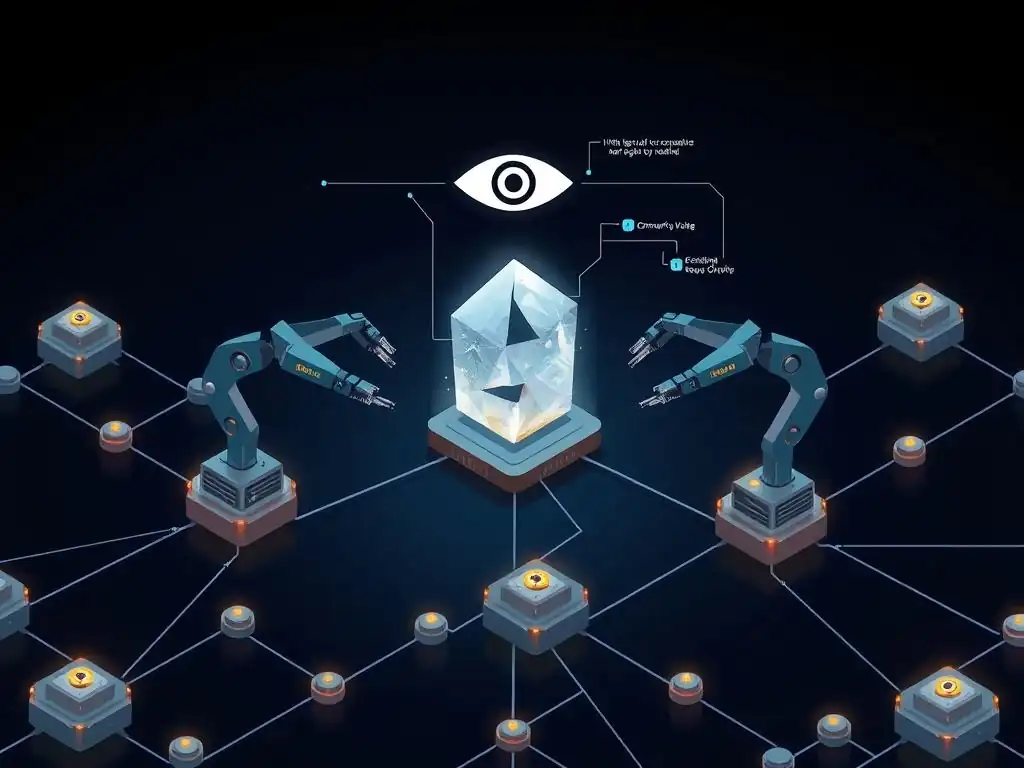
Even with robust governance processes, disputes and emergency situations can arise. What happens if a passed proposal is later discovered to have a critical bug? Or if an immediate action is required to prevent an exploit? Purely Onchain, time-locked governance can be too slow to react to rapid threats. Designing mechanisms for handling such scenarios is vital. Some protocols incorporate emergency multisigs controlled by trusted community members or core developers, authorized only to take specific, limited actions (like pausing contracts) under predefined emergency conditions, subject to later review or ratification by the DAO.
Other approaches include incorporating dispute resolution mechanisms, though implementing these purely Onchain is complex. This might involve Schelling point games or decentralized court systems (like Kleros) to resolve subjective disputes related to governance outcomes or proposal validity. While these mechanisms add complexity, they provide necessary safety valves for situations where the standard proposal/voting process is insufficient or too slow. A comprehensive Onchain governance model design must account for these edge cases.
Cost Analysis and Resource Allocation for Onchain Governance
Implementing and running Onchain governance is not free. Gas costs associated with deploying governance contracts, submitting proposals, and casting votes can be significant, especially on busy networks like Ethereum mainnet. While layer 2 solutions and alternative blockchains reduce these costs, they remain a factor. Beyond gas, resources are needed for security audits, developer time to implement governance features, community management, research, and potentially funding delegates or contributors.
DAOs often allocate a portion of their treasury or protocol revenue to cover these operational costs. Designing an Onchain governance model also involves considering the economic incentives for participation; for example, some systems might reward voters or delegates. Understanding and budgeting for the real costs – both technical and human – associated with maintaining an active, secure, and participatory governance system is crucial for long-term sustainability and is a key part of effective Onchain governance model design.
Implementing Onchain Governance: Practical Steps and Tools
Choosing the Right Smart Contract Platform for Governance
The choice of blockchain platform significantly impacts the implementation of Onchain governance. Different platforms offer varying trade-offs in terms of transaction costs (gas fees), speed, smart contract capabilities, security, and community size. Ethereum, with its large developer community and established tooling, is a popular choice, but high gas costs can hinder participation in governance votes for smaller token holders. Solutions like optimistic or zero-knowledge rollups on Ethereum can mitigate this, offering lower transaction fees.
Alternative layer 1 blockchains (like Solana, Avalanche, Polkadot, Tezos) offer different consensus mechanisms and fee structures that may be more conducive to frequent Onchain interactions like voting. When selecting a platform, consider the volume of expected governance activity, the technical complexity of the governance model, the desired level of decentralization, and the community's existing presence on the chain. The platform choice is a foundational decision in Onchain governance model design.
Developing and Deploying Governance Smart Contracts
Developing governance smart contracts requires specialized expertise in secure smart contract programming, typically in Solidity for Ethereum-compatible chains. These contracts must handle proposal submission, token or reputation locking/snapshotting, vote casting and tallying, quorum and threshold checks, and proposal execution logic. Common patterns include using upgradeable proxies for the main protocol contracts, allowing the governance contract to authorize upgrades without changing the protocol contract's address.
Deployment involves careful planning, including setting initial parameters, allocating governance tokens (if applicable), and potentially setting up a temporary multisig or foundation control during the initial bootstrapping phase. Given the criticality of these contracts, multiple audits and potentially formal verification should be completed before the final deployment to the mainnet. The development process is iterative and requires close collaboration between smart contract engineers and the community designing the governance process.
Integrating Governance Modules into Existing Smart Contracts
For existing protocols adding Onchain governance, integrating the new governance modules requires careful planning to ensure compatibility and security. This often involves making existing protocol contracts 'governance-aware', meaning they include functions that can only be called by the governance smart contract (or a timelock contract controlled by governance). For instance, a lending protocol's interest rate contract might have an updateInterestRate function with an onlyGovernance modifier.
The integration strategy must ensure that adding governance does not introduce new vulnerabilities or break existing functionality. Upgradeable contract patterns (like the UUPS or Transparent Proxy patterns) are commonly used to allow the governance contract to swap out implementation logic for protocol contracts over time as proposals pass. This integration step is complex and high-risk, requiring thorough testing and auditing.
Tooling for Onchain Governance: Snapshot, Tally
The ecosystem of tools supporting Onchain governance has grown significantly. Snapshot is a widely used offchain, gasless voting platform that uses cryptographic signatures to record votes based on token holdings at a specific block height. While votes on Snapshot are not directly enforceable Onchain, it serves as a powerful signaling tool for community sentiment and is often used to gauge support for proposals before submitting them to a more costly Onchain vote. Thousands of DAOs use Snapshot for their governance polls.
Tally is another valuable tool that provides a user-friendly interface to track Onchain governance activity across various protocols. It aggregates proposals, voting data, and delegate information, making it easier for token holders to monitor governance, find delegates, and participate. Tools like these are crucial for improving the user experience of Onchain governance, making it more accessible and transparent for the average participant and supporting effective Onchain governance model design.
Case Studies: Successful and Unsuccessful Onchain Governance Implementations
MakerDAO: A Successful Token-Based Governance System
MakerDAO is one of the earliest and most prominent examples of a large-scale protocol governed by a token-based Onchain system. Holders of the MKR token can vote on a wide range of parameters for the Maker Protocol, including adding new collateral types to mint DAI, adjusting stability fees (interest rates), modifying debt ceilings, and electing members of specialized domains (like risk or oracle teams). The governance process involves proposal submission (requiring 100 MKR), a short polling period (often 24 hours), and then an executive vote which, if passed, is enacted Onchain.
Over the years, MakerDAO governance has successfully navigated numerous challenges, including market crashes (like March 2020) and the need to integrate new collateral types and features. It manages a treasury holding millions of DAI and other assets. While facing challenges like voter apathy and the influence of large MKR holders, the system has proven resilient and capable of evolving the protocol significantly through decentralized decision-making. The consistent use of the executive vote mechanism to bundle multiple approved changes into a single Onchain transaction is a notable design feature.
Analysis of the Governance Structure and its Outcomes
MakerDAO's governance structure relies on MKR token weight, with a simple majority required for executive votes to pass. The use of polls allows for testing community sentiment before committing to a formal executive vote, which involves more complex smart contract interactions. The system has successfully implemented critical upgrades, such as the transition from Single-Collateral DAI to Multi-Collateral DAI and the introduction of various collateral types, demonstrating its ability to facilitate major protocol changes.
However, participation rates in MakerDAO governance polls and executive votes have often been low relative to the total MKR supply, sometimes requiring significant effort from core contributors and large holders to reach quorum. This highlights the persistent challenge of engaging a broad token holder base in Onchain governance. Despite this, the system's ability to adapt and manage risk through decentralized parameter adjustments is a testament to its fundamental design, providing valuable lessons for future Onchain governance model design efforts.
The DAO Hack: A Failed Onchain Governance Experiment
"The DAO" was an ambitious early experiment launched in 2016 on the Ethereum network, designed as a decentralized venture capital fund governed by token holders. It raised a significant amount of Ether, equivalent to about $150 million at the time. Its governance model allowed token holders to propose investments and vote on them. It also included a "split" function, allowing token holders to exit with their share of the Ether if they disagreed with the DAO's direction, creating a 'child DAO'.
In June 2016, a vulnerability in the split function was exploited, allowing an attacker to recursively call the split function before the internal balance could be updated, draining over one-third of The DAO's Ether into a child DAO controlled by the attacker. While the governance model itself wasn't the sole cause, the inability of the governance process to quickly react and patch the vulnerability, combined with the complexity of the smart contracts and the unexpected consequences of the 'split' function, contributed to the disaster.
Identifying the Reasons for Failure and Lessons Learned
The failure of The DAO can be attributed to several factors. Firstly, a critical security vulnerability existed in the smart contract code, which was not detected during auditing. This underscores the absolute necessity of rigorous security reviews. Secondly, the governance model, while allowing proposals and voting, did not have a mechanism for rapid response to emergencies or a simple way to freeze assets or patch the exploit before the attacker could finalize the withdrawal from the child DAO (which involved a 28-day waiting period).
The incident led to a contentious hard fork of the Ethereum network to recover the stolen funds, highlighting the challenges of decentralized decision-making in crisis. Key lessons learned from The DAO hack profoundly influenced subsequent Onchain governance model design: the paramount importance of smart contract security, the need for emergency response mechanisms, the benefits of simpler governance designs, and the potential risks associated with complex, untested Onchain logic controlling significant value.
The Future of Onchain Governance: Trends and Innovations
Scalability Solutions for Onchain Governance
High transaction costs and network congestion on some blockchains remain a significant barrier to widespread participation in Onchain governance. Future developments will heavily rely on scalability solutions. Layer 2 technologies, such as optimistic rollups (like Optimism and Arbitrum) and zero-knowledge rollups (like zkSync and StarkNet), offer the potential to execute governance votes and even complex proposal logic off the main chain, significantly reducing gas costs and increasing transaction throughput, while still inheriting the security of the base layer.
Native layer 1 protocols designed for scalability, often employing sharding or different consensus mechanisms (like Proof-of-Stake variations), also provide environments where Onchain governance can be more cost-effective and faster. As these scaling solutions mature and become more widely adopted, they will enable more frequent, granular, and inclusive Onchain governance processes, making complex Onchain governance model design more practical.
Improved User Interfaces and User Experience for Governance Participation
Current Onchain governance interfaces can be intimidating and complex for average users. Future trends will focus on significantly improving the user experience (UX) and user interface (UI) of governance platforms. This includes building more intuitive dashboards for tracking proposals, providing clearer information about the implications of votes, simplifying the delegation process in liquid democracy models, and integrating governance tools directly into popular wallets or dApp interfaces.
Making governance participation as easy and accessible as using other consumer-facing web applications is crucial for overcoming voter apathy and encouraging broader community engagement. Better visualization of voting power distribution, historical voting data, and delegate performance will also empower participants to make more informed decisions. These UX/UI improvements are essential for the long-term health and decentralization of protocols relying on Onchain governance model design.
Integration with Offchain Data and Systems
While core decision-making occurs Onchain, many real-world factors and data points are necessary for informed governance decisions. Future Onchain governance systems will increasingly integrate with offchain data and systems in secure and verifiable ways. This could involve using decentralized oracles to bring real-world data (like market prices, weather data for parametric insurance, or social media sentiment) into governance smart contracts to trigger proposals or inform decisions.
Mechanisms for verifying offchain identity or reputation could also play a role, potentially allowing for governance models that incorporate elements beyond just token holdings while mitigating sybil risks. Secure bridges and interoperability solutions will also allow governance decisions on one chain to affect assets or protocols on other chains. This integration of offchain context while maintaining Onchain verifiability is a complex but necessary evolution for sophisticated Onchain governance model design.
The Role of AI in Enhancing Onchain Governance
Artificial intelligence (AI) is beginning to explore potential applications within Onchain governance. AI could be used to help process and summarize large volumes of governance discussions, identify key arguments for and against proposals, or even flag potentially malicious or low-quality proposals for community review. AI models could also analyze historical governance data to predict potential outcomes or identify areas where governance processes could be improved.
Furthermore, AI agents or bots could potentially act as delegates in liquid democracy models, providing automated voting based on predefined strategies or analysis, though this raises questions about trust and accountability. While still in early stages, the integration of AI tools holds promise for making Onchain governance more efficient, informed, and accessible, presenting both opportunities and challenges for future Onchain governance model design.
Conclusion: Optimizing Smart Contract Governance Through Effective Onchain Model Design
Key Takeaways for Designing Robust Onchain Governance Systems
Designing effective Onchain governance models for smart contracts is a complex but critical task for building resilient, adaptable, and decentralized protocols. Key takeaways include prioritizing security through rigorous audits and formal verification of governance contracts, as these control the entire system. Careful parameter tuning is essential to balance efficiency and decentralization, avoiding both gridlock and vulnerability to capture.
Furthermore, success hinges on fostering active community engagement through user-friendly tools and clear communication. Planning for emergency situations and dispute resolution is necessary, as standard processes may be too slow in a crisis. Finally, understanding and allocating resources for the ongoing costs of governance – including gas fees, development, and community support – is vital for long-term sustainability. A holistic approach to Onchain governance model design considers technical, economic, and social factors.
The Importance of Ongoing Monitoring and Adaptation
Onchain governance is not a set-it-and-forget-it system. The effectiveness of any Onchain governance model design must be continuously monitored. This involves tracking participation rates, proposal success rates, the types of proposals being passed, and identifying potential points of centralization or apathy. Data analytics dashboards and tools play a crucial role in providing insights into the health of the governance process.
Based on this monitoring, the governance model itself may need to be adapted over time through the governance process. This could involve adjusting parameters, introducing new voting mechanisms (like incorporating quadratic voting or delegate incentives), or refining the proposal submission requirements. The ability of the governance system to evolve its own rules and mechanisms is a sign of maturity and essential for navigating the unpredictable future of decentralized ecosystems.
Frequently Asked Questions
What is Onchain governance model design, and why is it important?
Onchain governance model design refers to the automated processes embedded within smart contracts that allow token holders to directly participate in decision-making regarding the protocol's development and operation. It's crucial for decentralization and community ownership.
How does Onchain governance differ from Offchain governance?
Onchain governance executes decisions directly on the blockchain through smart contracts, automating the process. Offchain governance relies on traditional methods like forums and votes, which are then manually implemented by the development team.
What are some common examples of Onchain governance models?
Common Onchain governance models include token-weighted voting, where voting power is proportional to token holdings, and liquid democracy, where users can delegate their votes to others. These models aim to facilitate decentralized decision-making.
What are the key challenges in designing effective Onchain governance models?
Designing effective Onchain governance models involves addressing challenges like voter apathy, whale dominance, and the potential for malicious proposals. Balancing security, decentralization, and efficiency is crucial.
How might regulations impact the development and implementation of Onchain governance?
Regulations surrounding Onchain governance are still evolving, but potential areas of impact include securities laws, liability concerns, and requirements for transparency and accountability. Clear regulatory frameworks are needed for widespread adoption.
Final Reflection: Embracing Decentralized Futures
The exploration of onchain governance model design reveals that the future of decentralized organizations hinges on the effectiveness of their decision-making processes. What was once a theoretical concept is rapidly becoming a practical necessity, as DAOs and blockchain-based projects grapple with real-world challenges requiring robust and adaptable governance structures. The evolution of these models will directly impact the scalability, security, and overall success of the Web3 ecosystem.
The impact of onchain governance extends far beyond the technical realm, influencing the very fabric of how we organize and collaborate. Witnessing the emergence of these decentralized systems has been profoundly inspiring, highlighting the potential for greater transparency and community involvement in decision-making. The best argument against democracy is a five-minute conversation with the average voter.
- Winston Churchill. This quote, while cynical, underscores the challenge of effective governance, a challenge that onchain models strive to address through innovative mechanisms and transparent processes.
As you consider the intricacies of onchain governance model design, I invite you to reflect on your own role in shaping this decentralized future. How can you contribute to the development of more inclusive, efficient, and resilient governance systems? The power to build a more equitable and transparent world lies within our collective ability to design and implement effective onchain governance models. Let us embrace this opportunity and build a future where decisions are made collaboratively, transparently, and for the benefit of all.
Unleash the Power of Decentralized Decisions!
Thank you for exploring the world of smart contract governance and delving into on-chain decision-making. We hope you've gained valuable insights into shaping the future of decentralized applications. Now, it's time to put that knowledge into practice!
Here are some ways to deepen your understanding:
- Experiment with a DAO Framework: Take the initiative to explore platforms like Aragon or Snapshot to see how governance proposals are created and executed in real-world scenarios. It's the most effective way to understand their potential.
- Join the Conversation: Engage in discussions about governance strategies on relevant forums. Share your insights on platforms like Reddit or specialized Discord channels to learn from others and contribute your perspective.
- Review Smart Contracts: Even if you're not a developer, examining publicly available smart contracts with guidance from community resources can help you identify potential vulnerabilities and understand the importance of sound governance.
What innovative governance model are you most eager to see adopted in the blockchain world, and why? Share your thoughts below!
Leave a Reply