
Smart Contracts for Decentralized Autonomous Organizations (DAOs): Governance Reimagined


Welcome to Blockchain Trends, your guide to understanding the revolutionary impact of blockchain technology. Beyond the buzz surrounding cryptocurrencies, blockchain is reshaping industries and empowering new forms of organization.
Intrigued by the potential of decentralized governance? In this article, we delve into the core of DAO smart contract governance, exploring how these innovative contracts are redefining decision-making and community management. Discover how DAOs are leveraging smart contracts to build transparent, efficient, and truly decentralized systems – and what the future holds for this exciting intersection of technology and governance. Read on to unlock the possibilities!
Smart Contracts for Decentralized Autonomous Organizations (DAOs): Governance Reimagined
- Understanding DAO Smart Contract Governance
- Key Components of DAO Smart Contract Governance
- Benefits of Using Smart Contracts for DAO Governance
- Challenges and Considerations for DAO Smart Contract Development
- DAO Smart Contract Governance: Use Cases and Examples
- Best Practices for Implementing DAO Smart Contract Governance
- The Future of DAO Governance with Smart Contracts
-
Frequently Asked Questions
- What is the core role of smart contracts in DAO smart contract governance?
- How do smart contracts facilitate decentralized decision-making within DAOs?
- What are some potential challenges in implementing DAO smart contract governance?
- How does DAO smart contract governance improve upon traditional organizational governance models?
- What is the future outlook for DAO smart contract governance in various industries?
- Final Reflection: Embracing Decentralized Futures
- Ignite Your DAO Journey: Build, Govern, Thrive!
Understanding DAO Smart Contract Governance
What are Decentralized Autonomous Organizations (DAOs)?
Decentralized Autonomous Organizations (DAOs) represent a fundamental shift in organizational structure, leveraging blockchain technology to enable coordination and decision-making without centralized authority. At their core, DAOs are governed by rules encoded as smart contracts on a blockchain, defining how the organization operates, how funds are managed, and how members can participate in governance.
This structure aims to create transparent, censorship-resistant, and community-driven entities where power is distributed among stakeholders, typically token holders. Unlike traditional companies with hierarchical management and legal structures, DAOs rely on cryptographic proof and collective consensus mechanisms to execute actions and enforce rules, making the DAO smart contract governance mechanism the bedrock of their operation.
The emergence of DAOs is closely linked to the evolution of blockchain capabilities, moving beyond simple value transfer to complex programmatic logic. Early examples and concepts date back to discussions around Bitcoin's decentralized nature, but the practical implementation gained traction with the advent of smart contract platforms like Ethereum.
These platforms allowed for the creation of sophisticated, self-executing agreements that could manage assets and execute decisions based on predefined conditions and community input. As of early 2023, the DAO ecosystem had grown significantly, managing billions of dollars in assets across various sectors like DeFi, NFTs, and social platforms, demonstrating the increasing adoption and potential of decentralized governance models powered by DAO smart contract governance.
The Role of Smart Contracts in DAO Operations
Smart contracts are the operational engine and rulebook for DAOs. They automate the execution of governance proposals, manage treasury funds, handle membership rights, and enforce the organization's rules without intermediaries. When a proposal is voted on and passes according to the defined DAO smart contract governance rules, the smart contract automatically triggers the necessary actions, such as releasing funds from a treasury, upgrading a protocol, or modifying parameters. This direct execution capability eliminates the need for human administrators to interpret or manually implement the results of a vote, significantly reducing potential points of failure, corruption, or delay.
Moreover, the code of these smart contracts is typically open-source and verifiable on the blockchain, providing unparalleled transparency into the organization's rules and operations. Anyone can audit the code governing the DAO, understand how decisions are made, and track the flow of assets. This transparency is a cornerstone of trust in decentralized systems, ensuring that the organization operates exactly as programmed.
The robust and transparent nature of smart contracts is crucial for building confidence among participants and is a defining characteristic of effective DAO smart contract governance. For instance, a DeFi DAO's smart contracts manage lending pools, interest rates, and risk parameters, all governed by token holder votes executed directly by the contracts.
Evolution of DAO Governance Models
DAO governance models have evolved considerably since early iterations, moving from simple token-weighted voting to more complex and nuanced systems designed to address challenges like voter apathy, whale control, and sybil attacks. Initial models often relied solely on 1 token = 1 vote, where token holders could propose and vote on changes proportional to their holdings. While straightforward, this model can concentrate power in the hands of large token holders, potentially undermining decentralization goals.
In response, newer models have emerged, incorporating concepts like quadratic voting (where voting power increases less than linearly with token holdings), reputation-based systems (linking voting power to participation or contributions), liquid democracy (delegating votes to representatives), and conviction voting (giving more weight to votes held for longer periods). Examples include Snapshot's off-chain voting mechanisms linked to on-chain execution, Compound's governance system (Comp), and MakerDAO's complex executive and governance polls.
This continuous experimentation reflects the community's effort to refine DAO smart contract governance to be more inclusive, secure, and effective in managing increasingly complex decentralized protocols and organizations. The lessons learned from early failures, like The DAO hack in 2016 (which exploited a vulnerability in its smart contract code, leading to a contentious hard fork), have significantly influenced the emphasis on security and robust design in contemporary DAO smart contract governance architectures.
Key Components of DAO Smart Contract Governance
Smart Contract Architecture for DAOs
The architecture of smart contracts for DAOs is complex and typically modular, involving several interconnected components. At a high level, it includes a core governance contract, often a treasury contract, and potentially separate contracts for managing proposals, voting, and execution. The core governance contract defines the fundamental rules, such as quorum requirements (the minimum participation needed for a vote to be valid) and threshold requirements (the percentage of votes needed for a proposal to pass). The treasury contract manages the DAO's assets, often requiring successful governance votes to authorize transactions.
Further layers might include a proposal contract where members submit ideas, a voting contract that records and tallies votes (either directly on-chain or referencing off-chain snapshots), and an executor contract that implements the passed proposals. This modular design improves security by isolating functionalities and makes upgrades or modifications easier. For example, a typical DeFi DAO might use upgradeable proxy contracts ( ERC-1967) controlled by governance, allowing the DAO to update protocol logic via a vote without migrating all user funds. The careful design and interaction of these smart contracts are paramount to the security and functionality of DAO smart contract governance.
Tokenomics and Governance Rights
Tokenomics, the economics of a token, plays a critical role in DAO smart contract governance. Governance tokens (like COMP, UNI, MKR, AAVE) grant holders the right to participate in the DAO's decision-making processes. The distribution mechanism, total supply, and utility of these tokens directly influence the governance landscape. Fair distribution aims to prevent excessive concentration of power, while token utility beyond governance (e.g., staking rewards, protocol discounts) can incentivize participation and long-term holding.
Governance rights associated with tokens are encoded within the smart contracts. These rights typically include the ability to:
- Submit governance proposals (often requiring a minimum token balance).
- Vote on active proposals.
- Delegate voting power to another address.
- Potentially earn rewards for participation (though less common now than in early models).
The quantity of tokens held usually determines voting power, although as discussed, newer models are exploring alternatives to simple token-weighted voting. The design of tokenomics must align with the desired level of decentralization and the specific goals of the DAO, ensuring that the incentives for token holders encourage active and beneficial participation in DAO smart contract governance. For instance, Uniswap's UNI token grants holders significant control over protocol parameters and treasury funds.
Voting Mechanisms and Consensus Protocols in DAOs
Various voting mechanisms and consensus protocols are employed in DAO smart contract governance to determine the outcome of proposals. The most basic is simple majority or supermajority token-weighted voting, where the 'yes' votes from token holders representing more than 50% (or a higher threshold like 66.7%) of participating tokens pass a proposal. This is straightforward to implement on-chain but susceptible to low participation and whale dominance.
To mitigate these issues, DAOs utilize more sophisticated methods. Quadratic voting, for example, requires voters to pay a cost proportional to the square of the number of votes they cast, reducing the advantage of wealthy voters. Conviction voting, used by projects like Commons Stack, allows continuous voting where the longer a vote is held, the more 'conviction' it gains, giving gradual support more weight than sudden surges.
Many DAOs also use off-chain signaling or snapshot voting (like with Snapshot.org), which records token balances at a specific block height and allows free, gasless voting off-chain. If the off-chain vote passes, a final, minimal on-chain transaction might be required to execute the proposal via the governance smart contract. The choice of mechanism significantly impacts the accessibility, fairness, and security of DAO smart contract governance.
Benefits of Using Smart Contracts for DAO Governance
Increased Transparency and Auditability
One of the most significant advantages of using smart contracts for DAO smart contract governance is the inherent transparency they provide. The rules governing the organization, the proposals submitted, the votes cast, and the execution of decisions are all recorded on a public, immutable blockchain. Anyone with an internet connection can inspect the smart contract code that dictates the governance process and verify the history of all governance activities. This eliminates the opaque decision-making processes often found in traditional organizations, where crucial decisions might happen behind closed doors.
Furthermore, the on-chain record makes the entire governance history easily auditable. Researchers, community members, or regulators can analyze voting patterns, identify potential issues, and confirm that decisions were executed exactly according to the code. This level of auditability builds trust among participants and the wider ecosystem. For example, analyzing voting data on platforms like Tally.xyz or Boardroom reveals detailed participation rates and voting outcomes for major DAOs like Aave or Compound, offering unprecedented insight into their DAO smart contract governance in action.
Enhanced Security and Trust
Smart contracts, when correctly written and audited, offer a high degree of security for DAO smart contract governance. The rules are enforced by code, not by potentially fallible or malicious human actors. Once deployed, the core logic of a well-designed governance contract is immutable (or upgradeable only through a secure, community-controlled process), meaning its rules cannot be arbitrarily changed by a small group. This programmatic enforcement minimizes the risk of censorship, manipulation, or unauthorized actions.
The trust in a DAO shifts from trusting specific individuals or a central entity to trusting the underlying blockchain network and the audited smart contract code. While smart contracts are not immune to vulnerabilities (as evidenced by past hacks), the open-source nature and the increasing availability of professional auditing services help identify and mitigate risks before deployment. The inherent cryptographic security of the blockchain further protects against tampering with voting results or treasury funds managed by the governance contracts, making DAO smart contract governance potentially more secure against internal threats than traditional systems.
Automated Governance and Decision-Making
Smart contracts automate the entire governance lifecycle, from proposal submission and voting tabulation to the final execution of approved changes. This automation streamlines processes that would be manual and time-consuming in traditional organizations. Once a proposal meets the predefined quorum and threshold requirements encoded in the smart contract, the contract automatically executes the associated actions. This could involve sending funds from the DAO treasury, upgrading a protocol's smart contract (if designed for upgradeability), or changing system parameters like interest rates in a DeFi protocol.
This automated execution ensures that governance decisions are implemented swiftly and precisely according to the community's will, as expressed through the voting process. It removes bottlenecks and potential delays caused by human intervention. For DAOs managing complex protocols or significant treasuries, this automated DAO smart contract governance is essential for efficiency and responsiveness, allowing the organization to adapt and evolve based on collective decisions without relying on a central operational team for implementation. A successful governance vote on Uniswap, for instance, can directly trigger code changes to the protocol via the governance contract.
Improved Efficiency and Scalability in DAO Operations
Automating governance processes via smart contracts significantly improves the operational efficiency of DAOs. The time and resources required to coordinate, vote on, and implement decisions are dramatically reduced compared to traditional organizational structures. Proposals move through predefined stages automatically, and execution is instant upon successful voting. This allows DAOs to be more agile and responsive to changing conditions or new opportunities.
While on-chain voting can face scalability challenges and high transaction costs (especially on networks like Ethereum mainnet during peak times), the core DAO smart contract governance logic is designed for efficiency. Furthermore, the increasing adoption of Layer-2 scaling solutions and alternative blockchains addresses these scalability concerns, enabling faster and cheaper governance transactions. Platforms like Polygon, Arbitrum, Optimism, or Solana offer environments where the costs associated with on-chain voting or execution are significantly lower, improving the practical scalability of DAO smart contract governance for a larger number of participants and proposals.
Challenges and Considerations for DAO Smart Contract Development
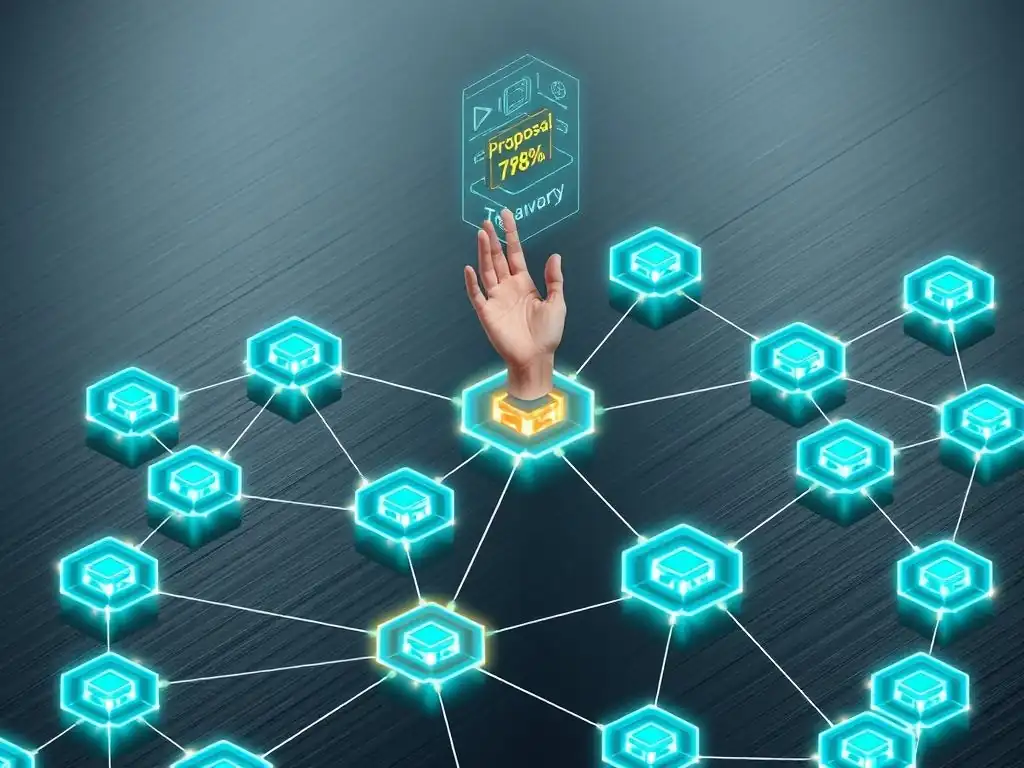
Smart Contract Security Vulnerabilities in DAOs
Despite the inherent security benefits of smart contracts, they are not immune to vulnerabilities, posing a significant challenge for DAO smart contract governance. Bugs or design flaws in the code can be exploited, leading to loss of funds, manipulation of governance processes, or complete shutdown of the DAO. The immutable nature of blockchain means that once a vulnerable contract is deployed, fixing it can be extremely difficult, often requiring complex and risky upgrade mechanisms or even a contentious hard fork, as seen with The DAO hack which resulted in the split of Ethereum.
Preventing such vulnerabilities requires rigorous security practices during development, including extensive testing (unit tests, integration tests, formal verification), internal code reviews, and professional external security audits by reputable firms. Even with these measures, new types of exploits can emerge. The complexity of interconnected smart contracts, especially in modular DAO architectures, increases the attack surface. Ensuring the security of DAO smart contract governance is an ongoing critical concern, demanding constant vigilance and adherence to best practices.
Regulatory Uncertainty and Legal Implications for DAO Smart contracts
The legal and regulatory status of DAOs and their smart contracts remains largely undefined and uncertain across many jurisdictions, presenting significant challenges. Questions abound regarding liability: who is responsible if a DAO or its smart contracts cause harm or violate laws? Are token holders considered partners, shareholders, or something else entirely? How are DAOs taxed? The lack of clear legal frameworks creates ambiguity for builders, participants, and third parties interacting with DAAs.
In some regions, efforts are being made to provide clarity, such as Wyoming's legislation recognizing DAOs as legal entities. However, a global consensus is far off. The decentralized nature of DAOs, operating across borders without a physical headquarters, complicates the application of existing laws designed for traditional, centralized entities. This regulatory uncertainty adds risk to DAO smart contract governance development and participation, as the legal implications of on-chain actions are still being determined.
Scalability Issues and Gas Optimization for DAO Transactions
Executing governance proposals and recording votes directly on a busy Layer-1 blockchain like Ethereum can be prohibitively expensive and slow due to high gas fees and limited transaction throughput. This scalability issue can hinder active participation in DAO smart contract governance, as the cost of casting a vote might outweigh the perceived benefit for smaller token holders. Complex governance mechanisms or proposals requiring multiple on-chain transactions exacerbate this problem.
Developers building DAO smart contract governance systems must prioritize gas optimization techniques to minimize transaction costs. This includes writing efficient Solidity code, minimizing storage reads/writes, and carefully designing the governance process to reduce the number of on-chain steps required. Furthermore, leveraging Layer-2 scaling solutions (like optimistic rollups or zero-knowledge rollups) or utilizing off-chain voting with on-chain execution are increasingly common strategies to improve the scalability and affordability of DAO smart contract governance.
On-Chain vs. Off-Chain Governance Solutions for DAOs
A key consideration in designing DAO smart contract governance is the balance between executing processes entirely on-chain versus leveraging off-chain solutions. Purely on-chain governance offers maximum security and censorship resistance, as every action is recorded and enforced by the blockchain. However, it suffers from high gas costs and scalability limitations, making frequent or low-stakes votes impractical.
Off-chain solutions, such as using platforms like Snapshot for gasless voting based on token holdings at a specific block height, offer significantly lower costs and higher flexibility. The results of off-chain votes can then be used to trigger an on-chain transaction via the governance smart contract for execution.
While cheaper and more scalable, off-chain voting introduces a degree of trust in the off-chain system and the method used to verify identity/token holdings. The choice between on-chain, off-chain, or a hybrid model depends on the DAO's specific needs, the value being governed, the desired level of participation, and the acceptable trade-offs between cost, security, and decentralization in DAO smart contract governance.
DAO Smart Contract Governance: Use Cases and Examples
Decentralized Finance (DeFi) DAOs
Decentralized Finance (DeFi) is arguably the most prominent sector where DAO smart contract governance is actively used. DeFi protocols manage vast amounts of digital assets and complex financial operations, making decentralized governance essential for ensuring their neutrality, security, and community alignment. DAOs in DeFi allow token holders to collectively manage critical parameters like interest rates, collateral ratios, supported assets, fee structures, and protocol upgrades.
Examples include:
- MakerDAO: Governs the Dai stablecoin system, allowing MKR token holders to vote on risk parameters, stability fees, and protocol upgrades. It's one of the earliest and most successful examples of DAO smart contract governance.
- Compound: The COMP token grants holders the right to propose and vote on changes to the Compound protocol, including adding new markets or adjusting interest rate models.
- Aave: AAVE token holders govern the Aave lending protocol, deciding on aspects like liquidity parameters, reserve factors, and protocol improvements.
These DAOs demonstrate how smart contracts enable direct community control over significant financial infrastructure, managing billions in Total Value Locked (TVL) through transparent and automated governance processes.
Beyond finance, DAOs are emerging in social media and content creation spaces, using DAO smart contract governance to manage platforms, curate content, and distribute rewards. These DAOs aim to create more equitable and censorship-resistant alternatives to centralized social platforms, giving users and creators more control and ownership.
In these models, governance tokens or reputation systems can grant users the right to:
- Vote on content moderation policies.
- Approve or reject new features for the platform.
- Allocate community funds to support creators or initiatives.
- Determine reward distribution mechanisms for valuable contributions.
Examples include projects exploring decentralized social graphs or content platforms where community-driven decisions, enforced by smart contracts, shape the user experience and economic model. While still nascent compared to DeFi, this area highlights the potential for DAO smart contract governance to decentralize ownership and control over online communities and digital content.
Investment and Venture Capital DAOs
Investment DAOs, often referred to as Decentralized Investment Clubs or Venture DAOs, pool capital from members to invest in various assets, typically other cryptocurrencies, NFTs, or early-stage blockchain projects. DAO smart contract governance is used to manage member contributions, propose and vote on investment opportunities, and distribute returns.
These DAOs leverage smart contracts to automate the investment process and ensure transparency in fund management. Members propose potential investments, and token holders vote on whether to allocate funds. If a proposal passes, the smart contract can be triggered to execute the investment transaction directly from the DAO's treasury. Examples include The LAO or Syndicate, which provide legal wrappers and technical infrastructure for creating investment DAOs. This application showcases how DAO smart contract governance can facilitate collective investment and asset management in a transparent and programmatic way.
Supply Chain Management DAOs
While less common than DeFi DAOs, the concept of using DAOs and smart contracts in supply chain management is being explored to enhance transparency, efficiency, and trust among participants. A Supply Chain DAO could involve manufacturers, suppliers, logistics providers, and consumers, all participating in a shared, decentralized network.
DAO smart contract governance in this context could be used to:
- Vote on standard operating procedures or quality control measures.
- Approve new participants joining the network.
- Manage dispute resolution mechanisms.
- Allocate shared resources or manage collective funds for infrastructure improvements.
Smart contracts could automate payments upon successful delivery verified on-chain, or manage complex agreements between parties. While enterprise adoption is slower due to integration challenges with existing systems, the potential for DAO smart contract governance to create more transparent, resilient, and cooperatively managed supply chains is significant.
Best Practices for Implementing DAO Smart Contract Governance
Secure Smart Contract Development Practices
Developing secure smart contracts is paramount for the success and safety of DAO smart contract governance. Given the immutable nature of blockchain and the potential for significant financial losses, security must be the top priority. Best practices include:
- Writing clean, simple, and well-documented code: Complex code increases the likelihood of bugs.
- Following established standards: Adhering to ERC standards (like ERC-20, ERC-721) and OpenZeppelin's battle-tested libraries reduces the risk of introducing common vulnerabilities.
- Comprehensive Testing: Implementing unit tests, integration tests, and property-based tests to cover all possible scenarios and edge cases. Aim for high code coverage.
- Independent Security Audits: Engaging reputable third-party security firms to conduct thorough audits of the smart contract code before deployment. This is arguably the single most important step.
- Bug Bounties: Running bug bounty programs after deployment to incentivize the community and security researchers to find and report vulnerabilities.
- Upgradeability with Caution: If contracts are upgradeable, ensure the upgrade mechanism itself is secure and controlled by the DAO governance process, not a centralized key.
Community Engagement and Participation in DAO Governance
Effective DAO smart contract governance requires active and informed participation from token holders. Without sufficient engagement, governance can become stagnant, or decisions can be dominated by a small, active minority. Best practices for fostering engagement include:
- Clear Communication: Providing clear, concise, and accessible information about governance proposals through forums, Discord, Snapshot, or governance dashboards.
- Education: Offering resources and educational materials to help token holders understand the proposals and the governance process.
- Accessible Voting Mechanisms: Using gas-efficient or off-chain voting solutions (like Snapshot) to lower the barrier to participation.
- Incentives: Exploring ways to incentivize participation, such as small rewards for voting, though this needs careful design to avoid perverse incentives.
- Delegation: Making it easy for token holders to delegate their voting power to trusted community members or delegates who are more engaged.
- Open Discussions: Fostering vibrant and inclusive discussion forums where proposals can be debated before voting begins.
Risk Management and Mitigation Strategies for DAOs
Implementing robust risk management is crucial for safeguarding the DAO and its assets under DAO smart contract governance. Risks include smart contract vulnerabilities, governance attacks (e.g., flash loan attacks manipulating voting), regulatory challenges, and market risks for treasury assets. Mitigation strategies include:
- Multi-signature Wallets for Treasury: While governance controls the keys, using multi-sigs for large treasury movements adds an extra layer of security against single points of failure or immediate execution of malicious proposals.
- Time Locks: Implementing time locks on governance execution, where a passed proposal has a delay before it can be executed. This gives the community time to react if a malicious proposal is passed.
- Layered Security: Employing multiple security measures, such as audits, bug bounties, and monitoring tools.
- Progressive Decentralization: For new protocols, starting with a degree of centralized control (e.g., a multisig with trusted parties) and progressively handing over control to the DAO smart contract governance as the system matures and is battle-tested.
- Contingency Planning: Having a plan in place for responding to security incidents or major vulnerabilities, potentially involving emergency shutdowns or limited administrative functions controlled by a trusted group (as a last resort).
Continuous Improvement and Adaptation of DAO Governance Models
The landscape of DAO smart contract governance is rapidly evolving. Successful DAOs must be prepared to continuously evaluate and adapt their governance models based on experience, community feedback, and the changing technical and regulatory environment. This involves:
- Monitoring Governance Metrics: Tracking participation rates, proposal types, voting outcomes, and delegate activity to identify areas for improvement.
- Gathering Community Feedback: Actively soliciting input from token holders and participants on what is working and what is not in the governance process.
- Experimentation: Being open to experimenting with new voting mechanisms, proposal types, or communication strategies.
- Upgradeable Contracts: Designing smart contracts to be upgradeable (securely, via governance) allows the DAO to implement improvements or fix issues identified over time without requiring a complete migration.
- Staying Informed: Keeping abreast of developments in DAO tooling, security best practices, and the broader blockchain governance landscape.
This iterative approach ensures that the DAO smart contract governance remains effective, inclusive, and resilient over the long term.
The Future of DAO Governance with Smart Contracts
Potential Innovations in DAO Governance
The field of DAO smart contract governance is ripe for innovation. Future developments could focus on improving voter identity and reputation, enhancing the quality of proposals, and making governance more accessible and engaging. Potential innovations include:
- Identity and Reputation Systems: Integrating decentralized identity solutions or reputation protocols to move beyond simple token-weighted voting, potentially giving more weight to experienced or long-term contributors.
- Delegation Markets: Creating more sophisticated markets or platforms for delegate discovery and compensation, improving the effectiveness of liquid democracy models.
- Prediction Markets for Governance: Using prediction markets to signal community sentiment on proposals before formal voting, providing valuable information to voters.
- NFT-based Governance: Exploring governance rights tied to non-fungible tokens (NFTs) representing unique roles, contributions, or membership tiers within the DAO.
- Formal Verification Integration: Increased use of formal verification methods during smart contract development to mathematically prove the absence of certain types of bugs in critical DAO smart contract governance code.
The Impact of Layer-2 Solutions on DAO Scalability
Layer-2 scaling solutions are poised to have a transformative impact on the scalability and usability of DAO smart contract governance, particularly for DAOs operating on Ethereum. By processing transactions off the main chain and periodically submitting batched proofs or data to Layer-1, L2s dramatically reduce transaction costs and increase throughput.
This will make on-chain voting significantly cheaper and faster, potentially increasing participation by lowering the financial barrier for token holders. More complex governance mechanisms that might be too gas-intensive for Layer-1 could become feasible on Layer-2s. As major DeFi protocols and other DAOs increasingly deploy or bridge to L2 networks, their DAO smart contract governance processes will naturally move or adapt to these environments, making decentralized governance more practical for everyday decisions and a wider range of participants.
The Role of AI and Machine Learning in DAO Governance
The integration of Artificial Intelligence (AI) and Machine Learning (ML) into DAO smart contract governance is an emerging area with potential benefits and challenges. AI could be used to:
- Analyze Governance Data: Process vast amounts of on-chain and off-chain data to identify trends, measure sentiment, or detect potential governance attacks.
- Assist Proposal Drafting: Help members formulate more effective and well-structured governance proposals by analyzing past successful proposals and protocol data.
- Identify Risks: Use ML models to monitor smart contract interactions and identify unusual patterns that might indicate a security vulnerability or an ongoing exploit attempt within the DAO smart contract governance system.
- Simulate Outcomes: Run simulations to predict the potential impact of different governance proposals before they are voted on.
However, integrating AI also raises questions about transparency, explainability (understanding why an AI made a certain recommendation), and the potential for manipulation if the AI models themselves are not decentralized and auditable. Any integration would need careful consideration within the decentralized framework of DAO smart contract governance.
Cross-Chain DAO Governance
As the blockchain ecosystem expands beyond single chains, the need for DAO smart contract governance that can operate and manage assets across multiple blockchains becomes increasingly important. Cross-chain DAOs would allow token holders on one chain to govern protocol deployments or treasury assets located on other chains.
This requires sophisticated cross-chain communication protocols and smart contract designs that can securely relay governance decisions and execute actions on disparate networks. Challenges include ensuring the security of cross-chain messages, maintaining consistent state across chains, and managing the complexity of assets distributed across multiple environments. Solutions are being developed using bridges, interoperability protocols, and specialized cross-chain governance frameworks. Successful cross-chain DAO smart contract governance is crucial for a truly interconnected decentralized future, allowing DAOs to manage diversified treasuries and govern protocols deployed across the multichain landscape.
Frequently Asked Questions
What is the core role of smart contracts in DAO smart contract governance?
Smart contracts are the foundation of DAO smart contract governance. They automate rules and processes, ensuring transparent and immutable execution of decisions without intermediaries. They are the building blocks of decentralized governance.
How do smart contracts facilitate decentralized decision-making within DAOs?
Smart contracts enable token-based voting and other forms of algorithmic governance. This empowers DAO members to propose, vote on, and implement changes in a decentralized and transparent manner.
What are some potential challenges in implementing DAO smart contract governance?
Challenges include security vulnerabilities in the smart contracts, potential for governance attacks, and the need for clear and accessible documentation for participants. Auditing is crucial.
How does DAO smart contract governance improve upon traditional organizational governance models?
DAO smart contract governance offers increased transparency, automation, and member participation, reducing the risk of corruption and centralized control found in traditional organizations. It enables greater efficiency and broader engagement.
What is the future outlook for DAO smart contract governance in various industries?
The future includes wider adoption across sectors like finance, supply chain, and healthcare, with smart contract governance enabling more democratic and efficient organizational structures and increased user empowerment.
Final Reflection: Embracing Decentralized Futures
The exploration of Smart Contracts for DAOs reveals not just a technological advancement, but a fundamental shift in how we organize and govern. The promise of transparent, immutable, and automated governance through DAO smart contract governance is no longer a distant ideal, but a rapidly evolving reality impacting industries and communities worldwide. This technology empowers individuals, fosters collaboration, and challenges traditional hierarchical structures, paving the way for a more equitable and participatory future.
The influence of DAOs, powered by smart contracts, extends far beyond the realm of cryptocurrency and blockchain. They represent a profound rethinking of power dynamics and decision-making processes, offering a glimpse into a future where communities can self-organize and collectively manage resources with unprecedented efficiency and transparency. The future is already here – it's just not evenly distributed.
- William Gibson. This quote perfectly encapsulates the current state of DAO adoption; while still nascent, its potential to reshape governance across various sectors is undeniable.
As you reflect on the potential of DAO smart contract governance, consider how you can contribute to this transformative movement. What role can you play in shaping a future where organizations are more democratic, accountable, and responsive to the needs of their members? Embrace the opportunity to learn, experiment, and contribute to the evolution of DAOs. The future of governance is being written now, and your voice matters.
Ignite Your DAO Journey: Build, Govern, Thrive!
Thank you for exploring how smart contracts are transforming DAO governance! We hope you've gained valuable insights into the power and potential of decentralized decision-making. Now, it's time to put that knowledge into action.
- Begin by developing a simple smart contract to outline a basic DAO governance model—experiment with voting mechanisms and proposal processes.
- Explore different smart contract platforms that are well-suited for DAOs, such as Solidity, Vyper, or Rust.
- Share this article with fellow blockchain enthusiasts and start a conversation about the future of DAO governance!
What innovative features will you incorporate into your upcoming DAO projects to improve transparency and efficiency? Let us know in the comments!
Leave a Reply