
BlockchainBased Social Safety Nets: A New Era of Transparent and Efficient Welfare Distribution?


Welcome to Blockchain Trends, your gateway to understanding the revolutionary potential of blockchain technology. Beyond the hype of cryptocurrencies, lies a world of innovation poised to reshape industries and empower individuals. Are you ready to explore how blockchain can revolutionize social safety nets? Dive into our latest article, "BlockchainBased Social Safety Nets: A New Era of Transparent and Efficient Welfare Distribution?", and discover how blockchain welfare distribution transparency is paving the way for a more equitable and accountable future. What if we could eliminate fraud and ensure aid reaches those who need it most? Let's explore the possibilities together...
Blockchain-Based Social Safety Nets: A New Era of Transparent and Efficient Welfare Distribution?
- Introduction: Revolutionizing Welfare with Blockchain Technology
- Understanding Blockchain Welfare Distribution Transparency
- Benefits of Blockchain for Social Welfare Programs
- Challenges and Considerations for Blockchain Implementation in Welfare
- Case Studies: Blockchain Welfare Distribution in Action
- The Future of Blockchain in Social Safety Nets
- Overcoming Barriers to Adoption: A Roadmap for Blockchain Welfare
- Conclusion: Towards a More Transparent and Equitable Welfare System
-
Frequently Asked Questions
- What are the primary benefits of using blockchain for welfare distribution?
- How does blockchain improve transparency in social safety nets?
- What are some potential challenges to implementing blockchain-based welfare systems?
- Can blockchain help reduce corruption in welfare programs?
- How does blockchain contribute to the future of decentralized systems in welfare?
- Final Reflection: Embracing Transparency in Social Welfare
- Reimagine Welfare: Empower Change Today!
Introduction: Revolutionizing Welfare with Blockchain Technology
Blockchain technology, renowned for its role in cryptocurrencies like Bitcoin, is increasingly being explored for its potential to transform various sectors beyond finance. One area showing significant promise is the realm of social safety nets and welfare distribution. Traditional systems often grapple with inefficiencies, lack of transparency, and susceptibility to fraud, leading to diminished impact on the very populations they aim to serve.
The inherent characteristics of blockchain – decentralization, immutability, and transparency – offer a compelling alternative. By creating a secure, shared ledger accessible to relevant parties, blockchain could fundamentally alter how welfare funds are managed, disbursed, and tracked. This shift could usher in an era of greater accountability, reduced leakage, and ultimately, more effective aid reaching those in need, directly addressing the critical need for Blockchain welfare distribution transparency.
The core promise of integrating blockchain into social safety nets lies in its ability to create a single, verifiable source of truth for transactions and identity management. Unlike fragmented databases used in many traditional systems, a blockchain ledger provides a chronological and tamper-evident record of every fund disbursement or resource allocation. This inherent feature drastically improves visibility for auditors, program administrators, and potentially even beneficiaries and donors, fostering a level of Blockchain welfare distribution transparency previously difficult to achieve.
Furthermore, blockchain enables the potential for automation through smart contracts. These self-executing contracts can disburse funds automatically based on predefined criteria, such as identity verification or proof of status, removing manual processes prone to error or manipulation. This not only speeds up the delivery of aid but also reduces administrative overhead and the potential for funds to be diverted, making the system more efficient and trustworthy.
Addressing Inefficiencies in Traditional Welfare Systems
Traditional social welfare systems, while well-intentioned, often face significant challenges that hinder their effectiveness. Administrative costs can be high, with estimates suggesting that a substantial percentage of aid money can be consumed by overhead rather than reaching beneficiaries. For instance, some reports on humanitarian aid administration indicate costs ranging from 7% to 15% or even higher, depending on the program and region. This represents a considerable amount of potential aid lost to bureaucracy.
Another major inefficiency is the lack of robust tracking and auditability. Funds often pass through multiple intermediaries, making it difficult to ascertain exactly where money goes and whether it reaches the intended recipient in full. This opacity creates opportunities for fraud and corruption, sometimes referred to as 'leakage,' which can siphon off significant portions of aid – potentially 10-30% or more in some contexts, according to various studies on aid effectiveness and corruption. These systemic issues underscore the urgent need for solutions that can enhance efficiency and introduce greater Blockchain welfare distribution transparency.
Understanding Blockchain Welfare Distribution Transparency
Understanding how blockchain technology contributes to transparency in welfare distribution requires a look at its foundational principles and how they apply to the flow of aid. It's not just about using a new database; it's about fundamentally restructuring the trust model by moving away from centralized authorities towards a distributed, verifiable ledger. This paradigm shift is key to unlocking enhanced Blockchain welfare distribution transparency.
The decentralized and immutable nature of blockchain means that once a transaction (like a welfare payment) is recorded, it cannot be altered or deleted without the consensus of the network. This creates a permanent, auditable trail of every transaction, visible to authorized parties. This contrasts sharply with traditional systems where records might be centralized, potentially easier to manipulate, or simply difficult to consolidate and audit effectively across different agencies or databases.
Defining Blockchain Technology and its Core Principles
At its heart, blockchain is a distributed, immutable ledger that records transactions across many computers. Instead of a single central database, copies of the ledger are maintained and updated simultaneously across a network of nodes. Each new transaction is grouped into a 'block,' which is then cryptographically linked to the previous block, forming a 'chain.' This structure makes it extremely difficult and computationally expensive to alter past records, as doing so would require modifying every subsequent block and achieving consensus across the majority of the network.
Key principles defining blockchain include decentralization (no single point of control or failure), immutability (records are permanent), transparency (transactions are typically visible to network participants, though beneficiary identities can be pseudonymous or handled off-chain), and security (through cryptographic hashing and consensus mechanisms). These principles are what make blockchain a powerful tool for creating systems where trust is derived from the technology itself, rather than relying solely on trust in intermediaries.
How Blockchain Enhances Transparency in Welfare Programs
Blockchain technology enhances transparency in welfare programs primarily by creating a shared, tamper-evident record of all transactions. Every time a welfare payment is made, a resource is allocated, or an identity is verified within a blockchain-based system, that event is recorded on the distributed ledger. This record includes details such as the amount transferred, the time of the transaction, and the recipient's (often pseudonymous) address. Because this ledger is replicated across multiple nodes and secured by cryptography, it is incredibly difficult to alter or delete past entries without detection.
This inherent transparency allows authorized auditors, program managers, and potentially even donors to track the flow of funds from the source to the intended recipient with a high degree of certainty. It provides a clear, verifiable audit trail that can quickly highlight discrepancies or unauthorized transactions. By making the process visible and auditable, blockchain significantly reduces the opportunities for funds to be diverted or misappropriated, thereby directly improving Blockchain welfare distribution transparency and accountability.
The Role of Smart Contracts in Automated Welfare Disbursement
Smart contracts are self-executing contracts with the terms of the agreement directly written into lines of code. Stored on a blockchain, these contracts automatically execute actions when predefined conditions are met, without the need for human intermediaries. In the context of welfare distribution, smart contracts can automate the disbursement of funds or resources, removing potential bottlenecks and points of corruption associated with manual processing.
For example, a smart contract could be programmed to release a monthly welfare payment to a beneficiary's digital wallet automatically on a specific date, provided their eligibility status remains valid based on verifiable data inputs (e.g., identity confirmed via a decentralized identifier). This automation ensures timely and reliable delivery of aid, reduces administrative effort, and minimizes the risk of human error or deliberate manipulation in the disbursement process. The logic of the smart contract is transparently recorded on the blockchain, further contributing to Blockchain welfare distribution transparency.
Implementing blockchain technology in social welfare programs offers several compelling benefits that address the shortcomings of traditional systems. These advantages stem from the core features of blockchain, leading to more effective, secure, and accountable aid delivery.
The potential benefits include significant improvements in the efficiency of fund management, a substantial reduction in fraud and corruption, enhanced security and privacy for sensitive beneficiary data, and improved accountability and auditability throughout the entire welfare distribution process. These factors collectively contribute to ensuring that aid reaches the intended recipients more reliably and effectively.
Increased Efficiency in Welfare Fund Management
Blockchain can dramatically increase the efficiency of managing welfare funds by streamlining processes and reducing the reliance on multiple intermediaries. Traditional systems often involve complex layers of banks, payment processors, and administrative bodies, each adding costs and potential delays. By using blockchain, funds can be transferred directly from the program administrator or donor to the beneficiary's digital wallet, often within minutes and at significantly lower transaction fees compared to traditional financial rails, particularly for cross-border aid.
For instance, the World Food Programme (WFP) reported significant savings in transaction fees and administrative costs by using its Building Blocks blockchain system compared to traditional cash or voucher distribution methods. In its operations in Jordan, WFP estimated savings of up to 98% on bank fees alone when distributing aid via blockchain, amounting to millions of dollars annually that could be redirected to support more beneficiaries or increase aid value. This demonstrates a clear pathway to improving the operational efficiency of welfare programs.
One of the most significant benefits of blockchain in welfare is its potential to drastically reduce fraud and corruption. The immutable and transparent nature of the blockchain ledger makes it extremely difficult for unauthorized individuals to divert funds or create 'ghost' beneficiaries. Every transaction is recorded and verifiable, creating a clear audit trail that exposes any attempt at manipulation. Program administrators can track funds from source to destination, ensuring they reach verified recipients.
Furthermore, integrating digital identity solutions with blockchain can ensure that aid is distributed only to legitimate beneficiaries whose identities have been verified. Smart contracts can be programmed to release funds only upon successful identity authentication, preventing payments to fraudulent accounts. This enhanced security and traceability directly combats the leakage of funds that plagues many traditional systems, leading to more resources reaching those genuinely in need and improving Blockchain welfare distribution transparency.
Enhanced Data Security and Privacy for Beneficiaries
While blockchain ledgers are transparent, the actual implementation for sensitive applications like welfare can incorporate robust data security and privacy measures. Instead of storing sensitive personally identifiable information (PII) directly on the public blockchain, systems can use privacy-preserving techniques. This might involve storing sensitive data off-chain in secure databases, with only hashed or tokenized references stored on the blockchain to verify transactions or identities.
Cryptographic techniques inherent to blockchain technology also ensure the integrity and security of the data recorded on the ledger. While transactions are visible, the identity of the recipient can be represented by a pseudonymous address, protecting their privacy. Advanced concepts like zero-knowledge proofs can further allow verification of eligibility or identity without revealing the underlying sensitive information, providing a balance between Blockchain welfare distribution transparency for audits and privacy for individuals.
Improved Accountability and Auditability of Welfare Spending
Blockchain provides an unparalleled level of accountability and auditability for welfare spending. Because every transaction is recorded on an immutable, distributed ledger, it creates a single source of truth that can be easily audited by relevant stakeholders, including government bodies, NGOs, donors, and potentially even beneficiaries themselves. This eliminates the need to reconcile disparate databases and paper records, which is a time-consuming and error-prone process in traditional systems.
Auditors can trace the flow of every dollar or resource from its origin to its final destination on the blockchain. This transparency makes it much easier to identify where funds were spent, verify that they reached the intended recipients, and flag any suspicious activity. This enhanced auditability not only helps prevent fraud but also provides concrete data on program effectiveness, enabling administrators to make informed decisions and demonstrate the impact of aid to donors and the public, thereby strengthening Blockchain welfare distribution transparency.
Challenges and Considerations for Blockchain Implementation in Welfare
Despite the significant potential, implementing blockchain-based social safety nets is not without its challenges. These hurdles span technical, regulatory, social, and ethical dimensions, requiring careful planning and execution to overcome.
Addressing these challenges is crucial for successful adoption and ensuring that blockchain solutions are equitable, secure, and genuinely beneficial for the populations they are designed to serve. Ignoring these considerations could lead to systems that are inaccessible, non-compliant, or fail to achieve the desired impact.
Scalability Issues in Blockchain-Based Welfare Systems
One of the primary technical challenges for implementing blockchain in large-scale welfare programs is scalability. Public blockchains, while offering high decentralization and transparency, can sometimes have limited transaction throughput (transactions per second) compared to traditional payment systems. For a national welfare program serving millions of beneficiaries with frequent disbursements, the required transaction volume could overwhelm certain blockchain networks, leading to delays and increased transaction costs (gas fees).
While private or permissioned blockchains can offer higher transaction speeds by limiting the number of participants, they might compromise some degree of decentralization and transparency compared to public chains. Choosing the right blockchain architecture that balances scalability needs with the desired level of decentralization and Blockchain welfare distribution transparency is a critical design consideration. Solutions might involve layer-2 scaling technologies or hybrid approaches that use blockchain for identity and verification while processing high-volume transactions off-chain.
Regulatory Hurdles and Legal Frameworks for Decentralized Welfare
The regulatory landscape for blockchain technology is still evolving in many jurisdictions, presenting significant hurdles for implementing decentralized welfare systems. Governments need to establish clear legal frameworks for recognizing digital identities managed on a blockchain, validating transactions recorded on a distributed ledger, and handling the legal status of smart contracts used for automated disbursements. There are also complex questions around data ownership, privacy regulations (like GDPR), and how they apply to immutable ledgers.
Furthermore, the legal recognition of blockchain-based payments and the integration with existing financial infrastructure require careful navigation. Governments and international bodies need to work together to create enabling regulatory environments that foster innovation while ensuring consumer protection, data privacy, and financial stability. Without clear legal guidelines, scaling blockchain welfare initiatives beyond pilot projects becomes difficult, impacting the potential for widespread Blockchain welfare distribution transparency.
Ensuring Digital Inclusion and Accessibility for all Beneficiaries
A major social challenge is ensuring that blockchain-based welfare systems are accessible to all beneficiaries, particularly those in marginalized communities who may lack access to technology, internet connectivity, or digital literacy. Implementing systems that rely solely on smartphones and internet access could exclude vulnerable populations, such as the elderly, individuals in remote areas, or those living in extreme poverty without digital devices.
Solutions must consider offline capabilities, the use of feature phones, or the establishment of community access points and support networks. Training and digital literacy programs are essential to empower beneficiaries to use the technology effectively and securely. Designing user interfaces that are simple, intuitive, and available in local languages is also critical to bridge the digital divide and ensure that the benefits of Blockchain welfare distribution transparency are available to everyone.
Data Privacy and Security Concerns in Blockchain Welfare
While blockchain technology itself offers strong security and immutability, concerns about data privacy and security remain pertinent when handling sensitive beneficiary information in welfare contexts. Putting personally identifiable information directly onto a public, immutable ledger could pose privacy risks, as this data would be permanently recorded and potentially visible (depending on the blockchain type). Ensuring compliance with data protection laws is paramount.
Robust security measures are needed to protect the digital wallets and private keys used by beneficiaries and administrators, as their compromise could lead to loss of funds. Systems must be designed with privacy-preserving techniques, such as using pseudonymous identifiers, storing sensitive data off-chain in encrypted databases, or employing zero-knowledge proofs. Balancing the need for Blockchain welfare distribution transparency for auditing with the imperative to protect individual privacy is a critical design challenge.
Case Studies: Blockchain Welfare Distribution in Action
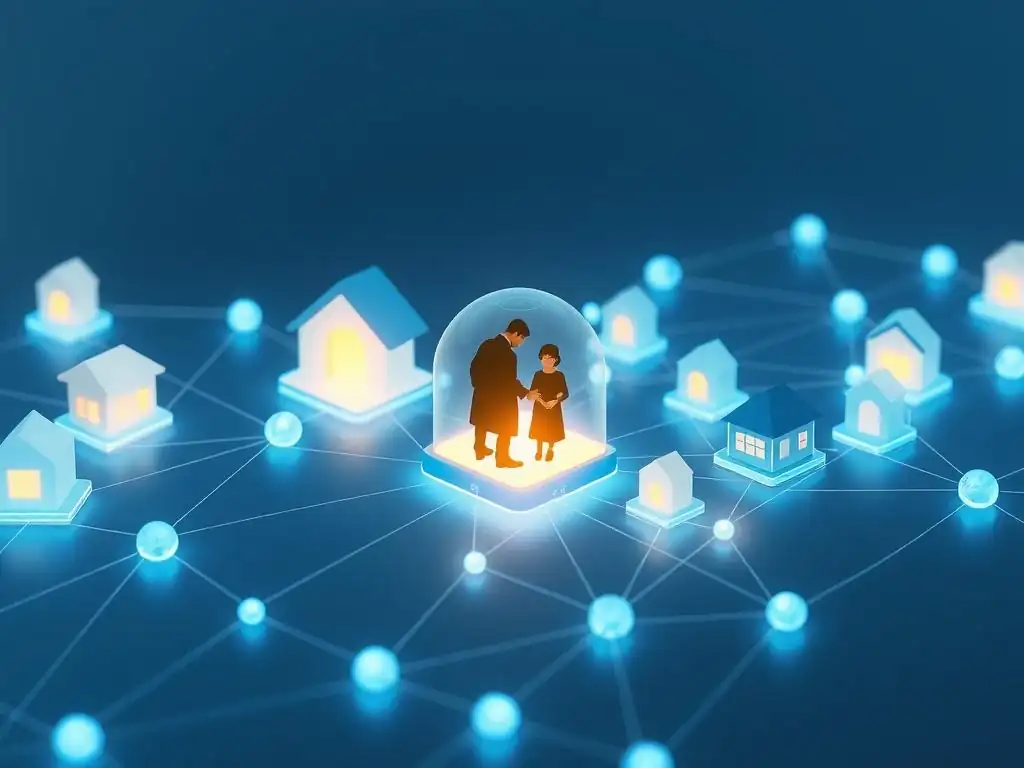
Real-world implementations offer valuable insights into the practical application and potential of blockchain in social safety nets. While still relatively few in number compared to traditional systems, these early projects demonstrate the feasibility and benefits of using blockchain for aid distribution and identity management.
Examining these case studies provides concrete examples of how blockchain principles like transparency, efficiency, and security are being applied, alongside the challenges encountered during implementation. These examples are crucial for understanding the potential and limitations of Blockchain welfare distribution transparency in practice.
Blockchain Land Registry in Honduras
While not strictly a welfare distribution program, the proposed blockchain-based land registry in Honduras, explored around 2015-2016, is an early and notable example of using blockchain for public good and transparency. The goal was to create an immutable record of land titles to combat rampant corruption and disputed ownership claims that plagued the traditional paper-based system. Land ownership issues disproportionately affect the poor and vulnerable, making this relevant to social equity.
The initiative aimed to record land titles on a blockchain, making ownership records transparent and tamper-proof, thereby protecting citizens from fraudulent land seizures. Although the initial project faced political and logistical challenges and did not fully scale as intended, it highlighted the potential of blockchain's immutability and transparency to address systemic corruption in public record-keeping, a factor that indirectly impacts social stability and welfare. It served as an early test case for using blockchain for public sector transparency beyond finance.
World Food Programme's Building Blocks Project in Jordan
The World Food Programme (WFP)'s "Building Blocks" project is one of the most prominent and successful examples of using blockchain for humanitarian aid. Launched initially in Jordan in 2017 to support Syrian refugees, the project uses a private, permissioned blockchain network to manage cash assistance. Instead of receiving physical cash or vouchers, beneficiaries had their identities registered and verified using iris scans, and their entitlement was recorded on the blockchain.
When refugees purchased groceries at participating markets, their identity was verified via iris scan, and the transaction was recorded directly on the blockchain. The WFP could then settle payments directly with the merchants, bypassing intermediary banks. This system significantly enhanced Blockchain welfare distribution transparency, reduced transaction fees (as mentioned earlier, saving millions), improved security by eliminating physical tokens, and provided WFP with real-time visibility into how and where funds were spent, serving over 1 million refugees across multiple countries by 2020.
Lessons Learned from Early Blockchain Welfare Implementations
Early blockchain welfare implementations like WFP's Building Blocks and the Honduras land registry initiative offer crucial lessons. Firstly, they demonstrate the technical feasibility of using blockchain for managing identity, tracking transactions, and automating processes in challenging environments. The WFP project, in particular, proved that significant cost savings and efficiency gains are achievable.
However, these projects also highlight the importance of non-technical factors: the need for strong partnerships with local governments and service providers, the necessity of user-friendly interfaces and support for beneficiaries (especially those with limited digital access), and the challenges posed by regulatory uncertainty and political will. Success requires not just robust technology but also careful consideration of the socio-economic context and a focus on user adoption and trust. The WFP's success is partly attributed to its focus on beneficiary experience and collaboration with local partners.
The trajectory of blockchain technology suggests its role in social safety nets is likely to expand, moving beyond pilots to potentially integrated components of national or international welfare systems. The lessons learned from early implementations are paving the way for more sophisticated and impactful applications.
The future holds promise for leveraging blockchain in innovative ways, including its potential use for universal basic income schemes, integration with other emerging technologies, and its long-term impact on addressing poverty and promoting social equity through enhanced Blockchain welfare distribution transparency and efficiency.
Potential Applications of Blockchain for Universal Basic Income (UBI)
Universal Basic Income (UBI) is a social welfare proposal where all citizens receive a regular, unconditional sum of money from the government. Implementing UBI on a large scale requires an extremely efficient, transparent, and reliable distribution mechanism, which is where blockchain technology could play a significant role. Blockchain and smart contracts could automate the regular disbursement of UBI payments to every eligible citizen's digital wallet, provided their identity is verified on the network.
This approach could drastically reduce the administrative costs associated with means-testing and distributing funds through traditional bureaucratic channels. The transparency of the blockchain ledger would allow citizens and oversight bodies to verify that payments are being made correctly and on time, enhancing public trust in the program. While significant challenges remain in terms of identity verification for an entire population and integrating with existing financial systems, blockchain offers a compelling technical foundation for a truly universal and transparent UBI system, potentially maximizing Blockchain welfare distribution transparency.
Integrating Blockchain with other technologies for Enhanced Welfare Delivery
The true power of blockchain in social safety nets will likely be realized through integration with other complementary technologies. For example, combining blockchain with decentralized digital identity systems can create robust, portable identities for beneficiaries, reducing the need for cumbersome documentation and preventing duplicate enrollments. The WFP's use of iris scans linked to a blockchain identity is an early example of this.
Internet of Things (IoT) devices could potentially be used to verify the delivery of goods or services in kind, with this data being recorded on the blockchain to trigger smart contract payments to suppliers. Artificial intelligence (AI) could be used to analyze data on the blockchain (while respecting privacy) to optimize aid distribution strategies and identify patterns of need or potential fraud more effectively. This convergence of technologies promises highly efficient, smart, and transparent welfare systems.
The long-term impact of blockchain on poverty reduction and social equity hinges on its ability to make welfare systems more effective, equitable, and trustworthy. By reducing administrative costs and minimizing leakage due to fraud and corruption, more resources can be directed towards supporting vulnerable populations. The enhanced Blockchain welfare distribution transparency can build greater trust among donors, governments, and citizens, potentially leading to increased funding and support for social programs.
Furthermore, by providing secure digital identities and direct access to aid via digital wallets, blockchain can empower individuals, particularly those excluded from traditional financial systems. This financial inclusion, coupled with reliable access to welfare support, can provide a stable foundation for individuals and families to build resilience and escape cycles of poverty. While not a silver bullet, blockchain has the potential to be a powerful tool in the global effort to achieve social equity and reduce poverty by fundamentally improving how aid is delivered.
Overcoming Barriers to Adoption: A Roadmap for Blockchain Welfare
Realizing the full potential of blockchain in social safety nets requires a concerted effort to overcome the significant barriers to adoption. This involves addressing not only technical challenges but also focusing on building trust, ensuring usability, and investing in education.
A clear roadmap focusing on collaboration, user-centric design, and capacity building is essential for successfully implementing blockchain-based welfare systems that are both effective and equitable.
- [ ] Building Trust and Collaboration among Stakeholders
- [ ] Developing User-Friendly Interfaces for Beneficiaries
- [ ] Investing in Education and Training on Blockchain Technology
Building Trust and Collaboration among Stakeholders
Successfully implementing blockchain for welfare requires building trust and fostering collaboration among a diverse group of stakeholders, including government agencies, NGOs, international organizations, technology providers, local communities, and beneficiaries themselves. Trust is paramount, as any new system handling sensitive data and vital support must be perceived as reliable and secure. This involves transparent communication about how the technology works, how data is handled, and how the system benefits everyone involved.
Collaboration is needed to navigate regulatory environments, integrate with existing infrastructure, and ensure the system meets the specific needs of the target population. Public-private partnerships and multi-stakeholder initiatives can help pool expertise and resources, facilitating the development and deployment of robust and widely accepted blockchain welfare solutions. Demonstrating clear benefits and ensuring Blockchain welfare distribution transparency through pilot projects can help build confidence.
Developing User-Friendly Interfaces for Beneficiaries
For blockchain welfare systems to be truly impactful, they must be designed with the end-user – the beneficiary – in mind. This means developing interfaces that are intuitive, easy to use, and accessible, regardless of a person's technical literacy or access to advanced devices. Mobile applications should be simple and available in multiple languages, and consideration should be given to solutions that work on basic feature phones or can be accessed via community agents or centers.
The process of receiving aid should be as straightforward as possible, minimizing steps and the potential for confusion or error. User testing with actual beneficiaries is crucial during the design phase to ensure the system meets their needs and does not create new barriers to accessing aid. A focus on usability ensures that the enhanced Blockchain welfare distribution transparency and efficiency translate into real benefits for those receiving support.
Investing in Education and Training on Blockchain Technology
A significant barrier to adoption is the general lack of understanding about blockchain technology among administrators, aid workers, and beneficiaries. Investing in comprehensive education and training programs is essential to build capacity and ensure the smooth operation and acceptance of blockchain-based welfare systems. Administrators and aid workers need to understand how the system works, how to manage it securely, and how to support beneficiaries.
Training for beneficiaries should focus on how to access and use their digital wallets safely, understand their entitlements, and verify transactions. Educational efforts should demystify the technology and highlight the benefits, such as increased speed, security, and Blockchain welfare distribution transparency. Addressing misconceptions and building digital literacy are critical steps towards widespread adoption and ensuring that everyone can benefit from these innovative systems.
Conclusion: Towards a More Transparent and Equitable Welfare System
The exploration and implementation of blockchain technology in social safety nets signal a potential paradigm shift in how welfare is delivered globally. The inherent characteristics of blockchain – its decentralization, immutability, and cryptographic security – offer powerful tools to combat the endemic issues of inefficiency, fraud, and lack of transparency that plague many traditional systems.
While significant challenges related to scalability, regulation, accessibility, and privacy must be carefully addressed, the promise of more direct, efficient, and accountable aid distribution is compelling. Early case studies, such as the World Food Programme's success in Jordan, demonstrate that blockchain is not just a theoretical concept but a practical technology capable of delivering real-world benefits and enhancing Blockchain welfare distribution transparency.
Blockchain technology holds genuine transformative potential for social good by fundamentally improving the infrastructure of aid delivery. By creating systems that are inherently more transparent and auditable, blockchain can restore trust among donors, governments, and citizens, potentially unlocking greater resources for social programs. Reducing administrative overhead and leakage means more funds directly reach those in need, maximizing the impact of every dollar spent on poverty reduction and social support.
Furthermore, by enabling secure digital identities and facilitating direct peer-to-peer or program-to-person transactions, blockchain can empower marginalized individuals and foster greater financial inclusion. It moves welfare distribution from complex, opaque bureaucratic processes to a more direct, verifiable, and potentially more equitable system, championing Blockchain welfare distribution transparency as a core principle.
Call to Action: Exploring and Supporting Blockchain Welfare Initiatives
The journey towards widespread adoption of blockchain-based social safety nets is still in its early stages. Continued research, development, and piloting are essential to refine the technology, address challenges, and build best practices. Governments, international organizations, NGOs, and technology developers should actively explore the feasibility and benefits of integrating blockchain into their welfare programs.
Supporting initiatives that are piloting blockchain for aid delivery, investing in the necessary infrastructure and digital literacy programs, and collaborating across sectors are crucial steps. By embracing innovation and working together, we can harness the power of blockchain to create more transparent, efficient, and equitable welfare systems that better serve the world's most vulnerable populations, making Blockchain welfare distribution transparency a reality.
Frequently Asked Questions
What are the primary benefits of using blockchain for welfare distribution?
Blockchain offers enhanced transparency and efficiency by providing an immutable and auditable record of all transactions. This reduces the risk of fraud and ensures funds reach intended recipients directly.
Blockchain creates a publicly accessible ledger where every transaction, including fund allocation and disbursement, is recorded. This increased visibility fosters accountability among administrators and builds trust with the public.
What are some potential challenges to implementing blockchain-based welfare systems?
Challenges include scalability issues, the need for digital literacy among beneficiaries, and concerns around data privacy and security within the blockchain network.
Can blockchain help reduce corruption in welfare programs?
Yes, by providing an immutable and transparent record of transactions, blockchain makes it significantly harder to divert funds or engage in corrupt practices. This auditability is a powerful deterrent.
How does blockchain contribute to the future of decentralized systems in welfare?
Blockchain facilitates the creation of decentralized welfare systems, empowering beneficiaries with greater control over their funds and reducing reliance on centralized intermediaries. This promotes autonomy and financial inclusion.
The exploration of blockchain-based social safety nets reveals a powerful potential for revolutionizing welfare distribution. The promise of enhanced transparency and efficiency, while not without its challenges, offers a compelling vision for a more equitable and accountable future. This is particularly relevant today, as trust in traditional institutions wanes and the need for effective social support systems intensifies in the face of global economic uncertainties.
The impact of blockchain technology on social welfare extends beyond mere technological advancement; it represents a fundamental shift in how we perceive and manage societal resources. This shift towards greater transparency and accountability resonates deeply, as it empowers beneficiaries and fosters a sense of ownership within the system. The best social program is a good job.
- Eleanor Roosevelt. While job creation is crucial, blockchain offers a parallel path to ensuring that existing safety nets are administered fairly and effectively, reaching those who need them most.
As we conclude this exploration, let us consider the profound implications of embracing blockchain welfare distribution transparency. How can we, as individuals and as a society, actively contribute to the responsible development and implementation of these technologies? Let us strive to build a future where social safety nets are not only efficient but also embody the principles of fairness, dignity, and unwavering transparency, ensuring that no one is left behind.
Reimagine Welfare: Empower Change Today!
Thank you for exploring how blockchain can revolutionize social safety nets. You've gained valuable insights into creating more transparent and efficient welfare distribution systems. Ready to take action?
Here are a few steps you can take:
- Propose concrete improvements to your local government or non-governmental organizations, focusing on how blockchain solutions can address current challenges and inefficiencies in welfare programs.
- Share this article with your network to spark a discussion about the potential of blockchain for social good. Let’s work together to raise awareness and find collaborative solutions!
- Explore and analyze existing blockchain-based social safety net projects worldwide. Identify best practices and potential obstacles for implementing such systems in various contexts.
What innovative blockchain application could you envision to further strengthen social safety nets and support vulnerable communities? Share your ideas in the comments below!
Leave a Reply