
DAOs: The Rise of Decentralized Autonomous Organizations and Their Impact


Welcome to Blockchain Trends, your compass in the ever-evolving world of decentralized technology.
Beyond the hype of cryptocurrencies lies a revolution reshaping industries and governance. Intrigued by the potential of self-governing entities? Dive into our exploration of decentralized autonomous organization benefits and discover how DAOs are rewriting the rules of collaboration and decision-making. What opportunities and challenges do they present for the future of business and society? Let's explore this fascinating frontier together.
- Decentralized Autonomous Organization Benefits: Exploring the Advantages
-
Frequently Asked Questions
- How do Decentralized Autonomous Organizations (DAOs) differ from traditional organizations?
- What are the main Decentralized Autonomous Organization benefits?
- How does blockchain technology enable the functionality of DAOs?
- What are some potential challenges or risks associated with DAOs?
- What are some real-world examples of successful DAOs and what are they doing?
- Final Reflection: Embracing the Decentralized Future
- Unlock the Future: Start Building Your DAO Today!
Decentralized Autonomous Organization Benefits: Exploring the Advantages
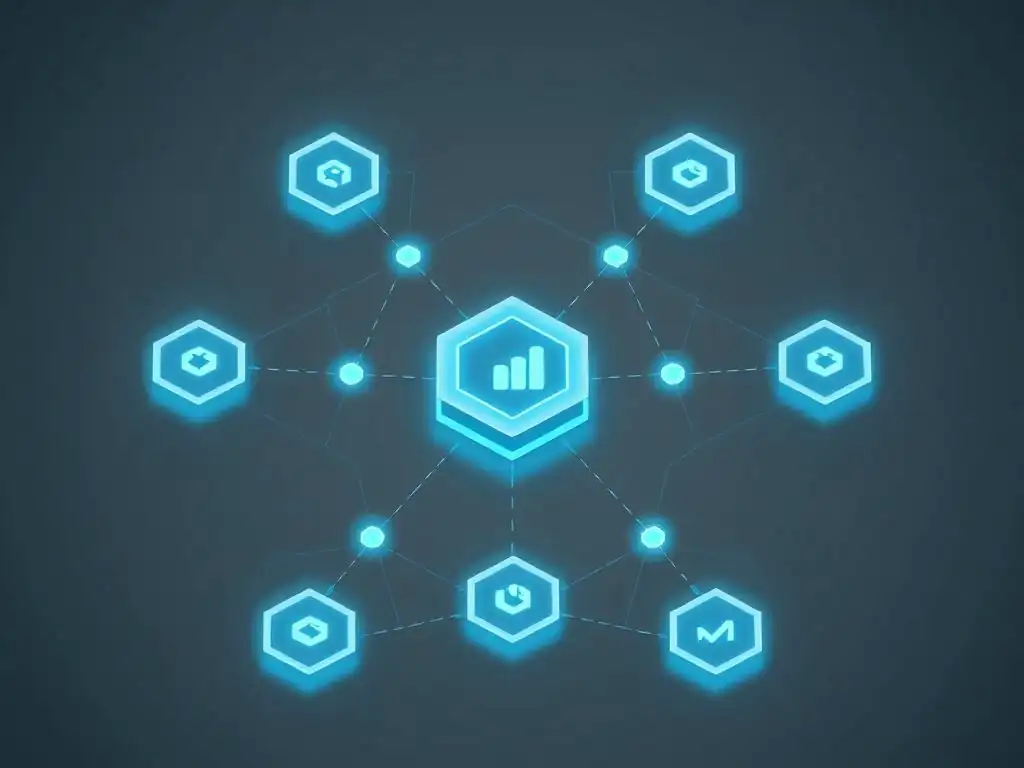
Decentralized autonomous organization benefits are manifold, stemming from their core design principles built upon blockchain technology. These advantages offer a compelling alternative to traditional hierarchical structures, fostering environments characterized by openness, efficiency, and broad participation. Exploring these benefits reveals why DAOs are gaining traction as a powerful model for future organizations.
The advantages of decentralized autonomous organizations extend across various operational and structural aspects, fundamentally changing how groups coordinate and make decisions. Unlike traditional companies where power is concentrated, DAOs distribute influence among participants, aligning incentives and promoting collective ownership. This shift not only improves operational aspects but also builds stronger, more engaged communities around shared goals.
Increased Transparency and Accountability Through DAOs
One of the primary decentralized autonomous organization benefits is the inherent transparency provided by blockchain technology. All transactions, proposals, and voting records within a DAO are typically immutably recorded on a public ledger. This means that anyone can audit the organization's activities, from how funds are spent to how decisions are made. For instance, the treasury balance of many major DAOs, such as Uniswap or Compound, is publicly verifiable on block explorers, offering unprecedented visibility compared to the opaque financial records of private companies.
This level of transparency naturally leads to enhanced accountability. Since every action taken via the DAO's smart contracts or governance mechanism is visible, participants are more accountable for their contributions and decisions. There's no hidden backroom dealing; the rules and their execution are open for inspection. For example, if a proposal passes to allocate funds for a specific project, the movement of those funds from the DAO's treasury to the recipient wallet can be tracked and verified by any interested party, ensuring funds are used as intended by the community vote.
Enhanced Efficiency and Automation in Organizational Processes
DAOs leverage smart contracts to automate many operational processes, significantly enhancing efficiency. Once a proposal is approved through the defined governance mechanism, the corresponding actions—like fund distribution, parameter changes in a DeFi protocol, or execution of a grant agreement—can be automatically triggered by the smart contract code.
This eliminates the need for manual intervention, reducing delays, minimizing human error, and lowering administrative overhead. Consider the process of distributing yield farming rewards in a DeFi protocol governed by a DAO; this is typically handled automatically by smart contracts based on predefined rules, rather than requiring a human finance department to process payments.
The automation capabilities of DAOs also streamline decision-making implementation. Once a vote reaches the required quorum and threshold, the outcome is enacted directly by the code. This contrasts sharply with traditional organizations where approved decisions often require multiple layers of administrative steps and human execution, potentially leading to significant lag times. For example, a governance vote to adjust interest rates in a lending protocol might take days or weeks to implement manually, but in a well-designed DAO, the smart contract can update the parameters almost instantly after the vote concludes, reacting rapidly to market conditions or community consensus.
Fostering Community Engagement and Participation
A significant benefit of decentralized autonomous organizations is their ability to foster deep community engagement and participation. By issuing governance tokens, DAOs empower their members with voting rights and the ability to propose changes, giving them a direct stake in the organization's future.
This sense of ownership encourages active involvement in discussions, proposal development, and voting on critical issues, from strategic direction to treasury allocation. For example, communities around protocols like Aave or Yearn Finance have vibrant forums and governance portals where thousands of token holders actively discuss and vote on proposals ranging from risk parameters to funding new initiatives.
This participatory model taps into the collective intelligence and diverse perspectives of the community, often leading to more robust and innovative solutions than might emerge from a small, centralized team. By allowing anyone with governance tokens to contribute ideas and vote, DAOs can harness the wisdom of the crowd.
Data from governance platforms often shows thousands of unique wallets participating in key votes, demonstrating a level of broad-based involvement rarely seen in traditional corporate governance structures where only a small board of directors holds significant power. This active participation is key to the resilience and adaptability of many successful DAOs.
Global Collaboration and Borderless Organizations
DAOs are inherently global and borderless, enabling individuals from anywhere in the world to collaborate and contribute seamlessly. Because operations and governance occur on the blockchain, participants are not limited by geographical location, legal jurisdiction, or traditional employment structures.
This allows DAOs to tap into a global talent pool, bringing together individuals with diverse skills, backgrounds, and perspectives who can work together towards a common goal without needing a physical office or traditional legal entity in every country. For instance, contributors to many open-source software DAOs or content creation DAOs collaborate across continents solely through online platforms and the decentralized governance framework.
This global nature also facilitates rapid scaling and resilience. A DAO is not tied to the regulatory or economic conditions of a single country. Its participants and operations are distributed globally, making it more resistant to localized disruptions or censorship. Furthermore, the ability to onboard contributors and token holders from around the world allows DAOs to grow and evolve much faster than traditional organizations constrained by national borders and complex international legal setups. This borderless collaboration is a fundamental aspect of the decentralized autonomous organization benefits that enable truly global communities and projects to flourish.
Frequently Asked Questions
How do Decentralized Autonomous Organizations (DAOs) differ from traditional organizations?
DAOs operate without centralized leadership, relying on smart contracts and community governance. Traditional organizations have a hierarchical structure with executives making decisions.
What are the main Decentralized Autonomous Organization benefits?
Decentralized autonomous organization benefits include increased transparency, enhanced security through blockchain, and greater community involvement in decision-making.
How does blockchain technology enable the functionality of DAOs?
Blockchain provides the immutable and transparent ledger necessary for DAOs to record transactions, execute smart contracts, and ensure secure voting processes.
What are some potential challenges or risks associated with DAOs?
Challenges include regulatory uncertainty, security vulnerabilities in smart contracts, and difficulties in achieving consensus among a large, decentralized community.
What are some real-world examples of successful DAOs and what are they doing?
Examples include DeFi protocols like MakerDAO, which manages the DAI stablecoin, and investment DAOs like The LAO, which invests in early-stage blockchain projects.
Final Reflection: Embracing the Decentralized Future
The exploration of Decentralized Autonomous Organizations (DAOs) reveals more than just a technological innovation; it unveils a fundamental shift in how we organize and collaborate. The promise of increased transparency, efficiency, and community ownership offered by DAOs is not a distant dream, but a tangible reality reshaping industries and challenging traditional hierarchies today. As we've seen, the benefits of DAOs extend far beyond mere cost savings, impacting governance, innovation, and the very essence of organizational structures.
The rise of DAOs has profoundly influenced the cultural and social landscape, fostering a sense of collective ownership and empowering individuals to participate in decision-making processes like never before. This shift towards decentralized governance resonates deeply with the growing desire for autonomy and transparency in a world often characterized by centralized power structures. Never doubt that a small group of thoughtful, committed citizens can change the world; indeed, it's the only thing that ever has.
- Margaret Mead. This quote perfectly encapsulates the potential of DAOs to empower communities and drive meaningful change.
Now, as you reflect on the potential of DAOs and their myriad benefits, consider how you can embrace this decentralized future. How can you leverage the principles of transparency, community ownership, and collaborative decision-making in your own endeavors? The future of organizations is being written today, and your participation in shaping that future, however small, can contribute to a more equitable, transparent, and empowered world.
Unlock the Future: Start Building Your DAO Today!
Thank you for exploring the world of Decentralized Autonomous Organizations with us! We hope you've gained valuable insights into their potential and impact. Now it's time to turn that knowledge into action.
Here's how you can get involved:
- Explore existing DAOs on platforms like Aragon and Snapshot to understand different governance models and community structures. This is a great way to learn by example.
- Identify a problem you're passionate about solving and consider whether a DAO structure could offer a unique solution. Think creatively—DAOs aren’t just for blockchain projects!
- Join a community that interests you and contribute your skills. DAOs thrive on diverse contributions!
What unique problem do you think DAOs are perfectly positioned to solve, and what skills could you bring to make it happen? Share your ideas in the comments below!
Leave a Reply