
Decentralization vs. Scalability: Finding the Right Balance for Blockchain Networks


Welcome to Blockchain Trends, your guide to navigating the evolving landscape of decentralized technology.
Ever wondered how blockchain can truly revolutionize industries beyond cryptocurrency? Today, we delve into one of the most critical hurdles facing widespread adoption: blockchain scalability challenges solutions. Discover how innovative approaches are striving to find the perfect equilibrium between decentralization and scalability, unlocking the full potential of blockchain networks. Read on to explore the future of blockchain and how these solutions are shaping it!
Decentralization vs. Scalability: Finding the Right Balance for Blockchain Networks
- Introduction: Understanding the Decentralization and Scalability Dilemma in Blockchain
- The Importance of Decentralization in Blockchain Technology
- The Critical Need for Blockchain Scalability Solutions
- Exploring Blockchain Scalability Challenges Solutions: Layer-1 and Layer-2 Approaches
- Balancing Decentralization and Scalability: Finding the Optimal Trade-off
- The Future of Blockchain Scalability: Emerging Technologies and Trends
- Conclusion: Towards a Scalable and Decentralized Future
-
Frequently Asked Questions
- What are the primary blockchain scalability challenges?
- How does decentralization impact blockchain scalability?
- What are some common solutions to address blockchain scalability challenges?
- How do enterprise blockchain applications address scalability challenges differently than public blockchains?
- What role does regulation play in the development of scalable blockchain solutions?
- Final Reflection: Navigating the Decentralization-Scalability Tightrope
- Unveil Your Blockchain Future!
Introduction: Understanding the Decentralization and Scalability Dilemma in Blockchain
Blockchain technology emerged with the promise of creating decentralized, trustless systems capable of revolutionizing various industries. At its core, a blockchain is a distributed ledger that records transactions across many computers, ensuring transparency and immutability without relying on a central authority. This fundamental design principle of decentralization is what underpins the security and censorship resistance of early blockchains like Bitcoin and Ethereum. However, this very strength often presents a significant challenge when it comes to handling a large volume of transactions efficiently – the problem of scalability.
The inherent trade-off between decentralization and scalability is one of the most significant hurdles preventing widespread adoption of blockchain technology for mainstream applications. While a highly decentralized network is robust and resistant to attack or control, it can become slow and expensive as more users join and transaction volume increases. Conversely, prioritizing speed and throughput might necessitate some degree of centralization, potentially compromising the core value proposition of blockchain. Addressing these blockchain scalability challenges requires innovative solutions that can strike an optimal balance, paving the way for a future where decentralized systems can support global demand.
The Importance of Decentralization in Blockchain Technology
Decentralization is not merely a technical feature; it is the philosophical backbone of blockchain, embodying principles of distributed power and censorship resistance. It ensures that no single entity has control over the network, making it incredibly difficult to shut down, alter transaction history, or discriminate against users. This distributed nature fosters resilience and trust, eliminating the need for intermediaries like banks or governments to validate transactions.
The power of decentralization lies in distributing control and data across a vast network of participants. Instead of storing all information in one central database, copies are maintained and updated across numerous nodes. This redundancy makes the system highly available and resistant to single points of failure, whether from technical glitches, malicious attacks, or regulatory interference. It is this characteristic that makes blockchain particularly appealing for applications where trust is paramount and centralized control is undesirable.
Defining Decentralization: The Foundation of Trustless Systems
Decentralization in blockchain refers to the distribution of network control and decision-making power away from a single central authority. This is achieved through a network of independent nodes that collectively validate transactions, maintain the ledger, and participate in the consensus process. In a truly decentralized system, no single entity, individual, or group holds more than a small fraction of the overall power, ensuring that the network operates based on predefined rules rather than the dictates of a few.
The concept of a trustless system is a direct consequence of this distribution of power. Because no single party can unilaterally alter the ledger or control access, users do not need to trust a specific entity to ensure the integrity of their transactions or the security of their assets. Instead, trust is placed in the network's consensus protocol and cryptographic principles. For example, Bitcoin's network consists of thousands of nodes run by independent operators worldwide, making it highly resistant to control by any single government or corporation, thereby embodying the principles of a trustless, decentralized system.
Trade-offs of High Decentralization: Limitations on Transaction Throughput
While high decentralization provides security and censorship resistance, it often comes at the cost of performance, particularly limiting the speed and volume of transactions the network can handle. In highly decentralized proof-of-work (PoW) systems, achieving consensus requires significant computational effort and communication between nodes globally. Every transaction must be broadcast to the network, validated by multiple nodes, and included in a block that is then added to the chain through a competitive mining process.
This process, while secure, is inherently slow and resource-intensive. For instance, Bitcoin, a highly decentralized PoW network, is designed to produce a new block approximately every 10 minutes and can process only about 7 transactions per second (TPS). Ethereum, in its original PoW form, managed slightly more, around 15-30 TPS. Compared to centralized payment systems like Visa, which can handle tens of thousands of transactions per second, these figures highlight the significant limitations on throughput imposed by the requirements of maintaining a globally distributed and highly decentralized consensus.
The Critical Need for Blockchain Scalability Solutions
For blockchain technology to move beyond niche applications and achieve mainstream adoption, it must be able to handle a volume of transactions comparable to or exceeding that of traditional systems. Imagine a global supply chain, a major social media platform, or a nationwide payment network attempting to run on a blockchain limited to tens of transactions per second; it simply isn't feasible. The critical need for blockchain scalability solutions arises from the demand for networks that can support millions or even billions of users and transactions daily without compromising performance.
Scalability is not just about increasing transaction speed; it's also about maintaining low transaction costs and ensuring the network remains accessible and efficient for all users, regardless of volume. As blockchain applications become more complex, incorporating smart contracts, decentralized finance (DeFi), non-fungible tokens (NFTs), and enterprise solutions, the demands on the underlying network infrastructure grow exponentially. Without effective blockchain scalability challenges solutions, the technology risks remaining confined to specific use cases, unable to unlock its full potential for transforming global systems.
Defining Scalability: Handling Increased Transaction Volume
In the context of blockchain, scalability refers to the network's ability to handle an increasing number of transactions and users without degrading performance or increasing transaction costs prohibitively. A scalable blockchain can process a high volume of transactions quickly and efficiently, accommodating growth in usage. The primary metric often used to measure scalability is Transactions Per Second (TPS), indicating how many operations the network can confirm within a one-second interval.
Achieving high TPS is crucial for applications requiring rapid finality and frequent interactions, such as payment systems, online gaming, or high-frequency trading in decentralized exchanges. A network that struggles with scalability will experience bottlenecks, leading to frustrating delays and increased costs for users. Therefore, defining and implementing effective blockchain scalability challenges solutions is paramount to enabling the widespread adoption of decentralized applications across various sectors.
Consequences of Poor Scalability: High Fees and Slow Transaction Times
The most tangible consequences of poor blockchain scalability for users are high transaction fees and slow confirmation times. When a network approaches its transaction limit, demand for block space outstrips supply. Users are forced to compete with each other by offering higher transaction fees (often called "gas fees" on networks like Ethereum) to incentivize validators or miners to include their transactions in the next block. This can lead to exorbitant costs, sometimes reaching tens or even hundreds of dollars for a single simple transaction during periods of high network congestion.
Furthermore, transactions may remain in the network's pending pool for extended periods, sometimes minutes or even hours, before being confirmed. This uncertainty and delay make the network impractical for time-sensitive applications or everyday transactions. The user experience suffers significantly, deterring potential users and developers. These issues highlight the urgent need to address blockchain scalability challenges solutions to create networks that are not only secure and decentralized but also practical and affordable for mass use.
Exploring Blockchain Scalability Challenges Solutions: Layer-1 and Layer-2 Approaches
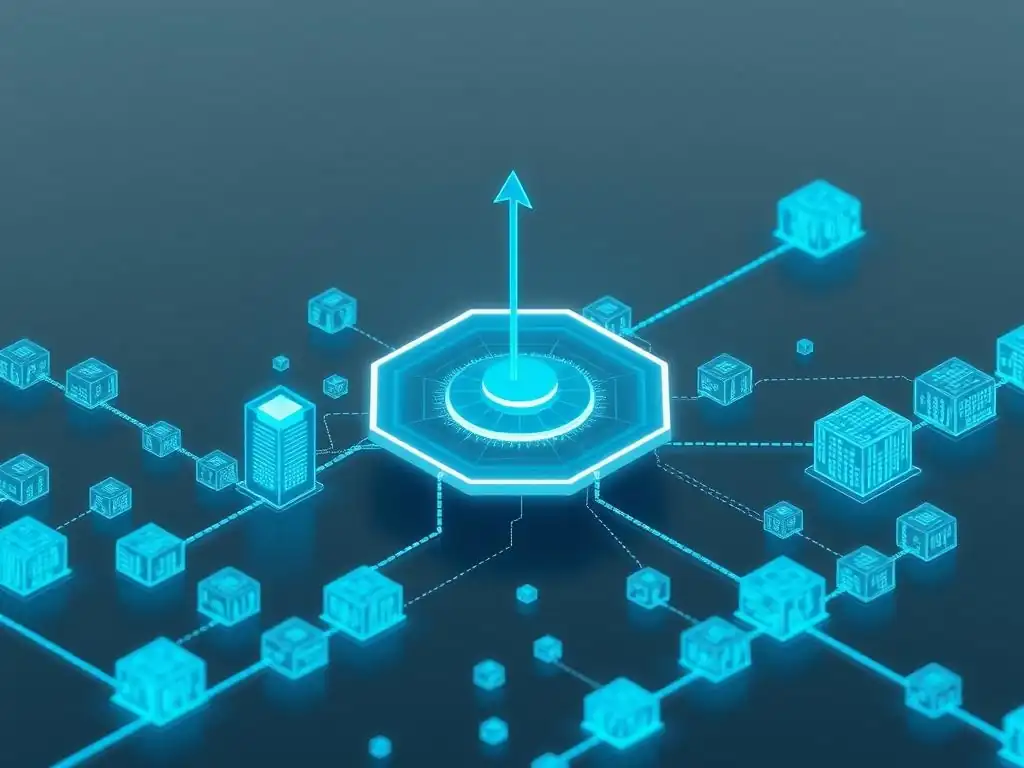
Addressing the scalability trilemma—balancing decentralization, security, and scalability—requires innovative approaches. Blockchain scalability challenges solutions are broadly categorized into two main types: Layer-1 solutions, which involve modifications to the core blockchain protocol, and Layer-2 solutions, which are built on top of the existing blockchain layer. Both approaches aim to increase transaction throughput and reduce costs, though they differ significantly in their implementation and trade-offs.
Layer-1 solutions seek to enhance the blockchain's fundamental capacity by altering its structure or consensus mechanism. Layer-2 solutions, conversely, offload a significant portion of the transaction processing away from the main chain, only using the base layer for settlement and security guarantees. A combination of these approaches is often seen as the most promising path forward for achieving significant improvements in blockchain scalability while preserving core decentralized principles.
Layer-1 Scalability Solutions: Modifying the Blockchain's Core Protocol
Layer-1 blockchain scalability challenges solutions involve making fundamental changes to the blockchain itself to increase its efficiency and capacity. These modifications can range from altering block size or block interval to implementing entirely new consensus mechanisms or data partitioning techniques. The goal is to enable the main chain to process more transactions per second natively, without relying on external protocols.
Implementing Layer-1 solutions often requires significant coordination and agreement among network participants, as it involves changing the core rules of the blockchain. However, successful Layer-1 upgrades can dramatically increase the base capacity of the network. Examples include changing from Proof-of-Work to Proof-of-Stake or implementing sharding techniques, which distribute the processing load across different parts of the network.
-
Sharding: Partitioning the Blockchain for Parallel Processing
Sharding is a technique borrowed from traditional database partitioning that divides the blockchain network into smaller, more manageable segments called "shards." Each shard can process transactions and maintain its own state independently and in parallel with other shards. Instead of every node validating every transaction on the entire chain, nodes are assigned to specific shards and only need to validate transactions within their assigned shard.
This parallel processing significantly increases the overall transaction throughput of the network. For instance, if a blockchain is sharded into 100 shards, it theoretically could process transactions at roughly 100 times the speed of an un-sharded chain, provided there are mechanisms for cross-shard communication and ensuring overall network security. Ethereum's long-term scaling roadmap includes implementing sharding as a key Layer-1 solution to dramatically increase its capacity beyond the improvements gained from the transition to Proof-of-Stake.
-
Consensus Mechanism Improvements: Moving Beyond Proof-of-Work
One of the most impactful Layer-1 blockchain scalability challenges solutions is the improvement or replacement of the consensus mechanism. Proof-of-Work (PoW), while secure and decentralized, is inherently slow and consumes vast amounts of energy due to the computational competition required to validate blocks. Alternative consensus mechanisms, particularly Proof-of-Stake (PoS) and its variations, offer significant improvements in transaction speed and efficiency.
In PoS systems, validators are chosen to create new blocks based on the amount of cryptocurrency they "stake" as collateral, rather than their computational power. This eliminates the energy-intensive mining process and allows for much faster block creation and finality. Ethereum's transition from PoW to PoS (the "Merge") was a major step towards improving its scalability, enabling faster block times and laying the groundwork for future Layer-1 scaling like sharding. Other networks like Solana and Cardano utilize variations of PoS, claiming potential throughputs ranging from hundreds to thousands of TPS, a substantial increase over PoW limitations.
Layer-2 Scalability Solutions: Building on Top of the Existing Blockchain
Layer-2 blockchain scalability challenges solutions operate off the main blockchain (Layer-1), processing transactions externally and only using the main chain for final settlement and security guarantees. These solutions aim to reduce the load on the Layer-1 network by handling a high volume of transactions more efficiently off-chain, thereby increasing overall throughput without modifying the core protocol.
Layer-2 solutions offer a flexible way to scale existing blockchains, especially those that are difficult or undesirable to modify at Layer-1 (like Bitcoin). They can be built as separate protocols or networks that interact with the main chain via smart contracts. This approach allows for rapid innovation and deployment of scaling techniques without requiring network-wide consensus changes on the base layer.
-
State Channels: Enabling Direct Transactions Off-Chain
State channels are a type of Layer-2 solution that allows participants to conduct multiple transactions off-chain, without submitting each one to the main blockchain. Participants lock a portion of the blockchain's state (like funds in a multi-signature wallet) into a channel opened on the Layer-1 chain. They can then transact directly with each other within this channel, updating a shared state off-chain as many times as needed.
Only the initial channel opening and the final state settlement transaction (or a dispute resolution transaction) are recorded on the main chain. This drastically reduces the number of on-chain transactions, significantly lowering fees and increasing speed for interactions within the channel. The Lightning Network for Bitcoin is a prominent example of a state channel implementation, enabling near-instant, low-cost payments between users connected through payment channels, effectively addressing some blockchain scalability challenges solutions for payments on Bitcoin.
-
Rollups: Aggregating Transactions for Batch Processing
Rollups are another popular category of Layer-2 blockchain scalability challenges solutions that execute transactions off-chain but post compressed transaction data back to the Layer-1 chain in batches. By bundling hundreds or thousands of transactions into a single batch and posting it as a single transaction on the main chain, rollups significantly reduce the amount of data and computation required on Layer-1.
There are two main types: Optimistic Rollups and Zero-Knowledge (ZK) Rollups. Optimistic Rollups assume transactions are valid by default and run computation off-chain, posting compressed data to Layer-1. They rely on a dispute resolution period where anyone can challenge the validity of a transaction batch by running fraud proofs on Layer-1. ZK Rollups run computation off-chain and generate cryptographic proofs (ZK-SNARKs or ZK-STARKs) verifying the validity of the transactions in the batch.
This proof is then posted to Layer-1 along with the compressed data. ZK Rollups offer faster finality than Optimistic Rollups as validity is proven on-chain, not just assumed. Networks like Arbitrum and Optimism are examples of Optimistic Rollups on Ethereum, while zkSync and StarkNet utilize ZK Rollups, demonstrating effective blockchain scalability solutions for smart contract platforms.
Balancing Decentralization and Scalability: Finding the Optimal Trade-off
The pursuit of blockchain scalability challenges solutions often involves navigating a complex landscape of trade-offs, primarily centered around the balance between scalability and decentralization. While security is generally considered paramount and difficult to compromise without breaking the fundamental promise of blockchain, networks often have to decide how much decentralization they are willing to sacrifice to achieve higher throughput, or vice versa. There is no one-size-fits-all answer, and the optimal balance depends heavily on the intended use case of the blockchain.
Finding the right balance requires careful consideration of the network's goals. A public, permissionless blockchain aiming to be a global, censorship-resistant store of value might prioritize decentralization and security over raw transaction speed, accepting limited scalability as a necessary cost. Conversely, a blockchain designed for high-volume micro-transactions or enterprise supply chain management might lean towards greater scalability, even if it means having a smaller, more controlled set of validators, potentially introducing a degree of centralization.
The Scalability Trilemma: Security, Scalability, and Decentralization
The concept of the "Scalability Trilemma," popularized by Ethereum co-founder Vitalik Buterin, posits that decentralized systems can only truly achieve two of the three desirable properties—Security, Scalability, and Decentralization—at any given time. According to this view, improving one aspect often requires compromising on at least one of the others. For example, increasing scalability by reducing the number of validators might improve speed but decreases decentralization and potentially security.
A highly decentralized network (like Bitcoin) prioritizes decentralization and security but struggles with scalability. A highly scalable network (like some centralized databases) prioritizes scalability but lacks decentralization and trustless security. The challenge for blockchain architects developing blockchain scalability challenges solutions is to find innovative ways to navigate this trilemma, perhaps not by achieving all three perfectly on a single layer, but by distributing the load across multiple layers or using clever cryptographic techniques that allow for improvements in one area without catastrophic losses in another.
Case Studies: Examining Different Blockchain Networks and Their Approaches
Examining different blockchain networks reveals varied approaches to addressing the scalability trilemma and implementing blockchain scalability challenges solutions. Bitcoin, for instance, is often seen as prioritizing decentralization and security above all else, resulting in limited Layer-1 scalability (around 7 TPS). It relies heavily on Layer-2 solutions like the Lightning Network to handle higher transaction volumes for payments.
Ethereum, after its shift to Proof-of-Stake, significantly improved its Layer-1 efficiency and laid the groundwork for sharding, aiming to achieve a better balance. However, it also heavily leverages Layer-2 solutions like Optimistic and ZK Rollups to offload computation and achieve significantly higher effective transaction throughput (potentially thousands of TPS) for DeFi and dApps running on top of it. Other networks, like Solana, have prioritized scalability by employing different consensus mechanisms (Proof-of-History combined with Proof-of-Stake) and hardware requirements for validators, allowing them to claim theoretical throughputs of tens of thousands of TPS.
This approach, however, is sometimes debated in terms of its degree of decentralization compared to networks with lower hardware barriers to entry for nodes. These examples illustrate the diverse strategies employed to tackle blockchain scalability challenges solutions, each with its own set of trade-offs.
The Future of Blockchain Scalability: Emerging Technologies and Trends
The quest for more effective blockchain scalability challenges solutions is ongoing, with significant research and development focused on pushing the boundaries of what decentralized networks can achieve. Beyond the established Layer-1 and Layer-2 techniques, new architectural paradigms and technological advancements are emerging that promise to further enhance the scalability and interoperability of blockchain systems. These trends suggest a future where blockchain networks are not only faster and cheaper but also more flexible and interconnected.
Future developments are likely to involve a combination of refined existing techniques and entirely new concepts. Focusing on optimizing specific layers of the blockchain stack and improving communication between different networks are key areas of innovation. These advancements are crucial for enabling the next wave of blockchain adoption across a wider range of applications and industries, ultimately contributing to a more scalable and interconnected decentralized ecosystem.
Advancements in Interoperability: Connecting Different Blockchains
While individual blockchain networks are working on their own scaling issues, a parallel trend focuses on improving interoperability – the ability for different blockchains to communicate and interact with each other. Advancements in cross-chain bridges and protocols like Polkadot, Cosmos, and others aim to create an interconnected ecosystem where assets and data can flow seamlessly between chains.
Improved interoperability can contribute to overall system scalability by allowing dApps to leverage the strengths of different chains. For example, a dApp might use a highly scalable chain for transaction execution while using a more decentralized chain for final settlement or data storage. By distributing different functions across specialized blockchains and enabling efficient communication between them, the ecosystem as a whole can handle a greater volume and variety of operations more effectively, indirectly addressing blockchain scalability challenges solutions at a broader level.
The Rise of Modular Blockchains: Optimizing for Specific Functionalities
A significant emerging trend in addressing blockchain scalability challenges solutions is the move towards modular blockchain architectures. Traditionally, blockchains have been monolithic, handling execution, consensus, data availability, and settlement within a single layer. Modular blockchains break down these functions into separate, specialized layers. For example, one layer might be optimized solely for data availability, another for transaction execution, and a third for consensus and settlement.
This modular approach allows each layer to be optimized independently for its specific task, leading to greater efficiency and scalability. It also fosters innovation, as developers can build new execution layers ("rollups") on top of existing data availability and consensus layers. Projects like Celestia are pioneering this approach, focusing on providing a scalable data availability layer that other chains and rollups can build upon. This specialization allows for higher throughput and flexibility compared to monolithic designs, representing a promising direction for future blockchain scalability solutions.
Conclusion: Towards a Scalable and Decentralized Future
The tension between decentralization and scalability remains a fundamental challenge in the evolution of blockchain technology. While decentralization provides the core benefits of trustlessness and censorship resistance, achieving the high transaction throughput required for mass adoption necessitates overcoming significant scalability hurdles. The ongoing efforts to develop and implement blockchain scalability challenges solutions, encompassing both Layer-1 protocol modifications and Layer-2 off-chain techniques, are critical to unlocking the full potential of decentralized systems.
There is no single magic bullet; the future likely involves a multi-faceted approach utilizing a combination of these solutions, potentially alongside emerging trends like modular architectures and improved interoperability. Finding the optimal balance between decentralization, security, and scalability will continue to be a key area of focus for researchers and developers. As these blockchain scalability solutions mature and become more widely adopted, we move closer to a future where decentralized networks can support a global scale of activity, bringing the benefits of blockchain technology to a much broader audience and enabling a new generation of innovative applications.
Frequently Asked Questions
What are the primary blockchain scalability challenges?
Scalability challenges refer to the limitations in a blockchain network's ability to handle a large volume of transactions efficiently. This often results in slow transaction speeds and higher fees.
How does decentralization impact blockchain scalability?
Decentralization, while enhancing security and transparency, often reduces scalability. Distributing data across many nodes requires more processing power and time to reach consensus on transactions.
What are some common solutions to address blockchain scalability challenges?
Layer-2 scaling solutions like Rollups and State Channels are designed to increase transaction throughput. Sharding, another scalability solution, divides the blockchain into smaller, manageable segments.
How do enterprise blockchain applications address scalability challenges differently than public blockchains?
Enterprise blockchains often utilize permissioned networks with fewer nodes, allowing for faster transaction processing. This controlled environment helps to improve scalability compared to open, public blockchains.
What role does regulation play in the development of scalable blockchain solutions?
Clear regulatory frameworks can foster innovation and investment in scalable blockchain technologies. Uncertainty, however, can hinder the adoption of blockchain and its further development.
The exploration of blockchain scalability challenges and solutions, as we've seen, is not merely an academic exercise, but a crucial endeavor shaping the future of digital trust. The tension between decentralization and scalability remains a defining characteristic of blockchain technology today, demanding innovative solutions that don't compromise the core principles of security and immutability upon which these networks are built. The choices we make now will determine whether blockchain fulfills its promise of a more equitable and transparent digital world.
The ongoing struggle to balance these competing forces has profoundly impacted the adoption and application of blockchain across various industries. Witnessing the evolution of Layer-2 solutions and sharding techniques has been inspiring, yet the complexity underscores the need for continued research and development. As Vitalik Buterin eloquently stated: The scalability problem is the biggest problem in blockchain right now.
This quote encapsulates the urgency and importance of finding effective solutions to unlock the full potential of decentralized networks.
Now, as you reflect on the challenges and potential solutions presented, consider your own role in shaping the future of blockchain. How can you contribute to the development of more scalable and decentralized systems? Embrace the spirit of innovation, question existing paradigms, and actively participate in the ongoing conversation. The future of blockchain depends on our collective commitment to finding the right balance, ensuring a future where decentralization and scalability coexist harmoniously.
Unveil Your Blockchain Future!
Thank you for diving into the crucial balance between decentralization and scalability in blockchain networks. We hope this article has provided valuable insights into navigating these complexities. Now, let's put that knowledge into action!
Here are some ways you can continue your journey:
- Dive deep and contribute to an open-source blockchain project focused on innovative scaling solutions. Your skills can directly impact the future of decentralized technology!
- Join our community forum at blockchaintrends.org and share your thoughts on the most promising approaches to achieving both decentralization and scalability. Let's learn from each other!
- Explore alternative consensus mechanisms like Proof-of-Stake or Delegated Proof-of-Stake and share your findings on social media using #BlockchainTrends.
Ready to champion a more scalable and decentralized future?
Leave a Reply