
Decentralized Governance Models: Blockchain's Challenge to Traditional Power Structures and Hierarchies

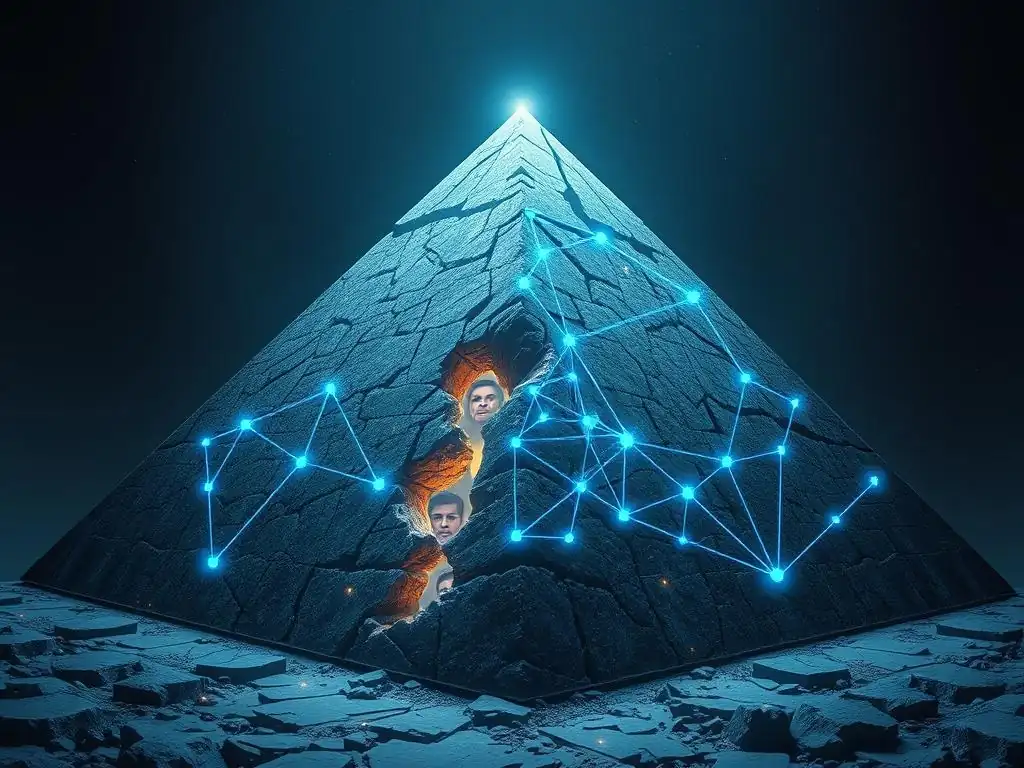
Welcome to Blockchain Trends, your guide to understanding the revolutionary impact of blockchain technology beyond the hype.
Have you ever wondered how decentralized systems can truly govern themselves? Dive into our latest exploration of blockchain governance models challenges and discover the complexities and potential pitfalls that lie ahead. This article, categorized under "The Future of Blockchain," sheds light on how these models are challenging traditional power structures and hierarchies. Intrigued? Read on to explore the crucial questions shaping the future of decentralized decision-making.
Decentralized Governance Models: Blockchain's Challenge to Traditional Power Structures and Hierarchies
- Introduction: Blockchain Governance Models and Shifting Power Dynamics
- Understanding Blockchain Governance Models: A Deep Dive
- Blockchain Governance Challenges: Addressing Limitations and Weaknesses
- The Impact of Blockchain Governance on Traditional Power Structures
- Blockchain Governance and the Future of Decentralized Organizations (DAOs)
- The Societal and Economic Implications of Blockchain Governance
- Conclusion: Blockchain Governance Models and the Path Towards Decentralized Power
-
Frequently Asked Questions
- How does blockchain technology challenge traditional power structures?
- What are some common blockchain governance models being implemented?
- What are the main challenges associated with blockchain governance models?
- How can blockchain governance models improve DeFi (Decentralized Finance) platforms?
- What role does regulation play in shaping the future of blockchain governance?
- Final Reflection: Embracing the Decentralized Future
- Unleash Your Inner Decentralist!
Introduction: Blockchain Governance Models and Shifting Power Dynamics
The Rise of Decentralized Systems and Blockchain's Role
The advent of blockchain technology has ushered in an era where decentralized systems are not just theoretical concepts but tangible realities. At its core, blockchain provides a secure, transparent, and immutable ledger that can facilitate trustless interactions. This fundamental capability has profound implications for how organizations, communities, and even societies can be structured and managed. Unlike traditional systems that rely on central authorities or intermediaries to validate transactions, enforce rules, and maintain order, blockchain distributes these functions across a network of participants.
This distribution of power and responsibility is the bedrock upon which new forms of governance are being built. By enabling direct peer-to-peer interactions and automating agreements via smart contracts, blockchain technology reduces the need for centralized oversight in many processes. This shift is particularly relevant in areas like finance, supply chain, and digital identity, but its most revolutionary potential lies in the realm of governance itself. As blockchain networks grow and manage significant value or coordinate large groups of people, the question of how these systems are governed becomes paramount, leading to the exploration of novel blockchain governance models.
Traditional Governance vs. Blockchain-Based Governance: A Paradigm Shift
Traditional governance structures, whether in corporations, governments, or non-profits, are typically hierarchical and centralized. Decisions flow from the top down, and power is concentrated in the hands of a few individuals or entities. This model relies on established institutions, legal frameworks, and human intermediaries to enforce rules, resolve disputes, and manage resources. While often effective, this centralized approach can be prone to inefficiencies, lack of transparency, corruption, and limited participation from stakeholders at lower levels.
Blockchain-based governance, in contrast, proposes a paradigm shift towards distributed power and automated rule enforcement. Instead of relying on human authorities, governance rules can be encoded directly into the blockchain via smart contracts. Decision-making can involve direct participation from token holders or network participants through various voting mechanisms. This model prioritizes transparency, as all governance actions can be recorded on the public ledger, and aims for immutability, where agreed-upon rules are automatically executed. This fundamental difference highlights the core of the blockchain governance models challenges: moving from established human-centric hierarchies to code-centric, distributed systems.
Why Blockchain Governance Models are Challenging Traditional Structures
The inherent characteristics of blockchain technology directly challenge the foundations of traditional power structures. By making information universally accessible and verifiable, blockchain erodes the information asymmetry that often underpins centralized control. When anyone can audit transactions or governance decisions on a public ledger, the potential for hidden agendas or opaque processes is significantly reduced. This transparency fosters greater accountability than is often possible in opaque, centralized systems.
Furthermore, blockchain enables new forms of collective action and decision-making that bypass traditional gatekeepers. Decentralized Autonomous Organizations (DAOs), for example, allow communities to pool resources and make collective decisions based on predefined rules executed by code, rather than relying on corporate boards or governmental bodies. This empowerment of distributed stakeholders represents a direct challenge to established hierarchies and concentrations of power, forcing a re-evaluation of how organizations and even aspects of civil society can be governed. The development and refinement of effective blockchain governance models are crucial for realizing this potential shift.
Understanding Blockchain Governance Models: A Deep Dive
Types of Blockchain Governance Mechanisms: On-Chain vs. Off-Chain
Blockchain governance models generally fall into two main categories: on-chain governance and off-chain governance. The distinction lies primarily in where and how governance decisions are made and enforced. On-chain governance embeds the rules and processes for decision-making directly into the blockchain protocol or smart contracts. Changes to the system, such as upgrades or parameter adjustments, are typically proposed and voted upon using mechanisms built into the network itself, with the outcomes automatically implemented by the code.
Off-chain governance, on the other hand, relies on discussions and decisions made outside the blockchain protocol, using traditional communication channels like forums, social media, and community calls. While the implementation of decisions might eventually occur on-chain (e.g., core developers writing code updates based on off-chain consensus), the decision-making process itself is not strictly controlled or automated by the blockchain. Many projects utilize a combination of both, recognizing the strengths and weaknesses of each approach when addressing blockchain governance models challenges.
On-Chain Governance: Direct Democracy and Automated Decision-Making
On-chain governance aims for a high degree of automation and direct participation. It seeks to make the process of proposing, voting on, and implementing changes transparent and resistant to manipulation by embedding it within the blockchain's consensus mechanism or associated smart contracts. This approach is often seen as more aligned with the core ethos of decentralization, as it reduces reliance on external human coordination beyond the network's participants. Protocols like Tezos and Dash are prominent examples that have experimented significantly with on-chain governance structures.
The core idea is that the rules for changing the rules are themselves part of the protocol, visible and auditable by anyone. When a proposal passes a predefined threshold of votes (often weighted by stake or token ownership), the protocol can automatically update itself or trigger specific actions via smart contracts. This direct link between decision and execution minimizes potential points of failure or resistance that can exist when decisions need to be manually implemented by a central team after an off-chain consensus is reached.
Token Voting and Proposal Systems
Token voting is a prevalent mechanism in on-chain governance, particularly within DAOs and decentralized protocols. In this model, ownership of a specific governance token grants the holder voting power, often proportional to the number of tokens held. Users can lock their tokens or delegate their vote to participate in proposal votes. Proposals can range from technical upgrades (like changing block size or consensus algorithms) to economic parameters (like adjusting fees or reward distribution) to strategic decisions (like allocating treasury funds).
Examples include Uniswap's UNI token or Aave's AAVE token, where token holders can vote on proposals to modify the protocol's parameters, allocate funds from the treasury, or elect delegates. While seemingly straightforward, this approach faces significant blockchain governance models challenges, such as voter apathy, low participation rates (often below 10-20% in many protocols), and the potential for whale dominance, where a few large token holders can sway decisions. Mechanisms like quadratic voting or vote delegation are explored to mitigate these issues.
Smart Contract Implementation of Governance Rules
A key feature of on-chain governance is the implementation of governance rules directly within smart contracts. This means that once a proposal passes a vote according to the rules encoded in the contract, the outcome is automatically executed by the code without the need for manual intervention. For instance, a proposal to change an interest rate parameter in a DeFi protocol, if passed, would automatically update the relevant variable within the lending smart contract.
This automated execution reduces the risk of voted-on changes being ignored or delayed by core teams, a potential issue in off-chain systems. It also enhances transparency, as the logic for how votes are counted and how outcomes are implemented is open-source and auditable on the blockchain. However, this also introduces a significant challenge: errors or vulnerabilities in the governance smart contracts can have severe, immutable consequences, potentially leading to locked funds or system exploits if not rigorously audited and tested. This highlights the critical security aspect among blockchain governance models challenges.
Off-Chain Governance: Community Input and Stakeholder Collaboration
Off-chain governance relies on processes that occur outside the blockchain itself to reach consensus on proposed changes or decisions. This typically involves discussions among core developers, community members, token holders, and other stakeholders using traditional communication platforms. While the final implementation might involve code changes that are pushed to the blockchain, the deliberation and decision-making do not happen directly through on-chain voting mechanisms or automated smart contracts.
This approach offers more flexibility than pure on-chain governance. Discussions can be more nuanced, complex issues can be debated in detail without the constraints of on-chain transaction costs or data limits, and a wider range of inputs (not just from token holders) can be considered. However, it also reintroduces elements of centralization and trust, as the power to ultimately implement changes often rests with a core group of developers or administrators who must act upon the community's consensus.
Forums and Community Discussions
A primary venue for off-chain governance is online forums, discussion boards (like Discourse), and chat platforms (like Discord or Telegram). These spaces allow for open dialogue, proposal drafting, feedback collection, and debate among project participants. Anyone interested can typically join these discussions, providing a broader platform for input beyond just those with significant token holdings. Proposals are often refined through iterative feedback before potentially moving to a more formal signaling or voting stage.
Examples include the Ethereum Magicians forum, where core protocol changes are debated, or specific project forums where proposals for features or parameter changes are discussed. While these platforms foster engagement and allow for rich qualitative input, they can be susceptible to noise, Sybil attacks (creating multiple identities to influence discussion), and difficulty in gauging true community sentiment versus the opinions of a vocal minority. Translating consensus reached in these diverse forums into concrete, implementable decisions is one of the practical blockchain governance models challenges.
Hybrid Governance Models: Combining On-Chain and Off-Chain Approaches
Many successful decentralized projects and DAOs employ hybrid governance models, leveraging the strengths of both on-chain and off-chain mechanisms. This typically involves using off-chain forums and discussions for initial proposal drafting, community feedback, and deliberation. Once a proposal is sufficiently developed and has garnered initial support, it might then move to an on-chain voting mechanism for formal approval or rejection by token holders.
MakerDAO is a well-known example of a hybrid model. Discussions and proposal refinement occur off-chain on forums and calls. Formal weekly executive votes and often more frequent smaller polls are then conducted on-chain using MKR token voting. This allows for robust community debate while retaining the security and immutability of on-chain execution for critical protocol changes. Hybrid models aim to balance the efficiency and expressiveness of off-chain communication with the security and automated execution of on-chain systems, attempting to mitigate the specific blockchain governance models challenges associated with each pure approach.
Blockchain Governance Challenges: Addressing Limitations and Weaknesses
Implementing effective decentralized governance is complex and fraught with difficulties. While the promise of decentralized power is appealing, the practical realities of coordinating diverse stakeholders, ensuring security, and achieving broad participation present significant blockchain governance models challenges that need careful consideration and innovative solutions.
Scalability Issues in Decentralized Governance
One major challenge is the scalability of on-chain governance processes. Conducting votes and executing governance logic directly on a blockchain can consume significant network resources. Each vote or proposal submission might require a transaction, incurring gas fees and potentially clogging the network, especially during periods of high activity. On networks with limited throughput, this can lead to slow voting periods or high costs that deter participation.
For example, on a high-traffic network, submitting a governance proposal or casting a vote might cost several dollars in transaction fees. This effectively disenfranchises smaller token holders for whom the cost of participation outweighs their potential influence. While Layer 2 scaling solutions offer some relief for general transactions, applying them seamlessly to complex governance interactions and ensuring the same level of security and decentralization remains an ongoing area of development and a key part of the blockchain governance models challenges landscape.
Security Risks and Vulnerabilities in Governance Systems
Decentralized governance systems, particularly those relying on smart contracts for execution, are susceptible to significant security risks. Flaws in the smart contract code that defines governance rules or handles treasury funds can be exploited, leading to loss of assets or manipulation of voting outcomes. Unlike traditional systems where errors might be corrected manually, exploits in immutable smart contracts can be irreversible.
History shows numerous incidents where vulnerabilities in DAO or protocol governance contracts led to substantial losses. The infamous 2016 DAO hack, resulting in the loss of millions of ether due to a reentrancy bug in its smart contract, is a stark reminder. While smart contract auditing and formal verification techniques have advanced significantly, the complexity of governance logic and the high value often controlled by these contracts make them attractive targets for malicious actors, posing persistent security-related blockchain governance models challenges.
The Problem of Low Participation and Voter Apathy
Despite the potential for empowering stakeholders, achieving high voter turnout and active participation in decentralized governance remains a persistent challenge. Many on-chain voting systems see participation rates well below 20%, sometimes even in the low single digits for less critical proposals. This "voter apathy" can lead to decisions being made by a small minority of engaged users or large token holders, undermining the goal of broad decentralization.
Reasons for low participation include the complexity of understanding proposals, the time required to stay informed and vote, transaction costs associated with voting, and a lack of sufficient incentives for participation. If governance power is highly concentrated among a few "whales" (large token holders), smaller participants may feel their vote is insignificant, further reducing motivation to engage. Addressing this low participation is one of the most significant behavioral and structural blockchain governance models challenges.
Overcoming Governance Challenges: Liquid Democracy and Quadratic Voting
Innovative mechanisms are being explored and implemented to address some of the core blockchain governance models challenges, particularly low participation and whale dominance. Liquid democracy, or delegative democracy, allows token holders to either vote directly on proposals or delegate their voting power to a trusted third party or expert. This combines elements of direct and representative democracy, potentially increasing overall participation by allowing less engaged users to still have their voice heard through delegates.
Quadratic voting is another mechanism designed to reduce the disproportionate influence of large token holders. Instead of granting one vote per token, quadratic voting gives participants voting power proportional to the square root of their token holdings, while requiring a cost (in tokens or transaction fees) proportional to the square of the votes cast. This makes it increasingly expensive for wealthy individuals to cast many votes on a single issue, giving smaller holders relatively more influence per token spent and encouraging broader participation across more issues. While complex to implement, these models represent promising avenues for fairer decentralized decision-making.
The Impact of Blockchain Governance on Traditional Power Structures

The emergence and evolution of blockchain governance models are not just technical developments; they carry significant implications for traditional power structures across various sectors. By enabling distributed decision-making and transparency, these models offer alternatives to centralized control and hierarchical organizations.
Decentralizing Decision-Making Processes: Empowering Communities
Blockchain governance directly challenges the model where decision-making authority is concentrated in the hands of a few leaders, boards, or executives. By distributing voting power or participation rights among a broader set of stakeholders – such as token holders, network participants, or even users – these models empower communities to have a direct say in the direction and operation of the systems they use or contribute to.
This shift is particularly visible in the rise of DAOs, where communities govern treasuries holding millions or billions of dollars and make critical decisions about protocol upgrades, partnerships, and strategic direction through collective voting. This contrasts sharply with traditional corporate structures where shareholders typically vote only on a limited set of issues (like board members) and operational decisions are made by management. This empowerment represents a fundamental re-alignment of power, moving it from centralized entities towards distributed networks of participants.
Reducing Centralized Control and Mitigating Corruption
Traditional centralized systems are often vulnerable to corruption, rent-seeking, and opaque decision-making due to the concentration of power and lack of public oversight. Decisions can be made behind closed doors, favoring special interests over the broader community or public good. Blockchain governance, with its emphasis on transparency and automated, auditable processes, offers a potential antidote.
By encoding governance rules in public smart contracts and recording votes and proposals on an immutable ledger, blockchain systems make the decision-making process significantly more transparent. This inherent transparency makes it harder for individuals or small groups to secretly manipulate outcomes or divert resources. While not immune to all forms of manipulation (like collusion or vote buying), the open nature of blockchain governance reduces the reliance on trust in centralized authorities and provides a verifiable record, thereby mitigating some traditional avenues for corruption.
Fostering Transparency and Accountability in Governance
One of the most significant contributions of blockchain to governance is the inherent transparency it provides. Every governance proposal, every vote cast (often linked to a pseudonymous address), and the execution of every passed decision can be recorded on the public blockchain and audited by anyone. This level of transparency is unprecedented in most traditional governance systems.
This transparency fosters accountability. When decisions and their outcomes are publicly visible, it becomes easier to identify who voted for what and to hold participants (or their delegates) accountable for their choices. This contrasts with the opacity often found in corporate boardrooms or political backrooms. While pseudonymity on blockchain means accountability is linked to addresses rather than legal identities, the public record still allows for analysis of voting patterns and influence, creating a new dynamic of oversight compared to traditional, less transparent structures.
Case Study: Aragon's Governance Tools for DAOs
Aragon is a platform specifically designed to empower individuals and groups to create and manage DAOs. It provides a suite of tools and templates for launching decentralized organizations with customizable governance structures. Users can set up rules for membership, voting mechanisms (such as token voting or reputation-based voting), and treasury management using modular smart contracts.
Aragon's framework allows for significant flexibility, enabling DAOs to experiment with different blockchain governance models to find what works best for their specific purpose, whether it's managing an open-source project, a venture fund, or a community. By abstracting away some of the technical complexity of smart contract development, Aragon lowers the barrier to entry for creating decentralized governance structures, contributing to the broader adoption and experimentation with these new organizational forms and highlighting the tools being built to navigate blockchain governance models challenges.
Blockchain Governance and the Future of Decentralized Organizations (DAOs)
DAOs represent a tangible manifestation of blockchain governance models and are often cited as a potential model for future organizational structures. Their ability to coordinate groups around shared goals using transparent, code-enforced rules makes them distinct from traditional companies or non-profits.
The Role of Governance in DAO Sustainability and Growth
Effective governance is absolutely critical for the long-term sustainability and growth of any DAO. Without clear, accepted, and functional mechanisms for decision-making, DAOs can become paralyzed by inaction, fall victim to internal conflicts, or fail to adapt to changing circumstances. Governance is the engine that allows a DAO to upgrade its protocol, manage its treasury, form partnerships, and resolve disputes.
Poor governance, conversely, can lead to project failure. Issues like low voter turnout, concentration of voting power, inability to reach consensus, or flawed proposal processes are significant blockchain governance models challenges that can cripple a DAO. Successful DAOs are those that manage to establish robust, engaged, and adaptable governance frameworks that can navigate complex decisions and maintain community alignment over time.
DAOs as a Model for Future Organizational Structures
The DAO model, powered by blockchain governance, offers a compelling alternative or complement to traditional hierarchical organizations. For certain types of activities, such as managing open-source software protocols, coordinating decentralized finance applications, or pooling capital for collective investment, DAOs can provide a more transparent, community-owned, and resilient structure.
Unlike traditional companies with clear legal structures and centralized control, DAOs can operate across borders with a distributed workforce or participant base, making decisions collectively and transparently. While significant legal and regulatory hurdles remain, the DAO structure demonstrates the potential for organizations to be governed by code and community consensus rather than corporate charters and executive boards, showcasing a potential future direction influenced by overcoming blockchain governance models challenges.
Case Study: MakerDAO and its Governance of the DAI Stablecoin
MakerDAO is one of the largest and most established DAOs, governing the Dai stablecoin, a decentralized cryptocurrency soft-pegged to the US dollar. The Maker Protocol is governed by holders of the MKR token through a system of executive votes and polls. MKR holders vote on critical parameters of the protocol, such as stability fees (interest rates for borrowing Dai), debt ceilings for various collateral types, and the addition of new collateral assets.
This governance process is vital for maintaining the stability of Dai and the health of the protocol. MKR holders act as the "lender of last resort" and are responsible for recapitalizing the system if collateral values fall too sharply. The governance process involves extensive off-chain discussion and analysis before proposals move to on-chain voting. Despite its success, MakerDAO governance has faced blockchain governance models challenges, including periods of low voter turnout, the influence of large MKR holders, and the complexity of coordinating decisions across a global community on highly technical parameters.
The Societal and Economic Implications of Blockchain Governance
Beyond the technical and organizational aspects, blockchain governance models have profound potential societal and economic implications, challenging existing power dynamics and proposing new ways to structure interactions and distribute value.
Redefining Ownership and Control in the Digital Age
Blockchain governance fundamentally redefines concepts of ownership and control, particularly in the digital realm. In traditional digital services, users are often tenants on platforms owned and controlled by corporations. Their data, access, and the rules governing their interactions are subject to the centralized authority of the platform provider.
In systems governed by blockchain models, ownership and control can be distributed among the participants. Token holders can collectively own and govern the protocol or platform they use. This shifts the relationship from one of a service provider and consumer to one of co-owners and co-governors. This redefinition has implications for digital rights, data ownership, and the distribution of value created by network effects, offering a model where users are stakeholders, not just customers, challenging existing economic power structures.
Creating More Equitable and Inclusive Governance Systems
Blockchain governance holds the promise of creating more equitable and inclusive governance systems compared to traditional models often plagued by gatekeeping, bureaucracy, and limited access. By allowing anyone with an internet connection and the required tokens (or other forms of participation) to contribute to decision-making, these models can lower the barriers to entry for political or economic participation.
Mechanisms like quadratic voting or identity-based voting (though challenging to implement in a decentralized way) are specifically designed to counteract the influence of wealth and power concentration, aiming for a more equitable distribution of influence. While achieving true inclusivity remains a significant challenge – facing issues like digital literacy, access to technology, and the cost of participation – the underlying principles of transparency and distributed participation offer a path towards governance systems that are potentially more representative and less susceptible to capture by entrenched interests, addressing key blockchain governance models challenges related to fairness.
One of the most complex blockchain governance models challenges lies in navigating the existing legal and regulatory landscape, which was built for traditional, centralized entities. DAOs and decentralized governance structures often don't fit neatly into established legal categories like corporations, partnerships, or non-profits. This creates uncertainty regarding liability, taxation, contractual enforcement, and regulatory compliance.
Jurisdictions are slowly beginning to grapple with how to regulate decentralized autonomous organizations and blockchain governance. Some, like Wyoming in the USA, have created specific legal frameworks for DAOs. However, the lack of global consensus and the borderless nature of many decentralized systems mean that legal ambiguity remains a major hurdle. Ensuring that decentralized governance models can operate legally and interact with the traditional economy requires significant innovation in legal frameworks and ongoing dialogue between regulators and the blockchain community.
Conclusion: Blockchain Governance Models and the Path Towards Decentralized Power
The Ongoing Evolution of Blockchain Governance
Blockchain governance models are still in their nascent stages, undergoing continuous experimentation and evolution. From early, simple token voting mechanisms to more complex hybrid models incorporating off-chain deliberation, liquid democracy, and quadratic voting, the field is rapidly iterating. The challenges faced – including scalability, security, low participation, and legal uncertainty – are significant but are also driving innovation in mechanism design, community building, and technical implementation.
The journey towards effective decentralized governance is not linear. It involves learning from failures, adapting strategies, and developing new tools and best practices. As blockchain technology matures and decentralized applications become more integrated into the economy and society, the importance of robust, fair, and efficient governance mechanisms will only grow. This ongoing evolution is crucial for the long-term success and legitimacy of decentralized systems.
Key Takeaways: Blockchain governance models challenges and their implications
The exploration of blockchain governance reveals several key challenges. Scalability issues can make on-chain voting expensive and slow. Security risks in smart contracts pose threats to funds and system integrity. Low participation rates can undermine decentralization and lead to decisions by a minority. Legal and regulatory uncertainty creates significant hurdles for real-world adoption. These blockchain governance models challenges are not merely technical; they are deeply intertwined with human behavior, economic incentives, and existing power structures.
However, overcoming these challenges holds transformative potential. Effective blockchain governance can enable decentralized decision-making, reduce reliance on centralized authorities, mitigate corruption through transparency, and foster greater accountability. It offers a path towards redefining ownership and control in the digital age and building potentially more equitable and inclusive systems, provided the inherent difficulties can be successfully navigated.
The Future of Governance: A Decentralized and Collaborative Approach
The future of governance, influenced by blockchain models, appears to be moving towards more decentralized and collaborative approaches. While traditional centralized structures will likely persist for many functions, blockchain offers a powerful toolkit for distributing power, enhancing transparency, and enabling collective action in ways previously unimaginable.
The lessons learned from developing and implementing blockchain governance models are applicable beyond native crypto protocols. Principles of transparent decision-making, auditable processes, and stakeholder participation can inform and potentially improve governance in traditional organizations, from corporations to non-profits and even aspects of public administration. As the technology and our understanding of these complex socio-technical systems evolve, blockchain governance holds the potential to fundamentally alter how we organize ourselves and make collective decisions in an increasingly digital and interconnected world.
Frequently Asked Questions
How does blockchain technology challenge traditional power structures?
Blockchain's decentralized nature inherently challenges traditional hierarchies by distributing power and control across a network, removing the need for a central authority. This transparency and immutability further erode the power concentrated in single entities.
What are some common blockchain governance models being implemented?
Common models include on-chain governance (voting directly on the blockchain), off-chain governance (using external forums for discussion), and hybrid models that combine both. The best model depends on the specific needs and goals of the blockchain project.
What are the main challenges associated with blockchain governance models?
Challenges include scalability (handling a large number of votes), voter apathy (low participation rates), and the potential for influence by powerful stakeholders who can manipulate the system. Security vulnerabilities are also a constant concern.
How can blockchain governance models improve DeFi (Decentralized Finance) platforms?
Effective governance allows DeFi platforms to adapt to changing market conditions, address vulnerabilities, and fairly distribute protocol upgrades. This enhances user trust and promotes the long-term sustainability of the platform.
What role does regulation play in shaping the future of blockchain governance?
Regulation aims to provide clarity and accountability for blockchain projects, but overregulation could stifle innovation. Finding a balance between fostering innovation and protecting users is crucial for the future of blockchain governance.
Final Reflection: Embracing the Decentralized Future
The exploration of decentralized governance models within blockchain technology reveals more than just innovative code; it highlights a fundamental shift in how we perceive and interact with power. The promise of equitable participation and transparent decision-making, while still facing significant hurdles, represents a powerful challenge to the established hierarchies that dominate our world. This isn't just about technology; it's about reimagining the very fabric of our societal structures.
The impact of these nascent blockchain governance models is already rippling through various sectors, from finance to supply chain management, forcing us to confront uncomfortable truths about centralized control and its inherent limitations. Witnessing this evolution firsthand underscores the profound importance of understanding and actively shaping the future of decentralized systems. The future is already here – it's just not evenly distributed.
- William Gibson. This quote perfectly encapsulates the current state of blockchain governance; the potential is immense, but its widespread adoption and equitable implementation require careful consideration and proactive engagement.
As we stand at the cusp of this decentralized revolution, let us not be passive observers. Let us critically examine the challenges and opportunities presented by blockchain governance models, and actively contribute to building a future where power is distributed, decisions are transparent, and participation is truly inclusive. Consider how you can contribute to the development and adoption of these models, ensuring they serve the collective good and empower individuals, rather than replicating the inequalities of the past. The future of governance is not predetermined; it is a future we must build together.
Unleash Your Inner Decentralist!
Thanks for exploring the world of decentralized governance! We hope you now have a clearer understanding of how blockchain is transforming power structures and offering a vision of a more equitable future. Are you ready to take the next step?
Here are some ways you can get involved and contribute to the decentralized revolution:
- Join a DAO: Participate actively in a Decentralized Autonomous Organization that aligns with your interests. Whether voting on proposals or sharing your skills, this is your opportunity to influence the future of governance directly.
- Explore alternative governance models: Investigate approaches like sociocracy, holacracy, and other decentralized organizational methods being used today to expand your perspective.
- Start a conversation: Share this article with your network and encourage discussions about the potential benefits and challenges of decentralized governance. What would a truly decentralized future look like to you?
What real-world problem do you believe decentralized governance could solve most effectively, and how would you approach implementing it? Share your thoughts in the comments below!
Leave a Reply