
Decentralized Science (DeSci): Blockchain's Role in Revolutionizing Scientific Research


Welcome to Blockchain Trends, your compass navigating the evolving landscape of decentralized technologies.
Imagine a world where scientific research is democratized, funding is transparent, and knowledge is accessible to all. Our featured article dives deep into DeSci: Blockchain's Role in Revolutionizing Scientific Research, exploring how blockchain is poised to reshape the very foundations of discovery. Could decentralized science be the future of innovation? Uncover the possibilities and explore the transformative potential within.
Decentralized Science (DeSci): Blockchain's Role in Revolutionizing Scientific Research
- Introduction: The Promise of DeSci and Blockchain in Scientific Advancement
- How Blockchain Technology is Transforming Scientific Research
- Key Applications of Blockchain in DeSci
- Benefits of DeSci: A New Paradigm for Scientific Collaboration
- The Role of NFTs in DeSci and Scientific Funding
- Challenges and Considerations for DeSci Adoption
- The Future of DeSci: A Vision for Decentralized Scientific Ecosystems
- Conclusion: DeSci and the Future of Science
-
Frequently Asked Questions
- What is Decentralized Science (DeSci) and why is it considered revolutionary?
- How can blockchain improve scientific research funding through DeSci?
- What are some examples of enterprise applications of blockchain within the scientific community?
- How does DeSci address the current regulatory landscape concerning scientific data and intellectual property?
- What is the future potential of decentralized systems like DeSci in transforming scientific research?
- Final Reflection: Embracing the Decentralized Future of Discovery
- Ignite the Revolution: Dive Deeper into Decentralized Science!
Introduction: The Promise of DeSci and Blockchain in Scientific Advancement
What is Decentralized Science (DeSci)?
Decentralized Science, or DeSci, is an emerging movement that leverages Web3 technologies, primarily blockchain, to build a more open, collaborative, and equitable ecosystem for scientific research. Its core aim is to address systemic issues within traditional science, such as opaque peer review processes, limited access to publications, difficulties in reproducibility, and concentrated control over funding and infrastructure. By distributing power and control across a network of participants, DeSci seeks to democratize access to scientific knowledge and resources, fostering innovation and accelerating the pace of discovery.
The vision for DeSci extends beyond merely applying blockchain to existing scientific workflows. It proposes a fundamental shift towards incentive structures that reward collaboration, data sharing, and the production of reproducible research outputs. This involves creating decentralized platforms for publishing, peer review, data storage, and crucial aspects like DeSci blockchain research funding. The ultimate goal is to create a self-sustaining digital infrastructure that aligns the incentives of researchers, funders, institutions, and the public towards the collective advancement of human knowledge.
Challenges in Traditional Scientific Research
Traditional scientific research faces several ingrained challenges that DeSci aims to mitigate. One significant hurdle is the often-slow and opaque process of publishing and peer review, which can delay the dissemination of critical findings. Another is the reproducibility crisis, where a substantial portion of published research results cannot be independently verified; estimates vary by field, but some studies suggest reproducibility rates below 50% in certain areas like psychology or cancer biology. This erodes trust in scientific outputs.
Furthermore, traditional science funding models are often centralized and highly competitive, leading to biases, geographical limitations, and a focus on research areas deemed "safe" or likely to yield quick, publishable results, potentially stifling exploratory or high-risk, high-reward projects. Access to published research is frequently locked behind expensive paywalls, hindering global collaboration and public access to taxpayer-funded science. These systemic issues highlight the need for alternative models that promote openness, transparency, and efficiency, paving the way for initiatives like DeSci blockchain research funding to gain traction.
How Blockchain Technology is Transforming Scientific Research
DeSci Blockchain Research Funding: Addressing Funding Gaps
DeSci is actively exploring innovative avenues for DeSci blockchain research funding, aiming to circumvent the limitations of traditional grant systems. Blockchain-based mechanisms enable direct funding models, allowing anyone, from philanthropists to decentralized autonomous organizations (DAOs), to contribute directly to specific research projects or researchers. Token sales, crowdfunding on decentralized platforms, and quadratic funding models (like those used by Gitcoin, which has facilitated millions of dollars in grants, much of it towards public goods including early DeSci projects) are examples of how capital is being raised and distributed more broadly.
These new models for DeSci blockchain research funding can lower the barriers to entry for researchers, particularly those outside established institutions or in underfunded fields. By tokenizing research projects or outcomes, contributors can potentially gain future rights or ownership in the scientific outputs they help fund, creating novel incentive structures. For instance, some DeSci protocols allow token holders to vote on which research proposals receive funding from a shared treasury, directly involving the community in the scientific direction. This decentralized approach to funding seeks to democratize the process and empower researchers globally.
Enhancing Transparency and Reproducibility in Scientific Data with Blockchain
Blockchain's inherent properties of immutability and transparency are powerful tools for addressing the reproducibility crisis and lack of transparency in science. By recording research data, methodologies, experimental protocols, and results on a blockchain or linking cryptographic hashes of these artifacts to a chain, researchers create an immutable, verifiable record of their work at specific points in time. This makes it significantly harder to tamper with data retrospectively and provides a clear lineage for research findings.
Platforms are being developed where researchers can register their experimental designs and data before conducting experiments or achieving results. This timestamped, public record helps prevent issues like 'p-hacking' or selective reporting and provides a clear audit trail. While the raw data itself might be stored off-chain due to size constraints, its integrity and association with specific research outputs can be verified via the blockchain, building a foundation of trust and making it easier for other researchers to replicate studies and validate findings.
Tokenization and Decentralized Autonomous Organizations (DAOs) for Scientific Projects
Tokenization is a core component of the DeSci ecosystem, extending beyond just funding. Scientific assets, such as datasets, research methodologies, intellectual property rights, or even reputation scores, can be represented as digital tokens on a blockchain. This tokenization enables new forms of ownership, exchange, and collaboration. For example, a complex dataset could be tokenized and sold or licensed in fractional pieces, allowing wider access and creating revenue streams for data generators.
Decentralized Autonomous Organizations (DAOs) provide the governance structure for many DeSci initiatives. These organizations operate based on rules encoded on a blockchain, and decisions are made by token holders through voting mechanisms. DAOs can manage pooled DeSci blockchain research funding, evaluate and select research proposals, govern access to decentralized resources, or even manage the publication and peer review process. This shifts control away from centralized institutions towards a community of stakeholders, fostering a more collaborative and democratic approach to scientific endeavors.
Key Applications of Blockchain in DeSci
Decentralized Data Storage for Scientific Datasets
Storing large scientific datasets presents challenges in terms of cost, accessibility, and long-term preservation. Centralized servers are vulnerable to censorship, single points of failure, and can be expensive to maintain. DeSci leverages decentralized storage solutions, such as IPFS (InterPlanetary File System) or Filecoin, which distribute data across a network of nodes. This approach enhances data resilience and censorship resistance, making scientific data more persistently available.
While raw data might reside on these decentralized storage networks, blockchain can be used to store metadata, access permissions, and cryptographic hashes of the data files. This ensures the integrity and verifiability of the stored data. Researchers can reference data on decentralized storage via blockchain transactions, creating a transparent and immutable link between published results and the underlying datasets, crucial for reproducibility and open science initiatives.
Blockchain-Based Intellectual Property Management for Scientific Discoveries
Managing intellectual property (IP) in science, such as patents and research findings, is traditionally complex, costly, and centralized. Blockchain offers a potential solution for creating more transparent, efficient, and accessible IP management systems within DeSci. By registering research outputs, experimental designs, or preliminary findings on a blockchain, researchers can establish an immutable, timestamped record of their discoveries.
This blockchain-based record can serve as proof of existence and prior art, simplifying the process of demonstrating inventorship or discovery date. Furthermore, smart contracts can be used to automate licensing agreements, royalty distributions, or even fractional ownership of IP rights represented by tokens. This could potentially speed up the translation of research into practical applications and provide researchers with more direct control and benefit from their innovations compared to traditional IP systems.
Decentralized Repositories for Scientific Publications and Research
Traditional scientific publishing is dominated by a few large publishers, often resulting in high subscription costs and delayed open access. DeSci envisions decentralized repositories for scientific publications and research outputs, free from the control of these centralized entities. These repositories could store preprints, peer-reviewed articles, datasets, code, and protocols on decentralized storage networks, with metadata and verification records stored on a blockchain.
This model promotes immediate open access to research findings, fostering faster dissemination and collaboration. Peer review could also be decentralized, potentially using token-based incentives to reward reviewers and ensure transparency in the process. By making all aspects of the research lifecycle openly accessible and verifiable on a blockchain, DeSci aims to create a more efficient and equitable system for sharing and building upon scientific knowledge.
Benefits of DeSci: A New Paradigm for Scientific Collaboration
Increased Accessibility to Scientific Knowledge and Resources
DeSci inherently promotes open access by leveraging decentralized technologies to store and share research outputs. By moving away from paywalled journals and centralized databases, scientific papers, data, and methodologies can become freely available to anyone with an internet connection. This drastically increases the accessibility of scientific knowledge, particularly benefiting researchers in institutions with limited budgets or those in developing regions who may struggle to afford expensive subscriptions.
Furthermore, DeSci platforms can facilitate easier access to research resources, such as specialized equipment or datasets, through tokenized access rights or decentralized marketplaces. This democratization of access to both the outputs and inputs of research can accelerate the pace of discovery and enable broader participation in the scientific process, fostering a more inclusive global research community.
Fostering Global Collaboration and Open Science Initiatives
The decentralized and permissionless nature of blockchain and DeSci platforms naturally encourages global collaboration. Researchers from different institutions and countries can easily share data, methodologies, and findings on shared, transparent platforms without needing permission from central authorities or navigating complex institutional agreements. This breaks down geographical and institutional silos that often hinder collaborative efforts in traditional science.
DeSci aligns strongly with the principles of open science, advocating for the transparent sharing of data, methods, and publications at every stage of the research process. By providing the technological infrastructure for verifiable data sharing and transparent collaboration, DeSci initiatives make it easier for researchers to practice open science, leading to more reproducible research, faster progress, and increased trust in scientific outcomes.
Accelerating Scientific Discovery through Decentralized Networks
By removing barriers to access, increasing transparency, and fostering collaboration, DeSci has the potential to significantly accelerate scientific discovery. Easier access to data and methodologies allows researchers to build upon existing work more efficiently, avoiding redundant experiments and enabling faster validation of results. Decentralized peer review could potentially speed up the publication process compared to traditional models.
Moreover, innovative models for DeSci blockchain research funding can support novel or unconventional research projects that might struggle to receive funding through traditional channels. The ability to tokenize and fractionalize research assets could also create new markets and incentives for collaboration and knowledge sharing. By creating a more efficient, open, and interconnected ecosystem, DeSci aims to unlock new possibilities for rapid scientific advancement.
The Role of NFTs in DeSci and Scientific Funding
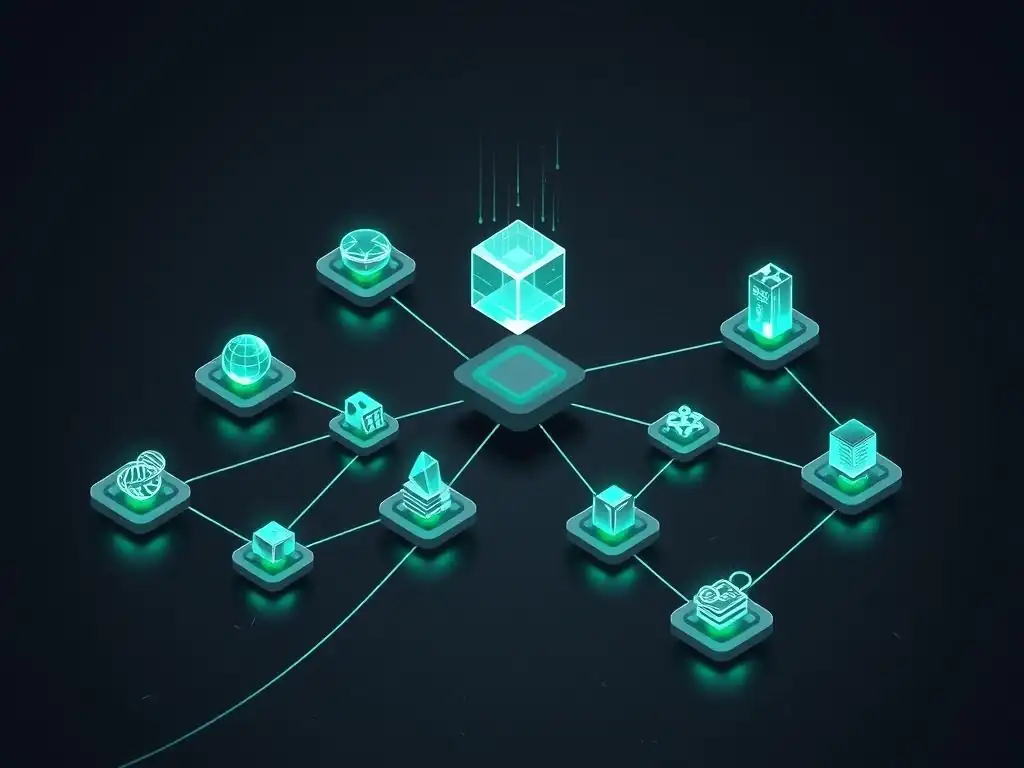
Funding Scientific Research with NFTs
Non-Fungible Tokens (NFTs), unique digital assets recorded on a blockchain, are finding unique applications within the DeSci ecosystem, particularly in the realm of DeSci blockchain research funding. NFTs can represent ownership or patronage of specific research outputs, datasets, or even future discoveries. For example, a research project could issue a limited series of NFTs, with proceeds going directly to fund the research. Buyers of these NFTs might receive exclusive updates, acknowledgments, or even fractional ownership rights in any resulting intellectual property.
This method provides a novel way for the public or specific communities to directly support research they care about, bypassing traditional funding gatekeepers. Projects like Vibe Bio have explored using NFTs to fund specific drug development research, offering community members a stake in potential future royalties. While still experimental, NFT-based funding represents an exciting frontier for DeSci blockchain research funding, connecting researchers directly with potential patrons and creating new incentive structures.
NFT-Based Ownership and Governance of Scientific Assets
Beyond funding, NFTs can represent ownership or access rights to various scientific assets in a decentralized manner. An NFT could represent ownership of a unique dataset, a specific research protocol, a piece of scientific equipment, or even a seat on a DAO's governance board related to a research project. This allows for granular control and transferability of scientific resources in a way that was previously difficult.
Consider a valuable dataset generated by a research lab. Instead of selling the entire dataset outright or licensing it through complex contracts, the lab could tokenize access to the dataset using NFTs. Different tiers of NFTs could grant different levels of access or usage rights. This creates a transparent, auditable record of ownership and access on the blockchain and allows the original creators to retain control while enabling broader utilization and potential revenue generation.
Specific DeSci Project Examples
Several projects are actively building the DeSci infrastructure and exploring these concepts. Molecule Protocol, for instance, focuses on creating decentralized marketplaces for research data and intellectual property, aiming to accelerate drug discovery by connecting researchers with funders and potential licensees. VitaDAO is a community-governed collective funding longevity research, using a DAO structure and tokens to govern funding decisions and potentially share in the IP generated.
ResearchHub, founded by Coinbase co-founder Brian Armstrong, provides a platform for researchers to share papers, data, and code, rewarding contributions with tokens. These examples demonstrate the diverse applications of blockchain in DeSci, from facilitating DeSci blockchain research funding and IP management to creating decentralized platforms for sharing and collaborating on scientific work, showcasing the nascent but growing ecosystem.
Challenges and Considerations for DeSci Adoption
Scalability and Interoperability of Blockchain Solutions
While promising, the widespread adoption of DeSci faces significant technical hurdles, particularly regarding blockchain scalability and interoperability. Storing large volumes of scientific data directly on current blockchains like Ethereum is often prohibitively expensive and slow due to transaction fees (gas costs) and throughput limitations. While Layer 2 solutions and alternative blockchain architectures are improving scalability, handling the massive datasets common in fields like genomics or particle physics remains a challenge.
Interoperability between different blockchain networks and traditional scientific infrastructure is also crucial. DeSci platforms need to seamlessly interact with existing databases, analytical tools, and institutional systems. Building bridges between decentralized ecosystems and the centralized world of universities, labs, and publishers requires significant development effort and standardization, which is still in its early stages.
Regulatory Landscape and Legal Considerations
The regulatory landscape surrounding blockchain, tokens, and decentralized autonomous organizations is still evolving and varies significantly across jurisdictions. This uncertainty poses challenges for DeSci projects, particularly concerning token issuance (which might be classified as securities), data privacy regulations (like GDPR), and the legal status and liability of DAOs. Navigating this complex environment requires careful legal consideration and could slow down adoption.
Furthermore, integrating blockchain into areas like intellectual property management raises novel legal questions about the enforceability of smart contracts representing IP rights and how decentralized ownership models interact with existing patent and copyright laws. As DeSci matures, clearer regulatory frameworks will be necessary to provide legal certainty for researchers and organizations operating within this space.
Ensuring Data Integrity and Security
While blockchain excels at ensuring the immutability of data recorded on the chain (or hashes linked to it), it does not automatically guarantee the accuracy or quality of the data before it is recorded. Bad or fraudulent data could still be uploaded to decentralized storage and linked to the blockchain. Developing robust mechanisms for data validation, verification, and curation within DeSci is essential to maintain the integrity of scientific outputs.
Security risks also exist, including smart contract vulnerabilities that could be exploited, or attacks on decentralized storage networks. Ensuring the long-term security and accessibility of valuable scientific data stored on decentralized networks requires continuous development and auditing of the underlying protocols. Building trust in the security and integrity of DeSci infrastructure is paramount for widespread adoption by the scientific community.
The Future of DeSci: A Vision for Decentralized Scientific Ecosystems
Predictions about the growth of DeSci
Predictions suggest significant growth in the DeSci movement over the next decade. While still in its early stages, the value proposition of addressing core issues in traditional science resonates with many researchers and innovators. We are likely to see increased experimentation with DeSci blockchain research funding models, potentially diverting a small but growing percentage of global research funding towards decentralized channels. Estimates on market size are speculative, but the potential impact on the multi-billion dollar global research ecosystem is substantial.
As blockchain technology matures, becoming faster, cheaper, and more user-friendly, the technical barriers to DeSci adoption will decrease. We can expect more specialized DeSci platforms catering to specific scientific disciplines, from biology to physics, and increased integration with existing scientific tools and workflows. The number of researchers actively participating in DeSci initiatives is projected to grow from a relatively small core group to potentially thousands or even tens of thousands globally as awareness and infrastructure improve.
The role of AI and other technologies in DeSci
The future of DeSci is likely to be synergistic with other emerging technologies, particularly Artificial Intelligence (AI). AI can play a crucial role in analyzing the vast datasets made accessible through decentralized storage, automating aspects of peer review, or even assisting in the design of experiments. Blockchain can provide a trusted layer for AI models, recording their training data, parameters, and outputs immutably, thus enhancing transparency and reproducibility in AI-assisted research.
Technologies like Zero-Knowledge Proofs (ZKPs) could also be vital, allowing researchers to prove the validity of their data or computations without revealing the underlying sensitive information, crucial for privacy-preserving research collaborations. The combination of decentralized infrastructure (DeSci), advanced computation (AI), and privacy-enhancing technologies (ZKPs) holds the potential to unlock entirely new paradigms for scientific discovery and collaboration.
The Impact of DeSci on Scientific Innovation
DeSci has the potential to profoundly impact scientific innovation by fostering a more open, collaborative, and efficiently funded research environment. By lowering barriers to access and participation, it can tap into a broader pool of talent and ideas globally. Innovative DeSci blockchain research funding mechanisms can support high-risk, high-reward projects that might not fit traditional funding criteria, potentially leading to breakthrough discoveries.
The emphasis on transparency and reproducibility can accelerate the validation and building upon existing research, reducing wasted effort. As decentralized communities form around specific research areas, they can leverage collective intelligence and resources more effectively. Ultimately, DeSci aims to create a scientific ecosystem that is more resilient, equitable, and dynamic, driving innovation at an unprecedented pace for the benefit of all.
Conclusion: DeSci and the Future of Science
Embracing Decentralization for a More Equitable and Efficient Scientific Future
Decentralized Science represents a bold vision for the future of scientific research, leveraging blockchain and Web3 technologies to address deep-seated issues within the traditional system. By promoting openness, transparency, and collaboration through decentralized infrastructure, DeSci aims to create a more equitable and efficient environment for generating and disseminating knowledge. The potential for DeSci blockchain research funding to democratize capital allocation and support a wider range of research is particularly significant.
While challenges related to scalability, regulation, and adoption remain, the foundational principles of DeSci offer compelling solutions to the reproducibility crisis, funding limitations, and access barriers that currently hinder scientific progress. Embracing decentralization holds the promise of unlocking new avenues for discovery and fostering a global scientific community that is more connected, collaborative, and impactful.
Participating in the DeSci Movement
The DeSci movement is still in its formative years, offering numerous opportunities for participation. Researchers can engage by sharing their work on decentralized repositories, experimenting with blockchain-based data management tools, or contributing to decentralized peer review processes. Technologists can contribute by building the necessary infrastructure, developing user-friendly platforms, and addressing scalability and interoperability challenges.
Individuals and organizations interested in supporting scientific progress can explore avenues for DeSci blockchain research funding through DAOs or tokenized research projects. By actively engaging with and contributing to the development of decentralized scientific ecosystems, stakeholders can help shape a future where scientific knowledge is more accessible, research is more reproducible, and innovation flourishes for the benefit of humanity.
Frequently Asked Questions
What is Decentralized Science (DeSci) and why is it considered revolutionary?
DeSci utilizes blockchain technology to decentralize scientific research, addressing issues like funding inefficiencies and lack of transparency. This fosters collaboration and accelerates discovery by providing more equitable access to resources and data.
How can blockchain improve scientific research funding through DeSci?
Blockchain offers new models for DeSci blockchain research funding by enabling direct funding from individuals and organizations, bypassing traditional gatekeepers. This reduces reliance on grants and incentivizes open-source contributions.
What are some examples of enterprise applications of blockchain within the scientific community?
Blockchain can be used for secure data storage, provenance tracking of research materials, and verifiable credentialing of researchers. This enhances data integrity and improves trust in scientific findings.
How does DeSci address the current regulatory landscape concerning scientific data and intellectual property?
DeSci aims to create more transparent and auditable systems for managing scientific data and intellectual property rights. This can lead to clearer ownership and facilitate easier collaboration while adhering to regulations.
What is the future potential of decentralized systems like DeSci in transforming scientific research?
The future holds the promise of faster scientific breakthroughs, increased public trust in research, and a more inclusive and equitable scientific ecosystem. DeSci could democratize access to knowledge and accelerate innovation globally.
Final Reflection: Embracing the Decentralized Future of Discovery
The exploration of Decentralized Science (DeSci) and its potential to revolutionize scientific research, particularly through DeSci blockchain research funding, reveals a paradigm shift that is already underway. The limitations of traditional funding models, the promise of increased transparency, and the potential for accelerated discovery are not just theoretical concepts; they are actively shaping the future of how science is conducted and supported.
The impact of DeSci extends far beyond simply securing research grants. It fosters a more inclusive and collaborative environment, empowering researchers and democratizing access to knowledge. This shift towards a decentralized model resonates deeply with the inherent spirit of scientific inquiry – a relentless pursuit of truth, unburdened by unnecessary constraints. Science knows no country, because knowledge belongs to humanity, and is the torch which illuminates the world.
- Louis Pasteur. This quote encapsulates the core principle of DeSci, where collaboration and shared knowledge transcend geographical and institutional boundaries.
As we stand at the cusp of this scientific revolution, it is crucial to embrace the potential of DeSci and actively participate in shaping its future. Consider how you can contribute to this movement – whether it's by supporting DeSci projects, advocating for decentralized funding models, or simply engaging in open and collaborative scientific discourse. Let us collectively build a future where scientific discovery is driven by curiosity, collaboration, and the unwavering pursuit of knowledge for the benefit of all.
Ignite the Revolution: Dive Deeper into Decentralized Science!
Thank you for exploring the potential of blockchain in transforming scientific research! You've just unlocked insights into a new era of collaborative, transparent, and impactful discovery. Now, it's time to become an active participant in the DeSci movement.
Here's how you can get involved:
- Fund the Future: Explore DeSci projects actively seeking funding and contribute directly to the scientific breakthroughs you believe in. Support researchers breaking free from traditional constraints and fostering open science.
- Join the Conversation: Engage in discussions on DeSci forums and platforms like VitaDAO or LabDAO. Share your perspectives, contribute ideas, and connect with fellow enthusiasts and researchers.
- Consider this: What specific scientific field do you believe would benefit most from the transparency and collaborative nature of DeSci, and how could you see blockchain being specifically applied to that field's challenges?
Leave a Reply