
The Global Impact of Web3: Transforming Industries and Societies Worldwide

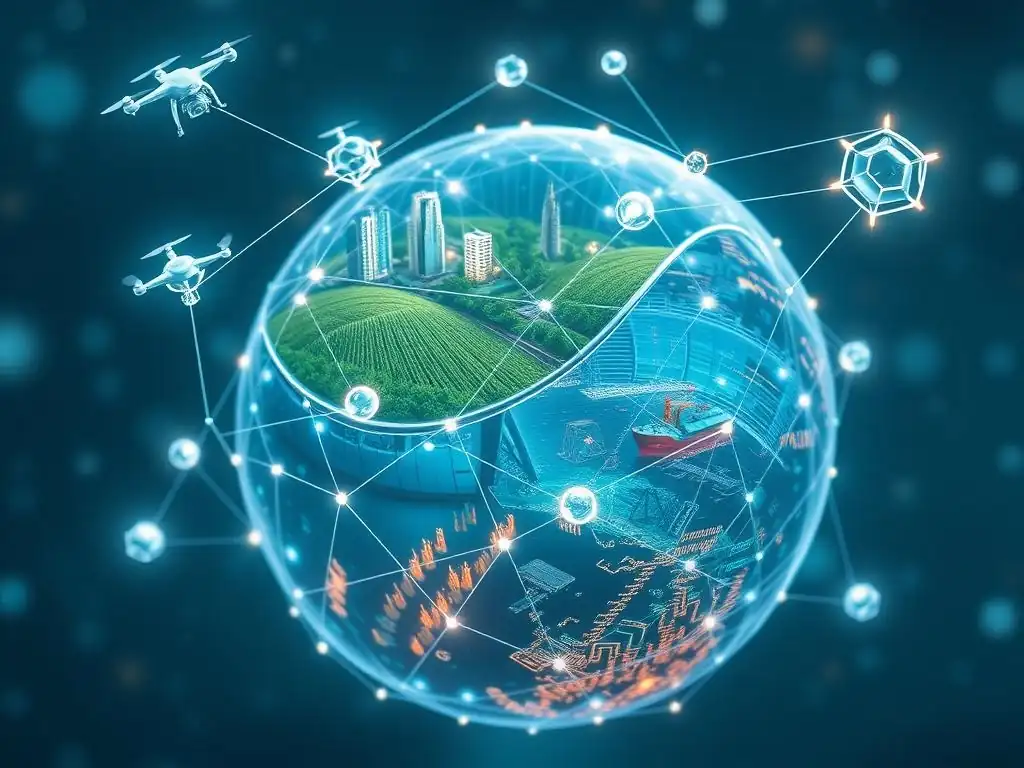
Welcome to Blockchain Trends, your compass navigating the revolutionary landscape of blockchain technology! Forget just cryptocurrencies; we're diving deep into the transformative power of decentralized systems. Ever wondered how Web3 decentralized industry applications are poised to reshape global economies and societies? Prepare to have your understanding challenged and your curiosity ignited as we explore the cutting-edge applications and future possibilities that blockchain unlocks. Dive in and discover how this technology is building a more decentralized and equitable future.
The Global Impact of Web3: Transforming Industries and Societies Worldwide
- Introduction: Understanding the Web3 Revolution and its Global Reach
- Web3 and the Transformation of Key Industries
- Web3's Impact on Societies Worldwide
- Challenges and Opportunities in the Global Adoption of Web3
- Web3 Use Cases Across Different Regions
- The Future of Web3: Predictions and Potential Scenarios
- Conclusion: Embracing the Transformative Potential of Web3 for a Decentralized Future
-
Frequently Asked Questions
- What are some key Web3 decentralized industry applications currently being implemented?
- How does Web3 differ from Web 2.0 in terms of data ownership and control?
- What role does regulation play in the development and adoption of Web3 technologies?
- What are the potential societal benefits of transitioning to a Web3-based system?
- What are the main challenges hindering the widespread adoption of Web3?
- Final Reflection: Embracing the Decentralized Future
- Unveil the Future: Become a Web3 Pioneer!
Introduction: Understanding the Web3 Revolution and its Global Reach
Defining Web3: Decentralization, Blockchain, and the Semantic Web
Web3 represents the next evolutionary phase of the internet, built upon the foundational principles of decentralization, transparency, and user ownership. Unlike the current Web2, dominated by centralized platforms that control user data and content, Web3 leverages technologies like blockchain, peer-to-peer networks, and cryptographic protocols to shift power away from large corporations and back to individuals.
At its core, Web3 envisions an internet where identity, data, and assets are owned and controlled by users, enabling a more open, secure, and equitable digital landscape. This paradigm shift is fueled by decentralized applications (dApps) that run on distributed ledgers, ensuring immutability and censorship resistance.
Beyond decentralization, Web3 often incorporates elements inspired by the concept of the Semantic Web, aiming to make internet data machine-readable and interconnected in a meaningful way. While the full vision of the Semantic Web from the early 2000s hasn't fully materialized, Web3's focus on structured data representation through tokens, smart contracts, and decentralized identifiers contributes to building a web where information is not just linked but also understood by machines, facilitating more intelligent and automated interactions. This combination of decentralized infrastructure and semantic understanding is key to unlocking the potential of Web3 decentralized industry applications across various sectors.
The Expanding Global Footprint of Web3 Technology
The adoption and development of Web3 technology are no longer confined to niche tech communities; they are expanding globally, influencing diverse economies and cultures. From vibrant developer hubs in Europe and North America to rapidly growing user bases in Asia, Latin America, and Africa, the reach of Web3 is becoming truly worldwide.
This global expansion is driven by the promise of solving real-world problems, offering new economic opportunities, and providing alternatives to existing centralized systems. Governments, corporations, and startups across continents are exploring and implementing Web3 solutions, ranging from digital currencies and asset tokenization to decentralized identity systems and supply chain tracking.
This increasing global footprint is evident in various metrics, such as the rising number of blockchain developers worldwide, the total value locked in decentralized finance protocols reaching tens of billions of dollars, and the explosion in popularity of non-fungible tokens (NFTs) across different markets. While regulatory clarity varies significantly from region to region, the underlying trend shows a persistent interest and investment in Web3 infrastructure and applications. The diverse applications being built demonstrate how Web3 is being tailored to meet local needs and address specific challenges, highlighting its adaptability and potential for widespread adoption.
Web3 and the Transformation of Key Industries
Decentralized Finance (DeFi): Revolutionizing Global Financial Systems
Decentralized Finance (DeFi) is perhaps the most prominent and rapidly growing application of Web3, aiming to recreate traditional financial services like lending, borrowing, trading, and insurance using blockchain technology and smart contracts. By removing intermediaries such as banks and brokers, DeFi protocols offer greater accessibility, transparency, and efficiency. Users can interact directly with these protocols through decentralized applications, enabling peer-to-peer transactions and automated financial operations available 24/7 globally. This open and permissionless nature is fundamentally challenging the established financial order, offering a compelling alternative, especially in regions with limited access to traditional banking.
The impact of DeFi on global financial systems is substantial. The total value locked (TVL) in various DeFi protocols, representing the total value of assets staked within them, has fluctuated but reached significant peaks, indicating substantial user adoption and capital inflow.
Platforms like Uniswap for decentralized exchange, Aave and Compound for lending and borrowing, and MakerDAO for stablecoin issuance demonstrate the breadth of services available. These Web3 decentralized industry applications are not just replicating existing services but are also creating entirely new financial primitives and markets, such as yield farming and liquidity mining, that were previously unimaginable within traditional finance.
The Rise of Decentralized Lending and Borrowing Platforms
Decentralized lending and borrowing platforms are a cornerstone of the DeFi ecosystem, allowing users to lend out their digital assets to earn interest or borrow assets by providing collateral, all without relying on traditional banks. Protocols such as Aave and Compound operate through smart contracts that automatically manage loans, collateral, and interest rates based on supply and demand algorithms. This automated and transparent process reduces operational costs and eliminates the need for credit checks in the traditional sense, as loans are typically over-collateralized to mitigate risk.
These platforms have unlocked significant liquidity within the crypto space and provided global access to credit and yield-generating opportunities. For instance, a user in one country can lend stablecoins to a borrower in another country instantly and permissionlessly. While risks exist, such as smart contract vulnerabilities or liquidation risks during volatile market conditions, the efficiency and accessibility offered by decentralized lending and borrowing represent a significant advancement in financial technology, providing a powerful Web3 decentralized industry application for capital deployment and management.
Cross-Border Payments and Remittances with Web3
Cross-border payments and remittances have historically been slow, expensive, and complex, often involving multiple intermediaries and high fees. Web3 technologies, particularly stablecoins and blockchain networks like Ethereum or Solana, offer a compelling alternative. By using stablecoins pegged to major fiat currencies, individuals and businesses can send value across borders quickly and at a fraction of the cost compared to traditional methods like wire transfers or money transfer services. Transactions settle much faster, often within minutes, regardless of geographical location or time zones.
Several Web3 decentralized industry applications and protocols are facilitating this transformation. While not purely decentralized, projects leveraging blockchain infrastructure for faster and cheaper payments are gaining traction. The underlying technology allows for direct peer-to-peer value transfer, bypassing correspondent banks and reducing friction. This is particularly impactful for remittances sent by migrant workers to their families in developing countries, where traditional fees can significantly erode the value transferred. Web3 offers the potential for greater financial inclusion and economic empowerment by making cross-border transactions more efficient and affordable.
Supply Chain Management: Enhancing Transparency and Traceability
Supply chain management is another industry ripe for disruption by Web3 technologies, primarily through the application of blockchain for enhanced transparency and traceability. Complex global supply chains often suffer from a lack of visibility, making it difficult to track goods, verify authenticity, and identify sources of issues like delays or ethical concerns. Blockchain provides a shared, immutable ledger that can record every step a product takes, from raw material sourcing to manufacturing, shipping, and final delivery to the consumer. Each transaction or movement can be logged as a block on the chain, creating a verifiable and tamper-proof history.
This enhanced transparency benefits all stakeholders in the supply chain. Consumers can potentially scan a QR code on a product to see its entire history, verifying its origin, ethical sourcing, and authenticity. Businesses can gain real-time insights into their supply chain, identify bottlenecks more quickly, and improve efficiency. Regulators can easily audit supply chain processes for compliance. The immutability of the blockchain ensures that once data is recorded, it cannot be altered, building trust among participants who may not otherwise trust each other. This makes it a powerful Web3 decentralized industry application for improving operational integrity and accountability.
Tracking Products from Origin to Consumer using Blockchain
Implementing blockchain in supply chains allows for granular, step-by-step tracking of products. When raw materials are sourced, their details can be recorded on the blockchain. As they move through manufacturing plants, distribution centers, and logistics providers, each transition point is logged. For example, a batch of coffee beans could have its origin farm, processing method, export details, import customs, roasting facility, and retail destination all recorded on a decentralized ledger. This creates a comprehensive digital trail that mirrors the physical journey of the product.
Major companies have piloted blockchain solutions for supply chain tracking. While specific enterprise solutions may not be entirely public Web3 applications, they leverage the core principles of decentralized ledgers for internal or consortium use. For instance, projects tracking high-value goods like diamonds, pharmaceuticals, or luxury items use blockchain to prove provenance and combat counterfeiting. Food supply chains, like tracking seafood or produce, also benefit by quickly identifying the source of contamination in case of an outbreak, potentially saving lives and reducing economic losses. This level of tracking provides unprecedented visibility compared to traditional paper-based or fragmented digital systems.
Reducing Fraud and Counterfeiting with Decentralized Ledgers
Fraud and counterfeiting are significant issues across many industries, costing businesses billions annually and, in some cases, posing serious health risks (e.g., counterfeit pharmaceuticals). Decentralized ledgers provide a robust mechanism to combat these problems by creating an immutable record of authenticity and ownership. When a genuine product is manufactured, it can be associated with a unique digital token or identifier recorded on the blockchain. As the product moves through the supply chain, its transfers of ownership or location updates are also logged on the chain.
Consumers or businesses can then verify the authenticity of a product by checking its unique identifier against the blockchain record. If the product's history on the chain doesn't match its physical presence or if multiple items claim the same unique identifier, it's likely a counterfeit. This system is particularly effective for goods where authenticity is paramount.
The decentralized nature of the ledger makes it extremely difficult for counterfeiters to falsify records, as they would need to compromise a distributed network rather than a single database. This application of Web3 in supply chain security is a critical tool for protecting brands and consumers alike.
Healthcare: Improving Data Security and Patient Empowerment
The healthcare industry faces significant challenges related to data security, interoperability, and patient access to their own medical information. Web3 technologies offer potential solutions by providing a secure, decentralized infrastructure for managing sensitive health data. Instead of patient records being fragmented across various centralized hospital or clinic databases, often with varying security standards, Web3 can enable a system where patients have more control over their health data, deciding who can access it and under what conditions.
Using blockchain, a secure, encrypted record of a patient's medical history, including visits, diagnoses, treatments, and prescriptions, could be created. This record wouldn't necessarily store all the sensitive data directly on the public blockchain but could store encrypted hashes or pointers to data stored securely off-chain, with access controlled by the patient's private key. This approach enhances privacy and security compared to centralized systems, which are often attractive targets for cyberattacks.
Furthermore, smart contracts could automate data sharing agreements between patients, doctors, and researchers, streamlining processes while maintaining privacy. This potential for secure, patient-centric data management makes healthcare a vital area for Web3 decentralized industry applications.
Secure Storage and Sharing of Medical Records on Web3
Storing and sharing medical records securely is paramount. Web3 approaches propose models where patient data is encrypted and stored either on decentralized storage networks (like IPFS or Filecoin) or in secure, personal data vaults. The blockchain then acts as an immutable index and access control layer. The patient, holding the private key associated with their decentralized identity, grants or revokes access permissions to specific healthcare providers, specialists, or family members via smart contracts.
This system addresses current issues where patients struggle to gather their complete medical history from different providers or where sharing data for second opinions is cumbersome and insecure. It also mitigates the risk of large-scale data breaches that plague centralized healthcare databases. While still in early stages of adoption, pilot projects are exploring how patients can own and manage their health data using decentralized identifiers and verifiable credentials, demonstrating a shift towards a patient-empowered model enabled by Web3 technology.
Decentralized Clinical Trials and Research
Clinical trials and medical research are often complex, costly, and can be hampered by data silos and lack of transparency. Web3 offers tools to improve the efficiency, integrity, and collaboration within the research ecosystem. Blockchain can provide an immutable ledger to record trial protocols, patient consent, data collection points, and results, ensuring data integrity and preventing tampering. Smart contracts can automate payments to participants or researchers based on predefined milestones.
Furthermore, decentralized identity and secure data sharing mechanisms can enable researchers to access aggregated, anonymized, or permissioned patient data across different institutions more easily, while respecting individual privacy. This could accelerate research, particularly for rare diseases where data is scattered. Web3 can also facilitate tokenized incentives for participation in trials or for sharing health data for research purposes, creating new models for funding and collaboration in medical science. The potential for more transparent, secure, and collaborative research makes this a promising Web3 decentralized industry application.
The Creator Economy: Empowering Artists and Content Creators
The rise of the creator economy has highlighted challenges faced by artists, musicians, writers, and other content creators on centralized platforms, including unfair revenue splits, lack of ownership over their work, and opaque monetization models. Web3 offers powerful tools to address these issues, enabling creators to connect directly with their audience, own their digital assets, and earn revenue in more equitable ways. Non-Fungible Tokens (NFTs) are a prime example, providing a way to tokenize unique digital creations and establish verifiable ownership on a blockchain.
Beyond NFTs, decentralized social media platforms, decentralized autonomous organizations (DAOs) for creative projects, and token-gated communities are emerging, giving creators more control and fostering direct relationships with their fans. This shift empowers creators to capture more value from their work, build independent businesses, and reduce reliance on intermediaries that often take a significant cut of their earnings or dictate terms of service. The Web3 decentralized industry applications in this space are fundamentally reshaping how digital content is created, distributed, and monetized.
NFTs and the Monetization of Digital Art and Collectibles
Non-Fungible Tokens (NFTs) have revolutionized how digital art, music, videos, and collectibles are valued and traded. An NFT is a unique cryptographic token on a blockchain that represents ownership of a specific digital or physical asset. For digital art, this means an artist can mint an NFT linked to their digital file, establishing verifiable ownership and authenticity. This allows creators to sell digital art as unique pieces, similar to how physical paintings are sold.
The impact has been significant, with individual NFTs selling for millions of dollars and platforms like OpenSea facilitating billions in trading volume. Artists can earn royalties automatically through smart contracts every time their NFT is resold on a secondary market, creating a continuous revenue stream that is often absent in traditional art markets. This model has expanded beyond art to music (tokenized albums or songs), gaming (in-game assets), and collectibles, providing creators with powerful new ways to monetize their work directly and globally. This is a prime example of how Web3 decentralized industry applications are creating new economic models.
Decentralized Social Media Platforms and Content Ownership
Traditional social media platforms are centralized, controlling user data, content distribution algorithms, and monetization. Web3 is inspiring the development of decentralized social media alternatives where users own their data and have more control over their content and the platform's governance. Protocols like Lens Protocol or applications like DeSo (Decentralized Social) aim to build social graphs and content feeds on decentralized infrastructure.
In these Web3 models, users' profiles, posts, and interactions are stored on decentralized ledgers or storage systems, not controlled by a single company. Creators can potentially earn directly from their content through token-based rewards or by charging for premium content access via tokens. Users could also have a say in how the platform is governed through decentralized autonomous organizations (DAOs). This shift aims to create a more open, censorship-resistant, and user-centric social media landscape, fundamentally changing the relationship between users, creators, and platforms.
Web3's Impact on Societies Worldwide
Fostering Financial Inclusion in Underserved Communities
Financial exclusion is a major global challenge, with billions of people lacking access to basic financial services like bank accounts, credit, or insurance. Web3 technologies offer a potential pathway to greater financial inclusion, particularly in developing economies. All that is typically required to access decentralized finance (DeFi) applications is a smartphone and internet connection. Users can create a digital wallet in minutes and start accessing services like saving, lending, borrowing, and sending money without needing to go through traditional financial institutions or meet stringent requirements.
DeFi protocols are permissionless, meaning anyone can participate regardless of their location, income level, or credit history (as lending is often collateralized). This opens up opportunities for individuals and small businesses in regions with underdeveloped banking infrastructure or high transaction costs. Stablecoins, in particular, provide a stable store of value and medium of exchange that is easily transferable across borders, offering a more reliable alternative to volatile local currencies in some contexts. The potential for Web3 decentralized industry applications to provide accessible financial tools is significant for global development.
Providing Access to Financial Services through DeFi
DeFi platforms provide a suite of financial services that mirror and, in some cases, improve upon traditional offerings. Individuals in underserved communities can use DeFi protocols to:
- Store value in stablecoins, protecting against local currency inflation.
- Earn yield on their savings by lending assets to others on decentralized platforms.
- Borrow funds for personal or business needs by collateralizing digital assets.
- Access decentralized exchanges to trade assets.
- Participate in peer-to-peer insurance pools.
These services are accessible with minimal barriers to entry compared to opening a traditional bank account or securing a loan. For example, individuals can use mobile wallets to interact with DeFi protocols directly from their phones, enabling financial activities that were previously unavailable to them.
The transparency of blockchain also means that all transactions are publicly verifiable on the ledger (though participant identities may be pseudonymous), reducing opportunities for corruption that can plague traditional financial systems in some regions. While challenges like digital literacy and internet access persist, the fundamental accessibility of DeFi provides a powerful tool for empowering individuals who are currently outside the formal financial system.
Empowering Small Businesses in Developing Countries
Small and medium-sized enterprises (SMEs) are the backbone of many developing economies but often struggle to access capital and affordable financial services. Web3 can provide new avenues for these businesses. Decentralized lending platforms can potentially offer alternative sources of funding, though the requirement for crypto collateral can be a barrier. However, innovative models are emerging, exploring reputation-based lending or using tokenized real-world assets as collateral.
Furthermore, the ability to receive payments quickly and cheaply via stablecoins or other cryptocurrencies can significantly benefit small businesses engaged in international trade or selling to customers abroad. The transparency of blockchain transactions can also simplify accounting and build trust with suppliers and customers. Projects are exploring tokenizing assets like invoices or future revenues, potentially allowing SMEs to access financing by selling these tokens on decentralized markets. These Web3 decentralized industry applications have the potential to unlock economic opportunities and foster growth for SMEs in regions where traditional finance falls short.
Enhancing Data Privacy and Security for Individuals
In the Web2 era, individuals have largely forfeited control over their personal data to centralized corporations in exchange for free services. This has led to concerns about privacy breaches, data misuse, and surveillance. Web3 offers a fundamental shift by empowering individuals to own and control their digital identity and data. Through technologies like decentralized identifiers (DIDs) and verifiable credentials, users can manage their personal information and decide precisely who they share it with and for how long, without relying on a central authority.
Instead of logging into countless websites using a centralized identity provider (like Google or Facebook), users can employ a self-sovereign identity managed on a decentralized network. When a service requires verification (e.g., age, proof of address), the user can present a cryptographically secured credential issued by a trusted entity (e.g., a government or university) without revealing unnecessary personal details.
This granular control over data sharing significantly enhances privacy and security, reducing the digital footprint left across the web and mitigating the risks associated with centralized data storage. This focus on user sovereignty is a core promise of Web3 decentralized industry applications.
Control Over Personal Data in the Web3 Ecosystem
Web3's architecture fundamentally changes the relationship between users and their data. In a fully realized Web3 environment, personal data is not stored in centralized silos owned by platforms but is instead controlled by the individual. Users hold the private keys that grant access to their encrypted data, which might be stored on decentralized storage networks. When a decentralized application (dApp) needs access to certain data, it must request permission from the user.
This model contrasts sharply with the current internet, where platforms collect vast amounts of user data, often without explicit, granular consent, and use it for advertising or other purposes. In Web3, consent is explicit and manageable by the user. For example, a health dApp might request access to specific medical records, and the user can approve or deny that specific request. This puts the individual in the driver's seat regarding their digital information, offering a level of control that is largely absent in Web2.
Decentralized Identity Management Systems
Decentralized Identity (DID) systems are a cornerstone of the privacy-preserving features of Web3. A DID is a persistent, globally unique identifier that does not require a centralized registration authority. DIDs are typically anchored on a decentralized ledger or network, ensuring their immutability and censorship resistance. Users control their DIDs and the cryptographic keys associated with them.
Verifiable credentials (VCs) work in tandem with DIDs. A VC is a tamper-evident credential (like a digital driver's license or university degree) issued by a trusted party (the issuer) to a subject (the user), which the user can then present to a verifier. The verifier can cryptographically verify the credential's authenticity and integrity without needing to contact the issuer directly or access a centralized database.
This allows for secure and private verification of attributes. This system eliminates the need for users to share sensitive underlying data (like sharing your birth date just to prove you are over 18) and reduces the honey pot risk associated with centralized identity databases. This is a crucial Web3 decentralized industry application for building trust and privacy online.
Promoting Transparency and Accountability in Governance
Web3 technologies, particularly blockchain and decentralized autonomous organizations (DAOs), offer innovative models for governance that prioritize transparency, immutability, and community participation. Traditional governance structures, whether in corporations or political systems, can suffer from opacity, centralized control, and limited citizen or shareholder involvement. Web3 provides tools to create systems where rules are encoded in public smart contracts, decisions are recorded on immutable ledgers, and participation is open to token holders.
This potential for increased transparency and accountability is being explored in various contexts. Within the crypto space, many decentralized protocols and platforms are governed by their communities through DAOs, where token holders vote on proposals regarding the protocol's future development, treasury allocation, or parameter changes. Extending these principles to broader societal or corporate governance could lead to more democratic, efficient, and less corrupt systems. This application of Web3 decentralized industry applications holds promise for reforming institutional decision-making processes.
Blockchain-Based Voting Systems
Blockchain technology has the potential to revolutionize voting systems by increasing transparency, security, and accessibility while reducing the risk of fraud. A blockchain-based voting system would record each vote as a transaction on an immutable ledger. This ensures that once a vote is cast and recorded, it cannot be altered or removed. The public nature of the ledger (while preserving voter anonymity through cryptography) allows anyone to verify that their vote was counted and that the total vote count is accurate.
Such systems could address concerns about electoral integrity, particularly in regions where trust in traditional voting processes is low. While implementing secure and truly anonymous blockchain voting for large-scale political elections faces significant technical and social challenges (e.g., ensuring voter anonymity while preventing double voting, usability for all citizens), smaller-scale applications within organizations, shareholder meetings, or community groups are more feasible and are being explored. The core principles of verifiable, immutable record-keeping offered by blockchain are highly relevant for improving electoral processes.
Decentralized Autonomous Organizations (DAOs) and Community Governance
Decentralized Autonomous Organizations (DAOs) are organizations whose rules are encoded as computer programs, typically on a blockchain, making them transparent and self-executing. Decisions within a DAO are often made through token-based voting, where participants who hold the DAO's governance tokens can propose and vote on initiatives. This structure allows for decentralized, community-driven governance without the need for a central authority or traditional hierarchical management.
DAOs are being used to govern Web3 protocols, manage decentralized treasuries holding significant assets (some DAOs control treasuries worth billions), fund projects, and even manage decentralized communities or investment clubs. This model offers a way for stakeholders to have a direct say in the operation and future of the systems they use or invest in. While challenges exist, such as achieving sufficient participation, preventing plutocracy (where wealthy token holders dominate), and navigating legal uncertainties, DAOs represent a powerful Web3 decentralized industry application for creating more inclusive, transparent, and resilient forms of organization and governance.
Challenges and Opportunities in the Global Adoption of Web3
Regulatory Hurdles and Legal Frameworks for Web3
One of the most significant challenges facing the global adoption of Web3 is the lack of clear and consistent regulatory frameworks across different jurisdictions. Governments worldwide are grappling with how to classify and regulate various Web3 components, including cryptocurrencies, stablecoins, NFTs, DeFi protocols, and DAOs. The decentralized and borderless nature of Web3 makes it difficult to apply existing regulations designed for centralized entities within national boundaries. Uncertainty around legal status creates risks for businesses, developers, and users, potentially stifling innovation and investment.
However, this challenge also presents an opportunity. As regulators gain a better understanding of Web3 technology, they have the chance to develop forward-thinking frameworks that protect consumers and ensure financial stability without stifling innovation. Proactive engagement between the Web3 community and policymakers is crucial to developing regulations that are tailored to the unique characteristics of decentralized systems. Some jurisdictions are beginning to establish clearer guidelines, aiming to attract Web3 businesses and talent, indicating a potential path forward for global regulatory clarity.
Scalability and Performance Limitations of Blockchain Technology
While blockchain provides the foundational layer for Web3, many existing blockchain networks face challenges with scalability and performance. Public blockchains like Ethereum, while robust and decentralized, have historically struggled with processing a large volume of transactions quickly and cheaply, leading to network congestion and high transaction fees (gas fees). This can hinder the adoption of Web3 decentralized industry applications that require high throughput and low costs, such as micro-payments or real-time gaming.
Significant research and development are ongoing to address these scalability issues. Solutions like Layer 2 scaling protocols (e.g., rollups on Ethereum), alternative consensus mechanisms (like Proof-of-Stake used by Ethereum 2.0), and entirely new blockchain architectures (like Solana or Polkadot) aim to increase transaction speed and capacity. Overcoming these technical limitations is crucial for Web3 to handle the demands of mainstream adoption and support complex, high-volume decentralized applications across various industries.
Addressing Security Risks and Vulnerabilities in Decentralized Systems
Although blockchain is often touted for its security and immutability, Web3 systems are not immune to security risks. Smart contracts, the self-executing code that powers many dApps and DeFi protocols, can contain bugs or vulnerabilities that malicious actors can exploit, leading to significant financial losses. The decentralized nature can also make it challenging to respond to exploits or recover stolen funds compared to centralized systems with clear points of control. Phishing attacks targeting users' private keys and exploits of cross-chain bridges are also significant threats.
Ensuring the security and robustness of Web3 decentralized industry applications requires rigorous smart contract auditing, formal verification methods, and best practices in decentralized application development. Educating users about security risks, such as protecting their private keys and recognizing phishing attempts, is also paramount. While the decentralized nature can introduce new security paradigms, continuous efforts are needed to identify and mitigate vulnerabilities to build trust and ensure the safe growth of the Web3 ecosystem.
Overcoming the Digital Divide and Ensuring Equitable Access to Web3
The potential of Web3 to foster financial inclusion and empower individuals is significant, but its benefits can only be realized if access is equitable. The digital divide – the gap between those who have access to computing and the internet and those who do not – remains a major barrier to global Web3 adoption. Access to reliable internet connectivity, affordable smartphones or computers, and the necessary digital literacy are prerequisites for participating in the Web3 ecosystem.
Efforts to bridge the digital divide are essential for ensuring that Web3 does not exacerbate existing inequalities. This includes initiatives to expand internet infrastructure in underserved areas, develop user-friendly Web3 interfaces that are accessible to individuals with varying levels of technical expertise, and provide education on digital literacy and the principles of Web3. Ensuring that Web3 decentralized industry applications are designed with accessibility and inclusivity in mind is crucial for realizing their potential to benefit societies worldwide, not just the digitally privileged.
Web3 Use Cases Across Different Regions
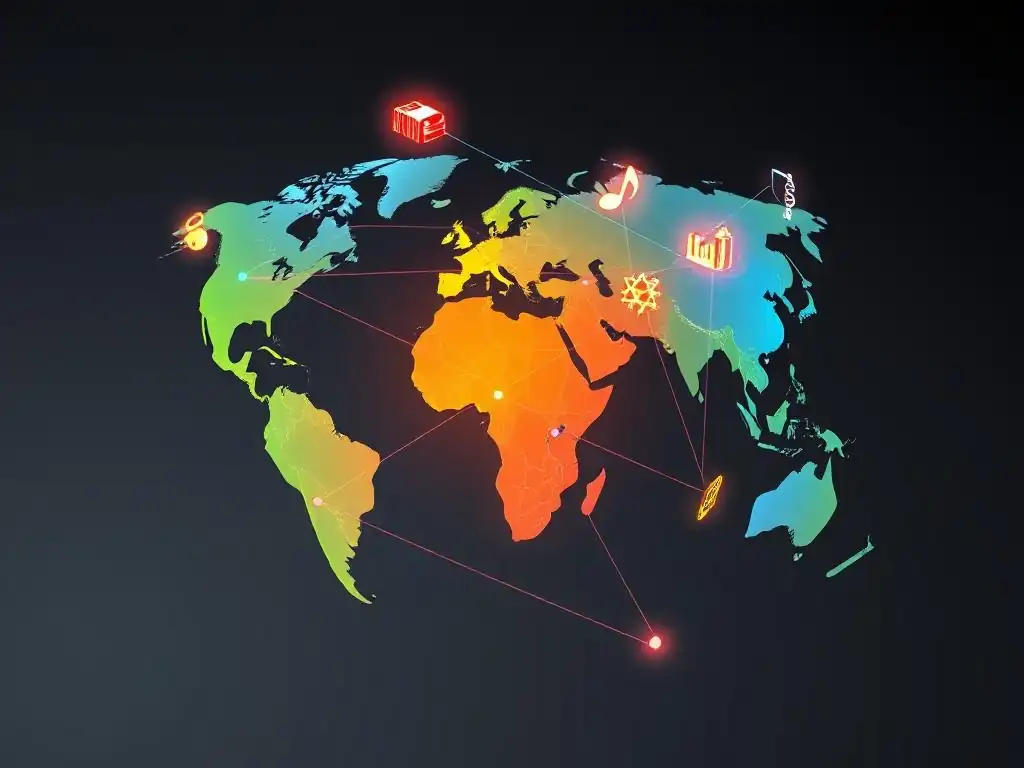
Web3 Innovation in North America
North America, particularly the United States and Canada, has been a hotbed for Web3 innovation, especially in the areas of infrastructure development, venture capital investment, and the growth of the creator economy via NFTs. Silicon Valley and other tech hubs have seen the emergence of numerous blockchain protocols, DeFi platforms, and Web3 tooling companies. Significant venture capital funding has flowed into Web3 startups in the region, driving rapid development and talent acquisition.
Examples include major blockchain networks developed by teams in North America, leading DeFi protocols, and prominent NFT marketplaces. The region has also been influential in setting trends in areas like tokenomics and DAO governance. While facing evolving regulatory landscapes, North America continues to be a major driver of research, development, and investment in Web3 decentralized industry applications, influencing global trends in the space.
Web3 Development in Europe
Europe has demonstrated strong interest and development in Web3, with significant activity across various countries. Switzerland has positioned itself as a "Crypto Valley," attracting blockchain foundations and companies. Germany has been active in exploring tokenized securities and digital assets. The UK has a vibrant fintech scene that is increasingly incorporating Web3 elements. Countries like France, the Netherlands, and those in Eastern Europe also have active developer communities and growing adoption.
European initiatives often focus on regulatory clarity (like MiCA - Markets in Crypto-Assets regulation), enterprise blockchain solutions, and digital identity projects. While perhaps less focused on the consumer-facing speculative aspects seen elsewhere, Europe is steadily building foundational Web3 infrastructure and exploring practical Web3 decentralized industry applications for finance, logistics, and public services.
Web3 Growth in Asia-Pacific
The Asia-Pacific region is a massive and diverse market with rapidly growing Web3 adoption and innovation. Countries like South Korea, Singapore, Hong Kong, and Japan have been early movers in cryptocurrency trading and blockchain technology. China has focused on developing its own state-backed blockchain initiatives and digital currency, while also seeing private sector interest in permissible Web3 applications. Southeast Asia, with its young, mobile-first population, is seeing rapid adoption of Web3 gaming, NFTs, and mobile-first DeFi applications.
The region is characterized by a high volume of cryptocurrency trading, significant activity in the NFT and GameFi sectors, and growing interest from traditional financial institutions and tech companies exploring blockchain and Web3. Regulatory approaches vary widely, but the sheer size of the market and the tech-savviness of the population make Asia-Pacific a critical region for the global growth of Web3 decentralized industry applications.
Web3 Adoption in Latin America
Latin America is emerging as a significant region for Web3 adoption, particularly driven by practical use cases addressing local economic challenges. Countries like El Salvador have adopted Bitcoin as legal tender (though this is a specific use case not solely Web3), while others like Brazil, Argentina, and Mexico are seeing increased use of stablecoins for remittances and as a hedge against currency volatility. DeFi is gaining traction as an alternative to traditional banking for individuals and businesses facing high inflation or limited access to credit.
The region has a growing community of Web3 developers and entrepreneurs building solutions tailored to local needs, such as payment systems, fractional ownership of assets, and supply chain transparency for regional products. The combination of economic necessity and increasing digital connectivity is fueling the adoption of Web3 decentralized industry applications that offer tangible benefits to the population.
Web3 Initiatives in Africa
Africa presents a compelling case for the potential of Web3 to drive financial inclusion and economic empowerment. With a large unbanked population and high costs associated with traditional remittances, cryptocurrencies and stablecoins are finding real-world use cases for payments and value transfer. Web3 is also being explored for applications beyond finance, such as land registries, identity management, and supply chain tracking for agriculture and minerals.
Countries like Nigeria, Kenya, and South Africa have seen significant grassroots adoption of crypto and growing interest in building Web3 projects. While challenges related to internet access, electricity infrastructure, and digital literacy remain, the potential for Web3 decentralized industry applications to leapfrog legacy systems and provide essential services to previously excluded populations is immense, making Africa a key frontier for Web3's global impact.
The Future of Web3: Predictions and Potential Scenarios
The Convergence of Web3 with Other Emerging Technologies
The future of Web3 is likely to involve significant convergence with other cutting-edge technologies. Artificial Intelligence (AI), for instance, could be used to analyze data on decentralized ledgers or manage complex DAO operations, while Web3 could provide a decentralized, verifiable layer for AI training data and model provenance. The Internet of Things (IoT) can benefit from Web3 by using blockchain for secure device identity, data sharing, and automated micro-payments between devices.
Augmented Reality (AR) and Virtual Reality (VR), foundational to the concept of the Metaverse, are intrinsically linked with Web3. Web3 provides the necessary infrastructure for digital ownership (NFTs for virtual assets), decentralized identity for avatars, and open, interoperable virtual economies powered by tokens and smart contracts. This convergence across AI, IoT, AR/VR, and Web3 will create increasingly sophisticated and interconnected decentralized applications and digital experiences.
The Evolution of Decentralized Governance Models
Decentralized Autonomous Organizations (DAOs) are still in their early stages, and their governance models are continuously evolving. Future developments are likely to address current challenges such as voter apathy, the influence of large token holders, and the complexity of proposal processes. We may see the emergence of more sophisticated governance mechanisms, potentially incorporating elements of liquid democracy, quadratic voting, or reputation-based systems alongside token voting.
The scope of DAOs is also expected to expand beyond governing protocols to managing decentralized networks, coordinating large-scale projects, and potentially even facilitating new forms of collective ownership and decision-making in the physical world. As Web3 decentralized industry applications mature, the governance structures that underpin them will become increasingly important for ensuring their long-term sustainability, fairness, and resilience.
The Role of Web3 in Shaping the Future of Work
Web3 has the potential to significantly shape the future of work, moving towards more flexible, global, and potentially more equitable models. The rise of DAOs and tokenized networks allows individuals to contribute to projects and earn compensation in tokens, regardless of their geographical location. This enables new forms of global collaboration and participation in decentralized economies.
The concept of verifiable credentials and decentralized identity could also change how skills and work history are attested and shared, potentially moving away from traditional resumes and centralized platforms. Furthermore, the creator economy tools provided by Web3 empower individuals to build independent careers by directly monetizing their skills and creations. As Web3 continues to mature, its impact on how we work, earn, and collaborate is likely to become increasingly profound, fostering new types of Web3 decentralized industry applications focused on talent management and compensation.
Conclusion: Embracing the Transformative Potential of Web3 for a Decentralized Future
Key Takeaways: The Global Impact of Web3 Decentralized Industry Applications
Web3 is not merely a technological upgrade; it represents a fundamental shift towards a decentralized, user-centric internet with profound global implications. Its impact is already being felt across diverse industries, from finance and supply chain to healthcare and the creator economy, through the development and adoption of Web3 decentralized industry applications.
These applications are enhancing transparency, improving security, fostering financial inclusion, empowering individuals with control over their data and assets, and enabling new models for collaboration and value creation. While challenges related to regulation, scalability, security, and equitable access persist, the ongoing innovation and global adoption demonstrate the significant transformative potential of Web3.
Call to Action: Exploring and Contributing to the Web3 Ecosystem
The Web3 revolution is still unfolding, offering immense opportunities for individuals, developers, entrepreneurs, and organizations to participate and contribute. Whether you are interested in building decentralized applications, exploring new investment opportunities in digital assets, leveraging Web3 tools for your business, or simply understanding how these technologies might impact your future, now is the time to engage with the Web3 ecosystem.
Explore the myriad of Web3 decentralized industry applications being developed, educate yourself about the underlying technologies, and consider how you can contribute to building a more decentralized, open, and equitable digital future. The global impact of Web3 is just beginning.
Frequently Asked Questions
What are some key Web3 decentralized industry applications currently being implemented?
Web3 applications are emerging across various sectors. Some examples include decentralized finance (DeFi), focusing on lending and borrowing, supply chain management providing transparency, and digital identity solutions enhancing security and control.
How does Web3 differ from Web 2.0 in terms of data ownership and control?
Web3 aims to shift data ownership and control back to the users. Unlike Web 2.0 where companies control user data, Web3 utilizes blockchain to enable users to have greater agency over their information.
What role does regulation play in the development and adoption of Web3 technologies?
Regulation is crucial for the responsible growth of Web3. Clear guidelines can foster innovation while protecting consumers and preventing illegal activities. Uncertainty in regulation can hinder widespread adoption.
What are the potential societal benefits of transitioning to a Web3-based system?
Web3 promises greater transparency, security, and decentralization. This can lead to more equitable access to services, reduced censorship, and increased trust in online interactions.
What are the main challenges hindering the widespread adoption of Web3?
Challenges include scalability issues with blockchain networks, the complexity of Web3 technologies for average users, and the need for improved security measures to prevent exploits and scams.
Final Reflection: Embracing the Decentralized Future
The exploration of Web3's global impact reveals a profound shift, not just in technology, but in the very fabric of how we interact and transact. The potential for Web3 to revolutionize industries and empower individuals through decentralized applications is no longer a distant dream, but a rapidly unfolding reality. From finance to healthcare, supply chain management to creative arts, the transformative power of blockchain technology and decentralized governance is reshaping the world as we know it.
This ongoing evolution has deeply influenced the cultural and social landscape, fostering a renewed sense of ownership and control over data and digital assets. The promise of a more equitable and transparent internet, where power is distributed rather than centralized, resonates deeply with the growing desire for autonomy and trust in a digital world increasingly plagued by misinformation and manipulation. The future is already here – it's just not evenly distributed.
- William Gibson. This quote perfectly encapsulates the current state of Web3; its potential is immense, but its benefits need to be accessible to all.
As we stand on the cusp of this decentralized future, let us not be passive observers, but active participants in shaping its trajectory. Consider how you can leverage the principles of Web3 – transparency, decentralization, and community ownership – in your own life and work. Explore the possibilities, contribute to the ecosystem, and advocate for a future where technology empowers us all. The future of the internet, and indeed, the future of our societies, depends on our collective embrace of this transformative technology.
Unveil the Future: Become a Web3 Pioneer!
Thank you for exploring the transformative potential of Web3. Now that you understand its global impact, it's time to take action and join this revolutionary movement. Here’s how you can get started:
- Start Building: Try creating your first decentralized application. Hands-on experience is the best way to grasp the power of Web3. Find a tutorial that matches your interests and begin coding.
- Share and Connect: Share this article on your preferred social media platform and tag friends who might be interested in Web3. Let’s spread awareness and foster a vibrant community!
- Innovate and Disrupt: Think about an industry—such as healthcare, supply chain, or education—that could be transformed by Web3. Brainstorm three innovative solutions and share your ideas in the comments below.
Are you ready to contribute to the next generation of the internet? What unique Web3 applications do you envision shaping the future? Share your thoughts below!
Leave a Reply