
Logistics Revolution: Blockchain for Streamlining Global Trade and Shipping Operations

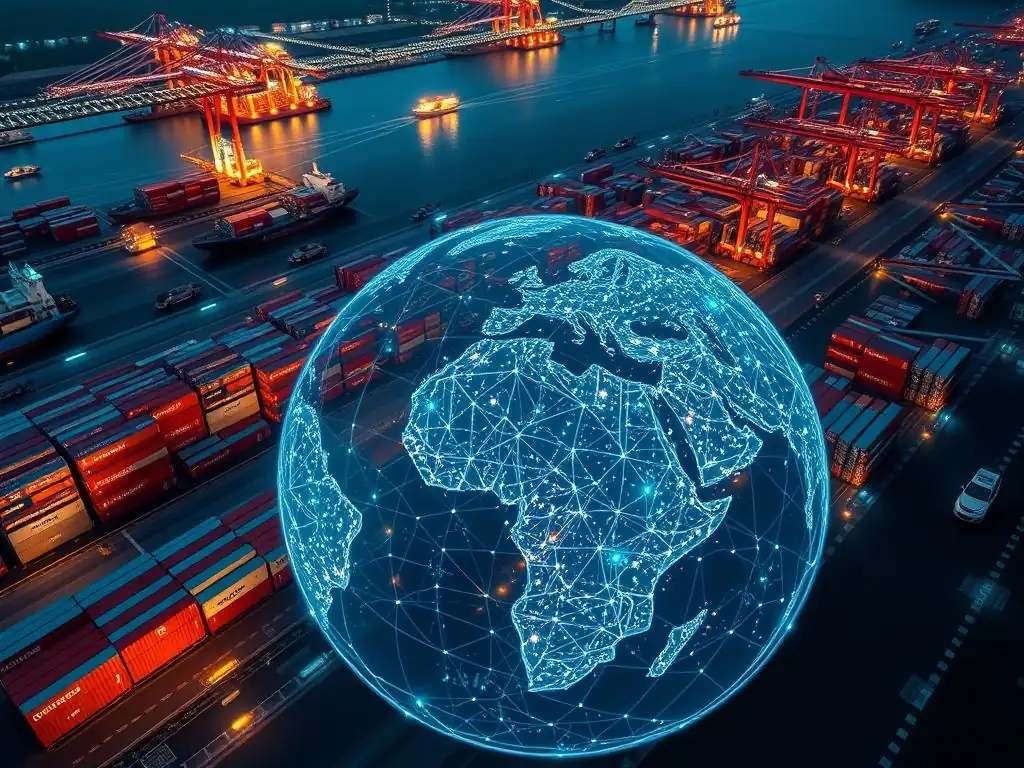
Welcome to Blockchain Trends, your compass in the rapidly evolving world of decentralized technologies. Are you ready to witness a revolution beyond digital currencies? Dive in as we explore the transformative power of blockchain across industries. Today, we're unraveling how blockchain logistics is streamlining global trade, optimizing supply chains, and reshaping the very fabric of international commerce. Intrigued? Discover how this innovative approach is poised to solve age-old problems and unlock unprecedented efficiency. Let's begin...
Logistics Revolution: Blockchain for Streamlining Global Trade and Shipping Operations
- Introduction: The Promise of Blockchain in Transforming Global Logistics
- Blockchain Logistics Streamlining: Key Benefits and Applications
- The Application of Blockchain in Different Areas of Logistics
- Case Studies: Successful Implementation of Blockchain in Logistics
- Overcoming the Challenges of Blockchain Adoption in Logistics
- The Future of Blockchain in Logistics: Trends and Predictions
- Conclusion: Blockchain's Transformative Potential for Global Trade and Shipping
-
Frequently Asked Questions
- How does blockchain help streamline global trade logistics?
- What are some specific applications of blockchain in logistics mentioned in the Blockchain Trends article?
- How can blockchain improve transparency in shipping operations?
- What role does regulation play in the adoption of blockchain for global trade?
- What is the future outlook for blockchain in logistics, according to Blockchain Trends?
- Final Reflection: Embracing Transparency in Global Commerce
- Unveil the Future: Optimize Your Supply Chain Today!
Introduction: The Promise of Blockchain in Transforming Global Logistics
Global trade and shipping form the backbone of the modern economy, facilitating the movement of trillions of dollars worth of goods across continents annually. However, this intricate network is plagued by inefficiencies, delays, and a lack of transparency. From complex documentation processes and fragmented communication between stakeholders to security vulnerabilities and disputes arising from opaque transactions, the challenges in global logistics are substantial. These issues often lead to increased costs, longer delivery times, and reduced reliability, impacting businesses and consumers alike.
The emergence of blockchain technology presents a compelling opportunity to address these long-standing problems. Originally known for powering cryptocurrencies, blockchain's core attributes—its decentralized, immutable, and transparent ledger—are proving to be remarkably well-suited for revolutionizing logistics operations. By providing a single, shared source of truth for transactions and information, blockchain can eliminate intermediaries, reduce paperwork, enhance security, and accelerate processes across the entire supply chain, promising a new era of efficiency and trust in global trade.
Understanding the Current Challenges in Global Trade and Shipping
The current state of global trade and shipping is characterized by significant operational hurdles. A primary challenge is the sheer volume and complexity of documentation required for each shipment. A single container shipment can involve dozens of different documents, including bills of lading, customs declarations, inspection certificates, and letters of credit, exchanged between multiple parties such as shippers, carriers, freight forwarders, customs authorities, and banks.
This manual, paper-based process is prone to errors, delays, and requires extensive administrative effort. Estimates suggest that documentation costs can account for a significant portion of the overall transport cost, sometimes reaching up to 20% or more.
Furthermore, the lack of real-time visibility and trust across the fragmented supply chain ecosystem creates bottlenecks and inefficiencies. Information is often siloed within individual organizations, leading to delays when data needs to be verified or shared. Disputes can arise due to discrepancies in records, and tracking the exact location and condition of goods at any given time is often difficult and unreliable.
Security concerns, including cargo theft and fraud through counterfeit documents, also pose significant risks, leading to financial losses and supply chain disruptions. These systemic issues highlight the urgent need for a more integrated, transparent, and secure framework for managing global trade and shipping.
How Blockchain Technology Offers Solutions for Logistics Bottlenecks
Blockchain technology offers a transformative approach to overcoming the inherent bottlenecks in global logistics by providing a secure, transparent, and immutable digital ledger. This distributed database records transactions across a network of computers, ensuring that once data is entered, it cannot be altered or deleted without the consensus of the network participants. This inherent immutability creates a single, trustworthy source of information accessible to all authorized parties in the supply chain, drastically reducing the need for multiple copies of documents and manual verification processes.
By digitizing and securing documentation on a blockchain, stakeholders can access real-time information about a shipment's journey, ownership, and status, fostering unprecedented levels of transparency. This eliminates the delays associated with exchanging and verifying paper documents. Moreover, blockchain enables the use of smart contracts—self-executing contracts with the terms of the agreement directly written into code.
These contracts can automate processes like payments triggered upon delivery or customs clearance, significantly speeding up transactions and reducing administrative overhead. The decentralized nature of the ledger also enhances security by making it virtually impossible for a single point of failure or malicious attack to compromise the entire system, thereby mitigating risks like fraud and cyber theft in the complex logistics chain.
Blockchain Logistics Streamlining: Key Benefits and Applications
Enhanced Transparency and Traceability in Supply Chains using Blockchain
One of the most significant advantages offered by blockchain in logistics is the dramatic improvement in transparency and traceability across complex supply chains. By recording every transaction and movement of goods on a shared, immutable ledger, blockchain creates a verifiable history from the point of origin to the final destination.
Each participant in the supply chain, from the producer to the end consumer (with appropriate access permissions), can view the same real-time information regarding a product's journey, including its origin, ownership transfers, handling, and location. This level of visibility was previously unattainable due to fragmented data systems and a lack of trust among disparate parties.
This enhanced transparency is crucial for various reasons. For instance, in the event of a product recall, tracing affected items back to their source can be accomplished in seconds or minutes, compared to the days or weeks it might take with traditional paper-based systems. This speed is critical for ensuring public safety and minimizing financial losses. Furthermore, consumers and businesses are increasingly demanding ethical sourcing and sustainability information; blockchain provides a reliable way to verify claims about a product's origin, fair labor practices, or environmental impact, building greater trust and accountability within the supply chain.
Improved Security and Reduced Fraud in Global Shipping with Decentralized Ledgers
Security and fraud prevention are paramount concerns in the high-value world of global shipping. Traditional systems, relying on paper documents and centralized databases, are vulnerable to tampering, forgery, and cyberattacks. Bills of lading, certificates of origin, and other critical documents can be counterfeited or altered, leading to disputes, financial losses, and delays. Centralized databases are also single points of failure, susceptible to breaches that can compromise sensitive information across an entire network.
Blockchain's decentralized and cryptographic nature fundamentally enhances security. Each transaction or data entry is encrypted and linked to the previous one, forming a chain that is extremely difficult to alter retroactively. Any attempt to tamper with a record would require altering all subsequent blocks and achieving consensus from the majority of the network participants, an economically infeasible task.
This makes the ledger highly resistant to fraud and manipulation. Furthermore, the distributed nature means there is no single central point for attackers to target. Using blockchain logistics streamlining global trade operations helps protect against document fraud, unauthorized access to shipment information, and ensures the integrity of data shared across the network, significantly reducing the risk of losses due to fraudulent activities.
Streamlined Processes and Reduced Costs Through Blockchain-Enabled Automation
Manual processes and the need for intermediaries are major contributors to the high costs and inefficiencies in global logistics. Verifying documents, settling payments, and managing contracts often involve multiple parties and time-consuming administrative steps. This complexity results in delays, increased labor costs, and potential demurrage or detention charges.
Blockchain technology, particularly through the implementation of smart contracts, enables significant process streamlining and cost reduction. Smart contracts can automatically execute predefined actions when specific conditions are met – for example, releasing payment to a carrier upon confirmation of goods delivery or automatically initiating customs clearance procedures once a shipment reaches a certain port.
This automation eliminates manual intervention in routine transactions, reduces the need for intermediaries like escrow agents, and accelerates the flow of goods and payments. By reducing paperwork, minimizing delays, and automating contractual obligations, blockchain logistics streamlining global trade processes leads to tangible cost savings for all parties involved, from reduced administrative overhead to lower financing costs due to faster transaction settlements.
The Application of Blockchain in Different Areas of Logistics
Blockchain for Tracking and Tracing Goods: Real-Time Visibility
One of the most immediate and impactful applications of blockchain in logistics is enhancing the tracking and tracing of goods. Traditional tracking systems often provide limited visibility, relying on disparate databases and manual updates at various checkpoints. This makes it difficult to pinpoint the exact location or status of a shipment in real-time and verify its condition throughout the journey.
By recording each transfer of custody, location update, and relevant event (like temperature changes if integrated with IoT sensors) on a blockchain ledger, a comprehensive and immutable trail is created for every item or container. All authorized parties—shippers, carriers, receivers, and even regulators—can access this shared ledger to view the real-time progress and history of a shipment. This provides unparalleled visibility, allowing stakeholders to anticipate potential delays, verify delivery status, and quickly identify the source of issues if goods are damaged or lost. This granular, real-time visibility is a cornerstone of effective blockchain logistics streamlining global trade.
Smart Contracts in Logistics: Automating Agreements and Payments
Smart contracts are self-executing digital agreements where the terms are directly written into lines of code, stored on a blockchain. In logistics, smart contracts can automate a wide range of processes that are currently manual and dependent on trust between parties or oversight by intermediaries. This includes automating payments, managing insurance claims, and enforcing contractual obligations based on verifiable data.
For example, a smart contract can be programmed to automatically release payment from the buyer to the seller or carrier as soon as the blockchain confirms that the goods have arrived at the destination port and have cleared customs. Similarly, an insurance claim could be automatically initiated if IoT data recorded on the blockchain indicates that the temperature inside a refrigerated container exceeded a critical threshold for a specified period.
This automation reduces administrative burden, minimizes payment disputes, eliminates delays associated with manual processing, and ensures that contractual terms are executed reliably and transparently, significantly contributing to blockchain logistics streamlining global trade operations.
Blockchain and Customs Clearance: Faster and More Efficient Processes
Customs clearance is a notoriously complex and time-consuming part of global trade, involving multiple documents, regulatory checks, and coordination between various government agencies and private entities. Delays at borders can lead to significant costs, including demurrage fees and supply chain disruptions. The reliance on paper-based documents and manual data entry further exacerbates these inefficiencies.
Blockchain can significantly accelerate and simplify the customs clearance process. By creating a shared, immutable ledger accessible to customs authorities, brokers, shippers, and carriers, all necessary documentation and shipment data can be submitted and verified digitally in real-time. Smart contracts can be used to automate compliance checks based on pre-defined rules and regulations.
For example, a smart contract could automatically flag a shipment for inspection if certain criteria are met or greenlight it for faster processing if all digital documentation is complete and verified on the blockchain. This reduces paperwork, minimizes manual data entry errors, speeds up verification processes, and provides customs officials with greater transparency and accuracy, thereby accelerating the flow of goods across borders.
Blockchain for Inventory Management: Optimizing Stock Levels and Reducing Waste
Effective inventory management is crucial for minimizing costs, preventing stockouts, and reducing waste in supply chains. However, gaining accurate, real-time visibility into inventory levels across multiple locations and different stakeholders (warehouses, distributors, retailers) can be challenging with traditional systems. This often leads to suboptimal stock levels, increased holding costs, and potential losses due to expired or obsolete goods.
Blockchain can provide a unified and transparent record of inventory movements and ownership across the entire supply chain network. By recording each addition, removal, and transfer of goods on the blockchain, companies can maintain a real-time, accurate, and verifiable count of stock levels at different points. This shared visibility allows for better coordination between supply chain partners, enabling more precise demand forecasting and inventory planning. Furthermore, tracking the provenance and age of goods on the blockchain can help in implementing FIFO (First-In, First-Out) strategies and identifying products nearing expiration, thereby reducing waste and improving overall inventory efficiency.
Case Studies: Successful Implementation of Blockchain in Logistics
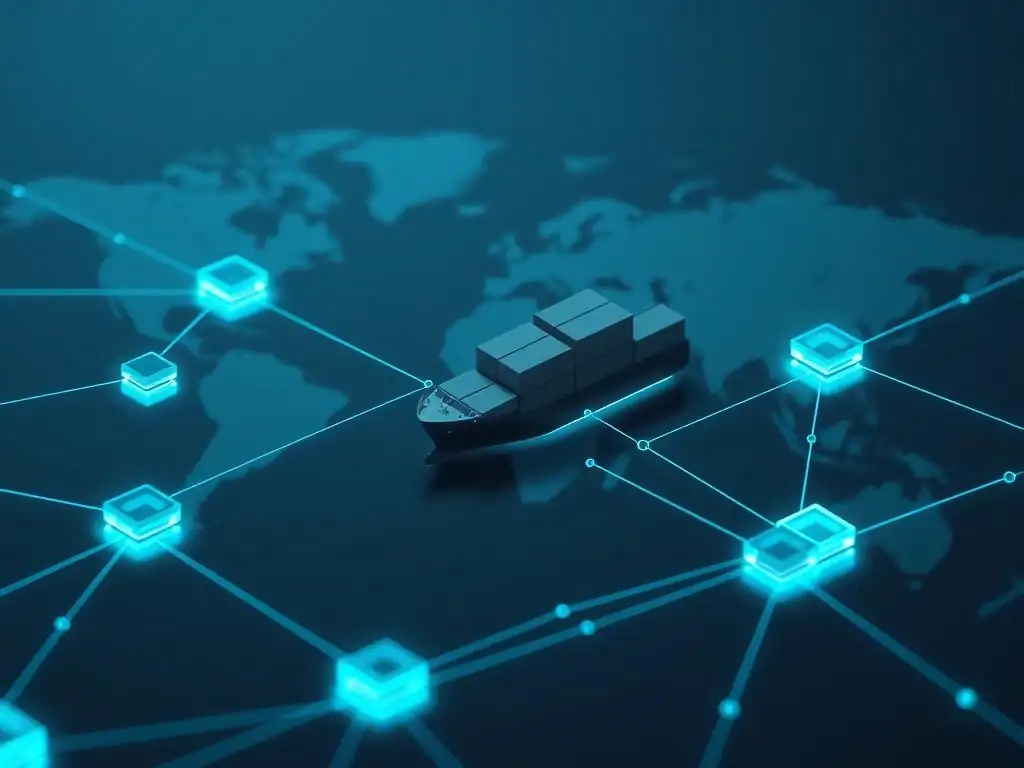
Maersk and IBM's TradeLens: Revolutionizing Global Container Shipping
One of the most prominent examples of blockchain logistics streamlining global trade is TradeLens, a platform developed jointly by Maersk, the world's largest container shipping line, and IBM. Launched in 2018, the platform aims to apply blockchain technology to create a more efficient and secure global supply chain ecosystem. TradeLens provides a neutral, shared digital ledger to which all participants—including carriers, ports and terminals, inland transportation providers, customs authorities, and shippers—can contribute data and access information based on their permissions.
The platform digitizes and automates many of the complex, paper-based processes involved in container shipping. By providing a single source of truth for shipment data, TradeLens significantly reduces the time and effort required to share and verify information across different parties.
Early adopters reported benefits such as a reduction in transit time by up to 40% for certain shipments and a significant decrease in the number of parties involved in processing a single shipment. The platform currently connects a substantial portion of the world's container volume and continues to expand its network of participants, demonstrating the potential of blockchain to transform even the most complex global logistics operations.
Walmart's Blockchain Initiative: Enhancing Food Safety and Traceability
Walmart, one of the world's largest retailers, has been a vocal proponent of using blockchain for supply chain traceability, particularly focusing on food safety. The company initiated a pilot program using blockchain to track produce, motivated by the need to quickly and accurately trace the origin of food items in the event of an outbreak or recall.
Before implementing blockchain, tracing a package of sliced mangoes back to its farm source could take Walmart weeks, requiring manual phone calls and searching through paper records across multiple intermediaries. With their blockchain-based system, built on the Hyperledger Fabric framework, Walmart demonstrated that they could trace the same package back to its farm in just seconds.
This dramatic reduction in tracing time is critical for public health, allowing for faster identification and removal of contaminated products from shelves. Walmart has since mandated that its leafy green suppliers use the blockchain system, highlighting the tangible benefits blockchain brings to supply chain visibility and safety.
Provenance's Seafood Tracking: Combating Illegal Fishing and Ensuring Transparency
Provenance is a technology company using blockchain to provide supply chain transparency, with a notable application in the seafood industry. The global seafood supply chain is often opaque, contributing to issues like illegal fishing, mislabeling of species, and poor labor practices. Consumers and businesses often lack reliable information about where and how their seafood was caught.
Provenance's solution involves tagging seafood at the point of catch or processing and recording key data—such as species, catch location, vessel, and date—on a blockchain. As the seafood moves through the supply chain, each transfer of custody and relevant event is added to the immutable ledger. This creates a verifiable digital passport for each batch of fish.
By scanning a QR code, consumers and businesses can access this transparent history, ensuring that the seafood they purchase is ethically sourced, legally caught, and accurately labeled. This application of blockchain logistics streamlining global trade helps combat illegal practices and builds trust in the seafood supply chain.
Overcoming the Challenges of Blockchain Adoption in Logistics
Regulatory Hurdles and Standardization Issues in Blockchain Logistics
Despite the clear benefits, the widespread adoption of blockchain in logistics faces several significant hurdles, particularly concerning regulatory frameworks and the need for standardization. Global trade operates under a complex web of national and international regulations, customs laws, and compliance requirements that vary significantly from country to country. Integrating blockchain systems with existing regulatory processes and ensuring they meet diverse legal standards, especially regarding data privacy and digital signatures, is a complex undertaking.
Furthermore, the lack of universally accepted standards for blockchain protocols, data formats, and interoperability between different blockchain platforms poses a major challenge. For blockchain logistics streamlining global trade to be truly effective, different companies and even different countries need to be able to seamlessly share and verify data across their respective blockchain networks. Without common standards, the ecosystem risks becoming fragmented, with multiple incompatible platforms that cannot communicate effectively, undermining the very benefit of a shared, transparent ledger. Establishing these standards requires significant collaboration among industry stakeholders, technology providers, and regulatory bodies worldwide.
Scalability and Interoperability Concerns in Global Trade Networks
The sheer volume of transactions and data generated by global trade presents significant scalability challenges for current blockchain technologies. Handling millions of shipments, billions of data points, and the participation of countless entities across the world requires a blockchain platform that can process a high throughput of transactions quickly and cost-effectively. While significant progress has been made in improving blockchain scalability, some existing protocols may still struggle to handle the massive scale required for truly global supply chain networks without compromising on decentralization or speed.
Interoperability is another critical technical challenge. The global logistics ecosystem is characterized by a patchwork of legacy systems, databases, and communication protocols used by different companies and organizations. For blockchain to be widely adopted, it must be able to seamlessly integrate with these existing systems and allow for the exchange of data between different blockchain networks or traditional databases. Developing effective bridges and APIs that enable this interoperability without compromising the integrity or security of the blockchain is essential for building a connected and efficient global trade network.
Building Trust and Collaboration Among Stakeholders in the Logistics Ecosystem
Perhaps the most significant non-technical challenge to blockchain adoption in logistics is the need to build trust and foster collaboration among a diverse and often competitive group of stakeholders. The logistics ecosystem involves a wide array of participants—shippers, carriers, ports, customs, banks, insurers, and freight forwarders—each with their own interests, legacy systems, and established business practices. Implementing a shared, transparent ledger requires these entities to agree on common processes, data sharing protocols, and governance models, which can be difficult to achieve.
Convincing competing companies to share data on a common platform, even a permissioned one where access is controlled, requires a fundamental shift in mindset and a willingness to collaborate for mutual benefit. Addressing concerns about data privacy, competitive advantage, and the potential disruption of existing business models is crucial. Building a governance framework that is fair, transparent, and inclusive of all participants is essential for fostering the necessary trust and cooperation required to successfully implement blockchain logistics streamlining global trade processes on a large scale. This often involves pilot projects and consortiums that demonstrate the tangible benefits of collaboration.
The Future of Blockchain in Logistics: Trends and Predictions
The Integration of IoT and Blockchain for Real-Time Supply Chain Monitoring
The future of blockchain in logistics is increasingly intertwined with the Internet of Things (IoT). IoT devices, such as sensors, GPS trackers, and smart containers, can collect vast amounts of real-time data about the location, condition (e.g., temperature, humidity, shock), and status of goods as they move through the supply chain. Integrating this data directly onto a blockchain ledger provides a powerful combination: IoT provides the real-world data, while blockchain provides an immutable and verifiable record of that data.
This integration enables unprecedented levels of real-time supply chain monitoring. For example, temperature sensors in a container carrying perishable goods can automatically record temperature readings onto the blockchain at regular intervals. If the temperature deviates from the required range, this event is permanently recorded on the ledger, providing verifiable evidence for insurance claims or quality control. This synergy between IoT and blockchain logistics streamlining global trade allows for proactive management, automated alerts, and a trustworthy audit trail for the condition of goods, significantly enhancing reliability and reducing disputes.
The Role of AI and Machine Learning in Optimizing Blockchain-Based Logistics Solutions
As blockchain networks in logistics accumulate vast amounts of structured and verifiable data, the potential for leveraging Artificial Intelligence (AI) and Machine Learning (ML) to optimize operations becomes immense. AI and ML algorithms can analyze the historical and real-time data stored on the blockchain to identify patterns, predict potential disruptions, and automate complex decision-making processes.
For instance, AI can analyze shipment data on the blockchain to predict potential delays based on historical port congestion or weather patterns, allowing logistics managers to reroute shipments proactively. ML models can optimize inventory levels by analyzing blockchain-recorded sales and movement data alongside external factors. Furthermore, AI can work in conjunction with smart contracts, using data from the blockchain to trigger automated actions based on sophisticated predictive analytics rather than simple predefined conditions. This combination of AI, ML, and blockchain logistics streamlining global trade promises a future of highly optimized, predictive, and autonomous supply chains.
Blockchain as a Catalyst for Sustainable and Ethical Supply Chains
There is growing pressure from regulators, consumers, and investors for companies to build more sustainable and ethical supply chains. Proving compliance with environmental regulations, verifying the use of sustainable materials, ensuring fair labor practices, and tracking carbon emissions throughout the product journey are becoming increasingly important. Blockchain technology is poised to become a key enabler for achieving these goals.
By providing an immutable record of a product's origin, the materials used, the processes involved, and the companies responsible at each step, blockchain can create a transparent and verifiable history that supports sustainability and ethical claims. For example, companies can record certifications (like fair trade or organic) on the blockchain, link them to specific batches of products, and allow consumers to verify these claims by scanning a QR code.
Furthermore, tracking metrics like carbon footprint associated with transportation on the blockchain can provide the data needed for accurate reporting and enable the implementation of incentives for greener logistics practices. Thus, blockchain logistics streamlining global trade can directly contribute to building a more responsible and sustainable global economy.
Conclusion: Blockchain's Transformative Potential for Global Trade and Shipping
Blockchain technology is not merely an incremental improvement for global logistics; it represents a fundamental shift in how goods are moved, tracked, and managed across the world. By establishing a shared, immutable, and transparent ledger, blockchain addresses core inefficiencies and trust deficits that have long plagued the industry. From reducing cumbersome paperwork and accelerating customs clearance to enhancing security against fraud and providing unprecedented real-time visibility, the potential benefits are vast and far-reaching.
Successful implementations like TradeLens and Walmart's food traceability initiative demonstrate that blockchain logistics streamlining global trade is already moving from theory to practice, delivering tangible improvements in efficiency, cost savings, and safety. While challenges related to regulation, standardization, scalability, and industry collaboration remain, the trajectory is clear. As these hurdles are overcome and the technology matures, integrated with innovations like IoT and AI, blockchain will increasingly become the foundational layer for the next generation of global supply chains – ones that are more efficient, secure, transparent, and sustainable.
Embracing Blockchain to Unlock New Efficiencies and Opportunities in Logistics
For businesses involved in global trade and shipping, embracing blockchain technology is becoming less of an option and more of a necessity to remain competitive. The ability to reduce operational costs, minimize delays, mitigate risks, and build stronger trust with partners and customers is a powerful incentive. Companies that proactively explore and implement blockchain solutions stand to gain significant first-mover advantages, establishing more resilient and agile supply chains.
Beyond simply optimizing existing processes, blockchain opens up opportunities for entirely new business models in logistics, such as decentralized freight marketplaces, tokenized assets representing cargo ownership, and automated supply chain finance solutions. The journey towards a fully blockchain-enabled global trade ecosystem will require continued investment, collaboration, and innovation. However, the transformative potential of blockchain logistics streamlining global trade is undeniable, promising a future where moving goods across borders is faster, cheaper, safer, and more transparent than ever before. The time to explore and adopt this revolutionary technology is now.
Frequently Asked Questions
How does blockchain help streamline global trade logistics?
Blockchain provides a shared, immutable ledger that enhances supply chain visibility and reduces fraudulent activities, leading to more efficient trade processes.
What are some specific applications of blockchain in logistics mentioned in the Blockchain Trends article?
The Blockchain Trends article highlights applications such as tracking goods, automating customs clearance, and managing payments in a more secure and transparent manner.
How can blockchain improve transparency in shipping operations?
Blockchain's decentralized nature allows for real-time tracking of goods, providing all stakeholders with a single source of truth about the shipment's location and condition.
What role does regulation play in the adoption of blockchain for global trade?
Clear and consistent regulations are crucial for fostering trust and encouraging widespread adoption of blockchain in global trade, addressing concerns around data privacy and security.
What is the future outlook for blockchain in logistics, according to Blockchain Trends?
The Blockchain Trends anticipates a future where blockchain will revolutionize global trade, enabling greater efficiency, reduced costs, and enhanced security across the entire supply chain.
Final Reflection: Embracing Transparency in Global Commerce
The journey through the potential of blockchain to revolutionize logistics reveals a profound truth: transparency and efficiency are no longer luxuries, but necessities in the complex tapestry of global trade. The challenges of outdated systems, fragmented communication, and security vulnerabilities demand innovative solutions, and blockchain offers a compelling path forward. Its ability to create immutable records, automate processes, and foster trust among stakeholders promises a future where goods flow seamlessly across borders, benefiting businesses and consumers alike.
This shift towards decentralized, secure, and transparent logistics is not just a technological advancement; it's a cultural one. It represents a fundamental change in how we perceive and interact with the global supply chain, demanding a willingness to embrace collaboration and shared responsibility. The potential for reduced fraud, faster delivery times, and increased sustainability is immense, and it's a future worth striving for. The supply chain is the only thing that connects every business in the world.
- Dave Waters, Supply Chain Expert. This quote encapsulates the interconnectedness that blockchain can enhance, fostering a more resilient and equitable global marketplace.
As we stand on the cusp of this logistics revolution, I urge you to consider the implications of blockchain for your own work and life. How can you champion transparency and efficiency in your own sphere of influence? How can you contribute to building a more sustainable and equitable global trade ecosystem? The future of logistics is not just about technology; it's about people, collaboration, and a shared commitment to a more efficient and transparent world. Embrace the change, explore the possibilities, and become a part of the blockchain logistics streamlining global trade movement.
Unveil the Future: Optimize Your Supply Chain Today!
Thank you for exploring how blockchain is transforming global logistics. Now that you understand its potential, it's time to take action and revolutionize your approach to trade and shipping.
Consider the following steps:
- Investigate which blockchain solutions are best suited for your specific logistics challenges. Evaluate factors such as scalability, security, and compatibility with your existing systems.
- Share this article with your colleagues and network to encourage discussion and promote the adoption of blockchain technology within your industry. Together, we can build a more transparent and efficient future.
- Explore innovative use cases beyond tracking and tracing. Have you thought about using smart contracts to automate payments or manage customs clearance processes?
How do you plan to leverage blockchain to create a more resilient and transparent global supply chain in the coming year? Share your insights in the comments below!
Leave a Reply