
The Metaverse Economy: Blockchain's Role in Building Immersive and Decentralized Digital Worlds

Welcome to Blockchain Trends, your source for understanding the real-world applications of blockchain technology.
Dive into the future of digital interaction as we explore The Metaverse Economy: Blockchain's Role in Building Immersive and Decentralized Digital Worlds. But what are the real blockchain metaverse economy integration opportunities? Discover how blockchain is poised to revolutionize virtual experiences, empower creators, and reshape digital ownership. Keep reading to uncover the secrets of this emerging landscape and its potential to transform the future as we know it!
The Metaverse Economy: Blockchain's Role in Building Immersive and Decentralized Digital Worlds
- Introduction: Exploring the Convergence of Metaverse and Blockchain
- Understanding the Metaverse Economy: A Deep Dive
- Blockchain's Transformative Impact on the Metaverse
-
Blockchain Metaverse Economy Integration Opportunities: Real-World Applications
- Gaming and Play-to-Earn Models: A Blockchain Revolution
- Virtual Events and Concerts: Secure Ticketing and Royalty Distribution
- Digital Identity and Avatar Management on the Blockchain
- Metaverse Real Estate: Buying, Selling, and Renting Virtual Properties
- E-commerce in the Metaverse: Secure and Transparent Transactions
- Challenges and Opportunities in the Blockchain-Powered Metaverse Economy
- The Future of the Blockchain Metaverse Economy
- Conclusion: Embracing the Decentralized Future of the Metaverse
-
Frequently Asked Questions
- What role does blockchain play in the metaverse economy?
- How can businesses leverage blockchain for metaverse integration?
- What are the key blockchain applications beyond cryptocurrencies in the metaverse?
- What are the potential regulatory challenges for the blockchain metaverse economy?
- What are the future integration opportunities for blockchain and the metaverse economy?
- Final Reflection: Embracing the Decentralized Future
- Dive Deeper: Build Your Metaverse Future!
Introduction: Exploring the Convergence of Metaverse and Blockchain
Defining the Metaverse: Immersive Digital Experiences
The metaverse represents a persistent, interconnected network of 3D virtual worlds where users can interact with each other, digital assets, and AI-driven agents in real-time. It goes beyond simple online gaming or social media, aiming to create a sense of presence and immersion akin to the physical world.
Key characteristics include persistence (it never resets or pauses), synchronicity (everyone experiences it live), economic functionality (a fully operational virtual economy), and interoperability (assets and identities ideally moving between different parts of the metaverse). Platforms like Roblox, which reported 66 million daily active users in early 2023, or Fortnite, with its massive cultural events, offer glimpses into this potential, demonstrating large-scale virtual interactions and burgeoning digital economies based on in-game purchases and user-generated content.
While early iterations of virtual worlds have existed for decades, the modern concept of the metaverse envisions a much deeper integration of our digital and physical lives, facilitated by technologies like virtual and augmented reality. The potential market size is staggering; some projections, like McKinsey's report from June 2022, estimate the metaverse could generate up to $5 trillion in value by 2030.
This value is expected to come from diverse areas including e-commerce within the metaverse, virtual advertising, digital events, gaming, and hardware development. The realization of this vast, interconnected digital space hinges significantly on underlying technologies that can support secure ownership, transparent transactions, and user autonomy, areas where blockchain technology offers compelling solutions.
Blockchain's Crucial Role in the Metaverse's Development
Blockchain technology provides the fundamental infrastructure necessary to enable the core principles of a truly decentralized and user-owned metaverse. At its heart, blockchain offers a distributed, immutable ledger that can record transactions, ownership, and identity in a transparent and secure manner, without relying on a single central authority.
This is critical for building virtual worlds where users can genuinely own their digital assets, from avatars and clothing to virtual land and unique collectibles. Unlike traditional online games where items are centrally controlled by the game developer and can be removed or altered at any time, blockchain-based assets (often represented as Non-Fungible Tokens or NFTs) grant verifiable ownership to the user.
Furthermore, blockchain facilitates the creation of open and interoperable economies within the metaverse. By using standardized token protocols (like ERC-20 for fungible tokens or ERC-721 and ERC-1155 for NFTs on Ethereum), assets and currencies can potentially be traded, used, or even moved across different virtual platforms that integrate with the same blockchain. This contrasts sharply with siloed, closed economies found in most current virtual environments.
The transparency of blockchain also allows for auditing of transaction histories and asset provenance, building trust within the virtual economy. This foundation is essential for unlocking the full potential of the blockchain metaverse economy integration opportunities that are beginning to emerge.
The Blockchain Trends Perspective on Metaverse Economics
From the perspective of Blockchain Trends, the convergence of blockchain and the metaverse represents one of the most significant economic paradigm shifts since the advent of the internet itself. We view the metaverse not just as a new entertainment platform, but as a burgeoning digital economy with unique characteristics driven by decentralization. The traditional economic models of digital goods, often based on licensing or controlled access, are being challenged by blockchain's ability to enable true digital property rights and peer-to-peer value transfer.
The economic implications are profound, creating new opportunities for creators, entrepreneurs, and users alike. Artists can sell digital art as NFTs, game developers can build player-owned economies, brands can establish virtual storefronts, and individuals can earn income through play-to-earn models or by providing services within virtual worlds. This decentralized economic framework fosters innovation and allows value to accrue directly to participants, rather than being captured solely by platform intermediaries. Understanding these dynamics and the specific blockchain metaverse economy integration opportunities is crucial for anyone looking to navigate the future of digital interaction and commerce.
Understanding the Metaverse Economy: A Deep Dive
Key Components of a Thriving Metaverse Economy
A robust metaverse economy relies on several interconnected components that facilitate value creation, exchange, and ownership within the virtual environment. At its core are digital assets, ranging from fungible virtual currencies used for transactions to unique non-fungible tokens (NFTs) representing ownership of everything from virtual land and buildings to avatars, wearables, art, and collectibles. These assets form the basis of commerce and investment within the metaverse. Marketplaces, often decentralized and powered by smart contracts, are essential for users to discover, buy, sell, and trade these digital goods and services transparently and securely.
Beyond assets and marketplaces, a thriving metaverse economy includes mechanisms for earning income, such as play-to-earn gaming models, virtual work opportunities (e.g., designing assets, building experiences, providing virtual services), and yield-generating activities on virtual property or digital assets. Decentralized finance (DeFi) protocols can extend into the metaverse, enabling activities like lending, borrowing, staking, and providing liquidity using virtual assets. Finally, decentralized governance structures, often implemented via Decentralized Autonomous Organizations (DAOs), allow the community to participate in decision-making regarding the economic policies and development of the virtual world, ensuring a more user-centric and resilient economy.
Virtual Land Ownership and Tokenization using Blockchain
One of the most prominent economic activities in early metaverses is the acquisition and development of virtual land. Platforms like Decentraland and The Sandbox have built their economies around finite parcels of virtual land, each represented by a unique NFT on a blockchain (primarily Ethereum).
Owning a land NFT grants the user immutable proof of ownership recorded on the public ledger, allowing them to use, build upon, rent out, or sell their virtual property just like physical real estate. This concept has driven significant investment; for instance, in late 2021, a patch of virtual land in Decentraland sold for a reported $2.4 million worth of cryptocurrency, intended for use by a fashion retailer.
The tokenization of virtual land turns digital space into a tradeable asset class. Prices fluctuate based on factors like location within the metaverse (proximity to popular areas or 'districts'), scarcity (fixed supply of land parcels), and planned utility or development.
Investors and developers purchase land with the intention of building experiences (shops, galleries, games, event venues) that can attract users and generate revenue, or simply holding it for speculative appreciation. Sales data from platforms like NonFungible.com have shown millions, and at times billions, of dollars transacted annually in metaverse land sales across various platforms, highlighting the significant economic activity already occurring in this niche.
Digital Asset Creation, Ownership, and Trading (NFTs)
Non-Fungible Tokens (NFTs) are arguably the cornerstone of digital ownership in the metaverse economy. Unlike fungible tokens (like cryptocurrency), each NFT is unique and represents ownership of a specific digital item, whether it's a piece of digital art, a virtual wearable for an avatar, an in-game item, or a virtual event ticket.
This verifiable ownership, secured by blockchain, is transformative because it allows digital goods to have provenance, scarcity, and the ability to be freely traded or sold on secondary markets outside the control of the original creator or platform. Artists and creators can mint their work as NFTs, selling directly to consumers and often earning royalties on future secondary sales via smart contracts.
The trading volume for NFTs has seen exponential growth, demonstrating the burgeoning digital asset market. While the market can be volatile, peak periods in 2021 and 2022 saw monthly trading volumes on major marketplaces like OpenSea reach billions of dollars, encompassing a wide range of digital assets including those intended for metaverse use.
This robust secondary market allows users to not only purchase assets but also potentially profit from their digital activities and investments within the metaverse. The ability to create, own, and trade these unique digital items frictionlessly via blockchain is a fundamental driver of the blockchain metaverse economy integration opportunities.
Decentralized Finance (DeFi) in the Metaverse: Powering Virtual Commerce
Integrating Decentralized Finance (DeFi) protocols into the metaverse economy unlocks complex financial interactions and opportunities beyond simple buying and selling of assets. DeFi applications built on blockchain allow users to access financial services directly and permissionlessly. Within a metaverse, this could mean using virtual land or high-value NFT assets as collateral to borrow cryptocurrency, which can then be used for further investment or spending within the virtual world. Users could also provide liquidity to decentralized exchanges (DEXs) operating within or connected to the metaverse, earning trading fees or yield farming rewards in native metaverse tokens or other cryptocurrencies.
Furthermore, DeFi can facilitate staking mechanisms where users lock up metaverse tokens to earn rewards or gain governance rights, aligning their incentives with the long-term success of the virtual economy. Smart contracts can automate payments, escrow services, and even complex financial derivatives based on the value or performance of virtual assets.
While still in early stages for specific metaverse applications, the potential for DeFi to power sophisticated virtual commerce, investment, and wealth-building activities is immense. This integration allows the virtual economy to mirror and even innovate upon traditional financial systems, creating a rich layer of economic activity within the decentralized digital world.
Blockchain's Transformative Impact on the Metaverse
Enhancing Security and Transparency in Metaverse Transactions
Blockchain technology fundamentally enhances security and transparency within the metaverse economy compared to traditional centralized systems. Every transaction, whether it's the transfer of virtual land ownership, the sale of an NFT wearable, or a payment for a virtual service, is recorded on a distributed, immutable ledger.
This means that once a transaction is confirmed on the blockchain, it cannot be altered or deleted, providing a permanent and verifiable history of all economic activity. This level of transparency allows anyone to audit the flow of assets and value within the metaverse (while potentially preserving user anonymity through pseudonymous addresses), significantly reducing opportunities for fraud and manipulation that plague centralized digital economies.
Security is also bolstered by the cryptographic principles underlying blockchain. Digital assets are secured by private keys held by the user, giving them direct control over their virtual property without relying on a central server that could be hacked or shut down. Smart contracts automate transactions based on predefined rules, executing automatically when conditions are met without the need for intermediaries.
This reduces counterparty risk and ensures that agreements, such as royalty payments on NFT resales or automated distribution of funds from a virtual event, are executed reliably and transparently. The inherent security and transparency of blockchain are critical for building trust in a decentralized metaverse economy.
Enabling Decentralized Governance in Virtual Worlds (DAOs)
Decentralized Autonomous Organizations (DAOs) offer a novel approach to governing virtual worlds, moving away from the centralized control of a single company. In a blockchain-powered metaverse, governance tokens can be issued to users, often based on their participation, ownership of virtual land, or other contributions. Holding these tokens grants users voting power on proposals that affect the future development and rules of the metaverse.
This could include decisions about new features, economic policies (like transaction fees), moderation guidelines, or how community treasury funds are spent. For example, the Decentraland DAO manages significant assets and allows token holders to vote on various aspects of the platform's operation and grants.
This decentralized governance model aligns the incentives of the platform's users and stakeholders, giving them a direct voice in its evolution. It fosters a sense of community ownership and can lead to a more resilient and user-centric virtual world, as decisions are made collectively rather than dictated by a corporate entity.
While challenges exist in achieving high voter participation and preventing concentration of power, the DAO structure represents a significant step towards creating truly decentralized digital societies where users are not just consumers but also co-creators and governors. This governance aspect is a key element of the broader blockchain metaverse economy integration opportunities.
Fostering Interoperability Between Different Metaverses via Blockchain
A long-term vision for the metaverse involves interoperability – the ability for assets, identities, and experiences to seamlessly transition between different virtual worlds and platforms. Blockchain technology provides a potential pathway to achieve this, breaking down the silos that characterize current digital environments. By representing digital assets (like avatars, wearables, or collectibles) as NFTs on public blockchains, these assets are not locked within a single platform's database. If multiple metaverses are built on or integrate with the same blockchain standard (e.g., using ERC-721 for assets), a user's NFT asset could theoretically be used in different compatible virtual worlds.
While full interoperability is still a significant technical and practical challenge, requiring common standards for asset rendering, identity representation, and user experience across diverse platforms, blockchain provides the foundational layer of shared ownership and transaction verification. Projects are exploring ways to standardize avatar systems, digital identities (using decentralized identifiers or DIDs), and asset formats to facilitate movement.
The potential for a user to buy a virtual jacket in one metaverse and wear it in another, or to use their reputation earned in a gaming world to access benefits in a social world, is enabled by the neutral, shared ledger that blockchain provides. This cross-platform potential is a compelling aspect of the blockchain metaverse economy integration opportunities.
Blockchain Metaverse Economy Integration Opportunities: Real-World Applications
Gaming and Play-to-Earn Models: A Blockchain Revolution
Gaming has emerged as a leading sector for blockchain metaverse economy integration opportunities, particularly through the rise of play-to-earn (P2E) models. In P2E games, players can earn tangible value, typically in the form of cryptocurrency or NFTs, by engaging with the game world – completing quests, battling other players, breeding digital creatures, or developing virtual land.
This model contrasts with traditional games where in-game purchases stay within the game's ecosystem and earnings have no real-world value. Axie Infinity, a pioneer in this space, at its peak allowed players in some regions to earn significant income, with reports suggesting average daily earnings could exceed minimum wages in certain countries, although this model proved sensitive to market fluctuations.
The economic activity in P2E games is substantial. Players invest in NFT assets (like Axies in Axie Infinity or virtual land in games like The Sandbox), spend time playing to earn tokens or new assets, and trade these assets on secondary markets. This creates a vibrant in-game economy where players are not just consumers but active participants and asset owners.
The total value of NFT transactions within gaming alone reached billions of dollars in recent years, demonstrating the scale of this blockchain metaverse economy integration opportunity. While the P2E model is evolving, the core concept of rewarding players with real ownership and value for their time and skill is a powerful application of blockchain in the metaverse.
Virtual Events and Concerts: Secure Ticketing and Royalty Distribution
The metaverse is increasingly becoming a venue for virtual events, concerts, fashion shows, and conferences, and blockchain offers valuable tools for managing these experiences securely and transparently. Ticketing for virtual events can be handled via NFTs, providing immutable proof of attendance or access that can be verified on the blockchain. These NFT tickets can also become collectibles themselves, potentially holding value on secondary markets.
Furthermore, smart contracts can automate the distribution of revenues and royalties generated by these events. For instance, if a virtual concert sells NFT tickets and associated digital merchandise, smart contracts can automatically split the proceeds among artists, organizers, and platform providers based on pre-agreed terms, ensuring transparency and reducing administrative overhead.
Major artists and brands have already experimented with this. Travis Scott's virtual concert in Fortnite in 2020 attracted over 12 million concurrent viewers, hinting at the scale of virtual events. While not fully blockchain-native, it showcased the potential audience. More recently, platforms like Decentraland and The Sandbox have hosted virtual music festivals and brand events leveraging NFT ticketing and token-based access. The potential for secure, verifiable access and automated royalty payments makes blockchain an attractive technology for powering the growing economy around virtual entertainment and gatherings within the metaverse.
Digital Identity and Avatar Management on the Blockchain
Managing a persistent and verifiable digital identity across different virtual worlds is a critical challenge for realizing a truly interconnected metaverse. Blockchain technology offers a decentralized approach to digital identity and avatar management, giving users more control over their online persona and reputation. Instead of relying on centralized platforms to manage user profiles and avatars, blockchain can anchor elements of a user's identity, including verifiable credentials (like proof of age, qualifications, or reputation) and ownership of avatar components (like unique clothing, hairstyles, or body types represented as NFTs).
This allows users to potentially carry aspects of their identity and appearance with them across different compatible metaverse environments. For example, an expensive, limited-edition digital sneaker owned as an NFT could be worn by the user's avatar in multiple virtual worlds that support the same standard.
Decentralized Identifiers (DIDs) and verifiable credentials, built on blockchain or distributed ledger technology, are emerging standards aimed at giving users control over their digital identity data, sharing only what they choose, when they choose. This shift from platform-controlled profiles to user-owned, portable identities is a significant blockchain metaverse economy integration opportunity, empowering users and fostering a more cohesive digital self.
Metaverse Real Estate: Buying, Selling, and Renting Virtual Properties
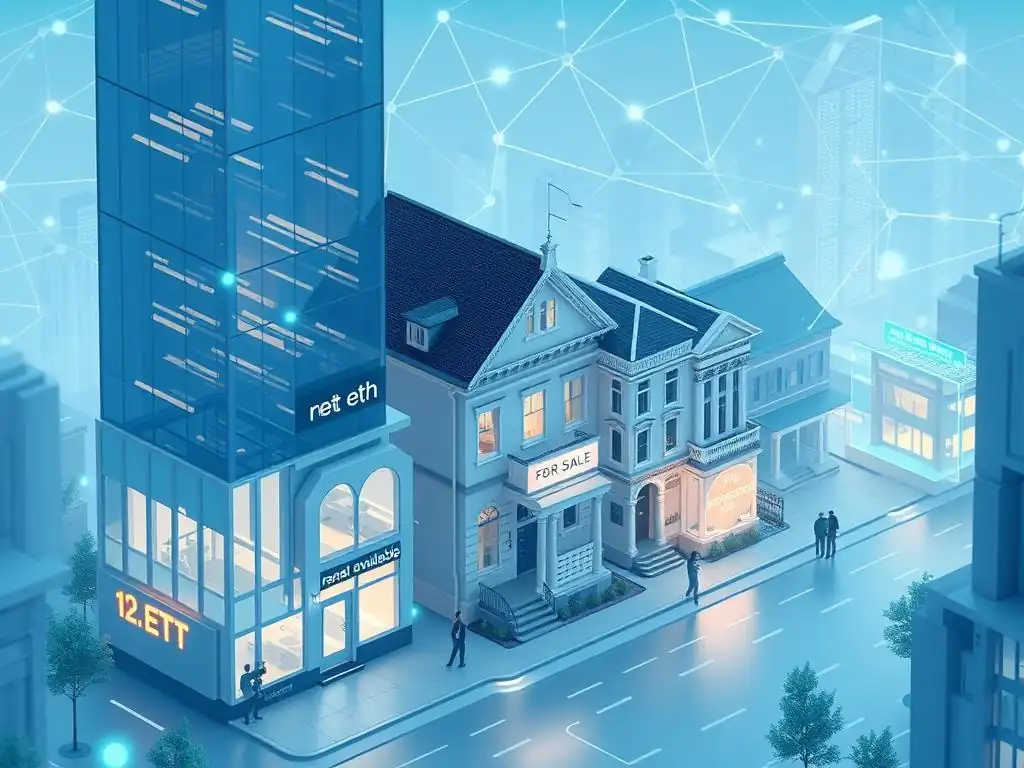
As discussed previously, virtual land ownership via blockchain is a significant economic activity. However, the blockchain metaverse economy integration opportunities around virtual real estate extend beyond simple buying and selling. Owners of virtual land can develop their properties, building structures ranging from virtual homes and offices to shops, galleries, and entertainment venues. These developed properties can then generate revenue through various means: renting out space for virtual events or advertising, selling digital goods or services from a virtual storefront, hosting experiences that charge an entry fee, or even offering virtual office space.
The market for virtual real estate development and services is growing, with architectural firms and digital design studios specializing in creating structures and experiences within platforms like Decentraland and The Sandbox. Reports indicate sales of virtual land parcels reaching hundreds of thousands or even millions of dollars, demonstrating the perceived value of prime virtual locations. Furthermore, companies are emerging that offer virtual property management services, facilitating rentals and development for owners who may not have the time or expertise. This parallels the physical real estate market, creating complex economic layers within the metaverse powered by blockchain-based ownership.
E-commerce in the Metaverse: Secure and Transparent Transactions
The metaverse is poised to become a significant channel for e-commerce, allowing brands and creators to sell digital and even physical goods directly to consumers within immersive virtual environments. Blockchain facilitates secure and transparent transactions for these purchases. When buying a digital item, like an NFT wearable, the transaction is recorded on the blockchain, providing immutable proof of purchase and ownership. For physical goods ordered within the metaverse, blockchain can be used to process payments securely using cryptocurrency or stablecoins, and potentially track the order or provide a verifiable digital receipt.
Brands like Nike, Adidas, and Gucci have already launched virtual products (often as NFTs) and opened virtual stores or experiences in metaverses like Roblox and The Sandbox. The potential revenue is substantial; Morgan Stanley projected that NFTs and the metaverse could represent a €50 billion opportunity for luxury brands by 2030.
Using blockchain for these transactions ensures that purchases are verifiable, reduces the risk of fraud, and allows for the potential integration of loyalty programs or rewards distributed via tokens. This creates a direct and trustworthy channel for commerce within the immersive digital space, representing a major blockchain metaverse economy integration opportunity for businesses.
Challenges and Opportunities in the Blockchain-Powered Metaverse Economy
Scalability Issues of Blockchain Networks in the Metaverse
One of the most significant technical hurdles for the mass adoption of a blockchain-powered metaverse economy is the scalability of current blockchain networks. A truly immersive and persistent metaverse could host millions of users simultaneously, each generating numerous micro-transactions related to movement, interaction, and asset transfer.
Traditional blockchains like Ethereum, in their original form, have limited transaction throughput (e.g., around 15-30 transactions per second for Ethereum mainnet before upgrades) and can suffer from high transaction fees (gas fees) during periods of high network congestion. This is insufficient for the volume and speed required for a dynamic, real-time virtual world experience.
However, significant opportunities lie in the development and implementation of scaling solutions. Layer 2 scaling solutions such as rollups (Optimistic Rollups like Optimism and Arbitrum, and Zero-Knowledge Rollups like zkSync and StarkNet) process transactions off the main chain and periodically submit compressed data or proofs to the layer 1 chain, dramatically increasing throughput and reducing costs. Sidechains like Polygon also offer higher transaction capacities at lower costs. The successful implementation and widespread adoption of these scaling technologies are crucial for enabling the fluid, high-volume economic activity necessary for a thriving blockchain metaverse economy.
Regulatory Uncertainty and Legal Frameworks
The nascent nature of the blockchain metaverse economy means that regulatory and legal frameworks are still largely undeveloped and uncertain. This poses challenges related to property rights for virtual assets, taxation of virtual income and transactions, intellectual property enforcement in virtual worlds, and consumer protection. The decentralized nature of many metaverse projects and the global reach of users complicate jurisdictional issues. For instance, how should virtual land ownership be legally recognized and protected across different countries? How should income earned from play-to-earn games or the sale of virtual assets be taxed?
This uncertainty creates risks for both users and businesses operating within the metaverse. However, it also presents opportunities for proactive engagement with policymakers and the development of industry standards. Clearer regulations could foster greater confidence and attract more mainstream participation and investment. As regulatory bodies around the world begin to address digital assets and virtual worlds, the development of sensible and adaptable legal frameworks will be essential for the long-term growth and stability of the blockchain metaverse economy. Navigating this evolving landscape is a key challenge and opportunity for stakeholders.
Ensuring User Privacy and Data Security in Decentralized Metaverses
While blockchain offers security through cryptography and transparency through public ledgers, ensuring user privacy in a decentralized metaverse presents unique challenges. Transactions and asset ownership are typically linked to public blockchain addresses, which, while pseudonymous, can potentially be de-anonymized through data analysis or linking to off-chain information. A highly transparent ledger of all metaverse economic activity could raise privacy concerns for users regarding their spending habits, asset holdings, and interactions.
Opportunities exist in leveraging privacy-enhancing technologies within blockchain, such as zero-knowledge proofs (ZKPs), which allow for verification of transactions or data without revealing the underlying information. Integrating decentralized identity solutions that give users fine-grained control over sharing their data is also crucial.
Furthermore, while blockchain secures ownership and transactions, the platforms and applications built on the blockchain must also implement robust security measures to protect user wallets, prevent phishing attacks, and secure off-chain data. Balancing the transparency benefits of blockchain with the need for user privacy and robust data security is a critical ongoing effort in building a trustworthy blockchain metaverse economy.
Bridging the Gap Between the Physical and Digital Worlds
A significant challenge in realizing the full potential of the metaverse economy is seamlessly bridging the gap between the physical and digital worlds. This involves not only the technological interface (like VR/AR hardware) but also the economic and social connections. How do assets and identities flow between these realms?
How is value generated in the metaverse exchanged for value in the physical world? How do physical world regulations and social norms translate into the digital space? Ensuring smooth and secure transitions, for example, when cashing out virtual earnings or using a digital identity for physical world interactions, requires robust infrastructure and standards.
Opportunities lie in the development of improved hardware for immersive experiences, more intuitive user interfaces, and protocols that link blockchain-based digital assets and identities to the physical world. This could involve using NFTs as proof of ownership for both digital and physical items, integrating metaverse economies with traditional payment systems, and developing legal frameworks that recognize digital property rights in the physical world. Successfully bridging this gap is essential for the metaverse to become a truly integrated part of daily life and for the blockchain metaverse economy integration opportunities to be fully realized by a broad audience.
The Future of the Blockchain Metaverse Economy
Emerging Trends and Innovations in Blockchain and Metaverse Technologies
The landscape of blockchain and metaverse technologies is evolving rapidly, with several emerging trends poised to shape the future economy. Beyond existing Layer 2 scaling solutions, advancements in areas like sharding and new consensus mechanisms aim to further increase blockchain throughput to support massive metaverse populations. The development of Soulbound Tokens (SBTs), non-transferable NFTs representing identity, reputation, or credentials, could play a crucial role in building social and economic trust within virtual worlds, enabling things like verifiable memberships or non-transferable achievements.
Further innovations include the integration of Artificial Intelligence (AI) to create more dynamic and responsive virtual environments and non-player characters (NPCs), enhancing immersion and creating new economic roles. Haptic feedback technology is improving, promising more tactile and realistic interactions within the metaverse. Cross-chain bridges are becoming more sophisticated, potentially allowing assets and data to move more freely between different blockchain networks, which is vital for fostering broader interoperability across diverse metaverse platforms built on different chains. These technological advancements are continuously expanding the scope of blockchain metaverse economy integration opportunities.
The Potential for Mass Adoption of Metaverse Experiences
Achieving mass adoption for the blockchain-powered metaverse economy requires overcoming current barriers such as high entry costs (for both hardware and initial digital asset purchases), complexity of blockchain technology for average users, and limited user experience compared to traditional applications. However, the potential scale is immense. As technology improves, hardware becomes more affordable and accessible, and user interfaces become more intuitive, the metaverse could attract billions of users. The appeal of immersive social interaction, new forms of entertainment, and opportunities for earning potential could drive this growth.
Key to mass adoption will be the development of compelling use cases that resonate with a broad audience beyond early adopters and crypto enthusiasts. This includes high-quality gaming experiences, engaging social platforms, accessible virtual events, and practical applications for education, work, and commerce. As more major brands, content creators, and developers enter the space and build user-friendly experiences leveraging the underlying blockchain technology, the metaverse economy will become more accessible and attractive to a global audience, significantly expanding the scope of blockchain metaverse economy integration opportunities.
Market Size Projections for the Blockchain Metaverse Economy
While still in its early stages, the projected market size for the metaverse economy, significantly influenced by blockchain integration, is staggering. Various analyst reports provide different figures, but all point towards exponential growth. As mentioned earlier, McKinsey projected the metaverse could generate $5 trillion in value by 2030. Bloomberg Intelligence provided a more conservative estimate of the metaverse market opportunity reaching $800 billion by 2024, encompassing gaming, entertainment, and social media. Citi GPS in 2022 suggested the metaverse economy could be worth between $8 trillion and $13 trillion by 2030.
These projections, while estimates, underscore the massive economic potential unlocked by the convergence of blockchain and the metaverse. They account for revenue streams from e-commerce in the metaverse, virtual advertising, digital events, hardware, software, and the creation and trading of digital assets (NFTs). The growth is expected to be driven by increasing user adoption, technological advancements, and the expansion of blockchain metaverse economy integration opportunities across various sectors. Investors, developers, and businesses are closely watching these figures as they strategize for participation in this emerging digital frontier.
Conclusion: Embracing the Decentralized Future of the Metaverse
The Blockchain Metaverse Economy: A New Paradigm for Digital Interaction
The convergence of blockchain technology and the metaverse is not merely creating new virtual worlds; it is forging a new paradigm for digital interaction and economic activity. By enabling verifiable digital ownership, transparent transactions, decentralized governance, and potential interoperability, blockchain provides the foundational elements for a user-centric, open, and resilient digital economy within immersive virtual environments. This shift empowers users from being passive consumers to active participants, owners, and creators, fundamentally altering the relationship between individuals and digital platforms.
The blockchain metaverse economy is characterized by novel concepts like virtual land ownership as a real asset class, play-to-earn models that provide tangible value for in-game activities, and decentralized marketplaces for digital goods. While challenges related to scalability, regulation, and user experience remain, the rapid pace of innovation in both blockchain and metaverse technologies suggests these hurdles are being addressed. The opportunities for value creation, entrepreneurship, and community building in this decentralized digital frontier are vast and continue to expand as the technology matures.
Call to Action: Exploring Investment and Development Opportunities in the Metaverse
For those interested in the future of digital technology and economics, the blockchain-powered metaverse economy represents a compelling area for exploration. The diverse blockchain metaverse economy integration opportunities span various sectors, from gaming and entertainment to real estate, retail, and digital identity management. Whether you are a developer looking to build decentralized applications and experiences, an artist or creator wanting to monetize digital content via NFTs, an investor interested in virtual assets or metaverse platforms, or a business seeking new channels for customer engagement and commerce, the metaverse offers fertile ground.
Understanding the underlying blockchain technology and its specific applications within virtual worlds is crucial for navigating this space effectively. As the metaverse continues to evolve from theoretical concept to tangible reality, driven by ongoing blockchain innovation, staying informed about emerging trends and identifying key areas for involvement will be essential to capitalize on the transformative potential of this decentralized digital future.
Frequently Asked Questions
What role does blockchain play in the metaverse economy?
Blockchain provides the underlying infrastructure for a secure and transparent metaverse economy. It enables digital ownership through NFTs and facilitates decentralized transactions, crucial for a fair and immersive experience.
How can businesses leverage blockchain for metaverse integration?
Businesses can use blockchain to create unique digital assets, build immersive brand experiences, and establish new revenue streams within the metaverse. This opens opportunities for marketing, sales, and customer engagement.
What are the key blockchain applications beyond cryptocurrencies in the metaverse?
Beyond cryptocurrencies, blockchain enables decentralized finance (DeFi) within the metaverse, allowing for lending, borrowing, and trading of virtual assets. It also facilitates secure identity management and verifiable digital ownership.
What are the potential regulatory challenges for the blockchain metaverse economy?
Regulatory challenges include data privacy concerns, protection of intellectual property, and prevention of illicit activities within virtual worlds. Clear guidelines are needed to foster innovation while mitigating risks.
What are the future integration opportunities for blockchain and the metaverse economy?
Future opportunities include building interoperable metaverse platforms, developing advanced decentralized applications (dApps), and creating new economic models powered by blockchain technology. This fosters a more connected and robust digital world.
Final Reflection: Embracing the Decentralized Future
The exploration of the blockchain metaverse economy integration opportunities has revealed a landscape brimming with potential, yet also fraught with challenges. The convergence of blockchain technology and immersive digital worlds is no longer a futuristic fantasy, but a rapidly evolving reality shaping how we interact, transact, and even define ownership in the digital age. Understanding this integration is crucial for anyone seeking to navigate the future of commerce, creativity, and community.
The impact of the blockchain metaverse economy extends far beyond mere technological innovation. It's fundamentally reshaping the cultural and social landscape, offering new avenues for self-expression, economic empowerment, and decentralized governance. Witnessing the emergence of digital identities, virtual real estate, and decentralized autonomous organizations (DAOs) within these metaverses underscores the profound shift towards a more user-centric and equitable digital future. The metaverse is coming, and it will affect every product, company, and person that we touch. It’s a big deal.
- Tim Sweeney, CEO of Epic Games. This quote encapsulates the transformative power and pervasive reach that the blockchain metaverse economy promises.
As we stand on the cusp of this new era, I invite you to reflect on your own role in shaping the decentralized future. Consider how you can leverage the opportunities presented by the blockchain metaverse economy to create, connect, and contribute to a more inclusive and empowering digital world. The possibilities are limitless; the future is decentralized; and the power to build it lies within each of us.
Dive Deeper: Build Your Metaverse Future!
Thank you for exploring the groundbreaking intersection of blockchain and the metaverse! Now that you understand the potential of this revolutionary economy, it's time to take your knowledge and turn it into action. Let's build the future, together.
Here's how you can get started:
- Start small but build steady: Begin by claiming your digital identity and exploring established metaverse platforms. Experiment with digital asset creation and trading to understand the dynamics of the metaverse economy.
- Share your insights and inspire others! Write a blog post, create a video, or simply start a conversation on social media using #MetaverseEconomy and #BlockchainTrends. Let's spread the word!
- Research emerging metaverse projects built on blockchain. Identify the ones that resonate with your interests and explore opportunities to contribute, whether through development, content creation, or community building. You might find your niche!
What's the first step you'll take to participate in shaping the metaverse economy? Share your plans in the comments below!
Leave a Reply