
Microfinance Reimagined: Blockchain Solutions for Poverty Alleviation and Economic Growth


Welcome to Blockchain Trends, your guide to understanding the revolutionary impact of blockchain technology beyond the hype.
Imagine a world where microfinance reaches the most vulnerable populations directly, securely, and transparently. Our latest article, "Microfinance Reimagined: Blockchain Solutions for Poverty Alleviation and Economic Growth," dives deep into the potential of blockchain microfinance poverty alleviation. Is blockchain the key to unlocking economic opportunity for all? Read on to explore the innovative applications and future implications of this groundbreaking approach, and discover how it's reshaping the landscape of development finance.
- Introduction: The Untapped Potential of Blockchain in Microfinance
- Blockchain Microfinance: A Solution for Poverty Alleviation
- Use Cases: Blockchain Applications in Microfinance
- The Benefits of Blockchain-Based Microfinance for Economic Growth
- Overcoming Challenges and Ensuring Sustainable Blockchain Microfinance Initiatives
- The Future of Blockchain and Financial Inclusion: A Synergistic Approach
- Conclusion: Blockchain's Transformative Power in Alleviating Poverty Through Microfinance
-
Frequently Asked Questions
- How can blockchain technology specifically help with microfinance?
- What role does DeFi (Decentralized Finance) play in blockchain microfinance?
- How does blockchain microfinance contribute to poverty alleviation?
- What are some of the regulatory challenges surrounding blockchain-based microfinance initiatives?
- What is the future potential of blockchain microfinance and its impact on economic growth?
- Final Reflection: Empowering Futures Through Decentralized Finance
- Empower Communities: Ignite Change with Blockchain
Introduction: The Untapped Potential of Blockchain in Microfinance
The Current State of Microfinance: Challenges and Limitations
Microfinance, the provision of financial services to low-income individuals or those who do not have access to traditional banking services, has been a crucial tool in poverty alleviation efforts globally. However, the existing microfinance infrastructure faces significant challenges that limit its reach and effectiveness.
High operational costs associated with managing small, frequent transactions and reaching remote populations often translate into higher interest rates for borrowers, sometimes exceeding 30% or even 50% annually in certain regions, making loans less affordable. Furthermore, the lack of robust identity verification systems and credit histories for potential clients in underserved areas creates significant risks for lenders and excludes millions from accessing necessary capital.
Manual processes for loan disbursement, collection, and record-keeping are time-consuming and prone to errors. This inefficiency burdens microfinance institutions (MFIs), consuming resources that could otherwise be directed towards expanding services or reducing costs for beneficiaries.
The absence of a transparent, immutable ledger also makes it difficult to track the flow of funds accurately, potentially leading to misuse or leakage. These systemic hurdles mean that despite decades of effort, a substantial portion of the world's population, estimated to be over 1.7 billion adults, remains unbanked or underbanked, highlighting the urgent need for innovative solutions to truly unlock the potential of microfinance for poverty alleviation and economic growth.
Blockchain Technology: A Paradigm Shift for Financial Inclusion
Blockchain technology offers a decentralized, transparent, and secure ledger system that has the potential to fundamentally transform the microfinance landscape. By providing a trustless environment where transactions are recorded immutably and verified by a network rather than a central authority, blockchain can address many of the inefficiencies and limitations inherent in traditional microfinance models.
This foundational technology enables peer-to-peer transactions, reduces reliance on intermediaries, and can significantly lower the costs associated with financial services. The decentralized nature means that financial services can be extended to individuals in remote areas without requiring physical bank branches, a critical factor for improving financial inclusion.
The inherent security features of blockchain, such as cryptographic hashing and distributed consensus mechanisms, make it highly resistant to fraud and manipulation. This enhanced security is particularly valuable in environments where trust in traditional institutions may be low.
Moreover, blockchain's ability to create digital identities and verifiable transaction histories for individuals who lack traditional documentation can pave the way for them to access financial services for the first time. Exploring the application of blockchain microfinance for poverty alleviation involves leveraging these technological advantages to build more efficient, transparent, and accessible financial systems tailored to the needs of the world's most vulnerable populations.
Blockchain Microfinance: A Solution for Poverty Alleviation
Reducing Operational Costs and Improving Efficiency in Microloan Disbursement
One of the most significant advantages blockchain technology brings to the microfinance sector is the potential for drastically reducing operational costs. Traditional microfinance involves labor-intensive processes for client registration, loan application processing, due diligence, disbursement, and repayment tracking. These steps often require significant human intervention and physical infrastructure. By leveraging blockchain, much of this can be automated through smart contracts, which are self-executing contracts with the terms of the agreement directly written into code. Once triggered by pre-defined conditions (e.g., a repayment date), the smart contract automatically processes the transaction.
This automation minimizes the need for manual processing, thereby reducing administrative overheads. Furthermore, blockchain platforms can facilitate direct peer-to-peer lending or more efficient capital deployment from institutions by removing intermediaries, cutting down on associated fees and delays.
Pilot programs exploring blockchain microfinance for poverty alleviation have demonstrated potential cost reductions. While precise global figures are still emerging, estimates from various studies suggest that blockchain could potentially lower transaction costs in financial services by up to 80% in some use cases, a saving that can be passed on to borrowers in the form of lower interest rates or used by MFIs to expand their reach.
Enhancing Transparency and Accountability in Microfinance Transactions
Transparency and accountability are critical for building trust between microfinance institutions, lenders, and borrowers, and for ensuring that funds are used effectively for their intended purpose – poverty alleviation. Traditional systems can be opaque, making it difficult for all parties to track the flow of funds or verify transaction details. Blockchain provides an immutable and transparent ledger where every transaction is recorded and visible to all participants in the network (depending on the blockchain type, e.g., public vs. permissioned). This inherent transparency makes it significantly harder for funds to be diverted or misused.
For microloan recipients, this means they have a clear, verifiable record of their loan disbursements and repayments, reducing the possibility of disputes over balances. For MFIs and the donors or investors who fund them, it provides unprecedented visibility into how and where funds are being utilized at the micro-level, enhancing accountability and allowing for better impact assessment. This level of verifiable transparency is a cornerstone of effective blockchain microfinance poverty alleviation strategies, ensuring that resources dedicated to economic empowerment reach the hands of those who need them most and are used responsibly.
Secure Identity Management for Unbanked Populations using Blockchain
A major barrier to financial inclusion for billions worldwide is the lack of official identification documents or verifiable identity records, making it impossible for them to open bank accounts or access formal financial services like microloans. Blockchain technology offers a promising solution through decentralized identity systems. Individuals can create a self-sovereign digital identity stored securely on the blockchain, controlled by the individual themselves. This digital identity can accumulate verified credentials over time, such as proof of address (via trusted third parties), educational qualifications, or even a history of participation in community programs.
Crucially, this digital identity can also build a credit history based on micro-transactions and repayment behavior within blockchain-based microfinance platforms. Even small, informal transactions or repayments of microloans can be recorded immutably, creating a verifiable track record of trustworthiness. This allows individuals who previously had no financial footprint to establish credibility and access larger loans or other financial products. Implementing secure digital identities via blockchain microfinance is a fundamental step towards breaking the cycle of exclusion for the unbanked, providing them with a portable, verifiable identity that can unlock access to financial services and opportunities for economic advancement.
Use Cases: Blockchain Applications in Microfinance
AgriLedger in Haiti: Impact on Smallholder Farmers
AgriLedger is a notable example demonstrating the potential of blockchain beyond traditional microfinance loans, focusing instead on value chains relevant to low-income populations, particularly smallholder farmers. Operating in Haiti, AgriLedger developed a blockchain-based system to improve transparency and efficiency in the agricultural supply chain, directly impacting farmers who often struggle with unfair pricing and lack of access to market information and financial services. By recording transactions between farmers, distributors, and buyers on a shared, immutable ledger, the platform ensures that farmers receive fair payment for their produce and provides them with a verifiable transaction history.
This system helps build trust among participants and, importantly, creates a digital record of farmers' economic activity. This verifiable history can then be used as a form of collateral or proof of income, potentially enabling them to access micro-loans or other financial products from participating MFIs or lenders who trust the data on the blockchain.
While not a direct microloan platform, AgriLedger's approach illustrates how blockchain can address systemic issues in informal economies, indirectly improving financial access and stability for vulnerable groups, contributing to the broader goal of blockchain microfinance poverty alleviation by empowering individuals within their existing economic activities.
Bloom Impact in Kenya: Empowering Small Businesses
Bloom Impact, though its model has evolved, is an example of an initiative that explored leveraging technology, including principles aligned with blockchain's potential for digital identity and efficient matching, to connect small and micro-enterprises (SMEs) in Kenya with suitable financial products. The platform aimed to act as a marketplace, helping small business owners navigate the complex landscape of financial services offered by various providers. By creating digital profiles for these businesses, including basic operational data and needs, Bloom sought to make them more visible and accessible to lenders, including those offering microfinance-style products.
While not purely a blockchain implementation in its initial phase, the concept aligns with how blockchain could provide verifiable business identities and transaction histories for informal SMEs. A blockchain-based version could immutably record sales, expenses, and interactions within supply chains (similar to AgriLedger), creating a rich, trustworthy data set that lenders could use to assess creditworthiness without relying solely on traditional, often unavailable, documents. This approach highlights how technology, including blockchain, can bridge the information gap that excludes millions of small businesses from accessing the capital needed for growth, a key component of blockchain microfinance for poverty alleviation.
Real-World Examples: How Blockchain is Bridging the Financial Gap
Beyond specific named projects, several initiatives globally are piloting blockchain solutions directly for microfinance operations. For instance, some non-governmental organizations (NGOs) and social enterprises are experimenting with issuing micro-tokens on a blockchain to disburse aid or small grants, providing recipients with a digital asset they can then exchange for goods or services within a local network, with all transactions transparently recorded. Other projects are using blockchain to create decentralized savings and loan groups, mimicking traditional community-based financial systems (like ROSCAs) but with enhanced transparency and automated rules enforced by smart contracts.
Consider a pilot program in Southeast Asia where a blockchain platform is used to manage micro-loans for women entrepreneurs. The platform records loan disbursements, tracks repayments via mobile money integrated with the blockchain, and allows peer-to-peer support and verification. Reports from such pilots indicate improved repayment rates (sometimes exceeding 95% in well-managed groups) due to increased transparency and accountability, and lower administrative costs compared to traditional methods. These real-world applications demonstrate that blockchain microfinance is moving from concept to reality, actively contributing to poverty alleviation by creating more accessible, affordable, and trustworthy financial pathways for those previously excluded.
The Benefits of Blockchain-Based Microfinance for Economic Growth
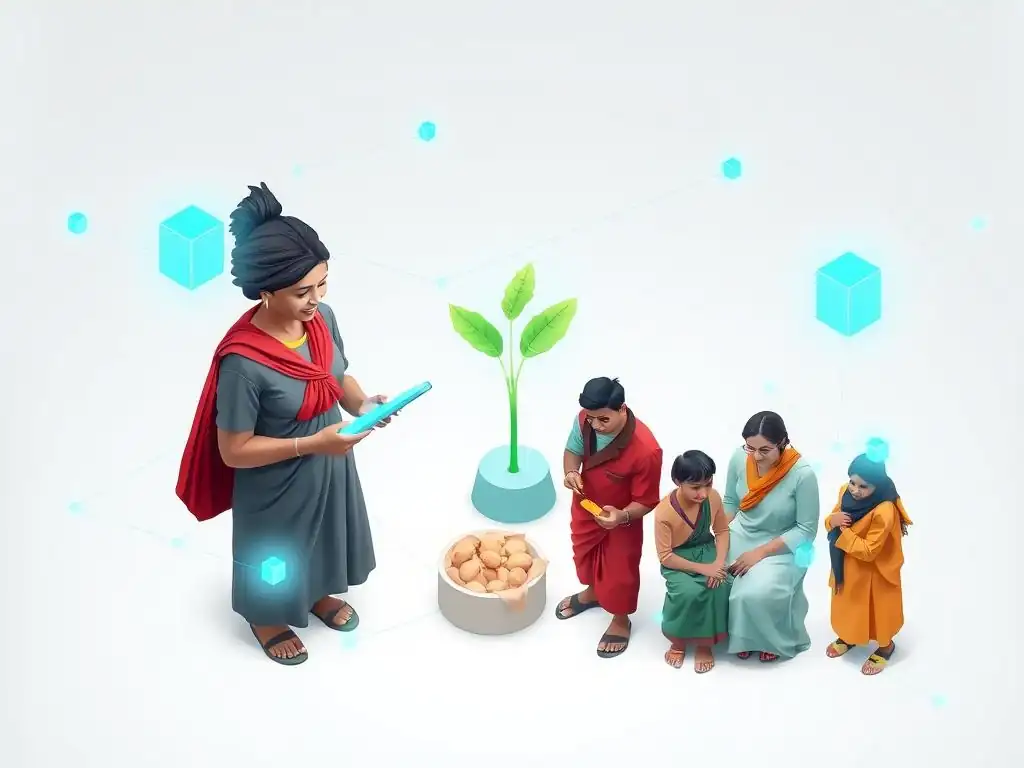
Increased Access to Capital for Small Businesses and Entrepreneurs
One of the most direct ways blockchain microfinance contributes to economic growth is by significantly increasing access to capital for small businesses and entrepreneurs in underserved regions. As discussed, blockchain addresses key barriers like lack of identity, credit history, and high transaction costs that prevent aspiring business owners from securing the funds needed to start or expand their ventures. By providing a secure, verifiable digital identity and an immutable record of even small transactions, blockchain platforms enable individuals to build a financial reputation, making them eligible for micro-loans and other forms of financing they couldn't access through traditional channels.
This injection of capital allows entrepreneurs to invest in inventory, equipment, or training, leading to increased productivity and profitability. Access to timely and affordable finance can mean the difference between a struggling informal business and a thriving small enterprise that creates jobs and stimulates local economic activity. Initiatives focused on blockchain microfinance poverty alleviation are specifically designed to channel funds more efficiently and securely to these productive uses, unlocking entrepreneurial potential that was previously constrained by financial exclusion.
Fostering Financial Literacy and Empowerment in Underserved Communities
Implementing blockchain-based microfinance solutions can also play a vital role in fostering financial literacy and empowering individuals in underserved communities. Engaging with digital wallets, understanding transaction histories on a transparent ledger, and interacting with smart contracts requires a basic level of digital and financial understanding. As users adopt these platforms, they naturally gain exposure to concepts like digital assets, transaction fees (even if minimal), and the importance of secure digital identities.
Many blockchain microfinance initiatives incorporate educational components, teaching users how to manage their digital wallets, understand their loan terms as coded in smart contracts, and track their financial progress transparently. This process demystifies financial services and empowers individuals to take greater control of their economic lives. By becoming more financially literate and technologically comfortable, beneficiaries are better equipped to make informed decisions about saving, borrowing, and investing, contributing to their long-term economic resilience and reducing vulnerability, which is a critical aspect of sustainable poverty alleviation.
Stimulating Local Economies Through Decentralized Finance (DeFi)
Blockchain's potential extends beyond simply digitizing existing microfinance models; it can also facilitate decentralized finance (DeFi) applications that directly stimulate local economies. DeFi protocols allow for peer-to-peer lending, borrowing, and yield farming without relying on traditional banks or financial institutions. In the context of microfinance, this could mean communities pooling resources in a decentralized manner to provide loans to local businesses or individuals, with rules and interest rates governed by smart contracts.
Such decentralized systems keep capital circulating within the community, generating returns for local savers while providing affordable credit to local borrowers. This contrasts with traditional models where capital might be sourced externally and profits repatriated. Furthermore, blockchain tokens or stablecoins can facilitate local commerce, enabling secure and low-cost transactions between community members. By leveraging the principles of DeFi and blockchain microfinance, communities can build more resilient and self-sufficient local economies, creating a virtuous cycle of investment, growth, and poverty alleviation from the ground up.
Overcoming Challenges and Ensuring Sustainable Blockchain Microfinance Initiatives
Regulatory Hurdles and Compliance Considerations for Blockchain Microfinance
Despite its promise, the path to widespread adoption of blockchain microfinance is not without obstacles, particularly concerning regulation and compliance. Financial services, including microfinance, are heavily regulated to protect consumers and prevent illicit activities like money laundering and terrorist financing (AML/CFT). Applying existing regulations, designed for traditional financial institutions, to decentralized blockchain platforms can be challenging. Regulators are often still developing frameworks for digital assets, smart contracts, and decentralized autonomous organizations (DAOs).
Blockchain microfinance initiatives must navigate this complex and evolving regulatory landscape. This includes complying with Know Your Customer (KYC) requirements, which can be difficult when serving unbanked populations who lack traditional identification. Finding ways to integrate verifiable digital identities with regulatory needs is crucial. Furthermore, legal clarity is needed regarding the status of smart contracts as legally binding agreements and the responsibility for enforcing rules within decentralized protocols. Successful blockchain microfinance poverty alleviation efforts will require close collaboration with regulators to build frameworks that foster innovation while ensuring consumer protection and financial stability.
Addressing Scalability and Interoperability Issues in Blockchain Microfinance Platforms
Scalability and interoperability are technical challenges that need robust solutions for blockchain microfinance to reach millions of people globally. Many early blockchain networks faced limitations in processing a high volume of transactions quickly and affordably, which is essential for microfinance with its numerous small transactions. While newer blockchain protocols and Layer 2 scaling solutions have significantly improved transaction throughput and reduced fees, ensuring these solutions are stable, secure, and cost-effective for micro-transactions remains an ongoing effort.
Interoperability – the ability of different blockchain networks or a blockchain network and traditional systems to exchange information and assets – is also vital. For blockchain microfinance platforms to be truly effective, they need to interact with existing mobile money systems, local payment gateways, and potentially traditional banking infrastructure for off-ramping/on-ramping funds. Building seamless bridges between decentralized systems and the tools people already use is necessary for widespread adoption. Overcoming these technical hurdles is key to building sustainable blockchain microfinance initiatives that can operate at the scale required for meaningful poverty alleviation.
Data Privacy and Security Concerns in Decentralized Microfinance Systems
While blockchain offers enhanced security through cryptography and decentralization, data privacy and security concerns still need careful consideration, especially in the context of sensitive financial information for vulnerable populations. Although transactions on public blockchains are often pseudonymous, the data is permanently recorded and publicly visible. For microfinance users, revealing transaction patterns or loan details might raise privacy concerns. Permissioned blockchains or privacy-enhancing technologies can offer solutions by restricting data visibility to authorized parties while maintaining the benefits of an immutable ledger.
Furthermore, the security of digital wallets and private keys is paramount. Users, particularly those new to digital technologies, need robust education and support to prevent loss of funds due to lost keys or phishing attacks. While smart contracts automate processes, vulnerabilities in their code can be exploited, leading to financial losses. Rigorous auditing and security best practices are essential. Ensuring the security and privacy of users' financial data and digital assets is a non-negotiable requirement for building trust and enabling the safe and effective use of blockchain microfinance for poverty alleviation.
The Future of Blockchain and Financial Inclusion: A Synergistic Approach
The Role of Smart Contracts in Automating Microloan Processes
Looking ahead, smart contracts are poised to play an increasingly central role in the future of blockchain microfinance. Their ability to automate the entire lifecycle of a microloan – from eligibility verification based on on-chain identity data to automated disbursement upon meeting conditions, scheduled repayment collection, and even automated actions in case of default (as defined by the contract) – drastically reduces the administrative burden on MFIs and minimizes human error. This automation not only cuts costs but also speeds up the loan process, providing faster access to funds for entrepreneurs who need capital quickly to seize opportunities.
For borrowers, smart contracts ensure transparency regarding the terms of their loan; the rules are coded and visible on the blockchain, removing ambiguity. Future developments might include more sophisticated smart contracts that dynamically adjust loan terms based on verifiable on-chain business performance or integrate with external data oracles (e.g., weather data for agricultural loans) to trigger flexible repayment schedules in case of unforeseen events. This level of automation and transparency, enabled by smart contracts, is fundamental to scaling blockchain microfinance initiatives sustainably and effectively for poverty alleviation.
Exploring the Potential of Decentralized Autonomous Organizations (DAOs) in Microfinance
Decentralized Autonomous Organizations (DAOs) represent another frontier for blockchain microfinance. A DAO is an organization whose rules are encoded as a computer program, transparent on the blockchain, controlled by stakeholders, and not influenced by a central government. In microfinance, DAOs could enable communities or networks of lenders and borrowers to collectively govern a microfinance fund or platform. Stakeholders (e.g., loan recipients who have repaid successfully, local community leaders, impact investors) could vote on key decisions, such as interest rates, loan eligibility criteria, or how to manage the fund's capital.
This model decentralizes power and decision-making, potentially making microfinance initiatives more responsive to the specific needs of the communities they serve. It fosters a sense of ownership and participation among beneficiaries, which can strengthen commitment and repayment rates. While still an emerging concept with governance challenges, DAOs offer a path towards truly community-owned and governed blockchain microfinance systems, moving beyond traditional institutional models to empower local populations in managing their own financial resources for collective economic growth and poverty alleviation.
Blockchain Microfinance: Towards a More Equitable and Inclusive Financial System
Ultimately, the synergistic application of blockchain technology in microfinance is driving a movement towards a more equitable and inclusive global financial system. By dismantling traditional barriers to access, reducing costs, enhancing transparency, and empowering individuals through digital identity and financial literacy, blockchain is enabling financial services to reach the previously unreached. This is not just about providing loans; it's about creating pathways for economic participation and self-sufficiency.
The combination of efficient, transparent loan disbursement via smart contracts, community-driven governance through DAOs, secure digital identities for the unbanked, and the ability to build verifiable credit histories on the blockchain creates a powerful framework. This framework supports not only individual entrepreneurial success but also strengthens local economies and fosters resilient communities. The future of blockchain microfinance holds the promise of unlocking the economic potential of billions, making significant strides in poverty alleviation and contributing to a more financially just world.
Conclusion: Blockchain's Transformative Power in Alleviating Poverty Through Microfinance
Key Takeaways: The Impact of Blockchain on Microfinance and Economic Development
The exploration of blockchain's role in microfinance reveals its profound potential to address long-standing challenges in serving the financially excluded. Key takeaways include the technology's ability to dramatically lower operational costs and improve the efficiency of microloan processes through automation via smart contracts. Blockchain enhances transparency and accountability, building trust among borrowers, lenders, and institutions by providing an immutable and auditable record of transactions. Furthermore, it offers a crucial solution for secure identity management, enabling individuals without traditional documentation to access financial services and build verifiable credit histories, a fundamental step for financial inclusion.
The impact on economic development is significant. Increased access to capital fuels small businesses and entrepreneurship in underserved areas, stimulating local economies. The engagement with blockchain platforms fosters digital and financial literacy, empowering individuals to manage their finances effectively. Real-world examples, though often in pilot phases, demonstrate tangible benefits, from improved supply chain transparency aiding farmers to platforms connecting small businesses with finance. Blockchain microfinance is proving to be a powerful tool for not just providing credit but creating a more robust, inclusive, and transparent financial ecosystem that directly contributes to poverty alleviation.
Looking Ahead: The Future of Blockchain-Enabled Financial Inclusion
Looking ahead, the future of blockchain-enabled financial inclusion is incredibly promising. As the technology matures and regulatory clarity increases, we can expect to see more widespread adoption of blockchain microfinance solutions. Innovations in scalability and interoperability will make these platforms more accessible and user-friendly, even in areas with limited infrastructure. The integration of advanced smart contracts will automate increasingly complex processes, further reducing costs and risks.
Moreover, the potential of decentralized governance models like DAOs could shift control and ownership of financial resources closer to the communities they serve, fostering truly sustainable and community-driven development. Continued focus on user education and robust security measures will be critical to building trust and ensuring safe participation. The journey of blockchain microfinance towards achieving global poverty alleviation and fostering economic growth is still unfolding, but the foundations are laid for a transformative shift in how financial services are delivered to those who need them most.
Frequently Asked Questions
How can blockchain technology specifically help with microfinance?
Blockchain offers transparent and secure transaction records, reducing the risk of fraud and lowering operational costs. This allows microfinance institutions to offer more accessible and affordable services to underserved communities.
What role does DeFi (Decentralized Finance) play in blockchain microfinance?
DeFi protocols can provide alternative lending and borrowing platforms, cutting out traditional intermediaries. This can lead to higher interest rates for savers and lower borrowing costs for micro-entrepreneurs.
How does blockchain microfinance contribute to poverty alleviation?
By facilitating access to capital and financial services, blockchain empowers individuals to start or expand businesses. This leads to increased income generation and improved economic well-being, directly addressing poverty.
What are some of the regulatory challenges surrounding blockchain-based microfinance initiatives?
Regulatory uncertainty regarding cryptocurrencies and digital assets can hinder adoption. Clear legal frameworks are needed to protect consumers and ensure the stability of the system.
What is the future potential of blockchain microfinance and its impact on economic growth?
Blockchain has the potential to democratize access to finance globally, fostering entrepreneurship and innovation. This could lead to significant economic growth in developing nations and reduced income inequality.
Final Reflection: Empowering Futures Through Decentralized Finance
The exploration of blockchain's potential in microfinance reveals a powerful synergy, demonstrating how decentralized technologies can directly address systemic barriers to poverty alleviation and economic growth. The promise of increased transparency, reduced operational costs, and enhanced access to financial services is not just theoretical; it represents a tangible pathway to empowering marginalized communities and fostering sustainable development in a world grappling with persistent inequality.
This reimagining of microfinance, fueled by blockchain, has the potential to fundamentally reshape the landscape of financial inclusion. It's inspiring to witness how technology can be harnessed to create a more equitable and accessible financial system, one that prioritizes the needs of the underserved. The power of blockchain is not just in its technology, but in its ability to empower individuals and communities to take control of their financial destinies.
This vision resonates deeply, underscoring the transformative potential of blockchain microfinance in building a more just and prosperous future for all.
Now, consider the implications of this exploration for your own perspective. How can you, in your own sphere of influence, champion the adoption of innovative solutions like blockchain microfinance? Reflect on the ways you can support initiatives that promote financial inclusion and empower individuals to break free from the cycle of poverty. The future of microfinance is being written now, and your contribution, however small, can help shape a more equitable and prosperous world for generations to come.
Empower Communities: Ignite Change with Blockchain
Thank you for exploring how blockchain technology can revolutionize microfinance and empower communities worldwide. Now that you've gained insights into this transformative approach, it's time to take action and contribute to a more equitable future.
Here are a few ways you can make a difference:
- Explore platforms that connect lenders directly with entrepreneurs in developing countries utilizing blockchain technology. Consider making a small investment to support a project. This is your primary action.
- Discover and share stories of successful blockchain-based microfinance initiatives on social media using the hashtag #BlockchainForGood. Let's amplify the impact!
- Research existing blockchain solutions in microfinance and identify potential improvements or new applications to propose. Your unique perspective can spark innovation.
What is one small step you can take this week to support blockchain-based microfinance and contribute to global economic empowerment? Share your ideas in the comments below!
Leave a Reply