
Rebuilding Social Contracts: Blockchain's Potential for CommunityLed and Decentralized Governance


Welcome to Blockchain Trends, your compass in the rapidly evolving world of decentralized technologies. Are you ready to move beyond the hype and delve into the real transformative power of blockchain? This week, we're exploring a fascinating frontier: blockchain communityled decentralized governance. How can blockchain rebuild trust and reshape social contracts? Discover the potential, the challenges, and the future of this groundbreaking approach. Read on to unlock the secrets of decentralized decision-making and see how it's poised to revolutionize how we organize and govern ourselves!
Rebuilding Social Contracts: Blockchain's Potential for Community-Led and Decentralized Governance
- Introduction: The Evolving Need for Decentralized Social Contracts
- Understanding Blockchain-Based Community Governance
- Benefits of Blockchain-Enabled Community Governance
-
Use Cases: Blockchain in Action for Decentralized Governance
- Decentralized Autonomous Organizations (DAOs) and Community Management
- Blockchain-Based Voting Systems for Citizen Engagement
- Supply Chain Governance and Ethical Sourcing using Blockchain
- Land Registry and Property Rights Management on the Blockchain
- Decentralized Identity and Secure Data Governance
- Challenges and Considerations for Implementing Blockchain Governance
- Overcoming the Challenges: Strategies for Successful Blockchain Governance
- The Future of Community-Led Governance: A Decentralized Vision
- Conclusion: Embracing Blockchain for a More Equitable Future
-
Frequently Asked Questions
- What is community-led decentralized governance in the context of blockchain technology?
- How does blockchain technology facilitate community-led decentralized governance?
- What are some potential benefits of implementing community-led decentralized governance?
- What are the key challenges in implementing community-led decentralized governance?
- How is community-led decentralized governance being used beyond cryptocurrencies in the broader blockchain ecosystem?
- Final Reflection: Embracing Decentralized Futures
- Unlock Your Community's Potential: Embrace Decentralized Governance!
The Limitations of Traditional Governance Models
Traditional governance structures, whether in nation-states, corporations, or local communities, often suffer from inherent limitations that can lead to inefficiency, lack of transparency, and reduced citizen or member engagement. Centralized authority can become prone to corruption, bureaucratic inertia, and decisions that do not truly reflect the will or needs of the community they serve.
Power concentrated in the hands of a few can create significant barriers to entry for participation, leading to disenfranchisement and a sense of detachment among the broader population. This often results in slow, opaque decision-making processes that struggle to adapt to rapidly changing societal and economic landscapes.
Furthermore, accountability mechanisms in traditional systems can be weak or difficult to enforce. Information asymmetry is common, where those in power possess significantly more data and context than the governed, making effective oversight challenging. This can erode trust between governing bodies and the communities they represent, fostering skepticism and reducing willingness to cooperate or participate. The need for more robust, transparent, and inclusive models of governance has become increasingly apparent in an interconnected world where information flows quickly and communities demand greater agency.
Blockchain Technology: A Catalyst for Societal Transformation
Blockchain technology, initially popularized by cryptocurrencies, has demonstrated a far broader potential to fundamentally alter how we organize and interact. Its core properties – decentralization, immutability, transparency (for public blockchains), and the ability to execute logic via smart contracts – offer compelling solutions to many of the issues plaguing traditional governance models. By distributing data across a network and securing it cryptographically, blockchain can create systems resistant to single points of failure or manipulation, fostering a new level of trust not based on intermediaries but on cryptographic proof.
This technological shift enables the possibility of creating truly blockchain communityled decentralized governance systems. Instead of relying on hierarchical structures and opaque processes, communities can leverage blockchain to establish verifiable, transparent, and automated rules for collective decision-making and resource management. This moves beyond simple digital tools for existing systems and proposes a foundational change in how social contracts and organizational structures are designed and executed, opening avenues for greater participation, accountability, and efficiency in various forms of collective action and governance.
Understanding Blockchain-Based Community Governance
Defining Community-Led Governance with Blockchain
Community-led governance, when empowered by blockchain technology, refers to systems where decision-making power and control are distributed among the members of a specific community, rather than being concentrated in a central authority. In this model, blockchain serves as the underlying infrastructure to record, verify, and execute governance decisions in a transparent and immutable manner.
It moves beyond simple digital voting to encompass the entire lifecycle of governance, from proposing ideas and debating options to casting votes and automatically enacting outcomes based on predefined rules embedded in smart contracts. This framework is particularly relevant for organizations like Decentralized Autonomous Organizations (DAOs), online communities, cooperatives, or even local civic groups seeking more equitable and verifiable governance.
The essence of blockchain communityled decentralized governance is the shift from permissioned, trust-based intermediaries to permissionless, trust-minimized protocols. Community members, often holding governance tokens or having their identity verified on-chain, can directly participate in proposing changes, funding initiatives, and voting on key decisions affecting the collective. The blockchain ensures that votes are counted accurately, rules are applied consistently, and the history of all governance actions is publicly auditable, building a foundation of verifiable trust among participants who may not know each other personally.
Key Principles of Decentralized Governance Systems
Decentralized governance systems built on blockchain typically adhere to several core principles designed to ensure fairness, transparency, and resilience. The first is transparency: all governance proposals, discussions (often linked or recorded on-chain), and voting outcomes are publicly accessible on the blockchain, allowing any member to scrutinize the process. This contrasts sharply with the often-opaque board meetings or political backroom deals of traditional systems. A second principle is immutability: once a decision is recorded on the blockchain, it cannot be retroactively altered or deleted by any single party, providing a reliable record of collective action.
Another crucial principle is distributed control and participation. Power is not held by a single entity but is spread across the network of community members, often proportional to their stake or contribution. This enables broader participation and reduces the risk of censorship or tyranny by a central figure.
Furthermore, many decentralized governance models emphasize automation through smart contracts, ensuring that approved proposals are executed automatically and reliably without requiring human intervention after the decision is made. This principle of automated execution enhances efficiency and reduces the potential for human error or malfeasance in implementing community decisions, solidifying the framework for blockchain communityled decentralized governance.
The Role of Smart Contracts in Automated Governance
Smart contracts are self-executing contracts with the terms of the agreement directly written into lines of code. Stored on a blockchain, they automatically execute predefined actions when specific conditions are met, without the need for intermediaries. In the context of decentralized governance, smart contracts are fundamental building blocks that automate rules, processes, and outcomes. They can be programmed to handle proposal submissions, manage voting mechanisms (e.g., weighted voting, quadratic voting), tally votes securely, and automatically trigger actions based on the voting results, such as releasing funds from a community treasury or upgrading a protocol.
For example, a DAO's governance smart contract might dictate that if a proposal receives more than 51% 'yes' votes from token holders representing at least 30% of the total circulating governance tokens, a specific function (like transferring funds to a contractor or changing a system parameter) is automatically executed. This automation removes the need for a central administrator to manually implement the decision, ensuring that the community's will, as expressed through the vote, is carried out reliably and transparently.
The code itself becomes the enforcer of the social contract, making smart contracts indispensable tools for building robust and automated blockchain communityled decentralized governance systems.
Benefits of Blockchain-Enabled Community Governance
Enhanced Transparency and Accountability in Decision-Making
One of the most significant advantages of using blockchain for community governance is the dramatic increase in transparency. Because the blockchain is a distributed and immutable ledger, every proposal submitted, every vote cast, and the outcome of every decision can be recorded on-chain and made publicly verifiable. This open record allows any community member to audit the governance process from start to finish, ensuring that rules are followed and results are accurate. Unlike traditional opaque processes, where decisions might be made behind closed doors, blockchain governance makes the inner workings of the community's collective will visible to all participants.
This inherent transparency directly leads to enhanced accountability. When all actions are recorded on an immutable ledger, it becomes difficult for individuals or groups to act against the community's best interests without being detected. Participants know that their governance actions are public, which can encourage more thoughtful and responsible participation.
For instance, in a DAO managing a significant treasury, the flow of funds approved through governance is visible on the blockchain, making it clear how community resources are being utilized and holding those who proposed or supported spending decisions accountable to the community. This level of verifiable accountability is a cornerstone of effective blockchain communityled decentralized governance.
Increased Participation and Inclusivity in Community Affairs
Blockchain technology can significantly lower the barriers to participation in community governance. Traditional systems often require physical presence, complex bureaucratic procedures, or membership in exclusive groups. Blockchain-based systems, while having their own requirements (like digital literacy and access), can enable participation from anywhere in the world with an internet connection. Governance tokens or on-chain identity mechanisms can grant voting rights to a broad base of stakeholders, allowing a wider range of voices to influence decisions. This is particularly powerful for global online communities or decentralized networks.
Furthermore, innovative governance mechanisms enabled by smart contracts, such as quadratic voting (where participants pay a cost proportional to the square of the votes they cast, mitigating the influence of wealthy individuals) or liquid democracy (allowing users to delegate their voting power to trusted delegates), can be implemented to promote more equitable and nuanced representation.
By making the process more accessible and potentially designing mechanisms that amplify minority voices or reduce the power of large stakeholders, blockchain communityled decentralized governance has the potential to foster greater inclusivity and encourage more active engagement from a diverse set of community members who might otherwise feel excluded or disempowered.
Improved Efficiency and Reduced Bureaucracy in Governance Processes
Traditional governance processes can be notoriously slow and burdened by bureaucracy. Proposals often require multiple layers of approval, physical meetings, extensive paperwork, and manual record-keeping. Blockchain-based governance, particularly through the use of smart contracts, can automate many of these steps, leading to significantly improved efficiency. Once a proposal is submitted and reaches the voting phase, the entire process of tallying votes and executing the outcome can be handled automatically by code, without the need for human administrators to manually verify results or implement changes.
This automation reduces the time and effort required for governance actions, allowing communities to be more agile and responsive. For example, upgrading a software protocol governed by a DAO might take weeks or months through traditional consensus-building and implementation methods, but with automated blockchain governance, an approved upgrade could be triggered and executed by a smart contract within hours of a vote concluding. The reduction in manual processes and bureaucratic overhead streamlines operations and frees up community resources, demonstrating the practical benefits of blockchain communityled decentralized governance for operational efficiency.
Fostering Trust and Collaboration within Communities
Trust is a fundamental requirement for any functioning community or governance system. In traditional models, trust is often placed in individuals, institutions, or intermediaries, which can be fragile and subject to failure or betrayal. Blockchain technology offers a different paradigm: trust is placed not in people, but in the protocol and cryptography. The transparent, immutable, and verifiable nature of the blockchain ledger builds trust among participants because they can independently verify that rules are being followed and data is accurate, without needing to trust any single party.
This protocol-based trust creates a stronger foundation for collaboration. When community members trust the governance system itself – knowing that their votes will be counted fairly, decisions will be executed automatically, and no one can secretly alter the rules or records – they are more likely to engage constructively and collaborate towards common goals. This shared trust in the underlying technology empowers communities to coordinate complex activities, manage shared resources, and make collective decisions with greater confidence, highlighting how blockchain communityled decentralized governance can strengthen the social fabric of decentralized communities.
Use Cases: Blockchain in Action for Decentralized Governance
Decentralized Autonomous Organizations (DAOs) and Community Management
Decentralized Autonomous Organizations (DAOs) are perhaps the most prominent example of blockchain communityled decentralized governance in practice. DAOs are internet-native organizations collectively owned and managed by their members, with rules encoded as smart contracts on a blockchain. Members typically hold governance tokens that grant them voting rights proportional to their holdings. These tokens allow them to propose and vote on decisions ranging from how treasury funds are spent (some DAOs manage treasuries worth hundreds of millions or even billions of dollars) to technical upgrades of the underlying protocol or platform.
Examples include MakerDAO, which governs the Maker Protocol and the DAI stablecoin, where MKR token holders vote on risk parameters and strategic direction; Aragon, a platform for creating and managing DAOs; and various DeFi protocols like Uniswap or Aave, whose governance is controlled by UNI and AAVE token holders respectively. These DAOs demonstrate that significant resources and complex systems can be effectively managed through decentralized, community-led processes, although they also highlight challenges related to voter participation, delegate behavior, and the concentration of voting power.
Blockchain-Based Voting Systems for Citizen Engagement
Applying blockchain technology to voting systems offers a potential solution to issues of trust, transparency, and accessibility in traditional elections, whether for civic purposes or within organizations. While large-scale national blockchain elections are still largely theoretical due to significant technical and social challenges, pilots and smaller-scale implementations have explored this potential. The core idea is to record votes on an immutable blockchain ledger, ensuring that once a vote is cast and verified, it cannot be altered or removed, and that all votes can be publicly tallied and audited.
Several projects and municipalities have experimented with blockchain voting for specific use cases, such as shareholder meetings, internal organizational elections, or limited local referendums. For instance, some US states and counties have explored blockchain-based voting solutions for overseas military personnel, aiming to improve security and timeliness compared to traditional methods. While widespread adoption requires overcoming hurdles like identity verification, privacy concerns (especially in public elections), and ensuring accessibility for all citizens, these initiatives illustrate the potential for blockchain to enhance the integrity and transparency of the voting process within a blockchain communityled decentralized governance context.
Supply Chain Governance and Ethical Sourcing using Blockchain
Blockchain's ability to create a transparent and immutable record of transactions and movements makes it valuable for improving governance within complex supply chains. In traditional supply chains, opacity can hide unethical labor practices, unsustainable sourcing, or fraudulent activities. By recording each step of a product's journey on a blockchain – from raw material to finished good – stakeholders can gain unprecedented visibility and verify claims about provenance, authenticity, and ethical compliance.
Companies like De Beers have used blockchain (specifically, their Tracr platform) to track diamonds from mine to retailer, aiming to assure customers of conflict-free sourcing. Food producers and retailers are exploring blockchain to track goods for safety recalls and verify organic or fair-trade claims.
This provides a form of decentralized governance over the supply chain ecosystem, where participants and consumers can verify the integrity of the process through the blockchain record, rather than relying solely on centralized certifications or audits. This application of blockchain facilitates a more trustworthy and accountable system for ensuring ethical and sustainable practices through verifiable, community-accessible data.
Land Registry and Property Rights Management on the Blockchain
Managing land registries and property rights is a critical function of governance, often plagued by bureaucracy, corruption, and disputed ownership in traditional systems. Blockchain technology offers a way to create a secure, transparent, and immutable record of land ownership and transactions. By registering property deeds and transfer records on a blockchain, it becomes significantly harder to commit fraud, forge documents, or dispute ownership based on lost or altered paper records.
Several countries and initiatives have piloted blockchain-based land registries. For example, the Republic of Georgia partnered with Bitfury to experiment with recording land titles on the blockchain as early as 2016. While full national implementation is complex, requiring legal reform and significant infrastructure, these pilots demonstrate the potential for blockchain to streamline property transactions, reduce legal disputes, and provide a more secure and accessible system for managing one of society's most fundamental assets. This application leverages the core strengths of blockchain – immutability and transparency – to improve governance over critical societal resources and establish clear, verifiable property rights.
Decentralized Identity and Secure Data Governance
Decentralized identity (DID) systems, often built on blockchain, empower individuals to control their own digital identities and personal data, shifting away from centralized identity providers (like social media giants or government databases). In a DID system, users can selectively share verified credentials (like proof of age, educational degrees, or professional licenses) without exposing unnecessary personal information. This has profound implications for data governance, giving individuals agency over who accesses their data and under what conditions.
This approach fosters a form of blockchain communityled decentralized governance over personal data, where the individual is the primary controller, supported by a decentralized network for verification and trust. It enables secure and privacy-preserving interactions in various contexts, from online services to civic participation.
For instance, a user could prove they are over 18 or a resident of a certain district to participate in decentralized governance or voting without revealing their exact birthdate or address. Projects like Sovrin or uPort are developing the underlying infrastructure for such systems, promising a future where identity and data are managed in a more secure, private, and user-centric manner, fundamentally changing the relationship between individuals, data, and governing entities.
Challenges and Considerations for Implementing Blockchain Governance
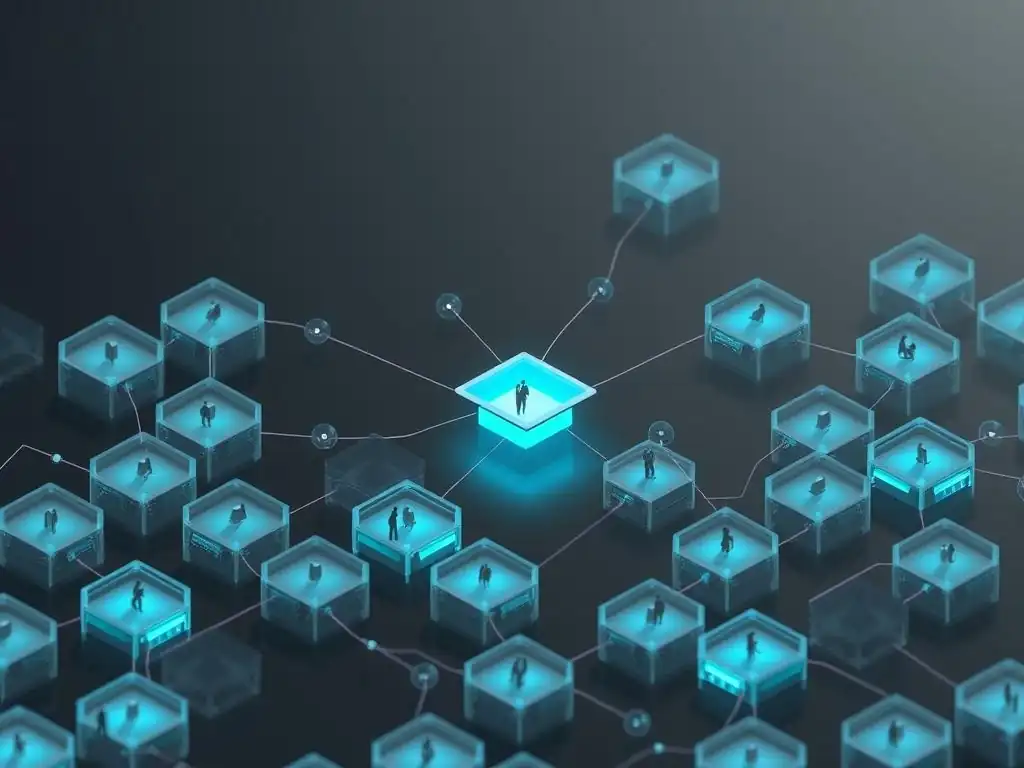
Scalability Issues in Blockchain Networks
One of the primary technical challenges facing widespread adoption of blockchain communityled decentralized governance is the scalability of current blockchain networks. Public blockchains like Ethereum, while robust and decentralized, can process a relatively limited number of transactions per second compared to traditional centralized databases. High transaction volumes, such as those generated by frequent voting, complex governance proposals, or large-scale data recording (like land registries), can lead to network congestion, slow transaction speeds, and high transaction fees (gas costs).
While significant progress is being made with Layer-2 scaling solutions (like rollups) and transitions to more scalable consensus mechanisms (like Ethereum's transition to Proof-of-Stake), achieving the throughput necessary for large-scale, real-world governance applications involving millions or billions of participants remains a significant technical hurdle. The need for the governance platform to handle numerous simultaneous operations efficiently is critical for practical implementation beyond niche decentralized applications.
Regulatory Uncertainty and Legal Frameworks for DAOs
The legal status and regulatory treatment of Decentralized Autonomous Organizations (DAOs) and other forms of blockchain communityled decentralized governance remain largely undefined and uncertain across most jurisdictions. As DAOs operate without traditional legal structures (like corporations or non-profits) and often have global, pseudonymous participants, fitting them into existing legal frameworks is challenging. Questions arise regarding liability (who is responsible if a DAO's actions cause harm? ), taxation (how are DAO treasuries and token distributions taxed? ), and legal standing (can a DAO enter into contracts or be sued? ).
This regulatory ambiguity creates significant risks and hinders mainstream adoption. Participants may be unaware of their legal obligations or potential liabilities. Some jurisdictions, like the state of Wyoming in the US, have begun to enact specific legislation recognizing DAOs as legal entities, offering a potential path forward. However, a lack of harmonized international legal frameworks means that DAOs operating across borders face complex and conflicting legal landscapes, posing a substantial challenge to their widespread and confident use for critical governance functions.
Security Risks and Vulnerabilities in Smart Contracts
Smart contracts, while powerful tools for automating governance, are lines of code and can contain bugs or vulnerabilities. Errors in smart contract code can lead to unintended behavior, including the loss of funds, freezing of assets, or exploitation by malicious actors. The immutable nature of blockchain means that once a vulnerable smart contract is deployed, it can be difficult or impossible to fix without complex and potentially controversial upgrade mechanisms (often themselves governed by smart contracts).
High-profile incidents, such as the 2016 DAO hack where a vulnerability led to the loss of millions of dollars worth of Ether (resulting in a controversial hard fork of the Ethereum network), highlight these risks. Ensuring the security of smart contracts governing critical community functions requires rigorous auditing by security experts, formal verification methods, and careful design patterns. The potential for code vulnerabilities represents a significant risk that must be meticulously managed to build trust in blockchain communityled decentralized governance systems.
The Digital Divide and Ensuring Accessibility for All
Implementing blockchain communityled decentralized governance assumes a certain level of digital literacy, internet access, and access to necessary hardware (like smartphones or computers) and software (like blockchain wallets). However, a significant portion of the global population still lacks reliable internet access, owns only basic mobile phones, or does not possess the technical skills required to interact with blockchain platforms, manage private keys securely, or participate effectively in online governance discussions and voting.
This "digital divide" poses a substantial challenge to the principle of inclusivity. If governance mechanisms are exclusively blockchain-based, they risk excluding individuals and communities who are already marginalized or lack access to digital resources. Efforts to promote digital literacy, develop user-friendly interfaces, and explore hybrid models that bridge the digital and physical worlds are necessary to ensure that blockchain governance does not exacerbate existing inequalities and can truly serve all members of a community.
Addressing Governance Design and Tokenomics
Beyond the technical and legal challenges, designing effective blockchain communityled decentralized governance models themselves is complex. How should voting power be distributed (one token, one vote; one person, one vote; quadratic voting)? How are proposals submitted and filtered? What is the quorum required for a vote to pass? How are delegates selected and held accountable in delegated systems? Poorly designed governance mechanisms can lead to apathy, voter fatigue, concentration of power in the hands of a few large token holders ("whales"), or susceptibility to hostile takeovers.
Furthermore, the tokenomics – the economic incentives surrounding governance tokens – must be carefully considered. If governance tokens are primarily treated as speculative assets rather than tools for participation, token holders may prioritize short-term financial gains over the long-term health and mission of the community. Designing sustainable and equitable governance models that align incentives, encourage broad and informed participation, and are resilient to various forms of attack or manipulation is an ongoing area of research and experimentation within the field of blockchain communityled decentralized governance.
Overcoming the Challenges: Strategies for Successful Blockchain Governance
Developing Robust and Auditable Smart Contracts
To mitigate the security risks associated with smart contracts, a multi-pronged approach is essential. This includes rigorous code development practices, emphasizing modularity and simplicity where possible. Crucially, smart contracts intended for governance should undergo multiple independent security audits by reputable firms before deployment. Tools for formal verification can also be used to mathematically prove that the contract code behaves as intended under all possible conditions, reducing the likelihood of unforeseen vulnerabilities.
Furthermore, implementing mechanisms for upgrading smart contracts, albeit carefully governed by the community itself, can provide a lifeline in case vulnerabilities are discovered post-deployment. This requires thoughtful design within the blockchain communityled decentralized governance framework to ensure upgrades are transparent and require significant community consensus, preventing malicious actors from unilaterally altering the rules. Continuous monitoring and bug bounty programs can also incentivize the community and security researchers to identify and report potential issues proactively.
Implementing Layer-2 Scaling Solutions for Higher Throughput
Addressing the scalability challenges requires leveraging advancements in blockchain technology, particularly Layer-2 scaling solutions. Technologies like optimistic rollups, zero-knowledge rollups (zk-rollups), state channels, and sidechains can process a large volume of transactions off the main blockchain (Layer 1) and then bundle or verify them on-chain more efficiently. This significantly increases the transaction throughput and reduces costs associated with governance actions, making blockchain communityled decentralized governance more practical for larger and more active communities.
For example, a DAO could conduct frequent, low-stakes votes or interactions on a Layer-2 network, only settling the final outcomes or major decisions on the more secure but slower Layer-1 blockchain. Continued research and development in sharding and other Layer-1 scaling improvements will also contribute to the overall capacity of the underlying infrastructure supporting decentralized governance applications, making them more viable for widespread adoption.
Engaging with Regulators and Shaping Legal Frameworks
Overcoming regulatory uncertainty requires proactive engagement with policymakers and legal experts. The blockchain community, including DAO participants and developers, needs to work towards educating regulators about the nature and potential benefits of blockchain communityled decentralized governance. This includes explaining how these structures differ from traditional entities and proposing new, appropriate legal classifications and frameworks.
Efforts to establish legal precedents and best practices, such as developing standardized legal wrappers for DAOs or exploring different legal structures (like foundations or cooperatives) that can interact with decentralized protocols, are crucial. As seen with initiatives in Wyoming and other jurisdictions, collaborative efforts between technologists, lawyers, and policymakers can help shape regulatory environments that foster innovation while providing necessary legal clarity and consumer protection, paving the way for DAOs and similar structures to operate with greater confidence and legitimacy.
Promoting Digital Literacy and Inclusion within Communities
To ensure that blockchain communityled decentralized governance is truly inclusive, significant efforts must be made to bridge the digital divide. This involves developing user interfaces that are intuitive and accessible, even for those with limited technical experience. Educational initiatives are vital, providing resources and support to help community members understand how blockchain works, how to securely manage their digital identities and assets, and how to effectively participate in decentralized governance processes.
Exploring hybrid models that integrate off-chain elements for accessibility can also be beneficial. For instance, allowing participation through simplified web interfaces or even physical proxies for certain types of decisions, while still recording final, verifiable outcomes on the blockchain, could broaden reach. Focusing on mobile-first design and reducing data requirements can also make participation more feasible in regions with limited infrastructure, ensuring that the benefits of decentralized governance are available to a wider population.
Designing Sustainable and Equitable Governance Models
Effective and resilient blockchain communityled decentralized governance hinges on well-designed governance mechanisms and tokenomics. This requires careful consideration of how voting power is allocated – moving beyond simple "one token, one vote" models where appropriate, to explore quadratic voting, reputation-based systems, or proof-of-stake mechanisms that better align incentives with long-term community health. Mechanisms for proposal filtering and deliberation, such as forums, discussion periods, and informal signaling rounds, are also crucial to prevent spam and ensure informed decision-making.
Furthermore, strategies to encourage active participation and prevent voter apathy are necessary. This could involve rewarding participation (e.g., through token incentives for voting), delegating votes to trusted and active community members, or designing governance interfaces that make it easy and engaging to contribute. Continuously evaluating and iterating on governance structures based on community feedback and observed behavior is key to developing models that are not only decentralized but also effective, equitable, and sustainable in the long run.
The Future of Community-Led Governance: A Decentralized Vision
Blockchain as a Foundation for Self-Organizing Communities
Looking ahead, blockchain technology is poised to serve as a fundamental infrastructure layer for increasingly sophisticated self-organizing communities. As the technology matures and becomes more accessible, we can expect to see a proliferation of blockchain communityled decentralized governance structures emerge across various domains – from online gaming guilds and creative collectives to local neighborhood associations and even decentralized scientific research collaboratives. These communities can leverage blockchain and smart contracts to define their own rules, manage shared resources (financial, data, or physical assets), and coordinate activities without relying on traditional top-down management or legal entities.
This vision entails a future where communities can dynamically form around shared interests or goals, establish transparent and verifiable governance frameworks tailored to their specific needs, and operate with a high degree of autonomy. The tools and patterns developed within the DAO ecosystem are likely to evolve and become more standardized, making it easier for groups to bootstrap their own decentralized governance systems. This shifts the paradigm from communities fitting into predefined organizational boxes to communities building their own, bespoke digital and legal structures from the ground up, enabled by decentralized technologies.
The Potential for Global Decentralized Governance Structures
Beyond individual communities, the principles of blockchain communityled decentralized governance hold potential for influencing larger-scale, even global, coordination. While a fully decentralized global government remains a distant and complex prospect, blockchain can facilitate decentralized governance within international organizations, cross-border collaborations, or digital public goods initiatives. Imagine decentralized protocols governing global data exchange standards, carbon credit markets, or even aspects of internet infrastructure, managed by a distributed network of stakeholders rather than centralized bodies.
Such global decentralized governance structures could offer increased transparency and inclusivity compared to traditional multilateral institutions, potentially giving a voice to a wider range of stakeholders, including individuals and smaller organizations, on issues of global importance. While significant technical, social, and political challenges must be overcome, the underlying capabilities of blockchain to enable verifiable, transparent, and automated coordination among disparate parties lay the groundwork for exploring novel forms of global blockchain communityled decentralized governance in the decades to come.
The potential of blockchain communityled decentralized governance extends to impacting social justice and economic equality. By lowering barriers to participation and creating more transparent systems, blockchain can empower marginalized communities and individuals who have historically been excluded from traditional power structures. Decentralized identity systems can grant individuals verifiable digital identities, essential for accessing services and participating in governance, especially for populations lacking traditional identification.
Furthermore, decentralized finance (DeFi) protocols, often governed by DAOs, can provide access to financial services for the unbanked. Community-led initiatives using blockchain for land registries or supply chain transparency can help secure property rights and ensure fair labor practices, directly addressing issues of economic inequality and exploitation. While blockchain is not a panacea and must be implemented thoughtfully to avoid exacerbating existing inequalities (like the digital divide), its potential to create more equitable, transparent, and participatory systems offers a powerful tool in the pursuit of social justice and greater economic equality through distributed governance.
Conclusion: Embracing Blockchain for a More Equitable Future
The Transformative Power of Blockchain Governance
Blockchain technology offers a profound opportunity to rethink and rebuild the social contracts that govern our interactions, organizations, and communities. By providing a foundation for transparency, immutability, and automated execution through smart contracts, blockchain enables the creation of truly blockchain communityled decentralized governance systems. These systems hold the potential to overcome the limitations of traditional, centralized models by enhancing transparency and accountability, increasing participation and inclusivity, improving efficiency, and fostering trust among participants.
From the practical management of Decentralized Autonomous Organizations (DAOs) overseeing significant digital treasuries and protocols, to potential applications in civic voting, supply chain management, property rights, and digital identity, the use cases for blockchain in decentralized governance are diverse and growing. While significant technical, regulatory, and social challenges remain, the ongoing innovation and experimentation in this space demonstrate a clear path towards developing more robust, scalable, and user-friendly solutions. Embracing the principles and potential of blockchain governance is key to building more equitable, resilient, and participatory systems for the future.
Call to Action: Exploring and Implementing Decentralized Solutions
The journey towards widespread blockchain communityled decentralized governance is ongoing. It requires continued research, development, and thoughtful implementation. For individuals and organizations interested in exploring this potential, the call to action is clear: engage with existing decentralized communities and DAOs to understand how they operate; explore the tools and platforms available for building decentralized governance structures; contribute to the development of robust smart contracts and scalable blockchain infrastructure; and advocate for regulatory environments that support responsible innovation in this space.
Implementing decentralized solutions requires not just technological adoption but also a cultural shift towards greater collaboration, transparency, and shared responsibility. By actively participating in the development and deployment of blockchain-based governance systems, we can collectively work towards a future where communities have greater agency, decisions are made more transparently and inclusively, and social contracts are built on a foundation of verifiable trust and shared ownership. The transformative power of blockchain governance is within reach, provided we commit to exploring its potential and overcoming its challenges together.
Frequently Asked Questions
What is community-led decentralized governance in the context of blockchain technology?
It refers to systems where decisions about a blockchain project or organization are made by the community members themselves, rather than a central authority. This leverages blockchain's inherent decentralization for more democratic and transparent decision-making processes.
How does blockchain technology facilitate community-led decentralized governance?
Blockchain provides the infrastructure for secure and transparent voting mechanisms, as well as immutable records of proposals and decisions. Smart contracts can automate the execution of governance rules, ensuring fairness and accountability within the system.
What are some potential benefits of implementing community-led decentralized governance?
Benefits include increased community engagement, improved transparency in decision-making, and enhanced trust among participants. It can also lead to more resilient and adaptable systems that are better aligned with the community's needs.
What are the key challenges in implementing community-led decentralized governance?
Challenges include overcoming apathy and low participation rates, addressing potential biases in voting mechanisms, and ensuring the security and integrity of the governance process. Scalability and complexity of implementation can also be significant hurdles.
How is community-led decentralized governance being used beyond cryptocurrencies in the broader blockchain ecosystem?
It's being explored in areas like Decentralized Autonomous Organizations (DAOs), supply chain management, and digital identity solutions. This allows for more democratic control and transparency across various industries, fostering greater trust and collaboration.
Final Reflection: Embracing Decentralized Futures
The exploration of blockchain's potential in rebuilding social contracts underscores a critical truth: the future of governance lies in empowering communities. We've seen how blockchain technology, with its inherent transparency and immutability, can foster trust and enable decentralized decision-making, moving away from centralized authorities and towards more equitable and participatory systems. The promise of community-led governance is not just a technological possibility; it's a societal imperative.
This journey into decentralized governance has profoundly impacted my understanding of collective action and the power of technology to reshape our social structures. Witnessing the emergence of DAOs and other blockchain-based governance models has solidified my belief in the potential for a more just and inclusive world. As Margaret Mead wisely stated: Never doubt that a small group of thoughtful, committed citizens can change the world; indeed, it's the only thing that ever has.
This quote resonates deeply as we consider the transformative power of blockchain in the hands of empowered communities.
Now, consider how you can contribute to this evolving landscape. Reflect on the ways you can leverage blockchain technology to foster greater transparency, accountability, and participation in your own communities. The future of governance is not predetermined; it is being actively shaped by the choices we make today. Embrace the opportunity to be a part of this revolution, and together, let's build a more decentralized and equitable future for all.
Okay, here's a draft CTA based on the title "Rebuilding Social Contracts: Blockchain's Potential for Community-Led and Decentralized Governance," for the website "Blockchain Trends" (blockchaintrends.org):
Unlock Your Community's Potential: Embrace Decentralized Governance!
Thanks for diving deep into the potential of blockchain for rebuilding social contracts. We hope you've gained valuable insights into how decentralized governance can empower communities and foster trust. Now, let's translate that knowledge into action!
Here's how you can contribute to a more decentralized and equitable future:
- Boldly initiate a discussion within your own community (local, online, or professional) about implementing blockchain-based governance solutions. What problems could it solve for you?
- Explore existing decentralized autonomous organizations (DAOs) and community-led projects. Identify their successes and challenges to better understand practical applications.
- Share this article with your network to spark conversations and spread awareness about the transformative power of blockchain in shaping our social structures.
What's the first step you'll take to explore blockchain's potential for rebuilding social contracts within your community? Let us know in the comments below!
Leave a Reply