
Reducing Blockchain Transaction Fees: Scalability's Impact on Affordability


Welcome to Blockchain Trends, your compass in the rapidly evolving world of decentralized technologies.
Ever wondered how we can make blockchain accessible to everyone? This article delves deep into the crucial topic of blockchain transaction fees reduction, exploring how innovative scalability solutions are paving the way for a more affordable and inclusive future. Discover the strategies shaping the Future of Blockchain and unlock the potential for widespread adoption. Let's explore how these advancements are not just theoretically possible, but actively reshaping the landscape.
Reducing Blockchain Transaction Fees: Scalability's Impact on Affordability
- Introduction: The Challenge of High Blockchain Transaction Costs
- Blockchain Scalability Solutions: A Path to Lower Transaction Fees
- The Interplay Between Scalability and Blockchain Transaction Fee Reduction
- Case Studies: Scalability Solutions in Action
- The Future of Affordable Blockchain Transactions
- Conclusion: Blockchain Scalability as the Key to Affordable Transactions and Wider Adoption
-
Frequently Asked Questions
- How does blockchain scalability directly impact transaction fees?
- What are some prominent blockchain scalability solutions being explored to reduce fees?
- Why are high transaction fees a barrier to wider blockchain adoption?
- What role does blockchain regulation play in the context of transaction fees?
- What are the potential future trends in blockchain technology that could further lower transaction fees?
- Final Reflection: Embracing Affordable Blockchain Futures
- Unlock Affordable Blockchain: Start Scaling Today!
Introduction: The Challenge of High Blockchain Transaction Costs
Understanding the Problem: Why are Blockchain Fees so High?
Blockchain networks, particularly those based on proof-of-work like Bitcoin or previously Ethereum, rely on transaction fees to incentivize miners or validators and prevent spam. These fees operate within a market where users bid for limited block space. When network activity is high, the demand for this space surges, leading users to offer higher fees to ensure their transactions are processed quickly. This auction mechanism, while effective for network security and prioritization, is the primary driver behind exorbitant blockchain transaction fees.
For instance, during periods of peak congestion on the Ethereum network before its transition to Proof-of-Stake, average gas prices could skyrocket, sometimes reaching hundreds of dollars for a single complex smart contract interaction. Similarly, Bitcoin transaction fees have historically surged during market rallies or periods of high usage, occasionally exceeding $50 per transaction, making small transfers economically unviable. This direct correlation between network demand and fee spikes highlights the inherent challenge in maintaining affordable transactions on capacity-constrained blockchains.
The Impact of High Fees on Blockchain Adoption
High blockchain transaction fees act as a significant barrier to widespread adoption, particularly for use cases requiring frequent or low-value transactions. Decentralized applications (dApps) in areas like gaming, social media, or micro-payments become impractical when the cost of interacting with the blockchain outweighs the value of the transaction itself. This limits the potential user base and stifles innovation in areas that could significantly benefit from decentralized infrastructure.
Furthermore, high fees disproportionately affect users with fewer resources, creating an exclusive environment. Participating in decentralized finance (DeFi), executing trades on decentralized exchanges (DEXs), or even transferring small amounts of cryptocurrency becomes prohibitively expensive for many. This undermines the core promise of blockchain technology to provide accessible and permissionless financial services globally. Reducing blockchain transaction fees is therefore not just a technical challenge, but a crucial step towards true mass adoption and financial inclusivity.
Blockchain Trends and Scalability Solutions: Setting the Stage
Current blockchain trends clearly indicate a strong focus on overcoming these limitations through various scalability solutions. The industry recognizes that for blockchain to move beyond niche applications and truly compete with or complement traditional systems, it must handle significantly higher transaction volumes at dramatically lower costs. This push towards scalability is driven by the increasing demand from a growing ecosystem of dApps, enterprise solutions, and global users.
Scalability solutions aim to increase the throughput (transactions per second) and efficiency of blockchain networks, thereby increasing the supply of block space and naturally driving down the cost per transaction. The pursuit of Blockchain transaction fees reduction has become a central theme in blockchain development, leading to the exploration and implementation of diverse approaches, ranging from fundamental changes to the core protocol (Layer-1) to building complementary layers on top (Layer-2).
Blockchain Scalability Solutions: A Path to Lower Transaction Fees
Layer-1 Scaling Solutions: Modifying the Blockchain Protocol
Layer-1 scaling involves making changes directly to the base blockchain protocol itself. These modifications aim to increase the network's capacity to process transactions inherently, without relying on external layers. Examples include altering consensus mechanisms, changing block parameters, or implementing more complex data structures within the chain.
While powerful, Layer-1 changes often require significant network-wide coordination and can sometimes involve trade-offs concerning decentralization or security. Successfully implementing Layer-1 scalability can directly lead to Blockchain transaction fees reduction by expanding the fundamental capacity of the network.
Sharding: Dividing the Blockchain for Parallel Processing
Sharding is a technique borrowed from database partitioning, applied to blockchain. Instead of every node processing every transaction, the network is divided into smaller, more manageable segments called "shards." Each shard processes its own set of transactions and maintains its own state. This allows multiple transactions to be processed in parallel across different shards, vastly increasing the network's overall throughput.
The implementation of sharding is a complex undertaking, requiring mechanisms for shards to communicate and interact securely. Ethereum's long-term scalability roadmap includes sharding, specifically focusing on Danksharding to improve data availability for Layer-2 rollups. While full sharding is still under development for major chains, the concept represents a significant potential leap in Layer-1 capacity, directly contributing to the goal of Blockchain transaction fees reduction by increasing the supply of transaction processing power.
Segregated Witness (SegWit): Optimizing Block Size and Transaction Throughput
Segregated Witness (SegWit) is a Layer-1 protocol upgrade implemented on Bitcoin and other blockchains. It addresses the issue of transaction malleability and, crucially, optimizes block space usage. SegWit separates the digital signature (witness data) from the transaction data, moving the witness data to a separate structure at the end of the block. This effectively allows more transactions to fit within the existing block size limit.
By making transactions more efficient in terms of space, SegWit increases the effective block weight limit, allowing blocks to contain roughly 1.8 to 2 times the number of transactions compared to non-SegWit blocks. This increase in transaction throughput on the base layer contributes to a more efficient use of block space and, consequently, can help lower average transaction fees during periods of moderate congestion by increasing the available supply of block space.
Block Size Increases: Balancing Throughput and Decentralization
Another direct Layer-1 approach is simply increasing the maximum block size limit. A larger block can accommodate more transactions, thus increasing throughput. For example, Bitcoin Cash forked from Bitcoin in part over a disagreement on block size limits, opting for larger blocks (currently 32MB) compared to Bitcoin's effective 1-4MB limit (depending on SegWit usage).
While increasing block size can immediately boost transaction capacity and potentially lead to lower fees, it comes with significant trade-offs. Larger blocks require more storage and bandwidth for nodes to download and verify, which can increase the hardware requirements for running a full node. This can lead to fewer individuals or entities running nodes, potentially compromising the network's decentralization, which is a core principle of blockchain. The debate over block size highlights the delicate balance between scalability, security, and decentralization.
Layer-2 Scaling Solutions: Building on Top of the Blockchain
Layer-2 scaling solutions are protocols built on top of the base blockchain (Layer-1). They handle transactions off-chain and periodically report the results back to the Layer-1 chain for final settlement and security. This approach offloads the bulk of transaction processing from the congested main chain, enabling significantly higher throughput and much lower costs.
The primary benefit of Layer-2 solutions is their ability to achieve massive scalability without requiring modifications to the underlying Layer-1 protocol, thus preserving the security and decentralization of the base chain. They are a key driver for achieving significant Blockchain transaction fees reduction, making micro-transactions and complex dApp interactions economically feasible.
Payment Channels: Enabling Off-Chain Transactions
Payment channels, such as the Lightning Network for Bitcoin, allow two parties to conduct multiple transactions off-chain without broadcasting each one to the main blockchain. A channel is opened by depositing funds into a multi-signature address recorded on the Layer-1 chain. Once the channel is open, parties can transact instantly and with minimal fees by simply updating a shared balance sheet off-chain.
Only the opening and closing of the channel, or in case of disputes, are settled on the Layer-1 chain. This model is particularly effective for frequent, small payments between the same two parties. For instance, Lightning Network fees are typically fractions of a cent, a stark contrast to potential mainnet Bitcoin fees, demonstrating a powerful method for Blockchain transaction fees reduction for specific use cases.
Sidechains: Independent Blockchains with Two-Way Pegs
Sidechains are independent blockchain networks that are connected to the main chain (parent chain) via a two-way peg. This peg allows assets to be transferred back and forth between the two chains. Transactions on the sidechain are processed and validated independently using their own consensus mechanism (which might differ from the parent chain), offering higher throughput and lower fees than the congested main chain.
Examples include Polygon's Proof-of-Stake chain operating alongside Ethereum. Users can bridge assets like ETH or ERC-20 tokens to Polygon, perform transactions cheaply (often costing less than $0.01 per transaction), and then bridge them back to Ethereum mainnet. While sidechains offer significant scalability and lower fees, their security typically relies on their own validator set, which may or may not be as robust or decentralized as the parent chain.
Rollups: Aggregating Transactions for Enhanced Efficiency
Rollups are a prominent Layer-2 scaling technique that executes transactions outside the Layer-1 chain but posts transaction data or validity proofs back to the Layer-1 chain. They "rollup" hundreds or thousands of off-chain transactions into a single batch and submit this batch as a single transaction to the main chain. This significantly reduces the amount of data and computation required on the Layer-1 chain per transaction, leading to massive scalability and lower fees.
Rollups inherit the security of the Layer-1 chain because the transaction data or proofs are anchored on the main chain, allowing anyone to verify the integrity of the rollup state. There are two main types of rollups, differing in how they ensure the validity of the off-chain state transitions: Zero-Knowledge Rollups and Optimistic Rollups. Both are crucial technologies driving Blockchain transaction fees reduction on networks like Ethereum.
Zero-Knowledge Rollups (zk-Rollups): Enhancing Privacy and Scalability
Zero-Knowledge Rollups (zk-Rollups) execute transactions off-chain and then generate a cryptographic validity proof (like a SNARK or STARK) that verifies the correctness of all transactions in the batch without revealing the transaction details themselves. This proof is then posted to the Layer-1 chain. The Layer-1 smart contract can quickly and cheaply verify this proof, confirming the validity of the entire batch of transactions.
The key advantage of zk-Rollups is that validity is proven directly on Layer-1, offering strong security guarantees and fast finality (once the proof is verified, the transactions are considered final). Projects like zkSync and StarkNet are developing and deploying zk-Rollup solutions, promising thousands of transactions per second (TPS) with fees significantly lower than Layer-1, representing a major leap in Blockchain transaction fees reduction potential while maintaining strong security.
Optimistic Rollups: Leveraging Fraud Proofs for Scalability
Optimistic Rollups assume that all transactions processed off-chain are valid by default, hence the name "optimistic." They execute transactions and aggregate state changes off-chain, posting only the compressed transaction data (not proofs) to the Layer-1 chain. There is a challenge period (typically around 7 days) during which anyone can submit a "fraud proof" if they detect an incorrect state transition or invalid transaction within the batch.
If a fraud proof is successfully submitted and verified on Layer-1, the invalid batch is reverted, and the sequencer (the entity submitting batches) is penalized. This optimistic approach allows for high throughput but introduces a delay for withdrawals from the rollup back to Layer-1, as users must wait for the challenge period to pass. Projects like Optimism and Arbitrum are leading implementations of optimistic rollups, currently handling significant transaction volumes at costs substantially lower than Ethereum mainnet fees, contributing significantly to Blockchain transaction fees reduction for users.
The Interplay Between Scalability and Blockchain Transaction Fee Reduction
Scalability is not just about making networks faster; its fundamental impact on affordability stems from increasing the supply of transaction processing capacity. When a network can handle more transactions per second, the competition for limited block space decreases, directly lowering the price users have to pay to get their transactions included.
The relationship is straightforward: higher throughput leads to less congestion, which in turn leads to lower fees. Efficient use of resources, enabled by many scaling techniques, further reduces the operational cost per transaction. This direct link makes achieving scalability the primary technical pathway to achieving widespread Blockchain transaction fees reduction.
Increased Throughput: Handling More Transactions per Second
One of the most direct ways scalability reduces fees is by drastically increasing the number of transactions a network can process within a given timeframe. A Layer-1 network like Ethereum might process around 15-30 transactions per second (TPS) on its own. Layer-2 solutions like rollups aim to achieve thousands or even tens of thousands of TPS.
Consider a scenario where users are trying to process 1,000 transactions per second, but the network can only handle 20 TPS. Users will engage in a fierce bidding war, driving fees sky-high. If, however, a scaling solution allows the network or layer to handle 5,000 TPS, that same demand of 1,000 TPS can be easily absorbed with minimal competition for block space, resulting in significantly lower fees per transaction. This massive increase in transaction capacity is the engine behind Blockchain transaction fees reduction on scalable networks.
Reduced Congestion: Alleviating Network Overload
High transaction fees are often a symptom of network congestion, where the demand for block space exceeds the network's capacity. This is particularly evident in networks with fixed or slowly increasing block size limits. When popular events occur on the blockchain, such as an NFT mint or a surge in DeFi activity, demand spikes, and the fee market becomes highly competitive.
Scalability solutions alleviate this congestion by providing ample capacity. By processing transactions off-chain or increasing the Layer-1 capacity through methods like sharding, they ensure that even during periods of high demand, there is sufficient "room" in blocks or rollup batches to accommodate transactions without triggering intense fee wars. Reducing congestion is critical for price stability and achieving reliable, low-cost Blockchain transaction fees reduction.
Enhanced Efficiency: Optimizing Resource Utilization
Many scaling solutions, especially Layer-2 rollups, achieve efficiency by optimizing how transaction data is stored and processed on the Layer-1 chain. Instead of posting the full details of every single transaction, rollups post compressed data representing hundreds or thousands of transactions in a single batch.
For example, posting data for a single Ethereum transaction might cost a certain amount of gas. A rollup batch containing 500 transactions might incur a fixed cost plus a cost proportional to the data size. When this total cost is amortized across the 500 transactions in the batch, the cost per individual transaction becomes dramatically lower than executing that transaction directly on Layer-1. This optimization of resource utilization is a key factor enabling the substantial Blockchain transaction fees reduction seen on Layer-2 networks.
Case Studies: Scalability Solutions in Action
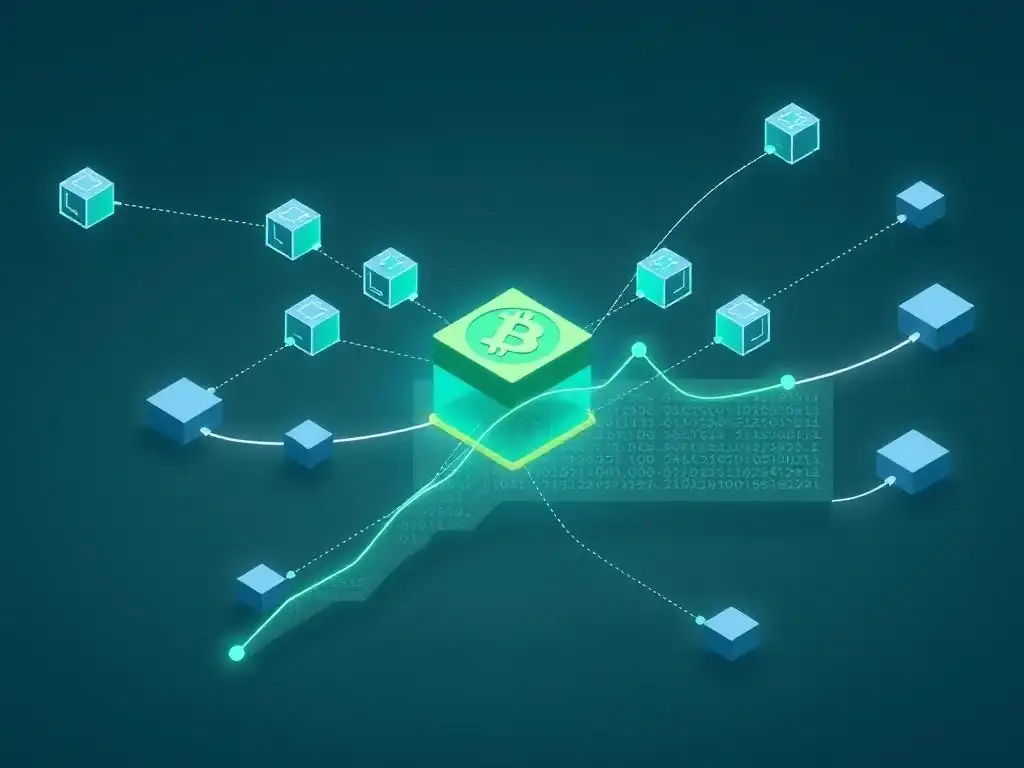
Ethereum's Transition to Proof-of-Stake (PoS) and Sharding: A Scalability Roadmap
Ethereum's transition from Proof-of-Work (PoW) to Proof-of-Stake (PoS) with 'The Merge' in September 2022 was a foundational step towards its long-term scalability vision, though PoS itself didn't directly increase throughput dramatically. The true scaling comes from subsequent planned upgrades, particularly sharding. The roadmap involves implementing 'data shards' designed not for executing transactions directly, but for providing massive data availability capacity for Layer-2 rollups.
The plan is for these data shards (potentially 64 initially) to handle large volumes of data posted by rollups. This increased data availability, combined with techniques like Danksharding and EIP-4844 (Proto-Danksharding), aims to make posting rollup data significantly cheaper. Since posting data to Layer-1 is a major cost component for rollups, reducing this cost directly translates to lower fees for users on Layer-2s, thus contributing to Ethereum's overall Blockchain transaction fees reduction strategy through a multi-layered approach.
Lightning Network on Bitcoin: Enabling Micropayments with Lower Fees
The Lightning Network is a prominent example of a Layer-2 solution successfully enabling low-cost transactions for Bitcoin. By establishing payment channels between users, it allows for an unlimited number of off-chain transactions within that channel. A typical Lightning payment might cost a fraction of a cent, compared to the average Bitcoin mainnet transaction fee which can fluctuate from less than a dollar to over fifty dollars depending on network congestion.
This dramatic reduction in cost makes Bitcoin viable for micro-payments and everyday transactions that would be economically unfeasible on the main chain. While opening and closing channels still requires Layer-1 transactions and fees, the ability to conduct numerous intermediate transactions off-chain offers significant Blockchain transaction fees reduction for frequent users of the network, demonstrating the power of Layer-2 solutions for specific use cases.
Polygon (MATIC): A Layer-2 Solution for Ethereum Scalability
Polygon is a widely adopted platform providing various scaling solutions for Ethereum, with its main Proof-of-Stake chain being a popular sidechain. Polygon PoS processes transactions significantly faster and cheaper than Ethereum mainnet. While Ethereum mainnet fees can range from a few dollars to over a hundred during peak times, average transaction fees on Polygon PoS are typically less than $0.01, often fractions of a cent.
This massive difference in cost has attracted numerous dApps and users, leading to Polygon processing millions of transactions daily. For instance, in early 2023, Polygon often processed over 2-3 million transactions daily, while Ethereum mainnet processed around 1 million. This high throughput combined with minimal fees illustrates how a dedicated Layer-2/sidechain solution can achieve substantial Blockchain transaction fees reduction and support a thriving ecosystem of dApps that require low-cost interactions. Polygon is also developing zk-Rollup solutions (Polygon zkEVM) to offer even stronger security guarantees inherited from Ethereum while maintaining low costs.
The Future of Affordable Blockchain Transactions
The Role of Continued Research and Development in Scalability
The journey towards truly affordable and mass-adoptable blockchain transactions is far from over. Continued research and development are crucial for refining existing scaling solutions and discovering new ones. This includes optimizing rollup efficiency, exploring novel consensus mechanisms beyond PoS, developing better cross-rollup communication protocols, and improving data availability layers.
Innovations like stateless clients and verkle trees in Ethereum development aim to reduce the burden on nodes, further supporting decentralization as the network scales. Ongoing work in areas like account abstraction also seeks to improve user experience on scalable layers. The commitment to pushing the boundaries of what's possible in terms of throughput and efficiency is essential for realizing the full potential of Blockchain transaction fees reduction on a global scale.
The Impact of Regulatory Frameworks on Blockchain Innovation
The evolving landscape of blockchain regulation can significantly impact the development and deployment of scaling solutions. Clarity in regulations regarding digital assets, Layer-2 operations, and decentralized protocols can foster innovation by providing legal certainty for developers and investors. Conversely, overly restrictive or unclear regulations could hinder progress, potentially slowing down the rollout of technologies vital for Blockchain transaction fees reduction.
For instance, regulations impacting how validators or sequencers operate on Layer-2 networks, or rules around bridging assets between layers, could influence the design and efficiency of these systems. A supportive regulatory environment that understands the nuances of decentralized technology is key to allowing scalability solutions to mature and deliver their full potential for affordability and accessibility.
Decentralized Applications (dApps) and the Demand for Low-Cost Transactions
The growth and diversity of decentralized applications are creating an ever-increasing demand for low-cost blockchain interactions. From blockchain gaming where players make frequent in-game transactions, to decentralized social media platforms requiring cheap posting or liking actions, to complex DeFi strategies involving multiple contract calls, the need for affordability is paramount.
Many innovative dApp designs are only economically viable on networks with significantly lower transaction costs than current Layer-1 peaks. As more users engage with these applications, the demand for scalable infrastructure that enables Blockchain transaction fees reduction will continue to grow, driving further investment and development in this critical area. The success of the dApp ecosystem is intrinsically linked to the affordability provided by scalable blockchain solutions.
Conclusion: Blockchain Scalability as the Key to Affordable Transactions and Wider Adoption
The Long-Term Vision: A Scalable and Accessible Blockchain Ecosystem
The ultimate goal of blockchain scalability is to create a global, decentralized ecosystem capable of handling the transaction volume of major traditional financial or internet systems, but with the benefits of censorship resistance, transparency, and permissionless access. Achieving this vision necessitates overcoming the current limitations of high transaction costs. The long-term trajectory involves a multi-layered architecture where Layer-1 provides robust security and finality, while Layer-2 solutions handle the vast majority of transaction volume at minimal cost.
This scalable architecture is the foundation upon which a truly accessible blockchain future can be built. By significantly reducing blockchain transaction fees, we pave the way for new use cases, empower users globally regardless of their economic status, and enable decentralized technologies to become mainstream.
Overcoming Challenges and Embracing the Future of Decentralized Finance (DeFi)
While significant progress has been made, challenges remain in achieving seamless scalability. These include improving user experience across different layers, simplifying the process of moving assets between Layer-1 and Layer-2s (bridging), and ensuring the security and decentralization of scaling solutions themselves. However, the rapid pace of innovation in areas like rollups demonstrates the industry's commitment to addressing these issues.
The future of Decentralized Finance (DeFi) is intrinsically linked to scalability. As fees decrease, DeFi becomes more accessible to a wider range of users and transaction sizes, unlocking new possibilities for financial inclusion, complex strategies, and capital efficiency. Embracing these scaling solutions is essential for DeFi to evolve from a niche financial experiment into a robust, global financial infrastructure.
The Importance of Scalability for Mass Adoption
Scalability is not merely a technical optimization; it is the critical prerequisite for mass adoption of blockchain technology. High blockchain transaction fees are a significant deterrent for everyday users and businesses. By increasing throughput, reducing congestion, and enhancing efficiency through Layer-1 and Layer-2 solutions, we can dramatically lower the cost of interacting with blockchains.
This makes blockchain technology viable for a vast array of applications, from simple payments and remittances to complex supply chain management and decentralized identity solutions. Achieving significant Blockchain transaction fees reduction is the key that unlocks the door to billions of users and integrates blockchain into the fabric of the global digital economy. The ongoing pursuit of scalability is therefore central to realizing the transformative potential of decentralized systems.
Frequently Asked Questions
How does blockchain scalability directly impact transaction fees?
Scalability solutions aim to increase the transaction throughput of a blockchain. Higher throughput means the network can handle more transactions per second, reducing competition for block space and, consequently, lowering transaction fees.
What are some prominent blockchain scalability solutions being explored to reduce fees?
Several solutions are being investigated, including Layer-2 scaling solutions like rollups and sidechains, as well as Layer-1 improvements like sharding. These methods aim to process transactions off-chain or parallelize on-chain processing.
Why are high transaction fees a barrier to wider blockchain adoption?
High fees make microtransactions unfeasible and can exclude users with limited resources. They hinder the growth of DeFi and other blockchain applications by increasing the cost of interacting with them.
What role does blockchain regulation play in the context of transaction fees?
Regulation can influence the development and adoption of scalability solutions. Clear regulatory frameworks can encourage innovation and investment in technologies that reduce fees.
What are the potential future trends in blockchain technology that could further lower transaction fees?
Future trends include advancements in consensus mechanisms, continued development of Layer-2 solutions, and further research into optimized smart contract execution. These improvements will contribute to a more efficient and affordable blockchain ecosystem.
Final Reflection: Embracing Affordable Blockchain Futures
The exploration of blockchain scalability and its direct impact on blockchain transaction fees reduction reveals a critical juncture for the technology's widespread adoption. The insights shared throughout this article underscore that affordability is not merely a desirable feature, but an essential prerequisite for blockchain to truly democratize access to financial services and digital ownership.
The journey towards lower transaction fees is not just a technical challenge; it's a cultural and societal imperative. The ability for anyone, regardless of their economic status, to participate in the blockchain ecosystem is paramount to its long-term success. The future of finance is inclusive, and blockchain has the potential to be the great equalizer, but only if we can make it accessible to all.
This pursuit of affordability will undoubtedly shape the future of blockchain, influencing its applications and its role in our lives.
As we conclude this exploration, I invite you to consider the implications of affordable blockchain transactions. How can you, in your own sphere of influence, advocate for and contribute to solutions that lower barriers to entry? Let us all strive to build a future where the power of blockchain is accessible to everyone, fostering a more equitable and interconnected world.
Unlock Affordable Blockchain: Start Scaling Today!
Thank you for exploring the importance of scalability in blockchain technology and how it can help reduce transaction fees. With a clear understanding of various approaches, you are now equipped to help make blockchain more accessible and cost-effective for everyone. Let's turn that knowledge into action!
Here are some steps you can take to promote affordable blockchain solutions:
- Support projects and initiatives focused on Layer-2 scaling solutions such as rollups and state channels. This is the most direct way to contribute to lowering fees.
- Investigate the transaction fee models of different blockchain platforms and try out those that offer lower costs. Share your experiences with the community.
- Review technical documentation of your favorite blockchain projects and consider contributing to efforts aimed at improving scalability or participating in related governance discussions.
What innovative solutions do you believe could further revolutionize blockchain scalability and significantly reduce transaction fees in the coming years? Share your insights below!
Leave a Reply