
The Role of Oracles in Web3: Connecting Blockchains to the Real World

Welcome to Blockchain Trends, your compass in the rapidly evolving world of decentralized technologies. Delve into the transformative potential of blockchain beyond cryptocurrencies, from DeFi innovations to enterprise solutions. In this article, we unravel a crucial component of the Web3 revolution: Blockchain oracles for Web3. How do blockchains, inherently isolated, access real-world data? Prepare to discover the vital role these digital bridges play in unlocking the true potential of decentralized applications and shaping the future of the internet. Explore the challenges, innovations, and the profound impact of oracles on the blockchain landscape.
- Introduction: Understanding Blockchain Oracles and Their Importance in Web3
-
Frequently Asked Questions
- What are Blockchain Oracles and why are they needed in Web3?
- How do Blockchain Oracles contribute to the functionality of DeFi (Decentralized Finance)?
- What are some potential risks associated with using Blockchain Oracles?
- Besides price feeds, what other types of data can Blockchain Oracles provide?
- How are Oracle solutions evolving to improve security and reliability in Web3?
- Final Reflection: Bridging the Digital and Physical Realms
- Unveil Your Web3 Potential: Become an Oracle Trailblazer!
Introduction: Understanding Blockchain Oracles and Their Importance in Web3
What are Blockchain Oracles and Why are They Needed?
Blockchains are inherently deterministic and isolated systems, designed to execute code (smart contracts) based solely on the data contained within the ledger itself. This isolation is a core component of their security and reliability; it ensures that all participants in the network can agree on the state of the ledger and the outcome of transactions without relying on external, potentially unreliable information. However, this design principle also creates a significant limitation: smart contracts cannot directly access data from the outside world, such as real-time market prices, weather conditions, election results, or the outcome of a sports match.
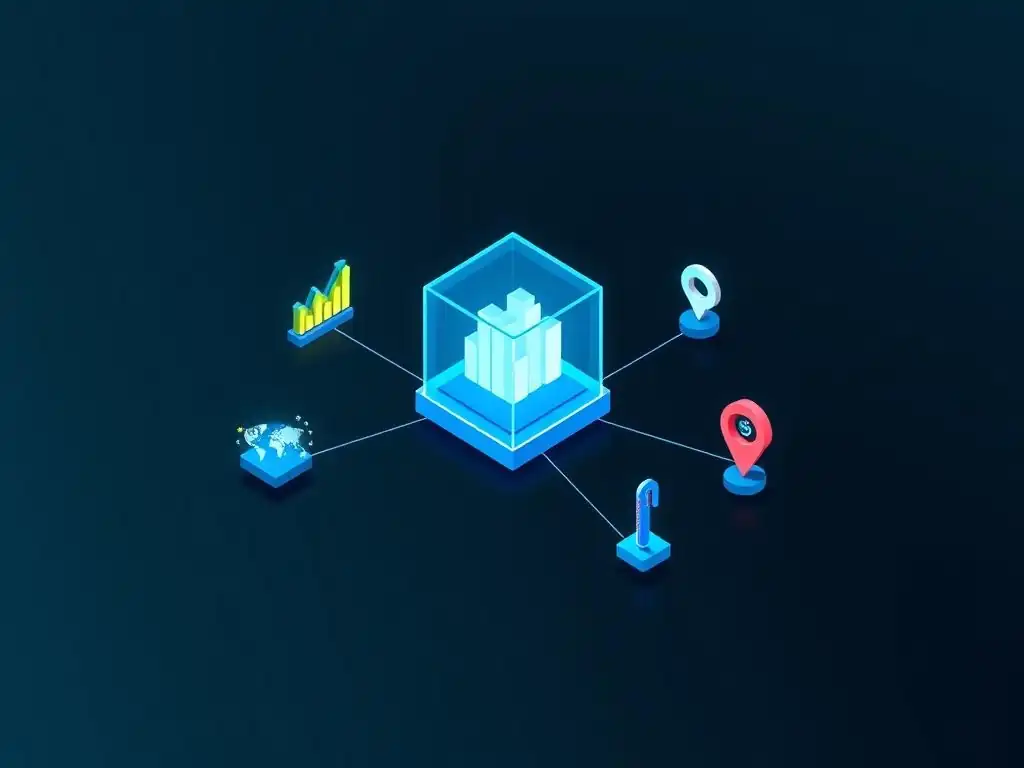
This is precisely where blockchain oracles come into play. An oracle acts as a bridge, a secure middleware that fetches information from off-chain sources and makes it available to on-chain smart contracts. Without oracles, smart contracts would be confined to reacting only to events that occur on the blockchain, severely limiting their potential applications.
For instance, a smart contract designed to execute a financial trade based on a specific asset price needs accurate, up-to-date price data from external markets – data that the blockchain itself cannot provide. Blockchain oracles for Web3 are essential infrastructure for enabling smart contracts to interact with and respond to the vast amount of information available outside the blockchain environment.
The Vital Role of Oracles in Bridging the Gap Between Blockchains and the Real World
The primary function of blockchain oracles is to enable smart contracts to become dynamic, reacting to events and data points that exist outside the blockchain's native environment. Imagine a smart contract for a decentralized insurance policy covering crop damage due to severe weather. For this contract to automatically trigger a payout, it needs reliable data on local weather conditions – specifically, whether a defined threshold for rainfall or temperature was met or exceeded in a particular location. This information originates from weather stations and data providers, which are off-chain sources.
Oracles retrieve this external data, verify its accuracy (depending on the oracle's design), and securely deliver it onto the blockchain in a format that the smart contract can understand and process. This crucial step allows smart contracts to move beyond simple on-chain transfers and execute complex logic based on real-world events.
Without robust and trustworthy blockchain oracles for Web3 applications, many of the most promising decentralized applications, from sophisticated DeFi protocols to automated supply chains and parametric insurance, would simply not be feasible. They represent the necessary link for blockchains to interface with and impact the physical and digital world beyond their cryptographic boundaries.
Blockchain Trends and Oracles: Shaping the Future of Decentralized Systems
As the blockchain ecosystem matures and expands beyond cryptocurrencies, the reliance on oracles is growing exponentially. Major blockchain trends, such as the rapid growth of Decentralized Finance (DeFi), the increasing adoption of Non-Fungible Tokens (NFTs) with dynamic attributes, and the development of sophisticated supply chain and gaming applications, all heavily depend on access to external data. DeFi protocols, which manage billions in assets, require constant, reliable price feeds to calculate collateral ratios, liquidation points, and asset values accurately. A single inaccurate data point from an oracle could potentially lead to significant financial losses or systemic risk within a protocol.
Consequently, the development and implementation of secure, reliable, and decentralized blockchain oracles for Web3 are becoming critical infrastructure components. The focus is shifting towards oracle solutions that minimize single points of failure, ensure data integrity, and can handle the increasing volume and variety of data requests from a diverse range of decentralized applications. The ongoing evolution of oracle technology is not just supporting current blockchain trends but is actively shaping the possibilities for future decentralized systems, enabling more complex, responsive, and real-world-connected applications within the Web3 paradigm.
Frequently Asked Questions
What are Blockchain Oracles and why are they needed in Web3?
Blockchain oracles are third-party services that provide external data to smart contracts. They're crucial because blockchains inherently cannot access off-chain information, making oracles essential for real-world applications.
How do Blockchain Oracles contribute to the functionality of DeFi (Decentralized Finance)?
Oracles are vital for DeFi platforms by providing accurate and timely price feeds for cryptocurrencies and other assets. This allows smart contracts to execute complex financial operations like lending, borrowing, and trading based on real-world market data.
What are some potential risks associated with using Blockchain Oracles?
A major risk is oracle manipulation or failure, which can lead to incorrect data being fed to smart contracts. This can result in significant financial losses and compromise the integrity of the entire Web3 application.
Besides price feeds, what other types of data can Blockchain Oracles provide?
Oracles can provide a wide range of data, including weather information, sports scores, election results, and identity verification. Essentially, any data available outside the blockchain can be brought on-chain via an oracle.
How are Oracle solutions evolving to improve security and reliability in Web3?
Oracle solutions are evolving through decentralization, multiple data sources, and reputation systems to improve security. These advancements aim to minimize the risk of manipulation and ensure that smart contracts receive accurate and reliable data, thus enhancing the overall trust in Web3 applications.
Final Reflection: Bridging the Digital and Physical Realms
The exploration of blockchain oracles underscores their critical role in unlocking the true potential of Web3. No longer confined to the digital realm, blockchain technology, through the ingenious mechanism of oracles, is poised to revolutionize industries by seamlessly integrating real-world data and events into decentralized applications. This connection is paramount for creating truly impactful and practical Web3 solutions.
The ongoing influence of oracles on the cultural and social landscape is undeniable, shaping everything from decentralized finance to supply chain management. Witnessing this evolution, and the potential for increased transparency and trust it unlocks, is profoundly inspiring. The future of Web3 hinges on the ability to bridge the gap between the digital and physical worlds, and oracles are the key to building that bridge.
This quote encapsulates the transformative power that oracles hold, promising a future where blockchain technology is not just a theoretical concept, but a tangible force for positive change.
As we stand on the cusp of this new era, let us reflect on the profound implications of blockchain oracles and their ability to connect the digital and physical worlds. Consider how you can contribute to this exciting evolution, whether through innovation, education, or simply by embracing the possibilities that Web3 offers. The future is decentralized, and it is up to us to build it responsibly and thoughtfully, ensuring that the power of blockchain technology is harnessed for the benefit of all.
Unveil Your Web3 Potential: Become an Oracle Trailblazer!
Thanks for diving into the world of Oracles and understanding their vital role in bridging blockchains with the real world! Now that you're equipped with this knowledge, it's time to put it into action and explore the exciting possibilities.
Here's how you can contribute to the Web3 revolution:
- Dive deep into data validation. Learn how to verify the accuracy and reliability of information from various external sources. This will help you understand the vital role oracles play in ensuring the integrity of blockchain applications.
- Explore the top oracle providers and compare their functionalities. Understand the trade-offs between different oracle solutions and consider how they might fit specific real-world applications.
- Share this article with a friend who's curious about Web3! Help spread awareness about the crucial role oracles play in building a more connected and trustworthy decentralized world.
What real-world data point do you think is most urgently needed on the blockchain, and what oracle solution do you envision making that possible?
Leave a Reply