
The Role of Sidechains in Achieving Blockchain Interoperability


Welcome to Blockchain Trends, your hub for understanding the revolutionary impact of blockchain technology beyond the hype.
Delve into the future of decentralized systems and discover how this technology is reshaping industries. Are you curious about how different blockchains can communicate seamlessly? Today, we unpack the game-changing blockchain sidechain interoperability benefits, revealing how this vital component is paving the way for a truly interconnected blockchain ecosystem. Read on to explore the possibilities...
The Role of Sidechains in Achieving Blockchain Interoperability
- Understanding Blockchain Interoperability and Its Importance
- Sidechains: A Key Solution for Blockchain Interoperability
- Blockchain Sidechain Interoperability Benefits: Expanding Functionality
- Exploring Different Sidechain Architectures and Mechanisms
- Real-World Use Cases of Sidechains for Interoperability
- Security Considerations for Blockchain Sidechain Interoperability
- The Future of Blockchain Interoperability: The Role of Sidechains
- Comparing Sidechains with Other Interoperability Solutions
- Conclusion: Embracing Sidechains for a More Connected Blockchain Future
-
Frequently Asked Questions
- What are blockchain sidechains and what is their primary purpose?
- How do sidechains contribute to blockchain interoperability?
- What are some key benefits of blockchain sidechain interoperability?
- What are the potential challenges associated with implementing sidechain interoperability?
- How might regulations impact the development and adoption of blockchain sidechain interoperability solutions?
- Final Reflection: Bridging the Blockchain Divide
- Unlock the Future: Explore Blockchain Connectivity!
Understanding Blockchain Interoperability and Its Importance
Defining Blockchain Interoperability: Connecting Isolated Networks
Blockchain interoperability refers to the ability of different blockchain networks to exchange data and assets with each other seamlessly and securely. Currently, many blockchain networks operate as isolated silos, making it difficult for users or applications on one chain to interact directly with those on another. This fragmentation hinders the broader adoption and potential of decentralized technologies.
Achieving true blockchain interoperability means enabling cross-chain communication, allowing value transfer (like moving tokens from one chain to another) and information exchange (like verifying events on one chain from another). This capability is crucial for building a truly connected decentralized ecosystem where diverse blockchains, each potentially optimized for different purposes (e.g., high throughput, privacy, specific functionalities), can collaborate and leverage each other's strengths.
Why Blockchain Interoperability Matters for the Future of Decentralized Systems
The future of decentralized systems envisions a multi-chain world, not one dominated by a single blockchain. In such a landscape, interoperability is not just a convenience but a necessity. It unlocks significant potential by allowing users to access the best features from multiple chains without being confined to one, fostering innovation across the entire ecosystem.
Consider the potential for decentralized finance (DeFi). Without interoperability, an asset locked on one blockchain cannot easily be used in a lending protocol or yield farm on another. Interoperability removes these barriers, creating a more liquid and efficient global DeFi market. Furthermore, it allows specialized blockchains (e.g., one for identity, another for supply chain) to interact, building complex decentralized applications that leverage the unique capabilities of each network. This is where blockchain sidechain interoperability benefits become particularly evident, enabling smoother asset flow and data sharing.
Challenges in Achieving Seamless Blockchain Communication
Realizing seamless communication between disparate blockchain networks presents several significant challenges. One primary hurdle is the difference in consensus mechanisms; a proof-of-work chain validates transactions differently than a proof-of-stake or a delegated proof-of-stake chain. These fundamental architectural differences make direct communication difficult.
Another challenge lies in varying data structures and transaction formats across blockchains. Each network defines how data is packaged and verified, requiring translation or interpretation layers for cross-chain interactions. Security is also a major concern; transferring assets or data between chains introduces new attack vectors, and ensuring the integrity and security of cross-chain operations without relying on a single point of failure is complex.
Sidechains: A Key Solution for Blockchain Interoperability
What are Blockchain Sidechains? An Overview
Blockchain sidechains are independent blockchain networks that are connected to a main blockchain (often called the "mainchain") using a two-way peg mechanism. This peg allows assets from the mainchain to be transferred onto the sidechain and vice-versa, effectively enabling assets to move between the two networks. Sidechains operate with their own consensus rules, block parameters, and often their own set of validators.
The key characteristic of a sidechain is its ability to function independently while maintaining a link to the mainchain. This independence allows sidechains to experiment with different features, consensus mechanisms, or transaction speeds without affecting the security or stability of the mainchain. For instance, a sidechain might use a faster consensus mechanism to achieve higher transaction throughput than its mainchain counterpart.
How Sidechains Enable Cross-Chain Transactions and Data Transfer
Sidechains facilitate cross-chain transactions primarily through the two-way peg mechanism. When a user wants to move assets from the mainchain to a sidechain, they lock those assets on the mainchain. A corresponding amount of the asset is then "unlocked" or created on the sidechain. To move assets back, they are locked on the sidechain and subsequently unlocked on the mainchain after a waiting period or verification process.
Beyond simple asset transfer, some sidechain designs and protocols allow for more complex data transfer or cross-chain function calls. While not as direct as some dedicated interoperability protocols, sidechains can be used to execute operations or store data that is periodically anchored back to the mainchain, providing a form of interaction and data verification across chains. This mechanism is fundamental to realizing the blockchain sidechain interoperability benefits touted by developers.
The Architecture of a Sidechain: Independent Yet Connected
The architecture of a sidechain involves several key components that ensure its operation and connection to the mainchain. At its core is the sidechain itself, which is a separate blockchain with its own ledger, transaction rules, and consensus mechanism. This could be anything from a simpler proof-of-stake variant to a federated model.
The critical link is the two-way peg. This typically involves a mechanism on the mainchain to verify that assets have been locked (e.g., via a specific address or smart contract) and a corresponding mechanism on the sidechain to verify the lock and release the mirrored assets. The security and functionality of this peg are paramount. Early sidechain proposals, like the original Bitcoin sidechain concept, often relied on a group of functionaries or a federation to manage this peg, while more recent designs leverage smart contracts or more decentralized verification methods.
Blockchain Sidechain Interoperability Benefits: Expanding Functionality
Enhanced Scalability through Sidechain Implementations
One of the most significant blockchain sidechain interoperability benefits is enhanced scalability. Mainchains, particularly those prioritizing decentralization and security like Bitcoin or Ethereum (pre-Sharding), often have limited transaction processing capacity. Sidechains offer a layer-2 scaling solution by offloading transactions from the mainchain onto a separate, faster network.
For example, a sidechain might process thousands of transactions per second using a more efficient consensus mechanism, while the mainchain is limited to tens or hundreds. Users can conduct frequent, low-value transactions on the sidechain with lower fees and faster confirmation times. Only the net results or batches of transactions are periodically settled or anchored onto the mainchain, significantly reducing the load on the main network while still inheriting some of its security properties through the peg. This scalable processing is a core component of blockchain sidechain interoperability benefits for high-volume applications.
Increased Transaction Throughput and Reduced Network Congestion
Following from scalability, sidechains directly contribute to increased transaction throughput for the overall ecosystem and help reduce congestion on busy mainchains. By diverting transaction volume to parallel sidechain networks, the mainchain's limited block space is preserved for high-value transactions or smart contract executions that require the highest level of security and decentralization.
Consider the Ethereum network. During periods of high activity, gas fees can become prohibitively expensive, and transaction confirmation times can increase significantly. Sidechains like Polygon PoS chain or Skale Network offer alternative environments where users can execute DeFi operations, transfer tokens, or interact with dApps with much lower fees (often fractions of a cent) and confirmation times measured in seconds. This improved efficiency is a tangible example of blockchain sidechain interoperability benefits in practice.
Improved Flexibility for Custom Blockchain Applications
Sidechains provide developers with immense flexibility to design and deploy custom blockchain applications tailored to specific needs, without being constrained by the mainchain's limitations or governance. Developers can choose different consensus mechanisms, block sizes, transaction types, and even privacy features that might not be feasible or desirable on the mainchain.
This flexibility allows for innovation in niche areas. A gaming sidechain, for instance, could prioritize extremely fast transaction times and low costs for in-game item transfers, using a consensus mechanism suitable for that specific environment. A supply chain sidechain might implement specific data structures or permissions not relevant to the general-purpose mainchain. The ability to connect these specialized chains back to a secure mainchain via a two-way peg leverages blockchain sidechain interoperability benefits, allowing assets or data to flow between the specialized application and the broader ecosystem.
Exploring Different Sidechain Architectures and Mechanisms
Two-Way Pegs: Moving Assets Between Mainchains and Sidechains
The two-way peg is the fundamental mechanism that enables assets to move between a mainchain and its sidechain. Conceptually, it involves locking assets on one chain and unlocking an equivalent amount on the other. The security and reliability of this peg are critical, as a compromised peg could lead to double-spending or loss of assets.
Early designs often relied on a federated model, where a group of trusted parties (functionaries) would collectively manage the locking and unlocking process. More advanced designs leverage cryptographic proofs and smart contracts. For example, on a smart contract-enabled mainchain like Ethereum, a smart contract can hold the locked assets, releasing them only upon cryptographic proof that the equivalent amount has been burned or locked on the sidechain. Conversely, the sidechain needs a mechanism to verify that assets have been locked on the mainchain before releasing the corresponding tokens.
Federated Sidechains: Utilizing Trusted Intermediaries
Federated sidechains utilize a group of pre-selected, trusted functionaries or validators to manage the two-way peg and potentially the sidechain's consensus. These functionaries are responsible for verifying asset transfers between the mainchain and the sidechain. When assets are sent from the mainchain, a majority of the functionaries must sign off on the transaction before the assets are released on the sidechain.
While simpler to implement and often capable of high transaction speeds, federated sidechains introduce a degree of centralization. The security of the peg relies on the trustworthiness and security of the functionaries. If the majority of functionaries are compromised or collude, the security of the assets transferred via the peg can be jeopardized. The Liquid Network, a Bitcoin sidechain primarily used by exchanges and traders for faster settlements, uses a federated model.
Drivechains: A Bitcoin Sidechain Proposal
Drivechains, formally known as Blind Merged Mining (BMM) sidechains, are a proposed method for creating sidechains connected to the Bitcoin mainchain. Unlike typical smart contract-based pegs, Drivechains propose a change to the Bitcoin protocol itself (requiring a soft fork) to allow Bitcoin miners to validate sidechain blocks.
In a Drivechain setup, Bitcoin miners would signal their support for sidechain blocks by including cryptographic commitments within the blocks they mine on the Bitcoin mainchain. This allows the sidechain to inherit some security from the Bitcoin network's immense hashing power. The peg mechanism involves Bitcoin being sent to specific addresses controlled by the sidechain, and the release of Bitcoin from these addresses requires a supermajority of sidechain validators and potentially a waiting period during which Bitcoin holders can signal disapproval if they detect malicious activity on the sidechain.
Plasma Chains: Scalability Solutions for Ethereum
Plasma is a framework proposed for creating scalable child blockchains (often considered a type of sidechain or layer-2 solution) anchored to the Ethereum mainnet. Plasma chains operate as separate blockchains with their own consensus mechanisms, processing transactions off-chain from the main Ethereum network. Periodically, the Plasma chain commits a hash of its state or batches of transactions to the Ethereum mainnet.
The key innovation of Plasma lies in its withdrawal mechanism, designed to allow users to safely withdraw their assets back to the main Ethereum chain even if the Plasma operator or validators are malicious. This is achieved through complex fraud proofs; if a user suspects fraudulent activity, they can initiate a withdrawal and challenge the validity of the Plasma chain's state on the mainnet. This mechanism is more complex than simple two-way pegs but aims to provide a higher degree of security inherited from the mainchain.
Real-World Use Cases of Sidechains for Interoperability
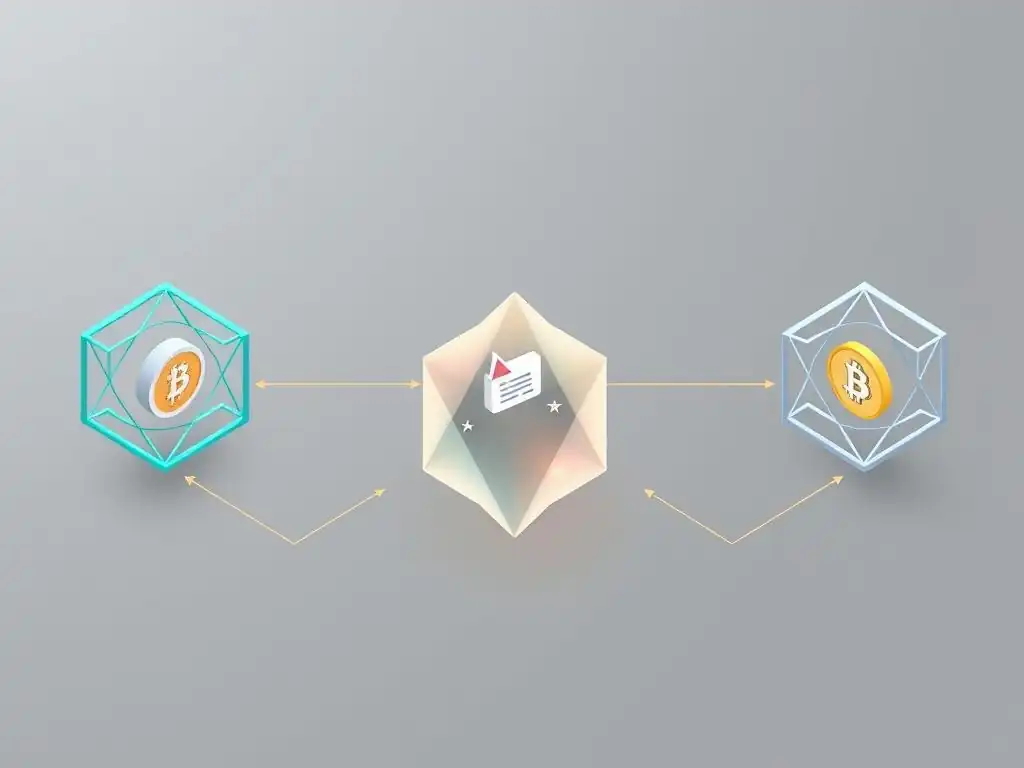
Sidechains in Decentralized Finance (DeFi)
Sidechains have become instrumental in scaling and enhancing decentralized finance applications, showcasing significant blockchain sidechain interoperability benefits. Projects like Polygon's PoS chain operate as a sidechain to Ethereum, hosting numerous popular DeFi protocols such as Aave, Compound, and Uniswap forks. Users can bridge assets like ETH, DAI, or USDC from the Ethereum mainnet to Polygon and participate in DeFi activities with drastically lower transaction fees and faster speeds.
This interoperability between Ethereum and its sidechains allows users to escape the high costs of the mainnet while still interacting with familiar protocols and assets. It expands the reach of DeFi to users who might be priced out by Ethereum gas fees, increasing overall participation and liquidity within the broader ecosystem. The ability to easily move assets between the main chain and the sidechain is fundamental to this utility.
Enterprise Applications Leveraging Sidechain Interoperability
Enterprises are exploring sidechains to leverage blockchain technology for specific business processes while maintaining connections to public or permissioned mainchains. Sidechains offer enterprises the ability to build private or consortium chains with customized permissions, data privacy features, and high transaction throughput required for business operations, while still being able to interact with external networks when necessary.
For example, a consortium of banks might use a permissioned sidechain for interbank settlements, processing transactions quickly and privately among themselves. Simultaneously, they could use a two-way peg to interact with a public mainchain to issue tokenized assets or settle transactions with external parties. This hybrid approach leverages the benefits of a controlled environment (privacy, speed) alongside the benefits of a public network (transparency for specific interactions, access to a wider ecosystem), demonstrating the practical blockchain sidechain interoperability benefits for businesses.
Sidechains for Supply Chain Management and Traceability
Supply chain management is another area where sidechains offer compelling blockchain sidechain interoperability benefits. A dedicated sidechain can be used to track goods, record provenance data, and manage logistics among a network of suppliers, manufacturers, distributors, and retailers. This sidechain can be optimized for the specific data structures and transaction volumes of the supply chain industry.
Interoperability comes into play when this supply chain data needs to interact with other systems or networks. For instance, a sidechain could peg to a mainchain to record significant milestones (like shipment completion) immutably, or interact with a financial services sidechain to trigger payment upon delivery verification. This allows for a more efficient, transparent, and automated supply chain, connecting internal processes on a sidechain with external financial or regulatory processes on other chains.
Security Considerations for Blockchain Sidechain Interoperability
Addressing Security Risks in Cross-Chain Transfers
Cross-chain transfers via sidechains introduce specific security risks that must be carefully managed. The primary risk lies in the two-way peg mechanism. If the peg is vulnerable to attacks, it could allow attackers to create assets on one chain without locking them on the other (inflation risk) or prevent users from withdrawing their assets back to the mainchain (liveness risk).
Different peg designs have varying security profiles. Federated pegs rely on the security of the functionaries, making them susceptible to collusion or compromise of the majority. Smart contract-based pegs rely on the security of the smart contract code itself, requiring rigorous auditing. Mechanisms involving mainchain consensus (like Drivechains) or fraud proofs (like Plasma) attempt to inherit more security from the mainchain but introduce complexity and potential denial-of-service vectors during challenges or withdrawals.
Consensus Mechanisms and Security Models in Sidechains
The security of the sidechain itself is independent of the mainchain's security, except for the link provided by the peg. A sidechain with a weak consensus mechanism is vulnerable to attacks (like 51% attacks) that could compromise its ledger or the assets held on it. The choice of consensus mechanism for a sidechain is a critical security decision.
Proof-of-work sidechains can be prohibitively expensive to secure due to the need for significant hashing power. Proof-of-stake sidechains rely on the value staked by validators, requiring a substantial amount of staked capital to deter attacks. Federated sidechains rely on the reputation and security practices of the functionaries. The security model of the sidechain must be robust enough to protect the assets and operations occurring on it, as a compromise on the sidechain can impact the value and integrity of assets transferred via the peg.
The Importance of Auditing and Vulnerability Assessments
Given the complexity and potential security risks associated with sidechains and their interoperability mechanisms, rigorous auditing and ongoing vulnerability assessments are paramount. The code for the two-way peg, smart contracts involved in bridging, and the sidechain's consensus mechanism must be thoroughly reviewed by independent security experts.
Regular vulnerability assessments and penetration testing are necessary to identify potential weaknesses as the sidechain software evolves and new attack vectors emerge. For federated sidechains, the security practices of the functionaries must also be scrutinized. A single vulnerability in the peg or the sidechain's core logic could undermine all the blockchain sidechain interoperability benefits and lead to significant loss of user funds or data.
The Future of Blockchain Interoperability: The Role of Sidechains
Emerging Trends in Sidechain Development
Sidechain development is continuously evolving, with several emerging trends shaping their future role in interoperability. One trend is the development of more decentralized and trust-minimized peg mechanisms, moving away from federated models towards cryptographic proofs and economic incentives. This includes advancements in zero-knowledge proofs being applied to sidechain state validation.
Another trend is the focus on creating sidechain development frameworks that make it easier for developers to launch application-specific or custom sidechains. Projects are building toolkits that provide modular components for consensus, execution environments (like EVM compatibility), and bridging, lowering the barrier to entry for creating specialized chains. Furthermore, research into improving the efficiency and security of state proofs and fraud proofs continues, particularly for scaling solutions like Plasma variants.
The Potential of Sidechains to Unlock New Blockchain Use Cases
By providing scalability, flexibility, and a degree of isolation from mainchain constraints, sidechains have the potential to unlock entirely new blockchain use cases that were previously impractical or too expensive on mainnets. High-frequency applications like gaming, social media, or IoT data processing become feasible on fast, low-cost sidechains.
Sidechains also enable the creation of permissioned or hybrid environments for sensitive data or regulated industries, while still allowing audited interaction with public blockchains. This expands blockchain adoption beyond purely public, permissionless use cases into enterprise and government sectors. The ability to connect these diverse applications via sidechain interoperability benefits the entire ecosystem, allowing value and data to flow freely between different domains.
Sidechains and the Evolution of a Multi-Chain Ecosystem
Sidechains are playing a crucial role in the evolution towards a multi-chain ecosystem, where numerous blockchains coexist and interact. They provide one of the primary pathways for assets and activity to move between different network environments. While other interoperability solutions exist, sidechains offer a compelling balance of scalability, customization, and connection to established mainchains.
As more specialized blockchains are developed and adopted, the need for seamless interoperability will only grow. Sidechains, alongside other bridging and communication protocols, will form the connective tissue of this future decentralized network, enabling a more liquid, functional, and integrated blockchain landscape. The realization of full blockchain sidechain interoperability benefits is key to this vision.
Comparing Sidechains with Other Interoperability Solutions
Sidechains vs. Atomic Swaps: A Comparative Analysis
Atomic swaps are a method for exchanging cryptocurrencies directly between different blockchain networks without needing a trusted third party. They typically involve using time-locked smart contracts or similar mechanisms on both chains to ensure that either both legs of the swap are completed or neither is.
The key difference is that atomic swaps are primarily designed for direct peer-to-peer asset exchange between two existing chains. Sidechains, on the other hand, enable assets to be transferred to a separate, often purpose-built, environment for processing transactions within that environment before potentially returning to the mainchain. Sidechains offer scalability and flexibility beyond simple swaps, allowing for complex application logic and high transaction volumes off-chain. Atomic swaps are useful for simple trading, while sidechains are better suited for scaling applications and creating connected sub-networks.
Sidechains vs. Relays: Understanding the Differences
Relays are protocols that allow one blockchain to read and verify events or the state of another blockchain. They typically involve submitting block headers or specific transaction proofs from one chain to a smart contract or light client running on the other chain. This allows the destination chain to gain verifiable information about the source chain without processing every transaction.
While relays enable information transfer and verification, they don't inherently facilitate asset transfer or off-chain computation for scaling in the way sidechains do via a two-way peg. Relays are foundational components used within some interoperability solutions (including potentially some sidechain designs or cross-chain protocols) to verify proofs. Sidechains are distinct networks linked by a peg, designed for scalability and parallel processing, whereas relays are mechanisms for cross-chain information verification.
Sidechains vs. Interoperability Protocols: Choosing the Right Approach
Sidechains are one type of solution contributing to interoperability. Interoperability protocols (like Polkadot, Cosmos, or specialized bridging protocols) are often broader frameworks designed to connect multiple blockchains, which may include mainnets, sidechains, or other types of zones/parachains. These protocols often use hubs, zones, or specific consensus mechanisms to facilitate communication and asset transfer between diverse networks.
Choosing between a sidechain and a broader interoperability protocol depends on the specific requirements. If the goal is to scale an existing mainchain or create a dedicated environment for a specific application while remaining closely tied to the mainchain's asset base, a sidechain might be the most direct approach, leveraging blockchain sidechain interoperability benefits for that specific connection. If the goal is to connect a large number of diverse blockchains with different characteristics into a cohesive ecosystem, a broader interoperability protocol might be more suitable. Often, sidechains can exist within or connect to these larger interoperability ecosystems.
Conclusion: Embracing Sidechains for a More Connected Blockchain Future
Sidechains represent a vital technology in the pursuit of a truly interoperable blockchain ecosystem. By providing scalable, flexible, and customizable environments linked to established mainchains via secure peg mechanisms, they address critical limitations of monolithic blockchain architectures. The blockchain sidechain interoperability benefits, such as enhanced transaction throughput, reduced fees, and the ability to host specialized applications, are already driving significant activity in areas like DeFi and enterprise solutions.
While challenges related to security, decentralization of the peg, and complexity remain, ongoing research and development in sidechain architectures are continuously improving their capabilities and trustworthiness. Alongside other interoperability solutions, sidechains are paving the way for a future where different blockchains can seamlessly interact, unlocking the full potential of decentralized technologies and fostering innovation across a global, interconnected network of chains. Embracing sidechains is a key step towards this more connected blockchain future.
Frequently Asked Questions
What are blockchain sidechains and what is their primary purpose?
Sidechains are separate blockchains linked to a main blockchain (like Bitcoin). Their primary purpose is to expand functionality and scalability without burdening the main chain.
How do sidechains contribute to blockchain interoperability?
Sidechains enable interoperability by allowing assets and data to move seamlessly between different blockchains. This fosters a more connected and collaborative blockchain ecosystem.
What are some key benefits of blockchain sidechain interoperability?
Key benefits include increased scalability, reduced transaction costs, and the ability to access diverse functionalities across different blockchain networks. This improves overall efficiency.
What are the potential challenges associated with implementing sidechain interoperability?
Challenges can include security risks related to cross-chain transfers, the complexity of developing interoperable protocols, and governance issues across different chains.
How might regulations impact the development and adoption of blockchain sidechain interoperability solutions?
Regulations could either hinder or facilitate adoption depending on their approach. Clear and supportive regulations can boost innovation, while overly restrictive ones may stifle progress in this area.
Final Reflection: Bridging the Blockchain Divide
The exploration of sidechains and their role in achieving blockchain interoperability reveals a critical truth: the future of blockchain technology hinges on seamless communication and collaboration between disparate networks. The potential benefits, from enhanced scalability to specialized functionality, are only fully realized when blockchains can interact freely, fostering a more unified and powerful ecosystem. This isn't just a technical advancement; it's a fundamental shift towards a more collaborative and decentralized future.
This quest for interoperability has profoundly influenced the blockchain landscape, moving it away from isolated silos and towards a more interconnected web. Witnessing this evolution firsthand underscores the importance of open standards and collaborative development in shaping the future of technology. The ability for different blockchains to "talk" to each other unlocks unprecedented opportunities for innovation and efficiency. The beauty of blockchain lies not just in its security and transparency, but in its potential to connect the world in new and meaningful ways.
This potential is only truly unlocked through robust interoperability solutions like sidechains.
As we stand on the cusp of a more interconnected blockchain future, I invite you to consider the implications of this technology in your own life and work. How can you leverage the benefits of blockchain interoperability to create new opportunities, solve existing problems, and contribute to a more decentralized and equitable world? The future of blockchain is not just about technology; it's about building a better future, together.
Unlock the Future: Explore Blockchain Connectivity!
Thank you for exploring the role of sidechains and their potential to transform blockchain interoperability. Now that you have a better understanding of this vital aspect of blockchain technology, it's time to take action.
Consider delving into the technical details of leading sidechain projects, sharing this article with fellow enthusiasts to spark meaningful discussions, or contributing to open-source initiatives aimed at improving cross-chain communication.
What innovative application can you imagine making possible through seamless blockchain interoperability? Share your ideas in the comments below!
Leave a Reply